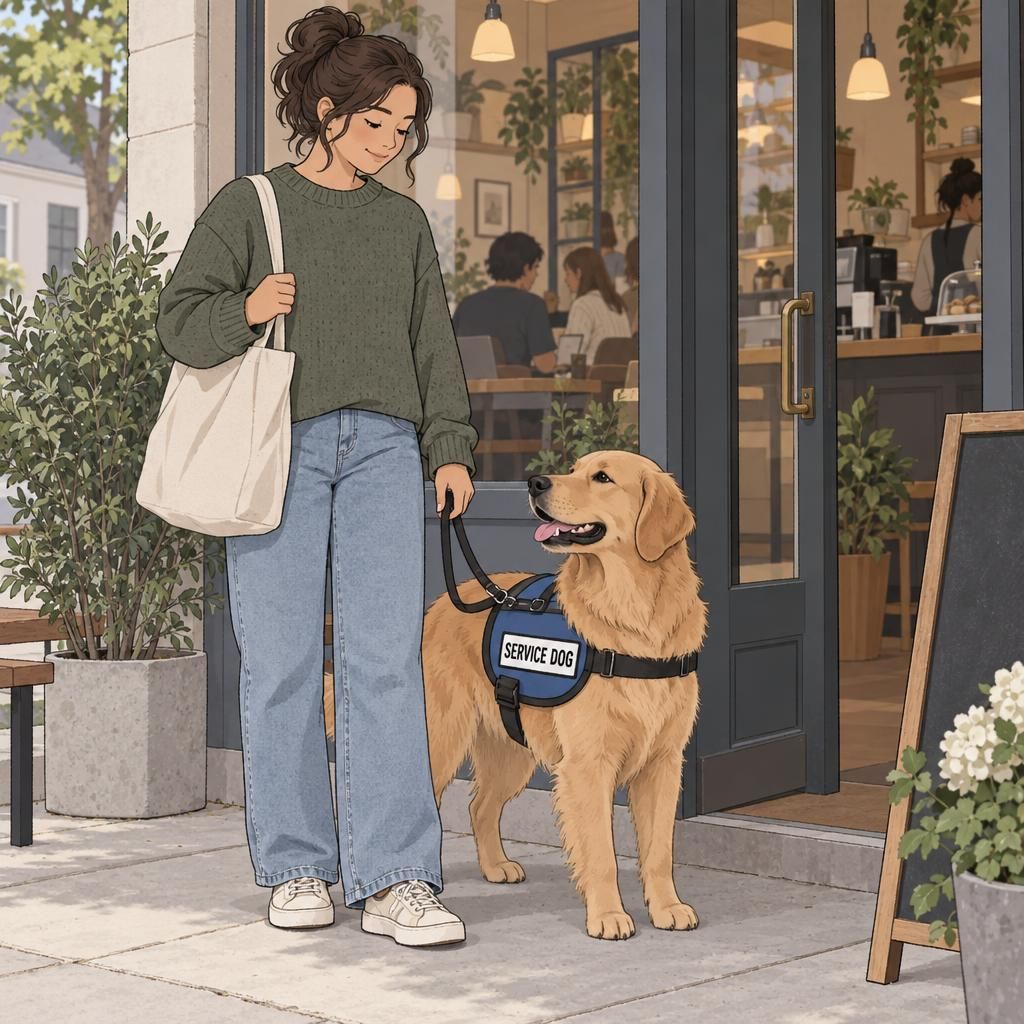
Everyday outings involve small interactions: entering a cafe, passing another shopper, checking into a hotel, or waiting for a ride. For someone accompanied by a service dog, these moments can also bring questions about the animal’s role. A clearly worded service dog tag offers a simple way to communicate that the dog is working.
A tag is a visible communication aid. It can help others recognize the dog’s role at a glance, potentially reducing how often the handler needs to repeat an explanation. That can be useful when the handler is concentrating on an errand, navigating a crowded entrance, or managing a disability-related need.
The word “official” should not be confused with federal government approval. A tag may be part of an organized identification package, but its practical value comes from clear wording and consistent use. It communicates information; it does not establish the dog’s training or independently grant access rights.
Even well-intentioned attention can interrupt a working dog. Someone may reach down to pet the dog, call to it from across an aisle, or offer a treat without realizing that the animal needs to stay focused on its handler. Short, visible messages can set a respectful boundary before that interaction begins.
Wording such as “Do Not Pet” or “Working” gives people an immediate cue to leave the dog undisturbed. National Animal Registry describes visible service dog tags as tools for communicating a dog’s working role and discouraging petting or other distractions (source). The goal is clearer communication, not a guarantee that everyone will notice or follow the message.
A tag can support the dog’s focus, but handlers may still need a short verbal reminder. “Please give us space; my dog is working” reinforces the message calmly and directly.
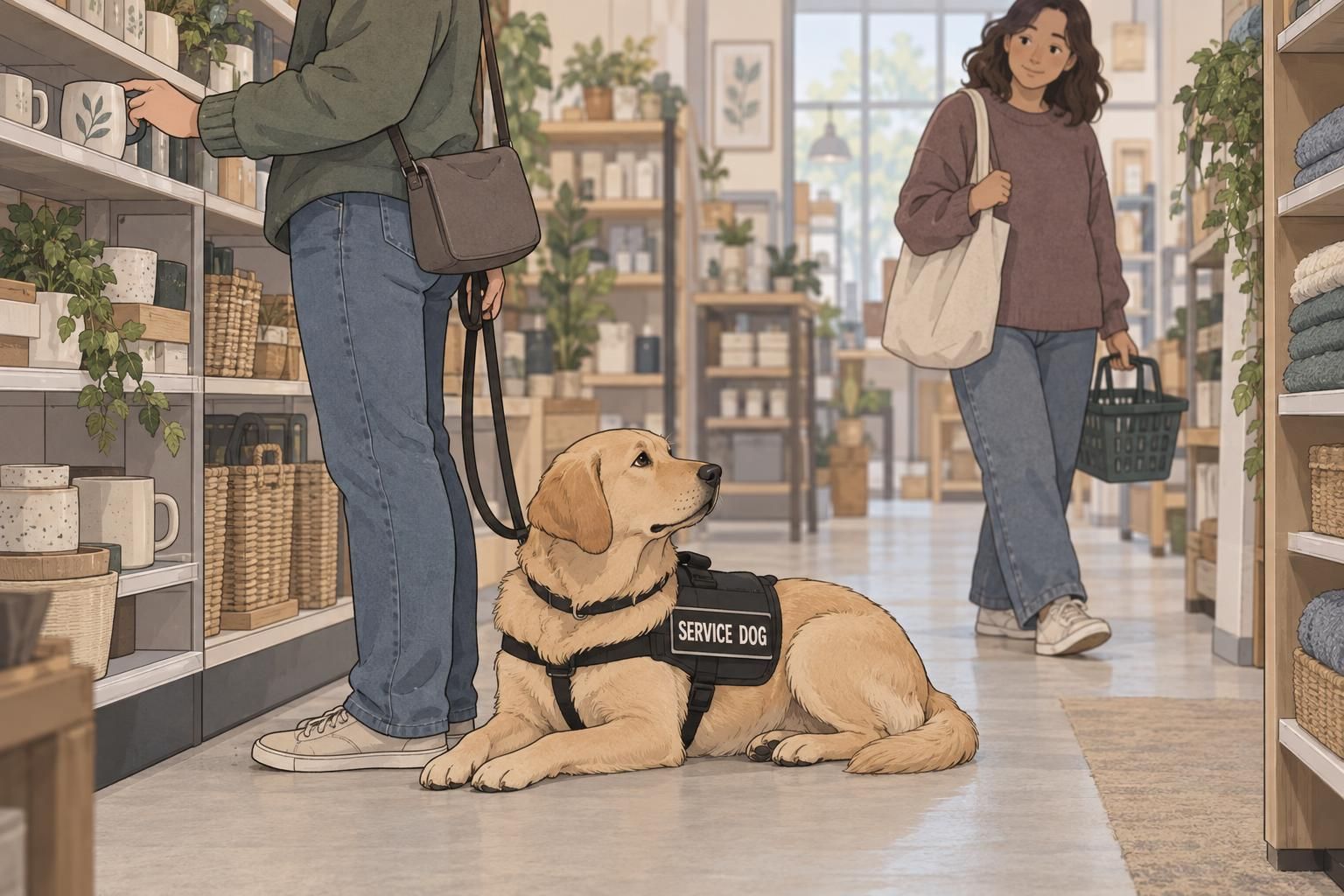
In restaurants, stores, hotels, and public events, staff often make quick decisions while helping several people at once. A visible identifier may help them recognize that a dog is accompanying a handler in a working role rather than visiting as a pet. That shared understanding can make an initial conversation more straightforward.
For example, a restaurant host may notice the tag while discussing seating, or an event employee may recognize the dog’s role while directing the handler toward an entrance. A tag can provide context without requiring the handler to present personal medical information to everyone nearby.
However, a tag does not itself determine public-access rights. Under the ADA, a service dog’s status depends on disability-related task training and applicable requirements, not on wearing a particular tag. Businesses may ask the limited questions allowed under the ADA when the dog’s role is not apparent, but cannot require registration or certification as a condition of access.

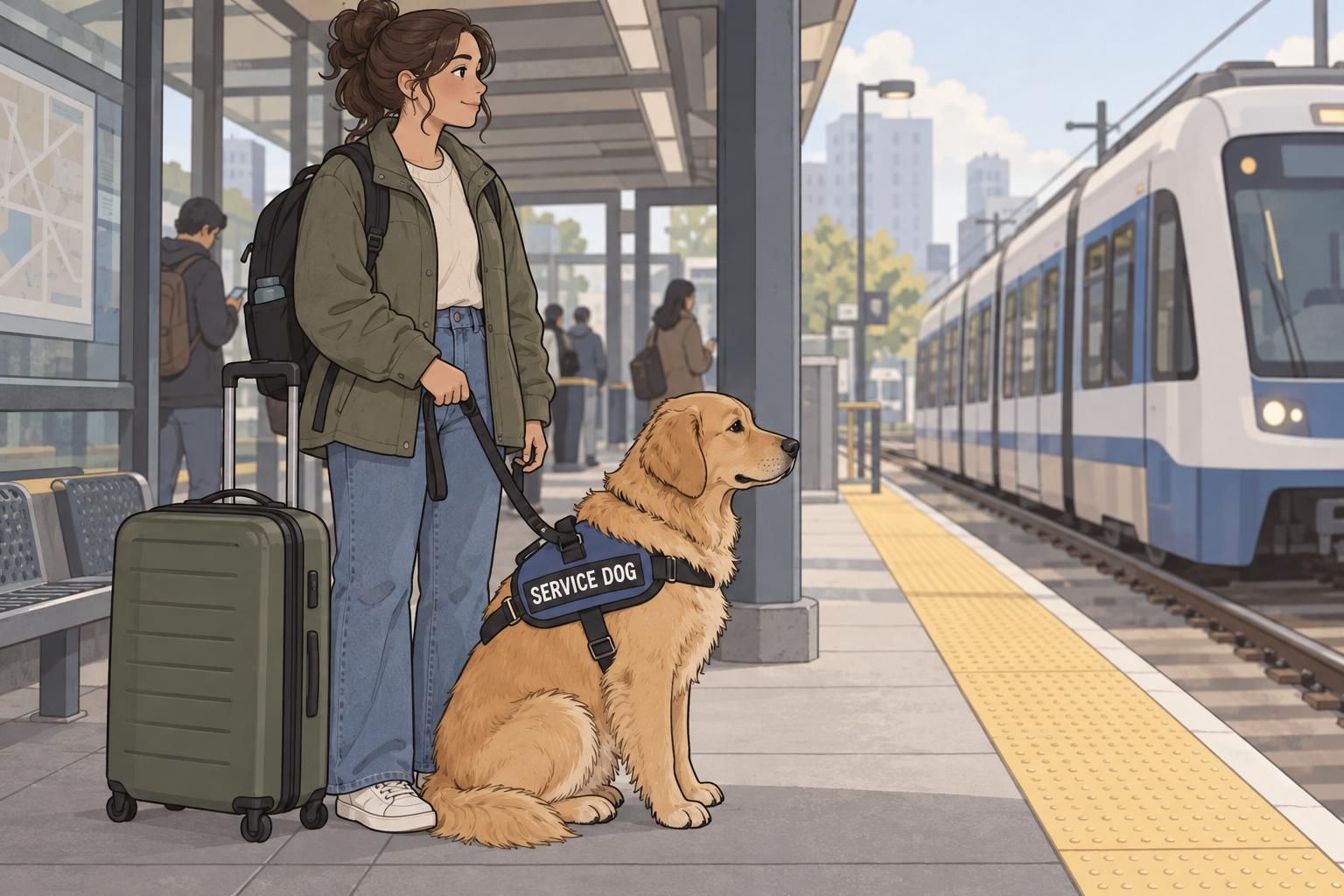
Travel brings frequent transitions between unfamiliar people and places. During a rideshare pickup, a visible tag may help a driver understand the dog’s role as the handler approaches. At a transit station or hotel check-in desk, it can provide the same quick context while the handler manages luggage, tickets, or a reservation.
Preparation matters more than relying on a tag alone. Before departure, review the requirements for each part of the journey, including transportation providers, accommodations, and destination rules. Air travel can involve requirements different from everyday public access, and an identification package should not be treated as a substitute for required carrier forms or procedures.
For preparation guidance, read about planning ahead for travel with a service dog. Handlers who prefer a coordinated kit can also explore options for organizing service dog travel identification and documents, while checking separately which materials their carrier actually requires.
A service dog tag can do more than identify a working role. Depending on its size and design, it may also carry a reachable phone number, an emergency contact, or a short instruction. If the dog becomes separated from its handler, practical contact information can help someone take the next useful step.
Choose details with privacy in mind. A public-facing tag generally does not need the handler’s diagnosis, medication information, full address, or other sensitive medical details. An instruction such as “If separated, call this number” may be more useful to a stranger than information they are not equipped to interpret.
Treat the service dog tag as a supplement to durable contact identification and any required local animal license. A role label and a contact tag serve different purposes, and keeping both readable supports everyday preparedness.

The most useful wording is usually the simplest. Decide what someone needs to understand first: the dog’s role, a request not to interact, or the need for additional space. Trying to fit every possible detail onto one small tag can make the whole message harder to read.
Choose wording that accurately describes the dog. Access rules for service dogs in training vary by location, so a training tag should not be assumed to provide the same access everywhere. Likewise, a label should not describe a support animal as a task-trained service dog unless that description is accurate.
Look for readable lettering, durable materials, and a secure attachment that does not interfere with the dog’s movement or equipment. If coordinated materials suit your routine, consider a service dog identification package that includes a QR tag. Keep essential information readable without requiring someone to scan a code.

Service dog tags, identification cards, registrations, and certificates can help handlers organize information and communicate a dog’s role consistently. Each format has a practical use: a tag is visible on the dog, a card is easy to carry, and a certificate can be kept with other records.
The ADA does not prescribe a federal government-issued service dog tag or require service dogs to wear identifying gear. Registration and identification materials are optional organizational and communication tools. Local animal licensing requirements are separate and may still apply, regardless of whether a dog wears a service dog tag.
No. A tag communicates a role, while access depends on applicable law and the dog meeting the relevant requirements. Identification can support communication without replacing those standards.
Yes. The ADA does not require identifying gear. Handlers may choose a tag because it makes everyday communication easier.
Not unless it also provides the necessary contact details. Keep reliable contact identification and any required local licensing information available.
The best tag fits the handler’s routine: clear enough to communicate quickly, sturdy enough for daily use, and limited to information worth sharing. Used thoughtfully, it can make ordinary interactions more understandable while keeping attention on the working partnership.
Your trusted source for service animal registration. Get professional ID cards, digital profiles, and smart NFC tags to keep your service animal safe and recognized.
© National Animal Registry — All rights reserved.