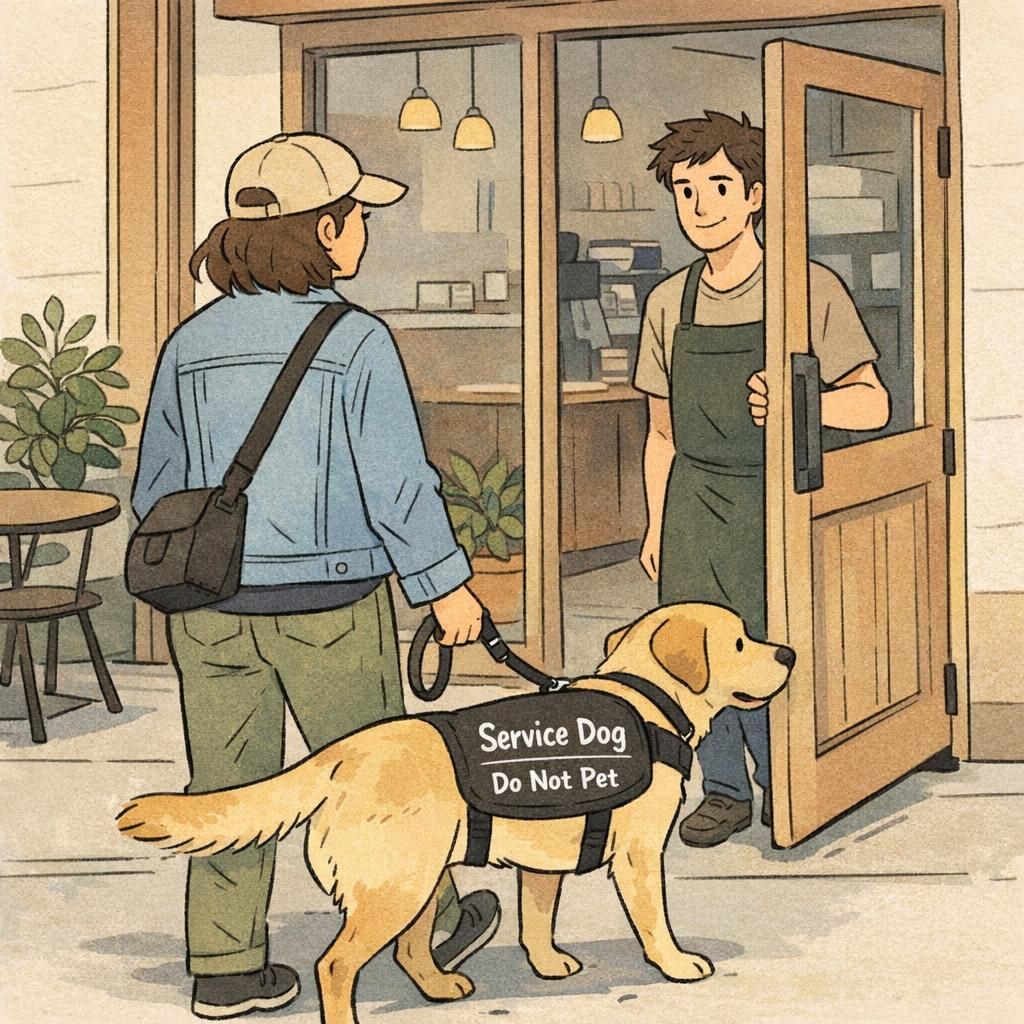
When people say “official service dog tag,” they’re usually talking about a clear, professional-looking identifier that helps the public quickly understand: this dog is working. In everyday life, “official” often means the tag looks standardized, is easy to read, and communicates the dog’s role without the handler needing to explain it repeatedly.
Handlers choose to use service dog tags for practical reasons: smoother entry into public places, fewer awkward conversations, and less interruption when their dog is focused on task work. A tag can also reduce well-meaning distractions from strangers who want to pet, talk to, or photograph the dog.
These terms get searched and used interchangeably, so a quick clarification helps. In the U.S., the Americans with Disabilities Act (ADA) focuses on service animals as dogs that are trained to perform tasks or do work related to a person’s disability. That task training is what separates a service dog from a pet or comfort animal in most public-access situations.
You’ll also hear “assistance dog,” which is often used as a broad everyday term that can include many working roles (like guide work, mobility support, psychiatric support, and more). In the U.S., “service dog” is the most common legal term people use when referring to ADA public access rights.
In many day-to-day conversations, people say “service animal” as a general phrase. Under the ADA, the most common service animal is a dog trained to perform disability-related tasks, so “service dog” is often the clearest wording in public settings.
It’s a widely used umbrella term that emphasizes the dog’s working purpose. In the U.S., “service dog” is the term most people recognize for ADA-related public access.
A common misconception is that service dogs must wear a vest, tag, or special ID to be allowed in public. Under ADA guidance, service animals are not required to wear a vest, tag, or any specific identifier, and handlers are not required to show documentation. You can review the ADA’s service animal requirements here: source.
That said, many handlers still choose to use tags and ID materials as an optional, practical way to make daily interactions smoother. In real life, a visible identifier can reduce confusion, prevent repeated questions, and help the public understand the dog is working—especially in places where staff or other customers aren’t familiar with service dog rules.
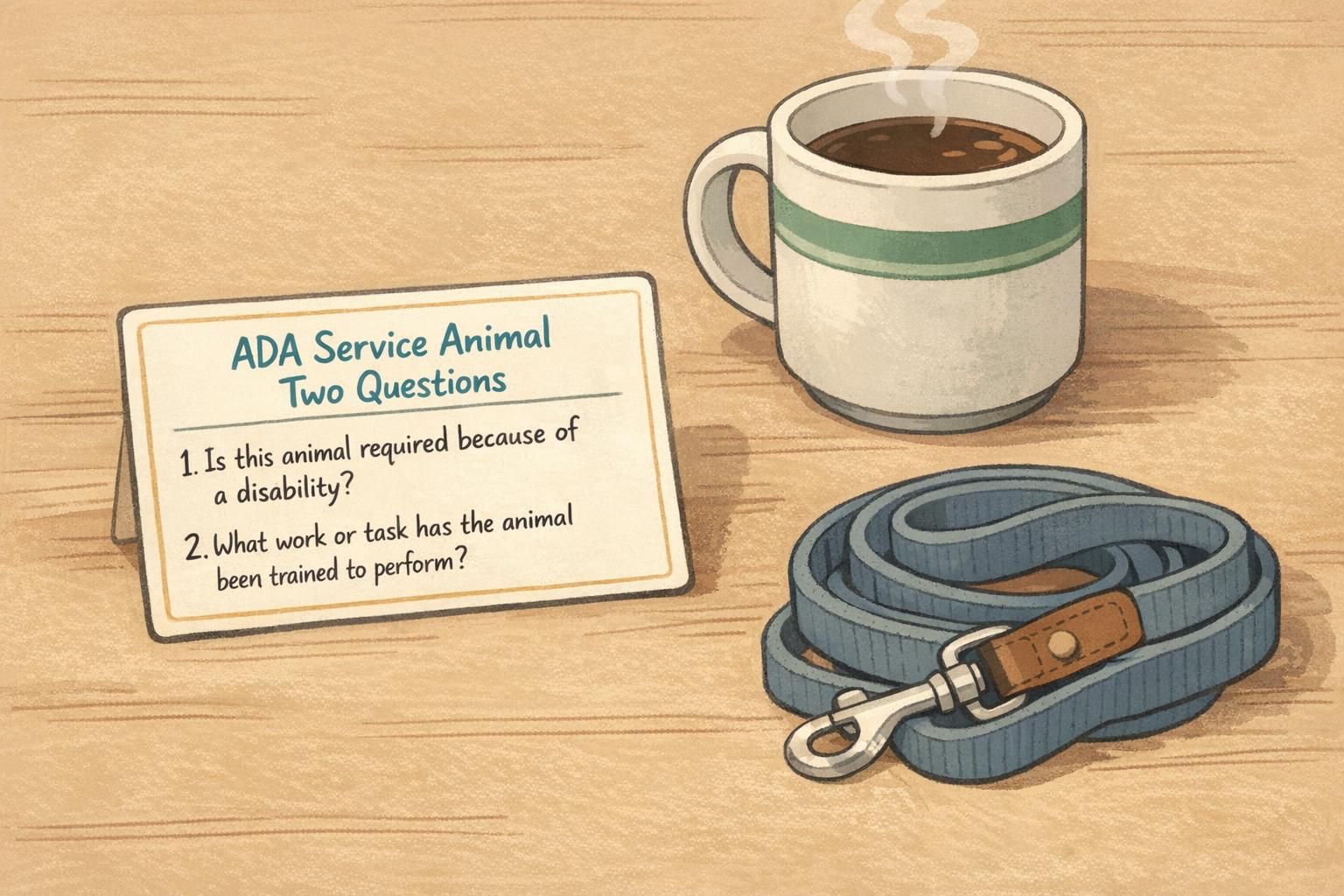
When a service dog enters a business, staff sometimes feel unsure about what they’re allowed to ask. ADA-aligned conversations are typically brief and respectful. Businesses may ask two questions when it isn’t obvious the dog is a service animal: (1) whether the dog is required because of a disability, and (2) what work or task the dog has been trained to perform.
Just as important: there are things staff should not request in that moment. For example, they should not demand that a handler disclose details about their disability, and they generally should not insist on “proof” like special paperwork as a condition of entry. In real-world settings, a visible service dog tag can help set expectations early and reduce repeated questions—especially when the handler is trying to stay focused on the outing.
Some handlers also keep simple educational materials on hand for calmer conversations, especially in places where policies vary by staff training or turnover. A small handout can keep the interaction short and friendly while the handler continues their day.
If you like having something ready to share, consider ADA law handout cards for calmer conversations.
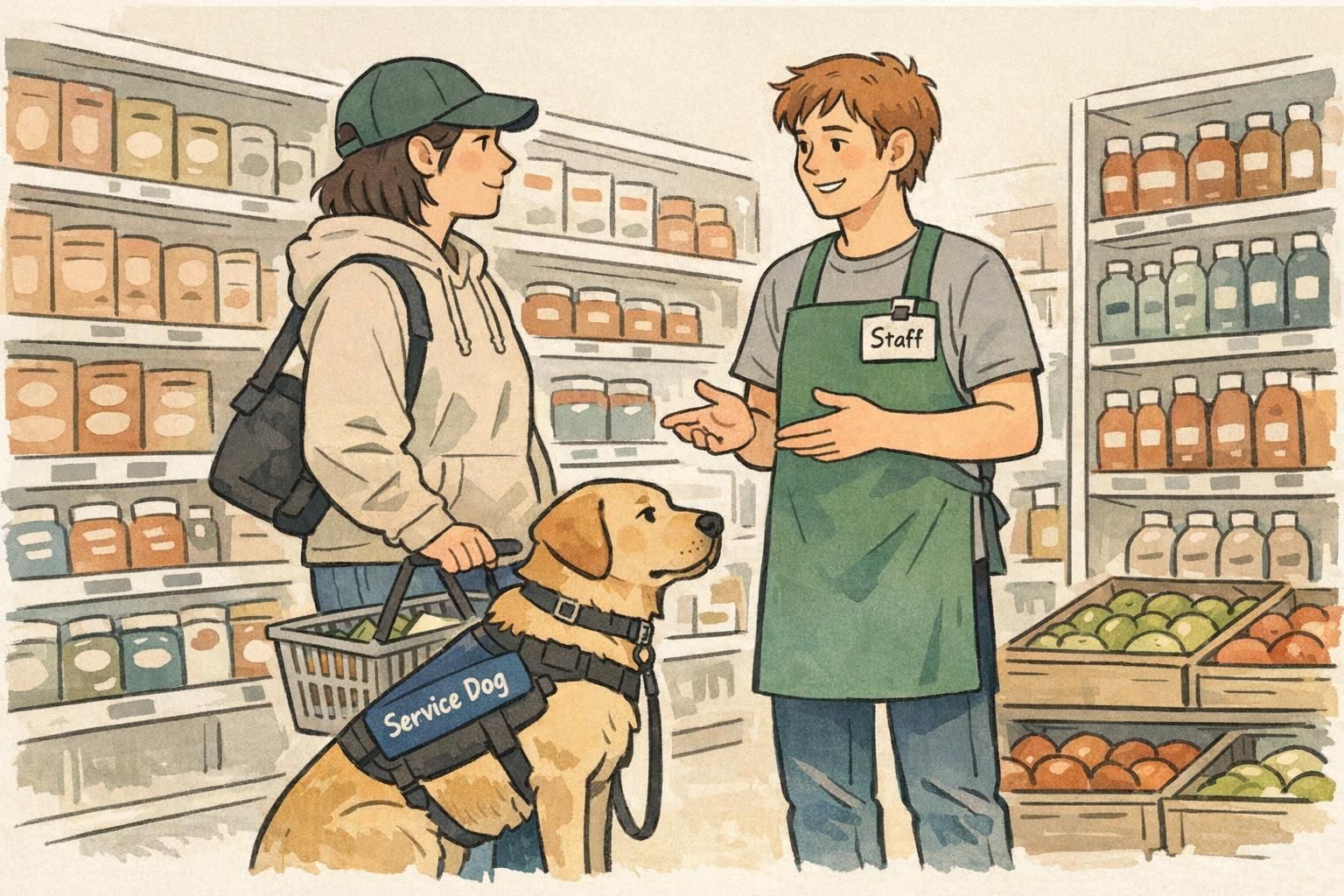
Most handlers aren’t looking for extra attention—they’re looking for fewer interruptions. A service dog tag can be helpful in everyday locations where staff may not immediately recognize a working dog or may be unsure about policy.
In these moments, a tag acts like a quick, nonverbal “context clue.” It can reduce the need to explain your dog’s role from scratch, especially when you’re in a hurry, managing symptoms, or simply trying to keep your dog focused.
“ "I don’t use a tag because I want attention. I use it because it keeps conversations short and lets my dog stay focused." – Service dog handler”
A good service dog tag is readable in a second or two. The goal is clarity, not personal details. Many handlers choose simple wording that helps the public understand the dog is working and should not be approached.
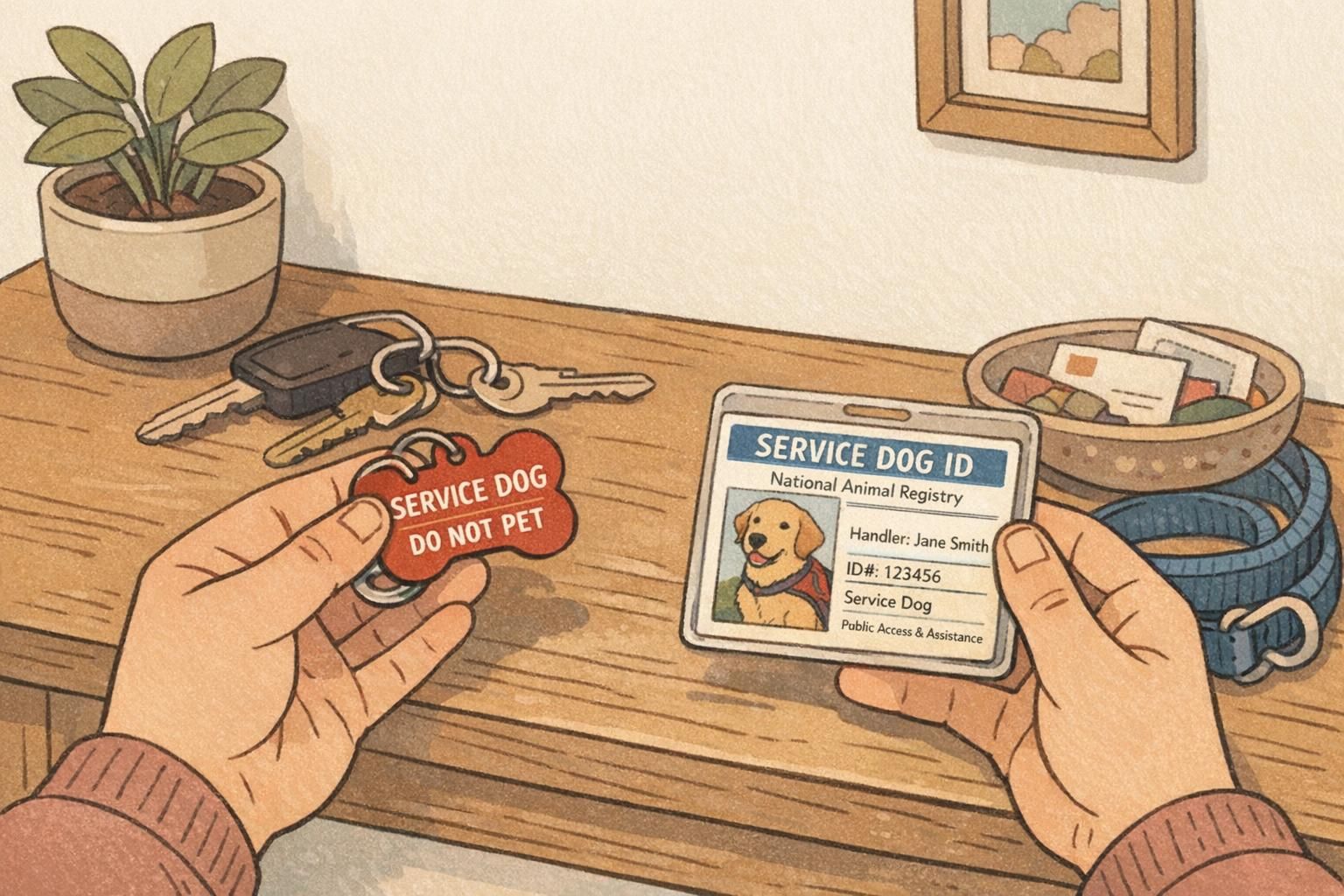
Many handlers prefer a “kit” approach: a visible tag for quick public understanding, plus a wallet ID card for consistency when questions come up, plus an optional digital profile that’s easy to reference on a phone. None of these tools have to be complicated—they’re about making your daily routine more predictable.
This can be especially helpful during travel, when speaking with new property managers, or during routine outings where you don’t want to repeat the same explanations. Keeping your details consistent across your tag, ID card, and digital profile can also help you feel more organized and prepared.
If you want an all-in-one option, you can consider a starter registration package for everyday identification.
A tag can help communication, but public access success usually comes down to practical basics: the dog stays under control, remains focused, and behaves appropriately in shared spaces. Under ADA guidance, service dogs are generally controlled by leash, harness, or tether unless those devices interfere with the dog’s work or the handler’s disability prevents using them. In those cases, the dog should still be under control through voice commands, signals, or other effective means.
In real-world terms, “under control” looks like staying close, not wandering up to people, not sniffing food displays, and not blocking aisles. It also means the handler is actively monitoring the dog’s body language and environment.
A short, calm boundary works best. Many handlers repeat a simple phrase like, “Please don’t distract him—he’s working,” and then refocus on their task. A visible “Do Not Pet” message supports your words without escalating the situation.
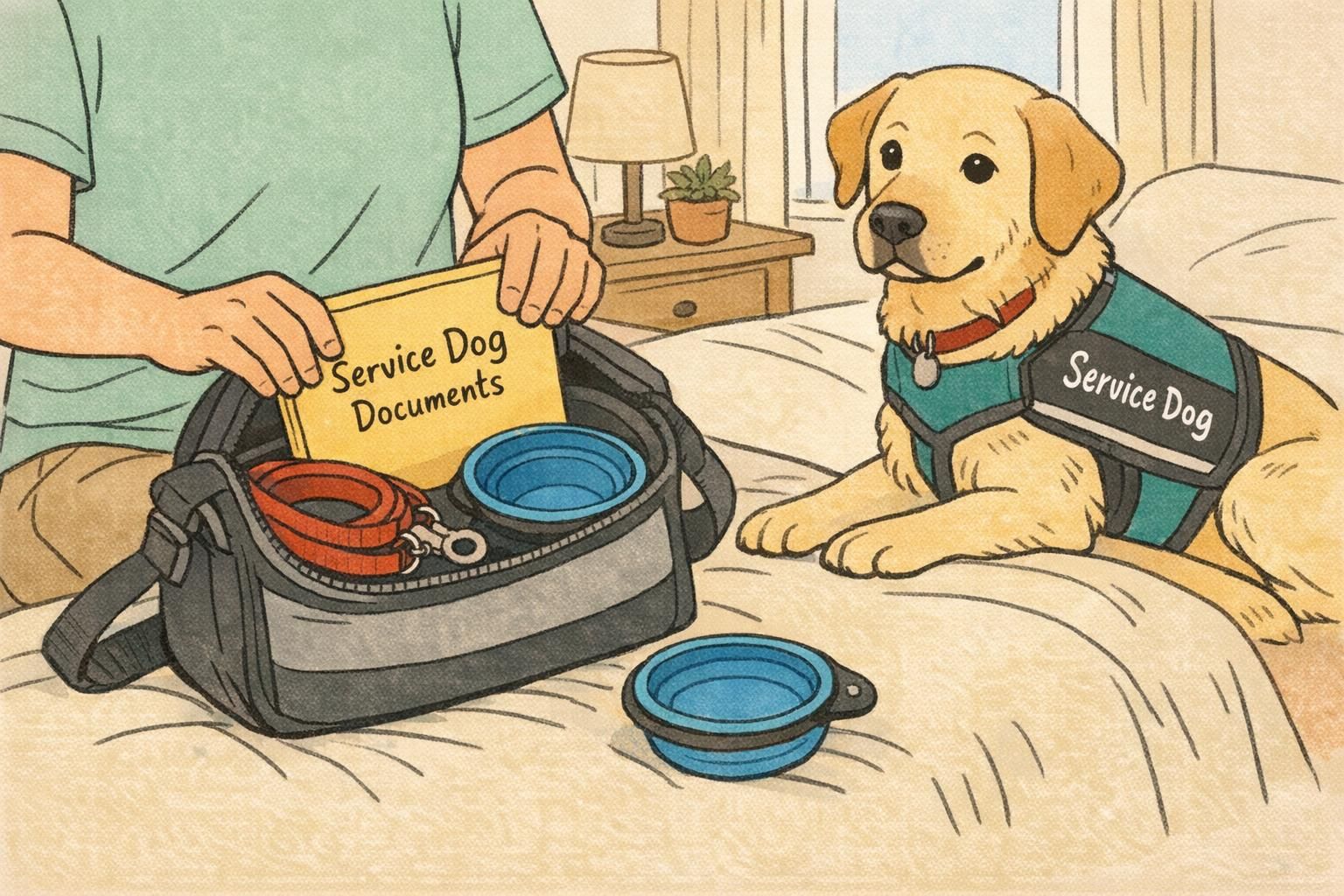
Travel tends to multiply interactions: check-ins, lobby walk-throughs, elevators, shuttles, and busy public areas. Even when everything is going well, it can feel tiring to repeat the same explanations. A service dog tag and consistent ID materials can help reduce repeated questions and keep your routine steady from one stop to the next.
If you’re planning a trip, it can help to review tips on traveling with a service dog so you feel ready for real-world situations like tight spaces, long waits, and lots of foot traffic.
For handlers who like a travel-focused set of materials, a travel-ready service dog registration package can help keep everything organized and consistent throughout the trip.
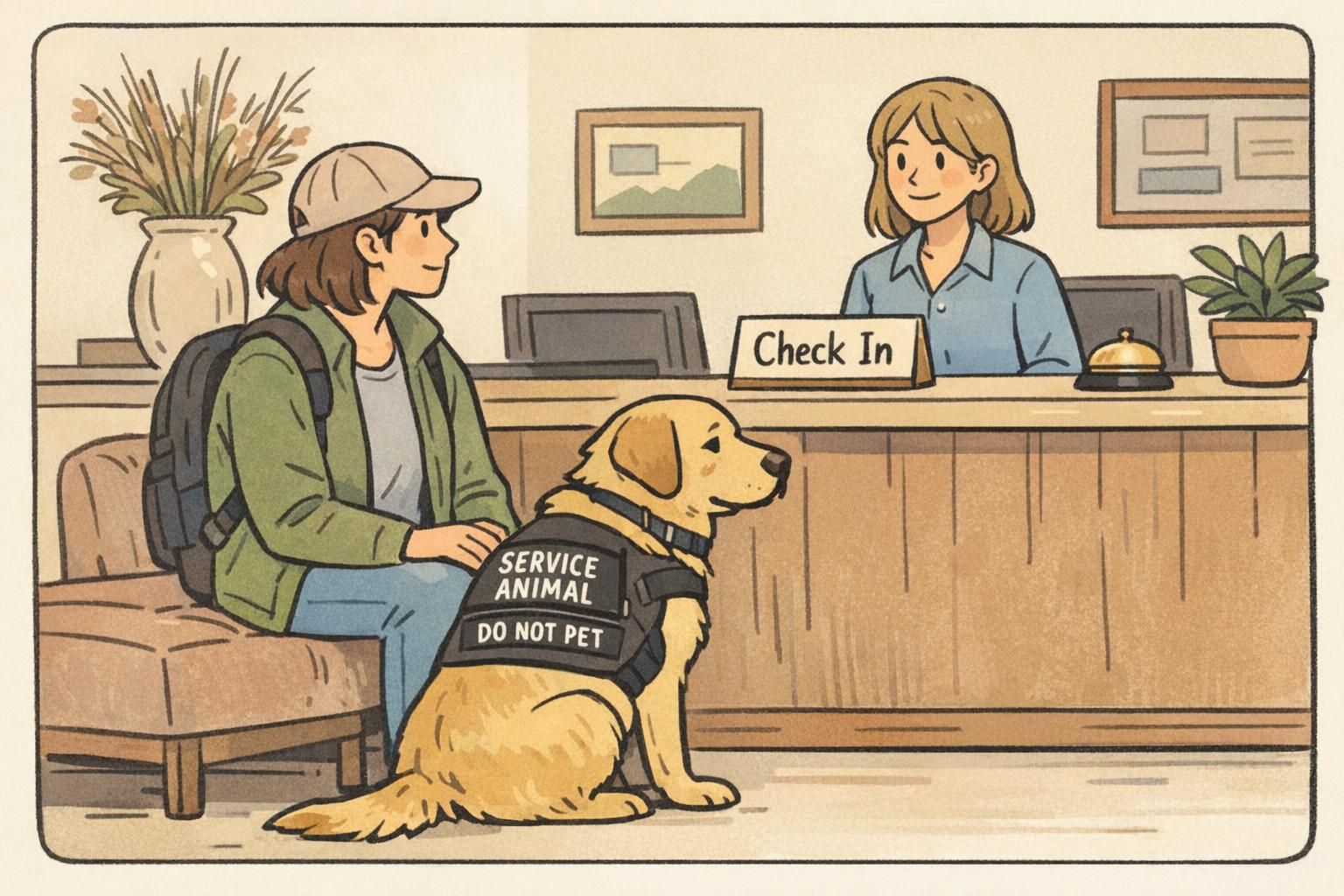
Service dogs and emotional support animals (ESAs) can both play meaningful support roles, but they’re not the same category under ADA public access rules. A service dog tag is typically used to signal that the dog is a working service dog trained to perform disability-related tasks—so the public understands why the dog is present and why it should not be distracted.
Because ESAs and service dogs often show up in different settings (and the rules can vary depending on where you are and what you’re doing), the most helpful approach is to choose identifiers that accurately match your animal’s role. Clear labeling helps everyone: it supports respectful access conversations, reduces misunderstandings, and sets the right expectations from the start.
If you want an “official-looking” setup, focus on what reads as professional in everyday life: durability, legibility, and consistency. People process short, clear messages fastest—especially staff who are multitasking at a counter, doorway, or check-in desk.
Many handlers choose optional registration and identification tools because they like feeling prepared and consistent in daily life—especially when navigating new places or meeting new staff. If you want a professional set that includes a printed ID and a matching digital page, consider a customizable printed service dog ID with a matching digital page.
“ "Having consistent ID materials doesn’t change how my dog works—it just helps other people understand what’s going on faster." – Service dog handler”
Your trusted source for service animal registration. Get professional ID cards, digital profiles, and smart NFC tags to keep your service animal safe and recognized.
© National Animal Registry — All rights reserved.