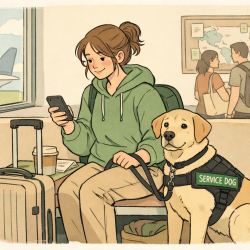
Traveling with your service dog opens up the world in ways few things can, whether it's a cross-country road trip, a beach resort getaway, or that dream European vacation you've always wanted. But let's be real: the extra rules, paperwork, and occasional misunderstandings can make planning feel daunting.
This complete guide cuts through the noise with clear steps for every stage - from legal rights and airline forms to packing lists, international borders, and handling "no dogs allowed" moments. Expect practical checklists, comparison tables for airlines and states, and tips drawn from real handlers who've flown with large breeds, cruised Caribbean decks at sunset, or navigated busy EU trains without a hitch.
By the end, you'll have everything to travel confidently with your canine partner.
A service dog is not just a well‑behaved pet that tags along on vacation. A service dog is a working partner, trained to perform specific tasks that help a person with a disability navigate daily life more safely and independently. Under U.S. law, a service animal is a dog that has been individually trained to do work or tasks directly related to a person’s disability. Examples include guiding a blind handler, alerting to an oncoming seizure, retrieving dropped items, or interrupting self‑harm or panic behaviors.
For a clear legal definition, see the official ADA service animal page at https://www.ada.gov/topics/service-animals/
Emotional support animals (ESAs), comfort animals, and therapy dogs play valuable roles, but they are different in the eyes of the law. An ESA that “just makes me feel better” without specific task training does not qualify as a service animal under the Americans with Disabilities Act (ADA). Psychiatric service dogs, however, are fully recognized as service dogs when they are trained to perform concrete tasks such as room checks, deep‑pressure interruption of panic, or medication reminders. The ADA explains these distinctions in more depth at https://www.ada.gov/topics/service-animals/
Most U.S. federal rules only recognize dogs as service animals. The ADA allows miniature horses in some situations as a reasonable modification, but this is relatively rare and highly case‑specific. For most travel situations - especially flights - “service animal” effectively means “service dog.”
A more technical explanation of species, tasks, and limitations can be found in the ADA’s detailed requirements at https://www.ada.gov/resources/service-animals-2010-requirements/
Traveling with a service dog in the United States sits on three main legal pillars: the Americans with Disabilities Act (ADA), the Air Carrier Access Act (ACAA) and related Department of Transportation (DOT) rules for air travel, and state‑level service animal laws. Knowing the basics of each helps reduce anxiety, makes it easier to stand up for your rights, and keeps expectations realistic when problems arise.
The ADA is the foundation of everyday public access rights with a service dog. It covers most businesses and state or local government entities, including restaurants, hotels, shops, public transit systems, museums, and many attractions. Under the ADA, a person with a disability has the right to be accompanied by a service dog in any area open to the public, as long as the dog is under control and housebroken. A friendly, human way to think of it is: “If other customers are allowed to be there, your service dog usually is, too.”
Official ADA guidance is available at https://www.ada.gov/topics/service-animals/.
Staff are generally limited to two questions when it is not obvious that a dog is a service animal: (1) “Is the dog required because of a disability?” and (2) “What work or task has the dog been trained to perform?”. They are not allowed to demand medical records, special ID cards, training certificates, or a demonstration of the dog’s tasks, although voluntarily sharing helpful information, calmly explaining what the dog is trained to do or having optional supporting documentation on hand can sometimes make the interaction smoother.
The ADA’s detailed FAQ spells this out clearly at https://www.ada.gov/topics/service-animals/
A business can ask a team to leave only in narrow situations, such as when a dog is out of control and the handler does not take effective action, or when the dog is not housebroken. Even then, the person with a disability must still be offered goods or services without the dog whenever reasonably possible.
These limits on exclusion are described in more detail at https://www.ada.gov/resources/service-animals-2010-requirements/
Air travel follows a different rulebook. The Air Carrier Access Act (ACAA) and the U.S. Department of Transportation’s (DOT) service animal regulations govern what happens at check‑in, at the gate, and on board. These rules are especially important if you are flying with a service dog to, from, or within the United States.
In 2020, the DOT updated its rules to tighten the definition of service animals in air travel. Under these rules, airlines are required to treat dogs trained to perform tasks for a person with a disability as service animals, including psychiatric service dogs. Emotional support animals, however, are no longer recognized as service animals and are instead handled under each airline’s pet policy.
A summary of these rules is available at https://www.transportation.gov/briefing-room/us-department-transportation-announces-final-rule-traveling-air-service-animals/
Airlines are allowed to require standardized U.S. DOT Service Animal forms. These forms typically confirm that the dog is a trained service animal, is vaccinated, and will behave appropriately in the cabin. Carriers may limit the number of service dogs per passenger, require that the dog fit in the handler’s foot space without blocking aisles or emergency exits, and deny boarding to dogs that are aggressive or clearly out of control.
The official service animal forms and instructions can be found at https://www.transportation.gov/resources/individuals/aviation-consumer-protection/service-animals/
One important point of reassurance is that the DOT rules explicitly recognize psychiatric service dogs on equal terms with other service dogs; airlines may not impose extra hurdles on them just because the disability is not visible. At the same time, these rules give airlines more power to say no to animals that do not meet behavior or size requirements, which makes good preparation and honest assessment of your dog’s readiness even more critical.
On top of federal law, each U.S. state can add its own service animal statutes. Think of ADA and ACAA as the minimum floor of rights that all states must respect. States cannot take those rights away, but they can add extra cushions: stronger penalties for fake service dogs, specific language about service dogs in training, or guidance on local licensing and ID tags.
Some states impose fines or even misdemeanors for people who misrepresent a pet as a service animal. Others specify that service dogs in training have certain access rights when accompanied by a trainer or handler. A few mention optional ID tags or special registration programs, though these cannot be used to exclude legitimate teams that do not participate. Because these details change over time, it is useful to rely on regularly updated compilations rather than memorizing statute numbers.
A widely used resource is the “Table of State Service Animal Laws” maintained by the Animal Legal & Historical Center. It collects key statutes and notes for every state in one place and is available at
https://www.animallaw.info/topic/table-state-assistance-animal-laws/.
This table makes it easier to check whether a state has penalties for fraudulent service animals, how it defines “service animal,” and whether it mentions psychiatric service dogs or miniature horses explicitly.
Later, when exploring differences between states, it is helpful to keep one idea in mind: federal ADA rights always apply across the U.S., even when state laws are silent or confusing. State provisions mostly add clarity, enforcement tools, or extra protections rather than reducing access.
Question | ADA (Everyday Public Access) | Air Travel (ACAA + DOT Rules) |
|---|---|---|
Where does it apply? | Most businesses and state/local government services in the United States | Flights to, from, and often within the U.S. |
Who counts as a service animal? | Dog trained to perform tasks for a person with a disability (miniature horse sometimes) | Dog trained to perform tasks for a person with a disability |
Are emotional support animals SDs? | No. ESAs are not service animals under the ADA | No. ESAs are treated under each airline’s pet policy |
What proof is usually needed? | No mandatory papers or vests; staff may only ask the two allowed questions | Airlines may require standardized DOT service animal forms and advance submission |
When can access be denied? | Dog out of control, not housebroken, or genuine safety/fundamental change in service | Dog is aggressive, too large for the foot space, or required forms/conditions are not met |
Pre‑trip planning with a service dog is where stress starts to melt away and real excitement begins. This section focuses on practical steps you can take before you ever step out the door, so travel feels organized instead of chaotic.
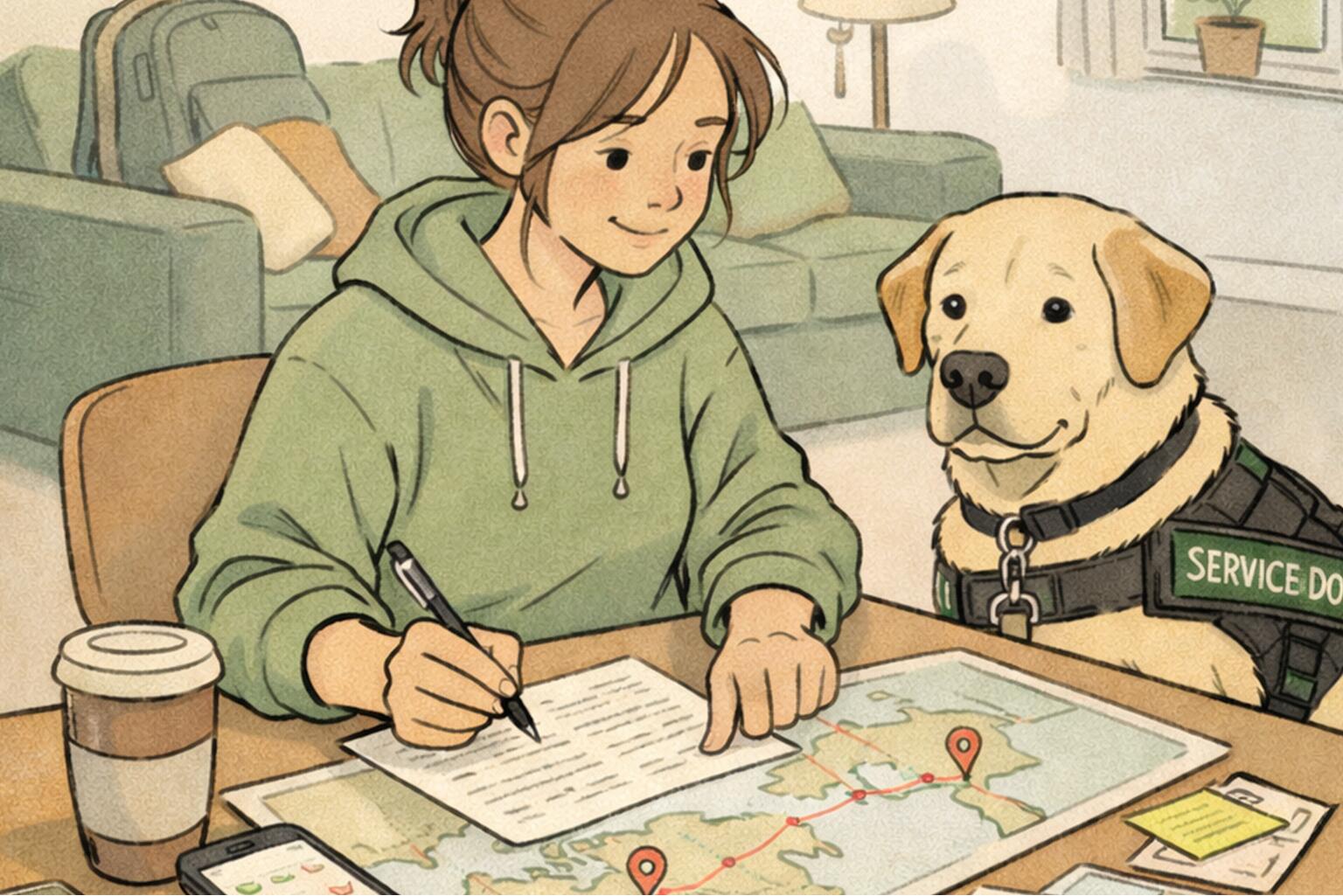
Traveling with a service dog often means managing two trips at once: your own, and your dog’s. The more you do in advance - checking rules, gathering paperwork, choosing the right flights or hotels - the less you have to problem‑solve in real time in a crowded airport lobby or at a hotel front desk.
Good planning protects your access rights, your dog’s health, and your own energy.
The first step is to look at where you are going and what that country, state, or city expects from dogs entering its territory. Even within the same region, requirements can vary a lot. Some places care mostly about rabies vaccination and a microchip; others require blood tests, parasite treatments, or official veterinary certificates stamped by a government agency.
If you are flying internationally or crossing a border, look up:
Vaccination requirements (especially rabies)
Microchip requirements and accepted chip standards
Health certificates or veterinary inspection forms
Blood titers or waiting periods after vaccination
Parasite treatments (such as tapeworm treatment before entry)
Possible quarantine on arrival
Official government health and agriculture websites are usually the best sources for these rules. Many also publish “pet and service animal” sections or PDF checklists that you can save and print. For complex trips with multiple countries, it often helps to create a simple spreadsheet or note with each country’s requirements and deadlines.
Every airline has its own way of applying the general service animal rules. Before you book, it is worth reading the “service animals” or “accessible travel” page on the airline’s website. These pages typically explain what forms are needed, how far in advance you should submit them, and any special rules about dog size, seating, and long‑haul flights.
Look specifically for:
Service animal policy page and forms
Deadlines for form submission (for example, 48 hours before departure)
Rules about where the dog must sit or lie (usually at your feet, not blocking aisles)
Any extra requirements for certain destinations (some airlines add notes for the UK, Ireland, Australia, etc.)
Saving a PDF or screenshot of the airline’s policy page can be reassuring. If gate or check‑in staff seem unsure, having that information ready on your phone often makes conversations easier and more respectful.
Travel with a service dog goes more smoothly when you have all essential documents in one place. A simple folder physical, digital, or both - can save you from frantic searches at check‑in or customs. Many handlers like to keep a slim travel wallet just for dog paperwork. Commonly useful documents include:
Vaccination records, especially rabies certificate
General health certificate from your veterinarian (if required)
Microchip number and registration confirmation
Proof of parasite treatments if the destination requires it
Copies of completed airline service animal forms
Contact details for your home veterinarian and any specialist
A recent, clear photo of your dog (in case of separation)
It can also be helpful to store digital copies in a secure cloud folder and keep them accessible offline on your phone or tablet. That way, even if a paper copy gets lost or wet, you still have what you need.
A simple timeline makes pre‑trip planning feel manageable instead of overwhelming. The exact dates will depend on your destination’s rules, but the structure below works well for many trips.
Check destination entry rules for dogs and service animals.
Talk to your veterinarian about needed vaccines, titers, and treatments.
Confirm that your dog’s microchip is registered with accurate contact information.
Decide which airline(s) and route work best for your dog (for example, fewer connections, reasonable layovers).
Schedule vet appointments for any remaining vaccines or health checks.
Review airline policies again and download any required service dog forms.
Start conditioning your dog to any new gear you plan to use (booties, muzzle if required by the destination, travel mat, etc.).
Obtain a health certificate if needed (many countries require it within a specific window).
Complete and submit airline forms and keep copies in your document folder.
Confirm pet/service animal requirements with your airline and, if necessary, your first hotel.
Double‑check your documentation folder and backup digital copies.
Pack dog food, medications, and gear in easily accessible bags.
Adjust your dog’s schedule slightly if needed (for example, later meals) to match travel timing.
Once the planning and paperwork are under control, the hardest part of the journey is already behind you, and you and your service dog are free to focus on the adventure ahead rather than the obstacles in your way.
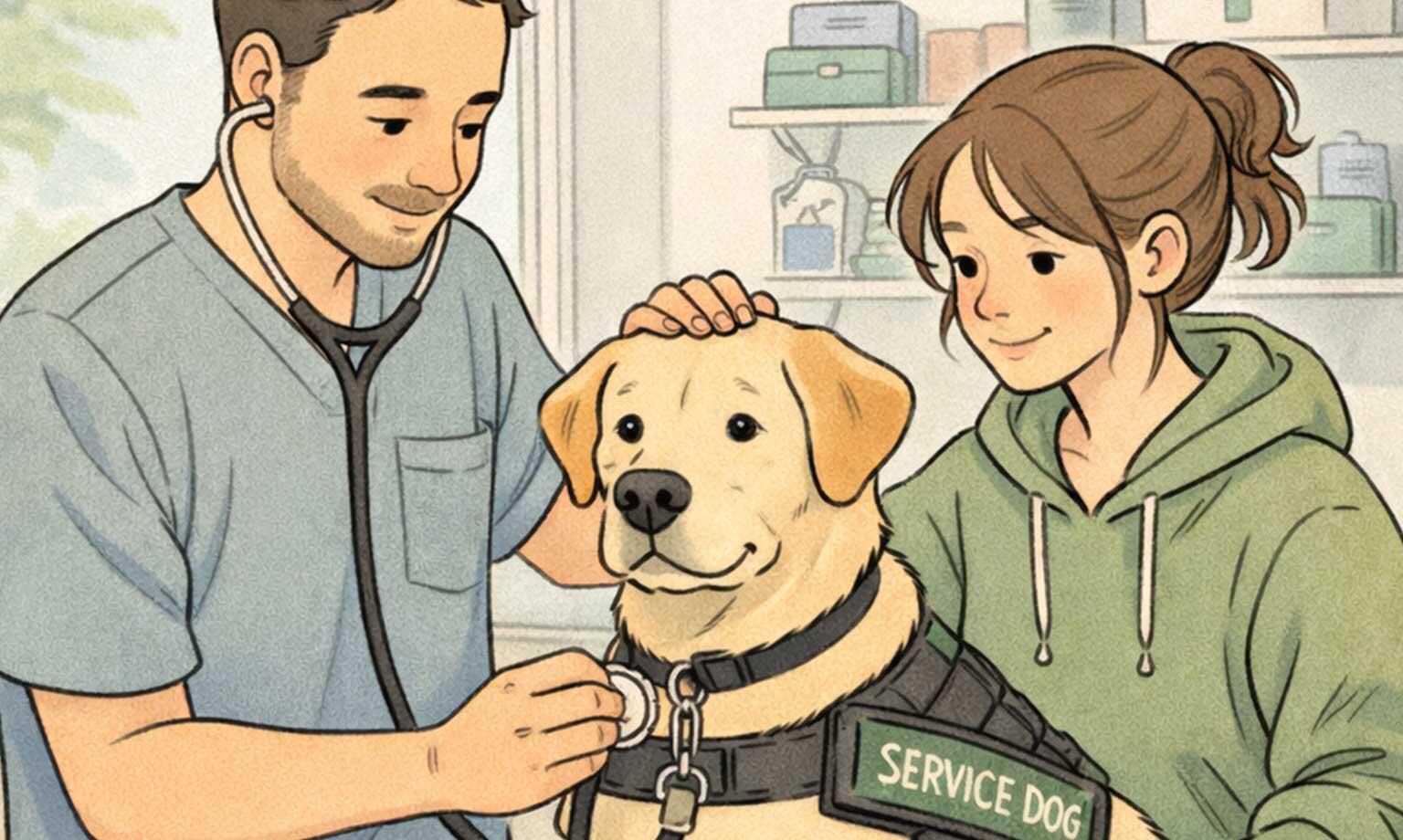
Travel is exciting, but it is also demanding. Long days, crowded terminals, new climates, and strange noises can be a lot for any dog, even an experienced service dog. Focusing on health, training, and welfare before you go protects your dog’s safety and performance, and it also protects you, because your independence depends on your dog being able to work comfortably.
A healthy dog travels better, copes with stress more easily, and recovers faster if something goes wrong. Before bigger trips - especially flights or international travel - it is wise to schedule a thorough check‑up and talk with your veterinarian about your itinerary. Key points to cover with your vet include:
Overall fitness and any chronic conditions that might be affected by heat, cold, altitude, or long travel days
Vaccinations, especially rabies, and whether booster timing needs to be adjusted to match entry rules
Parasite prevention (fleas, ticks, heartworm, intestinal worms), which is particularly important in warmer or rural destinations
Risks of sedation for flying or long car rides - most experts discourage routine sedation for air travel because it can affect breathing and balance at altitude
For international travel, many countries and airlines expect a recent veterinary health certificate confirming that the dog is healthy and free from contagious diseases, listing the examination date, rabies vaccine confirmation, and microchip information. Health certificates are often required within a specific time window (for example, within 10 days of travel) and may be checked both by airline staff and officials at your destination.
If you are crossing borders or returning to the United States, it is also important to check current import rules. The U.S. Centers for Disease Control and Prevention (CDC) maintain detailed guidance on “Traveling with Pets and Service Animals” in the Yellow Book (https://www.cdc.gov/yellow-book/hcp/family-travel/traveling-with-pets-and-service-animals.html) and on bringing dogs into the U.S. (https://www.cdc.gov/importation/bringing-an-animal-into-the-us/index.html).
These pages explain age limits, documentation, and rules for dogs coming from countries with higher rabies risk.
Strong training is what allows a service dog to stay calm in a noisy terminal, sleep through a red‑eye flight, and ignore the french fries under the airport seat. There is no single, legally mandated training program in the U.S., but several respected organizations have published minimum standards that are very helpful when preparing for travel.
Assistance Dogs International and the International Association of Assistance Dog Partners both suggest that an assistance dog should receive at least around 120 hours of training over six months or more, with at least 30 of those hours spent practicing in public places. This public training time focuses on working unobtrusively in real‑world environments - walking through crowds, waiting in lines, riding elevators, and navigating narrow aisles.
You can find additional information on the links bellow:
https://iaadp.org/membership/iaadp-minimum-training-standards-for-public-access/
https://assistancedogsinternational.org/resources/travel-and-public-access/
Public access tests are commonly used to check whether a service dog is ready to work safely in public. While not required by law, they offer a clear benchmark. Typical criteria include: no aggressive behavior toward people or animals, staying by the handler’s side without constant pulling, ignoring food on the floor, not soliciting attention from strangers, and remaining calm around sudden noises or distractions. A dog that easily passes this type of test is usually much better prepared for the added stresses of travel.
Some airlines and foreign carriers may ask for proof that a dog is trained, or for a certificate from an accredited training organization, especially on international routes.
For example, some European carriers describe “assistance dogs” as specially trained dogs that perform tasks for a person with an impairment and may require documentation of that training. Even when not strictly required, having your dog meet recognized training standards makes it easier to demonstrate that the dog is safe and appropriate for travel.
Even the best‑trained service dog can feel overwhelmed by travel days filled with lines, security checks, loud announcements, and cramped seating. Watching for stress signals and building in rest helps prevent burnout and behavior problems. Common signs of stress can include excessive panting in cool environments, yawning, lip licking, pinned‑back ears, a tucked tail, or suddenly refusing to move forward. More obvious signs might be shaking, whining, or trying to hide behind the handler. If these appear, it often helps to step to a quieter corner, offer water, and give the dog a chance to reset before pushing on.
From a health and disease‑prevention standpoint, it is also wise to be cautious about where your dog eats, drinks, and toilets during travel. The CDC notes that traveling animals can encounter new parasites, bacteria, and viruses, and that planning for safe food, water, and rest stops can reduce the risk of illness.
Their Yellow Book section on pets and service animals highlights the value of up‑to‑date vaccines and parasite control when visiting new regions (https://www.cdc.gov/yellow-book/hcp/family-travel/traveling-with-pets-and-service-animals.html)
If your dog has a bad day or seems unusually stressed, it is okay to scale back plans, shorten an outing, or take an early night at the hotel. Travel with a service dog is a partnership; protecting your dog’s welfare is also a way of protecting your own ability to enjoy the trip.
Packing well for a trip with a service dog is one of the easiest ways to make travel feel calm instead of chaotic. A good packing list keeps your dog comfortable, protects their health, and saves you from scrambling to find basics in unfamiliar places.

When you pack for a trip with a service dog, you are really packing for two: a human traveler and a working canine partner. Your dog needs the same things you do—food, water, medications, comfort items—and also the tools that let them do their job in busy, unpredictable environments. It helps to divide packing into four categories: essentials, health and safety, work gear, and comfort.
Everyday essentials are the non‑negotiables your dog needs to function and work: food, water, and basic equipment. Running out of any of these while traveling can turn a smooth trip into a stressful scramble.
Key items include:
Sufficient food for the full trip plus a small buffer (and a measuring cup or scoop)
Portable, lightweight food and water bowls
A sturdy primary leash and collar or harness with up‑to‑date ID tags
A backup leash and collar in case of breakage or loss
Waste bags and a small, sealable pouch for used bags until you find a trash can
Whenever possible, traveling with your dog’s regular food helps avoid stomach upsets. If you think you may need to buy food at your destination, taking a photo of the bag and writing down the exact brand, recipe, and size makes it easier to find or order the right product.
Health items deserve their own section in your packing plan. Having the right medications and basic first‑aid supplies on hand can prevent small issues from becoming trip‑ending emergencies.
Consider packing:
All prescription medications your dog needs, in original labeled containers
A copy of your dog’s prescriptions or a note from your vet listing drug names and dosages
Flea, tick, and heartworm preventives due during the trip
A simple pet first‑aid kit (bandage material, non‑adhesive pads, vet‑approved antiseptic, tweezers, tick remover if needed)
Any supplements your dog normally takes (joint support, probiotics, etc.)
It is often safest to divide critical medications into two sets: one in your carry‑on and one in checked luggage or another bag, so a single lost bag does not leave your dog without essential medicine. Keeping a list of nearby veterinary clinics or 24‑hour hospitals at your destination can also provide peace of mind.
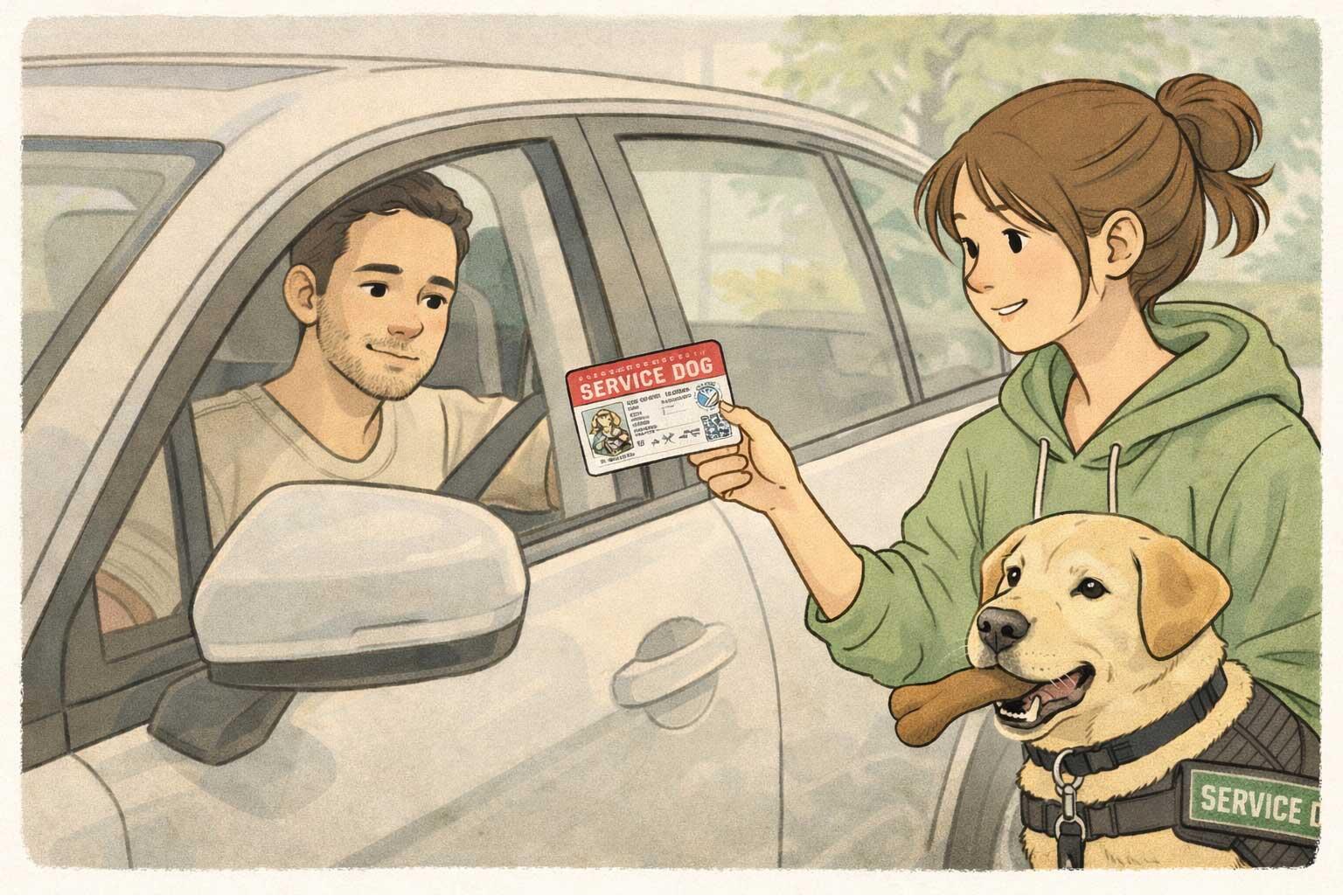
Work gear is what signals to your dog that it is time to focus and to other people that your dog is not a pet. While many places cannot legally require special vests or ID, having clear, professional equipment often reduces confusion and unwanted challenges.
Useful work gear may include:
Your dog’s usual working harness or guide dog harness
A comfortable, well‑fitting collar with ID tag and phone number
A visible vest or jacket identifying the dog as a service dog (even if not legally required)
Short and long leashes for different environments (crowds vs. open spaces)
Muzzle, if needed or required by local law (for example, in some countries or transit systems)
For air travel, work gear should also be compatible with airline rules. Many airlines state that service dogs must be leashed or harnessed at all times and must fit at the handler’s feet without blocking the aisle. Choosing gear that allows the dog to lie comfortably in a small footprint makes flights and gate waits easier.
Even the most focused service dog needs downtime. Bringing a few comfort items from home helps your dog relax in hotel rooms, rentals, and other unfamiliar spaces, which also helps them recharge for the next working day.
Comfort items can include:
A familiar mat, blanket, or small bed that carries home scents
A couple of favorite chew or enrichment toys (durable, non‑squeaky options are best for hotels and planes)
A lick mat or food puzzle to use during long waits or evenings in
A lightweight sheet or blanket to protect hotel bedding if your dog is allowed on the bed off duty
If your dog is sensitive to noise, a white‑noise app or small travel fan can help mask sounds in hotels or busy city environments. For dogs that are easily overstimulated, having a designated “place” they know well - a mat or bed you use consistently at home - gives them a mental anchor.
Weather and terrain change quickly when you travel, and your dog’s paws, coat, and overall comfort need to keep up. Packing for climate makes it easier to protect your dog from heat, cold, ice, or rough surfaces.
Depending on your destination and season, consider:
Paw protection: booties for hot pavement, ice, snow, or rough trails
Cooling gear: a cooling vest or bandana and a collapsible water bottle for hot climates
Warmth: a fitted dog coat or sweater for cold or wet weather
Paw balm for dry, cracked pads in very hot, cold, or dry environments
A small microfiber towel for rainy days, beach trips, or muddy trails
In hot climates, planning for early‑morning or evening walks and carrying extra water is as important as any physical gear. In very cold or icy locations, booties and a warm coat can make the difference between a quick, functional potty break and a miserable, painful outing.
Category | Key items |
|---|---|
Essentials | Food, bowls, leash, backup leash, collar/harness, ID tags, waste bags |
Health & meds | Prescriptions, preventives, first‑aid kit, vet contact info, copies of medical records |
Work gear | Harness, vest, primary and secondary leashes, muzzle (if required), ID tag |
Comfort & rest | Mat or bed, toys, chew items, sheet/blanket for hotel, white‑noise source if helpful |
Weather & terrain | Booties, cooling vest or bandana, coat/sweater, paw balm, towel |
Air travel with a service dog can be empowering, but it also comes with extra rules, forms, and expectations. This section walks through airline policies, what most passengers actually experience, and what to do if an airline says “no.”
In the United States, air travel with a service dog is governed by the Air Carrier Access Act (ACAA) and the U.S. Department of Transportation’s (DOT) service animal rules. Under these rules, airlines must accept dogs that are individually trained to do work or perform tasks for a person with a disability, including psychiatric service dogs, but they can treat emotional support animals as pets. Airlines are allowed to require DOT service animal forms that confirm your dog’s health, behavior, and training, and they can refuse animals that are aggressive, out of control, or too large to fit in the handler’s foot space.
The DOT’s official service animal page and forms are available at:
https://www.transportation.gov/resources/individuals/aviation-consumer-protection/service-animals
Most major U.S. airlines follow the same basic federal rules, but each has its own service animal page and process for submitting forms. In general, service dogs travel in the cabin for free, must fit at your feet or on your lap if small, and must remain leashed or harnessed and under control at all times. Emotional support animals are no longer treated as service animals and instead fall under pet policies, including fees and carrier requirements.
Here is a quick overview of several big U.S. airlines and their current service dog policies:
Airline | Policy highlights (service dogs) | Policy page (copy link as is) |
|---|---|---|
American Airlines | Allows trained service dogs in the cabin for free; requires DOT Service Animal Air Transportation Form; dog must fit at passenger’s feet or lap and cannot block aisles or sit in a seat. ESAs are treated as pets. aa+1 | https://www.aa.com/i18n/travel-info/special-assistance/service-animals.jsp |
Delta Air Lines | Accepts trained service dogs in cabin; requires DOT forms and advance submission; dog must remain under control and fit in the floor space at the handler’s feet. delta | https://www.delta.com/us/en/accessible-travel-services/service-animals |
United Airlines | Allows trained service dogs in cabin; requires DOT forms and, for many international routes, compliance with CDC dog import rules; dogs must fit in the foot space and may not sit in seats or block aisles. united+1 | https://www.united.com/en/us/fly/travel/accessibility-and-assistance/service-animals.html |
Most airlines ask you to submit the DOT Service Animal Air Transportation Form at least 48 hours before departure if you booked in advance. The DOT has clarified that if a passenger fails to submit the form in time, the airline must still make reasonable efforts to accommodate the team rather than automatically refusing transport, although this can lead to delays at the airport.
In day‑to‑day passenger experiences, many teams report smooth flights when documents are submitted early and behavior standards are clear. The most common frustrations include staff who are unaware of current rules, inconsistent enforcement between airports, and confusion when connecting between different airlines or countries. Having copies of your forms, policy pages, and key links saved on your phone often helps resolve misunderstandings quickly.
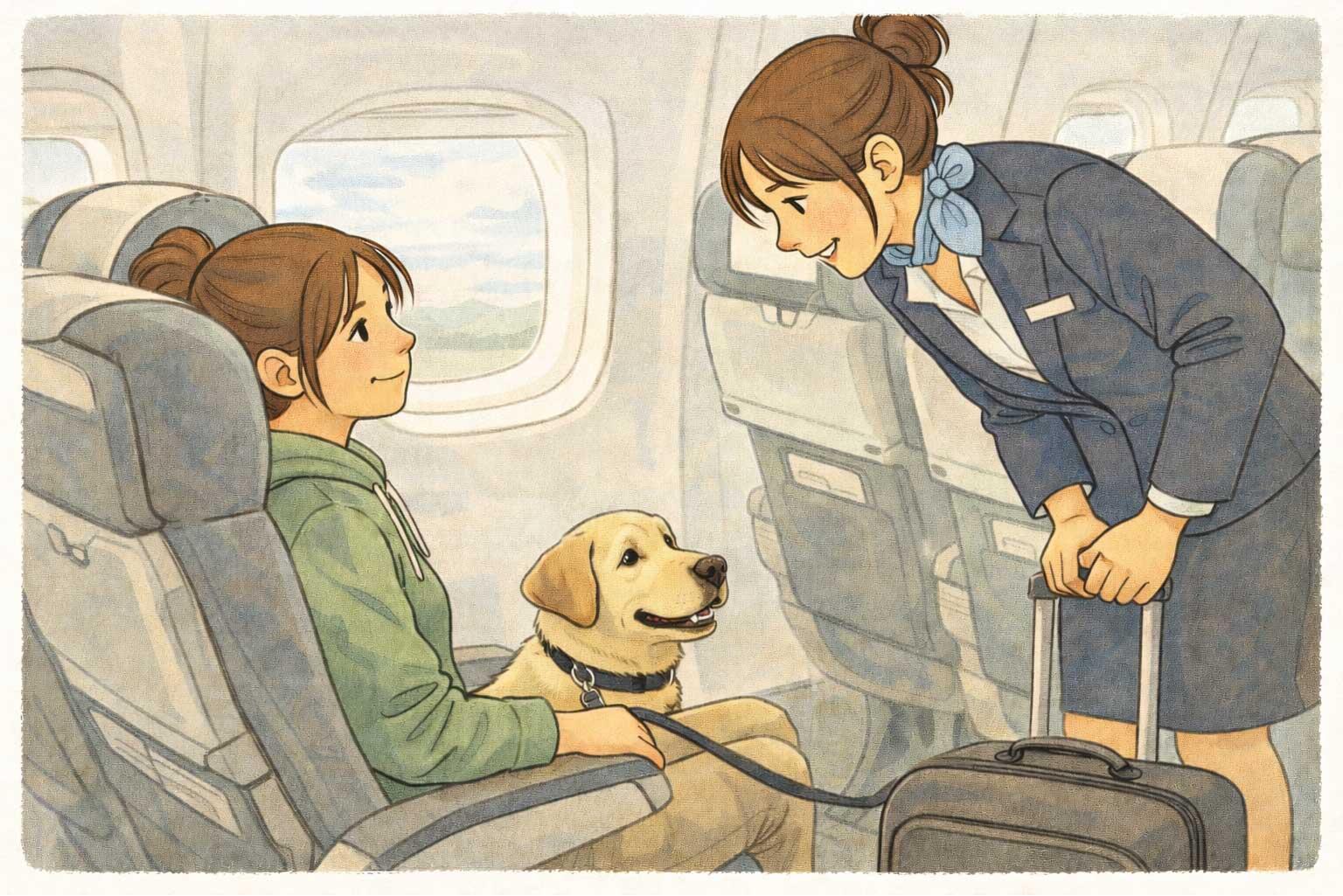
When everything goes well, flying with a service dog can feel surprisingly routine. Check‑in agents review your DOT form, security officers guide you calmly through screening, and gate agents allow pre‑boarding so you and your dog can settle into your space without being jostled by crowds. Many handlers describe positive interactions with crew members who offer water, ask respectful questions, and quietly make sure you are comfortable without drawing unwanted attention.
The more challenging experiences tend to fall into a few patterns: staff who confuse service dogs with emotional support animals, requests for “certification” that is not required by federal rules, sudden claims that a dog is “too big” despite previously accepted documents, or gate agents who are not familiar with psychiatric service dogs. Turbulent flights, long delays, and missed connections can add extra stress, especially when access to relief areas is limited. Clear knowledge of your rights, a calm explanation, and a copy of airline and DOT policies can make these bumps easier to handle.
Outside the United States, airlines often use the term “assistance dog” rather than “service dog,” and they may apply slightly different documentation and training expectations. Many carriers still allow trained assistance dogs to travel in the cabin free of charge, but they may require advance registration, proof of training, and compliance with destination‑country rules.
Examples include:
Lufthansa (Germany): Lufthansa states that assistance dogs can travel in the cabin free of charge if requirements are met and typically must be registered at least 48 hours in advance. On flights involving the United States, Lufthansa aligns with DOT rules and allows up to two assistance dogs per passenger who meets disability criteria.
Official info: https://www.lufthansa.com/us/en/assistenzhunde
Other European and international carriers: Many European airlines treat assistance dogs differently from pets and allow them to travel in the cabin, usually with proof that the dog is specially trained to perform tasks for a disabled person. Policies may differ for routes touching the U.S. (where DOT rules apply) versus purely intra‑European or international routes, so it is important to read both the “assistance/guide dog” section and the general pet travel page for each airline.
Non‑U.S. airlines may also be more likely to require documentation from an accredited training organization, especially for guide dogs and hearing dogs, and may limit which types of owner‑trained dogs qualify as “assistance dogs.” Because these conditions can vary, it’s best to check your airline’s official “assistance dogs” or “special assistance” page for the most accurate, up-to-date details.
Even well‑prepared teams sometimes face airline refusals. Common reasons include missing or incomplete DOT forms, dogs that appear aggressive or out of control, dogs that are too large to fit safely in the assigned space, or staff confusion about laws and policies. Knowing what is legitimate - and what is not - helps you respond calmly and effectively.
Under current U.S. DOT rules, airlines may not deny transport to a service dog solely because of breed. If an airline cites a “pit bull ban” or similar rule as the only reason, that may conflict with federal guidance, and you can request a supervisor and reference the DOT’s service animal page at https://www.transportation.gov/resources/individuals/aviation-consumer-protection/service-animals.
Yes. Airlines are allowed to refuse service dogs that show aggressive or disruptive behavior, such as repeated uncontrolled barking, lunging, or biting, or dogs that are not housebroken. They can also require that the dog be leashed or harnessed and remain under control at all times.
Airlines may require the DOT Service Animal Air Transportation Form and, on long flights, a Relief Attestation Form, submitted up to 48 hours in advance if the reservation was made earlier. However, DOT guidance says that if a passenger did not submit the form in time, the airline must still make reasonable efforts to accommodate the passenger and may not automatically deny transportation solely for that reason, though processing at the airport may take longer.
If you believe your service dog was wrongfully refused:
Stay calm and ask politely to speak with a supervisor or the airline’s complaint resolution official (CRO), if available.
Show copies of the DOT rules and the airline’s own service animal policy page.
Ask staff to clearly state their reason for refusal and note names, times, and any written notes.
If the issue is not resolved at the airport, you can file a formal complaint with the U.S. Department of Transportation using the online form on the DOT’s aviation consumer protection site: https://www.transportation.gov/airconsumer/file-consumer-complaint
Advocacy resources and legal guides on flying with service animals, such as the ADA National Network’s “Flying With a Service Animal” (https://adata.org/service-animal-resource-hub-flying), provide additional plain‑language explanations and examples of when refusals are lawful or discriminatory.
For most teams, flying with a service dog becomes much less intimidating once the big pieces are clear: dogs trained to perform tasks for a disability are recognized as service animals; emotional support animals are not. Airlines can require DOT forms, enforce behavior and size standards, and refuse dogs that are unsafe, but they cannot demand special certifications or deny access based purely on breed.
Combining early paperwork, careful seat selection, good training, and a solid understanding of your rights creates the conditions for calm, predictable flights. When problems arise, knowledge and documentation are your best tools: they help you advocate for yourself and your dog in the moment and, if necessary, file effective complaints later so future trips are smoother - for you and for other service dog teams.
Road trips with flexible stops or a steady train gliding through countryside offer breathing room that airports rarely match. Under the ADA, U.S. public transit like buses and trains must allow service dogs without fees, leashed and under control. Private options like rideshares follow similar rules with company policies supporting access. This section covers policies and practical tips to make every journey smoother.
Car travel gives you complete flexibility - no lines, adjustable stops, and climate tailored to your dog. It's ideal for building confidence on longer hauls.
Safety essentials: Use a crash-tested harness like Sleepypod Clickit or a secured crate; avoid loose riding.
Comfort tips: Cooling mats for heat, ginger chews for motion sickness; practice short drives first.
Stop strategy: Apps like BringFido map dog-friendly parks every 2-3 hours; pack enzymatic cleaners.
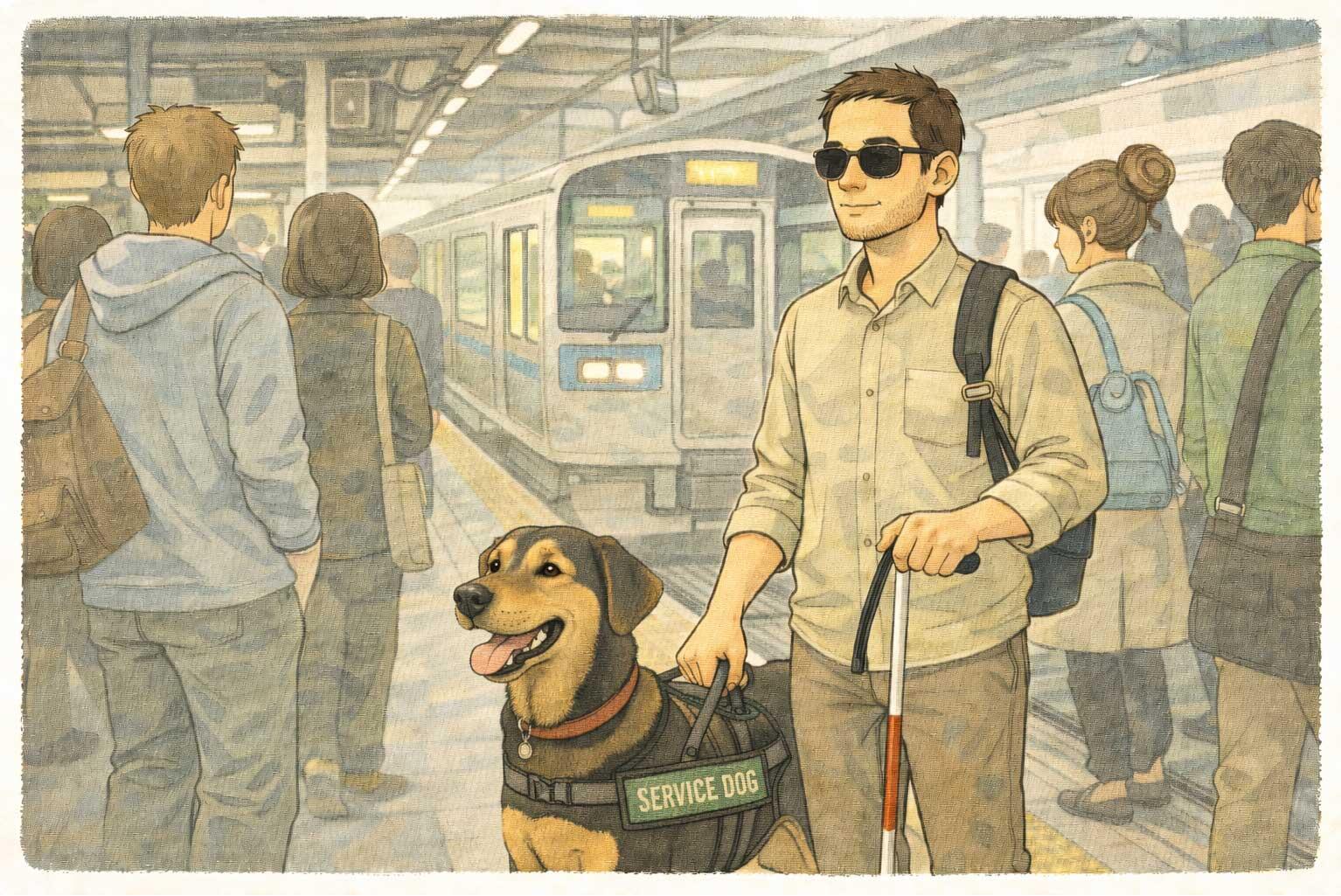
Amtrak welcomes service dogs in all passenger areas, no fees or reservations needed beyond standard ticketing (check amtrak.com/service-animals). Greyhound allows trained service dogs meeting ADA standards - under seat or lap, housebroken. Local buses offer priority seating.
Mode | Policy Summary (U.S.) | Quick Tip |
|---|---|---|
Amtrak | Full access, no fees; leashed | Book SAS for legroom online |
Greyhound | Service dogs only; well-behaved | Front seats for space |
City Bus | ADA priority seating, free | Visible vest aids quick boarding |
Uber and Lyft require drivers to accept service dogs - no denials for allergies or fears (see uber.com/us/en/about/accessibility/service-animal-user-guide). Taxis in regulated cities like NYC must comply.
App steps: Select "Assistance animal" option; upfront note keeps rides smooth.
Pro etiquette: Seat cover sheet, good tips for positive ratings.
U.S. ferries follow ADA for free access; cruises like Royal Caribbean allow trained service dogs in public areas, leashed, with advance notice (royalcaribbean.com/experience/accessible-cruising/service-animals).
No pools/spas; relief areas provided.
Ferry tip: Head topside for breezes; confirm schedules.
Cruise prep: Notify accessibility desk early; check port rules.
Hydration hack: Tethered bowl for spill-free drinks.
Calm kit: Lick mats, pheromone collars for waits.
Apps: Roadtrippers for parks, Transit for schedules, CruiseMapper for layouts.
Bond tip: Soft narration reinforces focus.

The ADA provides your nationwide access rights to businesses and public spaces, but U.S. states layer on additional protections, penalties, or details. These never override federal law - they clarify enforcement, address fakers, or extend rights like access for dogs in training. Grouping by key features helps you quickly spot what matters for your trip. For complete statutes and updates, use the Animal Legal & Historical Center's comprehensive table: https://www.animallaw.info/topic/table-state-assistance-animal-laws.
Over 30 states now penalize misrepresenting a pet as a service dog, typically with civil fines ($250–$1,000+) or criminal misdemeanors for repeat offenses. This discourages vests on pets and protects legitimate teams from skepticism.
State | Penalty Type | Fine Amount / Notes |
|---|---|---|
Texas | Misdemeanor | Up to $1,000 fine or 1 year jail |
Florida | Misdemeanor (3rd degree) | Up to $500 fine and/or 60 days jail |
California | Infraction / Misdemeanor | $250–$1,000 civil; misdemeanor for repeats |
New York | Civil penalty | Up to $1,000 per violation |
Illinois | Civil / Criminal | $250–$2,500; double damages in lawsuits |
Nevada | Misdemeanor | Up to $1,000 fine or 6 months jail |
Utah | Infraction | Up to $995 fine |
Virginia | Class 3 misdemeanor | Up to $500 fine |
About 15 states offer voluntary ID programs - tags, cards, or certificates issued after vet records or training proof. Businesses cannot require them under ADA, but handlers often carry them for easy conversations.
State | Program Details | How to Obtain |
|---|---|---|
Missouri | "Service Dog" tag from county clerk | Vet certification + application fee (~$25) |
Ohio | Optional state registry card | Training proof + $25 fee |
Virginia | DCJS Service Dog ID card | Training organization or self-certify |
New York | Municipal tags in some cities | Local animal control + vet records |
Colorado | Some counties issue "service dog" tags | Varies by locality; voluntary |
Indiana | Lifetime license tag | Vet exam + training affidavit |
Several states grant public access to service dogs in professional training and strengthen housing or taxi rights beyond federal minimums.
State | Expanded Rights | Key Details |
|---|---|---|
California | Dogs in training get full access | With professional trainer present |
Colorado | Dogs in training + stronger housing rules | No pet fees/deposits explicitly banned |
Florida | Dogs in training access | Trainer must carry liability insurance |
New York | Housing + dogs in training | Covers minis too; no extra housing fees |
Washington | Robust housing protections | Emotional support in housing (not public) |
Oregon | Dogs in training + taxi access | Taxis cannot refuse service dogs |
Massachusetts | Dogs in training rights | Public access when with qualified trainer |
Federal ADA rights always apply - no state can limit access to businesses or public areas. Use state extras to anticipate penalties or grab optional IDs.
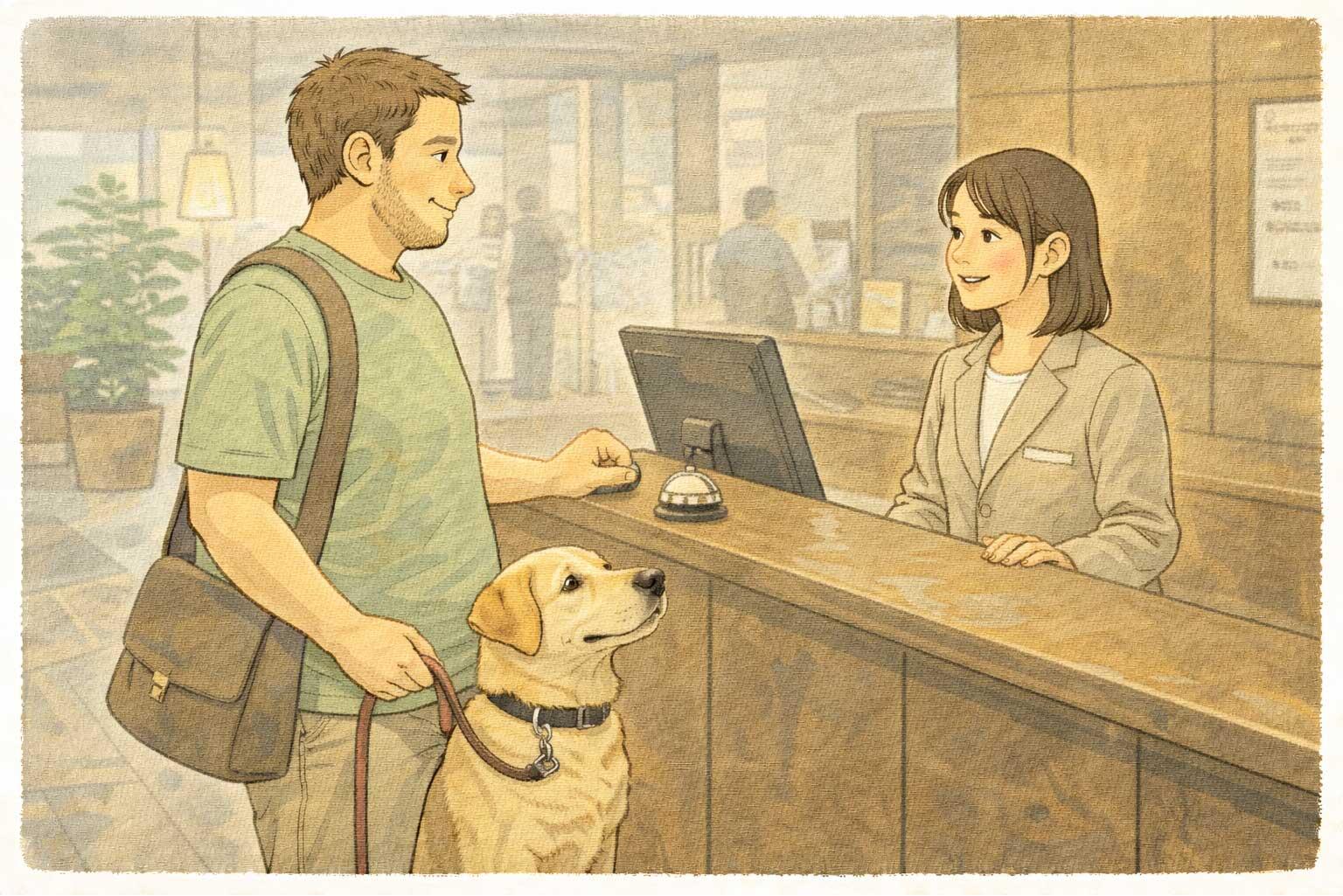
Staying somewhere comfortable and enjoying local spots without hassle makes any trip feel like a true getaway. Hotels, rentals, and attractions must follow ADA rules for service dogs, so focus on smooth check-ins and fun outings - your dog belongs there just like you do.
Hotels cannot charge pet fees for service dogs or treat them as pets, even with "no pets" policies. Service dogs get access to rooms and public areas like lobbies, poolsides (not in pools), and restaurants. They can only charge for actual damages beyond normal wear.
Check-in tips: Mention your service dog when booking; bring vaccination records if asked (not required by ADA).
Airbnb/VRBO: Hosts must allow service dogs in entire-home rentals; disclose early to avoid surprises.
Housekeeping: Expect daily cleaning but cover your dog's mat or bed to protect linens.
For official ADA hotel guidance, see https://www.ada.gov/resources/service-animals-faqs/.
Handler note:
A Connecticut Comfort Inn settled with the U.S. Attorney’s Office after denying a guest due to their service dog, paying damages and training staff.
Service dogs go anywhere the public does - dining rooms, patios, bars, restrooms (not kitchens). Staff can ask the two ADA questions but cannot demand proof or exclude well-behaved dogs.
Venue Type | Access Rules | Pro Tip |
|---|---|---|
Indoor dining | Under table, leashed | Practice "place" stays at home eateries |
Outdoor patios | Full access, even "pet-friendly" zones | Arrive early for space |
Bars/Buffets | Same as dining; avoid food solicitation | Mat keeps dog settled near high-traffic |
Restaurants confirm service dogs rarely cause issues - trained teams stay calm around dropped food.

Museums, zoos, theaters, and parks welcome service dogs in public areas. Some sites (beaches, pools) have health rules excluding all animals, but service dogs often get exceptions.
Theme parks: Disney, Universal allow service dogs everywhere guests go (no rides if safety risk).
Beaches/parks: Leashed access; carry water for hot sand.
Museums/historic sites: Quiet halls suit settle training perfectly.
Handler note: Handlers report smooth museum visits when dogs ignore crowds, turning outings into relaxed explorations.
Pet fee pushback: Politely remind staff of ADA (https://www.ada.gov/resources/service-animals-2010-requirements/); ask for manager.
"Proof" demands: Only two questions allowed.
Damages: Normal shedding isn't chargeable; deep cleaning for accidents is.
Hotels violating ADA face fines or lawsuits - knowledge keeps your stay stress-free.
International travel with a service dog adds extra layers - border rules, health paperwork, airline policies in multiple countries - but it also opens doors to beaches, historic cities, and family visits you might not reach otherwise. This section focuses on popular destinations for U.S. travelers and the documents you and your dog will likely need.
Canada and Mexico are two of the most common first international trips for U.S. service dog teams because flight times are manageable and entry rules, while detailed, are relatively straightforward.
For Canada, you will generally need:
Proof of current rabies vaccination
A health certificate may be requested depending on airline/route
Microchip is highly recommended
Canada has national guidance on service dogs and accessibility, including “Service dogs: A guide” from the Canadian Transportation Agency:
https://otc-cta.gc.ca/eng/publication/service-dogs-a-guide
For Mexico and many Caribbean-adjacent routes, expect:
Rabies vaccination proof
Sometimes an official health certificate within a specific time window
Possible inspection on arrival by agricultural or health officials
The CDC’s Yellow Book “Traveling with Pets and Service Animals” gives an excellent overview of cross-border health and documentation expectations:
https://www.cdc.gov/yellow-book/hcp/family-travel/traveling-with-pets-and-service-animals.html
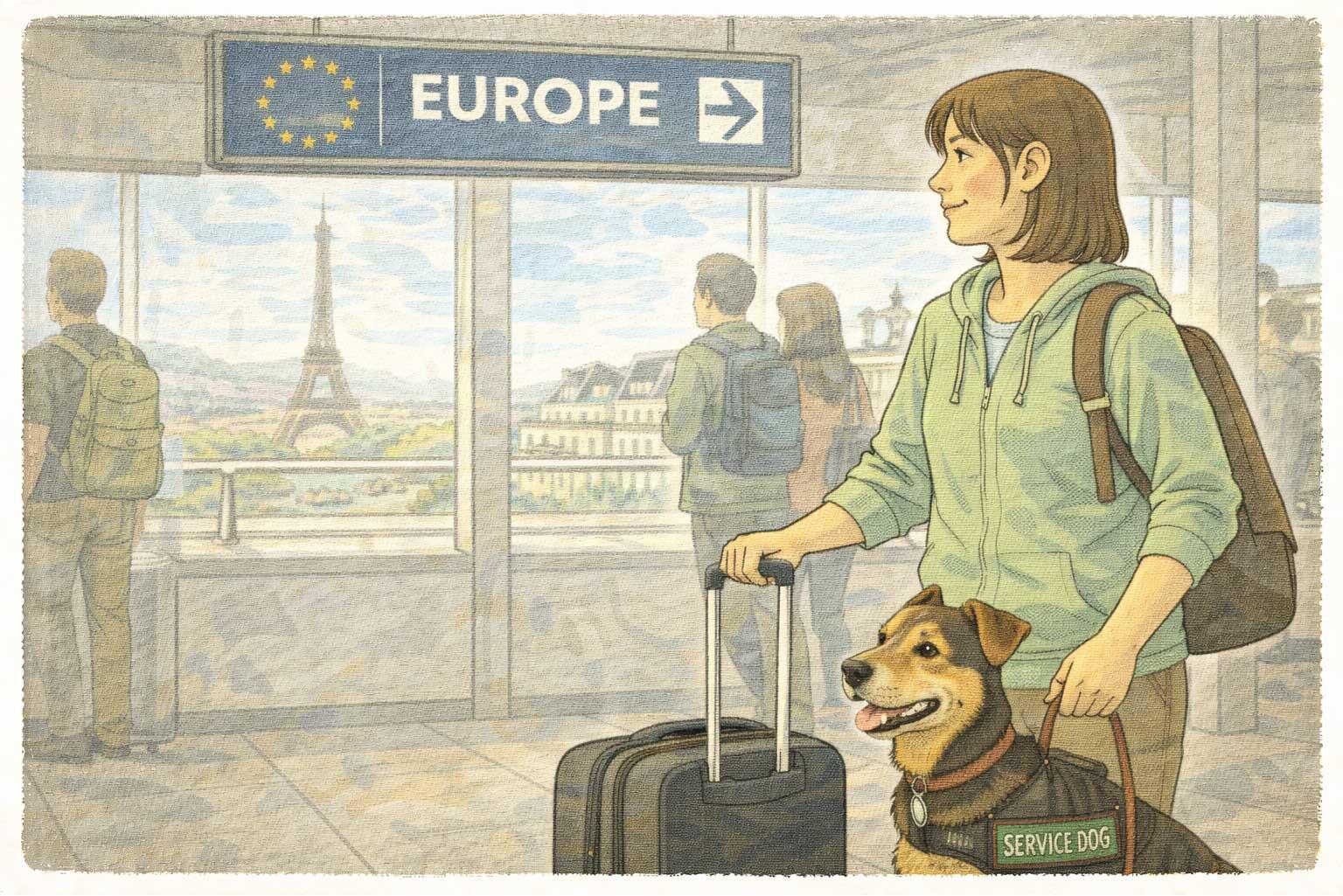
Many U.S. travelers dream of visiting London, Paris, Rome, or Barcelona with their service dog. The UK and EU treat dogs under “pet travel” frameworks with extra consideration for assistance dogs.
Generally, for UK/EU travel you will need:
ISO-compliant microchip
Current rabies vaccination (with specific timing before entry)
Official health certificate or pet passport equivalent
In some countries, tapeworm treatment within a specific time before arrival
Because requirements and forms can change, it is important to check official government “pet travel” portals for each country you plan to enter or transit. A useful high-level guide to international service dog travel (including UK/EU) is: https://www.servicedogtrainingschool.org/blog/requirements-traveling-service-dog-internationally
For step-by-step planning, Mobility International USA offers “10 Steps to Bring Service Animal or Guide Dog to Another Country”: https://miusa.org/resource/tip-sheets/10steps/
Popular resort destinations like Cancun, the Riviera Maya, the Bahamas, Dominican Republic, and Jamaica often combine strict agricultural rules with tourist-focused infrastructure.
Typical requirements include:
Rabies vaccination and recent health certificate
Possible parasite treatment documentation
Country-specific veterinary forms or permits
Because resorts may add their own rules (for example, where dogs can walk on the property or whether they can join certain excursions), it helps to:
Check the country’s agriculture or health ministry website for “animal import” or “pet entry” instructions
Check your resort chain’s accessibility or pet/service animal policy page
The CDC again provides broad region-specific cautions on disease risk and vaccination planning: https://www.cdc.gov/yellow-book/hcp/family-travel/traveling-with-pets-and-service-animals.html

Japan and Australia are favorite bucket-list destinations for many, but both are known for some of the strictest animal import rules in the world.
Japan often requires:
Advance notification to quarantine services
Microchip and rabies vaccination
Rabies antibody titer test
Possible quarantine on arrival depending on origin and timing
Australia typically requires:
Pre-approval import permits
Specific rabies titers and waiting periods
Pre-departure treatments and inspections
A mandatory quarantine period on arrival
Because these processes can take months to a year from first vaccination to approved entry, long lead times are essential. A clear, up-to-date overview of common requirements is here:
https://www.servicedogtrainingschool.org/blog/requirements-traveling-service-dog-internationally
For any trip that involves leaving and re-entering the United States with a dog, check current CDC dog import rules and online forms (especially if coming from or transiting high-risk rabies countries):
General import page: https://www.cdc.gov/importation/bringing-an-animal-into-the-us/index.html
Dog import form and instructions: https://www.cdc.gov/importation/dogs/dog-import-form-instructions.html
Planning international service dog travel is more paperwork-heavy than domestic trips, but once you have the timelines and documents organized, the rest of the journey looks much more like any other vacation - just with a trusted partner at your side in every new country.
Denied entry at a door or gate is stressful, but knowing your rights and next steps makes a huge difference. Under the ADA, businesses may only ask if the dog is required because of a disability and what tasks it performs; they cannot demand documentation or deny access just because they “don’t allow dogs.” Airlines follow the Air Carrier Access Act and DOT rules, which allow them to require standard service animal forms and to exclude dogs that are unsafe or too large to fit in the handler’s space.
If you are refused service or boarding, calmly ask to speak with a manager or, at airports, the airline’s Complaint Resolution Official (CRO), and briefly restate your rights. If the issue is not resolved, you can later file a complaint with the U.S. Department of Transportation for airline issues (https://www.transportation.gov/airconsumer/file-consumer-complaint) or with the U.S. Department of Justice or local civil rights agencies for ADA violations. Many handlers report that simply mentioning the relevant law and offering to show the ADA or airline policy page often leads to a quick, quiet resolution on the spot.
A service dog’s job is demanding; travel amplifies those demands with long days, crowds, and new environments. The CDC emphasizes that traveling animals face additional stress and disease exposure, and recommends planning for regular rest, safe food and water, and gradual acclimation to hot or cold climates. Short decompression walks, predictable feeding times, and built‑in “off‑duty” periods in a quiet hotel room or rental help dogs recharge so they can keep working reliably.
Common stress signs include excessive panting in cool spaces, yawning, lip licking, pinned ears, refusal to move, or clinginess. When these appear, handlers often find that pausing in a quieter corner, offering water, and giving the dog a short break on a familiar mat works better than pushing through. Handlers who wrote about “vacationing with a service dog” frequently mention that their best days came when they consciously scheduled dog breaks between sightseeing blocks instead of trying to see everything.
Emergencies on the road can involve either the handler or the dog, so planning for both is part of responsible travel. The CDC advises travelers to identify local veterinary clinics and 24‑hour hospitals at their destination in advance, and to carry copies of vaccination records, medication lists, and any chronic condition summaries. Keeping at least a few days of extra medication in a separate bag, plus a basic first‑aid kit, helps if luggage is lost or travel is unexpectedly extended.
If the handler is hospitalized, a written plan for who can temporarily care for the dog (family, local friend, or boarding facility) is extremely helpful. For international trips, knowing how to contact your embassy or consulate and the local equivalent of emergency services ensures that you are not trying to search for information in a crisis. Experienced handlers often describe feeling far more relaxed once they have a “what‑if” document in their phone: vet contacts, hotel address, emergency numbers, and a brief note about the dog’s needs.
Ethics and etiquette are not just about being polite; they shape how businesses and the public perceive all service dog teams. The ADA and DOJ stress that service dogs must be under control, housebroken, and not pose a safety threat; handlers must remove a dog that is out of control and not corrected or that soils indoors. Maintaining high training standards, cleaning up promptly after your dog, and avoiding unnecessary confrontation preserves goodwill and makes it easier for the next team who walks through that door.
A major ethical issue is the rise of fake or poorly trained “service dogs” wearing online vests, which many disability advocates argue leads to more scrutiny and refusals for legitimate teams. Several states now impose fines or criminal penalties for misrepresentation, reinforcing that calling a pet a service dog is not a harmless shortcut. Many experienced handlers also ask the public to follow simple etiquette: do not pet or distract a working dog, speak to the handler rather than the dog, and teach children to admire from a distance unless the handler clearly invites interaction. These small acts of respect make travel and daily life smoother for teams everywhere.
Quick answers to the most common service dog travel questions, plus ready-to-use checklists to make planning effortless.
Do I need special certification or ID for my service dog?
No, under ADA rules, no certification, vest, or ID is legally required for public access. However, a vest or ID can help clarify to staff and the public that your dog is a working service animal, which may reduce confusion, questions, and delays. Just remember these items are optional and don’t grant legal rights on their own - the dog’s trained task(s) and your access rights under the ADA are what matter. Airlines may require DOT forms. Link to ADA FAQ: https://www.ada.gov/resources/service-animals-faqs/.
Can hotels charge pet fees for service dogs?
No service dogs are not pets. They can charge only for actual damages. ADA hotel guidance: https://www.ada.gov/resources/service-animals-2010-requirements/.
What if my service dog is too big for airplane foot space?
Airlines can deny if the dog blocks aisles/exits or won't fit at your feet. Request bulkhead seats early.
Are emotional support animals the same?
No - ESAs get no public access or airline service animal rights; treated as pets.
International: Do I need a pet passport?
Often yes (microchip + rabies + health cert). Check CDC: https://www.cdc.gov/yellow-book/hcp/family-travel/traveling-with-pets-and-service-animals.html.
What if denied access?
Ask for manager, cite ADA/DOT, file complaint: https://www.transportation.gov/airconsumer/file-consumer-complaint.
Pre-Trip Planning (Download or make a PDF print-ready file)
Research destination rules (gov sites)
Vet visit: rabies, health cert, microchip
Airline forms (DOT Air Transportation + Relief)
Backup docs: digital + paper folder
You've got the roadmap - now pack your docs, practice those cues, and hit the road (or skies) with your service dog. Download the checklists from Section 15, bookmark key links like ADA.gov and DOT forms, and start planning that first trip today. Safe travels; the world is waiting for you both.
Your trusted source for service animal registration. Get professional ID cards, digital profiles, and smart NFC tags to keep your service animal safe and recognized.
© National Animal Registry — All rights reserved.