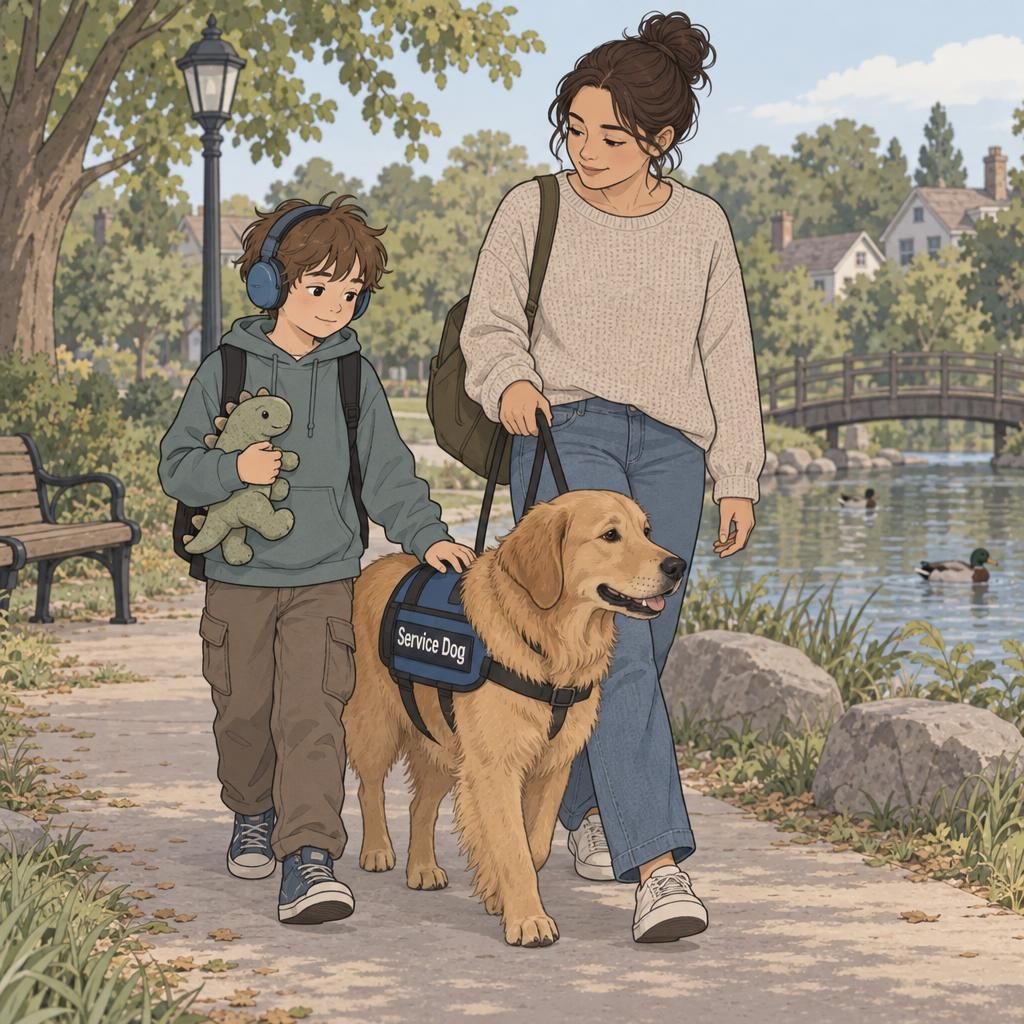

A service dog can be an important partner in an employee’s workday. Rather than simply accompanying someone to the office, a service dog is trained to perform specific tasks related to that person’s disability. Those tasks may help the employee move through the workplace, respond to important sounds, manage disability-related symptoms, or complete everyday activities more independently.
The distinction between task-based assistance and emotional support matters. A dog’s companionship can be comforting, but emotional support alone is different from a trained action that addresses a disability-related need. For example, a dog trained to interrupt a panic response performs a specific task; a dog whose presence simply makes someone feel calmer provides a different kind of support.
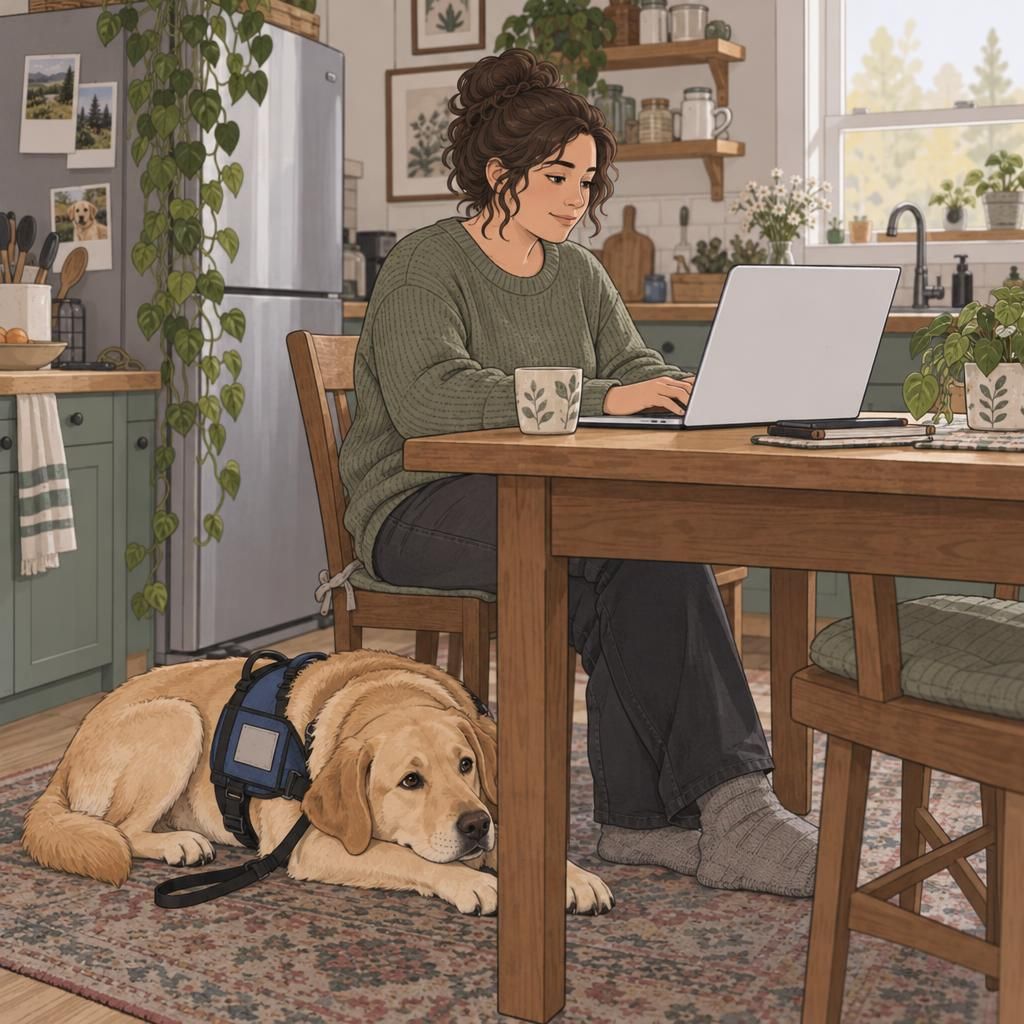
At work, much of a service dog’s contribution may be quiet and easy to overlook. The dog might rest beside a desk until needed, retrieve something without drawing attention, or respond to a handler’s cue. Understanding that role helps coworkers see the dog as a working partner rather than an office pet.
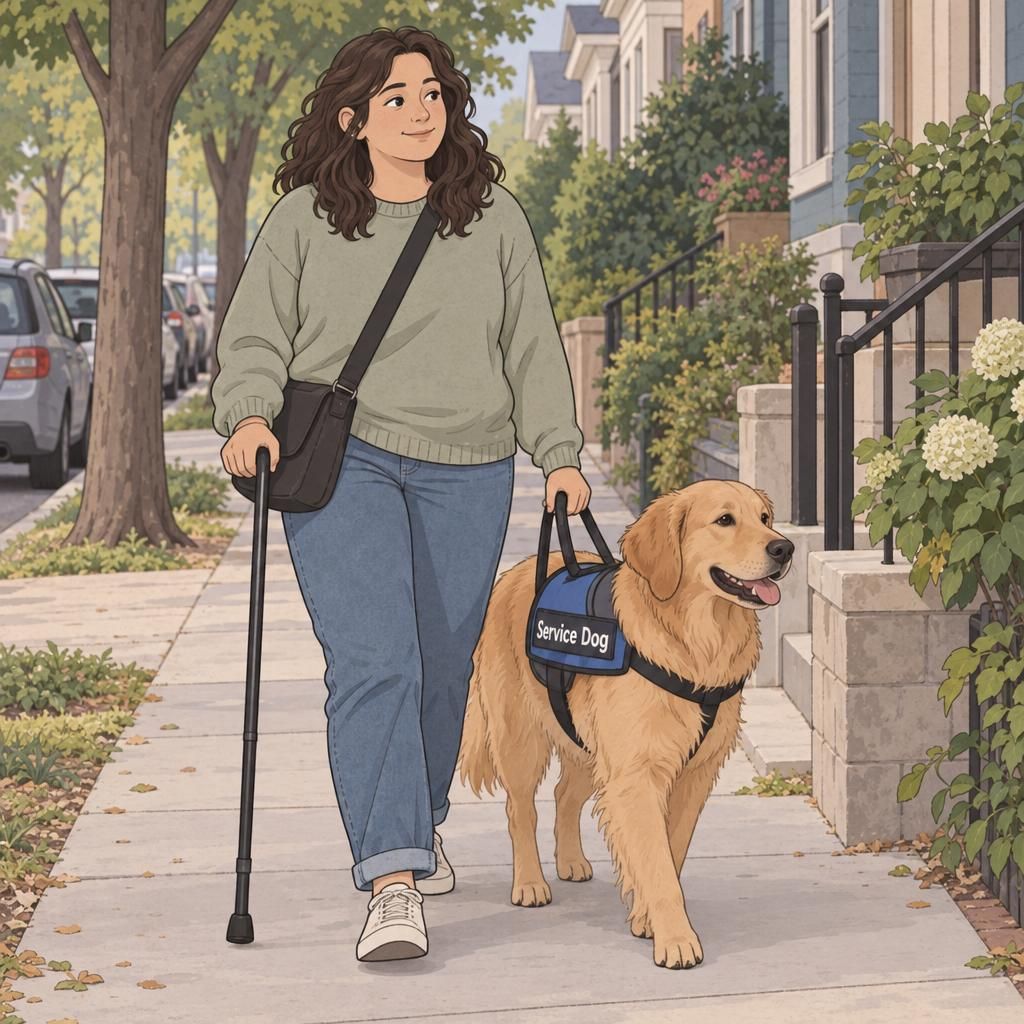
Physical assistance can make ordinary workplace activities more manageable. Depending on the employee’s disability and the dog’s training, tasks may reduce the need to bend, reach, navigate obstacles without assistance, or rely on someone else to notice an important sound. These small moments can add up across a full workday.
These examples illustrate how trained assistance can support independence and safety. The provided source offers context on service dog tasks and the potential role of dogs in work-related functioning and social support. The practical value of any task depends on the employee’s needs and the setting where it is performed.
A service dog should fit into a broader workplace safety plan. Clear routes, accessible equipment, and agreed-upon emergency procedures remain important. The goal is to make the employee’s workday easier without expecting the dog to replace workplace safeguards or perform tasks outside its training.

Service dogs can also perform tasks related to psychiatric disabilities and other disability-related needs. This assistance is not defined by a diagnosis alone. What matters is the specific action the dog is trained to take and how that action helps the individual handler.
For one employee, a dog may interrupt an escalating panic response with a trained nudge or another practiced behavior. For another, a dog may provide grounding through a trained contact response. Some dogs help create space in crowded areas by taking a particular position near their handler, making a busy hallway or shared area easier to navigate.
Other tasks may support sensory regulation, transitions between activities, or disability-related reminders. A dog may also be trained to wake a handler from nightmares, although that task generally relates to sleep rather than ordinary office activity. The mix of tasks depends on the person’s daily life, work schedule, and individual needs.

When a service dog helps with a disability-related barrier, an employee may have more capacity to focus on work. Retrieving an item, providing an alert, or interrupting a distress response can make it easier to continue an activity or return to it after a pause. For some employees, this support may contribute to more consistent participation in meetings, shared workspaces, or daily routines.
Dogs may also contribute to a sense of security and social support. An employee who feels better supported may find certain interactions or workplace activities more manageable. These potential benefits are individual, however, and should not be treated as a promise of improved performance or a universal experience.
Coworkers can help by respecting boundaries. A service dog should not become a reason to interrupt someone repeatedly, ask personal medical questions, or expect the employee to educate the entire team. Inclusive participation means keeping attention on the employee’s work and preferences, not making the dog the center of every conversation.
A smooth arrangement begins with practical, respectful communication. The employee and the appropriate workplace contact can discuss how the dog’s tasks relate to the workday, where the dog will rest, and which parts of the setting need attention. Keeping the conversation focused on functional needs makes planning more useful and less intrusive.
Applicable accommodation processes and legal requirements can vary by location and situation. Employees and employers should consider the rules relevant to their workplace rather than assuming one approach applies everywhere. Clear expectations and a willingness to address practical questions can help everyone understand the arrangement.

Respectful etiquette helps a service dog stay focused and gives the handler room to work. Even when the dog appears relaxed or is resting, coworkers should avoid calling to it, petting it, offering food, or trying to get its attention. A resting dog may still need to respond to its handler.
The handler is responsible for the dog’s care and behavior while at work. Coworkers are not expected to take over feeding, handling, or supervision. If a concern arises, a calm conversation about the specific issue is more helpful than assumptions about the employee or the dog.

Identification materials can help a handler communicate a service dog’s role and keep useful information organized. A printed ID offers an easy-to-carry reference, while a digital profile can provide a consistent place for relevant details. A certificate can also form part of the handler’s organized registration materials.
For handlers who want these tools together, a service dog registration package with an ID card and digital profile provides a practical way to organize everyday identification. Having consistent materials available may make explanations more straightforward and help the handler feel prepared for routine interactions.
Registration materials are practical identification tools, while workplace arrangements depend on the employee’s needs and applicable rules. Workplace policies and laws may differ by location, so handlers should use their materials alongside clear communication about the dog’s tasks and the relevant accommodation process.
Service dogs support employees through trained, disability-related tasks. That assistance may involve retrieving objects, navigating the workplace, alerting to sounds, interrupting panic responses, or supporting other individual needs. Each dog’s work—and each employee’s experience—will be different.
A positive workplace experience also depends on people. Thoughtful planning, respectful communication, and consistent working-dog etiquette help make the arrangement more manageable. By focusing on the employee’s needs and the dog’s specific tasks, teams can support a workplace where the employee has more opportunity to participate with independence and confidence.
Your trusted source for service animal registration. Get professional ID cards, digital profiles, and smart NFC tags to keep your service animal safe and recognized.
© National Animal Registry — All rights reserved.