
The best accessories for an autism service dog are the ones that make everyday routines safer, more comfortable, and easier to manage. A visible vest, a dependable leash, and a familiar resting mat can each serve a practical purpose. But “must-have” does not mean every team needs every item. Start with the handler’s needs, the dog’s comfort, and the places they regularly visit.
Think through a typical outing from beginning to end: getting ready, entering the vehicle, walking to a destination, waiting, and returning home. Which supplies help at each stage? This approach keeps purchases focused on real needs rather than filling a bag with equipment that rarely gets used.
Build a manageable kit first, then add accessories when a specific need becomes clear. A simple, familiar setup is often easier to use consistently than a complicated collection of straps, clips, and attachments.
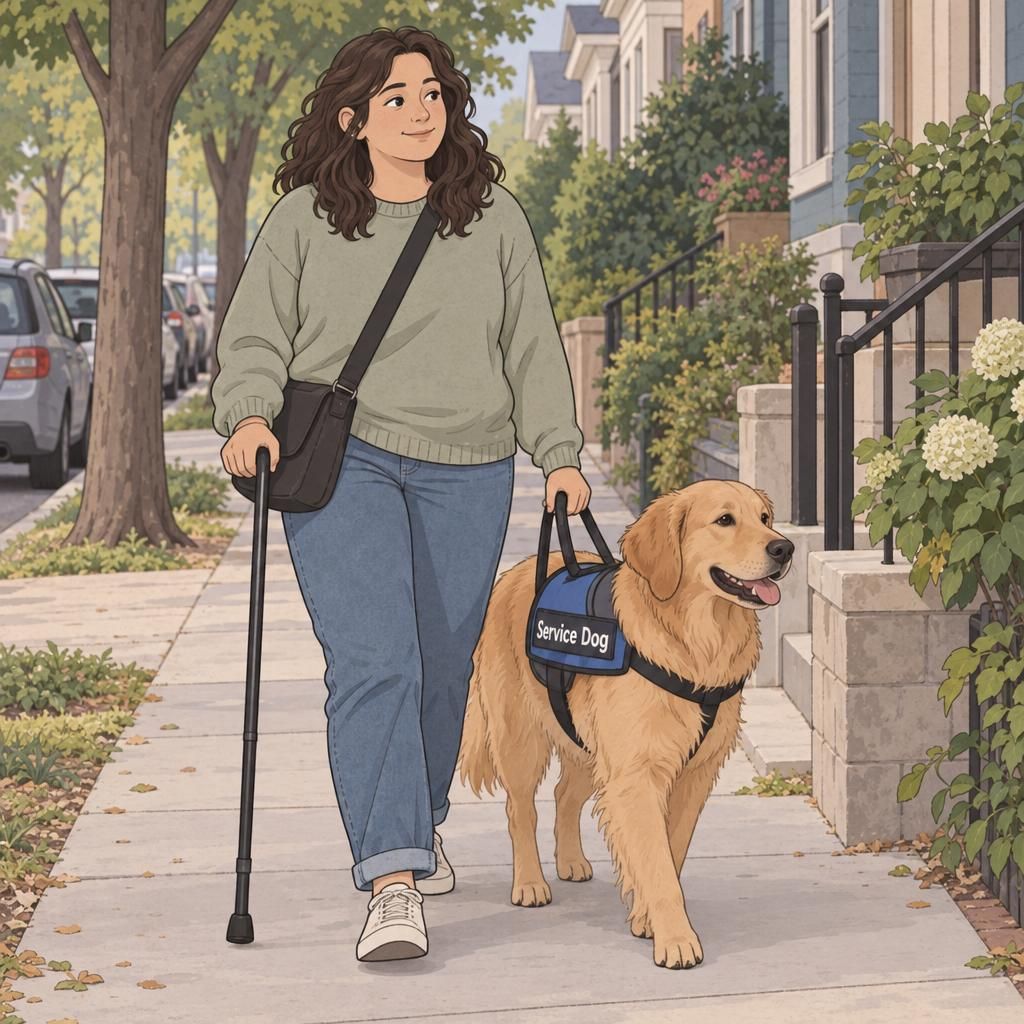
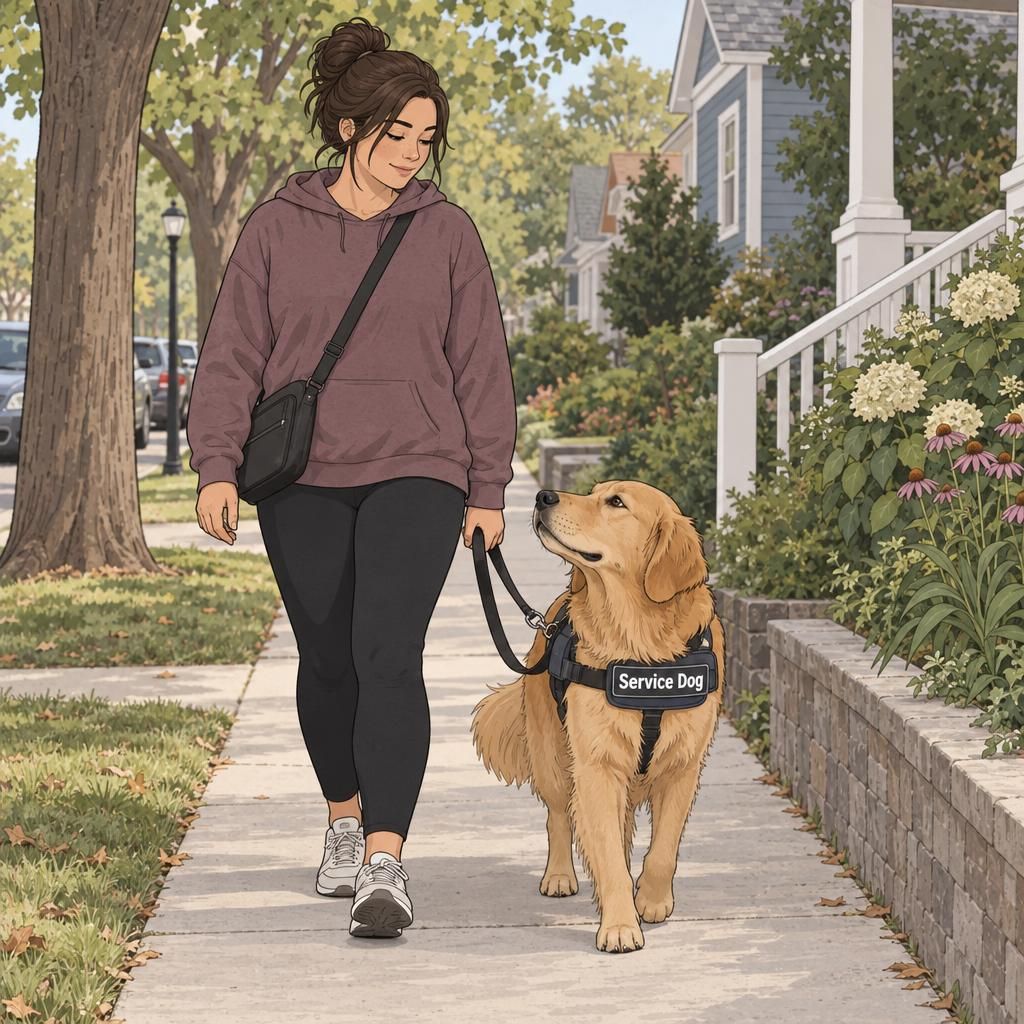
A well-fitted service dog vest or harness can make a working dog easier to recognize and provide a convenient place for identification patches. For teams that choose visible identification, the goal is straightforward communication without adding unnecessary bulk or discomfort.
Check the fit while the dog stands, walks, turns, and settles. Straps should stay in place without rubbing, and the design should allow comfortable movement. Consider how the vest works with the dog’s collar, leash, and other equipment so attachments do not crowd one another.
Some autism service dog teams use a harness with a suitable support handle. Choose a handle system around the dog’s size, the handler’s needs, and the team’s practiced routines. A handle should not be treated as an invitation to pull, lift, or place unplanned weight on the dog.
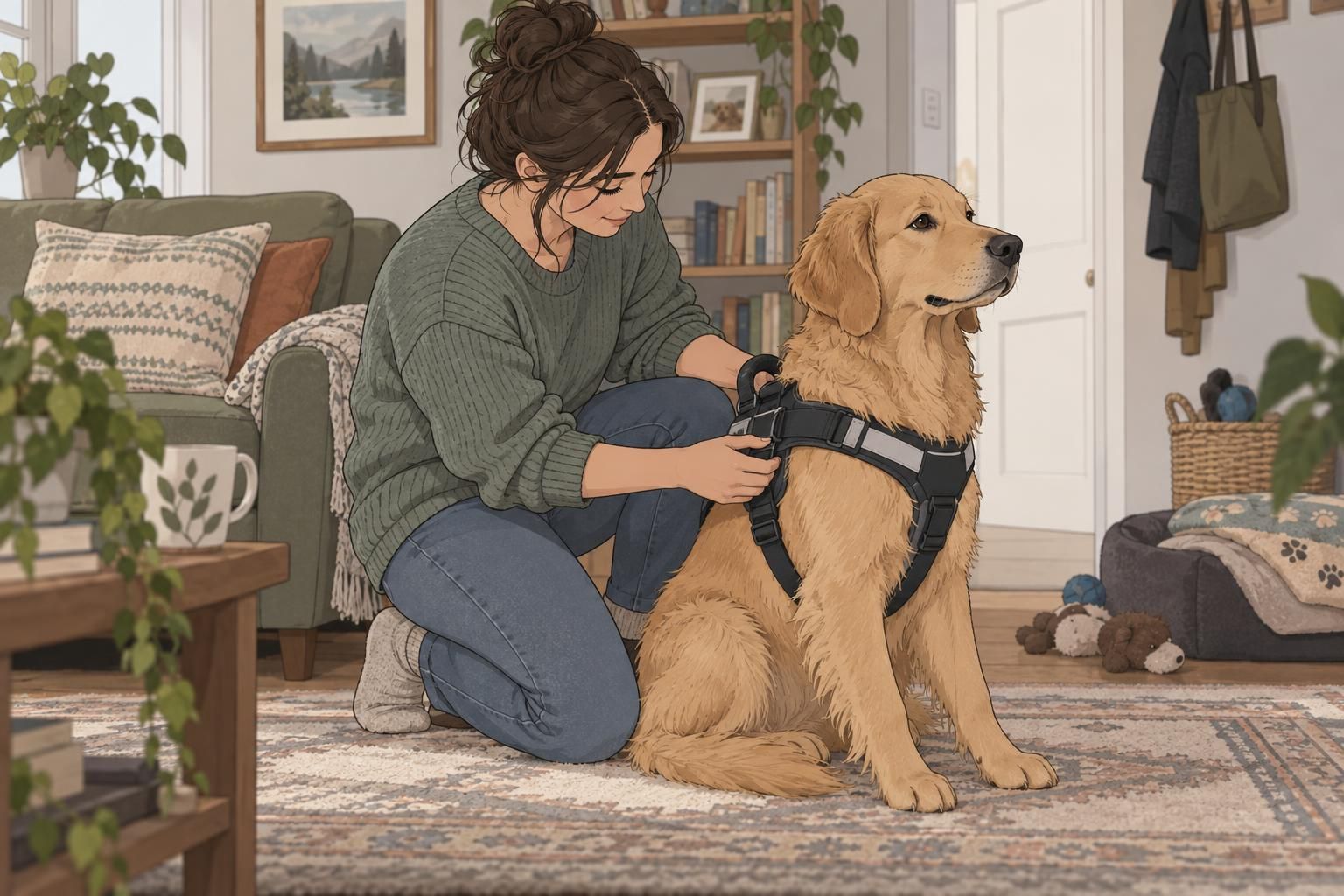
Identification accessories help communicate that a dog is working and keep important handler-dog information organized. Patches provide a visible message, collar tags keep identification attached to the dog, and an ID card gives the handler a compact reference to carry during outings.
For an organized identification option, National Animal Registry offers a customizable service dog ID with an autism option. Keeping identification materials together can make them easier to find when the handler chooses to share them.
Registration materials and identification gear can support clear communication during everyday interactions. Select what is useful for the team, and consider which details the handler wants readily available rather than displaying more personal information than necessary.
A dependable leash is a central part of many handling setups. An additional handle or secondary leash may help maintain contact and guide movement when appropriate, but the arrangement should match the team’s familiar way of working.
Start by checking the leash’s length, weight, grip, and attachment hardware. The handler should be able to use it comfortably, and the dog should have enough room to move without excess material getting underfoot. More attachments do not automatically make a setup safer; each piece should have a clear purpose.
If a secondary handle makes movement awkward or distracts the dog, reassess the setup. Comfortable, predictable contact is more useful than adding equipment simply because another team uses it.

Travel accessories should address two separate needs: securing the dog appropriately and making the journey comfortable. Depending on the dog’s size and the vehicle, a properly sized carrier or another suitable car restraint may be appropriate. Check fit, follow the equipment’s instructions, and review applicable travel and safety requirements.
A washable seat cover can protect the vehicle, while a familiar blanket provides a comfortable resting surface. Carriers, car seat covers, and dog blankets are among the practical accessories identified in autism service dog resource guidance (source). Choose items that work together without interfering with the travel restraint.
Keep frequently used supplies in a small travel pouch so they are easy to locate at your destination. For a broader look at preparing for outings, explore planning comfortable, predictable service dog travel. A repeatable packing routine can make departures less rushed and help prevent forgotten essentials.
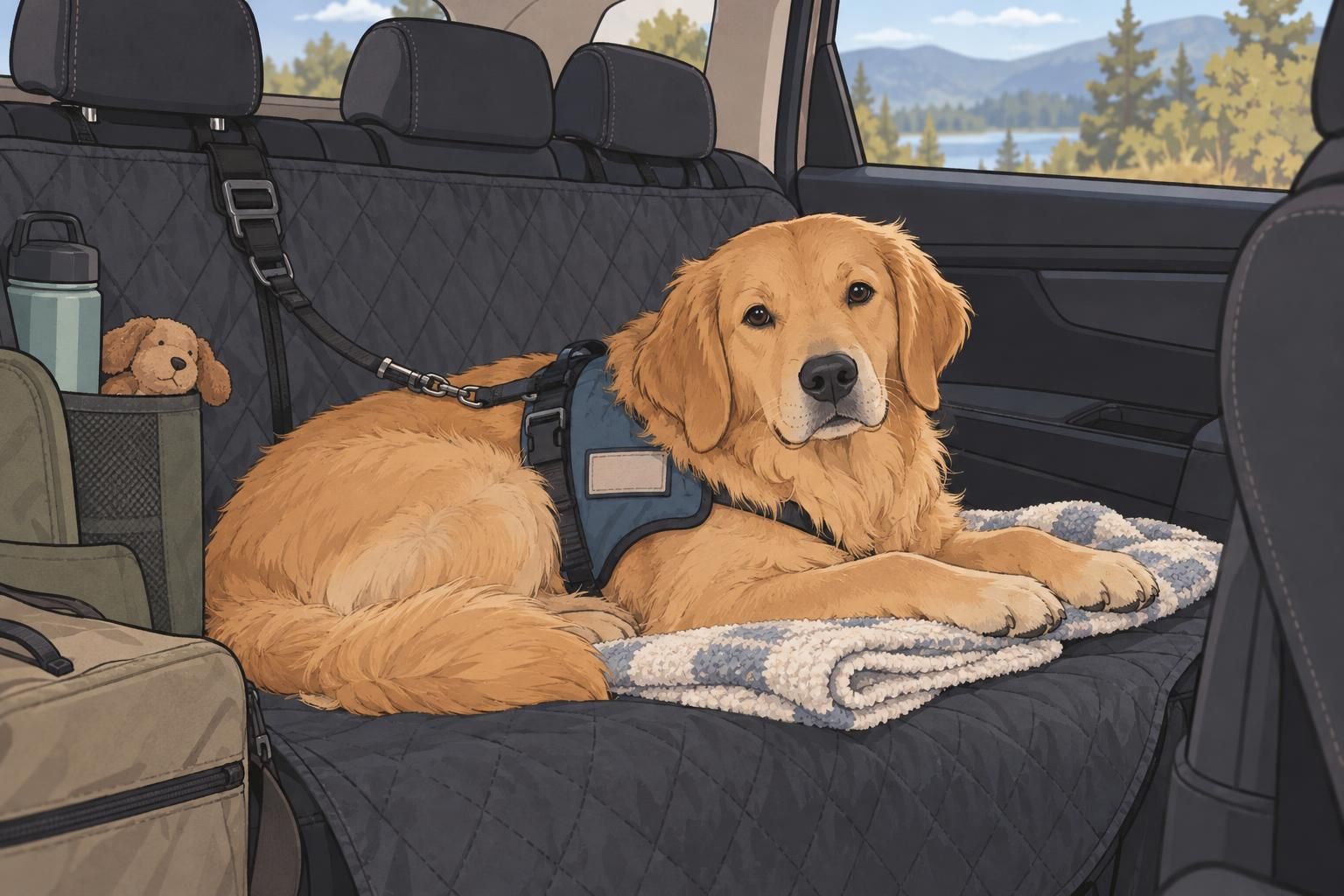
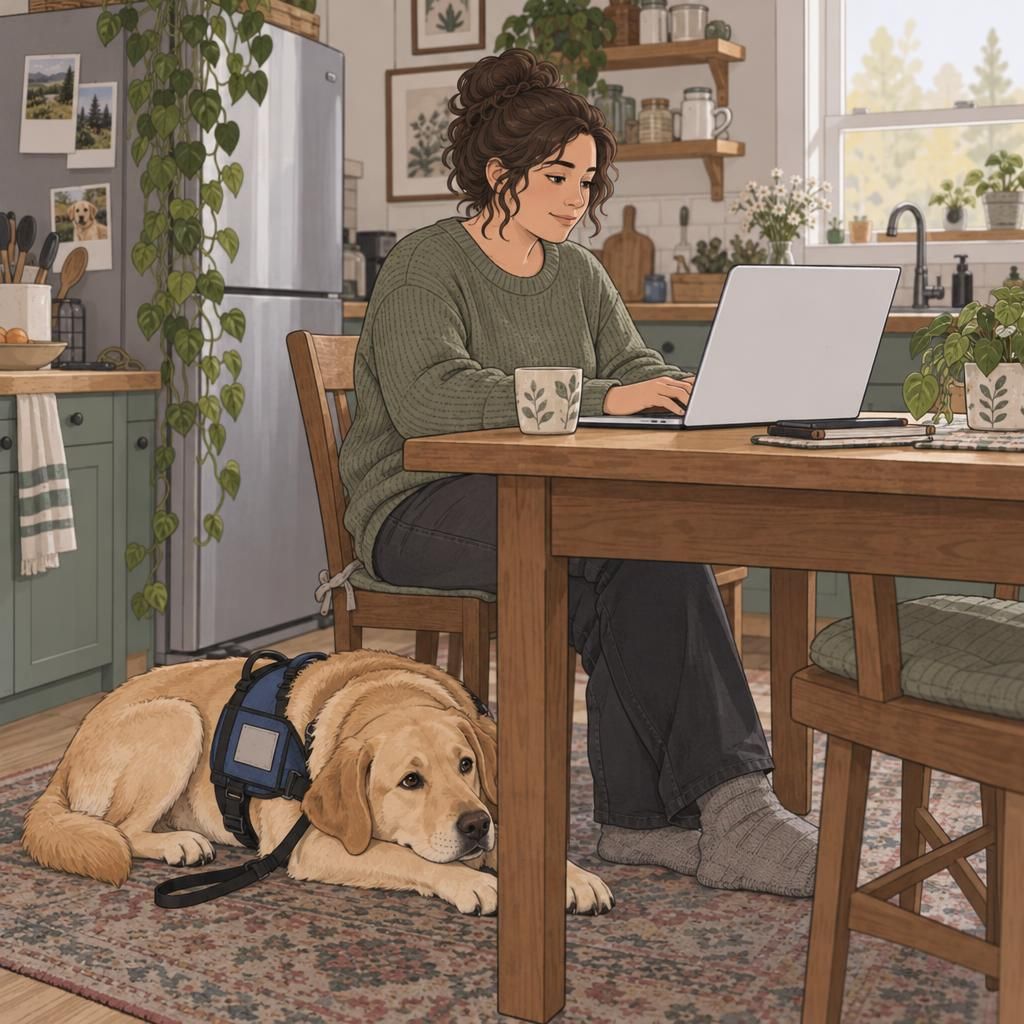
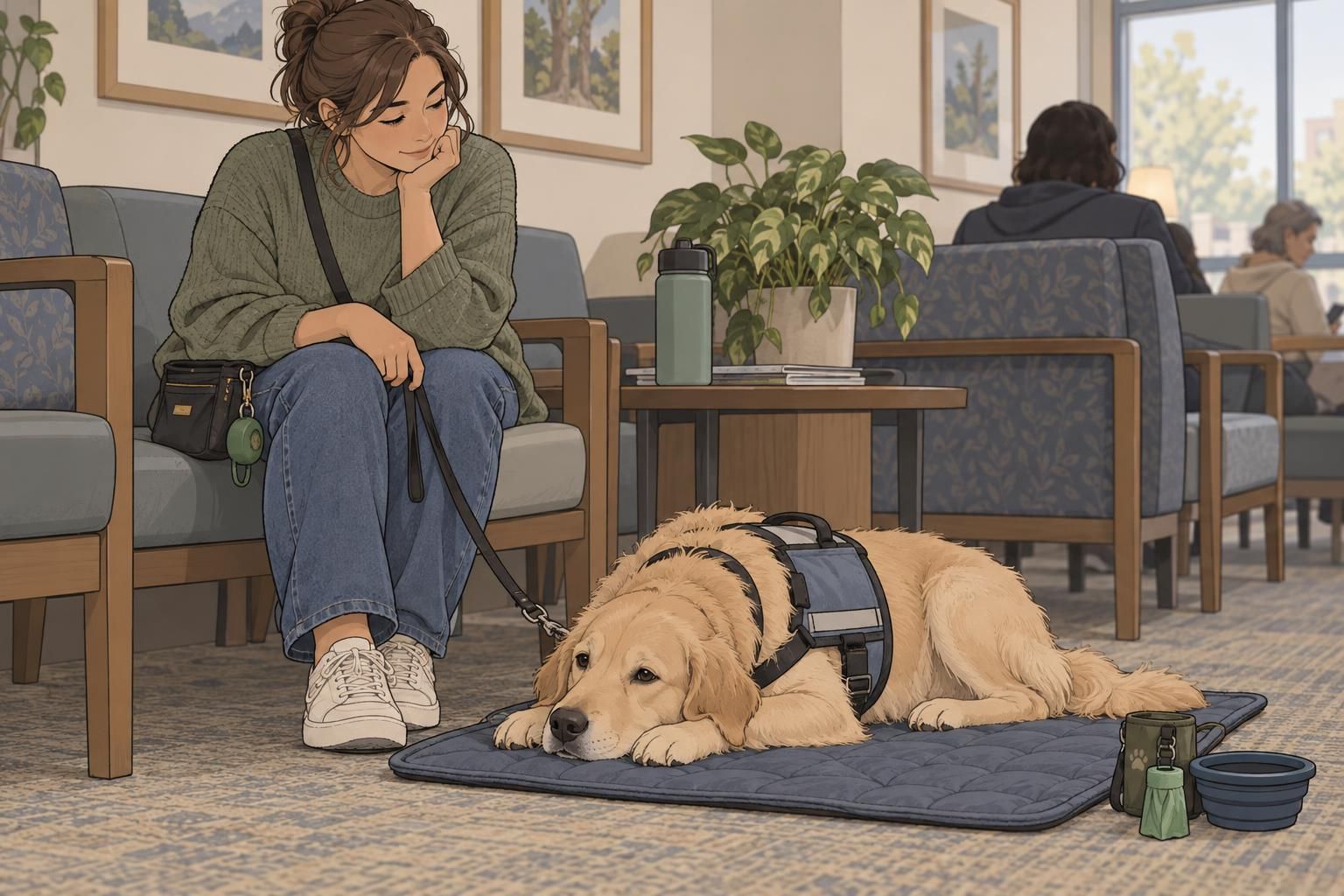
A portable blanket or settling mat gives the dog a consistent place to rest in waiting areas, public spaces, or vehicles. Bringing a familiar surface can help make the team’s resting routine more predictable, even when the surroundings change.
Choose a mat large enough for the dog to lie comfortably but compact enough to carry. Material matters, too: look for something comfortable, easy to clean, and practical for the surfaces the team encounters. A bulky blanket may be pleasant at home but inconvenient during a short outing.
Use the blanket or mat as part of an established settling routine. The accessory supplies a familiar resting surface; its value comes from how comfortably and consistently the team uses it.
Small accessories can make a big difference when they keep essentials within reach. A treat pouch can support the team’s practiced routines, while clips or a lanyard can organize lightweight items. Keep the arrangement simple enough that the handler can find what they need without searching through multiple pockets.
A waste kit is another useful everyday addition. Pack cleanup supplies before leaving and replenish them afterward. Storing them in the same place each time helps make preparation a routine rather than a last-minute check.
Booties or other paw protection may be useful in extreme temperatures or on rough surfaces. They are situational accessories, not automatic requirements for every outing. Check their fit and the dog’s movement, and allow time for the dog to become comfortable wearing them.
Even well-chosen accessories need regular checks. Inspect straps, seams, clips, and attachment points for wear, and replace damaged equipment. Watch for rubbing, restricted movement, or signs that an item is distracting the dog. Reassess fit whenever the dog’s size or the team’s setup changes.
Identification gear can support clear communication, while service animal rules and access requirements may vary by location. Review the requirements relevant to your destination and travel arrangements rather than assuming every setting follows the same process.
No. Choose accessories around the handler-dog team’s needs, environments, and established routines. Some items are everyday essentials for one team and occasional tools for another.
Make a quick condition and fit check part of getting ready for outings, and inspect equipment more closely during cleaning. Address damaged hardware, rubbing, or poor fit before continued use.
The most useful kit balances safe handling, organized identification, and the dog’s comfort. Start with reliable basics, keep them in good condition, and add only what genuinely helps your team.
Your trusted source for service animal registration. Get professional ID cards, digital profiles, and smart NFC tags to keep your service animal safe and recognized.
© National Animal Registry — All rights reserved.