
Keeping your service dog’s information organized can make everyday preparation feel more manageable. Voluntary registration brings basic handler and dog details together in a consistent record, with options for identification materials that fit your routine. The process can be straightforward, whether you prefer a printed card, a digital profile, or both.
Depending on the provider and registration option, registration may include a registry record, printed ID, certificate, or digital profile. These formats serve different organizational purposes: a registry record keeps submitted details together, a card offers a portable reference, and a digital profile provides another way to access information.
National Animal Registry does not require proof, medical letters, or training documentation to register. You can focus on entering your details accurately and choosing the materials you want. Before selecting an option, review what it includes so that the registration record and any accompanying items match your expectations.

A little preparation can make registration easier. Start by deciding which format you want to use most often, then gather the basic handler and dog details requested by the provider. Exact information fields, available items, and package contents vary, so read the option’s description before completing your selection.
For handlers who want several formats together, a service dog registration package with a printed ID, digital profile, and certificate offers a combination to consider. Review the package details to understand what is included rather than assuming every registration option provides the same items.
Taking a moment to check your entries helps avoid preventable inconsistencies. If you notice an error afterward, review the provider’s instructions for corrections or updates. Keeping one consistent version of your details makes the finished materials easier to organize and reference.
The most useful format is the one that fits your habits. A printed ID may suit someone who prefers a physical reference in a wallet or bag. A digital profile may be convenient for someone who routinely uses a phone to access information. A certificate can stay with other documents at home or in a folder.
You do not have to use every format in every situation. Instead, think about what you carry, where you keep important records, and how you prefer to communicate. Identification materials can help present relevant details clearly when you choose to share them, without requiring you to carry a large collection of paperwork.
If you prefer both physical and digital access, consider a customizable printed service dog ID with a digital profile. Review the available customization choices and select information that accurately describes your situation.
Keep privacy in mind, too. Before sharing a card or profile, check which details it displays. Choose materials you feel comfortable using, and keep any private records separate from items intended for everyday reference.

Understanding the distinction between voluntary registration and public-access requirements helps you use your materials confidently. The Americans with Disabilities Act, or ADA, does not require service animals to be registered or certified for public access. Registration and identification materials can still support personal organization and clear communication.
The U.S. Department of Justice explains that registration or certification is not required under the ADA and that service animals remain subject to local dog licensing and vaccination requirements. Its service-animal FAQs provide further clarification: source.
These are separate matters. A voluntary registry record organizes the information you submit to a provider. Local licensing and vaccination rules concern requirements in your community. Check with your city, county, or other local authority to learn which rules apply and how to keep those records current.
Keeping this distinction clear helps you decide when identification is useful without treating it as a required admission document. You may choose to carry an ID for convenience while keeping licensing and vaccination records organized separately. Each set of materials has its own purpose, and maintaining both can support orderly recordkeeping.

Once your materials are ready, give them a consistent place in your routine. Keeping a printed ID in the same wallet pocket or bag compartment makes it easier to find. If you use a digital profile, make sure you know how to open it before you need to reference it.
For a portable educational reference, wallet-sized ADA service dog rights handout cards are another option to consider. Having information available can help you explain a point calmly without needing to recall every detail on the spot.
Use these materials as practical additions, not replacements for applicable laws or access rules. A clear, respectful conversation may be all an interaction needs; in other situations, you may choose to reference an ID, digital profile, or handout. The goal is to keep useful information available while maintaining a routine that feels manageable for you.
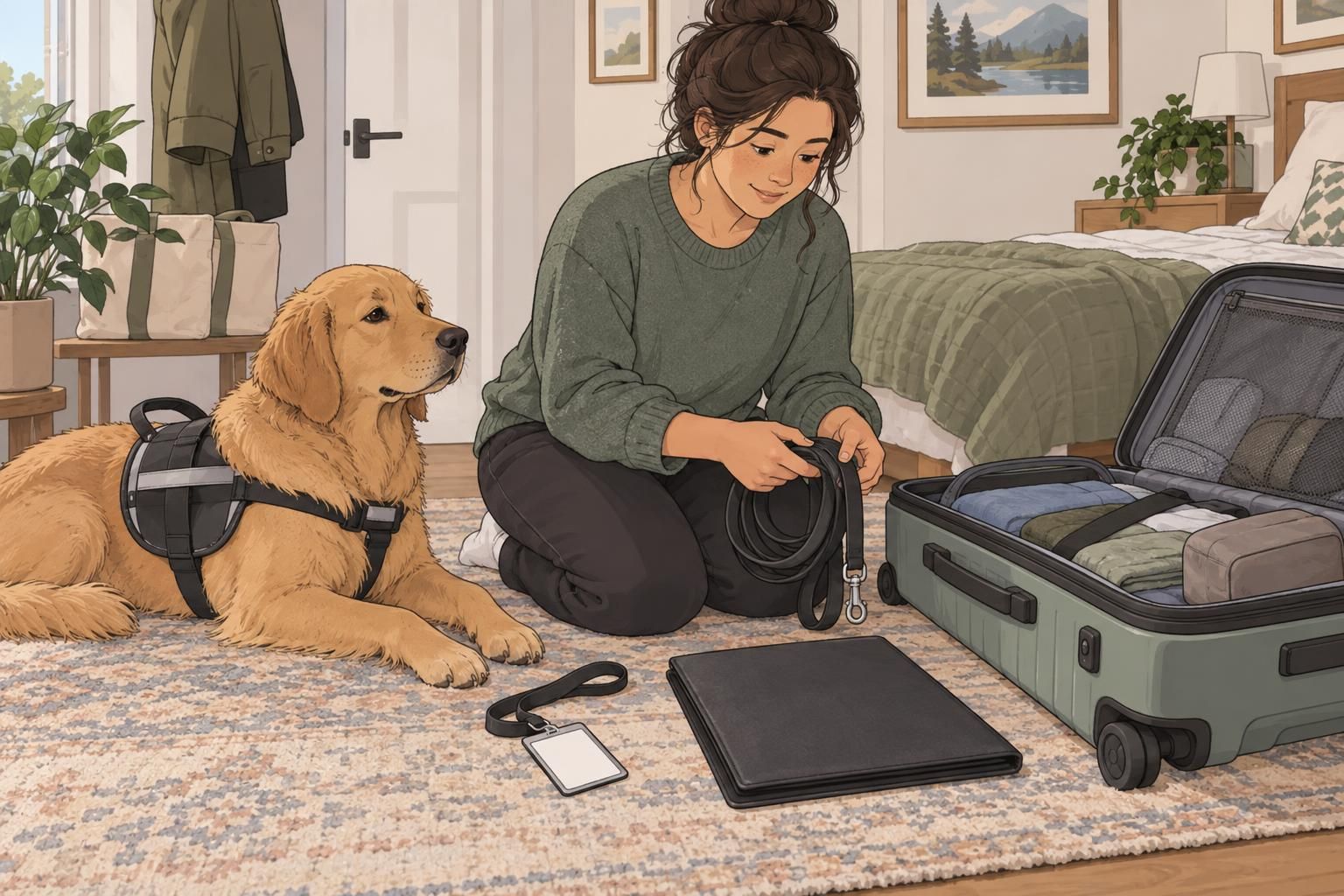
Travel preparation begins with checking the requirements for your specific trip. Your route, carrier, and destination may involve different procedures, so review their current information before departure. Organize your identification alongside any travel information or records required for that journey.
For more preparation ideas, read a practical guide to traveling with a service dog. Use it to support your planning, then confirm the details that apply directly to your itinerary.
If you prefer a dedicated organizational option, consider a service dog travel kit for keeping trip materials organized. Review its contents and compare them with your plans. A kit can help keep materials together, but the carrier’s and destination’s applicable requirements still guide your preparation.
A simple registration process, accurate details, and thoughtfully chosen materials can support an organized routine at home and on the road. Start with the formats that suit you, keep them current, and pair them with a clear understanding of the rules that apply wherever you and your service dog go.
Your trusted source for service animal registration. Get professional ID cards, digital profiles, and smart NFC tags to keep your service animal safe and recognized.
© National Animal Registry — All rights reserved.