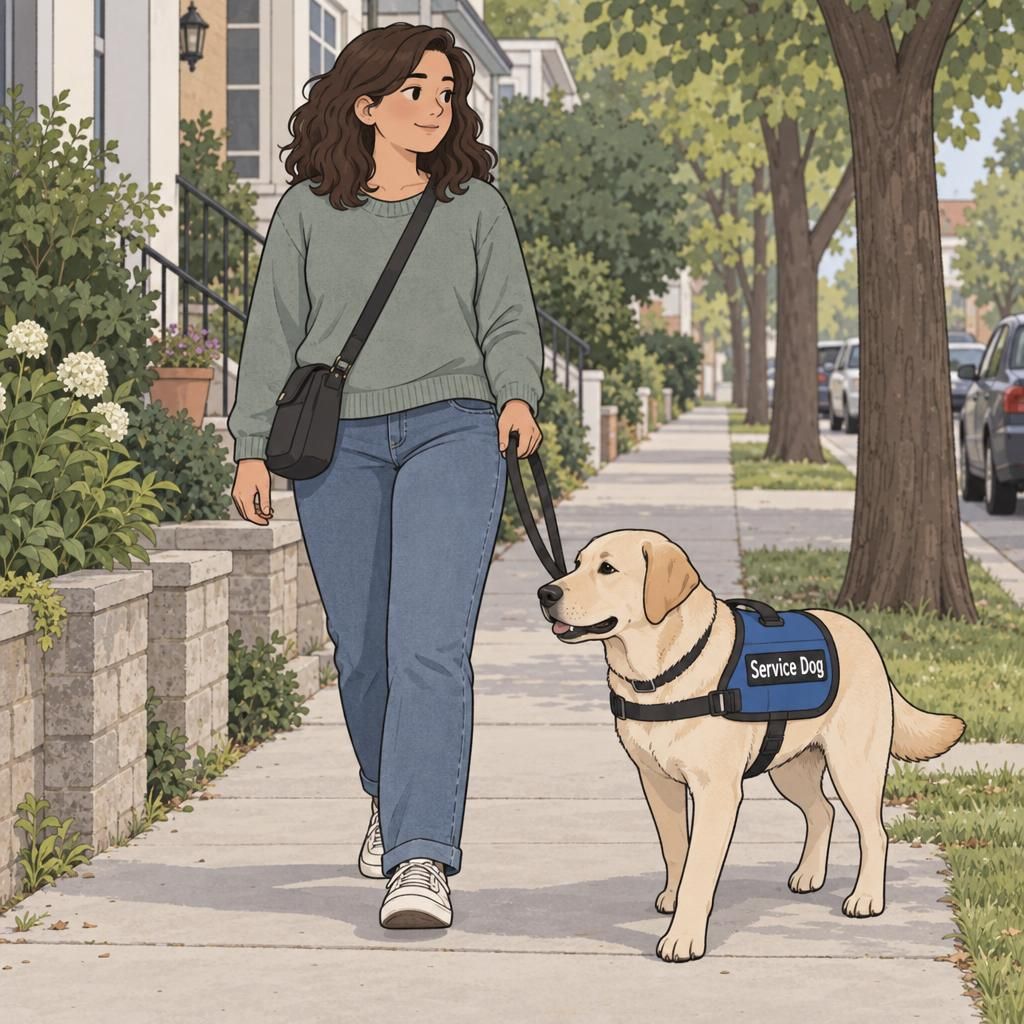

A service dog tag offers a simple, visible way to communicate that a dog is working alongside its handler. In a busy store, at a reception desk, or during an everyday outing, that small identifier can give people useful context before a conversation begins. For many handlers, it is one part of a practical identification routine that also includes a vest, printed card, or organized registration materials.
Owners often choose tags because they are portable and easy to use with equipment the dog already wears. A tag can move between suitable collars or harnesses, making it convenient when a handler changes gear for different activities. The goal is straightforward: keep the dog's identification visible without adding unnecessary weight or distraction.
The word “official” should be understood in the context of whoever issues the tag. A registry-issued tag identifies the dog through that registry, while a local assistance-dog tag may belong to a particular municipal program. Neither description means that every service dog must have that item. Choosing identification is about supporting clear communication, not replacing the dog's working role or the rules that apply to a particular setting.
The best location for a tag is somewhere people can reasonably see it and where it will not interfere with the dog's movement or tasks. Common choices include a collar ring, a suitable attachment point on a harness, or a secure loop on a vest. Before choosing a location, consider how the dog walks, rests, turns, and performs its work.

A dangling tag may be easy to notice, but extra movement or jingling can be distracting for some dogs. If that happens, consider a different attachment point or a more stable arrangement. Visibility matters, but it should never come at the expense of comfort or reliable task performance. A quick equipment check before leaving home can catch a loose ring or damaged tag early.
Visible identification can help staff and bystanders recognize that a dog is accompanying a handler in a working capacity. Someone who notices a service dog tag may be less likely to assume the dog is a pet or approach it for attention. That recognition can reduce the need for an immediate explanation, especially when the handler is concentrating on shopping, navigating, or completing another activity.
A tag cannot guarantee that every interaction will be smooth. Some people may not notice it, and others may still have questions. A calm, brief explanation can help keep the exchange focused. Handlers may also choose to have identification materials available so they can share appropriate information without searching through a bag or phone.

Public-access questions are governed by applicable law and the circumstances, rather than by the presence or absence of a tag. Under the ADA, when a dog's service role is not apparent, staff may ask whether the dog is required because of a disability and what work or task it has been trained to perform. They may not require registration or certification documents as a condition of ADA access. Optional identification can still support communication without changing those rules.
The Americans with Disabilities Act does not require service dogs to wear tags, vests, special harnesses, or other identifying gear. Handlers may nevertheless choose these items because they make the dog's role easier to communicate. This distinction allows owners to use the identification that works for them while understanding that federal access rules do not depend on a particular accessory.
Service dogs and emotional support animals also have different roles under federal public-access rules. Under the ADA, a service dog is trained to perform work or tasks related to a person's disability; providing comfort through presence alone does not qualify an animal as a service dog. A tag should accurately describe the animal's role rather than suggest access that does not apply.

Some local authorities maintain their own assistance-animal identification processes. These programs may have location-specific application steps, eligibility terms, renewal arrangements, or tag-return requirements. Ventura County's animal services information provides an example of a local resource for reviewing assistance-animal policies and identification procedures: source. Requirements and policies vary by jurisdiction, so one area's program should not be treated as a nationwide standard.
A visible tag and supporting identification materials serve different practical purposes. The tag communicates at a glance, while a printed ID or digital profile can organize details in a format that is easier to review. A certificate can be kept with registration records, helping the owner maintain a consistent set of materials rather than scattered information.
Handlers who prefer a coordinated setup may consider a service dog package with a QR tag and coordinated identification materials. Keeping these items together can simplify preparation for outings and make it easier to locate the information a handler chooses to share.

Choose the format around your routine. A printed card is accessible without a battery or internet connection. A digital profile may be convenient when using a phone, while a QR tag can provide a quick route to that profile when connectivity is available. Before relying on a digital option, test it and review what information is publicly visible. Keep private medical details out of materials intended for routine identification.
Travel is easier to prepare for when identification and trip-specific documents are organized before departure. Start by checking the rules that apply to your destination, transportation provider, and planned activities. Air travel, international travel, and everyday public access may involve different requirements, so do not assume that a familiar tag or card covers every situation.
For planning ideas, review a practical guide to traveling with a service dog. Build time into your preparations to confirm current policies and complete any applicable travel forms. A tag can help communicate the dog's role during the journey, while an organized folder keeps relevant information within reach.

If you prefer both physical and digital identification, a customizable printed service dog ID with a digital profile offers that combination. Keep the printed item accessible and check the digital information before leaving. These materials can support clear communication, while any destination-specific requirements remain separate.
Used thoughtfully, a service dog tag becomes part of a dependable everyday system: comfortable gear, accurate identification, and materials organized around the handler's needs. That preparation can make interactions more predictable while keeping attention where it belongs—on the handler and the dog's work.
Your trusted source for service animal registration. Get professional ID cards, digital profiles, and smart NFC tags to keep your service animal safe and recognized.
© National Animal Registry — All rights reserved.