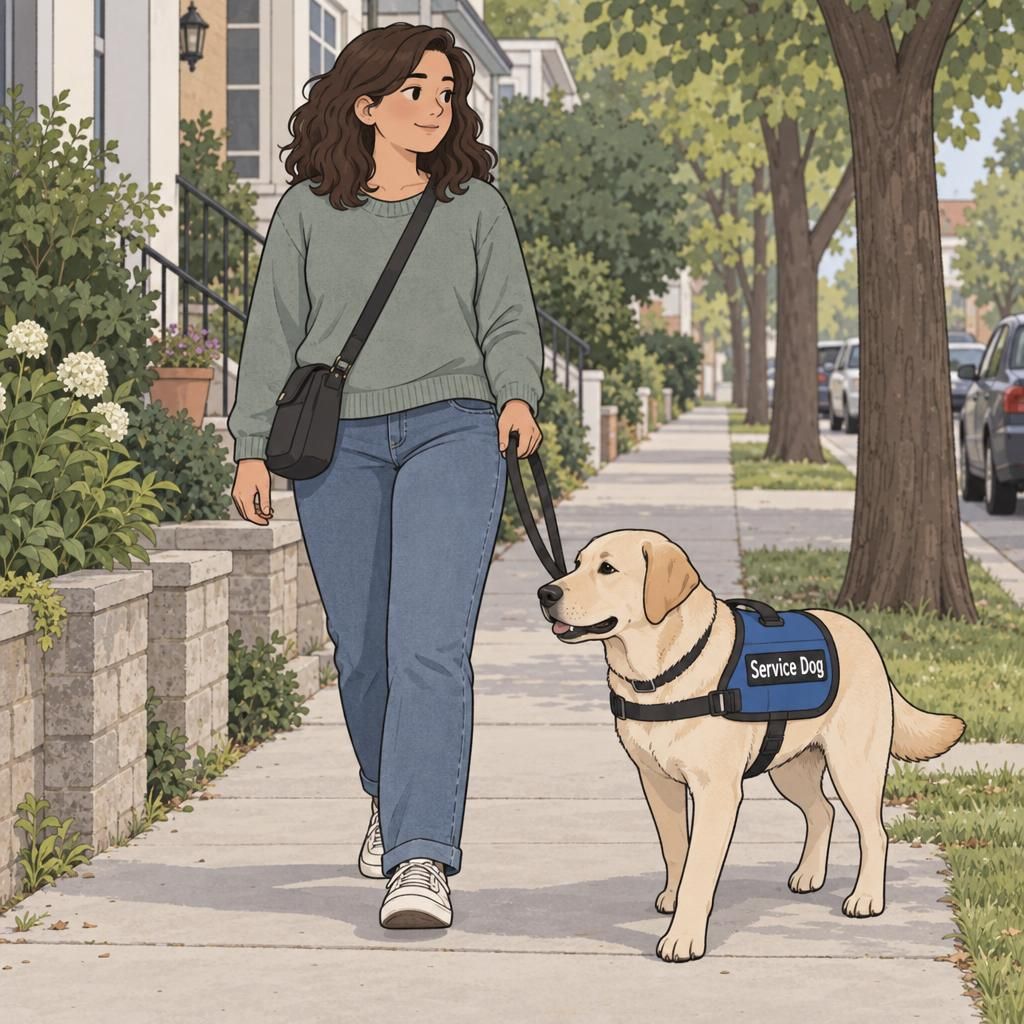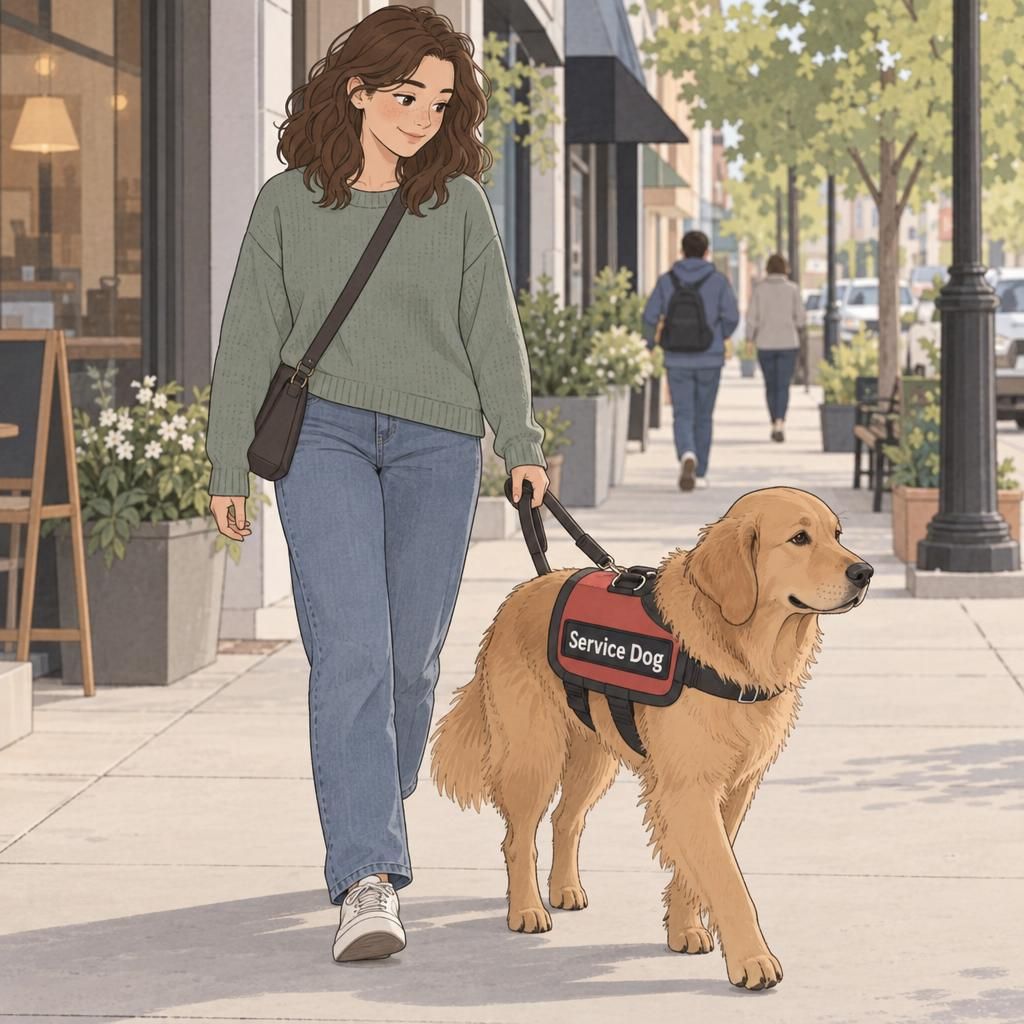

The most useful medical alert dog accessories make everyday routines easier without getting in the dog’s way. A secure identification tag, comfortable harness, small supply pouch, and accessible information card can each serve a different purpose. Together, they help a handler keep essentials organized, make the dog’s working role easier to recognize, and keep useful contact information close at hand.
There is no need to choose every accessory at once. Start with the situations your team encounters most often: short errands, busy entrances, extended appointments, or travel. Consider what you need to carry, how visible the dog needs to be, and which attachments the dog comfortably accepts. A simple setup that works reliably is often more practical than a heavily equipped one.
Identification accessories keep important information connected to your dog. An engraved tag can provide a name and contact number in a compact format. A QR-code tag can direct someone to a digital profile or contact page, making additional information accessible without putting every detail on the tag itself. Choose information that would be genuinely useful if someone needed to contact you.
Think carefully about where identification will sit. A collar may be convenient for everyday wear, while a harness attachment can keep a tag with the dog’s outing gear. Clips and D-rings offer flexible attachment points, but they should close securely and avoid dangling where they could catch on furniture or interfere with movement. Check that an engraved tag remains readable and that a QR code can be scanned.
A registered ID can be a convenient part of an everyday identification kit, particularly when the details on the tag, card, and digital profile are consistent. For handlers who prefer a coordinated set, a service dog ID and QR tag package brings several identification and reference materials together.
Examples of medical alert dog accessories include ID tags, vests, patches, and ID holders, giving handlers several ways to organize identification and improve visibility (source). Select the combination that suits your routine, and review contact or profile information whenever your details change.
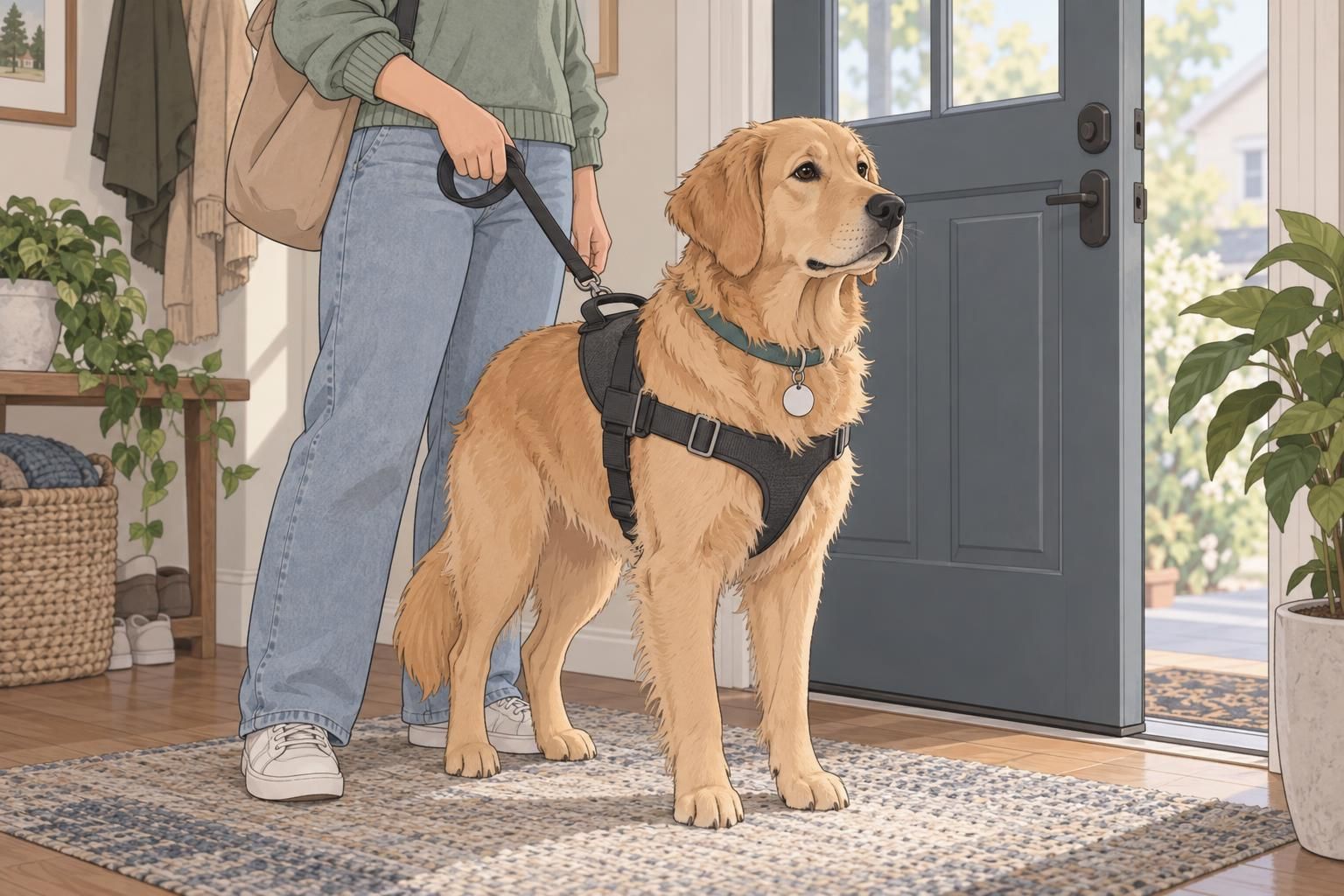
A vest, harness, or removable patch can make a dog’s working role easier for others to recognize. Visibility accessories provide a clear visual cue, which may help communicate that the dog is accompanying a handler in a working capacity. The best choice is one that provides that cue while remaining comfortable during the activities your team actually does.
Look for lightweight, breathable materials and a fit that stays stable without restricting natural movement. Pay attention to the areas around the chest, shoulders, and front legs. Gear should not shift, bunch, or press into the dog when standing, walking, turning, or resting. Consider how the material will feel in the weather and indoor environments you regularly encounter.
Removable patches are useful when you want flexibility without replacing an entire vest or harness. Before leaving home, check the attachment and smooth down any raised edges. Keep the overall setup uncomplicated: visibility should support the team, not become a reason to add weight or heat.
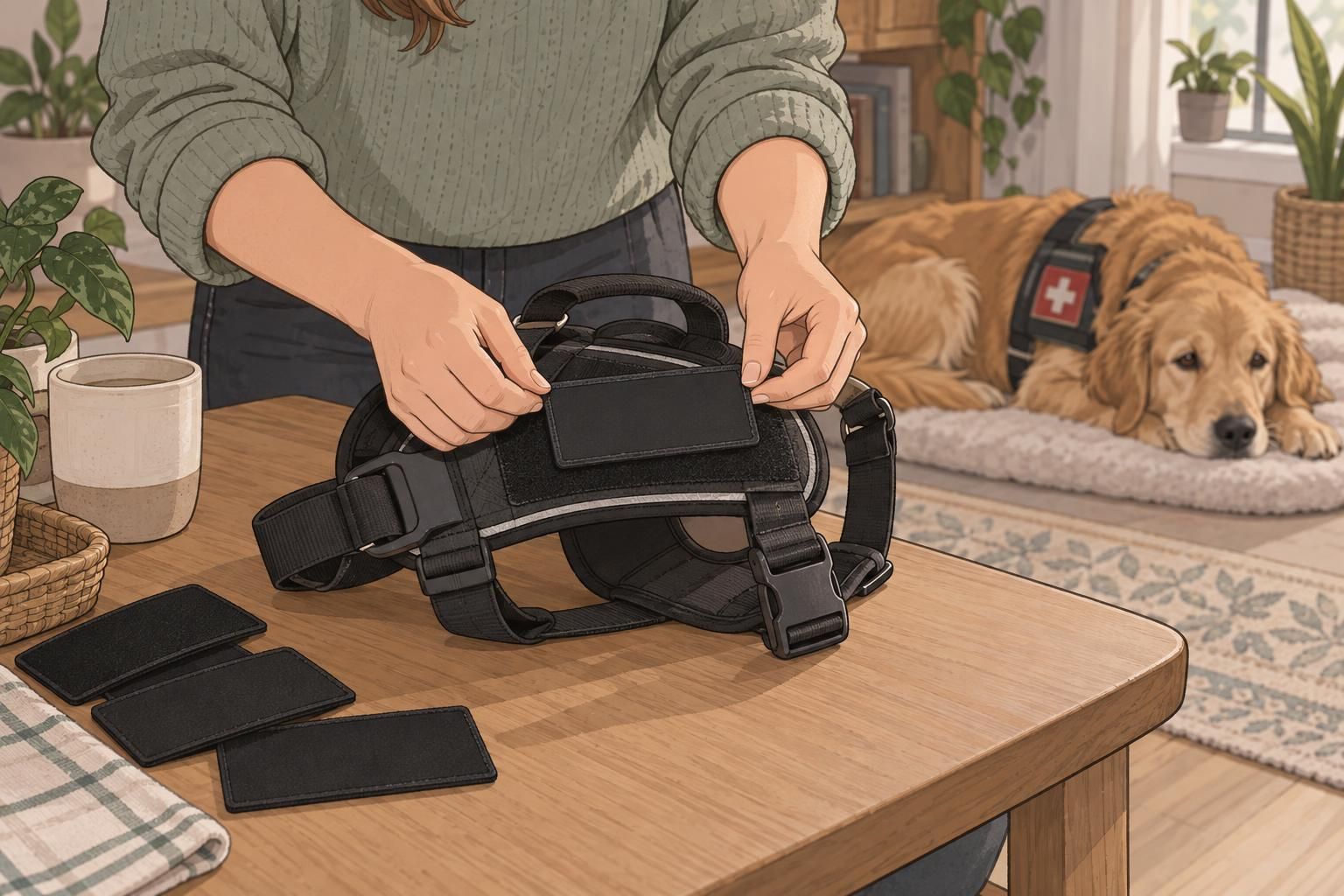
A small pouch can keep frequently used items together instead of scattered across pockets or bags. Depending on your routine, those items might include emergency contacts, keys, a compact medical kit, or medication carried by the handler. A clip-on pouch can attach to the handler’s bag or belt, while a suitable vest-mounted pouch offers another organizational option.
Decide where an item belongs based on access, storage needs, and the dog’s comfort. Medication and other essential medical items should remain appropriately stored and readily accessible to the handler. Do not assume every item belongs on the dog. If carrying it yourself is more secure or convenient, use the pouch on your own bag instead.
For any dog-mounted pouch, keep the contents minimal and the attachment secure. Check that the pouch does not swing, bounce, rub, or obstruct movement. Test it with its actual contents rather than only when empty. A pouch that appears unobtrusive on a table may sit differently once attached to a moving dog.
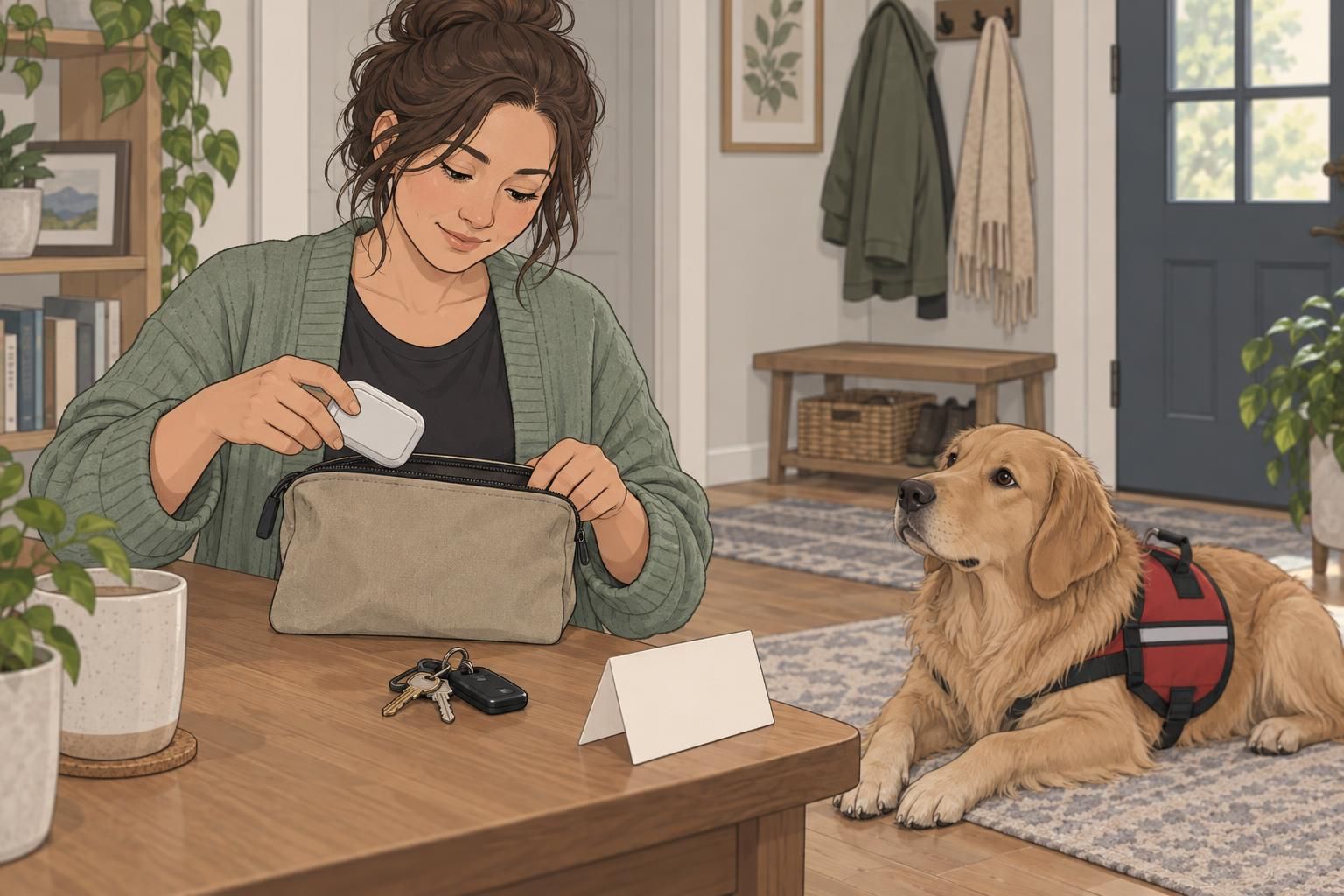
Keeping identification and helpful information together can make it easier to find what you need during an outing. A wallet, badge holder, or digital profile can organize a service dog ID, registration materials, contact details, and reference information. Choose a format that is easy to reach without searching through multiple compartments or handing over more personal information than you intend.
Registration materials, certificates, and cards are optional, practical communication tools. A consistent set can help you present information clearly and keep your records organized. Requirements and public-access rules vary by location and setting, so review the rules relevant to your destination rather than assuming that one document covers every situation.
For a compact reference option, wallet-sized service dog information cards can fit alongside your everyday identification. Keep reference materials separate from private medical details, and know where each item is stored before you leave. If you use a digital profile, check that its information is current and easy to access.
Using both can be convenient. A printed card is easy to locate in a wallet, while a digital profile can keep additional information accessible. Choose the combination that fits your routine and keep shared details consistent.
No. Identification and reference materials support communication, while the applicable rules depend on the location and setting. Reviewing those rules ahead of time helps you prepare the right information.
Comfort is the foundation of a useful accessory setup. Even a lightweight item can become distracting if it rubs, rattles, or moves unpredictably. Try new gear during a calm period at home, then observe how it behaves during ordinary walking and resting. Add accessories gradually so you can identify which item needs adjustment.
Repeat these checks when you change equipment or adjust what you carry. Your dog’s accessories should support a familiar routine, not require the dog to work around awkward gear. If an item consistently slips or interferes with movement, a different size, attachment point, or simpler design may be a better choice.
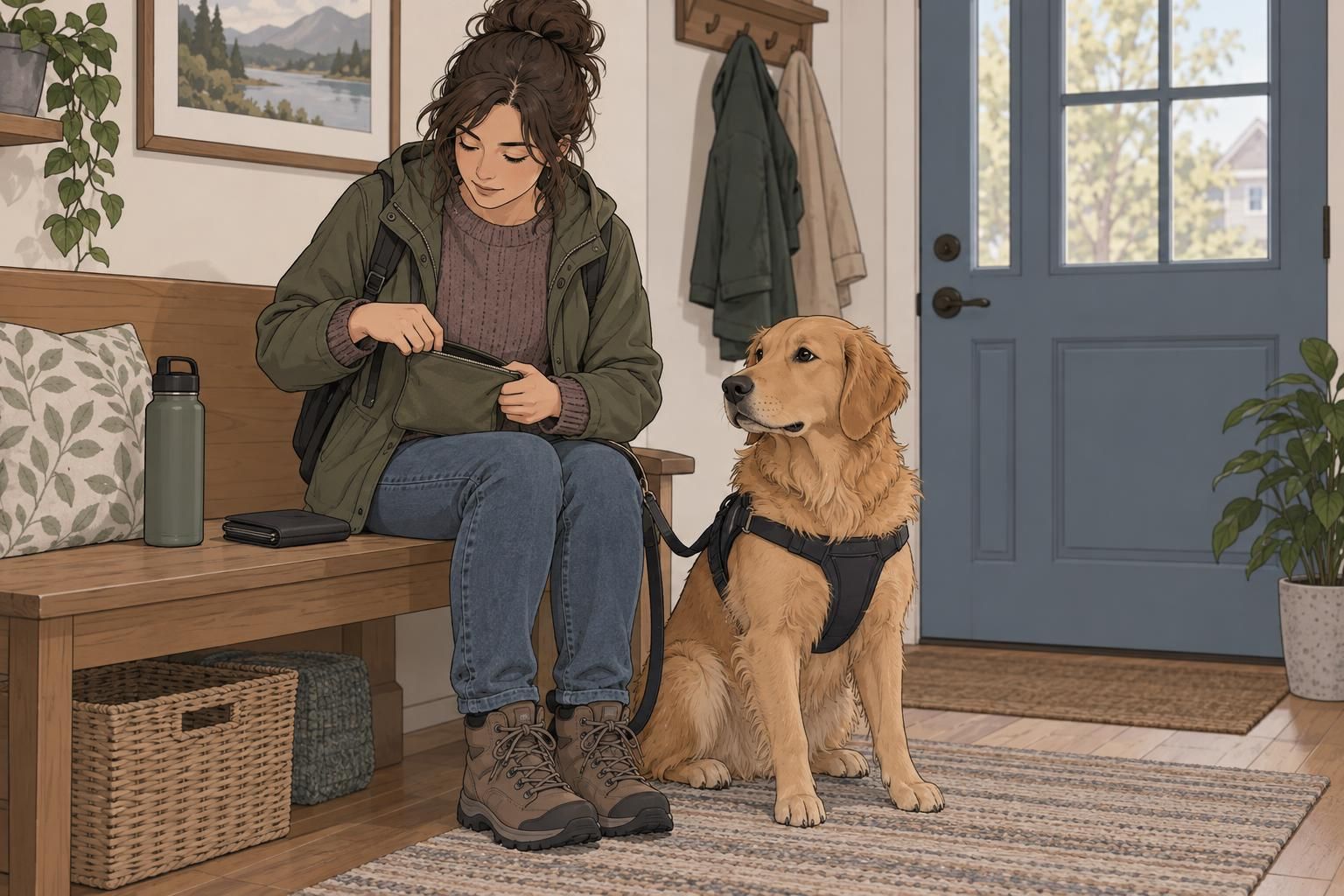
A practical outing kit brings identification, visibility, supplies, and reference materials together without overloading the dog. For a routine appointment or errand, your setup might include a securely attached tag, a comfortable visibility option, a handler-carried essentials pouch, and a wallet containing helpful information.
Keep your regular kit in a consistent place so preparation becomes straightforward. For longer trips and destination-specific packing ideas, consult the service dog travel planning guide. The goal is a reliable, comfortable setup that helps both you and your medical alert dog move through the day with less fuss.
Your trusted source for service animal registration. Get professional ID cards, digital profiles, and smart NFC tags to keep your service animal safe and recognized.
© National Animal Registry — All rights reserved.