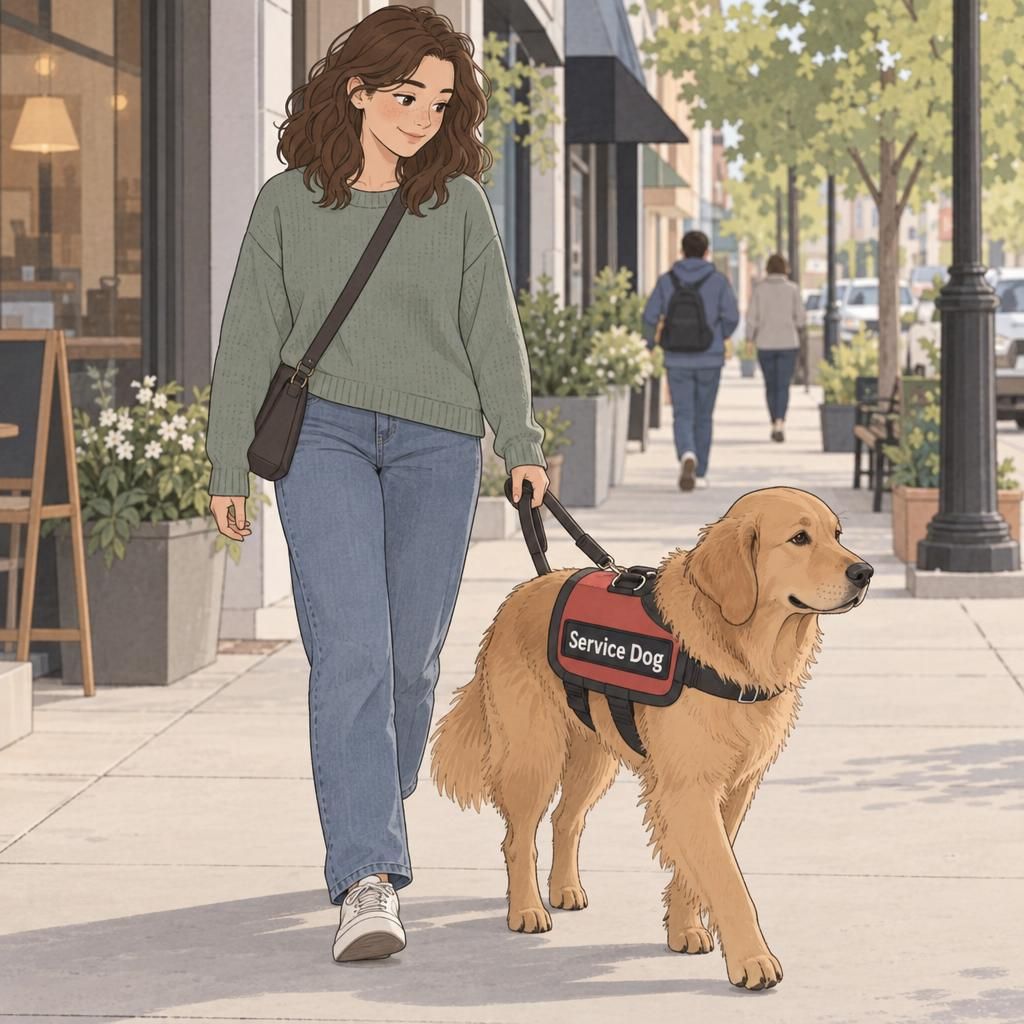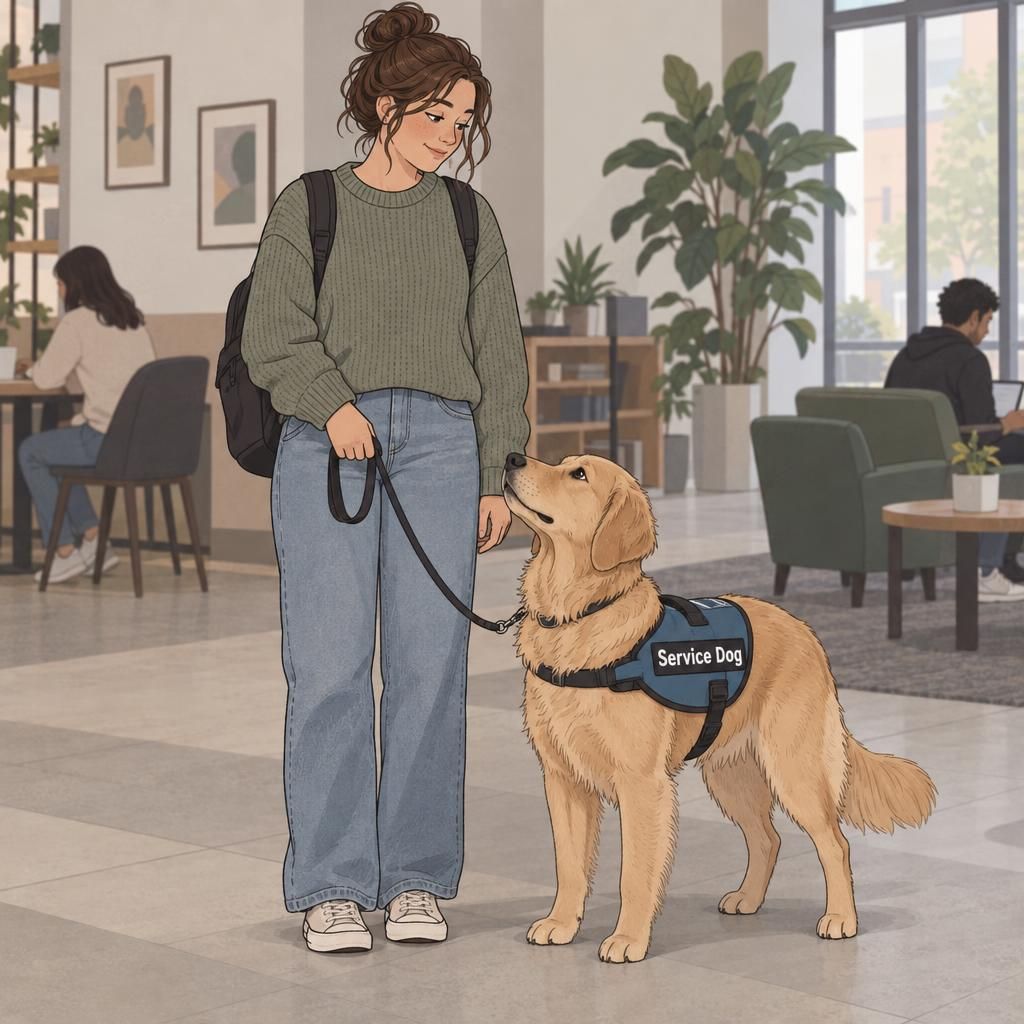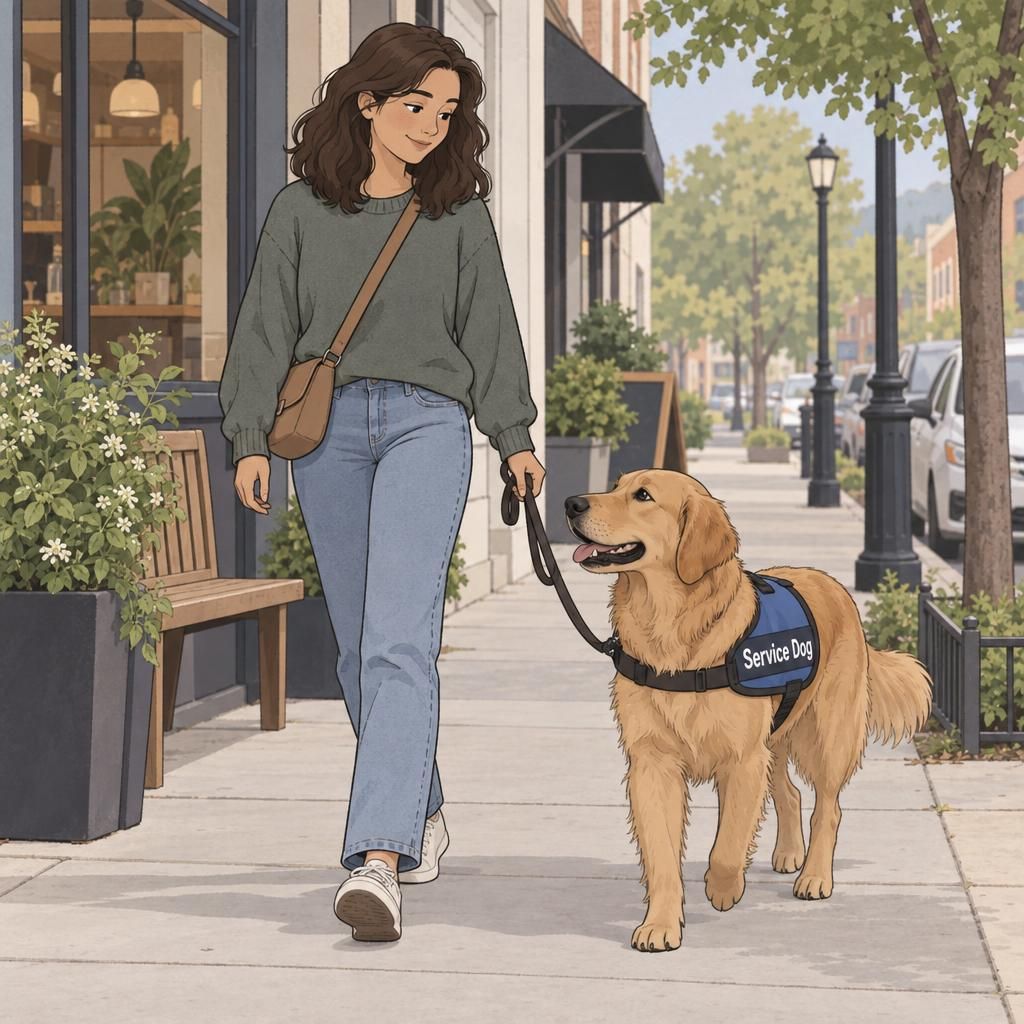
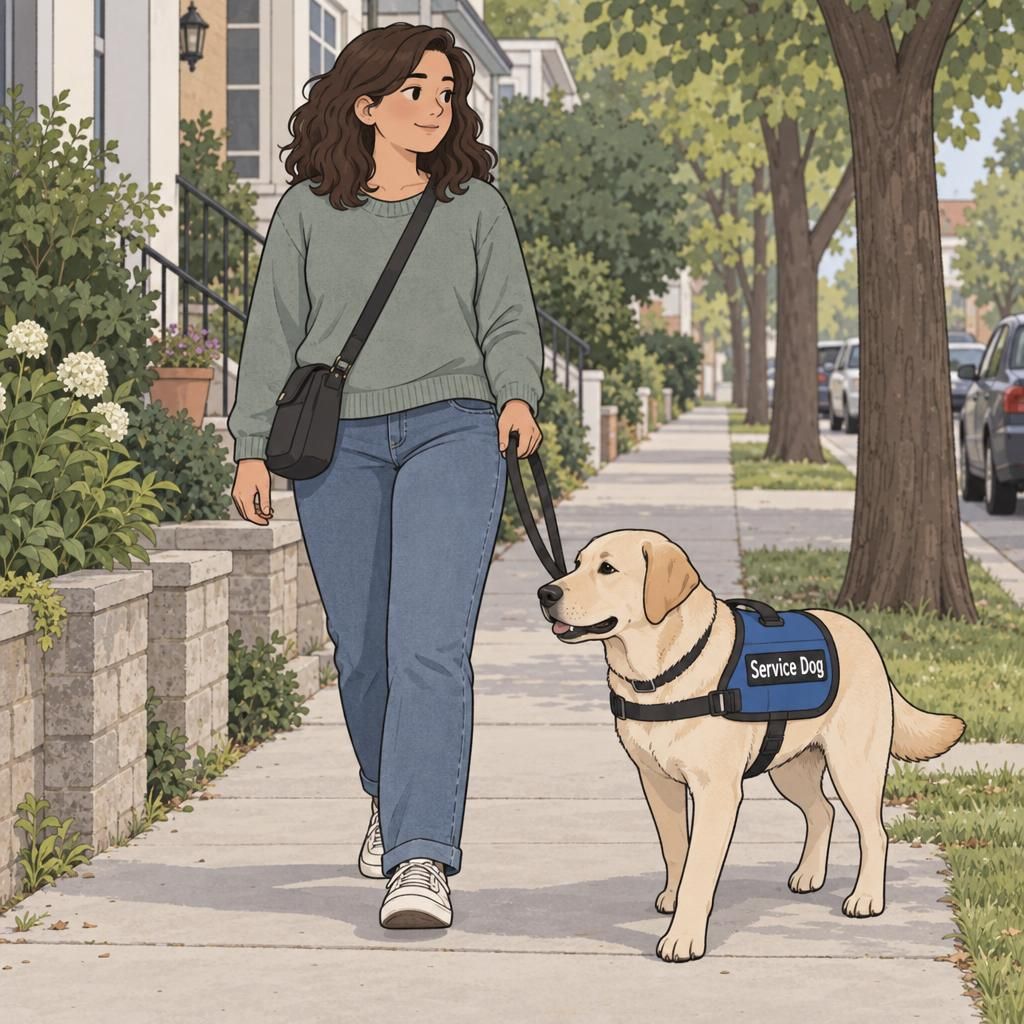
The best assistance-dog accessories make everyday routines easier without getting in the way of the dog’s work. Some help communicate the dog’s role. Others improve leash handling, keep supplies organized, increase visibility, or support a particular task. A useful setup might be as simple as a comfortable harness, a dependable leash, and identification kept within easy reach.
Start with your partnership rather than a shopping list. Consider what your dog does, where you spend time together, and which parts of your routine could be more comfortable or organized. A handler who walks after sunset may prioritize visibility, while someone who frequently travels may value compact storage and accessible identification.
Fit and comfort should guide every choice. Equipment should allow natural movement, remain secure during ordinary activity, and avoid unnecessary weight or bulk. Introduce new accessories gradually in a calm setting so you can see how your dog responds before using them during a busy outing.
Vests and capes are often chosen to make an assistance dog easier to recognize. Lightweight versions provide a visible surface without much bulk. Other styles include pockets for small items or removable patches that let handlers adjust the message displayed. Consider whether pockets are genuinely useful, since their contents add weight and may shift as the dog moves.
Harnesses serve a different purpose when they are designed for leash attachment or a specific working function. Padded harnesses can offer comfortable contact surfaces, while some no-pull designs provide attachment options intended to help manage pulling. Neither padding nor a no-pull label guarantees a suitable fit: the shape, strap placement, and effect on movement still matter.
It is helpful to distinguish identification gear from task-support equipment. A vest that displays a patch is not necessarily built to support a handle or mobility task. Likewise, an everyday walking harness should not be treated as specialized support equipment simply because it has a sturdy-looking strap. Working-dog collections offer examples of harnesses, visibility accessories, and boots that illustrate these different equipment categories (source).
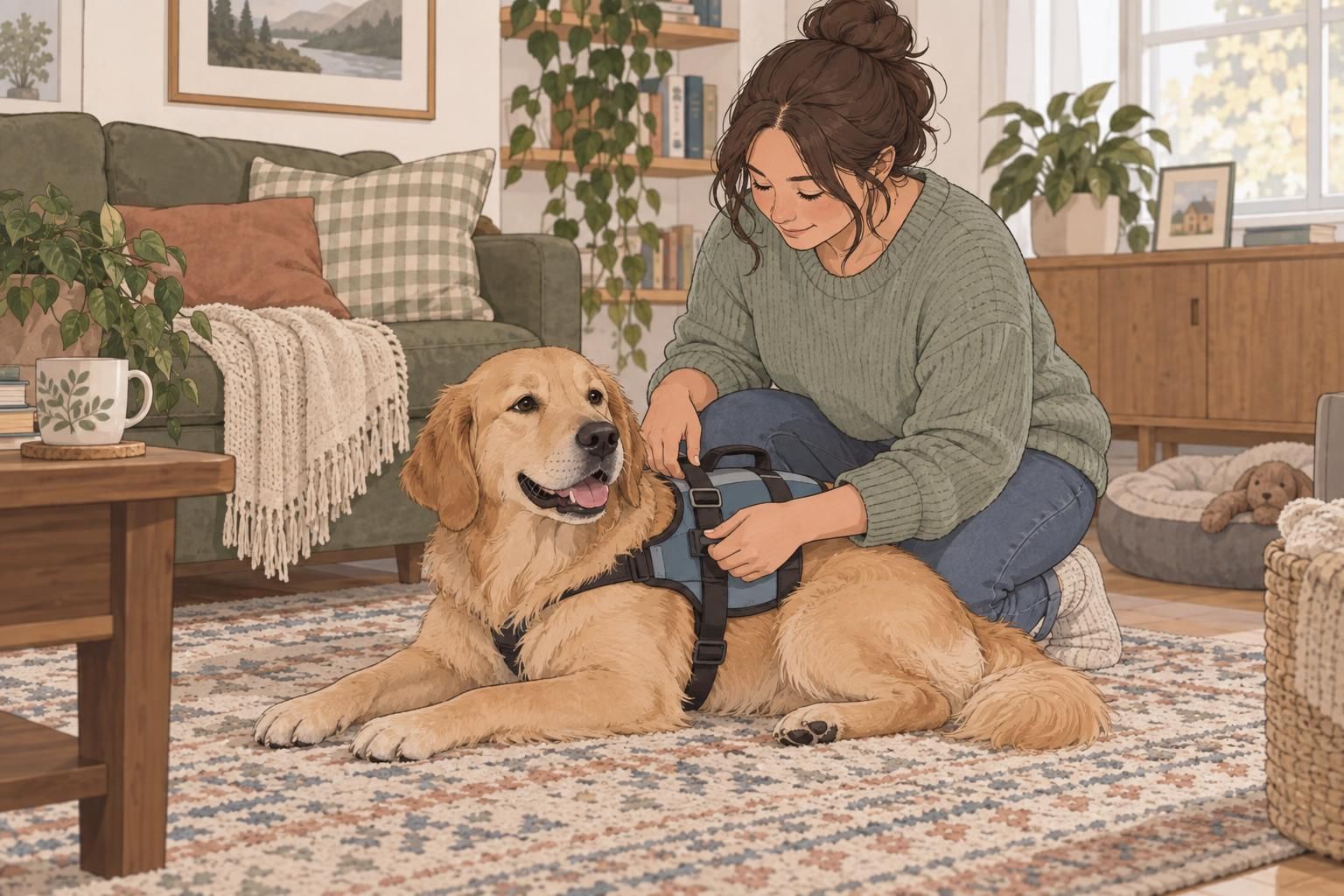
A standard leash offers a straightforward connection and familiar control. Hands-free leashes can suit handlers who prefer to keep a hand available, but their attachment position and length should work with the handler’s balance, mobility, and routine. Try any new arrangement somewhere quiet before relying on it around traffic, crowds, or other distractions.
Leash wraps can display a brief message, while handle wraps may make a grip more comfortable. Clips can keep a small accessory accessible or attach a pouch where it is easy to reach. Keep attachments light and positioned so they do not strike the dog, snag on nearby objects, or obstruct the leash’s normal operation.
Clear communication works best when the setup is simple. A readable wrap and a comfortable handle may be more useful than several competing messages or attachments.

An ID card, tag, or removable patch can help communicate an assistance dog’s role and keep identification details accessible. Each format has a different everyday advantage: a card fits in a wallet or pouch, a tag stays with the dog’s equipment, and a patch can be noticed without the handler searching through a bag.
Registration materials are an optional, practical way to organize identifying information. Keeping details consistent across printed and digital formats can make them easier to find and share when appropriate. For handlers who want both formats, a customizable printed Service Dog ID with a digital profile offers an identification option to consider.
Choose wording that accurately describes your dog’s role. Service animals and emotional support animals have different roles, and applicable access rules can differ by setting and location. Identification can assist communication, while the rules for the destination still guide what arrangements apply.
Clip-on pouches, accessory bags, and lanyards can reduce the need to search for everyday supplies. A small pouch may hold cleanup bags or a compact item you use frequently. A separate handler-carried bag is often a better place for heavier supplies, keeping the dog’s equipment light and uncluttered.
For low-light outings, reflective trim, bright bands, and small safety lights can make your team easier to notice. Position these accessories so they remain visible and do not interfere with movement or leash handling. Reflective materials need an external light source to stand out, while a safety light provides its own illumination. Check the light’s operation before leaving.
Before a trip, decide which identification and supplies should stay immediately accessible rather than packed away. A familiar leash, cleanup supplies, water, and any equipment needed for the journey deserve a place in your plan. Consult a practical guide to traveling with a service dog as you organize the outing and review destination-specific arrangements.
If you prefer to organize identification in multiple formats, consider a registration package with printed and digital identification options. Keep printed items protected and digital details accessible, while checking the journey’s applicable requirements separately.

Balance harnesses, support handles, and related attachments are specialized options for dogs performing mobility tasks. Their suitability depends on the intended task, the equipment’s design, and the dog’s physical condition. A handle’s presence alone does not mean a harness is appropriate for pulling, bracing, or bearing a handler’s weight.
Select mobility equipment with particular care. Seek individualized guidance from a veterinarian and a knowledgeable task-training or equipment-fitting professional before using gear that places physical demands on the dog. This helps match the equipment to the partnership rather than asking the dog to adapt to an unsuitable design.
Boots and other paw-protection items may help with particular terrain or weather conditions. Fit matters: protection should stay in place without rubbing or altering the dog’s gait. Introduce boots in short, calm sessions, inspect paws afterward, and reassess if the dog seems uncomfortable. Protective gear is an aid, not a reason to continue across unsafe surfaces.
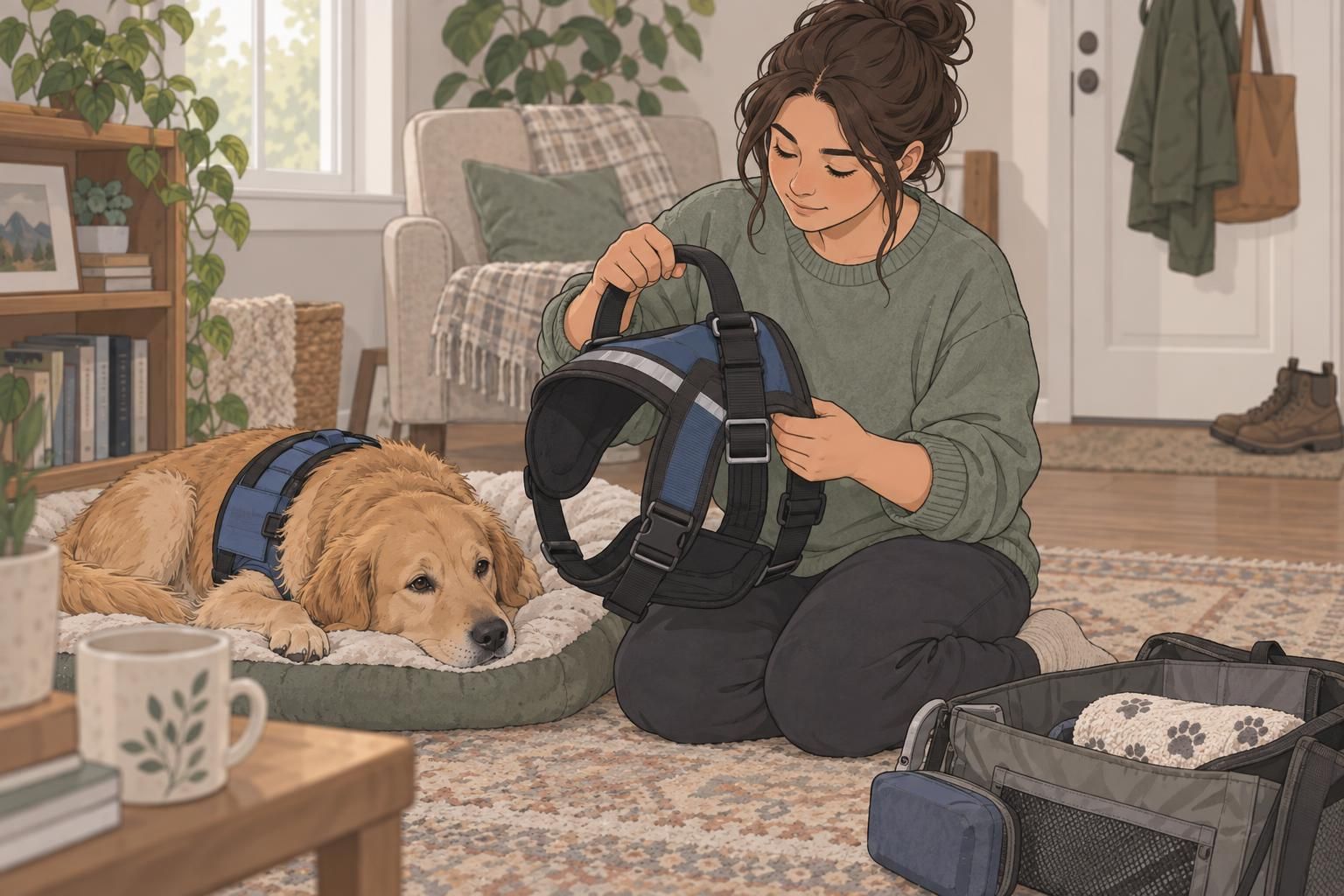
Before adding an accessory, ask what problem it solves and how it will fit into your routine. Assess the complete setup, not just each piece separately: a comfortable harness can become awkward when combined with a heavy pouch or poorly positioned clip.
Check fit again after adjustments, cleaning, or changes in the dog’s condition. Watch how your dog walks, turns, sits, and lies down while wearing the complete setup. The right accessories should support a comfortable partnership: useful when needed, easy to manage, and never an unnecessary obstacle to the dog’s work.
Your trusted source for service animal registration. Get professional ID cards, digital profiles, and smart NFC tags to keep your service animal safe and recognized.
© National Animal Registry — All rights reserved.