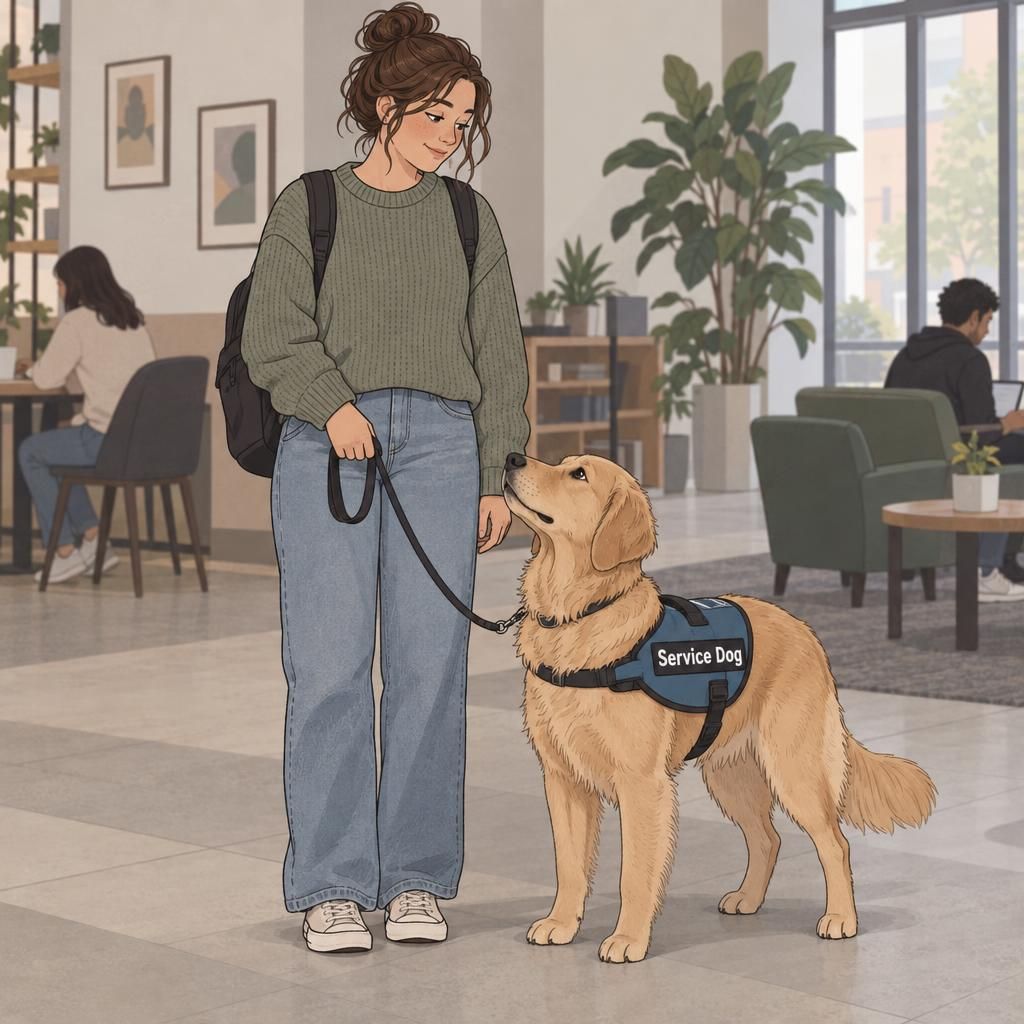
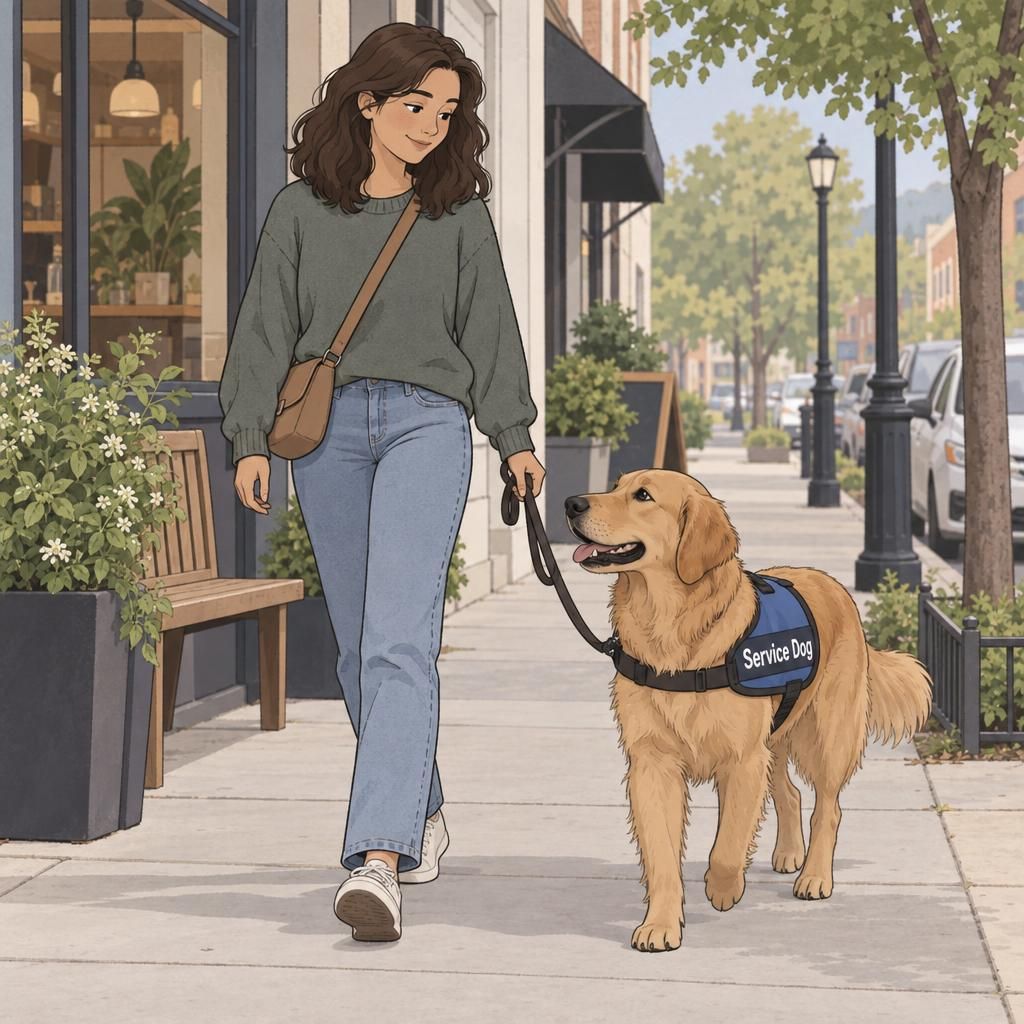
Everyday outings involve plenty of small interactions: entering a cafe, checking in for an appointment, or passing neighbors on a sidewalk. For someone accompanied by a service dog, these moments can also bring questions or unwanted attention. A visible ID card, tag, or vest can provide a simple communication cue, helping others recognize that the dog is working rather than visiting as a pet.
Clear identification may reduce confusion and help handlers feel more at ease in public, a practical benefit discussed in this source. It cannot control every interaction, but it can give people useful context before they approach. A recognizable vest or clear label may remind someone to leave room, avoid petting, and allow the handler and dog to continue without interruption.
That difference can matter during a busy day. Instead of repeatedly explaining that the dog is working, a handler can let a visible signal communicate the basics. Identification works best as a helpful introduction—not a guarantee that questions will disappear or that every person will understand service dog etiquette.

ID cards, tags, and vests serve different purposes. The right choice depends on how a handler prefers to communicate, what feels comfortable for the dog, and which items are easiest to use throughout the day. Some people prefer one lightweight option; others combine several so information is available both at a glance and when needed.
For handlers who want a portable reference, a customizable service dog ID card offers a way to keep identification close at hand. Choose descriptions that accurately reflect the animal’s role, and keep the information consistent across any card, tag, or profile you use.
There is no need to overload a dog with identification equipment. A comfortable vest and a card in the handler’s wallet may be enough for one routine, while a tag may better suit another. The goal is clear communication with as little inconvenience as possible.

Good identification makes basic information easy to find without turning every interaction into a personal conversation. A handler may want to communicate the dog’s working role while keeping medical history and other sensitive details private. Thoughtfully chosen wording can help separate those goals: explain what others need to understand without sharing more than the handler wishes.
A printed card and digital profile provide two convenient ways to keep identification accessible. The card can be reached without unlocking a phone, while a digital profile offers another reference when the physical card is elsewhere. Keeping both organized can make the handler’s own routine simpler, especially when switching between bags, jackets, or travel gear.
For those who prefer coordinated materials, a service dog registration package with a printed ID and digital profile brings those formats together. Registration materials can support consistent identification and personal organization. Their practical role is to communicate information; access rules still depend on the applicable law and situation.

The most useful identification is equipment you can comfortably use every day. Consider visibility, fit, durability, and access before choosing an item. A clear label is helpful only if it remains easy to see, and a card is convenient only if you can reach it when you want to.
Travel adds another layer of planning. Keep identification together with itinerary details, contact information, and any documents relevant to your transportation provider or destination. Requirements can differ across settings, so check current information rather than assuming the same procedures apply everywhere. Start with planning ahead for travel with a service dog to make preparation part of your routine.
Handlers who prefer several identification formats may consider a service dog package with a printed ID and QR tag. Think about which formats you will actually use. Printed identification offers a convenient backup when a phone battery is low, while digital features may be useful when connectivity is available.

The Americans with Disabilities Act does not require a service animal to wear a vest, tag, or specific harness. Identification is an optional communication aid, allowing handlers to choose what works best for their needs. A clearly labeled vest may make a dog’s role more apparent, but the equipment itself does not determine service animal status.
Under the ADA, a service dog is trained to perform work or tasks for a person with a disability. Emotional support alone does not meet that definition. This distinction helps handlers select accurate labels and understand which rules apply. Registration, a certificate, or an ID can support organization and communication, but does not replace the ADA’s service animal criteria.
Under the ADA’s public-access rules, businesses cannot require a service animal ID or certification as a condition of entry. Handlers may choose to carry identification for convenient communication.
Not necessarily. Air travel, housing, and other settings can involve different rules. Check the requirements relevant to your situation; an identification package does not substitute for any applicable forms or procedures.
Confidence often grows from small, repeatable habits. Put your ID in the same accessible pocket, check the dog’s gear before leaving, and keep labels unobstructed. These simple preparations reduce last-minute searching and help you focus on the outing rather than your equipment.
Clear wording also matters. A working label can communicate the dog’s role, while a brief message such as “Do Not Pet” can help discourage distractions. Choose labels that are accurate and easy to read, without crowding the vest or adding unnecessary weight.
For general educational conversations, wallet-sized ADA service dog information cards offer a compact way to share information. A concise handout can provide a starting point without requiring a lengthy verbal explanation. Keep it accessible, and remember that general information should be read in the context of the situation’s applicable rules.
Ultimately, the best identification setup is one that fits your life and respects your dog’s comfort. Whether you choose a card, tag, vest, or coordinated combination, the aim is straightforward: clearer communication, better organization, and fewer avoidable distractions. Thoughtful preparation can make everyday outings feel more manageable—one small detail at a time.
Your trusted source for service animal registration. Get professional ID cards, digital profiles, and smart NFC tags to keep your service animal safe and recognized.
© National Animal Registry — All rights reserved.