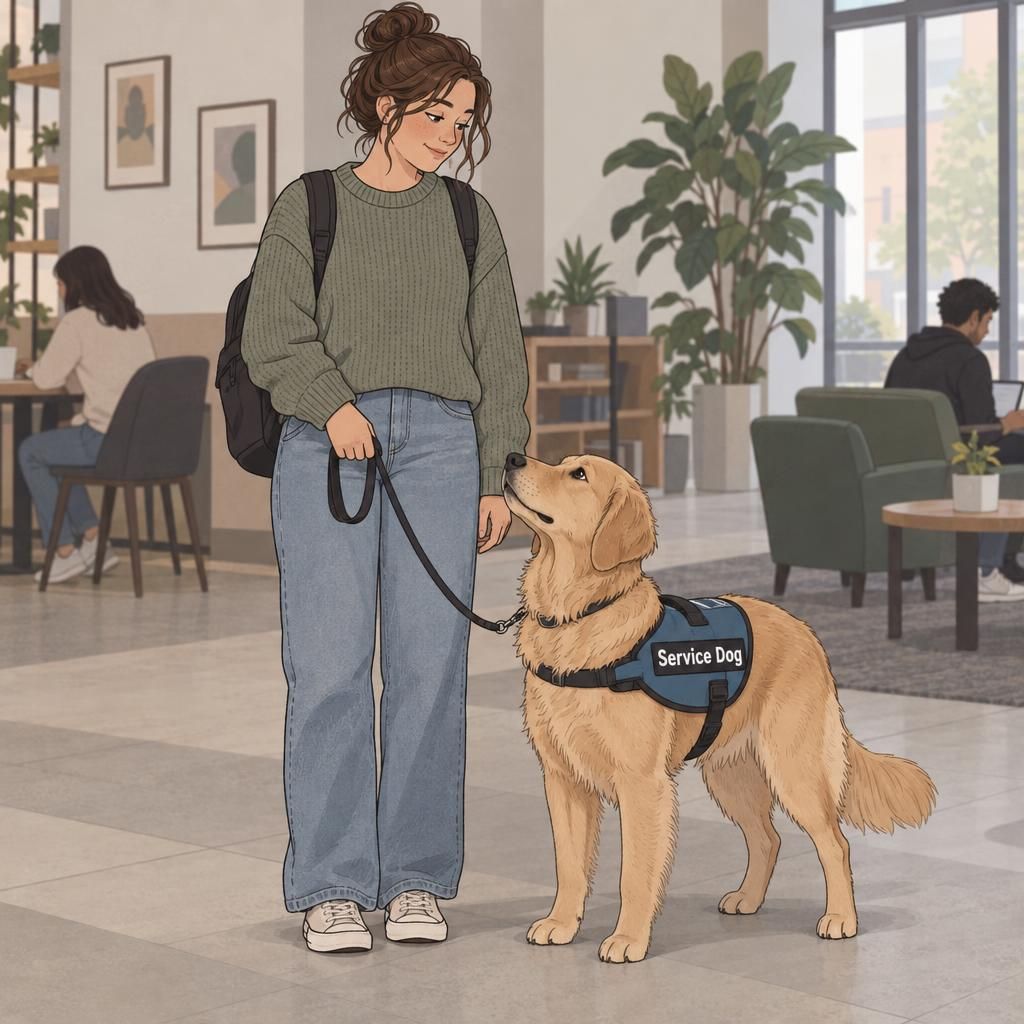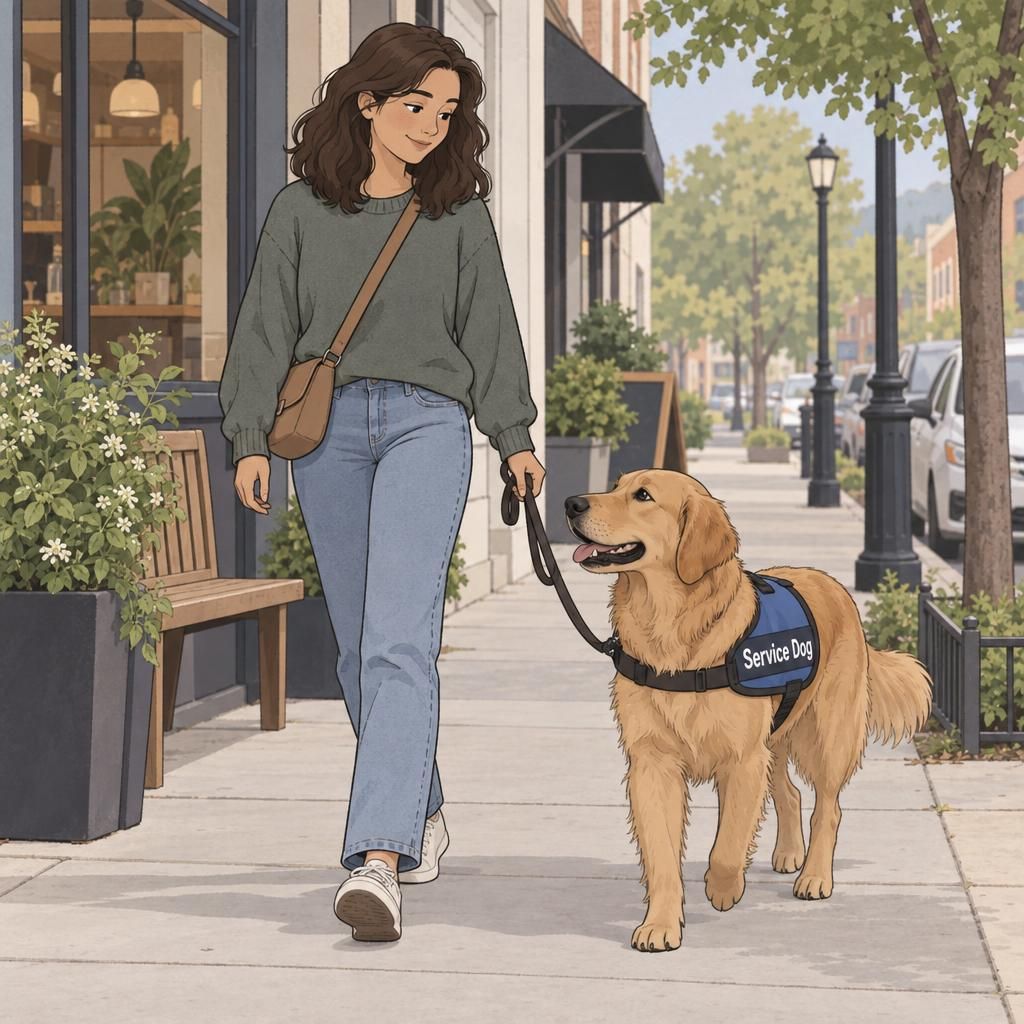

A service dog partnership is built around work, trust, and a person’s individual needs. Behind an ordinary trip to a store or a quiet afternoon at home is a dog trained to perform tasks related to its handler’s disability. The routine may look different from one team to another, and much of the dog’s work may not be obvious to people nearby.
Under the Americans with Disabilities Act, service animals are dogs individually trained to do work or perform tasks for people with disabilities. The ADA generally requires covered businesses and state and local government entities to allow service animals in areas where the public may go, subject to applicable conditions and exceptions. Comfort or companionship alone does not meet this service-animal definition. The ADA provides the federal public-access framework discussed here (source).
For a handler, everyday life involves more than entering public places. It includes maintaining training, meeting the dog’s needs, planning breaks, and deciding how to respond to questions. Registration materials can be part of that routine, but they serve a different purpose from disability-related task training and the legal rules governing access.

Public interactions can be straightforward, awkward, or somewhere in between. One visit may involve little more than finding a suitable place for the dog to settle. Another may bring questions from an employee or attention from a passerby. A dog’s working role is not always immediately apparent, particularly when the task it performs is subtle.
Consider an illustrative situation: a handler enters a shop, an employee notices the dog, and the handler briefly explains that it is a service dog. An identification card may provide a convenient visual reference during that conversation. For someone who prefers to keep explanations brief, having information close at hand can make the exchange feel more organized.
That does not mean an ID will prevent every misunderstanding. Staff familiarity with service animals, the environment, and the circumstances of the visit can all affect the interaction. Another handler may prefer a short verbal explanation without showing any materials. Both approaches can reflect thoughtful choices about comfort and routine.
The practical goal is clear communication while keeping attention on the partnership. A smooth interaction is helpful, but it is not a guaranteed result of registration, certification, or a particular identification format.
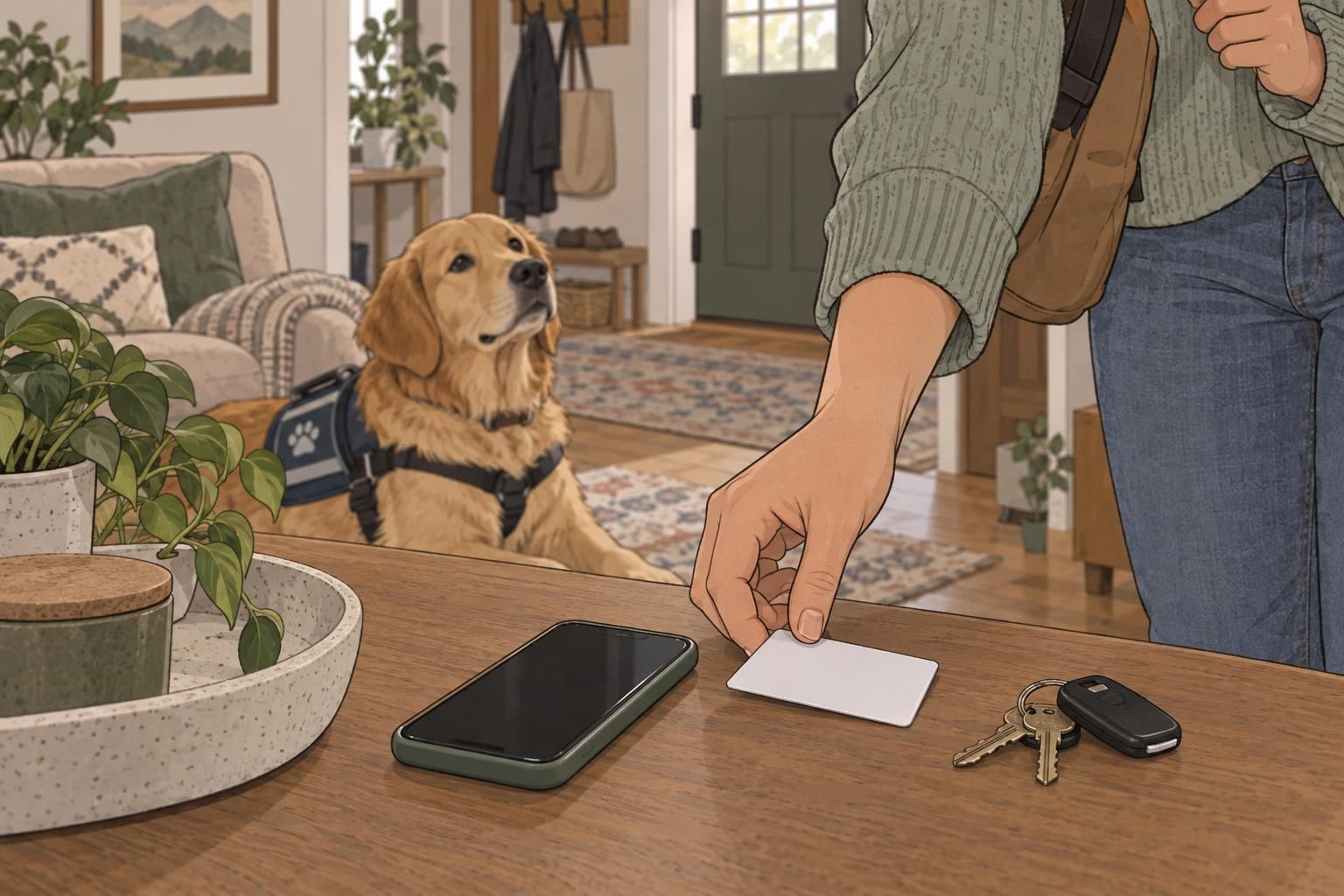
Registration IDs and certificates can help handlers keep identifying information together and present it in a consistent format. A printed card can fit into a wallet or bag. A certificate can be stored with other records. A digital profile can provide another way to find information when a paper copy is not nearby.
For handlers who like a physical reference, a customizable printed service dog ID offers an identification option they can incorporate into their everyday routine. Its practical value lies in having selected information organized and accessible, rather than having to search through unrelated records during a conversation.
It helps to distinguish registration or certification materials from the rules that apply in a particular setting. Access is governed by applicable laws and setting-specific requirements. An identification card or certificate does not itself establish a dog’s training or guarantee admission in every situation. Likewise, the wording on a card does not determine which legal category applies to an animal.
Some handlers may feel more prepared when they carry organized materials. Others may primarily use them for personal recordkeeping. The most useful approach is to understand what the materials provide and choose how they fit into daily life.

A familiar local routine and an unfamiliar trip can call for different levels of preparation. Transportation, lodging, housing, and public businesses do not all operate under identical rules. The requirements may also differ by destination and by whether the animal is a service animal or a support animal.
Before traveling, check the current requirements for the transportation provider and destination. Confirm any applicable forms, submission deadlines, and procedures rather than assuming that the process used on a previous trip will be the same. The resource on planning ahead for service dog travel is a place to begin organizing your preparations.
For housing, ask about the applicable accommodation process instead of treating it as the same as entry into a shop. Registration materials may help organize identifying details, while a housing provider’s process may involve separate considerations. Keeping these purposes distinct makes communication clearer.
Preparation cannot eliminate every unexpected issue. It can, however, reduce last-minute uncertainty and give you more time to resolve questions. Think of identification materials as one part of a broader plan that also accounts for the setting and your dog’s needs.

The best identification format is one you can comfortably keep organized and access when you want it. A handler who usually carries a wallet may prefer a printed ID. Someone who relies on a phone may appreciate a digital profile. A certificate may suit someone who keeps a dedicated folder for their animal’s records.
Handlers who prefer several formats together can consider a registration package with a printed ID, digital profile, and certificate. Having more than one format offers flexibility: a physical card for a quick reference, a digital profile for electronic access, and a certificate for organized records.
Whichever format you choose, check that the information is accurate and consistent. Store paper materials where they will be protected, and make sure you know how to access any digital profile before you need it. Consider whether the information you share is appropriate for the conversation, particularly when privacy matters.
Registration can be a practical way to bring identifying information into one place. Choosing a format is about convenience and preference—not selecting a document that promises different access rights.

The most useful lesson from everyday service dog situations is not that one approach works for everyone. It is that preparation, clear communication, and an understanding of the setting can help handlers make decisions that suit their own partnerships.
Identification tools may help some people feel ready for conversations, while others value them mainly for organization. A printed card, digital profile, or certificate can support a routine without replacing task training, the dog’s care needs, or the requirements that apply to a particular location.
No. It may offer a convenient reference, but responses and circumstances vary. Applicable laws and setting-specific rules govern access.
Consider what you normally carry, how you organize records, and whether you want a physical backup. You can choose one format or combine several.
Check the relevant setting’s current requirements and process. Keep registration materials available for identification, while addressing any separate requirements that apply.
Start with your actual routine: the places you visit, the information you want accessible, and the situations that require advance planning. Choose practical resources that support those needs. A well-prepared partnership is built through thoughtful daily habits, with identification tools available when they are useful to you.
Your trusted source for service animal registration. Get professional ID cards, digital profiles, and smart NFC tags to keep your service animal safe and recognized.
© National Animal Registry — All rights reserved.