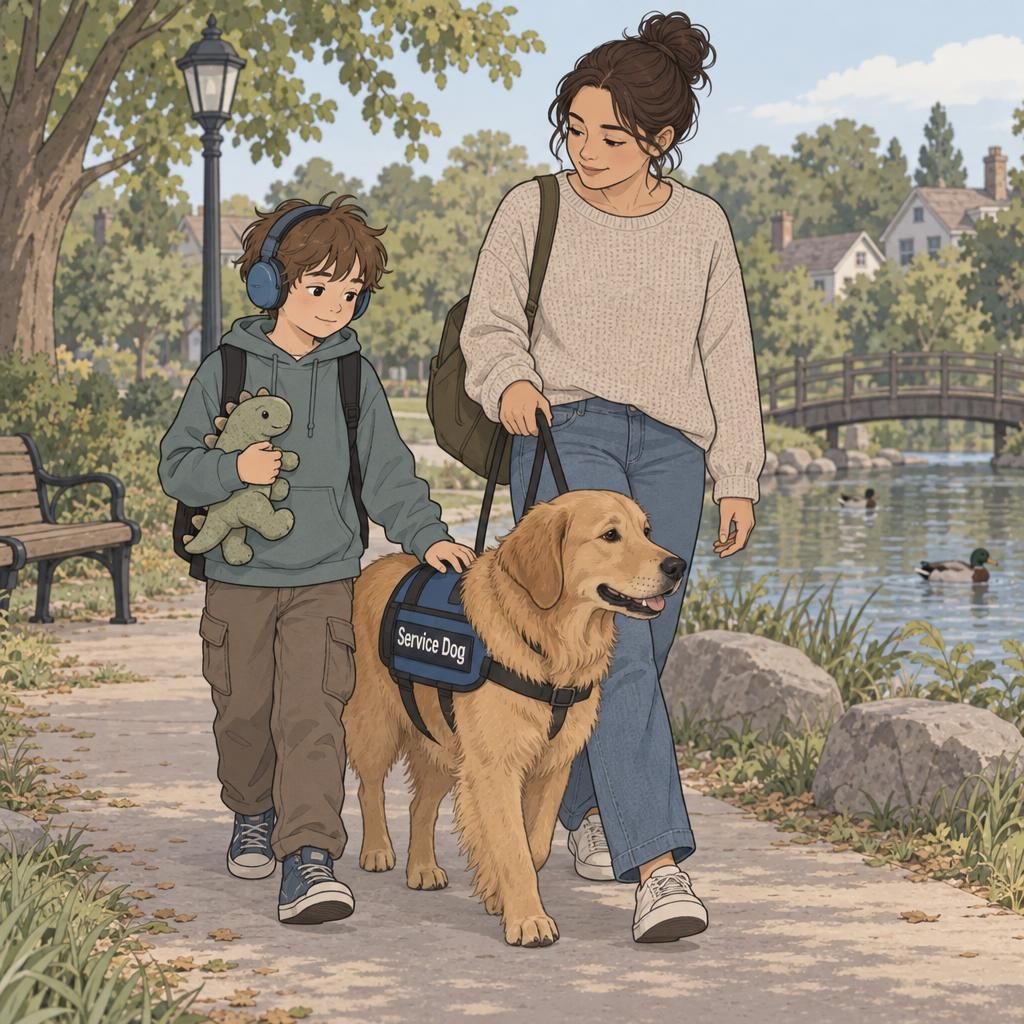
Guide dogs help people who are blind or vision impaired move through everyday life with greater independence, confidence, and freedom. Sometimes called seeing eye dogs or blind assistance dogs, they provide practical mobility support through a close working partnership with their handler. Irish Guide Dogs for the Blind describes these benefits in its overview of guide dog support: source.
That support can make a difference in ordinary moments: leaving home for work, visiting a familiar shop, or meeting friends. A guide dog helps with navigating a physical environment, while the handler contributes direction, decisions, and knowledge of the journey. Together, they develop routines that reflect the handler’s life rather than a single model of independence.
A guide dog is one part of a broader independence and support plan. Mobility skills, accessible information, assistive devices, and support from other people can all remain valuable. Independence does not mean doing everything alone; it means having meaningful choices about where to go, what to do, and which resources to use.
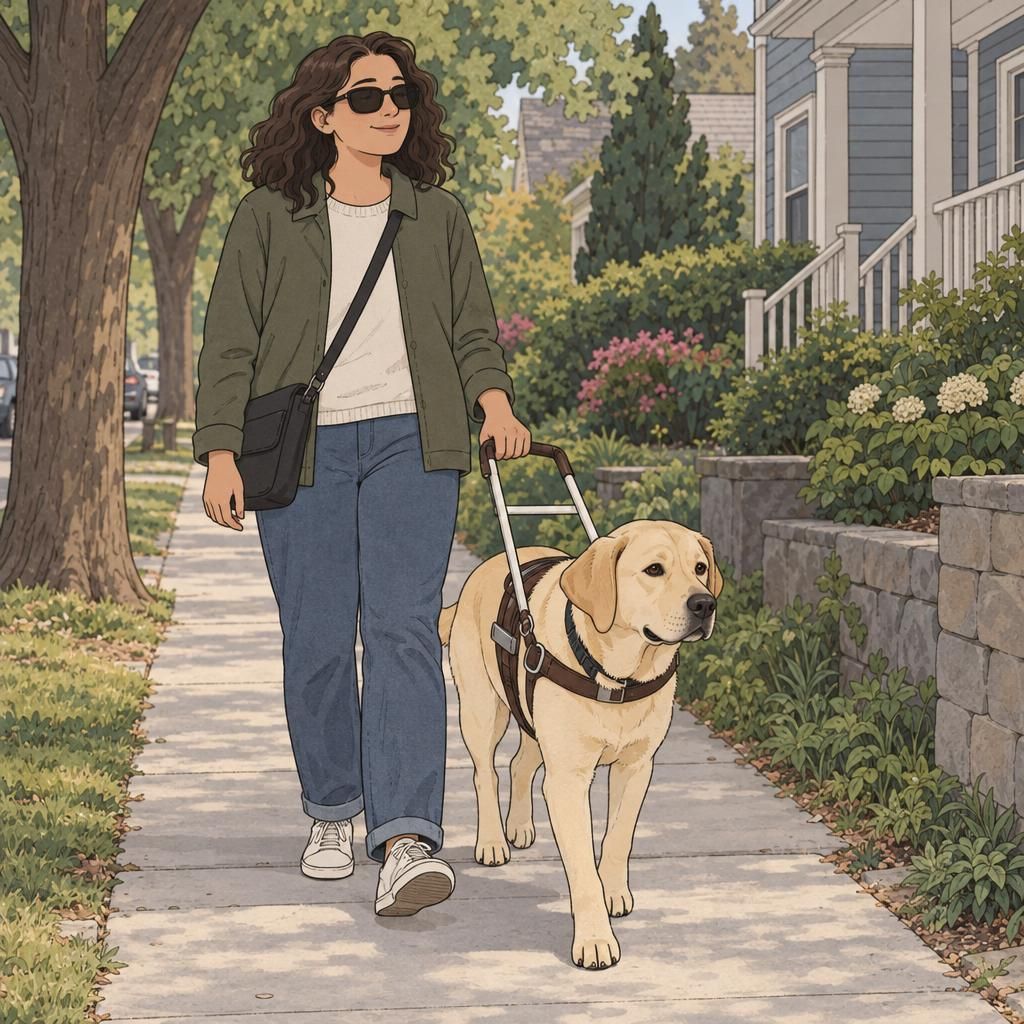
A guide dog and handler work as a team. The handler gives cues and guides the overall journey, while the dog helps navigate the space ahead. This collaboration supports safer movement around obstacles and through familiar surroundings. The dog’s assistance complements the handler’s mobility skills rather than replacing the handler’s judgment.
The relationship also involves everyday care. Feeding, exercise, rest, grooming, and attention to the dog’s well-being are part of maintaining a dependable partnership. Consistent routines help both members of the team understand what comes next, whether that is a morning commute, an afternoon appointment, or quiet time at home.
Individual needs and preferences shape how the partnership works. One handler may travel frequently on public transport, while another may focus on neighborhood routes and occasional outings. Household arrangements, activity levels, and personal goals all matter. A useful routine leaves room for both the handler’s choices and the dog’s care needs.
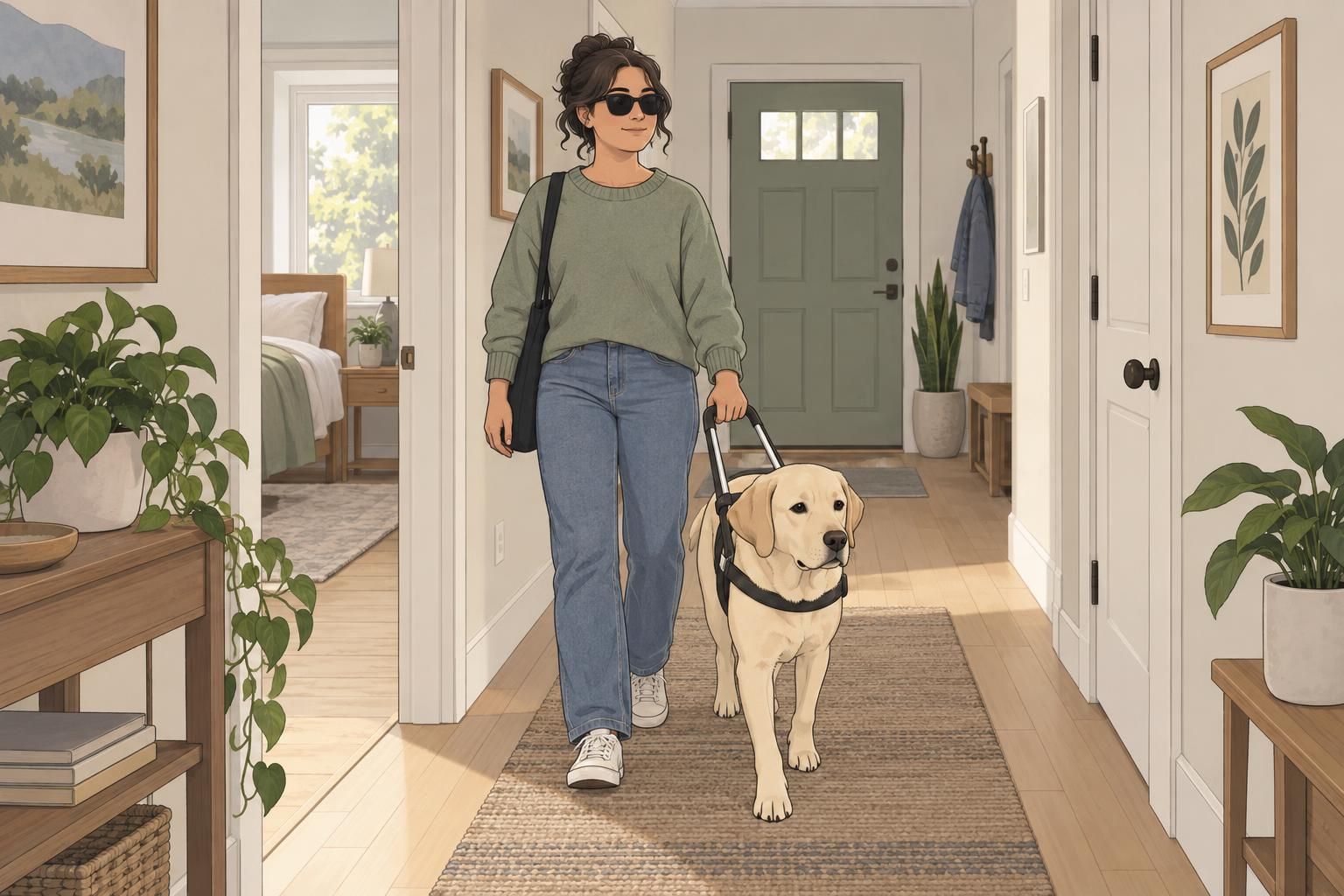
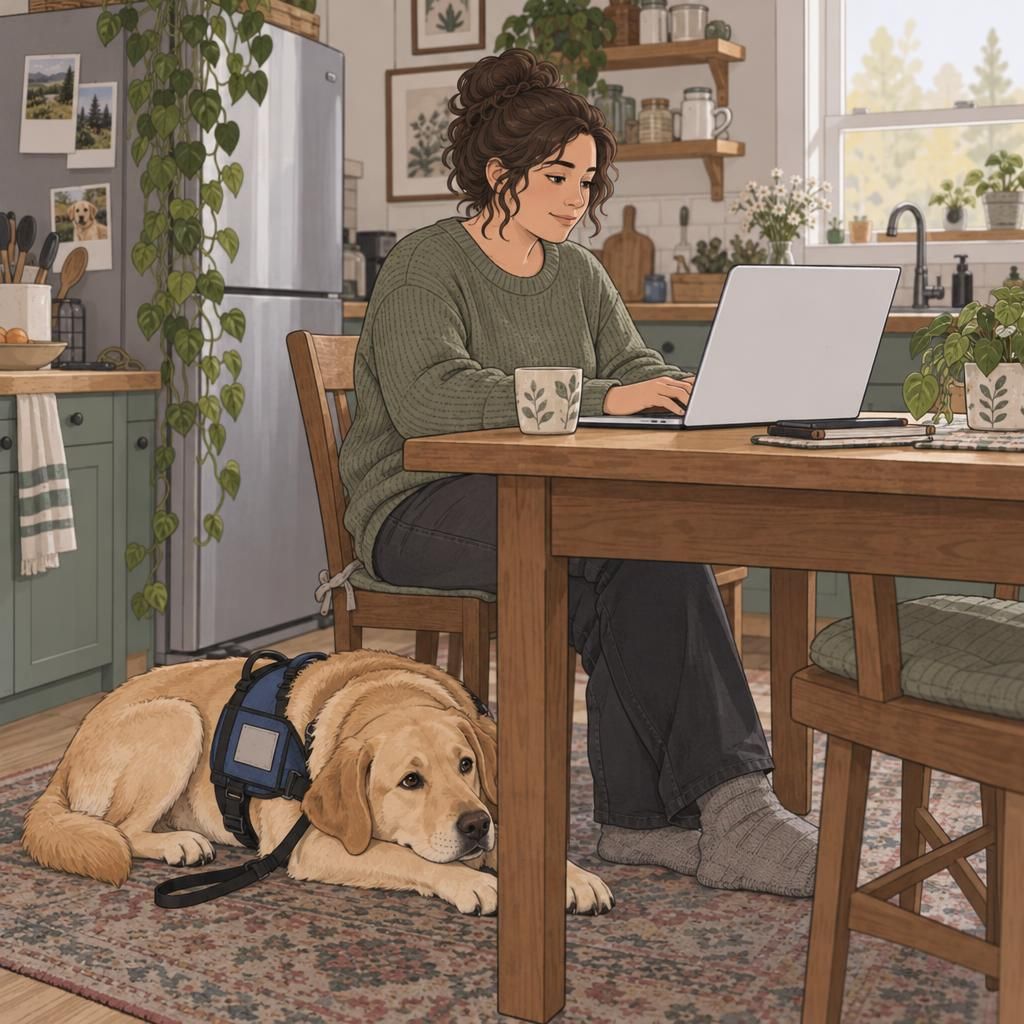
A familiar, predictable home can make movement more comfortable and reduce avoidable obstacles. Small habits often matter more than major changes. Clear walking routes and consistent storage locations help the person understand their surroundings without repeatedly encountering unexpected objects.
Discuss changes with the person rather than reorganizing the home on their behalf. An arrangement that looks tidier to someone else may interrupt a system the handler already knows well. If furniture needs to move, explain what changed and allow time to become familiar with the layout.
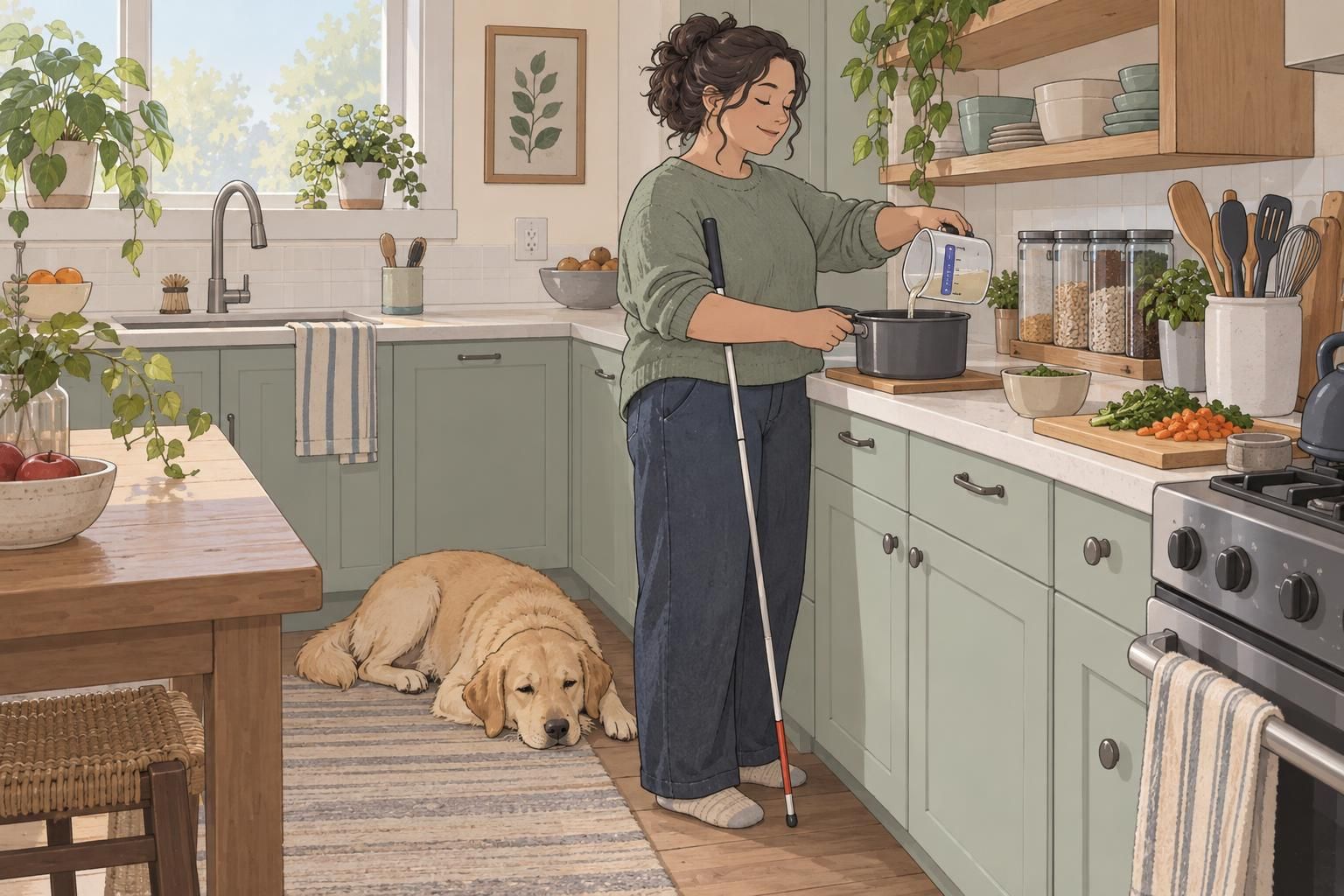
Daily living strategies and aids can also support cooking, shopping, and using a telephone. Organized kitchen tools, accessible shopping routines, and telephone features suited to the person’s needs can make tasks easier to manage. The goal is not to use every available aid, but to select approaches that fit the individual.
Guide dogs can support travel along familiar routes to work, shops, public transport, and social activities. Their assistance helps handlers move confidently through environments that may include narrow pathways, busy entrances, and changing pedestrian activity. Familiarity with a route gives the partnership a useful foundation, but each outing still involves attention and decisions.
Planning ahead is particularly helpful when a journey includes an unfamiliar destination or a change to a usual route. Consider the starting point, transport connections, destination entrance, and return trip. Leave enough time to move at a comfortable pace and to meet the dog’s care needs along the way.
When surroundings change, orientation and mobility support can help the handler explore alternatives and build familiarity. A new workplace, altered transport stop, or different home-to-shop route may call for an updated travel plan. For additional preparation ideas, explore planning travel with a service dog.

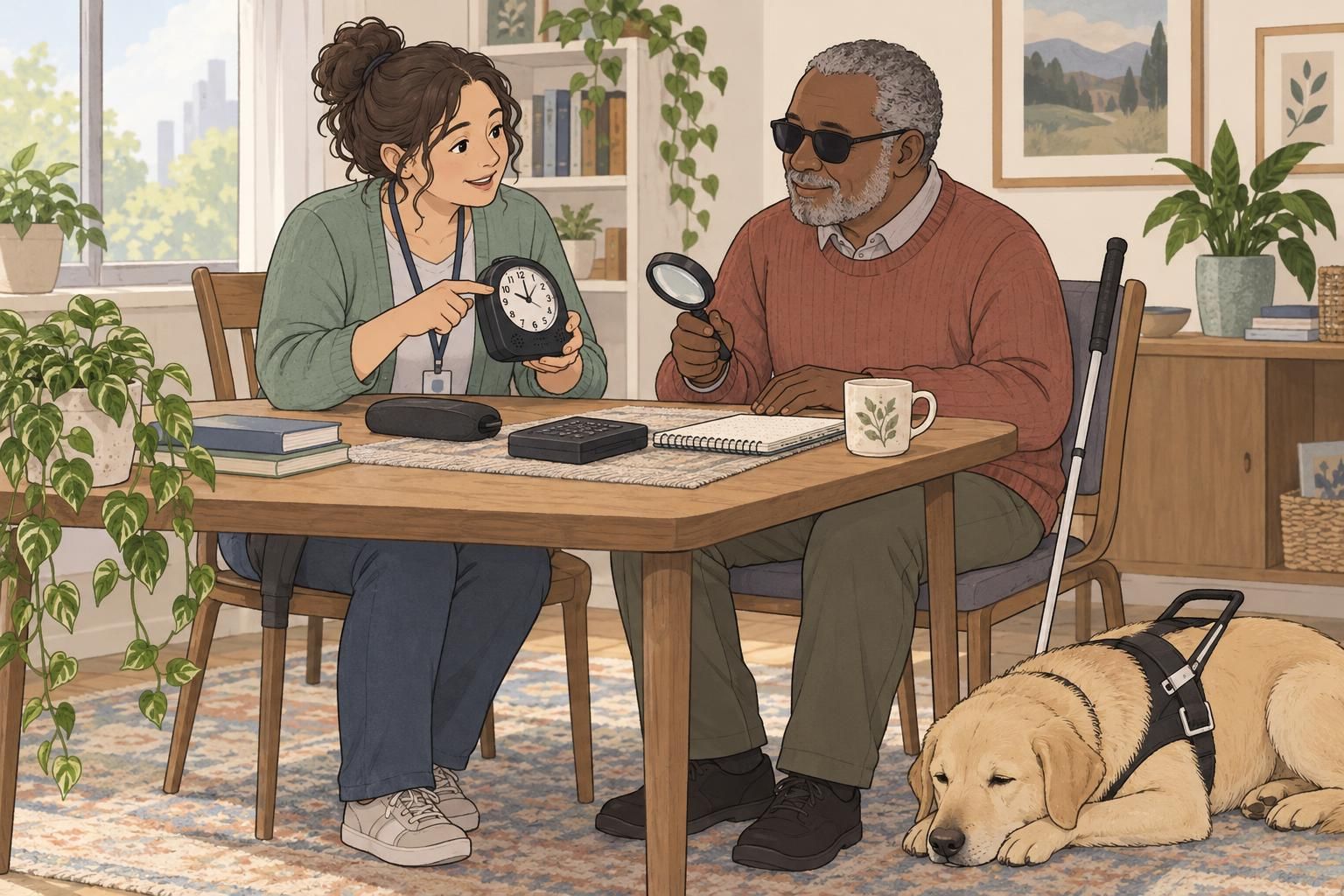
The strongest support plan brings together resources that serve different purposes. Orientation and mobility training can help with understanding routes and moving through changing environments. Occupational therapy can support daily activities and practical home arrangements. Assistive technology can improve access to information and make specific tasks more manageable.
Not every device suits every person. Someone’s vision, preferences, routines, and experience will influence which tools are helpful. An opportunity to discuss options or try a device can be more useful than choosing it solely because it is commonly recommended.
Follow-up services can also help when circumstances change. Moving to a new home, starting a different routine, or learning a new route may require adjustments to an established support plan. Seeking assistance at these points is a practical way to maintain independence, not a sign that the partnership has fallen short.
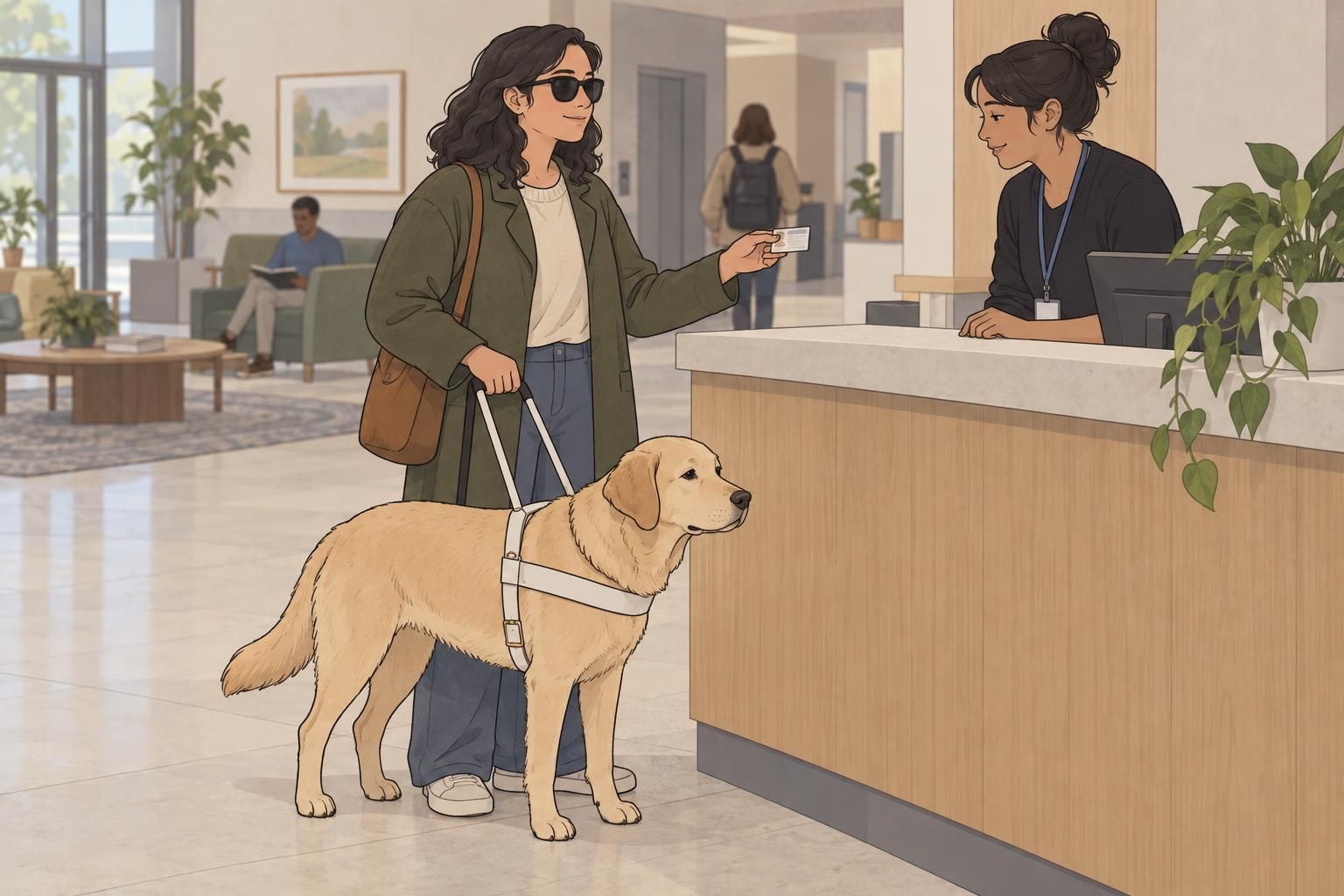
A clear ID can help a handler communicate that their dog is a guide or service dog during everyday interactions. Having identification available may provide a straightforward reference when speaking with staff or explaining the dog’s working role. The handler can decide whether and how to use it.
Registration materials, IDs, and certificates are optional practical tools for identification and documentation clarity. Keeping details consistent across materials can make information easier to share and organize. These tools can complement a handler’s communication preferences without replacing an understanding of the rules that apply to a particular setting.
Access rules and policies can vary by location and context. Before visiting an unfamiliar destination, check the relevant requirements rather than assuming that the same process applies everywhere. Identification can support communication, while applicable access rules determine what a venue or provider may require.
Guide dog support works best when it reflects the handler’s goals, routines, and choices. For one person, the priority may be a more confident commute. For another, it may be visiting friends, managing errands, or becoming comfortable in a new neighborhood. Those personal priorities should guide decisions about mobility support, home arrangements, and useful tools.
If identification fits your preferences, National Animal Registry offers a customizable ID with a Guide service-type option. It can be part of an organized approach to communicating your dog’s role, alongside planning for the settings you visit.
Explore local guide dog organizations and relevant support services to learn what resources fit your circumstances. Ask about mobility support, daily living aids, and follow-up assistance as your needs evolve. Independence is personal, and the most useful plan is one that helps you make choices and participate in everyday life on your own terms.
Your trusted source for service animal registration. Get professional ID cards, digital profiles, and smart NFC tags to keep your service animal safe and recognized.
© National Animal Registry — All rights reserved.