A comfortable hotel stay with a service dog starts with familiar routines and a few thoughtfully chosen accessories. You do not need to bring everything from home. A compact collection of items for resting, feeding, cleanup, and handling can help your dog settle in while keeping the room organized and your everyday essentials within reach.
Think about the stay from your dog’s perspective: a different sleeping space, unfamiliar hallways, and meals away from the usual kitchen. Familiar supplies can make these changes easier to manage. Room signs and handler-selected identification can also support clear communication with hotel staff, while a well-organized travel pouch helps you find important items quickly.
The best packing list is practical rather than elaborate. Choose accessories that fit your dog’s usual routine, your handling preferences, and the length of your visit. Focus on room comfort, food and water, cleanliness, reliable gear, safety, and communication.
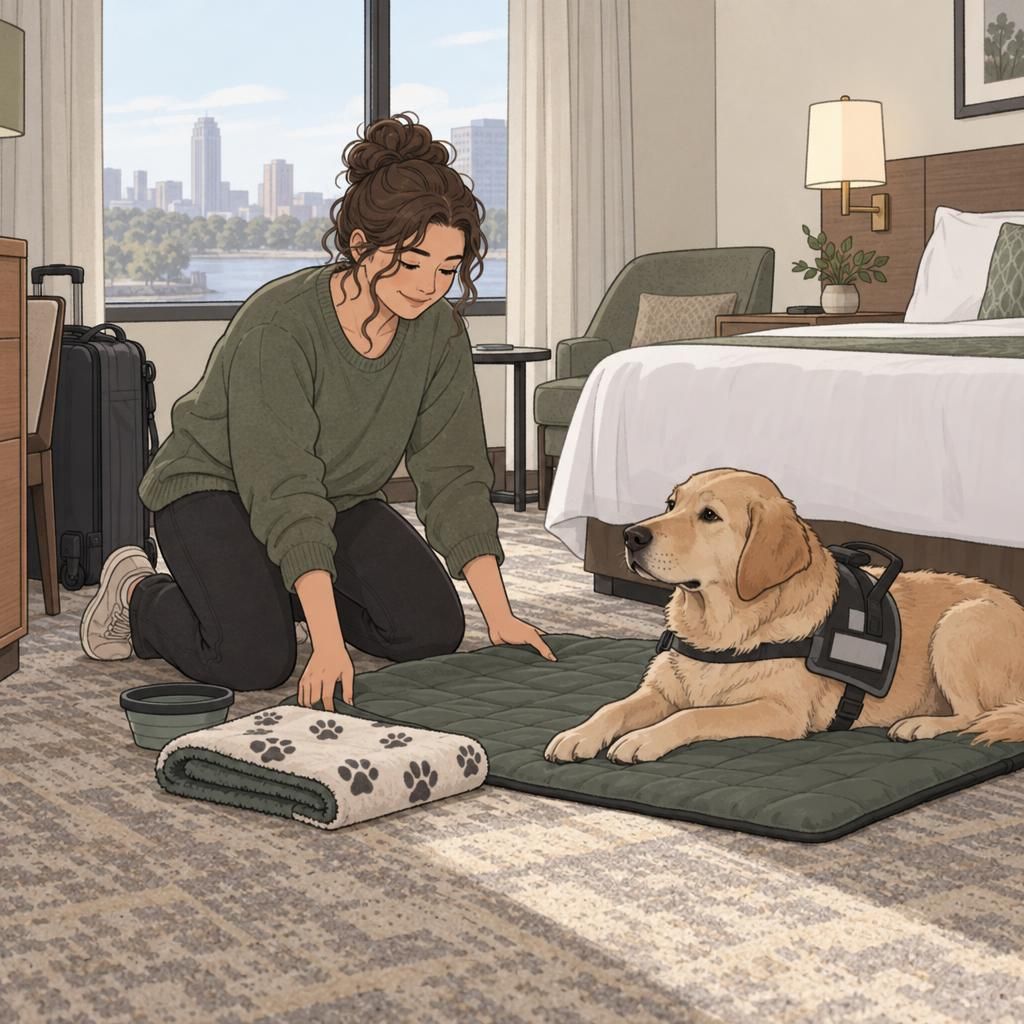
A portable bed or mat gives your service dog a consistent place to rest in an unfamiliar room. Choose something your dog already uses comfortably, or introduce a travel version before departure. A lightweight mat that folds or rolls easily is convenient when luggage space is limited.
Add a familiar blanket if it is part of your dog’s normal routine. A washable cover makes it easier to keep the resting area clean and can help protect hotel furnishings where appropriate. Rather than packing the largest bed available, look for a setup that offers enough space for your dog to stretch out without making the room difficult to navigate.
When you arrive, place the resting spot where your dog can settle comfortably without blocking the doorway or your walking route. Keep the arrangement similar throughout the stay. For a broader preparation routine, consider planning ahead for service dog travel alongside your accessory checklist.
Collapsible food and water bowls are useful for both hotel rooms and travel days. They take up little space when folded and can be kept near the top of your bag for quick access. Choose bowls that are appropriately sized for your dog and easy to clean between uses.
A small feeding mat helps create a designated mealtime area and catches minor spills. Set it on a level surface away from busy walking routes, and keep a towel nearby for splashes. Compact accessories work best when they are also stable enough for your dog’s usual eating and drinking habits.
Bring familiar food in a securely closed container, with enough for the planned stay and a modest allowance for delays. Keeping meals close to the usual routine can make travel days feel more predictable. After feeding, clean the bowls and mat so the area is ready for the next meal.

A small cleanup kit helps you manage ordinary travel messes without searching through several bags. Pack waste bags, enzymatic cleanup wipes, a small towel, and the grooming brush or comb your dog normally uses. Keep frequently needed items together near the room entrance or in your travel pouch.
Choose cleaning products suited to their intended use. Enzymatic wipes can be helpful for appropriate surfaces, but a surface-cleaning product should not be used on your dog unless its label specifically permits that use. For paws and fur, use the towel or wipes labeled as pet-safe for that purpose.
A quick paw check after an outdoor outing can help limit tracked-in dirt. Routine brushing can also help manage loose hair and keep your dog comfortable. Use products according to their labels and check that they are suitable for the hotel surface before applying them. Small, regular cleanups are generally easier than letting damp towels, spills, or loose hair accumulate.

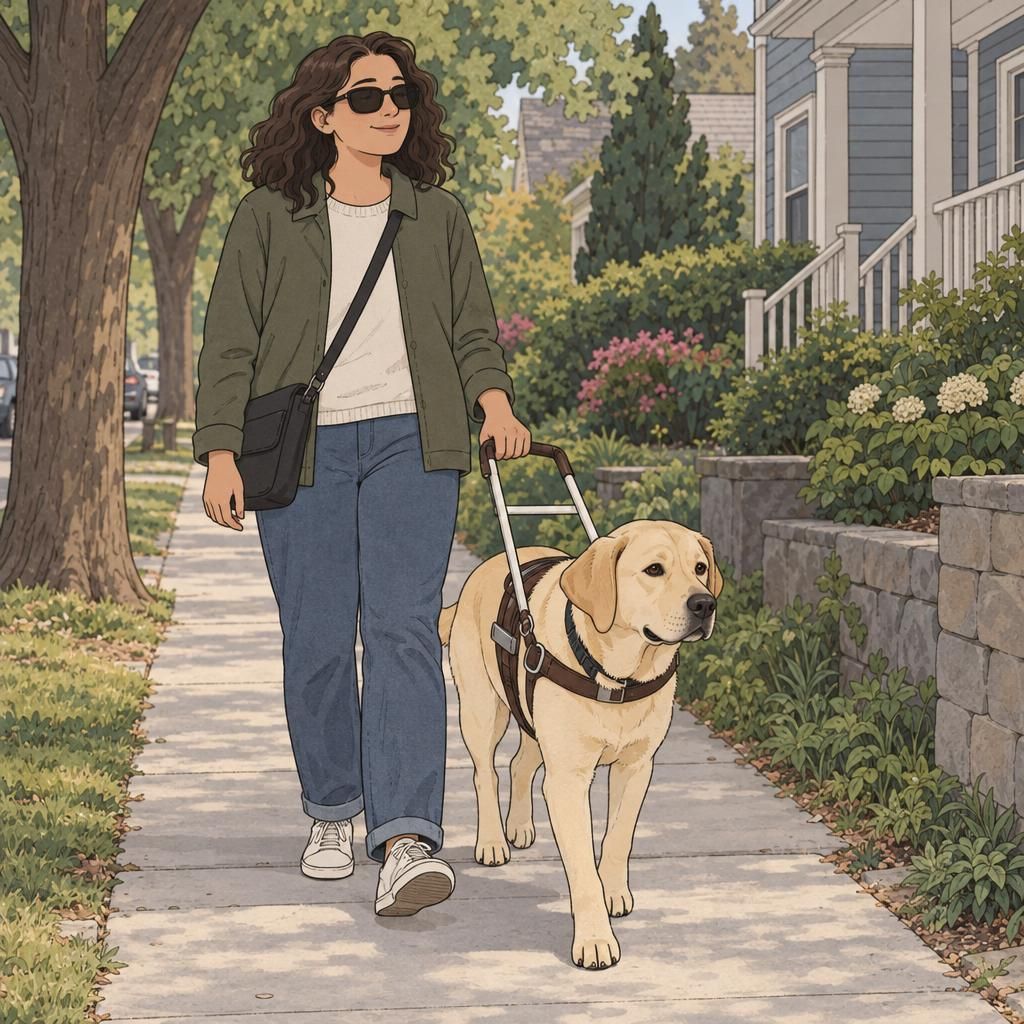
Bring a reliable leash and, if you use one, a well-fitted harness that works with your established handling routine. Travel is usually simpler with familiar gear rather than an untested setup. Before packing, check the leash, attachment points, and harness fasteners for wear or damage.
A spare leash is a useful backup if the main one becomes wet, misplaced, or damaged. Store it somewhere easy to reach instead of at the bottom of your luggage. The goal is to have dependable equipment available without carrying unnecessary duplicates of every accessory.
Reflective or high-visibility details may help your team be easier to see in parking areas, lobbies, and other dimly lit spaces. Choose additions that do not interfere with fit or movement. Visibility gear is a practical extra, not a reason to change equipment that already works well for you and your service dog.
A door hanger or room placard can be an optional way to let hotel staff know that a service animal is in the room. It may be particularly useful when housekeeping approaches. Keep the message clear and coordinate directly with staff about room servicing; a sign works best as a communication aid rather than the entire arrangement.
An ID card or other handler-selected identification can provide a convenient way to share information during an interaction. If you prefer a consistent, easy-to-carry format, a customizable Service Dog ID for convenient identification is one option to include in your travel kit.

An easy-to-reach travel pouch can keep reservation details, medications, emergency contact information, and small routine-care items together. Choose a pouch with enough organization to separate paperwork from items that might become damp or dirty. Keep medication packaging and storage needs in mind when deciding where each item belongs.
Include the communication tools you prefer to carry. For U.S. travel, portable ADA information cards for clear communication can offer a compact reference during conversations. Keep them accessible alongside your reservation information rather than buried in a suitcase.
Before departure, check your hotel arrangements and the requirements that apply at your destination. Rules can vary by location, particularly when traveling across borders. Confirm practical details such as room servicing and where you can take your dog for routine outdoor breaks. Preparing these details ahead of time leaves fewer logistics to manage after arrival.

Use this checklist as a starting point, then adjust it to your dog’s needs and the length of your trip. A short overnight stay may call for a smaller kit than a longer visit, but familiar essentials remain the priority.
Before closing your bag, check that washable items are clean, gear is in good condition, and everyday supplies are easy to find. A thoughtful hotel kit supports a familiar routine without adding unnecessary bulk, helping you and your service dog settle in with greater comfort and organization.
Your trusted source for service animal registration. Get professional ID cards, digital profiles, and smart NFC tags to keep your service animal safe and recognized.
© National Animal Registry — All rights reserved.