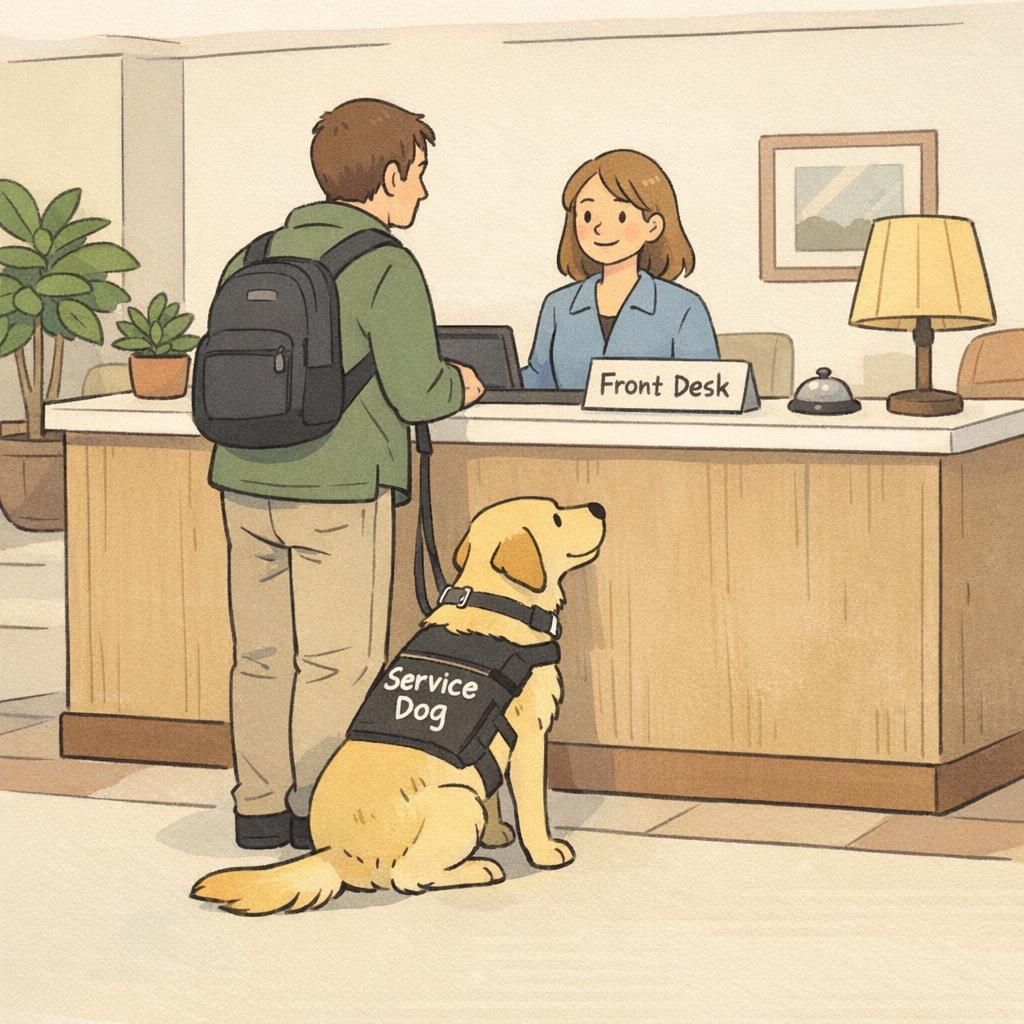
Many service dog handlers describe hotel travel as a mix of very easy wins and occasional, frustrating hurdles. One front desk associate may welcome you warmly, check you in in two minutes, and treat your dog like any other accessibility aid. Another may hesitate, ask for “proof,” or mistakenly route you to a pet-only process—even when the basic rules are the same.
When problems happen, it often comes down to inconsistent staff training, shift changes, or uncertainty about how service dogs differ from pets. That doesn’t mean you did something wrong. In practice, your goal is usually to keep the interaction calm, quick, and respectful—while still protecting your rights and your ability to travel comfortably.
In the ADA context, a service dog is a dog that is trained to do work or perform tasks for a person with a disability. The trained tasks are what make the dog a service animal—not the dog’s breed, size, or whether the dog wears special gear.
Because a service dog is there for disability-related assistance, access is different from “pet-friendly” policies. Pet rules are optional hospitality features; service dog access is part of disability access. In general, a service dog can accompany you in public areas where guests are allowed to go, as long as the dog remains under control and does not cause a disruption.
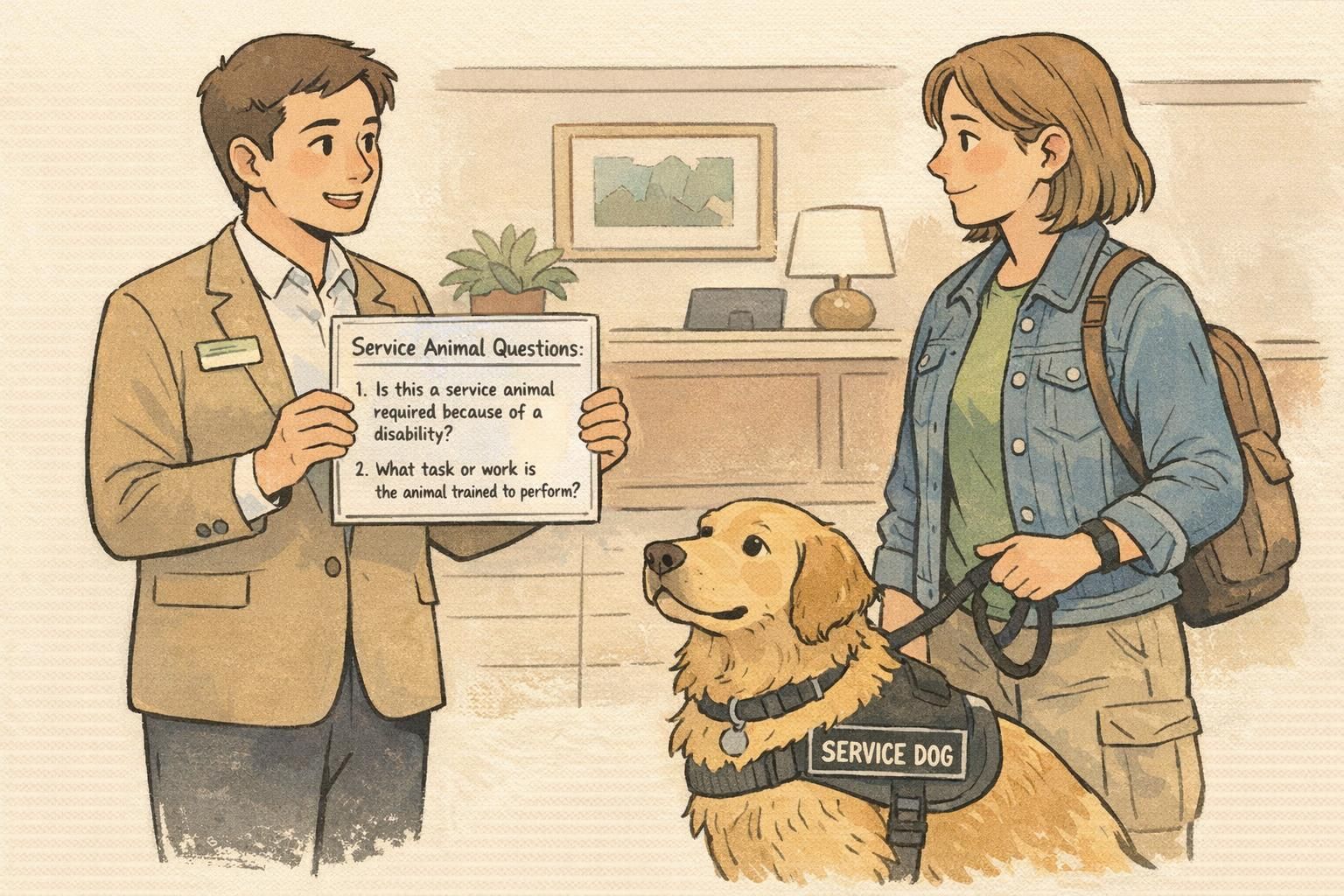
Check-in is where most misunderstandings happen. Many front-desk teams want to do the right thing, but they may default to the same steps they use for pets—asking for paperwork, vaccination records, or “certification.” Under ADA guidance, staff are typically limited to two questions when it isn’t obvious that a dog is a service animal.
Those two questions are: (1) whether the dog is a service animal required because of a disability, and (2) what work or task the dog has been trained to perform. Staff generally may not require documentation, certification, or a demonstration of the dog’s tasks. For the ADA’s FAQ wording, you can reference this: source.
A calm, consistent answer often prevents the conversation from escalating. The goal is not to argue—it’s to give staff what they’re allowed to ask for, then move forward with the reservation.
“ "I keep my answers short and routine. Once I state the task my dog performs, most check-ins go right back to normal." – Frequent hotel traveler”
If you prefer a polite, ready-to-share reminder for staff, having ADA law handout cards for quick, polite clarification can help keep things friendly and efficient—especially during busy check-in lines.
One of the most common surprises for handlers is being told there’s a pet fee, pet deposit, or mandatory cleaning surcharge “because of the dog.” In general, hotels typically may not charge a guest extra simply because they have a service dog. That includes routine cleaning needs like normal shedding or dander that occurs with any stay.
At the same time, a hotel can usually charge for legitimate damage beyond normal wear—just as they would for any guest. Think of it this way: your service dog shouldn’t trigger automatic fees, but the room is still expected to be left in reasonable condition.
Another frequent experience is being steered toward “pet-friendly rooms” only—often on a particular floor, with fewer options, or with less convenient access. For many handlers, this matters because room location is part of accessibility: proximity to elevators, reduced hallway noise, or easy outdoor relief routes can make a real difference.
When you’re booked into a standard room category, it’s reasonable to request the same range of choices available to other guests. If a staff member automatically redirects you, a simple, non-confrontational approach usually works best.
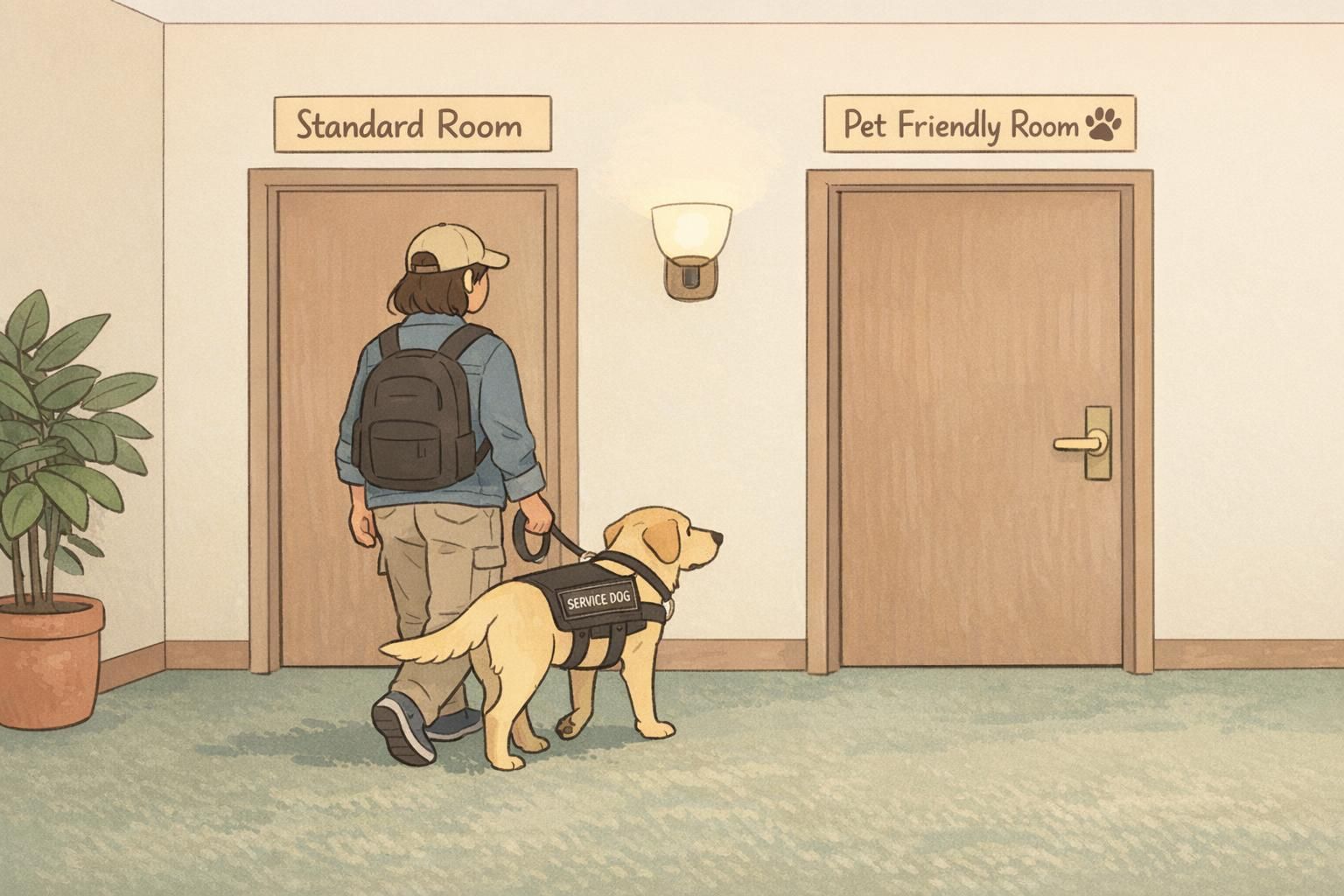
A good rule of thumb is that your service dog can accompany you anywhere guests are allowed—unless there’s a specific, narrow reason to exclude the dog. In hotels, that usually includes the lobby, hallways, elevators, and other common areas that are open to guests.
Hotels are not required to allow a service dog to remain if the dog is out of control and the handler doesn’t correct it, or if the dog is not housebroken. These are narrow circumstances, and removal should be about behavior—not the presence of a service dog itself.
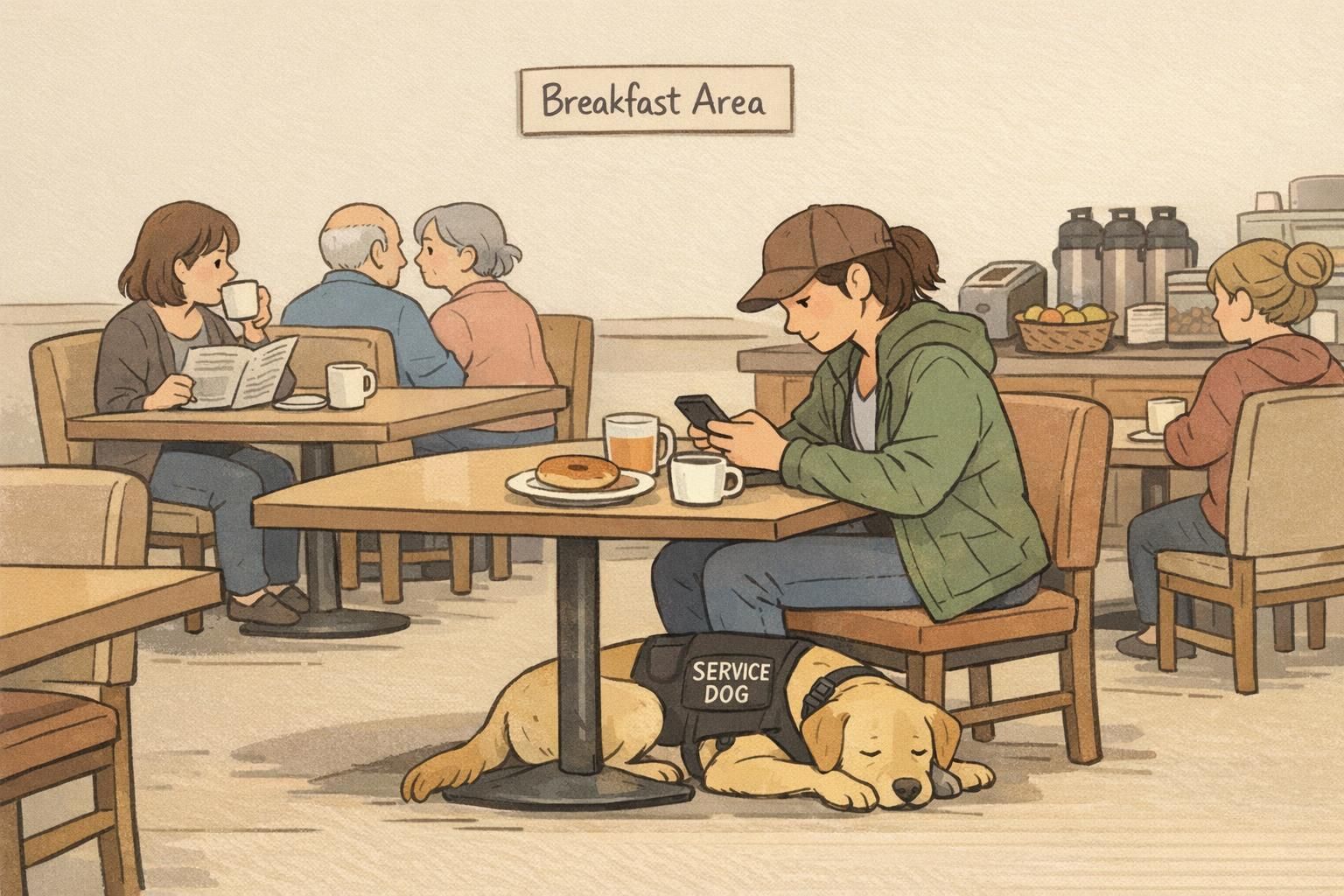
Many issues can be avoided by proactively meeting the practical expectations hotels have for any guest, plus the basics of service dog control and etiquette. Most staff and neighboring guests respond well when they see a calm team that doesn’t disrupt the space.
“ "The smoother my dog’s routine is, the less attention we get. Quiet check-in, quick potty break, settle in the room—then the hotel stay feels normal." – Service dog handler”
Even when you’re prepared, certain patterns show up again and again at hotels—especially when staff are new, the property is busy, or policies get mixed with pet rules. Knowing these friction points ahead of time can help you respond without stress.
Helpful responses tend to be short and steady. Answer the two allowed questions, confirm that no pet fees apply, and request your reserved room type. If something still feels off, note the staff member’s name, the date/time, and what was said. Documentation keeps follow-up clear—without turning check-in into a confrontation.
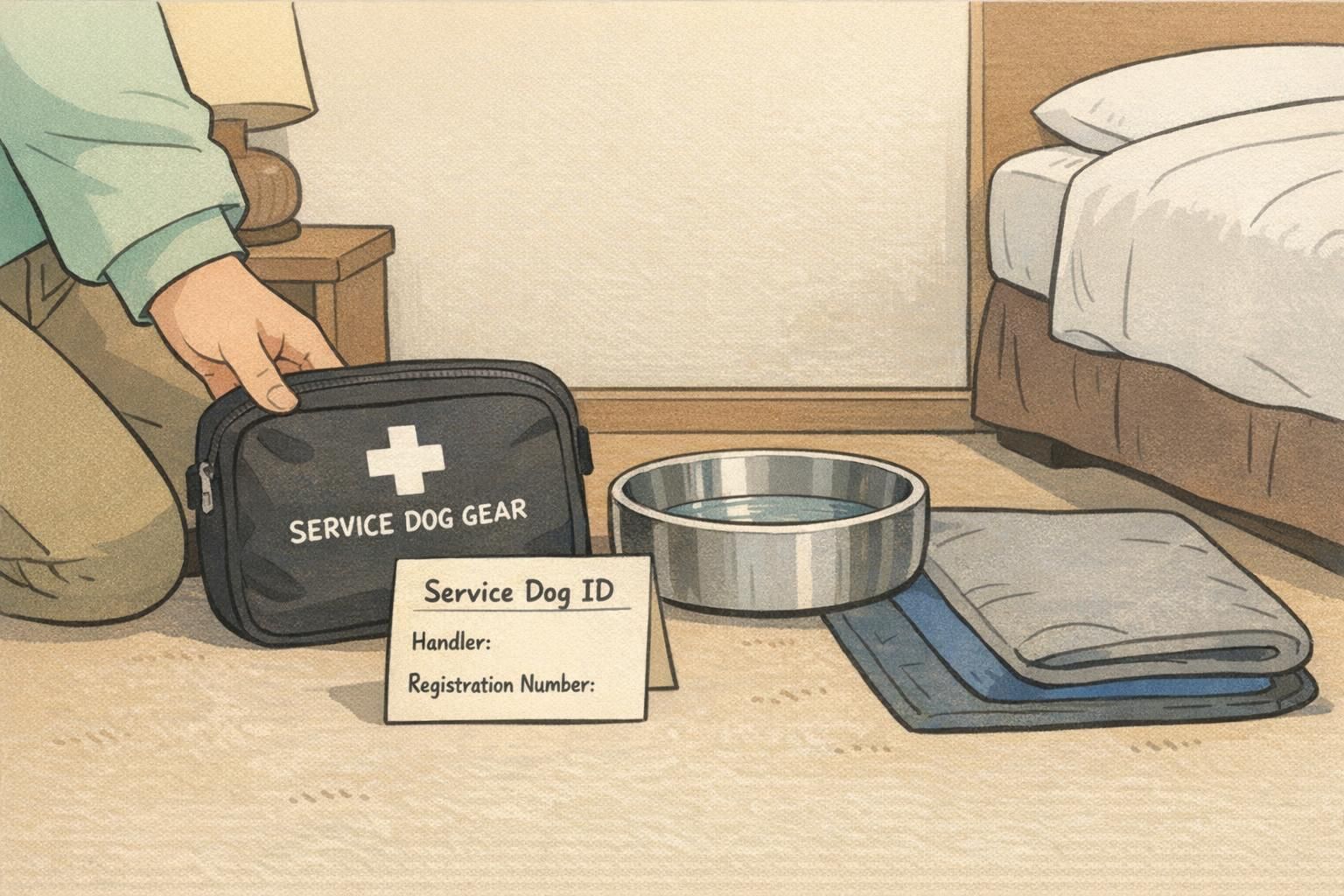
Although staff are generally expected to rely on the standard service dog questions when needed, many handlers still choose to travel with clear identification materials. In the real world, a visible, professional-looking set of materials can reduce confusion, speed up check-in conversations, and help a busy front desk feel confident about how to proceed.
Registration materials can also help you keep your information consistent across trips—especially if you travel often, switch hotels frequently, or want a simple way to communicate clearly without over-explaining your disability.
If you want a streamlined set of travel materials, consider a travel-ready service dog registration package for clearer hotel interactions.
When a hotel interaction goes sideways, the best approach is usually a calm escalation path. The goal is to get checked in and settled—not to “win” a debate in the lobby. Staying factual and polite helps staff shift from uncertainty to problem-solving.
“ "Asking for the policy in writing changed the tone immediately. It turned into a ‘let me double-check’ moment instead of an argument." – Traveler with a service dog”
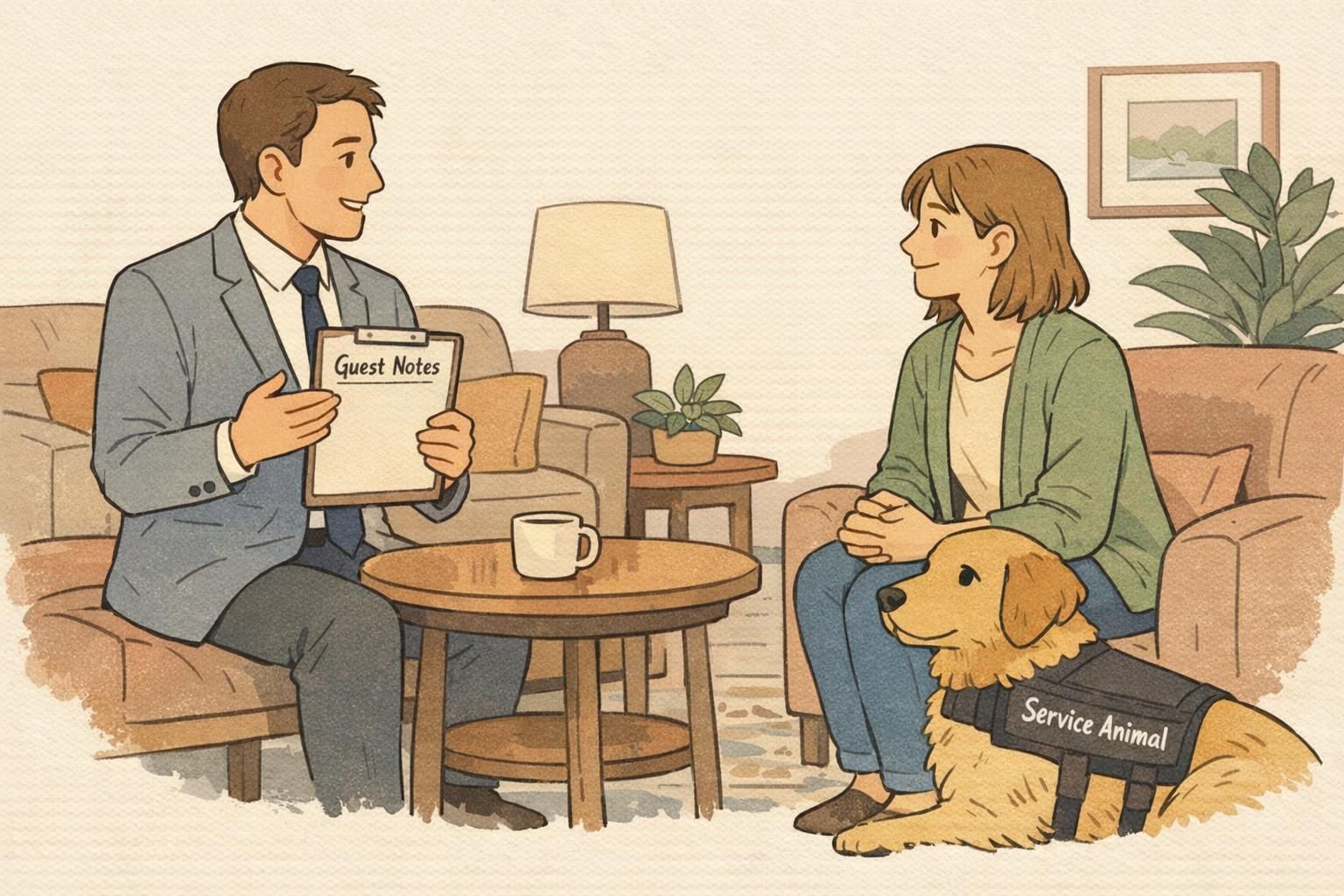
A little planning can prevent most hotel friction. When you book, it’s helpful to add a simple note and confirm that the reservation won’t be flagged with pet fees. This is especially useful when you’re arriving late, traveling during peak hours, or staying at a property you’ve never visited before.
For a deeper guide to preparation, review travel planning tips for staying with a service dog.
Some handlers also like to carry a simple, everyday ID option that matches their dog’s role and keeps information consistent from trip to trip, such as a customizable service dog ID for everyday identification.
Hotels may set reasonable rules to prevent noise complaints or damage, and some handlers avoid leaving a service dog unattended if it increases stress or barking. If you do need to step out briefly, aim for a calm setup (settle mat, quiet routine) and follow hotel policies that apply to all guests (like no excessive noise).
In normal circumstances, no. Your service dog is part of your accessibility support and should remain with you in guest-accessible areas. The narrow exceptions typically relate to specific behavior issues (the dog is out of control and not corrected, or not housebroken).
Service dogs are generally not subject to pet fees, pet deposits, or automatic cleaning charges simply for being present. However, a hotel can typically charge for actual damage beyond normal wear the same way it would for any guest.
Hotels often try to accommodate everyone by creating space—such as placing guests farther apart—without excluding the service dog team from normal access. A complaint alone doesn’t usually justify removing a service dog that is under control and behaving appropriately.
Some people travel with more than one service dog when both are needed for disability-related tasks. It can help to proactively explain that each dog has a trained role, confirm that both will remain under control, and request enough room space to keep the stay comfortable and non-disruptive.
Your trusted source for service animal registration. Get professional ID cards, digital profiles, and smart NFC tags to keep your service animal safe and recognized.
© National Animal Registry — All rights reserved.