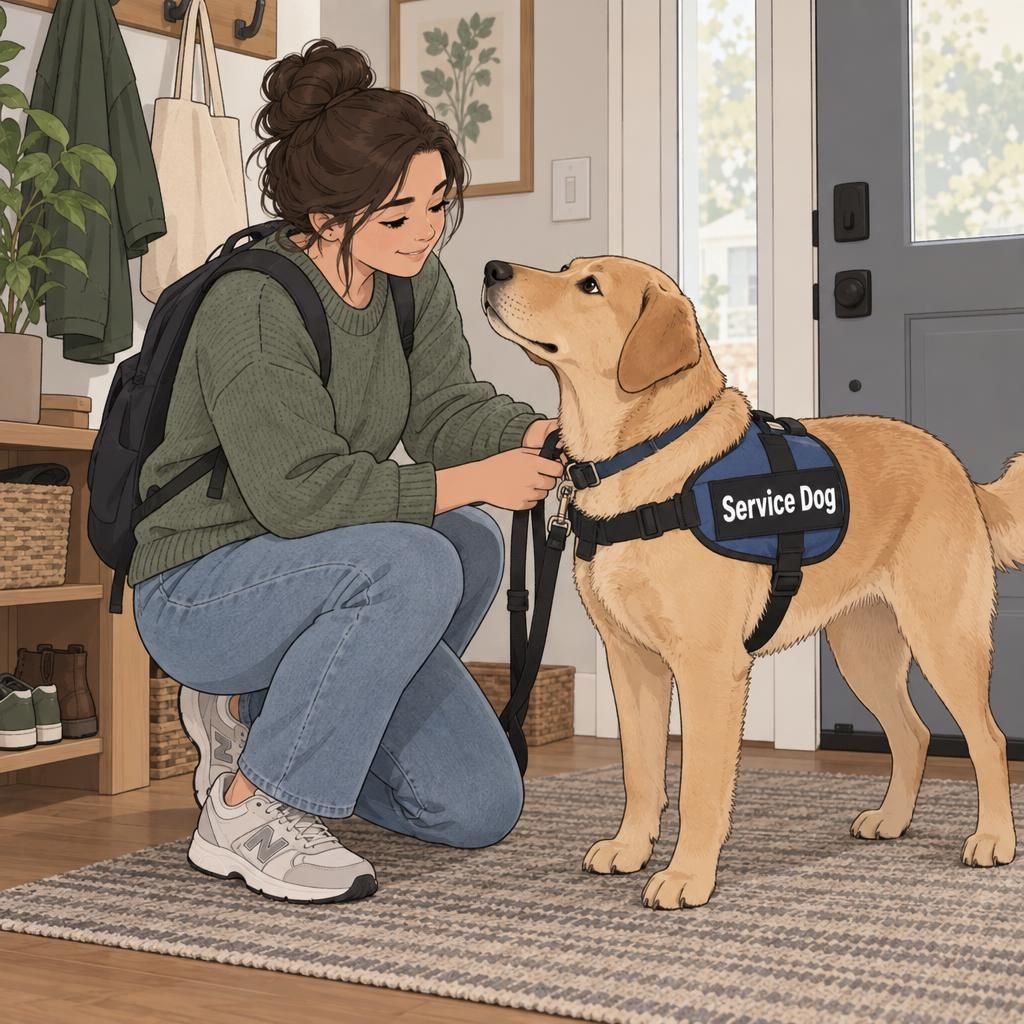
The best accessories help your dog do their job comfortably while making your shared routine easier. That does not necessarily mean buying more equipment. A simple, lightweight setup that fits well is often more useful than a vest covered with attachments your dog never needs.
Start by thinking about a typical day together. Do you take short neighborhood walks, navigate busy indoor spaces, or spend long periods away from home? Consider your dog’s trained tasks, where they need freedom of movement, and which supplies you actually use. For a support dog, focus on comfortable everyday handling and accessories that accurately communicate their role.
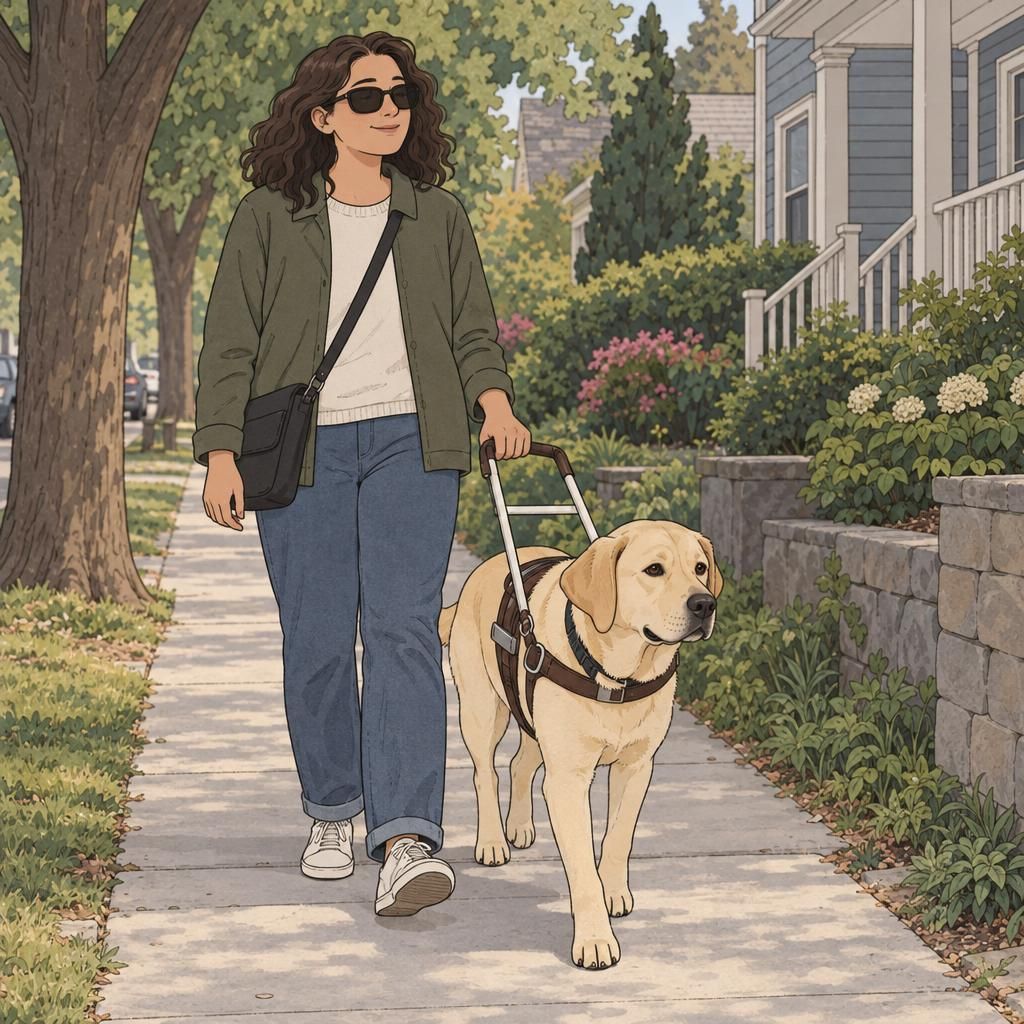
A vest can help communicate your dog’s role, while a harness should suit its intended handling or working purpose. Neither should restrict ordinary movement. Look for a secure fit that lets your dog walk, sit, lie down, and breathe comfortably, with their shoulders moving naturally.
Check the fit while your dog is moving, not just standing still. Watch for straps shifting toward sensitive areas, edges rubbing behind the legs, or panels bunching when your dog lies down. Slipping, pinching, pressure, or a change in how your dog moves are reasons to reassess the equipment.
Introduce a new vest or harness gradually, beginning with brief, calm sessions before expecting your dog to wear it through a full outing. Prioritizing fit, natural movement, comfort, and gradual familiarization gives you a useful foundation for choosing accessories (source).

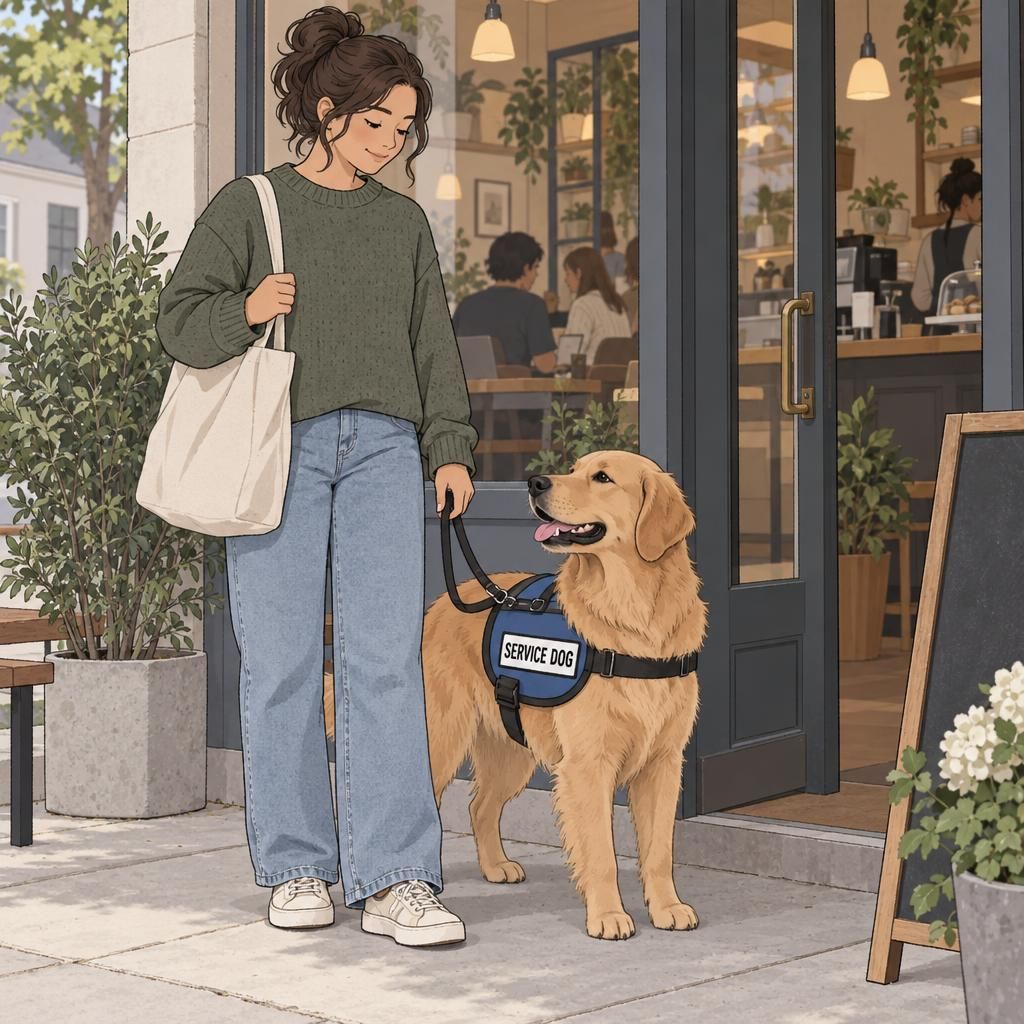
Identification works best when people can read it at a glance. Choose plain, high-contrast lettering and a patch size that suits your dog’s equipment. Labels such as “Service Dog” or “Working Dog” can help communicate a dog’s role when they accurately describe that role. Select wording for a support dog with the same care.
A boundary patch such as “Do Not Pet” may help discourage interruptions. Keep it visible rather than hiding it beneath a pouch or overlapping straps. Too many patches can compete for attention, so prioritize the message you most want someone nearby to notice.
Even clear patches will not prevent every approach or question. Calm handler communication and your dog’s training remain important. A brief response such as “Please give us space; my dog is working” can reinforce the boundary without turning an ordinary outing into a lengthy conversation.
Choose a durable leash with hardware that fastens securely and is comfortable for you to operate. Think about how the leash feels during a normal walk, how easily you can manage extra length, and whether the clip works smoothly with the intended attachment point.
A practical length depends on your surroundings. You should be able to keep your dog appropriately positioned without constantly gathering loose material or restricting comfortable movement. Try the setup during a quiet practice outing before relying on it somewhere crowded.
Add a handle only when it serves a specific control or positioning purpose. Its presence does not mean the equipment can safely support a person’s weight. Weight-bearing assistance calls for equipment specifically evaluated for that task, with guidance from your dog’s trainer and veterinarian.

A small pouch can keep waste bags, wipes, or medication organized, but storage should not interfere with your dog’s comfort. Choose a compact design that attaches securely without swinging, pressing against the body, or obstructing movement. Carry heavier or bulky supplies yourself rather than overloading your dog.
Pack for the actual outing instead of every possible situation. After attaching a pouch, check the fit again with its contents inside. A harness that sits comfortably when empty may shift once accessories are added.
Weather accessories should solve a real problem, not simply complete a matching set. Watch how your dog moves in each new item, and simplify the setup if added gear gets in the way.
You do not need to buy every accessory at once. Start with a dependable core kit, then adjust it as you learn what makes your routine smoother. Choosing compatible pieces also makes it easier to spot problems with fit or attachment points.
Introduce new items one at a time so you can observe your dog’s response. Begin in a familiar setting, keep early sessions brief, and check comfort before increasing wear time. If several accessories arrive together, resist the temptation to test the complete setup immediately.
Make maintenance part of your routine. Inspect stitching, clips, buckles, and attachment points for wear or damage. Recheck fit when your dog’s coat or weight changes, and whenever you add or remove equipment. Replace compromised components rather than relying on them for another outing.

Understanding your dog’s role helps you select appropriate identification. Service dogs are generally trained to perform work or tasks related to a person’s disability. Emotional-support animals provide comfort through their presence. Applicable access rules vary by location and setting, so plan around the guidance relevant to your circumstances.
Many handlers find registration, an ID, or organized documentation helpful for clear everyday identification and consistent communication. Keeping your materials together can make them easier to find when discussing arrangements or preparing for an outing.
For handlers who want a personalized identification option, a customizable service dog ID can be part of that organized setup. Choose details that accurately describe your dog’s role, and keep the information current.
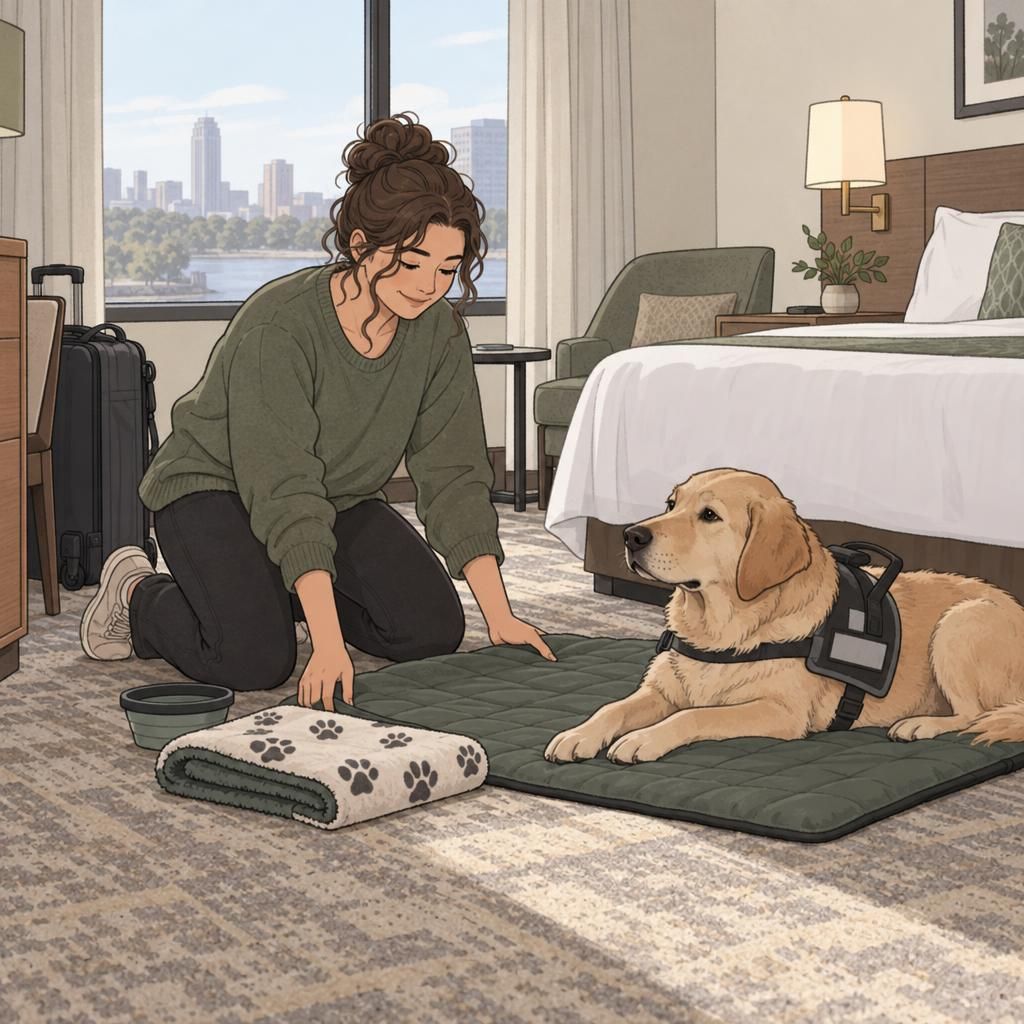
Before leaving home, check the rules and practical arrangements for the places you plan to visit. Consider how your dog will move through the space, where they can rest comfortably, and which accessories the outing actually requires. Travel plans deserve an equipment check rather than an assumption that your everyday setup will suit every situation.
Keep useful identification and travel information accessible instead of buried beneath other supplies. For more planning support, consult the guide to traveling with a service dog. Review guidance relevant to your plans before departure.
Some handlers also choose to carry wallet-sized service dog information cards as a convenient communication aid. A compact backup leash and basic canine first-aid supplies can round out your outing kit without adding unnecessary equipment to your dog.
The perfect accessories are the ones that work comfortably for your team. Start simply, observe your dog, and make thoughtful adjustments. Well-chosen gear should support your routine—not become another obstacle to enjoying it together.
Your trusted source for service animal registration. Get professional ID cards, digital profiles, and smart NFC tags to keep your service animal safe and recognized.
© National Animal Registry — All rights reserved.