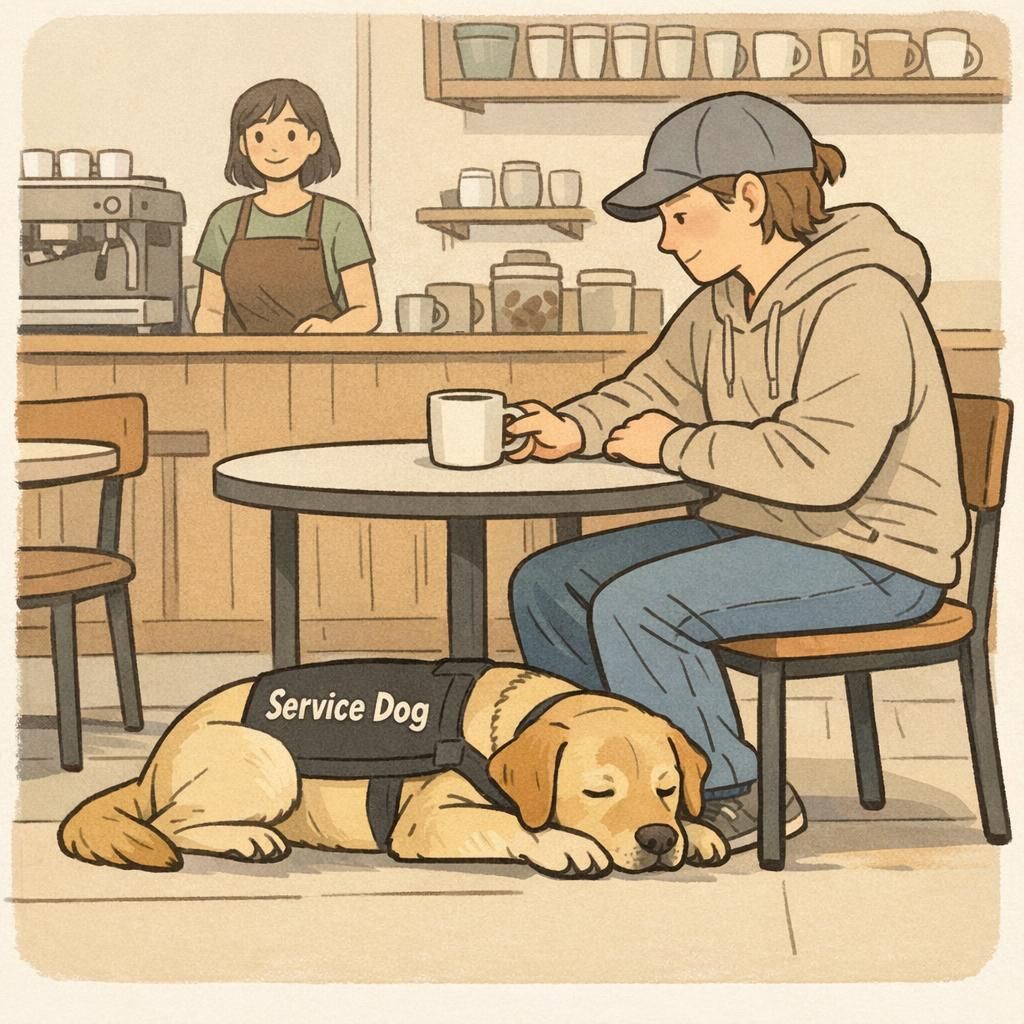
“Public access” is the everyday ability for a person with a disability to bring their service dog into places the public normally goes—like grocery stores, pharmacies, restaurants, clinics, hotels, or government buildings. For many handlers, it’s not a convenience; it’s a key part of safely completing daily tasks, staying independent, and participating in community life.
In real life, public access can also mean navigating busy entryways, answering questions from unfamiliar staff, and handling moments of confusion without losing your focus or your time. Even when rights are clearly defined under federal law, a service dog team may still run into misunderstandings—especially in fast-paced settings where employees are trained to ask for “proof” for other situations.
That’s where registration can be helpful: not as a requirement, but as a practical tool that makes it easier to communicate your dog’s role at a glance—so you can spend less time explaining and more time living your life.
Service and support animal terminology gets confusing quickly, especially online. People often use different words to mean the same thing, or the same word to mean different things. Clear definitions can help you advocate for yourself and communicate confidently in public.
No matter which term someone uses, the central idea is consistent: a service dog is individually trained to perform disability-related tasks. Those tasks might include guiding, alerting to medical changes, retrieving items, interrupting harmful behaviors, creating space in crowds, or providing balance support—depending on the handler’s needs.
In the U.S., the Americans with Disabilities Act (ADA) sets a baseline for public access protections for people who use service dogs. These protections are designed to help people with disabilities access everyday goods and services without unnecessary barriers.
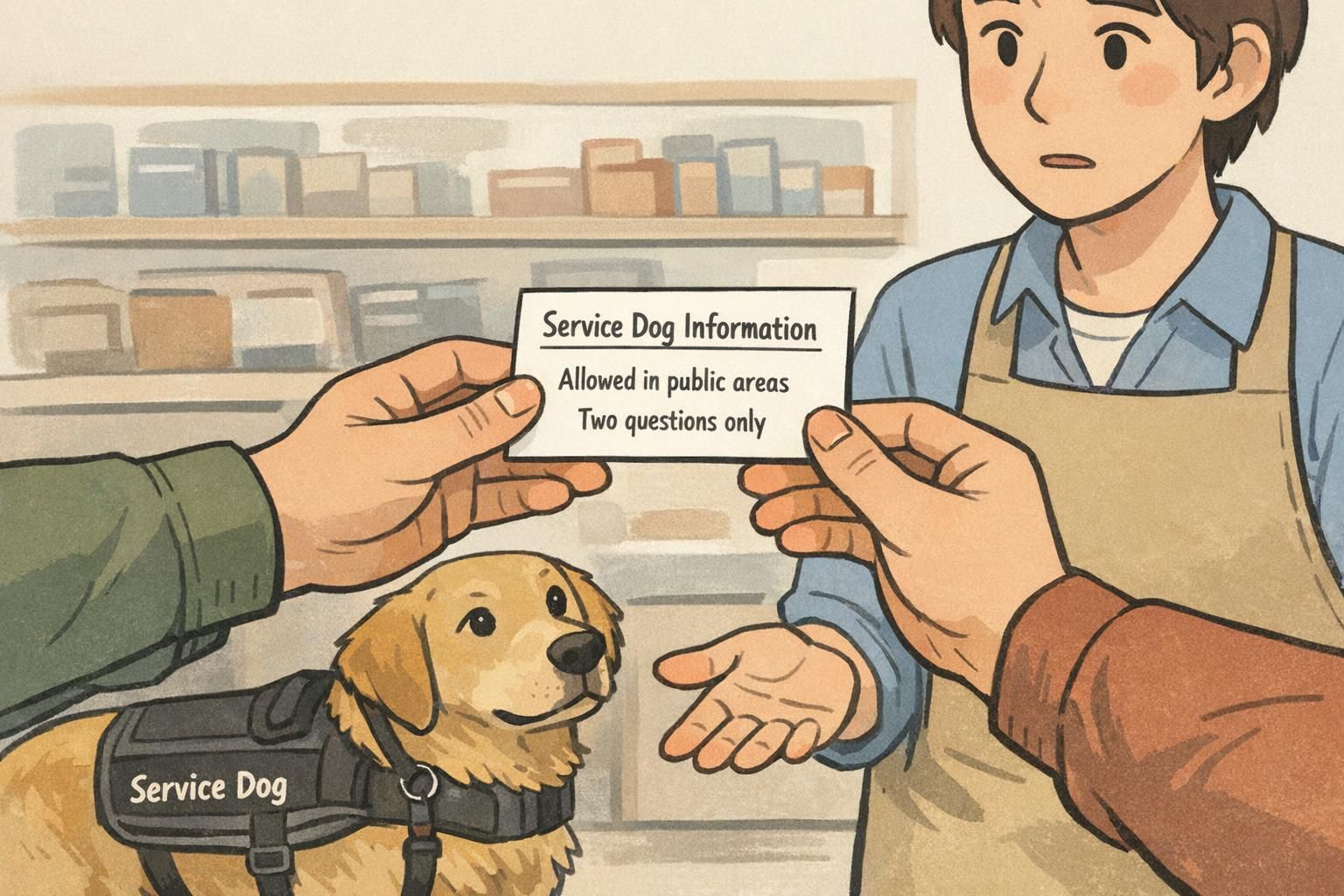
One of the most important practical points for handlers is that public-facing staff are usually limited in what they can ask. In many situations, a business may ask two basic questions: whether the dog is required because of a disability and what work or task the dog has been trained to perform.
The ADA also explains that service dogs are not required to be registered, certified, or accompanied by documentation for public access, and it clarifies the limited scope of what staff may ask. For the official overview, refer to this ADA guidance: source.
At the same time, real-world interactions don’t always go by the book. Policies can be misunderstood, staff training can be inconsistent, and local rules or specific environments can add complexity. When in doubt, official guidance is the best reference point—and having a calm plan for communication can help you protect your time and your peace of mind.
Many handlers choose to register their service dog for one simple reason: it makes everyday life more manageable. Registration can function like an organizational “hub” for your dog’s working identity—creating consistent information you can reference quickly when questions come up.
Even when you know your rights, it can be exhausting to explain them repeatedly, especially in crowded stores, at appointments, or during travel. Voluntary registration is often used as a convenience tool: something that helps interactions feel more predictable and less personal.
“ "I don’t register because I need permission. I register because it helps me stay organized and makes public interactions feel less stressful." – Service dog handler”
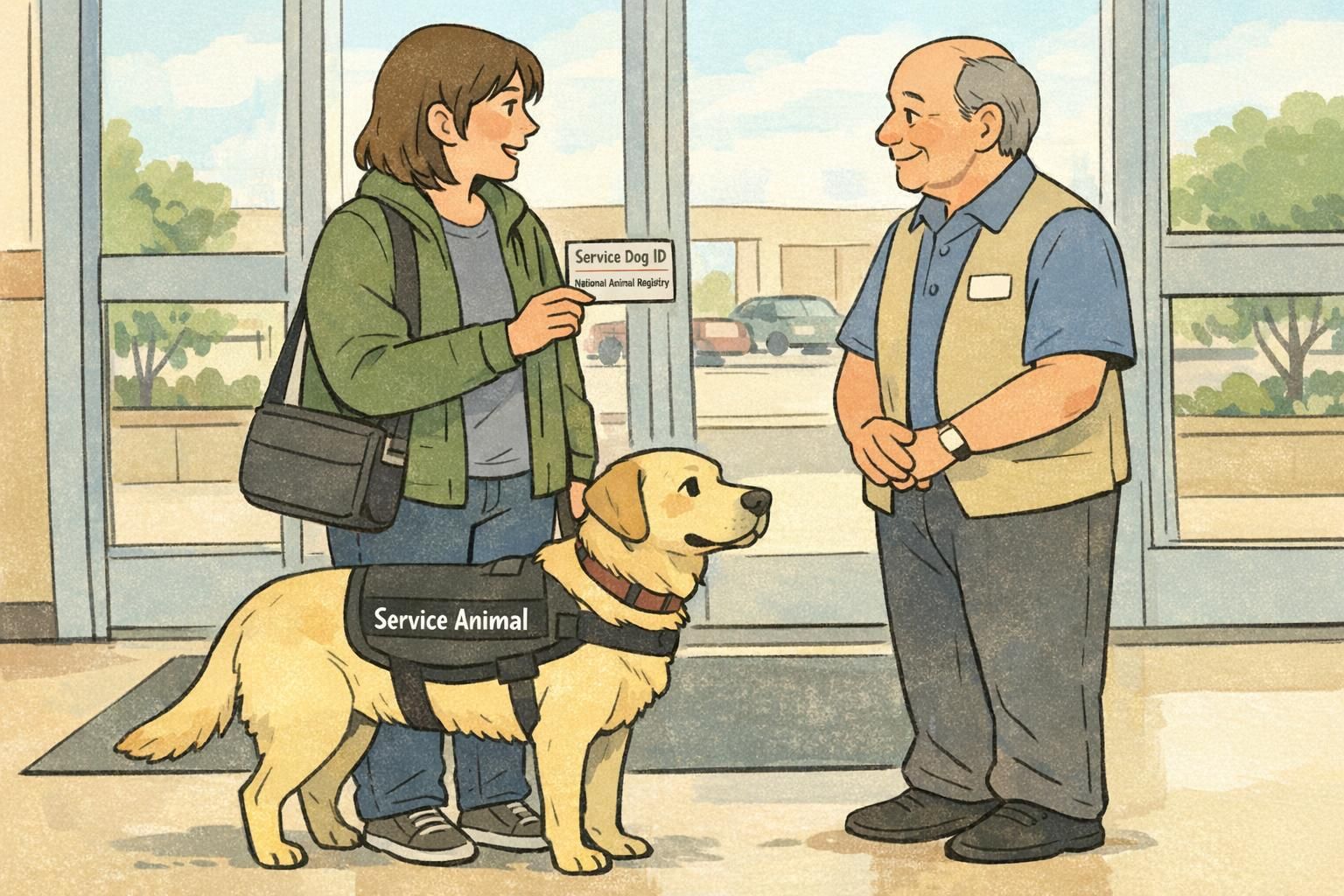
Many public access issues happen in the “in-between” moments: a quick pause at the entrance, a question at checkout, a new employee who isn’t sure what the policy is, or a busy waiting room where attention is already high. When those moments happen, clear and professional identification can help make the situation feel routine instead of confrontational.
Tools like a printed ID card, a digital profile, or a registry number give you a consistent way to identify your dog’s role. Some handlers find it helps them speak less and move more—offering a calm, brief explanation while staying focused on their dog’s working behavior.
If you want a streamlined option that combines a professional printed card with online details, consider a customizable printed Service Dog ID with a matching digital profile.
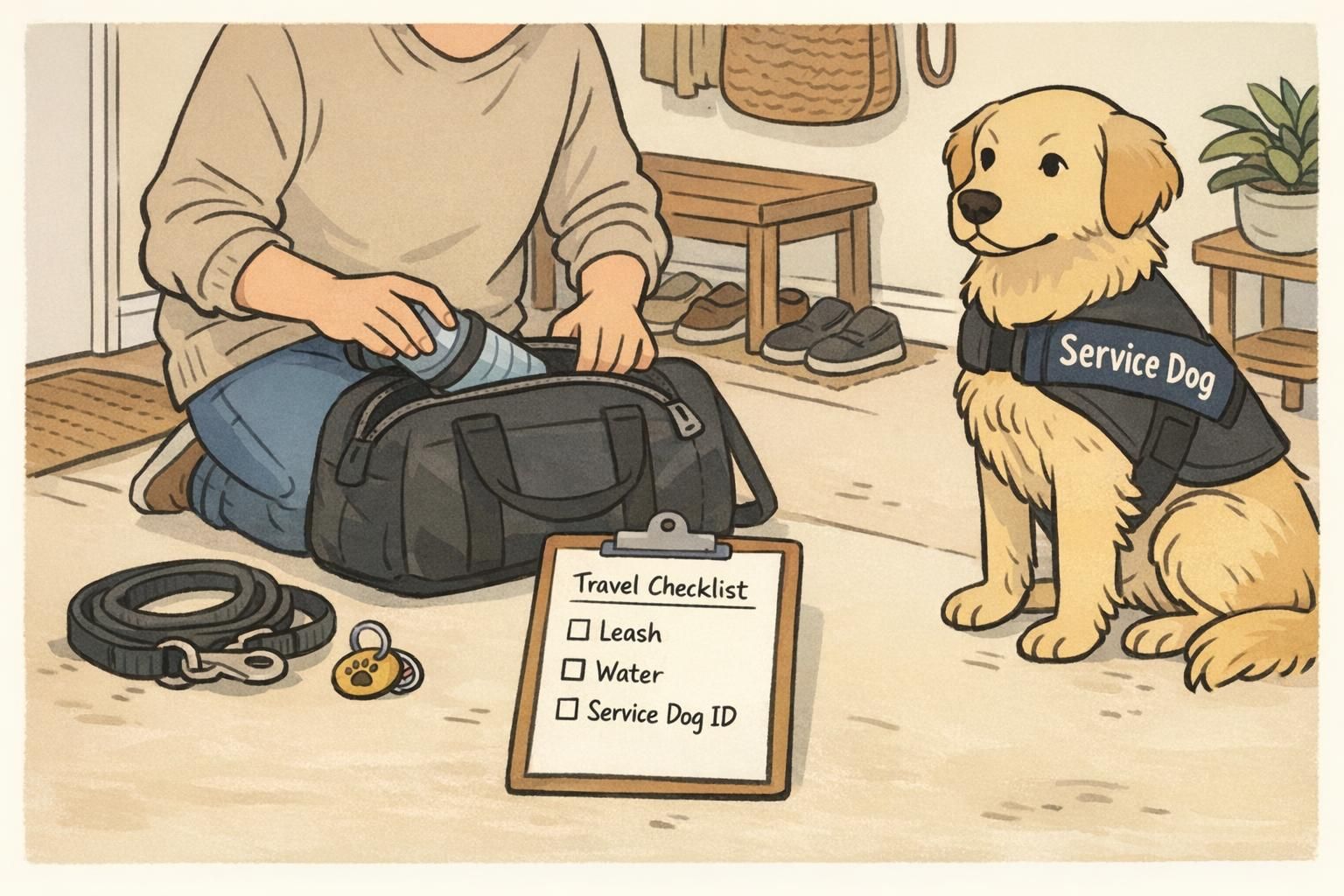
Travel adds layers of complexity: new environments, unfamiliar staff, changing policies, tight timelines, and a higher chance of running into someone who has never interacted with a service dog team before. Many handlers prepare travel-ready information so they can stay calm and organized on the move.
Planning ahead matters even more when you’re juggling reservations, accessibility needs, and your dog’s routine. If you’re looking for trip-planning tips, this guide can help: planning ahead when traveling with a service dog.
Registration materials can be helpful here because they keep key details in one place—especially if you use a digital profile or carry a consistent ID card and tag. For handlers who want a ready-to-go bundle, a travel-focused registration package with digital and printed identification can make it easier to keep everything together.
Public access is only one part of a handler’s day-to-day life. Many people also navigate housing conversations, workplace discussions, and frequent appointments—situations where multiple people may be involved and details can easily get lost or misunderstood.
In these settings, consistent identification materials can help keep communication organized. Rather than having to re-explain your service dog’s role from scratch in every conversation, you can provide a clear, professional point of reference that helps everyone stay on the same page.
For handlers who want a tidy way to keep residential conversations consistent, a housing-oriented registration package for organized residential conversations can be a practical, organized option.
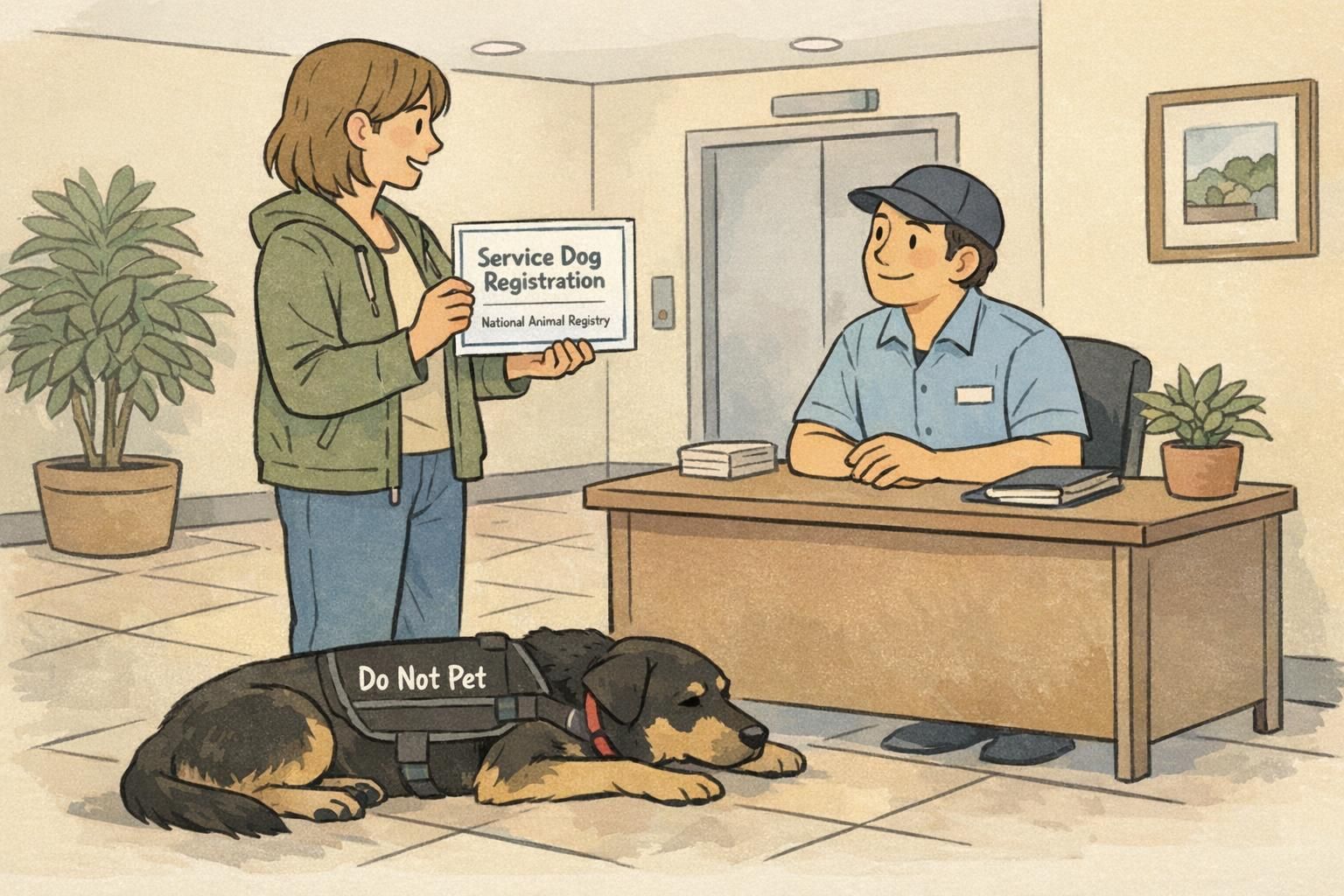
Public access works best when a service dog is calm, controlled, and able to focus in real-world environments. That includes staying close to the handler, remaining non-disruptive, and ignoring distractions like food smells, other animals, and well-meaning strangers.
Many teams build confidence through structured goals—starting in low-distraction environments and gradually practicing in busier places. This approach helps the handler trust their dog’s responses and helps the dog learn what “working mode” looks like in different settings.
It’s also important to remember a practical standard many handlers live by: if a dog is out of control or disruptive, a business may ask the team to leave—regardless of what identification the team carries. Identification supports communication, but behavior is what sustains public access over time.
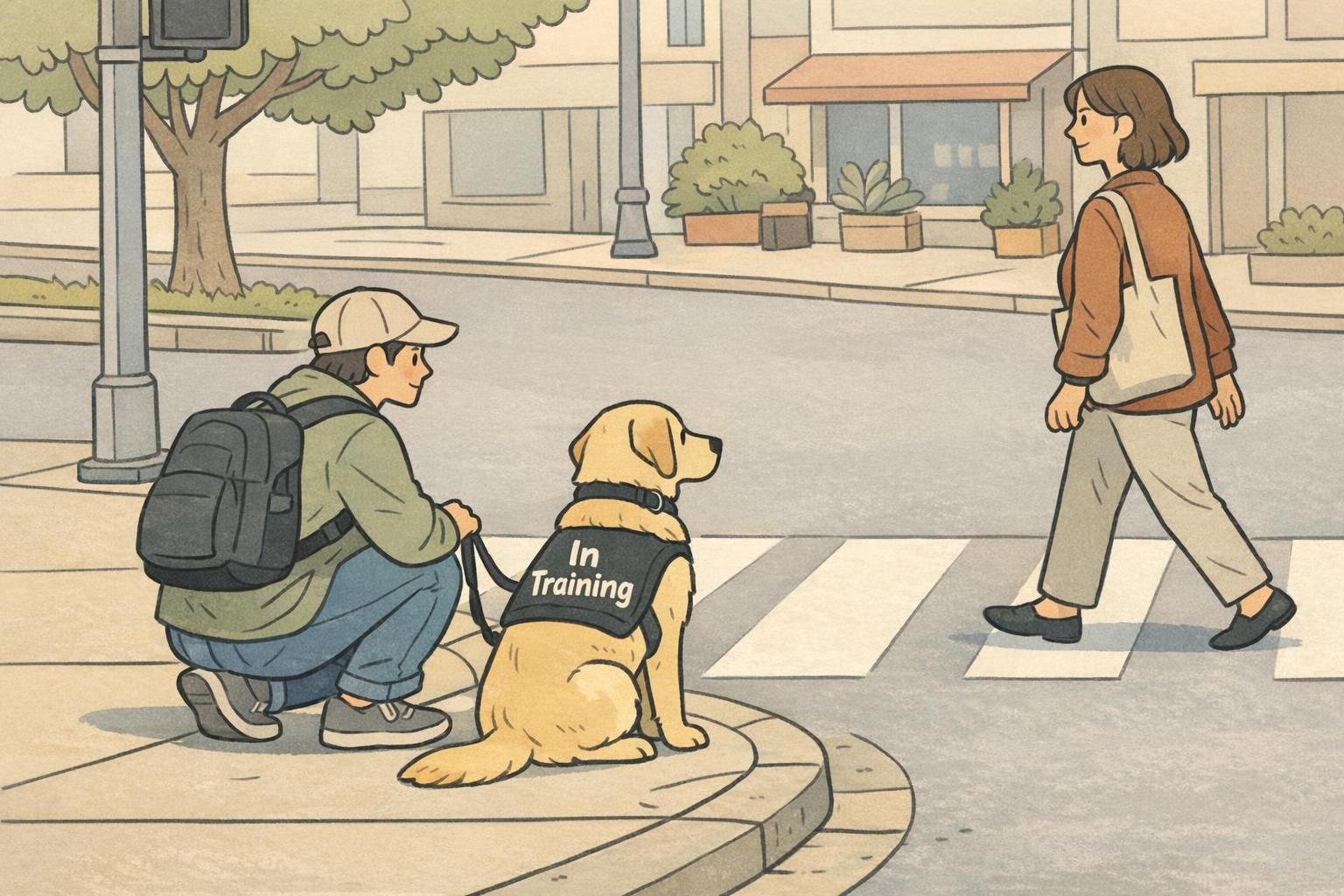
The most effective service dog teams use registration materials as communication aids—not as a replacement for training, public manners, or respectful interaction. When used responsibly, an ID card, tag, or digital profile can help reduce stress while keeping the focus on what matters: safe access and a well-behaved working dog.
“ "The more calm and consistent we are, the easier it is for everyone—me, my dog, and the staff member who’s just trying to do their job." – Service dog handler”
Sometimes misunderstandings happen in the middle of a busy moment—an employee is uncertain, a line is forming, and you can feel the tension rising. In those situations, a small, professional handout can help you communicate quickly without turning the moment into a debate.
A wallet-sized reference card can be especially useful when you want to stay brief, point to plain-language information, and move on. If you’d like an easy option to keep on hand, consider ADA law handout cards for calm, clear communication.
Public access means being able to move through everyday public places with your service dog as a working partner. In the U.S., the ADA sets important baseline protections and outlines what staff generally can and can’t ask in many situations.
Even with clear rules, many handlers still choose voluntary registration because it supports real life: quicker communication, fewer misunderstandings, and an organized way to keep key details consistent across errands, appointments, and travel.
Your trusted source for service animal registration. Get professional ID cards, digital profiles, and smart NFC tags to keep your service animal safe and recognized.
© National Animal Registry — All rights reserved.