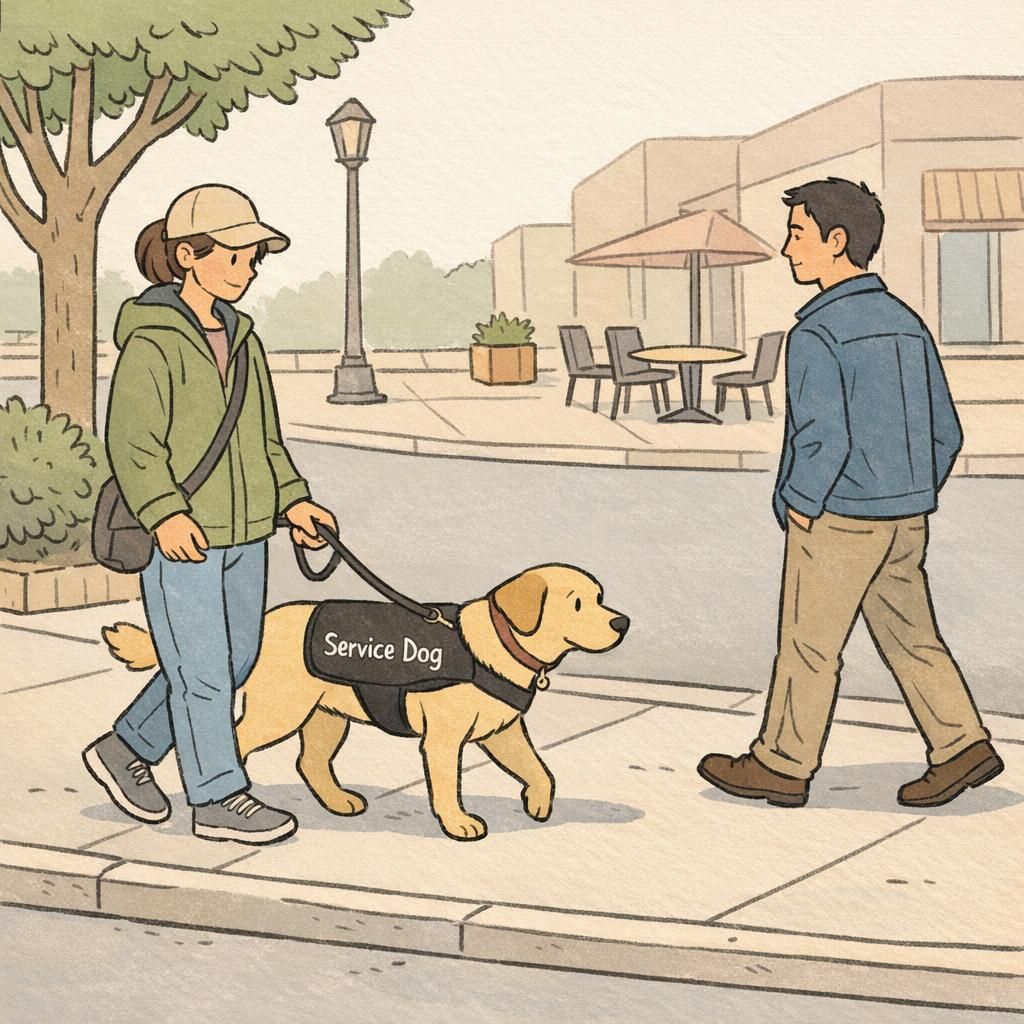
In everyday spaces—sidewalks, shops, elevators, waiting rooms—a dog vest works like a quick visual introduction. It signals that the dog has a supportive role and that the handler may be managing health, mobility, sensory needs, anxiety, or another day-to-day challenge. For many handlers, that split-second cue helps the public understand: “This dog is working. Give them space.”
Vests and patches are especially helpful because most people want to do the right thing, but they don’t always know what to do. Clear identification sets expectations without forcing the handler to explain personal details. It can reduce awkward interruptions, repeated questions, and the all-too-common “Can I pet your dog?” moments that can break a dog’s focus.
Many owners choose registration and a vest for one practical reason: consistency. When the dog’s role is clearly identified, everyday interactions become more predictable. Instead of explaining the dog’s purpose over and over, owners can rely on a simple, professional identification system that’s ready when needed.
Registration materials are often used as a quick reference point during real-life conversations—at a store entrance, during a housing discussion, while checking into a hotel, or when someone asks questions in a public space. It’s not about making a scene; it’s about having a calm, organized way to communicate.
Owners who want a straightforward way to keep identification consistent often choose an everyday registration package for clear identification so they can keep key details in one place and feel prepared for common questions.
“ "The vest helps people understand right away, and the ID gives me a simple way to answer questions without turning it into a big conversation." – Dog Owner”
People use a variety of terms to describe dogs who help them: service dog, support dog, emotional support animal, therapy dog, companion animal. In everyday conversation, those labels can overlap—especially when someone is trying to explain quickly that their dog plays an important role in their life.
A practical way to think about these terms is that they describe different kinds of support and different expectations in public. The more clearly you can describe your dog’s role, the easier it is to have respectful, low-stress conversations with staff, neighbors, and the public.
No. Most handlers prefer simple, privacy-respecting language like “My dog helps me with a disability-related need” or “My dog supports me and helps me function day to day.” A vest and professional ID materials can reduce how often you’re asked to explain.
Many people choose the phrasing that feels comfortable and easy to understand. The key is respectful communication and using identification tools—like a vest and consistent materials—so expectations stay clear.
Public friction usually comes from uncertainty. A staff member may not know what to ask. A stranger may assume every dog is there for attention. A well-marked vest reduces that uncertainty by clearly stating the dog’s working status and the handler’s need for space.
Registration materials can also help keep conversations calm and predictable. When you can present a consistent ID or certificate, you often avoid long explanations and keep the interaction focused on moving forward—ordering coffee, checking in, or simply walking through a lobby.

Some handlers prefer a customizable card that reflects their dog’s specific supportive role. A customizable printed service dog ID card can be a simple, professional way to keep details consistent across day-to-day situations.
“ "When my dog’s vest is visible, people usually give us space. And if someone still asks, having an ID ready helps me respond calmly." – Handler”
Housing is one of the most common places where owners want a clear, organized approach—especially when a building has a pet policy, pet fees, or breed/size restrictions. In these moments, a vest helps reinforce that the dog isn’t simply a casual pet outing, and registration materials help keep communication consistent.
The goal is a respectful, straightforward conversation. Many owners find it helpful to keep a small folder (physical or digital) with the same identification information each time, so they don’t have to scramble or re-explain. Being organized reduces back-and-forth and helps everyone stay on the same page.

For owners who want a ready-to-go set of materials designed with housing conversations in mind, a housing-focused registration package can help you present information in a clear, consistent way.
Travel days and busy errands often create the most questions. You’re moving through transitions—parking lots, hotel lobbies, elevators, terminals, crowded sidewalks—and people may be more likely to stop you. A simple identification system can make these moments easier: the vest does the “first explanation,” and your materials are there if you need a quick follow-up.
Many handlers find it helpful to plan ahead the same way they would for any essential item: keep the vest clean and readable, store ID materials in one predictable spot, and pack a few basics that support calm behavior (water, cleanup supplies, a small towel, and a quiet chew if appropriate).
For more planning ideas, see travel tips for service dog handlers.

Some owners prefer a travel-ready set that keeps everything consistent and easy to access, like a travel registration package for smoother trips.
Public access conversations can feel intimidating, but the basics are often simpler than people expect. In general, public rules focus on the dog’s role and the dog’s behavior in shared spaces. Handlers aim for calm, controlled behavior—staying near the handler, not disturbing others, and moving safely through the environment.
It’s also common for people to assume a vest, tag, or ID is required everywhere. Under the ADA, service animals are not required to wear vests, tags, or ID. That said, many handlers still choose vests and registration materials because they’re practical communication tools that reduce confusion and help everyday interactions go more smoothly. If you want to read the ADA’s explanation directly, here is the official FAQ: source.
Because rules and expectations can vary by location and situation, it’s smart to check local guidelines and approach each interaction respectfully. A calm tone, a well-behaved dog, and clear identification often prevent problems before they start.
The best vest wording is clear, simple, and readable from a respectful distance. Overly busy patches can invite more questions because people have to stop and stare to understand what they’re seeing. A few well-chosen words can do more than a full paragraph of text.
Placement matters. A large patch on each side of the vest is often easiest for people to read when they’re walking past you. A small patch on the top can help in tight spaces like lines or elevators. If you use multiple patches, keep the key message (“Service Dog” or “Do Not Pet”) the most visible.

National Animal Registry supports owners who want clear, professional identification they can use in everyday life. Many handlers find that pairing a vest with consistent materials—like a digital profile, printed ID, and certificate—helps them feel prepared for common questions in public, housing conversations, and travel situations.
Day to day, owners often use registration materials in simple ways: keeping a printed card in a wallet, saving a digital profile on a phone for quick access, and maintaining a consistent set of details they can reference when needed. The goal is not to complicate outings—it’s to make them smoother.

If you want a single, all-in-one system for comprehensive identification and day-to-day confidence, the complete registration bundle for comprehensive identification is a popular choice.
“ "Having everything consistent—vest, card, and digital info—helps me feel prepared. It keeps interactions short and respectful." – Dog Owner”
Even with a vest, you’ll occasionally get questions or attention. A calm, friendly script can make these moments easier—especially when you’re in a hurry or your dog needs to stay focused. Think of etiquette as a way to protect your dog’s working mindset while keeping the interaction respectful.
Some handlers like having a small handout ready, especially when a staff member is trying to follow policy and wants something clear to reference. ADA law handout cards for easy communication can be a helpful way to keep the tone calm, reduce back-and-forth, and move on with your day.
Staying calm helps. Many handlers simply point to the dog’s excellent behavior and use their vest and identification as a practical way to clarify things quickly. When needed, a short, respectful explanation and a handout can keep the conversation from escalating.
Clear vest wording like “Do Not Pet,” consistent boundaries, and practiced routines (sit at your side in line, focus cues, quick rewards if appropriate) help your dog stay engaged with you rather than the crowd.
Your trusted source for service animal registration. Get professional ID cards, digital profiles, and smart NFC tags to keep your service animal safe and recognized.
© National Animal Registry — All rights reserved.