
If you’ve ever heard someone say, “My emotional support animal is allowed everywhere,” you’ve already run into the most common point of confusion: different laws use different definitions. The Americans with Disabilities Act (ADA) is the main federal law that provides public-access protections for service animals in many public settings—think restaurants, grocery stores, hotels’ public areas, government buildings, and other places open to the public.
What makes the ADA unique is that it uses a very specific definition of “service animal.” That definition is the reason emotional support animals (ESAs) are treated differently under the ADA—even when an ESA provides real, meaningful help for someone’s mental health.
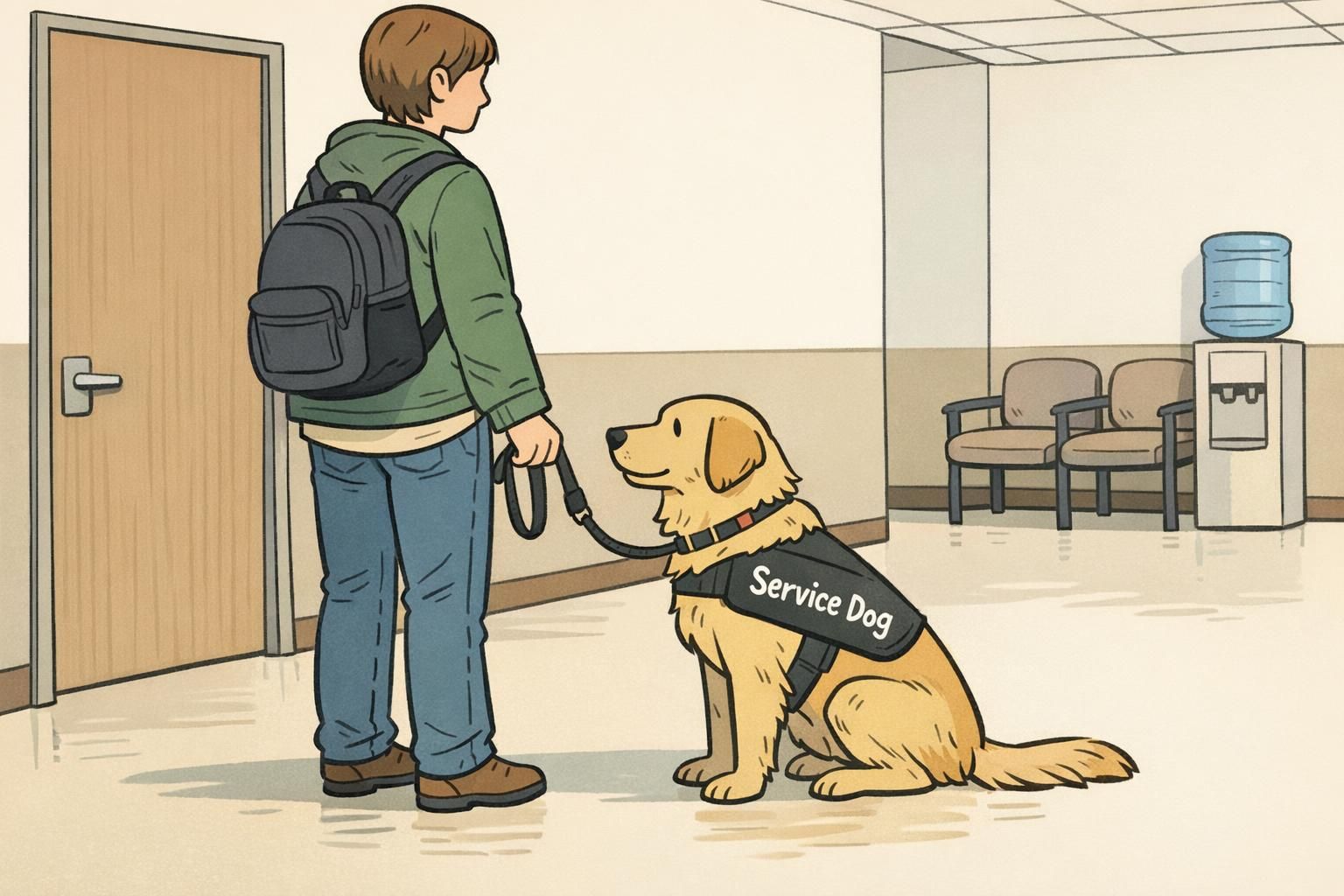
Under the ADA, a service animal is a dog that is individually trained to do work or perform tasks for a person with a disability. In some limited situations, miniature horses can also be accommodated when they meet certain criteria. The critical piece is the training: the animal is trained to take a specific action when it’s needed, and that action is directly related to the person’s disability.
That “task-trained” standard is what separates an ADA-protected service animal from an animal that helps primarily through companionship, comfort, or emotional reassurance. The ADA’s own guidance is very clear that comfort alone does not qualify as a “task” under ADA public-access rules. For more details straight from the ADA, see this source.
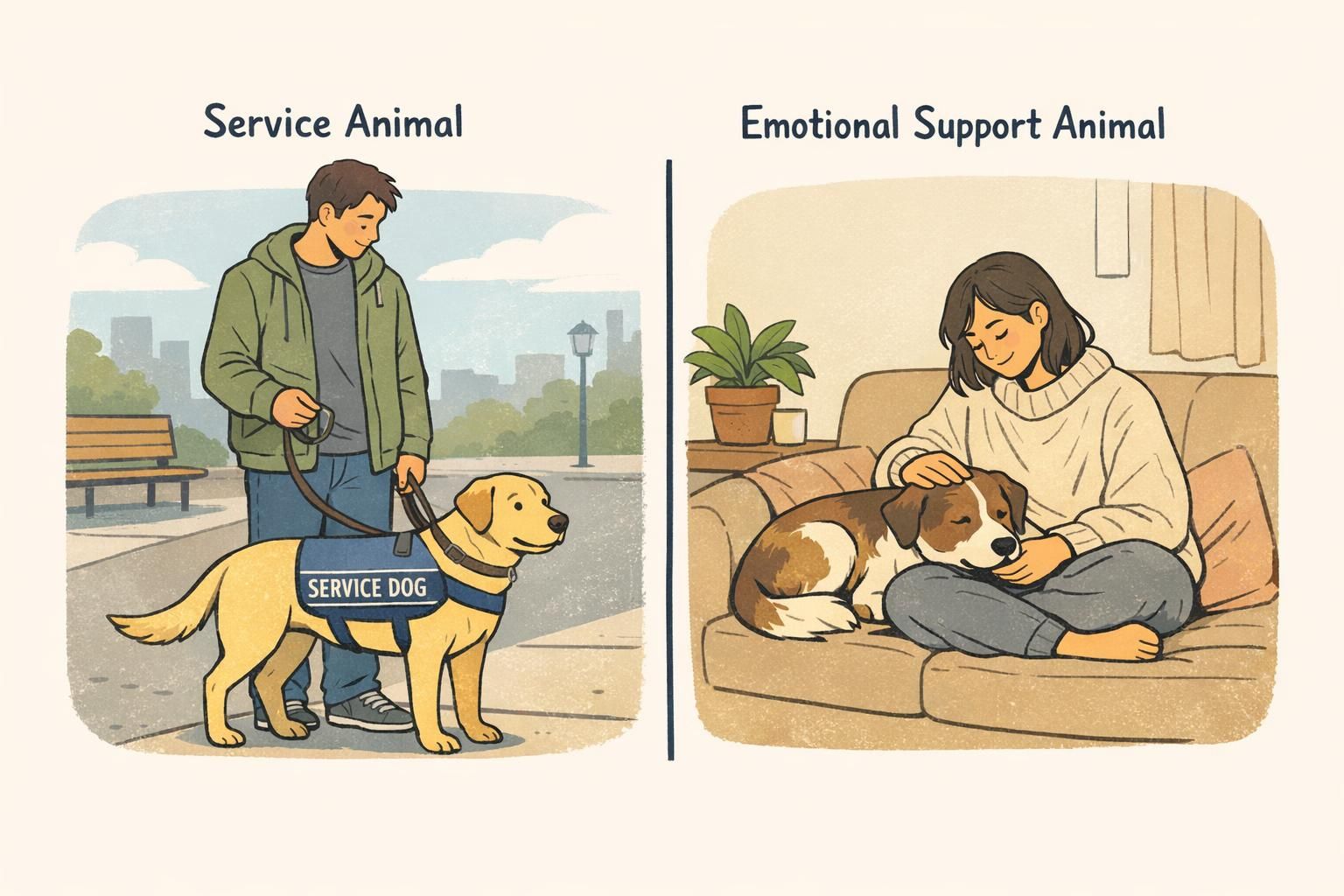
Emotional support animals can be life-changing. For many people, an ESA reduces anxiety, provides stability, eases loneliness, and supports daily functioning. But under ADA rules for public access, the standard isn’t “this animal helps me feel better.” The standard is whether the animal is trained to perform a specific disability-related task.
When an animal’s primary function is comfort or emotional support by presence alone, it doesn’t meet the ADA’s task-training definition. That’s why ESAs are not guaranteed entry into restaurants, stores, and other public accommodations under ADA Titles II and III (the parts of the ADA that cover state/local government services and businesses open to the public).
“ "My emotional support animal is essential at home and in stressful moments—but I plan ahead because public places often follow ADA service animal rules." – Support animal owner”
This is where many people feel stuck: “My disability is psychiatric—does that mean my animal is an ESA?” Not necessarily. The ADA does not exclude psychiatric disabilities. A psychiatric service dog can be ADA-protected when the dog is trained to take a specific action related to that disability.
For example, a dog might be trained to interrupt a panic attack by nudging, applying trained deep pressure, guiding the handler to an exit, or performing a practiced “find help” behavior. The important distinction is that the dog is trained to do something specific in response to the disability-related need—not simply providing comfort through companionship.
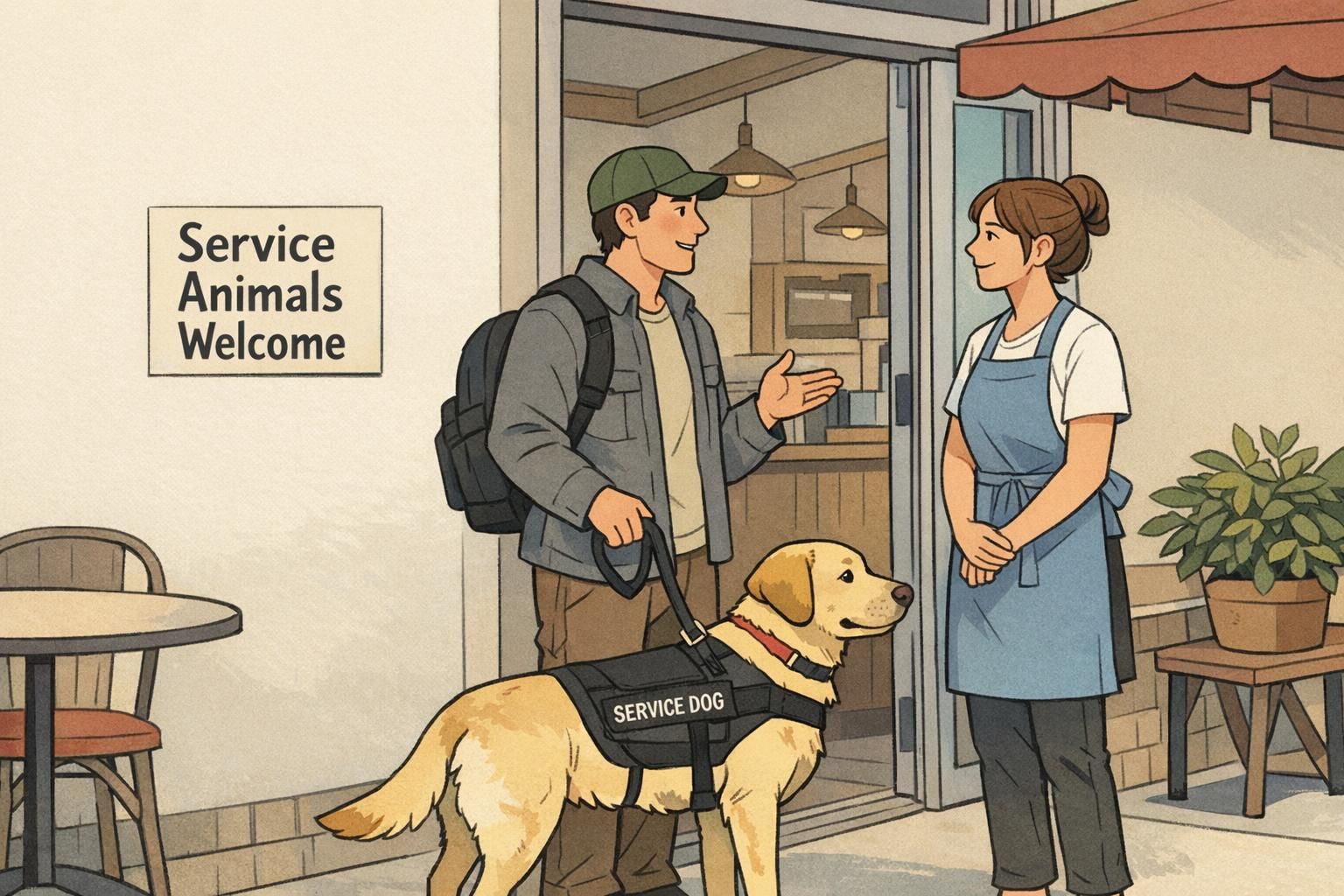
Most conflicts happen at the front door: a host stand, a shop entrance, a lobby, or a security checkpoint. Knowing what staff are allowed to ask (and how to answer calmly) can prevent a small misunderstanding from turning into a stressful scene.
In ADA-covered public places, staff typically focus on two basic questions: whether the animal is a service animal required because of a disability, and what work or task the animal has been trained to perform. They generally are not supposed to demand personal medical details in order to decide whether to allow entry.
In typical ADA-style public interactions, it’s best to avoid oversharing. Keep it focused on whether the animal is a service animal and what tasks it’s trained to do.
Staying calm helps protect your privacy and your day. A short, steady response—and offering to speak with a manager if needed—often de-escalates the situation.
Even though ESAs aren’t covered for broad public access under the ADA, they may still be recognized in other contexts—especially housing. In many housing situations, the concept of an “assistance animal” can be broader than the ADA’s definition of a service animal, which is why renters and tenants often hear about ESAs in connection with apartments, condos, and other residential settings.
Because housing and travel policies can be shaped by different federal rules, state and local guidance, and individual provider policies, it’s smart to confirm what rules apply to your specific situation. The most practical approach is to ask early, document what the provider requests, and keep everything organized so conversations stay simple and respectful.

Workplaces are different from restaurants and retail stores. In a typical workplace setting, bringing an animal to work is usually handled as an accommodation conversation rather than an automatic public-access right. That means the process can involve back-and-forth: what your job requires, what the workspace is like, what safety issues exist, and what accommodations are workable for both sides.
If you’re hoping to bring an ESA (or a service dog) to work, the most effective strategy is preparation. Think through the practical details your employer will care about—how the animal will be managed, where it will rest, how distractions will be minimized, and how you’ll handle meetings, shared spaces, or client interactions.
“ "When I treated it like a problem-solving conversation instead of a confrontation, we found a plan that worked for everyone." – Employee and handler”
Even when you understand the rules, everyday life moves fast—busy entrances, noisy lobbies, rushed check-ins. That’s where registration and identification tools can be helpful. While policies vary by setting, having consistent information organized in one place can reduce misunderstandings and make conversations smoother.
Many handlers like having a printed ID card, a digital profile, and a unique registration number for easy reference—especially during travel planning, lodging check-ins, and situations where you want to communicate clearly without oversharing personal details. If you’re looking for a simple all-in-one option, consider an everyday service dog registration package with printed ID and a digital profile.
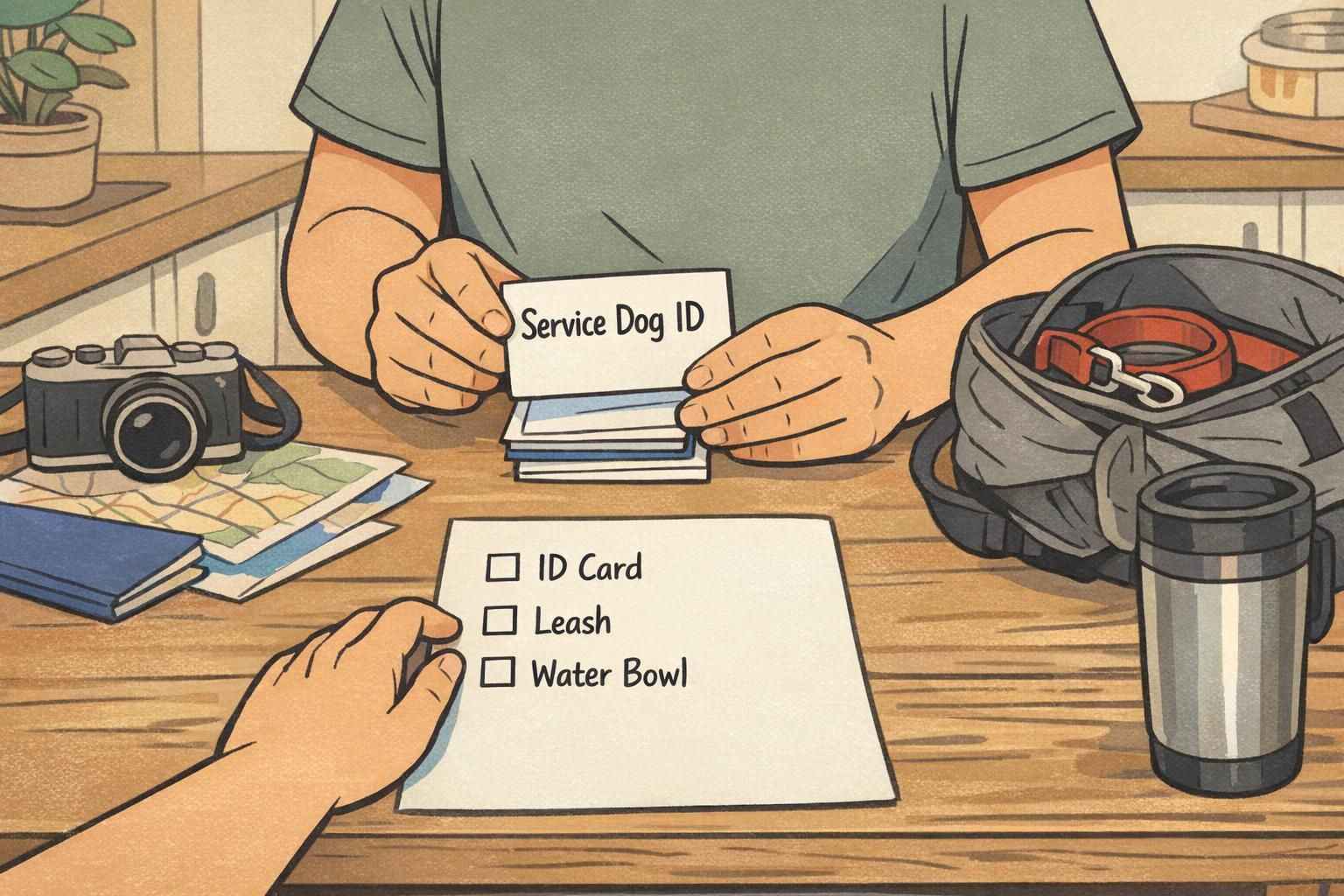
It’s one thing to understand definitions. It’s another to be standing at a doorway with a line behind you. Here are a few realistic scenarios to show how ADA public-access rules often work in practice, and how non-ADA contexts may differ.
For more planning ideas that make trips smoother with an ADA-protected service dog, see travel planning tips for life with a service dog.
In higher-friction situations—like a busy entrance or a misunderstanding with staff—having a short, clear explanation ready can be a game-changer. Some handlers also like keeping a simple educational card on hand for low-stress communication, such as wallet-sized ADA handout cards for clear, low-stress communication.
“ "Once I understood the difference between task-trained service animals and emotional support animals, I felt more confident advocating for myself without escalating conflict." – Handler”
If you take away one thing, let it be this: ADA coverage is about trained tasks in public spaces. ESAs can still be deeply valuable, and other rules may recognize them in places the ADA doesn’t. When you plan ahead, keep your information organized, and communicate respectfully, you give yourself the best chance at smooth, low-stress experiences.
Your trusted source for service animal registration. Get professional ID cards, digital profiles, and smart NFC tags to keep your service animal safe and recognized.
© National Animal Registry — All rights reserved.