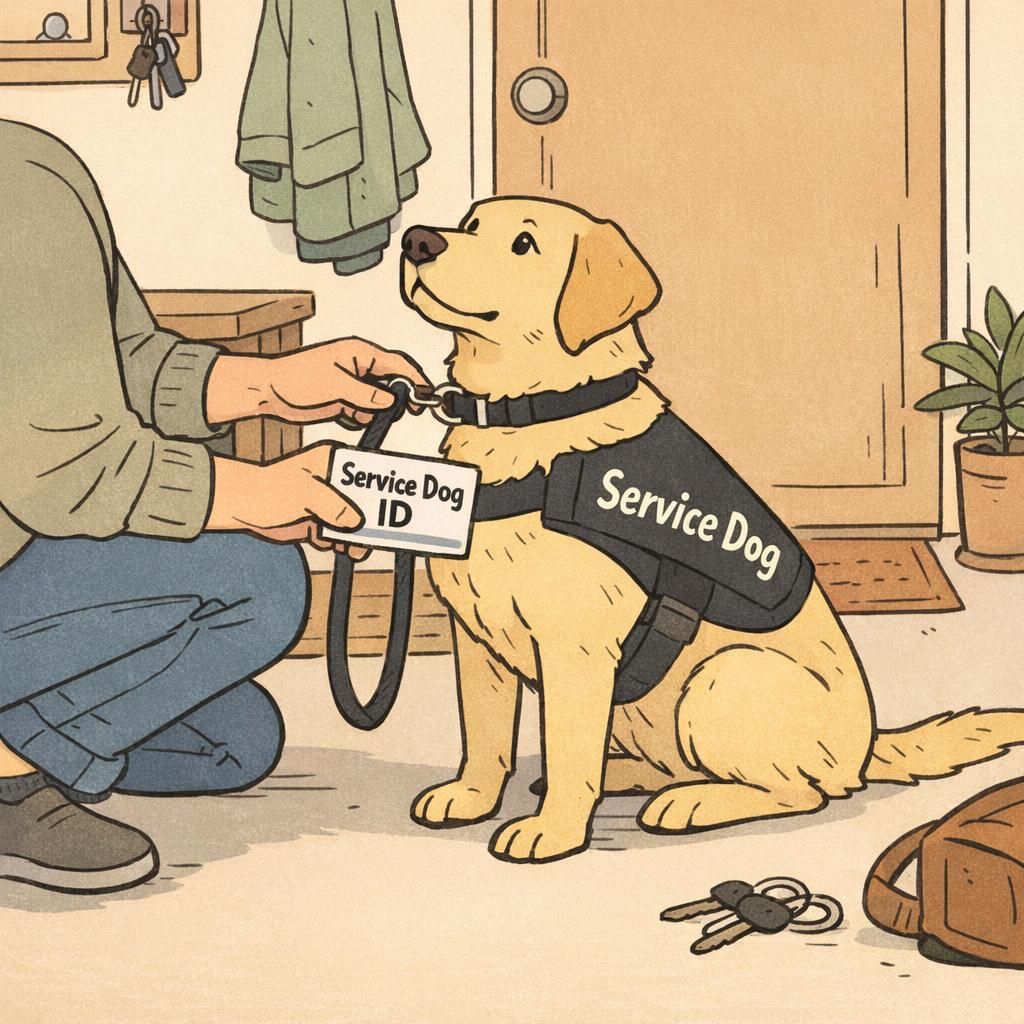
When most handlers say “service dog certification,” they’re usually talking about practical documentation that helps them communicate quickly and clearly in everyday life. That might include a printed ID card, a certificate, a digital profile page, a QR tag, or a simple set of materials that presents the dog’s working role in a professional way.
In casual conversation, “certification” can be shorthand for “I have something organized that explains my dog’s role.” It’s often less about legal terminology and more about reducing confusion—especially in busy places like stores, medical offices, or airports where staff may not be familiar with how service dogs work.
It can help to remember there’s a difference between how people use the word “certification” day-to-day and how laws describe service animals. You don’t have to be a legal expert to navigate public outings—you just need a reliable dog, a clear understanding of what your dog does for you, and a simple way to communicate that when necessary.
In everyday conversation, you’ll hear terms like “service dog,” “service animal,” and “assistance dog” used almost interchangeably. While different regions and organizations may prefer one term over another, the core idea is consistent: a dog trained to perform disability-related tasks that help their handler function more safely and independently.
The most important anchor is task-trained support. In other words, the dog isn’t there simply for comfort in public—it’s there to do specific, trained work that mitigates a disability in real time.
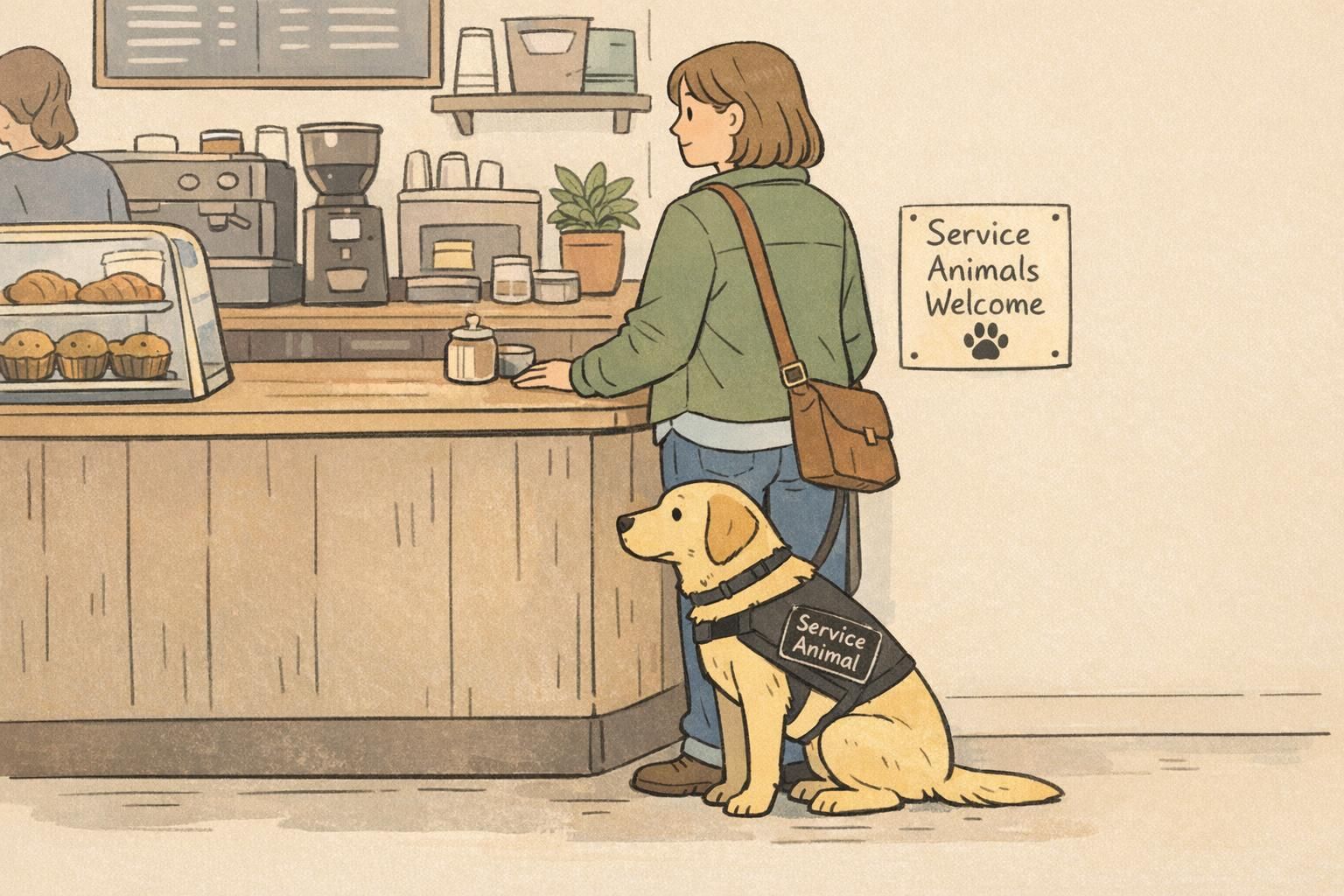
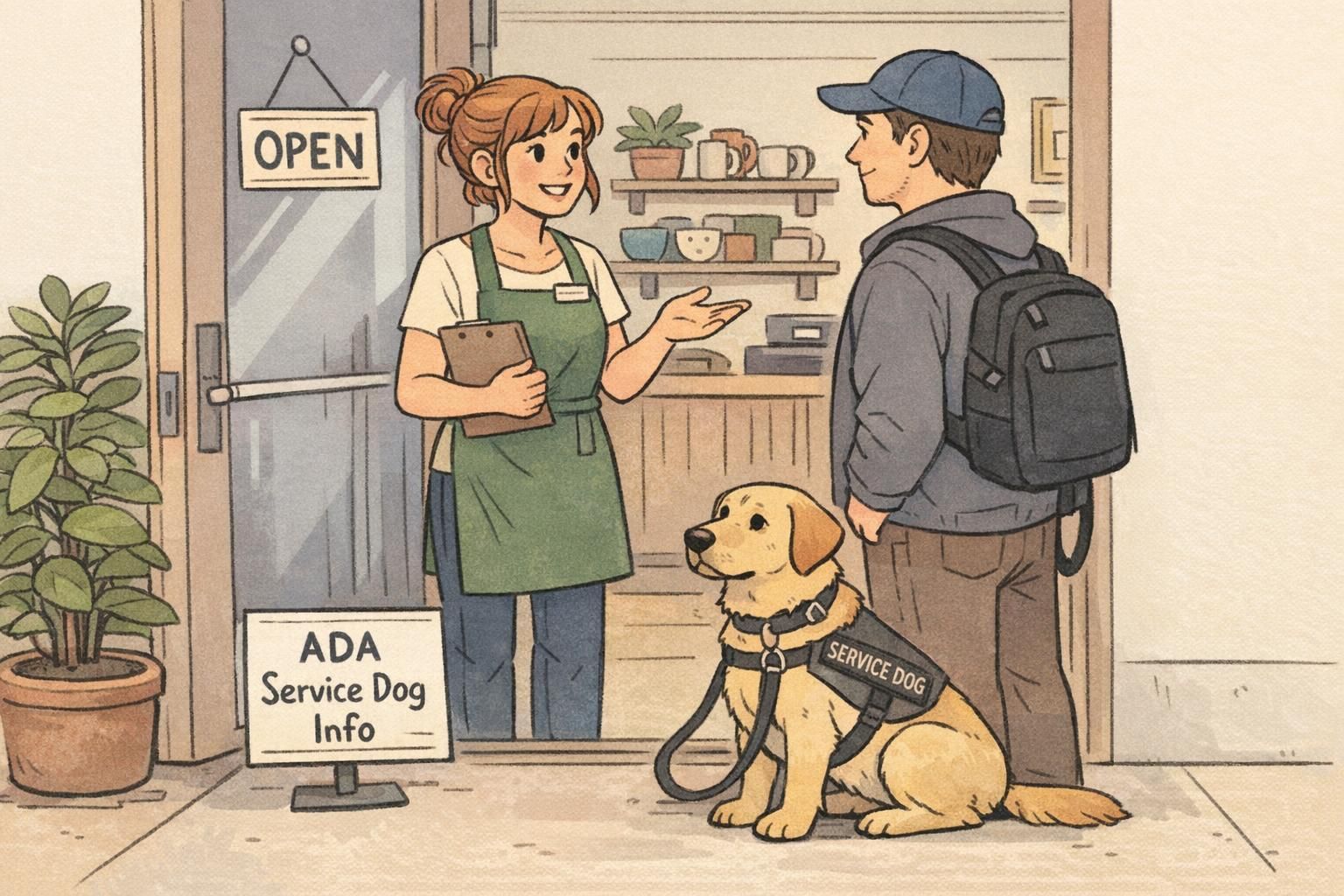
One of the biggest stressors for handlers is the moment a staff member asks questions at the door. In real life, the smoothest interactions tend to be brief, respectful, and focused on the dog’s role—without turning the moment into a debate.
In the U.S., public-facing staff are generally limited to asking two questions: whether the dog is required because of a disability, and what work or task the dog has been trained to perform. Businesses generally can’t require documentation as a condition of entry. You can read the ADA’s overview here: source.
Even though documentation usually isn’t required for public access, many handlers still choose to carry clear, simple materials. The goal isn’t to “prove” themselves in an argument; it’s to reduce friction, prevent misunderstandings, and keep the interaction calm and short—especially when the handler is tired, managing symptoms, or in a hurry.
Some handlers like to keep polite, easy-to-hand materials available for staff training moments or misunderstandings. For example, ADA law handout cards for quick, polite explanations can help keep the tone friendly while making the interaction less stressful.
Optional certification-style documentation is popular because it supports real-world communication. Many handlers find that having a consistent set of materials reduces awkward questions and helps them stay calm and confident during errands and appointments.
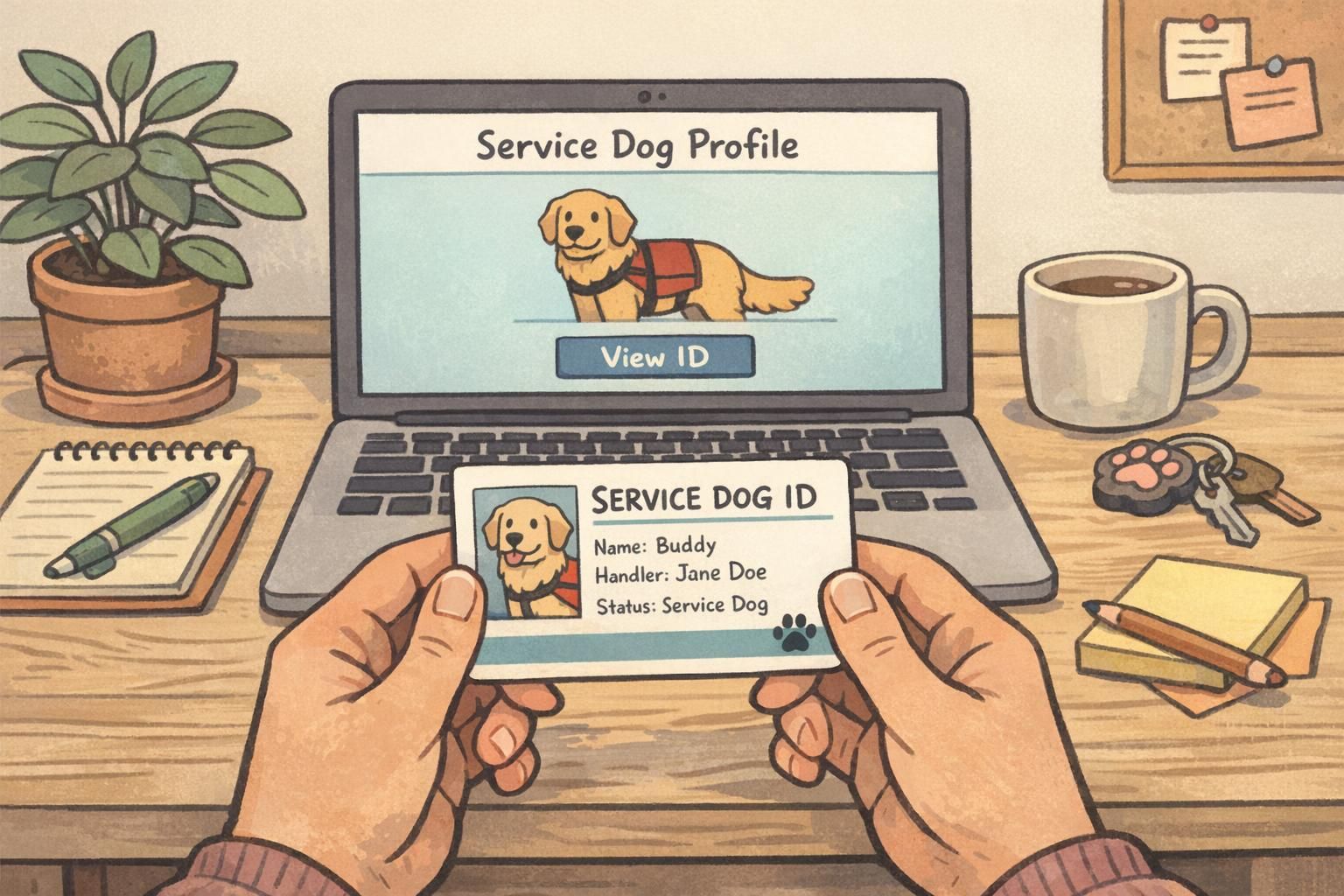
In practice, these materials can function like a “ready-to-show” snapshot: the handler’s name, the dog’s name, a photo, a registration number, and a simple statement that the dog is a working service dog. When presented politely, it can help staff quickly understand what they’re seeing—especially in environments where employees are trained to look for clear identification.
For many teams, getting organized starts with basics that are easy to use day-to-day, such as a starter registration package for everyday identification.
“ "I don’t use my documents to argue. I use them so I can keep things calm, answer quickly, and get on with my day." – Service dog handler”
There isn’t one single path that owners take when preparing a dog for service work. Some work with professional trainers, some train their own dog, and some receive a dog from a program. What matters most is that the dog can reliably perform its trained tasks and behave safely and calmly around real-world distractions.
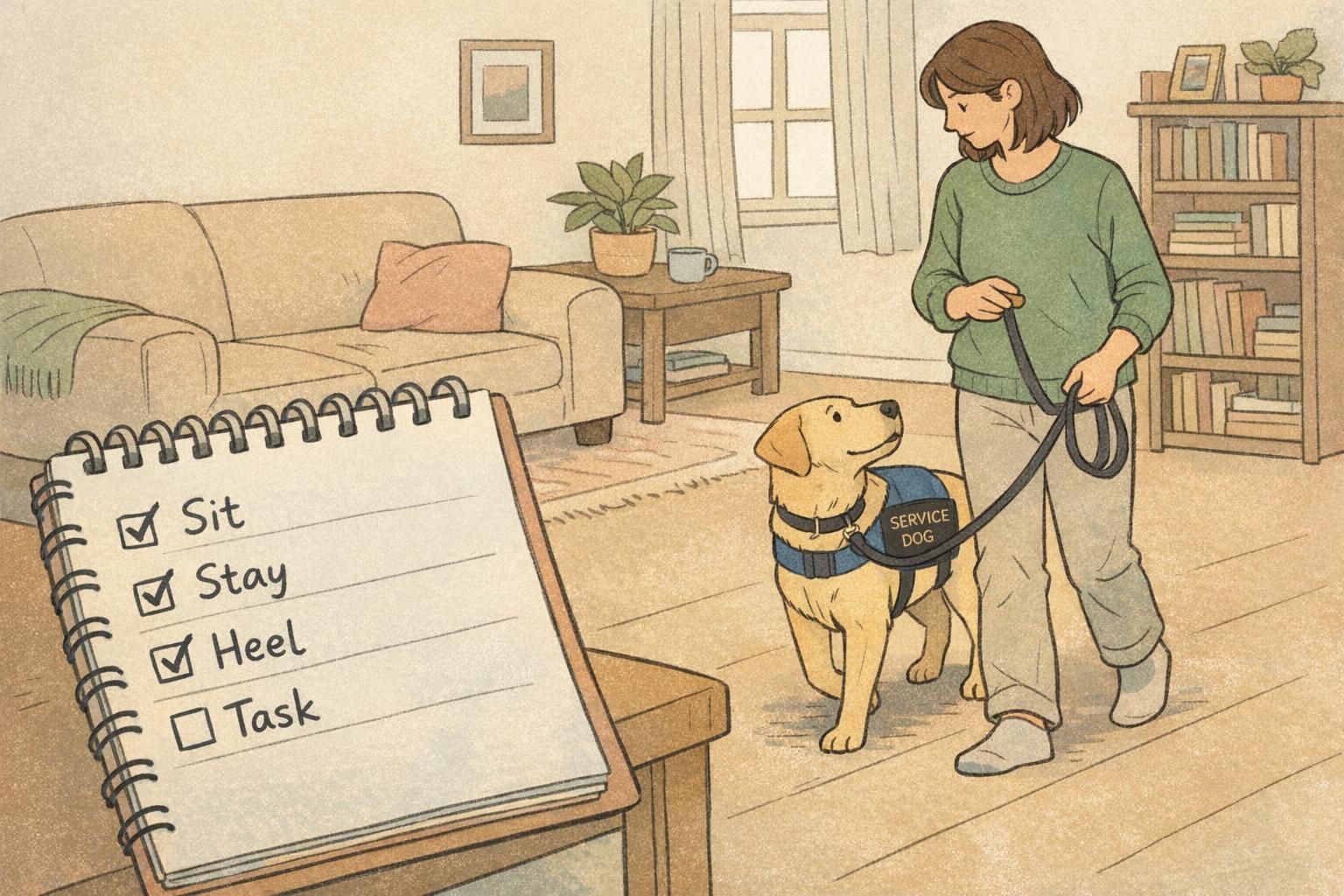
“Ready for public access” is less about perfection and more about consistency. A service dog should be able to remain under control, ignore common distractions, and settle appropriately for the environment—whether that’s a quiet office or a crowded checkout line.
Because “certification” is used in different ways, it can look very different from one organization to another. Some handlers choose third-party programs for structure, goal-setting, or personal reassurance. Others prefer to track readiness on their own. Either way, it helps to understand what optional programs may include so you can choose what fits your needs.
Optional programs often focus on three broad areas: task performance, temperament, and public behavior. These standards can help a handler identify training gaps and build a plan for improvement—especially for teams that want an extra layer of organization.
When you’re in public, the most helpful materials are the ones you can access quickly and present calmly. Many handlers aim for a small “grab-and-go” set: something readable, something digital, and optional accessories that help the public recognize the dog is working.
Many owners like to pair a printed card with an online profile for quick access, such as a customizable printed service dog ID with a matching digital profile.
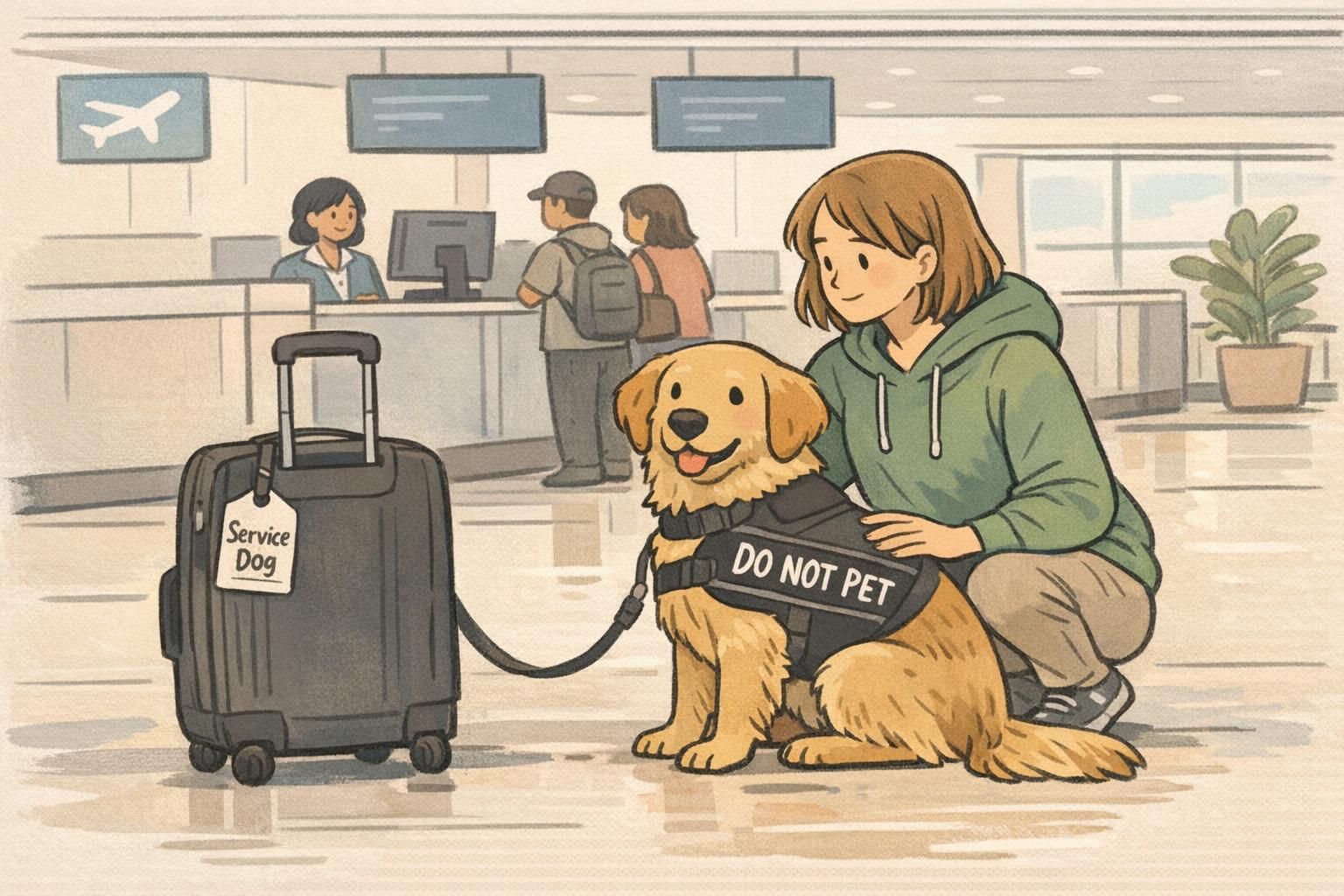
Housing and travel are two areas where handlers often prioritize being organized. Not because a single document “solves everything,” but because these situations can involve multiple steps, multiple people, and time pressure. Having consistent, ready-to-share information can make the process feel more predictable.
For housing conversations, you may be communicating with a landlord, property manager, or leasing office—sometimes by email, sometimes in person. For travel, you may be juggling airline policies, check-in timing, and busy environments where it helps to keep your information in one place.
If you’re planning a trip, this guide can help you think through the process: traveling with a service dog.
Some teams also prefer a bundled set of travel-focused materials to reduce last-minute stress, such as a travel-ready service dog registration package.
For many handlers, the goal of registration is simple: stay organized, keep information consistent, and have quick access to identification materials when life gets busy. A straightforward approach can help you feel prepared without adding extra stress.
If you want fast access that’s easy to pull up during check-ins or quick conversations, an instant-access digital service dog ID is a practical option many handlers like for day-to-day organization.
When public conversations happen, the best strategy is usually calm, brief, and consistent. Most interactions go well when handlers answer what’s asked, share only what’s necessary, and keep the focus on the dog’s trained work and good behavior.
No. In most everyday interactions, it’s enough to confirm the dog is required for a disability and briefly describe the tasks the dog is trained to perform. Many handlers keep their answers simple and avoid medical details.
Many handlers use documentation strategically—when it helps reduce confusion, speed up an entry conversation, or keep things calm. If the interaction is already smooth, you may not need to show anything at all.
A prepared one-sentence script plus organized, easy-to-reach materials can help you keep the interaction brief. The goal is to stay respectful and move through the moment with minimal stress.
At the end of the day, the focus is safety, respect, and consistent handling. A well-prepared team—supported by calm communication and organized materials—can make public outings feel more manageable and predictable.
Your trusted source for service animal registration. Get professional ID cards, digital profiles, and smart NFC tags to keep your service animal safe and recognized.
© National Animal Registry — All rights reserved.