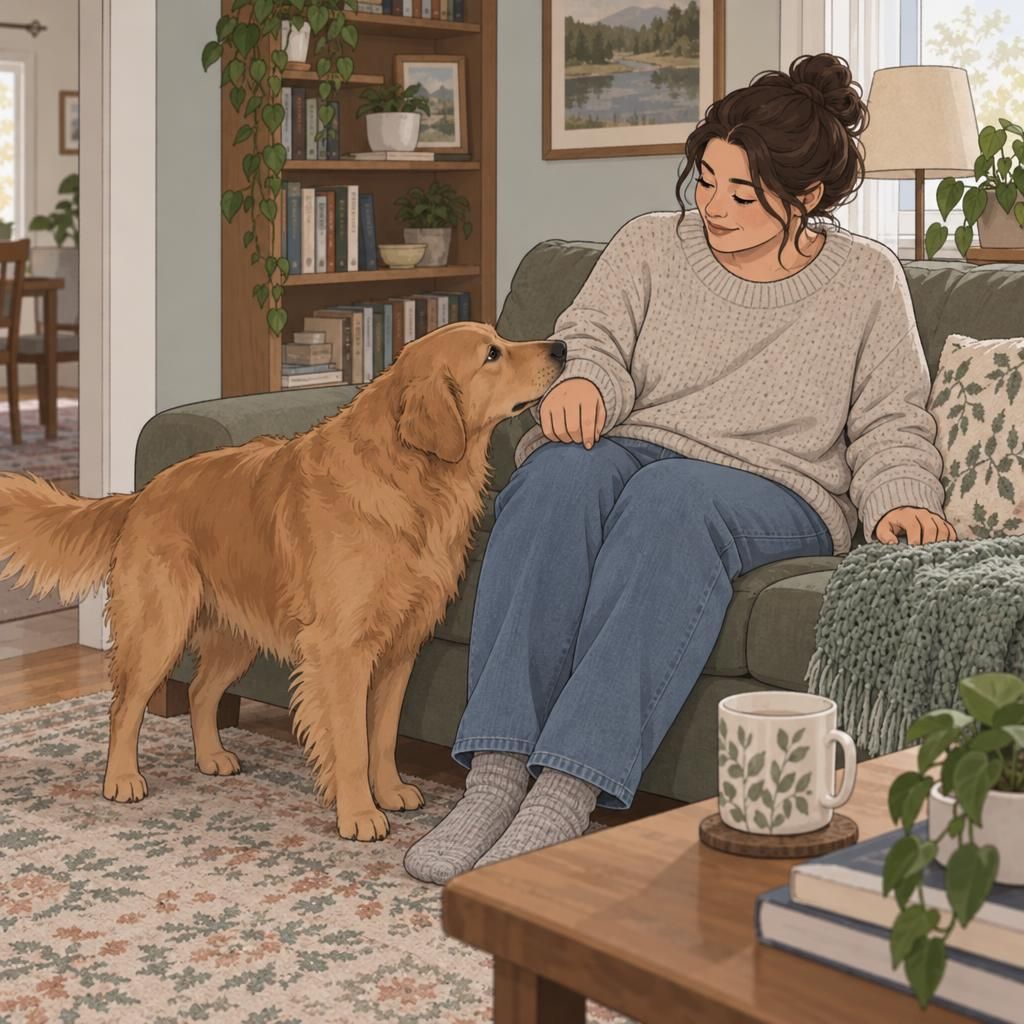
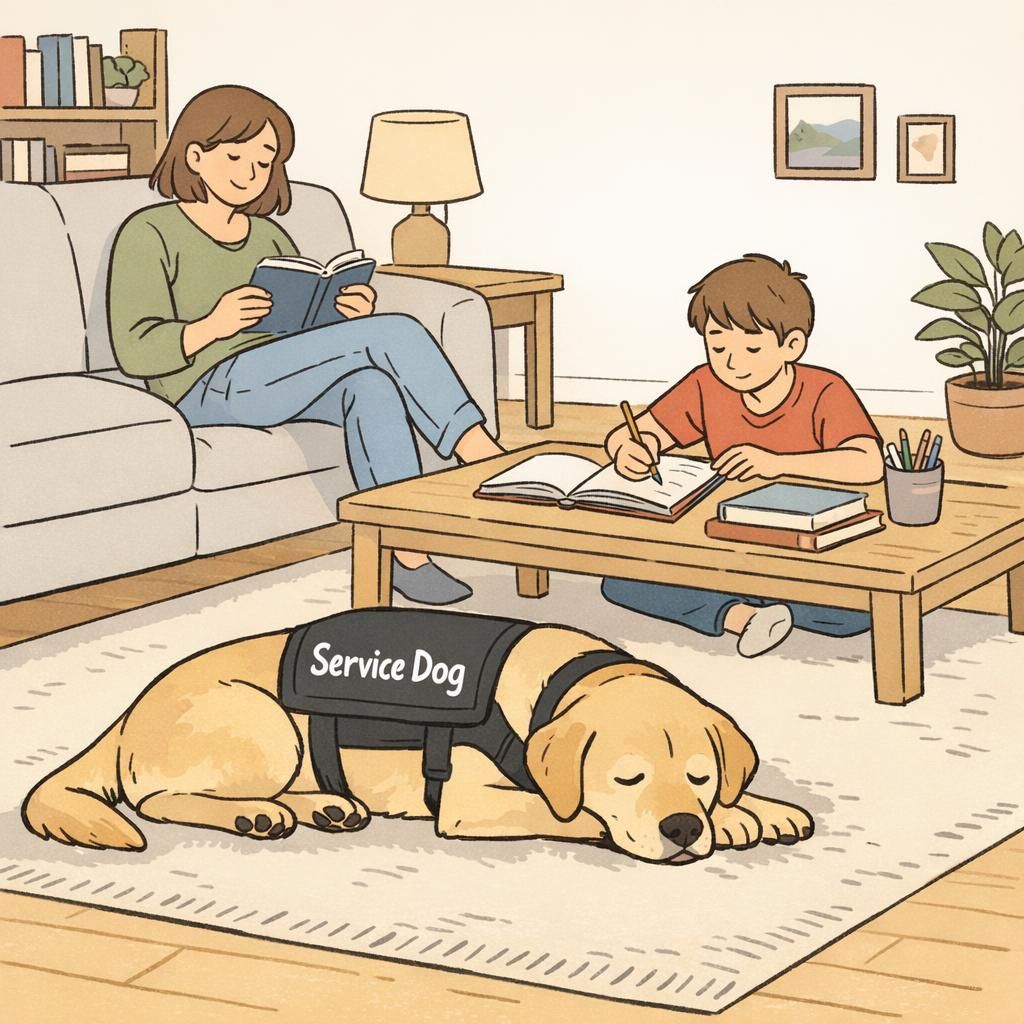
When people think about an assistance dog, they often picture a single handler and a single set of needs. In real life, the impact tends to spread—quietly but powerfully—through the whole household. Parents, partners, siblings, and caregivers may notice that daily life feels steadier: routines get smoother, outings feel less stressful, and home feels more connected.
That ripple effect makes sense. When one family member has fewer difficult moments to manage alone, everyone else can breathe a little easier. Families often describe more predictable mornings, fewer last-minute cancellations, and a calmer tone at home—support that can strengthen relationships, not just symptoms.
“ "It wasn’t just that our child felt more secure—our whole house got quieter. We stopped bracing for the next hard moment, and we started planning again." – Parent of an assistance dog handler”
Many families notice emotional benefits first. A service dog or support dog can provide grounding through steady presence, comforting proximity, and predictable companionship. That steadiness can be especially meaningful during high-stress seasons—new school routines, health changes, grief, or major transitions.
In day-to-day family life, stress rarely shows up as one big moment. It’s more often the small spirals: an anxious morning, a tense bedtime, a frustrating afternoon when everyone is tired. A dog’s consistent behavior can help interrupt those spirals by offering a familiar cue to slow down, breathe, and reset.
“ "When stress starts building, the dog’s calm is contagious. It reminds all of us to soften our voices and slow down." – Partner of a handler”
Families thrive on routines—but routines can be hard to maintain when disability-related needs add unpredictability. Assistance dogs can support structure by reinforcing transitions, offering calming behaviors, and helping the handler stay oriented to the next step. Over time, that structure can reduce decision fatigue for everyone.
Different households experience this differently. A family supporting a child may focus on smoother school mornings and after-school decompression. A household supporting an adult may focus on steadying the workday and reducing overwhelm. For seniors, the priority may be reminders, pacing, and safer movement through the home.
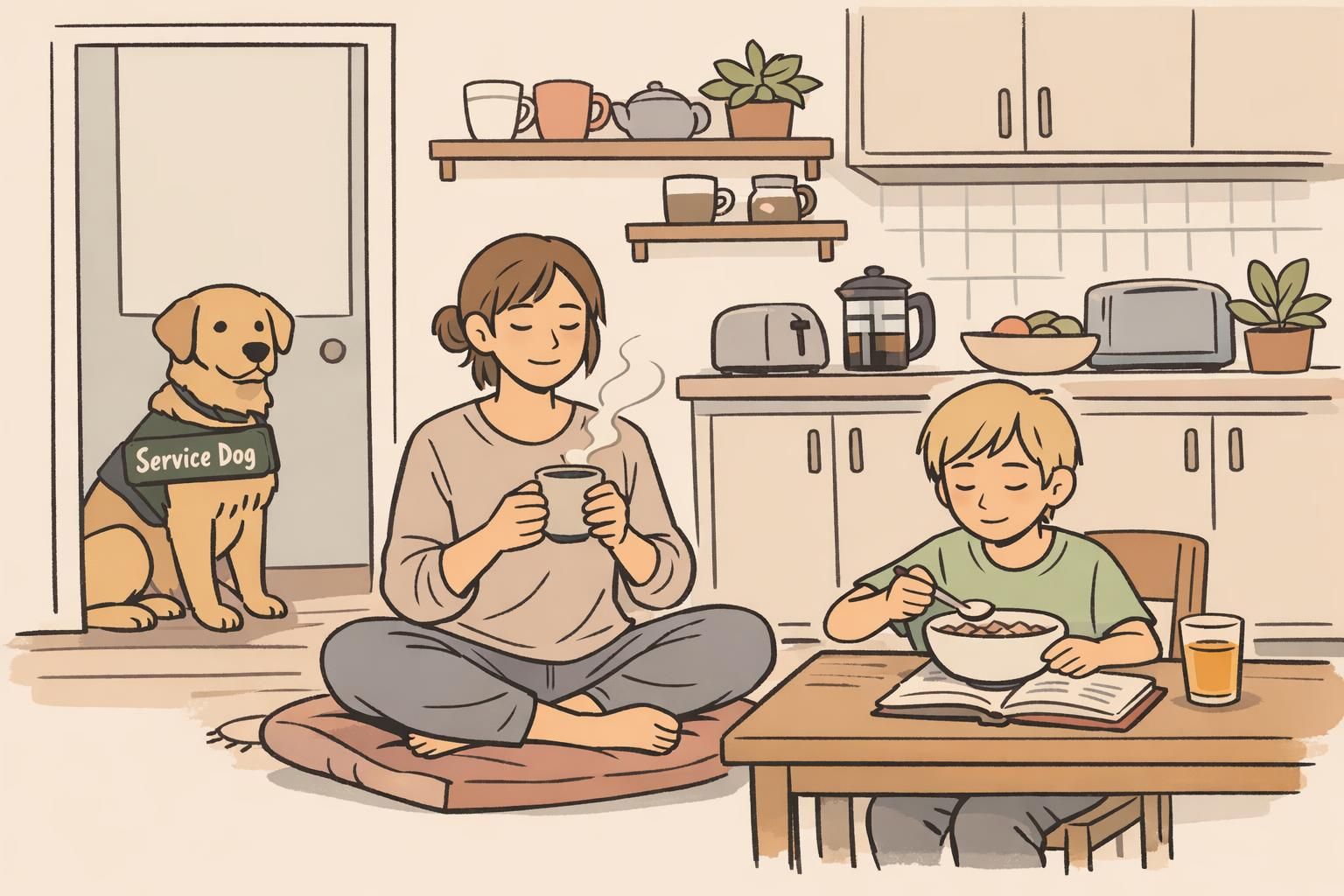
For many families, the hardest part of disability support isn’t what happens at home—it’s what happens when you try to leave the house. Errands, appointments, school events, and family gatherings can bring uncertainty: crowd noise, long lines, unexpected delays, or unplanned interactions.
An assistance dog can help outings feel more manageable by adding predictability and improving focus. Some dogs perform specific tasks related to the handler’s disability; others provide steady companionship that helps the handler stay regulated. Either way, families often report that they can say “yes” more often—yes to a quick grocery run, yes to a sibling’s game, yes to a family walk.
“ "We used to plan our whole day around avoiding triggers. Now we plan around what our family wants to do." – Caregiver”
While emotional support is meaningful, many families also appreciate practical help—small tasks that reduce strain over hundreds of ordinary moments. When an assistance dog reliably helps with day-to-day needs, caregivers may get back time, energy, and attention for the rest of the household.
Tasks vary widely depending on the person and disability, and each team’s training and routines are unique. What matters is the outcome: fewer bottlenecks, fewer repeated interruptions, and more independence for the handler.
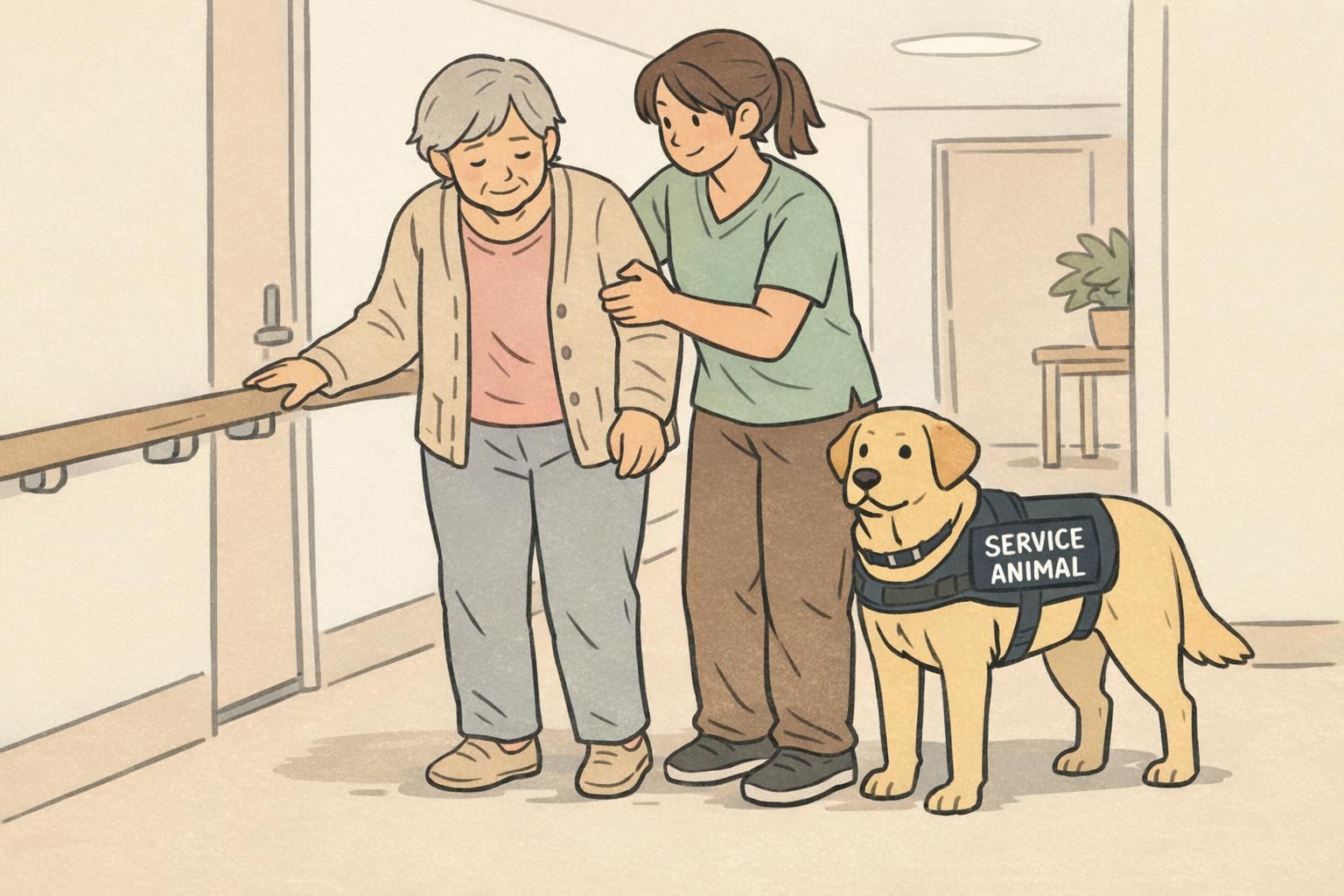
In many households, stress shows up as conflict—not because anyone is doing something wrong, but because everyone is stretched thin. When an assistance dog helps reduce the intensity or frequency of difficult moments, families may find that conversations get easier and patience lasts longer.
Parents and partners often describe less caregiver burnout when support feels more evenly distributed across the day. Siblings may feel safer and more included when home life is calmer and plans are more reliable. Couples may reconnect as partners rather than feeling stuck in caregiver-and-patient roles.
“ "The biggest change was our connection. We weren’t only managing symptoms anymore—we were enjoying our family again." – Spouse of a handler”
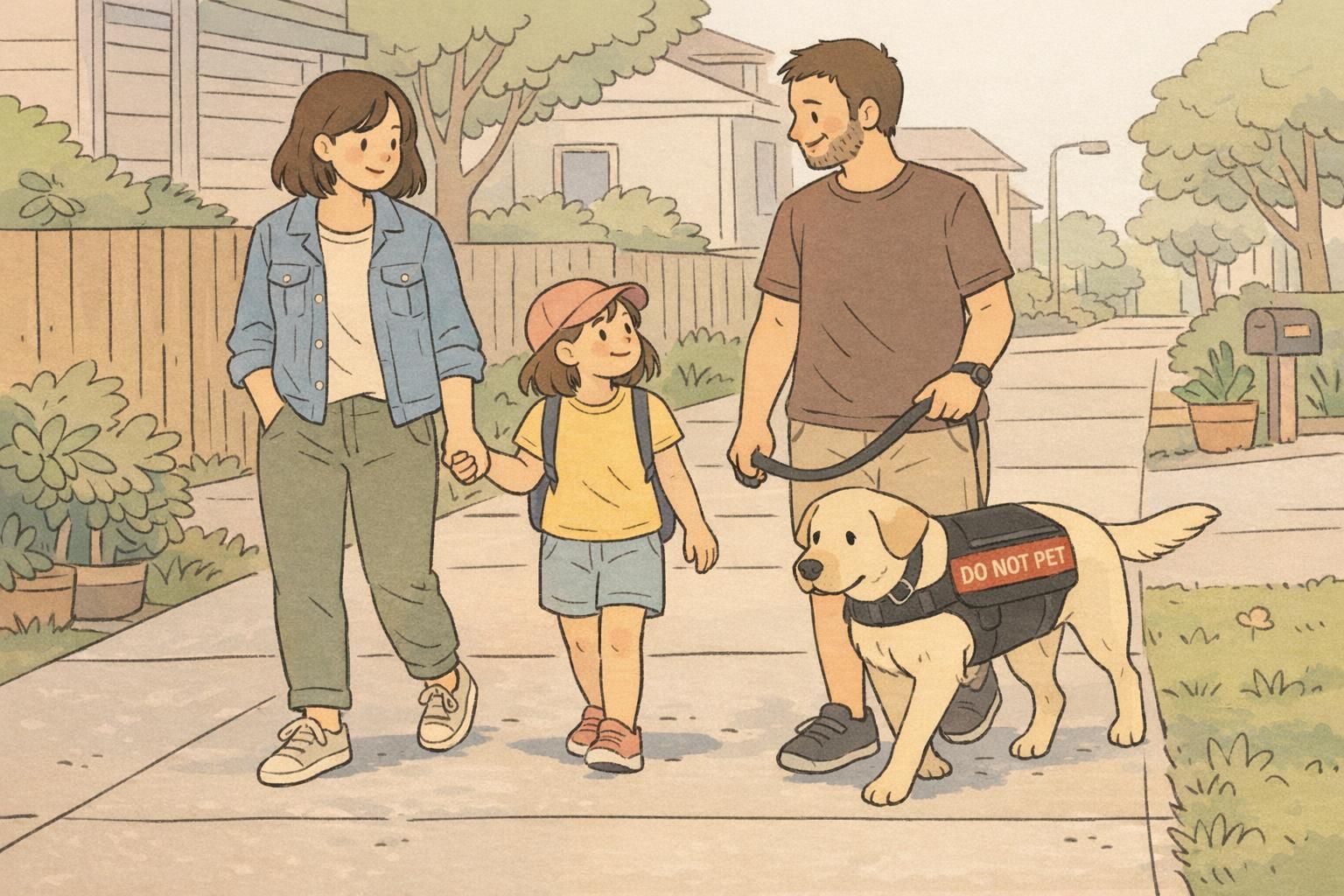
Assistance dogs can change how families move through the world socially. On the positive side, many people feel less isolated and more able to participate—school events, neighborhood walks, community activities, and time with friends. At the same time, a working dog can draw attention, questions, and occasional misunderstandings.
Having a simple plan for public interactions helps protect the handler’s comfort while keeping conversations respectful. Families often find it useful to decide ahead of time who answers questions, what to say when someone wants to pet the dog, and how to exit a conversation smoothly.
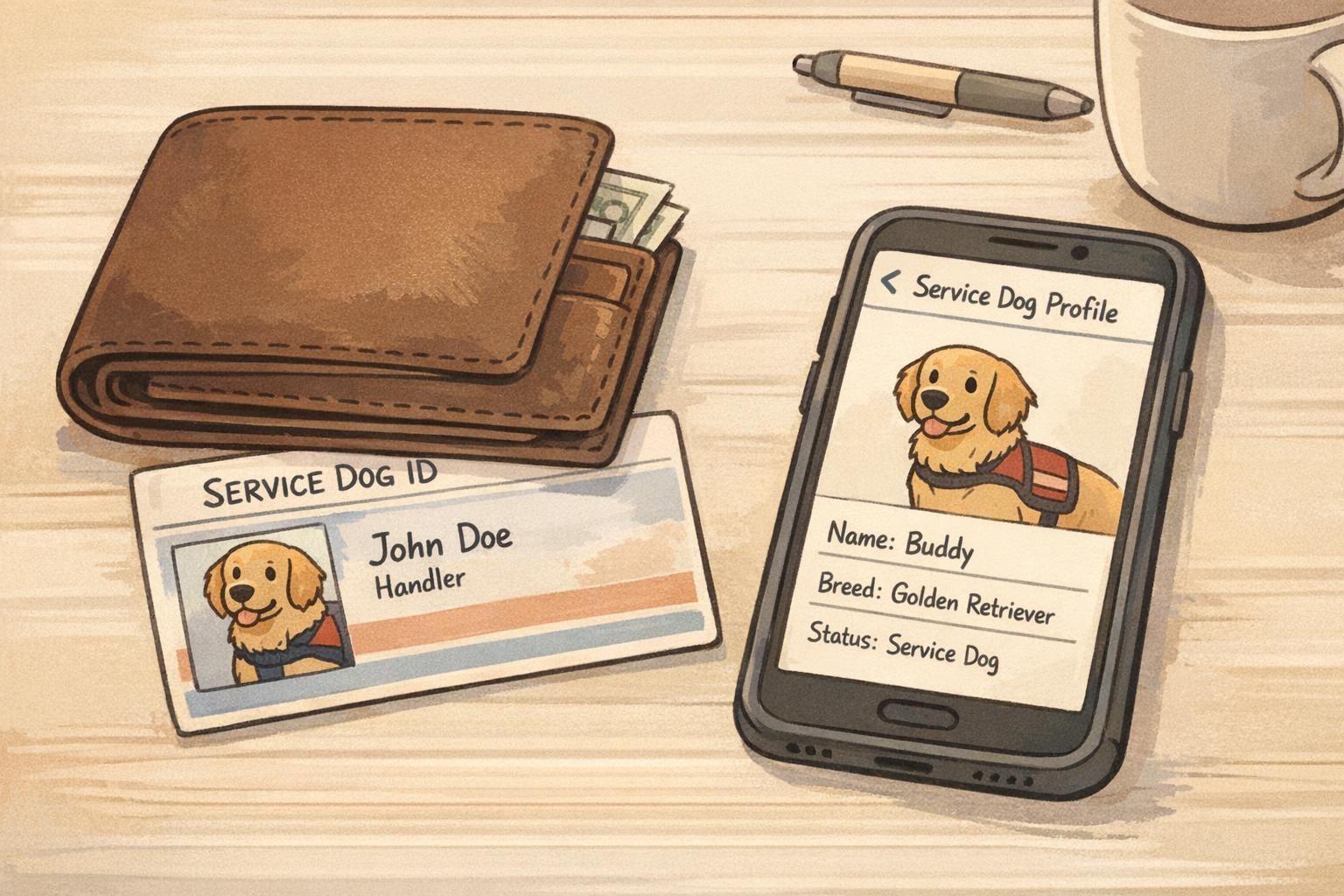
In busy real-world settings, families often appreciate tools that help them communicate clearly and stay organized. Identification can be especially helpful on travel days, during housing conversations, at crowded events, or anytime the family simply wants interactions to be smoother and more predictable.
Registration and ID materials are optional tools many handlers choose for everyday convenience. They can help a family present consistent information, keep important details in one place, and feel more prepared when questions come up. For some households, that organization alone reduces stress.
Many families also like having a quick way to share key details (without turning a day out into a long conversation). When communication is simpler, the handler can stay focused on their needs and the family can keep moving.
If you’re looking for a practical way to streamline everyday identification, consider a starter registration package for everyday identification.
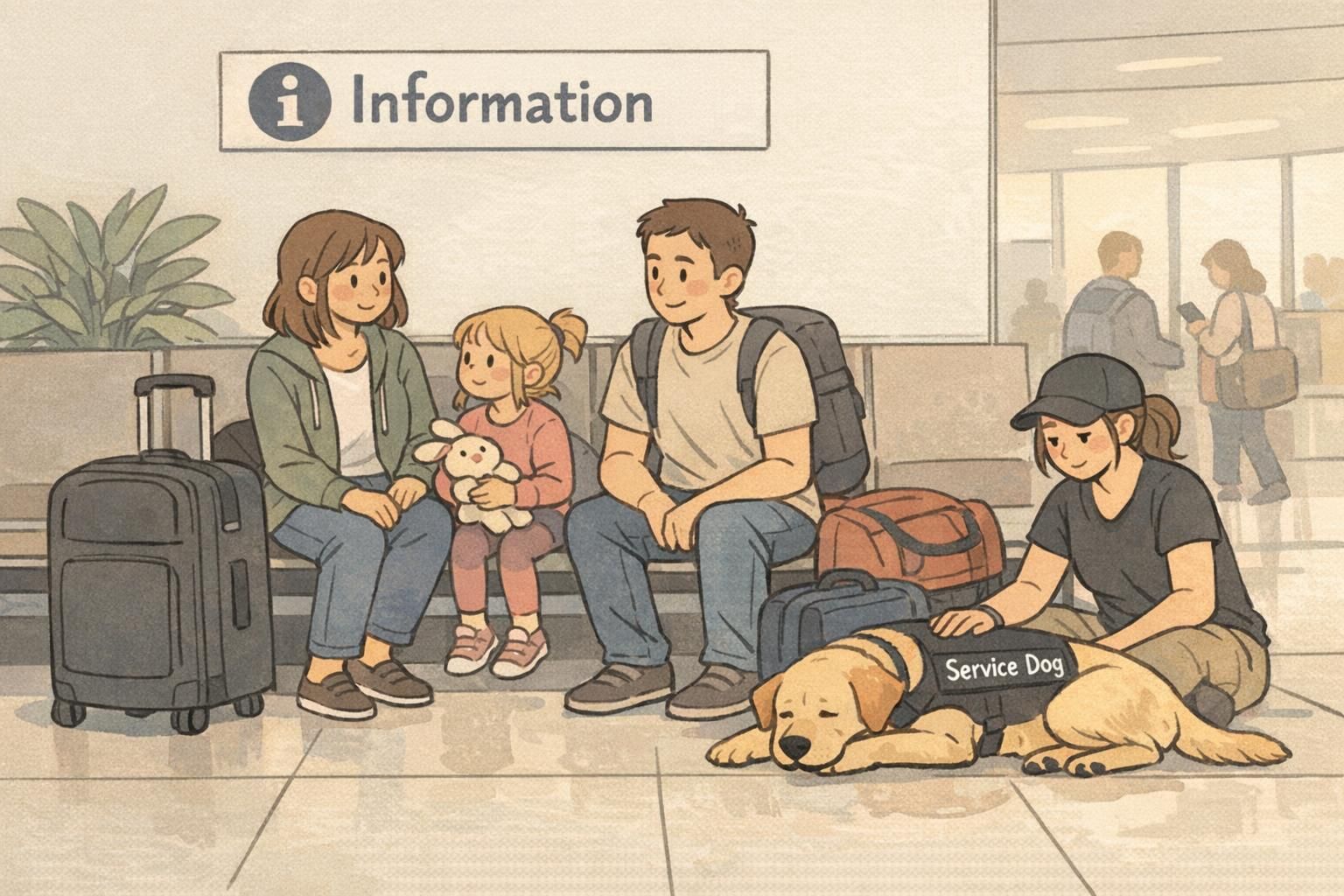
Family trips can be wonderful—and they can also magnify stress. Longer days, unfamiliar environments, and schedule changes may affect both the handler and the dog. Planning ahead helps you keep the day calm and predictable, even when something unexpected comes up.
A few simple travel habits tend to make the biggest difference: build in extra time, plan bathroom breaks, and keep essentials easy to reach. It also helps to remember that rules and policies can vary by location and setting, so confirming details ahead of time can reduce surprises.
For more planning ideas, visit tips for traveling with a service dog.
If your family wants a travel-ready set of identification and materials to help you stay organized on the go, you may also consider a travel-focused service dog package.
A well-supported dog supports the family better over the long term. That starts with clear home expectations and routines everyone understands. Families do best when they treat the dog as both a working partner and a living being with real needs: rest, consistency, and respectful handling.
It can help to think of your dog’s daily life in “on-duty” and “off-duty” rhythms. Some households use a vest or specific cue to signal working time, while others rely on location-based routines. Whatever your approach, consistency makes life easier for kids, visitors, and the handler.
People use these terms in everyday life in different ways, and rules can also vary depending on location and context. The most helpful approach is to focus on clarity, respect, and responsible handling—especially in public settings and shared spaces.
In everyday conversation, “service dog” typically refers to a dog that assists a person with a disability, often by performing specific supportive behaviors or tasks. How service dogs are defined and accommodated can depend on the setting and local rules.
Many people use “support dog” to describe a dog that provides comfort, grounding, and stability—especially at home and during stressful moments. Depending on where you live and the context (housing, travel, public spaces), the term may be treated differently, so it’s wise to plan ahead and communicate clearly.
A companion animal is commonly understood as a beloved pet whose main role is companionship. Many families find companionship deeply therapeutic in daily life, even when the animal is not working in a formal assistance role.
Keep it short and polite. A simple boundary like “Please don’t pet—our dog is working” is often enough. If you want a low-friction way to share basic info and keep conversations respectful, printed materials can help.
Some families like having simple, respectful materials on hand for quick communication in public. Consider ADA law handout cards for simple, respectful communication.
Your trusted source for service animal registration. Get professional ID cards, digital profiles, and smart NFC tags to keep your service animal safe and recognized.
© National Animal Registry — All rights reserved.