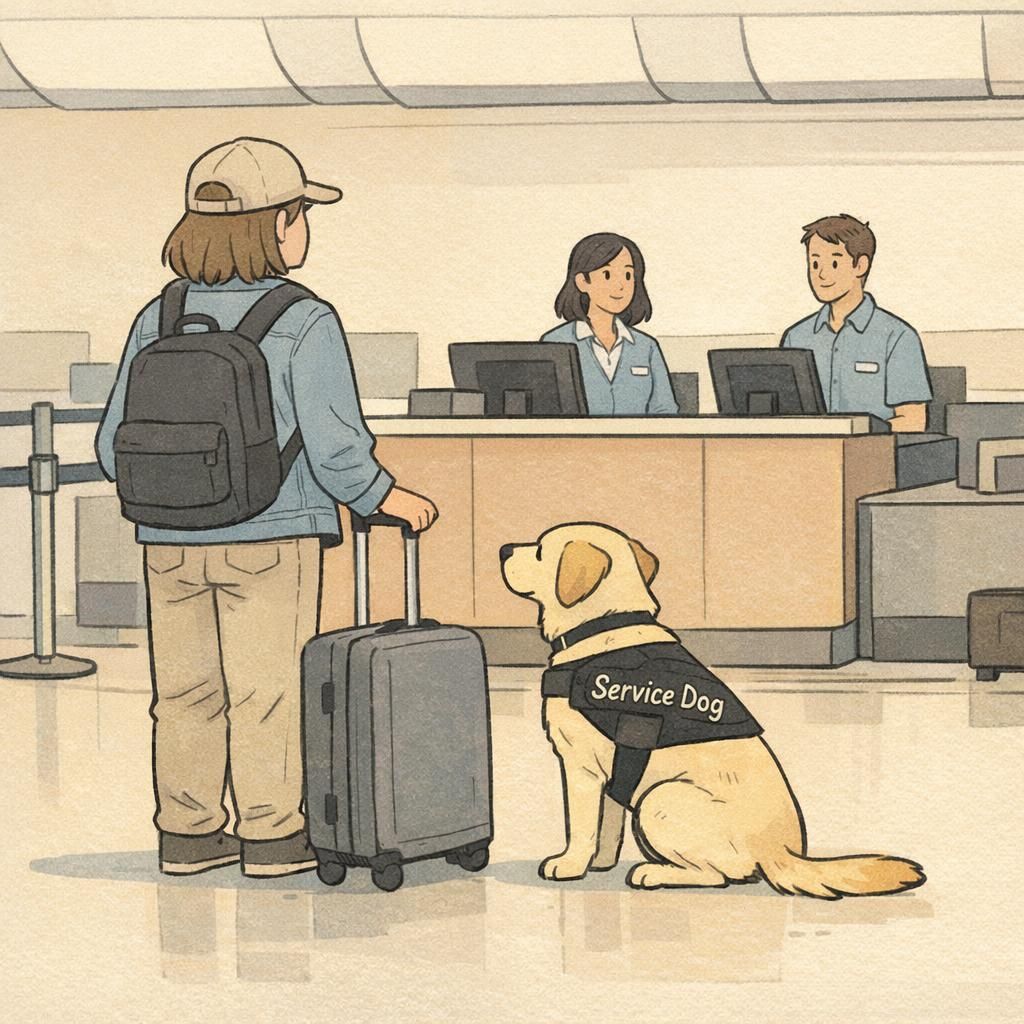
When handlers say they want to “register a service dog for travel,” they’re usually talking about something very practical: having clear, consistent identification and easy-to-present documentation that helps them move through travel steps with less back-and-forth. In real life, travel can involve fast decisions, unfamiliar staff, and quick questions at the least convenient moments. Having a professional-looking ID card, a digital profile, and an organized set of materials can make those moments feel simpler.
It’s also important to set expectations. Travel processes can include airline-specific steps, forms, and timelines—especially when you’re flying. Registration is commonly used to reduce day-to-day friction, but it doesn’t replace reading your carrier’s current policies or completing any required airline paperwork. Think of registration as your “ready kit”: consistent information you can present calmly while you follow the airline’s process.
Even when a service dog is well-trained for public access and the handler is fully prepared, travel can still feel complicated. Airports are crowded and noisy. Lines move quickly. Staff rotate between stations. And procedures can differ based on the airline, airport layout, or even the specific employee assisting you.
Common “pinch points” tend to happen when a handler is juggling multiple tasks at once: keeping their dog in a safe position, handling luggage, showing a boarding pass, answering questions, and staying aware of announcements. If questions come up repeatedly—at the counter, at security, at the gate—many handlers look for ways to make each interaction calmer and more predictable.
That’s where organized registration materials often help. A consistent ID and a quick way to present your dog’s profile can reduce the need for long explanations. For a broader overview of what to expect, see traveling with a service dog.
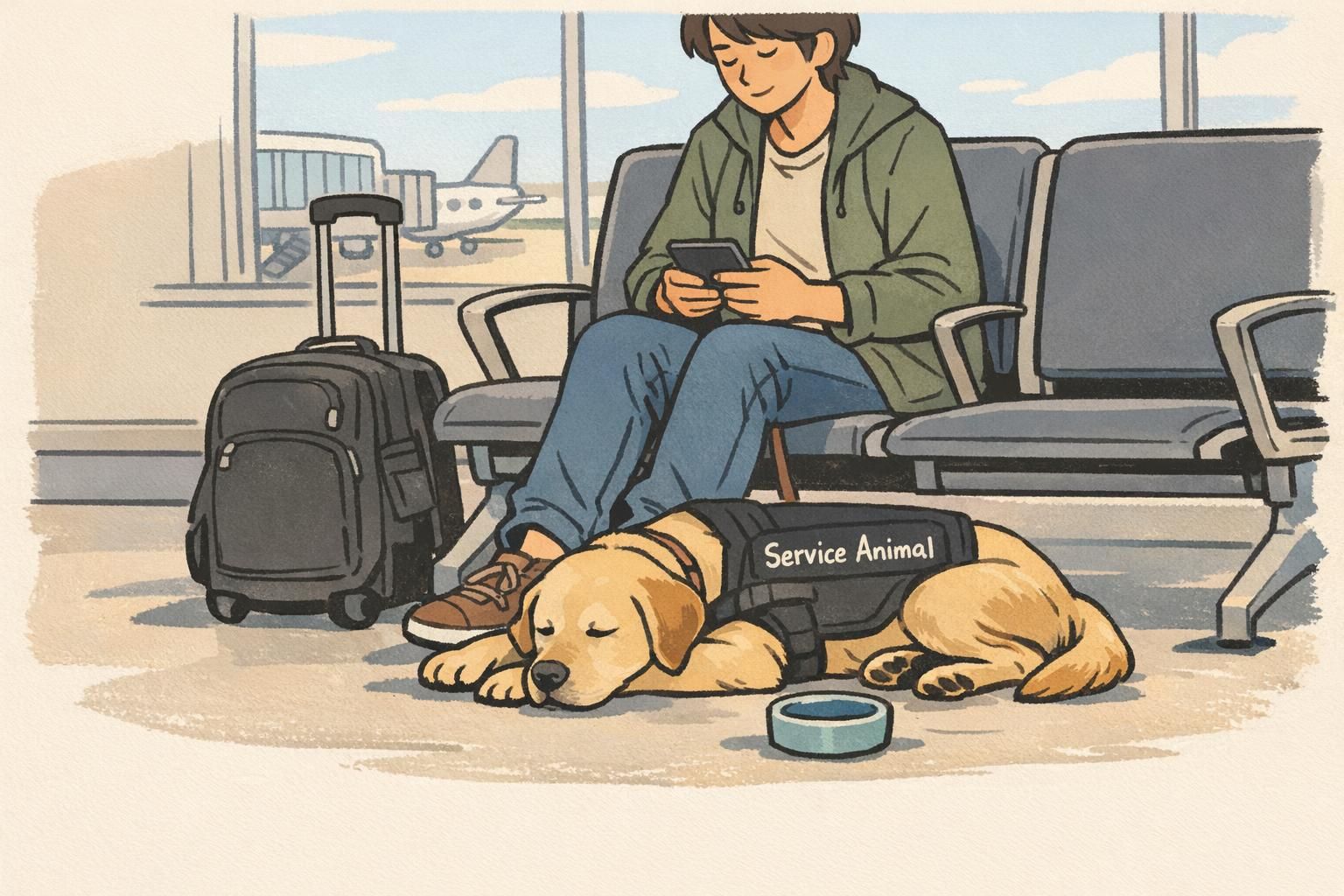
In busy public spaces, clarity matters. A professional ID card and a consistent profile can help staff quickly understand that your dog is working and that you’re prepared to communicate respectfully. While an ID or vest isn’t the same thing as “permission,” many handlers find that clear identification reduces misunderstandings—especially when an employee is trying to help quickly and has limited time to talk.
Handlers often describe the benefit as “less friction.” Instead of feeling like every interaction might turn into a long conversation, they have a simple, consistent way to present information. This can be helpful across common travel moments like check-in, security, boarding, and layovers—where you might speak with several different people in a single day.
“ "Travel days move fast. Having consistent ID and a simple way to present my dog’s info helps me keep conversations short, calm, and respectful." – Frequent Traveler”
For flights, preparation often includes airline documentation steps. Many airlines request Department of Transportation (DOT) service animal forms to be submitted within a particular window before departure. If you travel often, keeping your dog’s details organized in one place can speed up your routine: you’re less likely to hunt through emails, retype the same information, or scramble to find what you used last time.
Some carriers also have workflows that can make repeat trips easier. For example, an airline may review submitted documentation, approve it, and issue an internal identifier that can be saved to future bookings—sometimes with a time-limited validity period that requires re-submission after it expires. That kind of process is described here: source.
In that context, registration can be a simple organizational advantage. You have a consistent profile, your dog’s key details at your fingertips, and a predictable system for storing what you need for each airline’s steps—especially helpful when you’re booking multiple trips in a year.
One reason travel can feel stressful is that procedures don’t always look the same from trip to trip. Different airlines may have different submission steps. Airports may have different layouts and staffing patterns. If you’re traveling across states—or internationally—expectations and logistics can change again.
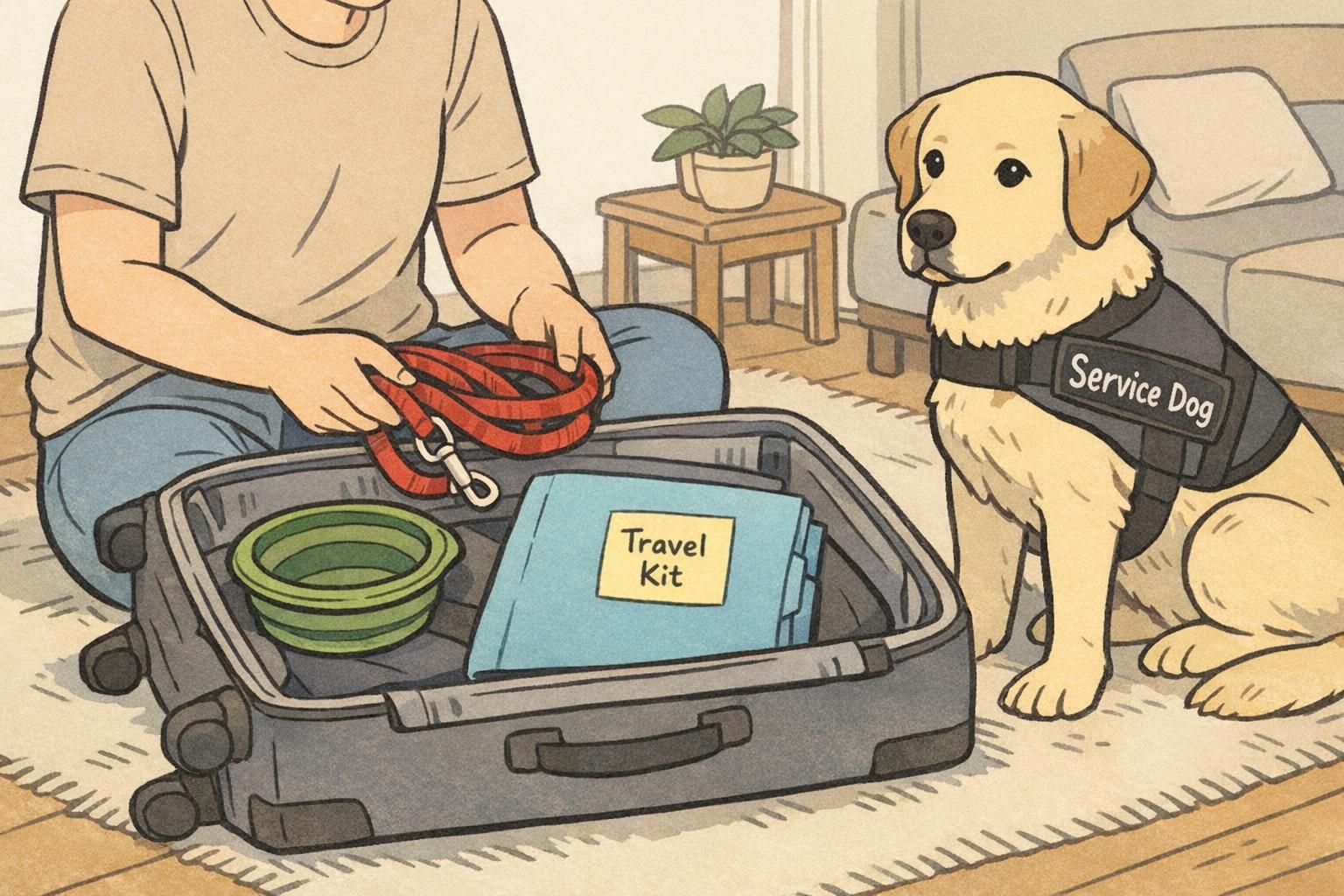
When the environment varies, many handlers prefer to keep their own materials consistent. A travel folder (digital and/or printed), an ID that matches your dog’s profile, and a predictable “routine” for how you present information can make you feel more in control even when the setting is unfamiliar.
Travel affects the whole team. A handler may be managing health needs while navigating noise, crowds, and time pressure. At the same time, a service dog is working in a highly distracting environment—staying focused, maintaining position, and ignoring attention from strangers.
Preparation supports both sides of that partnership. When you’re not searching for documents or repeating explanations, you can put your attention where it matters: keeping your dog calm, advocating politely when needed, and giving your dog the breaks and care that help them work comfortably.
“ "When I’m organized, my dog stays more settled. Less stopping and starting means fewer stress spikes for both of us." – Service Dog Handler”
Most handlers develop a simple system they can repeat for every trip. The goal is convenience and clarity: you’re ready to answer common questions quickly, without turning travel into a debate or a long explanation.
Many owners prefer a “grab-and-go” set of materials that includes both a physical backup and an easy digital option. If you want an all-in-one option, National Animal Registry offers a travel-ready service dog registration package designed around the items people commonly reach for when they’re on the move.
In airports, most handlers don’t want long, emotional conversations about personal medical details. They want quick, respectful communication that helps everyone move forward. A calm tone, a short explanation, and a consistent way to share basic information can keep things professional—especially if you’re speaking with someone who is trying to follow their procedures.
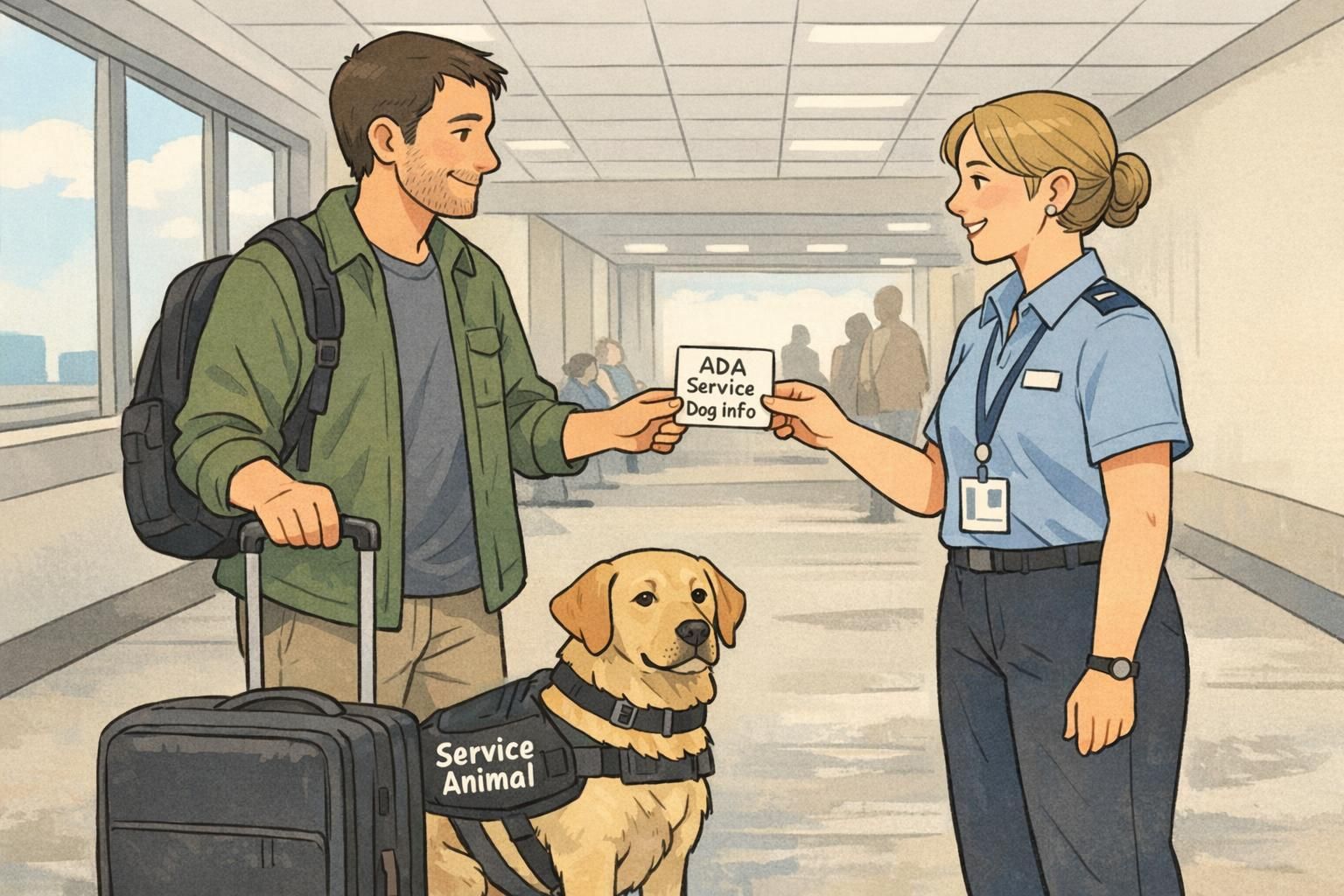
That’s why some handlers carry a small rights-overview card. It can be a low-pressure way to clarify common questions without turning the interaction into a confrontation. If you like having something you can hand over quickly, National Animal Registry offers ADA law handout cards that are easy to keep in a wallet, document folder, or carry-on pocket.
Many handlers find it works best to stay brief and polite. A simple confirmation and a calm, professional tone usually keeps things moving.
Keeping your materials organized and offering a clear, consistent explanation can help. If needed, ask respectfully whether they can check with a supervisor for the current procedure.
Most handlers prefer not to. In travel settings, short, practical communication is often the most comfortable approach.
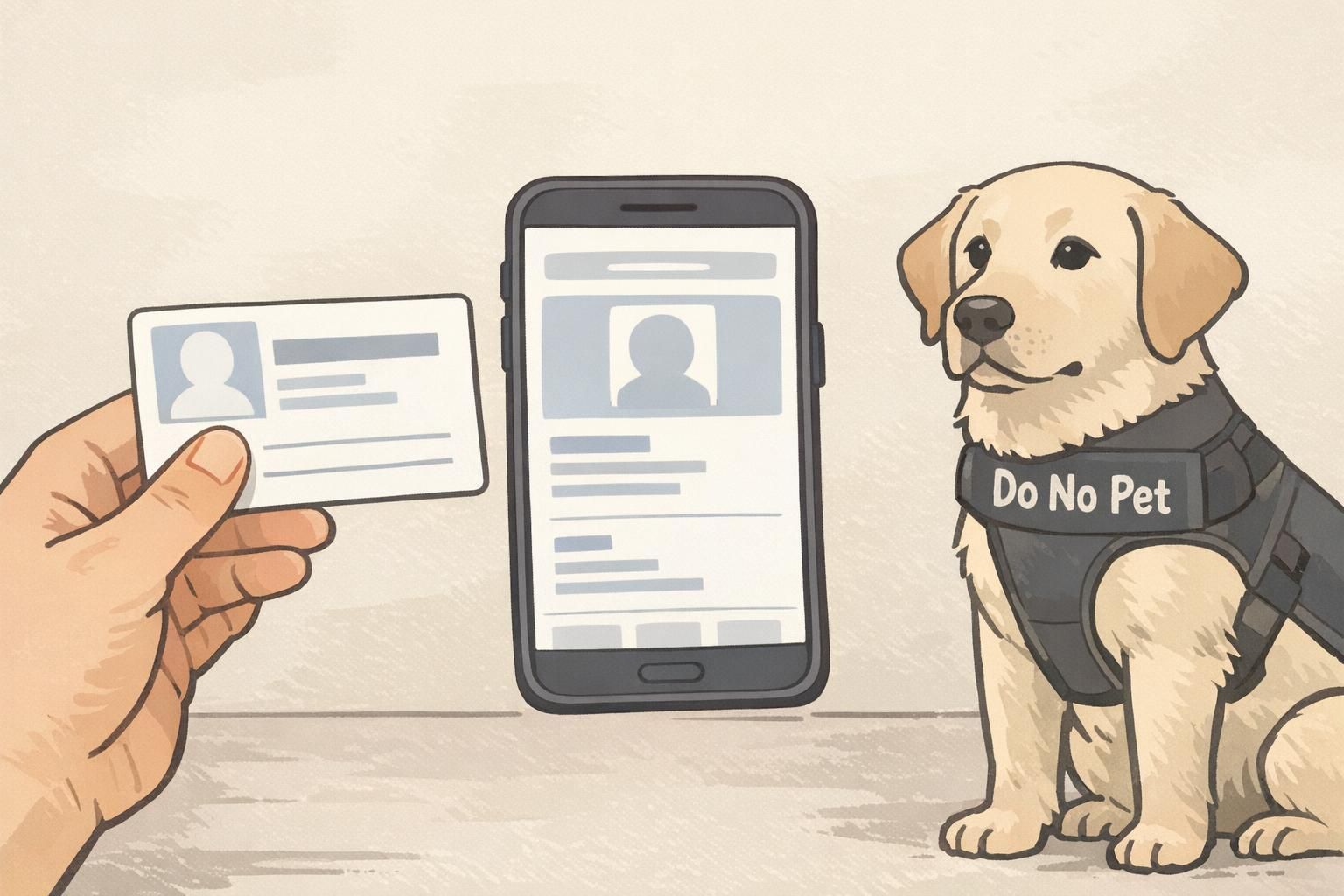
Travel is one of the clearest reasons people choose both a digital and a printed ID. A digital ID is fast: you already have your phone out for boarding passes, maps, and confirmations, so pulling up your dog’s profile can feel seamless. But a printed card is the reliable backup—no battery required, no spotty signal, no screen glare.
Many handlers like the redundancy. If your phone is low on power, you still have a physical card. If you’re moving quickly and need to show something without unlocking your phone, the printed ID can be faster. National Animal Registry offers a customizable printed service dog ID and matching digital profile so you can keep both options ready in a consistent format.
When you travel with a service dog, the goal is usually simple: move through each step smoothly, keep your dog focused and comfortable, and avoid unnecessary stress. Registration and identification materials can support that goal by giving you a consistent way to present information in real-world situations—especially when you’re interacting with new staff or traveling through unfamiliar airports.
National Animal Registry helps handlers stay organized with registration, IDs, certificates, and optional travel accessories that are designed for day-to-day usability. If you’re starting with the basics and want a straightforward setup, you can consider a starter registration package for everyday identification to keep your service dog’s information consistent and easy to access.
Your trusted source for service animal registration. Get professional ID cards, digital profiles, and smart NFC tags to keep your service animal safe and recognized.
© National Animal Registry — All rights reserved.