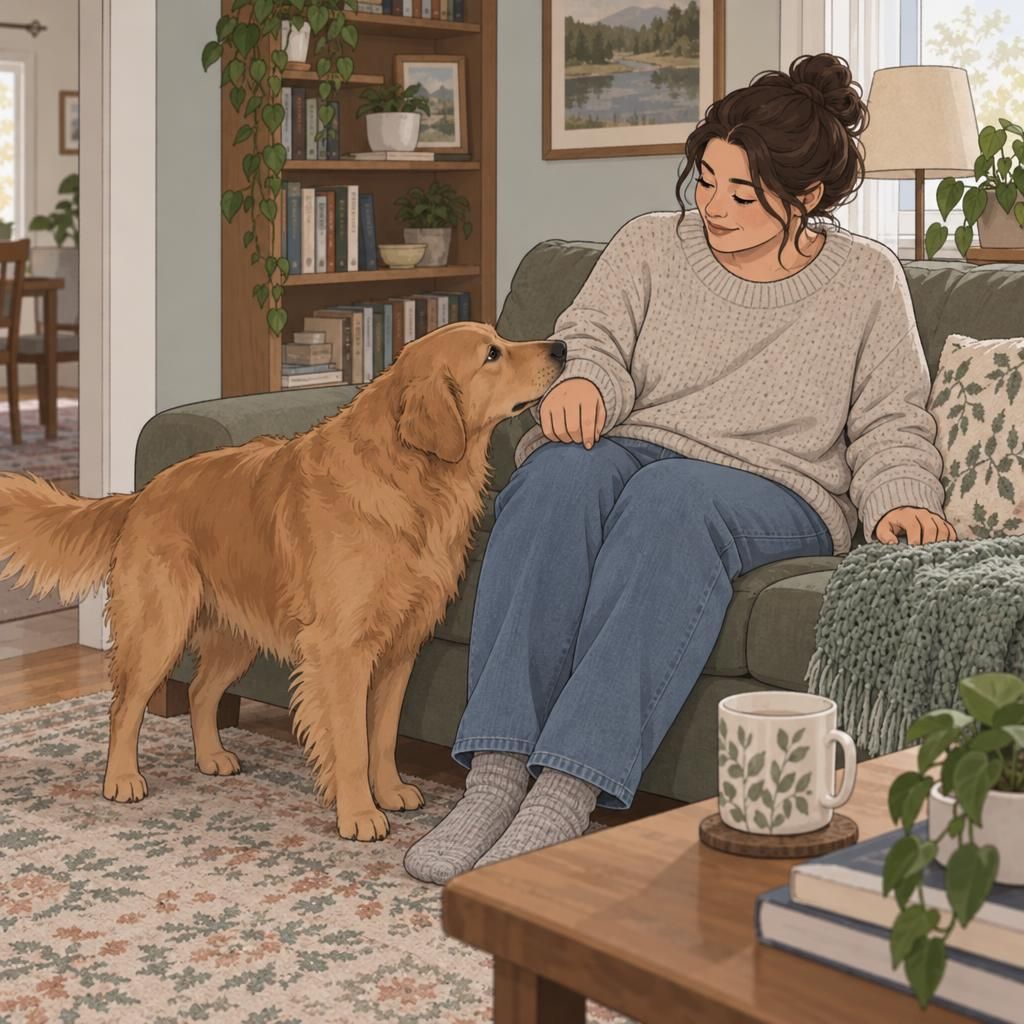
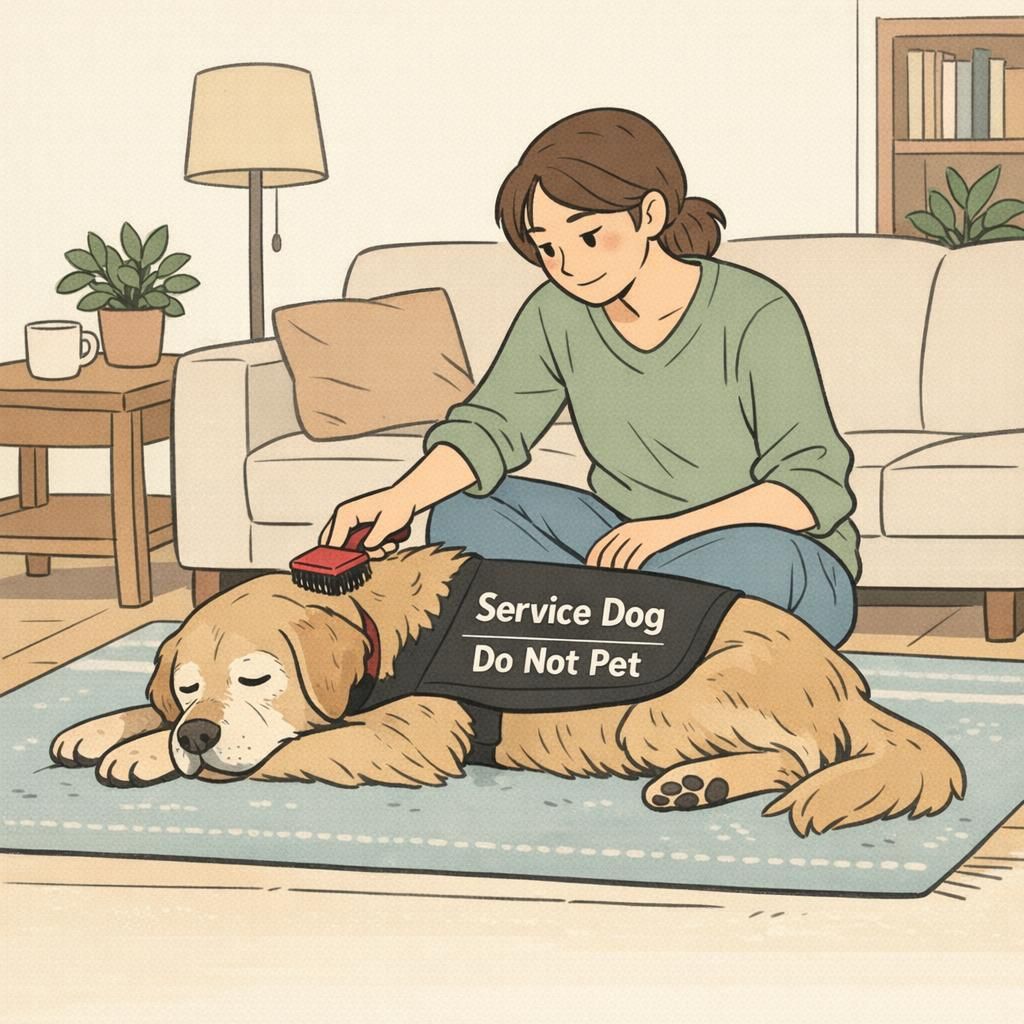
For a service dog, “retirement” doesn’t mean a sudden end to connection, purpose, or training. It usually means a shift away from regular public-access work and physically or mentally demanding tasks—toward a lifestyle that prioritizes comfort, rest, and enjoyment.
Many working dogs transition in stages. Some move from full-time work to part-time, then eventually to staying home. Others stop public work but still enjoy a few simple “jobs” at home, like gentle retrievals, interrupting a behavior, or offering steady companionship. The most important measure is quality of life: your dog’s ease, enthusiasm, and ability to recover comfortably after activity.
Many service dogs retire somewhere around 8–10 years old, but there is no universal “right” age. Some dogs happily work longer with lighter routines, while others need to slow down earlier. Retirement timing depends on the whole picture—your dog’s body, your dog’s role, and your day-to-day lifestyle.
The goal of retirement planning isn’t to “hold on” as long as possible—it’s to proactively protect your partner. Thinking ahead is part of responsible handling, and it gives you more options when the time comes to adjust routines.
Some teams expect retirement to come with a dramatic moment—one obvious day when the dog “can’t do it anymore.” More often, the signs are subtle and gradual. Paying attention early can help you adjust before your dog feels overwhelmed or uncomfortable.
“ "The first clue wasn’t a big mistake—it was that my dog stopped looking excited when I picked up the vest. Once we listened to that, everything got easier." – Service dog handler”
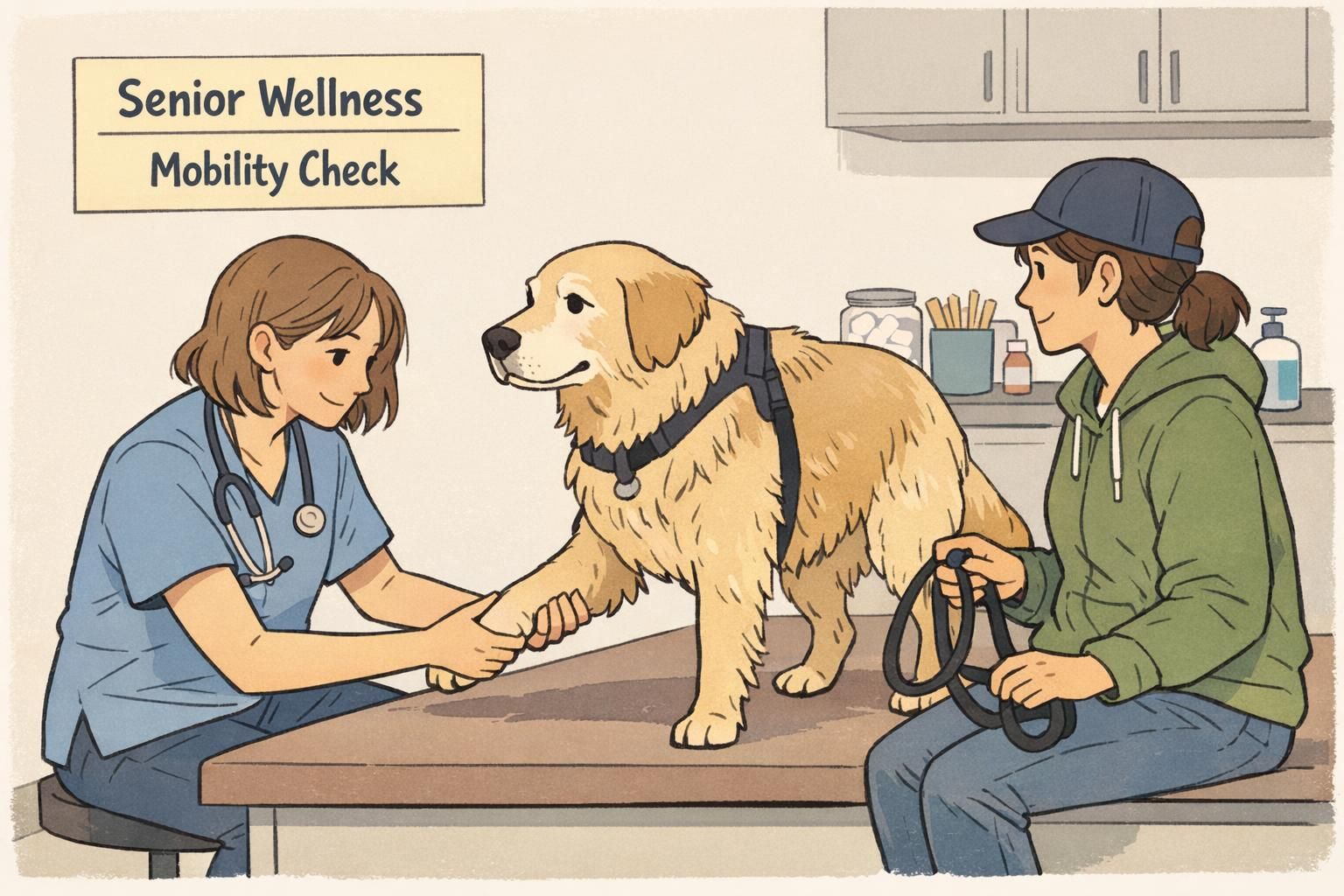
When you suspect your service dog may be ready to reduce work, start with a veterinary check-in. Many changes that look like “slowing down” are linked to treatable discomfort—such as arthritis, soft-tissue strain, dental pain, or endocrine issues. Vision and hearing changes can also make busy public environments feel more difficult, even if your dog’s behavior still looks “well trained.”
A veterinarian can help you assess pain, mobility, weight, and senior wellness needs, and can discuss supportive options like conditioning plans, joint support, or modifications to your routine. If you have access to a qualified trainer (especially one familiar with service dog work), they can help evaluate working comfort, sharpen skills for shorter shifts, and recommend whether reduced duties or full retirement is the kindest next step.
Not always. Many teams do best with small adjustments first—shorter outings, more rest days, less physically demanding tasks—while you rule out pain or medical causes with your vet.
That’s common. Public access adds noise, crowds, hard floors, and long waits. Some dogs do well transitioning to “home-only” support long before they fully retire from all task work.
A gradual retirement helps many dogs adjust emotionally and physically. Rather than removing all work overnight, you can scale down in a way that preserves confidence and reduces stress—especially if your dog has worked for years and strongly associates gear and outings with purpose.
Thoughtful transition planning and slowly reducing workload can help minimize stress and support a smoother adjustment for both handler and dog (source).
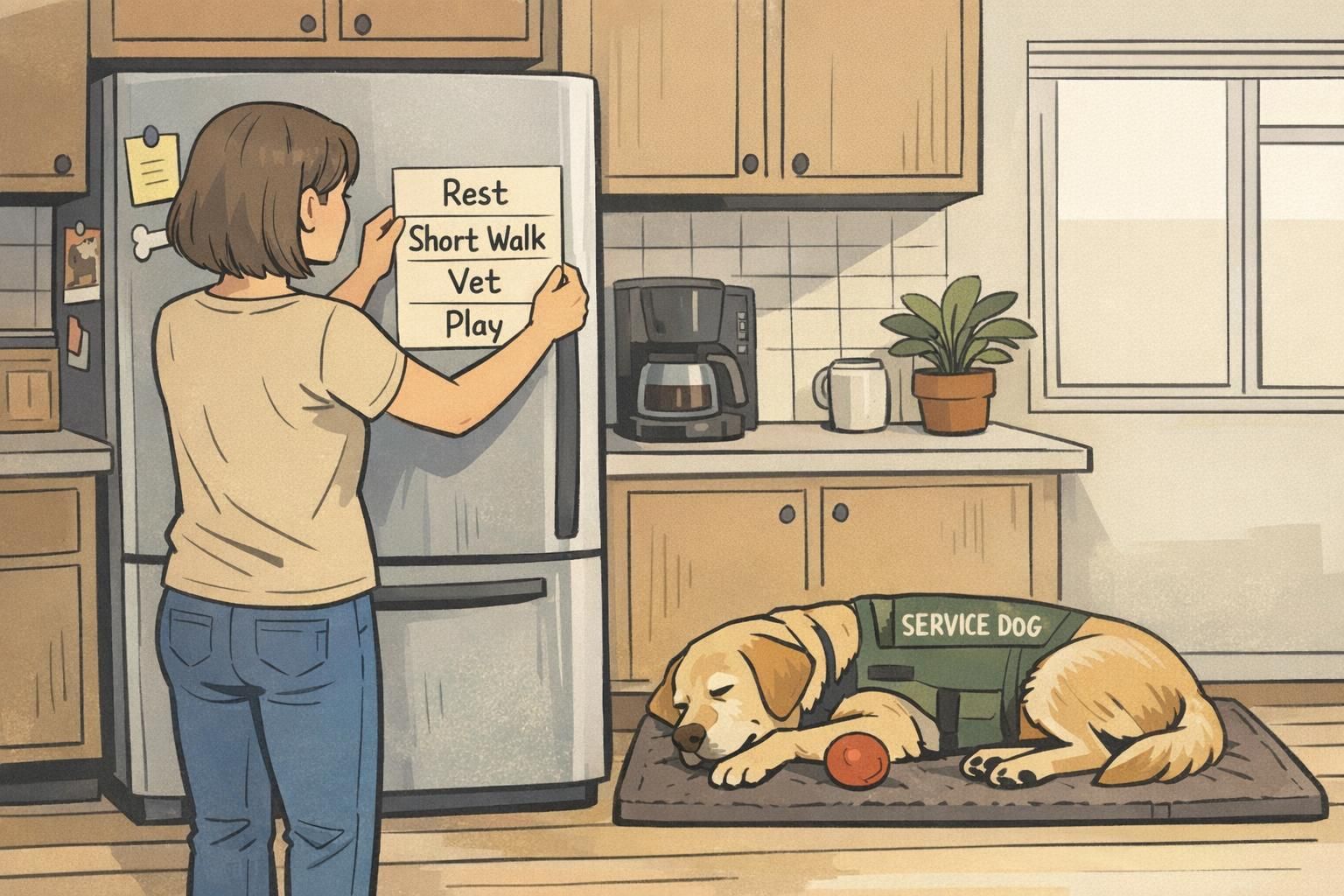
If you’ll need another working dog, planning early can protect your retiring dog from being asked to do “just a little more” for too long. Applications, waitlists, and training timelines can take months (sometimes longer), so thinking ahead gives you breathing room.
Some teams benefit from a gentle overlap: the older dog reduces workload while the successor learns routines. Overlap isn’t right for every household, but when it works, it can ease pressure on the senior dog and give the handler time to adjust.
Retired service dogs can thrive in many living arrangements. The best option depends on the dog’s comfort, the handler’s needs, housing logistics, and the dog’s relationship with the people involved. What matters most is that the dog feels safe, secure, and included.
If your dog is moving to a new home, ease the change with short visits, then longer visits, then sleepovers. Send familiar items like a favorite bed, blanket, toy, and the same food if possible. Keep the first weeks simple: consistent feeding times, low-pressure walks, and a quiet place to rest.
“ "We did two weeks of short visits before the move. Having his same bed and our usual routine cues made him settle in like he’d always lived there." – Retired service dog adopter”
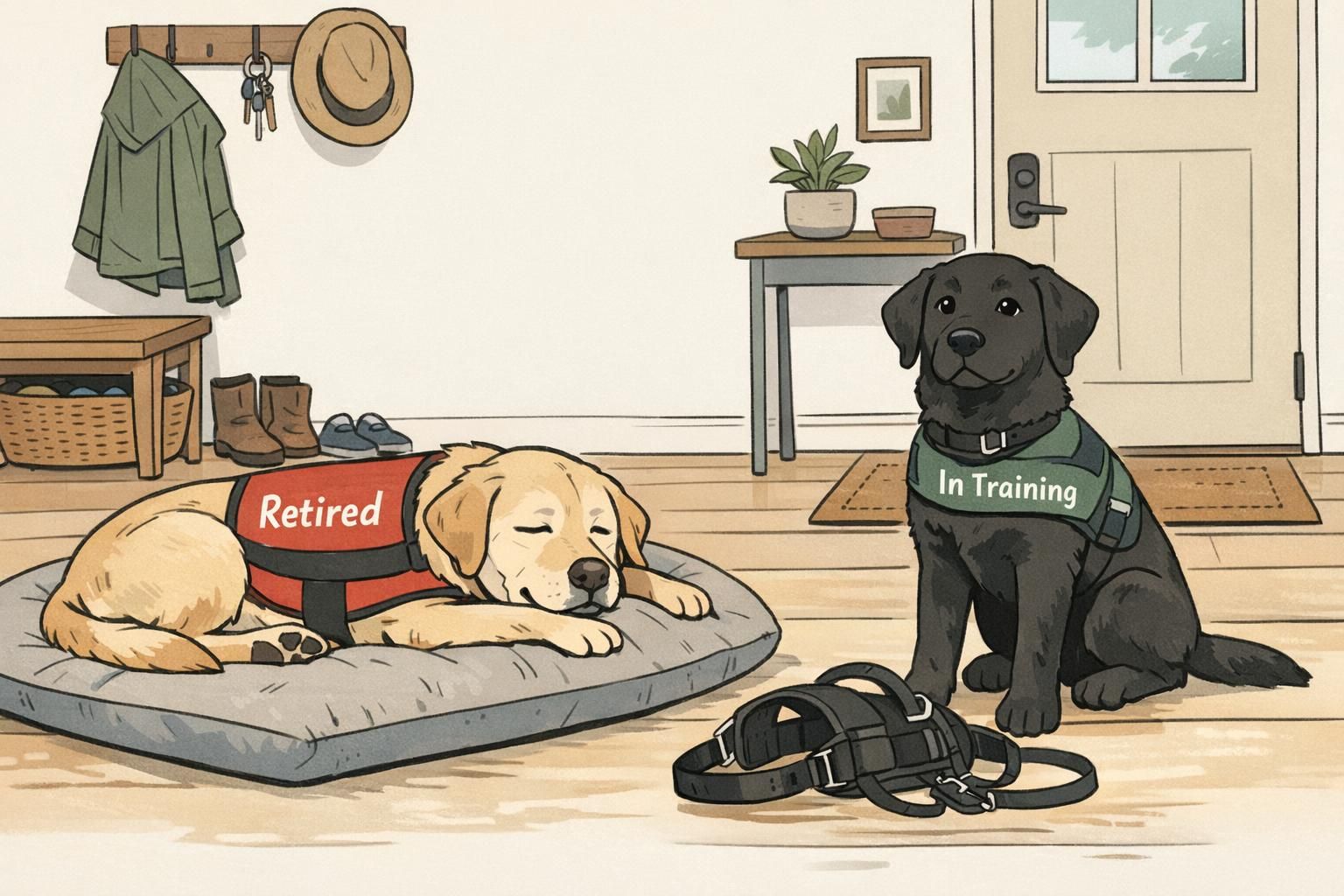
Many retired service dogs settle into a calmer rhythm quickly—especially when they’ve been showing signs of fatigue. Expect more rest, gentler activity, and fewer high-stimulation environments. Retirement can be deeply rewarding for dogs that have spent years “on” in public.
During partial retirement, you may find yourself in a “gray area” day-to-day: some outings might still be comfortable, while others are no longer fair to ask of your dog. Many teams adjust public routines to match the dog’s energy and confidence—shorter stops, quieter times of day, or leaving the dog home more often.
Because routines can change quickly in this phase, some handlers prefer to keep clear, easy-to-understand identification on hand for smoother interactions. While documentation isn’t something you have to rely on to care for your dog, having consistent materials available can reduce friction and help conversations stay calm—especially in housing, travel, or new environments.
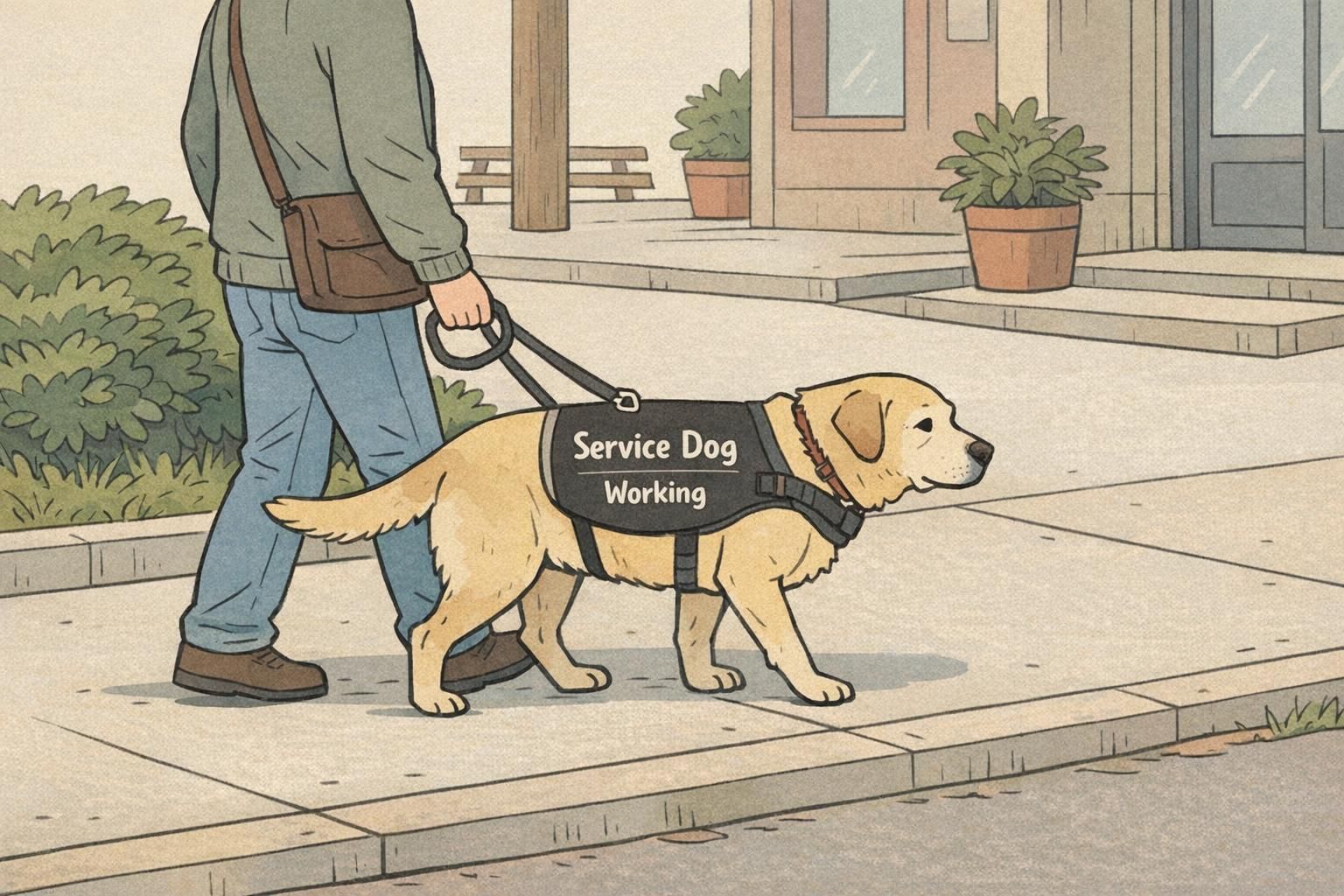
In the real world, retirement transitions can create extra questions: Is your dog still working today? Are you training a successor? Are you traveling? Having simple, consistent communication tools can make everyday interactions more comfortable—without turning your day into a debate.
Some handlers like carrying ADA law handout cards for quick, calm explanations when they want a low-effort way to clarify common points and keep the focus on the errand at hand.
When a dog is moving from full-time work to part-time or retirement, introductions can get complicated. Some days your dog may be working; other days they may be accompanying you in a lower-pressure way. Many handlers appreciate optional registration and identification because it creates a consistent, professional way to present your dog’s role—especially when routines are changing.
If you want a simple, everyday identification setup, consider a starter service dog registration package for everyday identification. Tools like an ID card and digital profile can streamline introductions, reduce misunderstandings, and provide peace of mind in day-to-day situations.
Yes. Many teams use clear identification throughout a transition—especially when a dog is doing limited work, accompanying the handler selectively, or shifting to home-only support.
It can be helpful for organization and clarity in real-life interactions. Many handlers like having consistent details in one place and an easy way to introduce their dog’s role without stress.
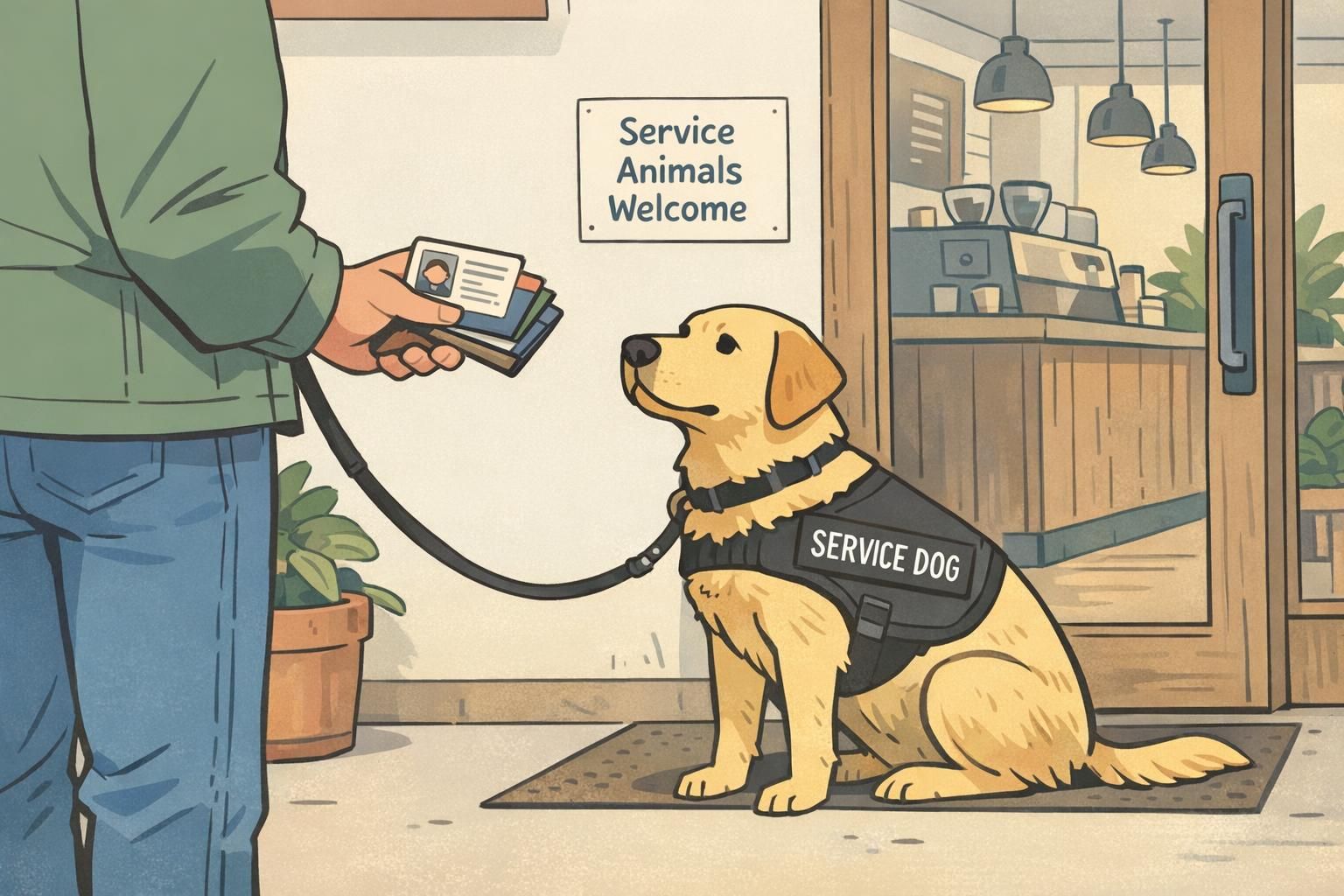
Travel can be more tiring for an aging or semi-retired service dog than it was in earlier years. Long days, unfamiliar flooring, busy terminals, and schedule disruptions can add stress. Planning around your dog’s comfort helps everyone arrive in better shape.
If you’re traveling with a working or transitioning service dog, it also helps to keep your information organized and communication simple. You can review travel tips for life with a service dog and consider a travel-focused service dog registration package for easier, more organized trips to keep key details accessible when you need them.
Retirement is a process, not a single decision. If you’re noticing changes—or simply planning ahead—small steps over the next few months can protect your dog’s comfort and make the transition feel steady rather than sudden.
Your trusted source for service animal registration. Get professional ID cards, digital profiles, and smart NFC tags to keep your service animal safe and recognized.
© National Animal Registry — All rights reserved.