When people talk about “public access training,” the phrase “under control” comes up constantly—and for good reason. In everyday terms, a dog is “under control” when their handler can reliably guide their behavior in real-world places: stores, sidewalks, hotel lobbies, waiting rooms, and anywhere else the public moves closely together.
This isn’t about expecting a dog to be perfect or robotic. It’s about predictability and safety. The goal is that your dog’s behavior stays calm, non-disruptive, and responsive even when something unexpected happens—like a cart squeaking past, a kid running by, or food smells drifting through a checkout lane.
Legally and practically, “under control” is usually understood through observable behavior. While exact wording and expectations can vary by jurisdiction and environment, many service dog teams focus on the same core themes: responsiveness, proximity, and non-interference.
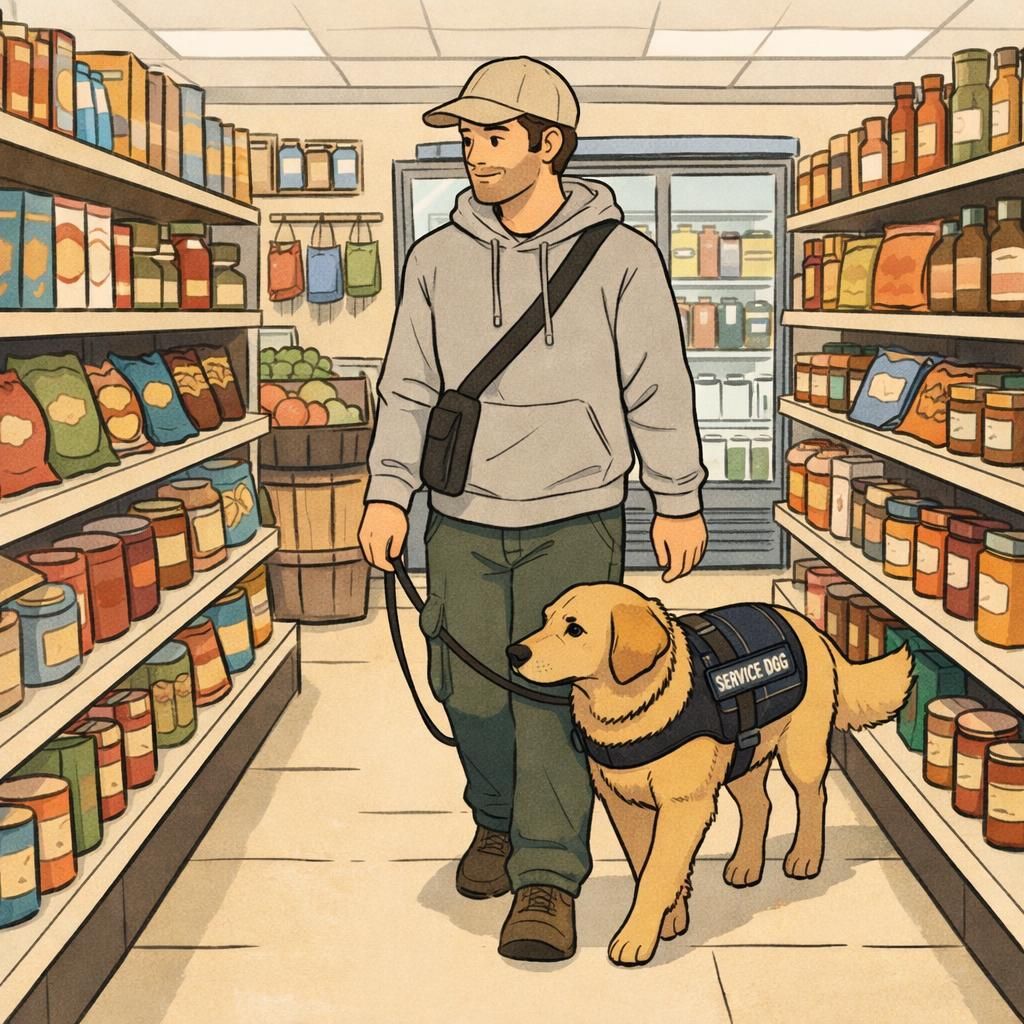
Think of it this way: if someone watched your team for two minutes in a busy public place, would they see a dog who is clearly working with you—following your lead, staying in an appropriate position, and not disrupting anyone else? That’s the day-to-day standard most handlers aim for during public access training.
In practice, most handlers aim for quiet, settled behavior in public. An occasional brief sound may happen, but repeated barking, whining, or vocalizing that disrupts others is a common sign more training is needed before increasing difficulty.
Not necessarily. Many teams use a heel, a loose leash walk, or a slightly behind position depending on the handler’s needs. The key is that the dog is close enough to be safely managed and is not interfering with others.
Most handlers maintain control with a combination of tools and skills: a leash or tether, clear body positioning, and trained responses to cues. The “best” method often depends on the handler’s disability-related needs, the environment, and local rules, but the most important common denominator is that control is visible and effective.
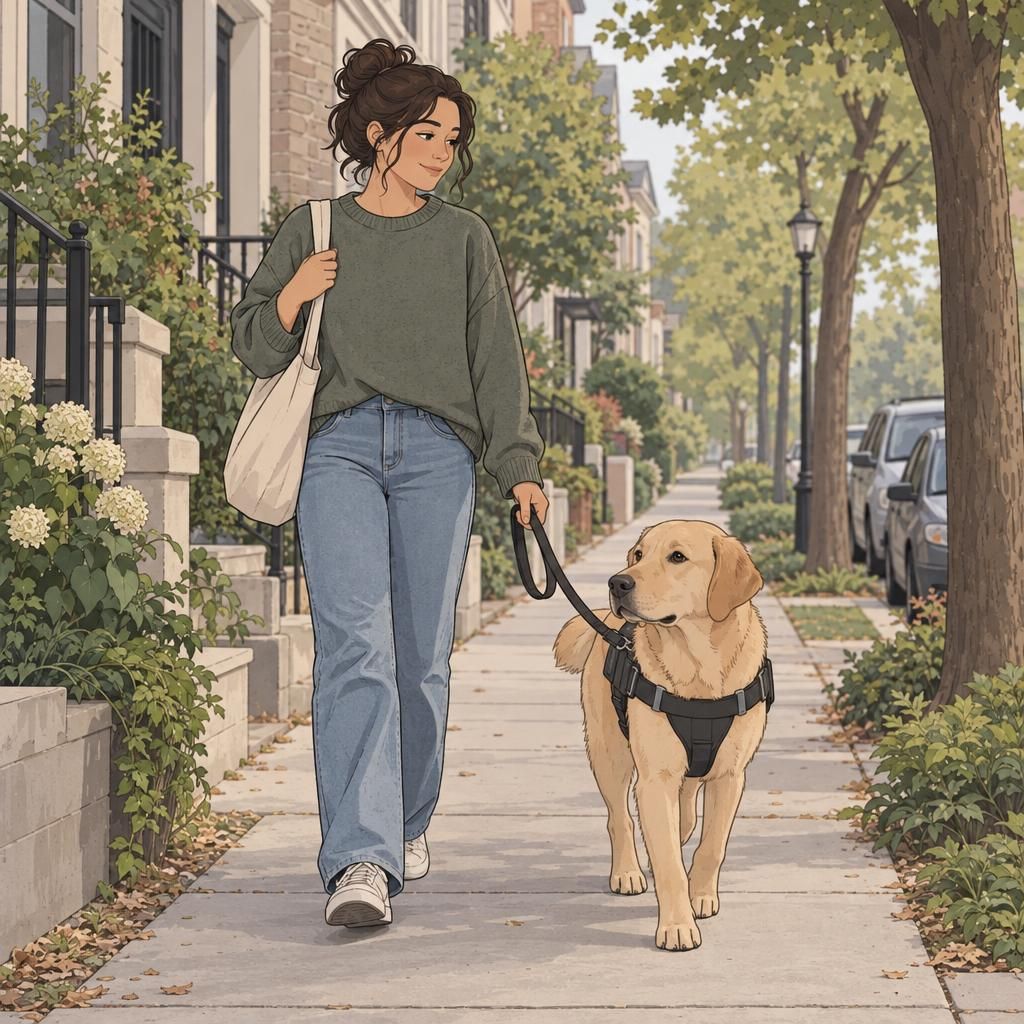
For many public environments, a leash is the simplest way to demonstrate control. Good leash handling is less about gripping tightly and more about preventing problems before they start—keeping slack appropriate, avoiding tangled lines, and using your body position to guide your dog smoothly through narrow spaces.
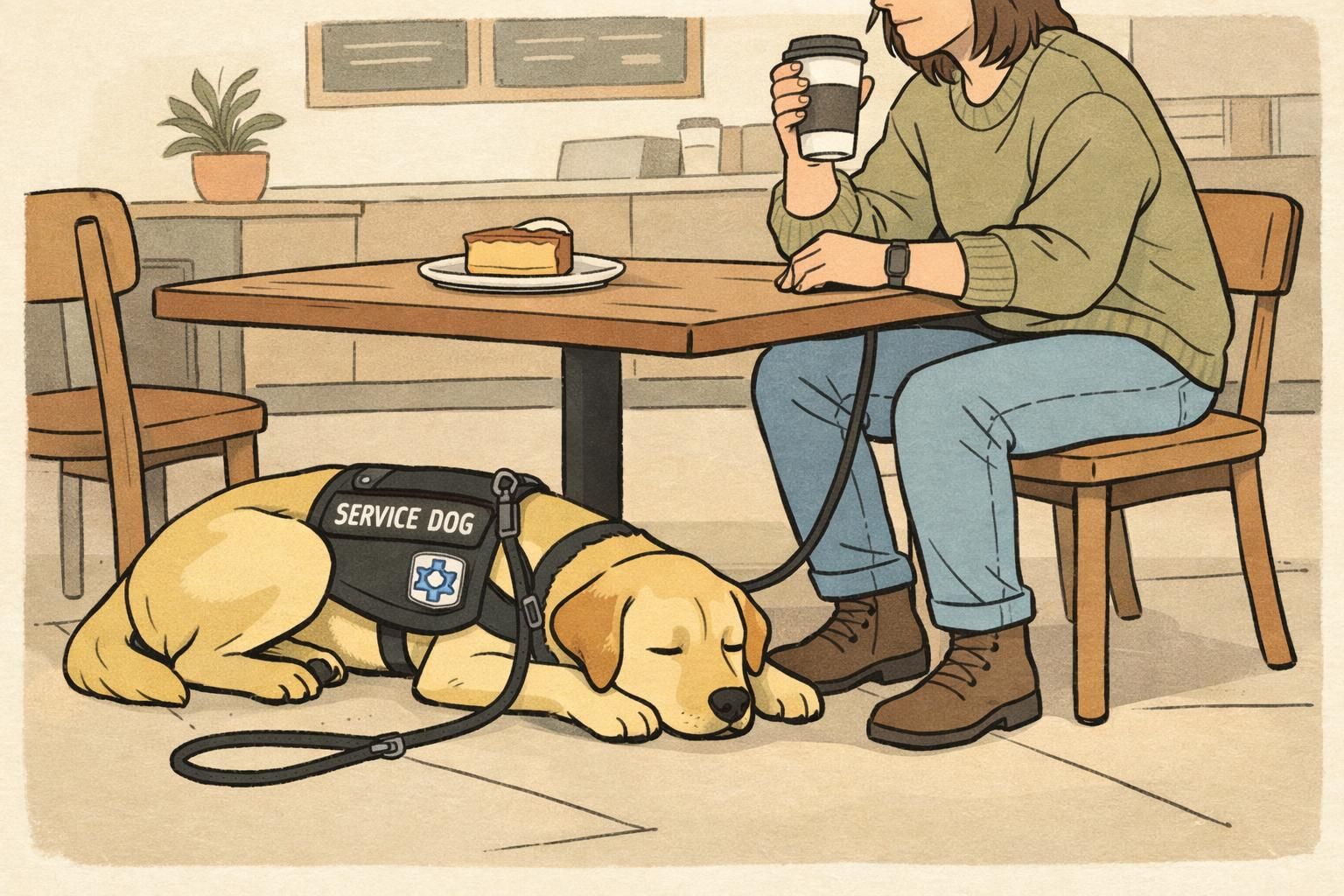
Positioning also matters. A consistent “default” position (like heel, a tucked-behind position, or a close side position) helps your dog know where to be when the environment becomes busy. Many handlers also teach automatic sits at stops and a reliable settle under tables or beside chairs, since those are common moments when dogs drift out of control without meaning to.
It’s also worth noting that some widely referenced assistance-dog public access standards emphasize stable, controlled conduct in public—often including being leashed and maintaining calm, grounded behavior (such as staying on all fours) as a baseline expectation in many environments. See source.
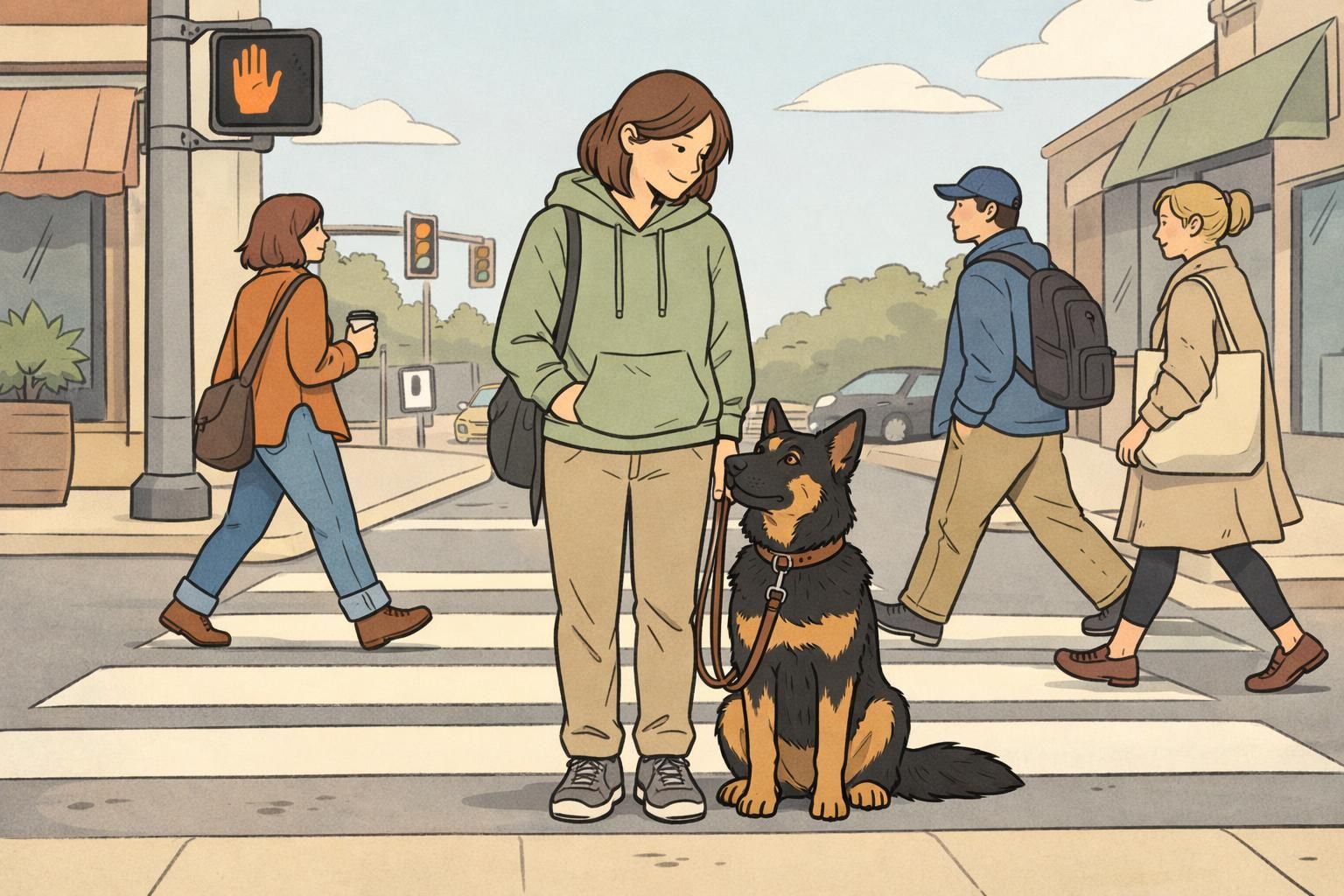
A helpful way to understand “under control” is to look at the behaviors that tend to cause friction in public. These aren’t moral failures and they don’t mean you’ve “ruined” your dog. They’re simply signals: your training plan needs a smaller step, more repetition, or better reinforcement in that environment.
Below is a neutral self-check list of common behaviors that usually read as “not under control,” paired with a training-focused fix you can practice.
“ "The moment I treated distractions like training information—not ‘bad behavior’—our progress sped up. Smaller steps and better rewards made public outings feel doable." – Service dog handler”
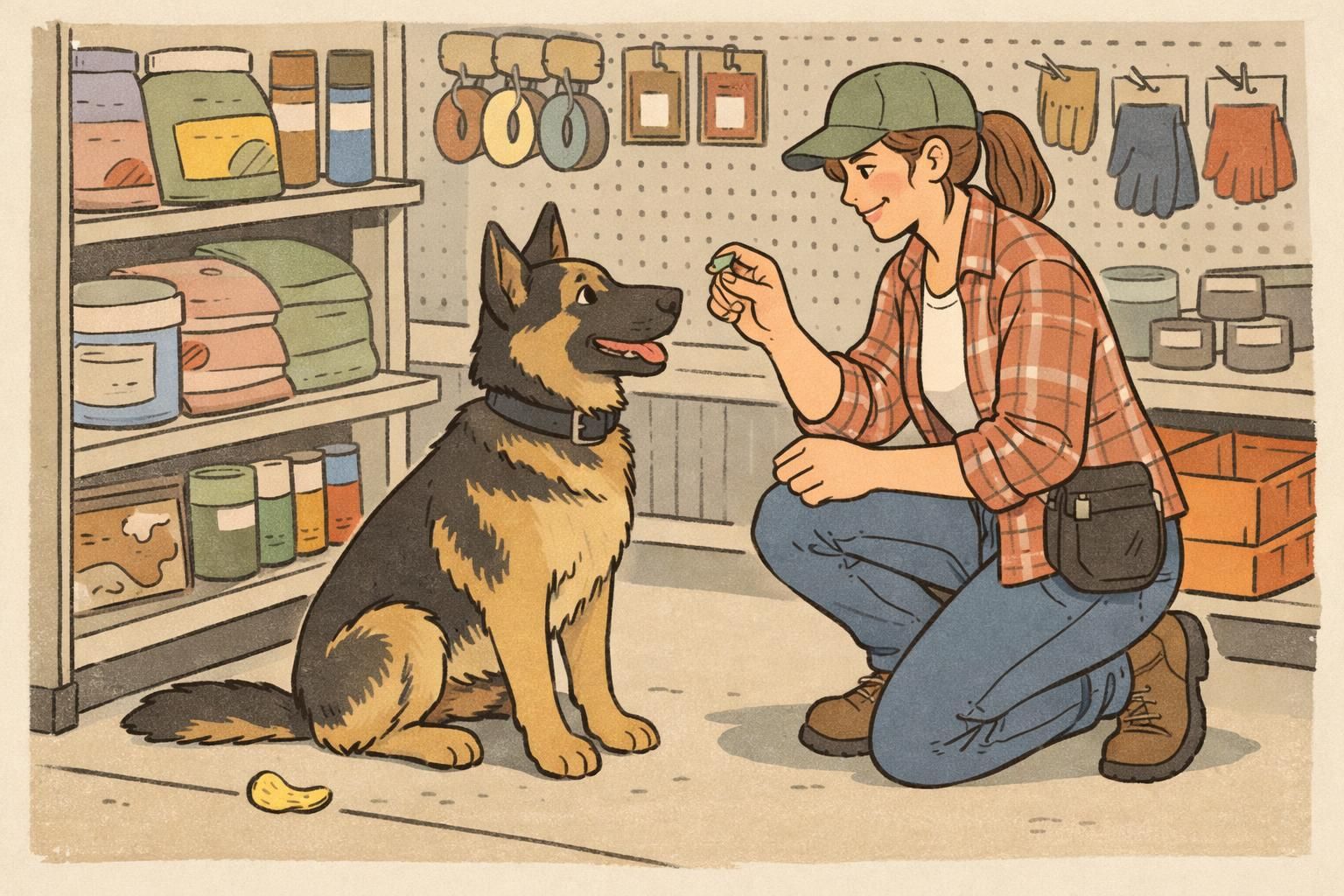
High-distraction environments are where “under control” becomes most visible. The key is progressive training: start where your dog can succeed, then add complexity gradually. Skipping steps often looks like “my dog knows this at home but forgets in public,” when the reality is that public places feel like a different universe to a dog.
A smart approach is to build a ladder of difficulty: quiet times first, short duration first, greater distance from distractions first. As your dog improves, you can add more movement, more noise, and more time—without pushing so hard that your dog falls apart.
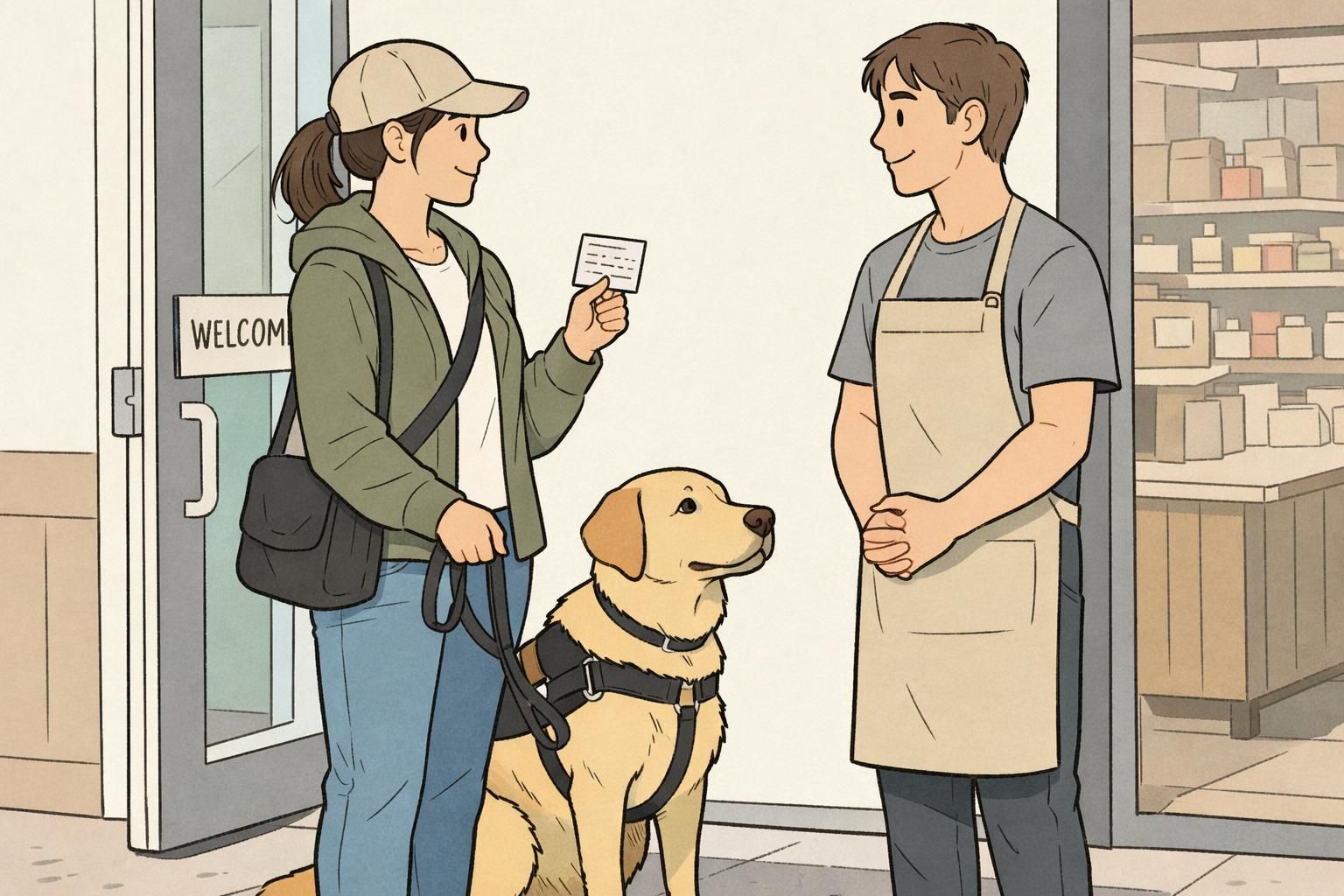
Even when your dog is beautifully behaved, questions can happen—especially in busy businesses where staff are trying to apply policies consistently. The best approach is usually calm, brief, and respectful communication while keeping your focus on your dog’s behavior and your own steady body language.
When you respond professionally, you reduce the emotional “temperature” of the interaction. That helps you stay in control of the moment, and it also helps your dog remain calm. A dog who senses tension can become restless, which is why handlers often practice their “people script” just like they practice heel and settle.
Many handlers find it helpful to carry printed information they can hand over without turning the moment into a confrontation. Tools like ADA law handout cards for quick, respectful communication can make it easier to stay calm and clear—especially when you’d rather not explain everything out loud.
While your dog’s behavior is the heart of public access success, many teams also appreciate having a clear, consistent way to identify their service animal in everyday life. Registration and ID can be a practical, optional tool that helps reduce confusion, keep your dog’s information organized, and support smoother interactions when you choose to share details.
In day-to-day situations—especially in busy environments—people often respond well to clarity. A professional ID and a secure digital profile can make it easier to pull up key information quickly, keep your records consistent, and feel more confident navigating new places.
If you’re looking for an all-in-one option for everyday identification, a starter registration package for everyday identification can help you keep everything in one place and present your team consistently when it’s useful.
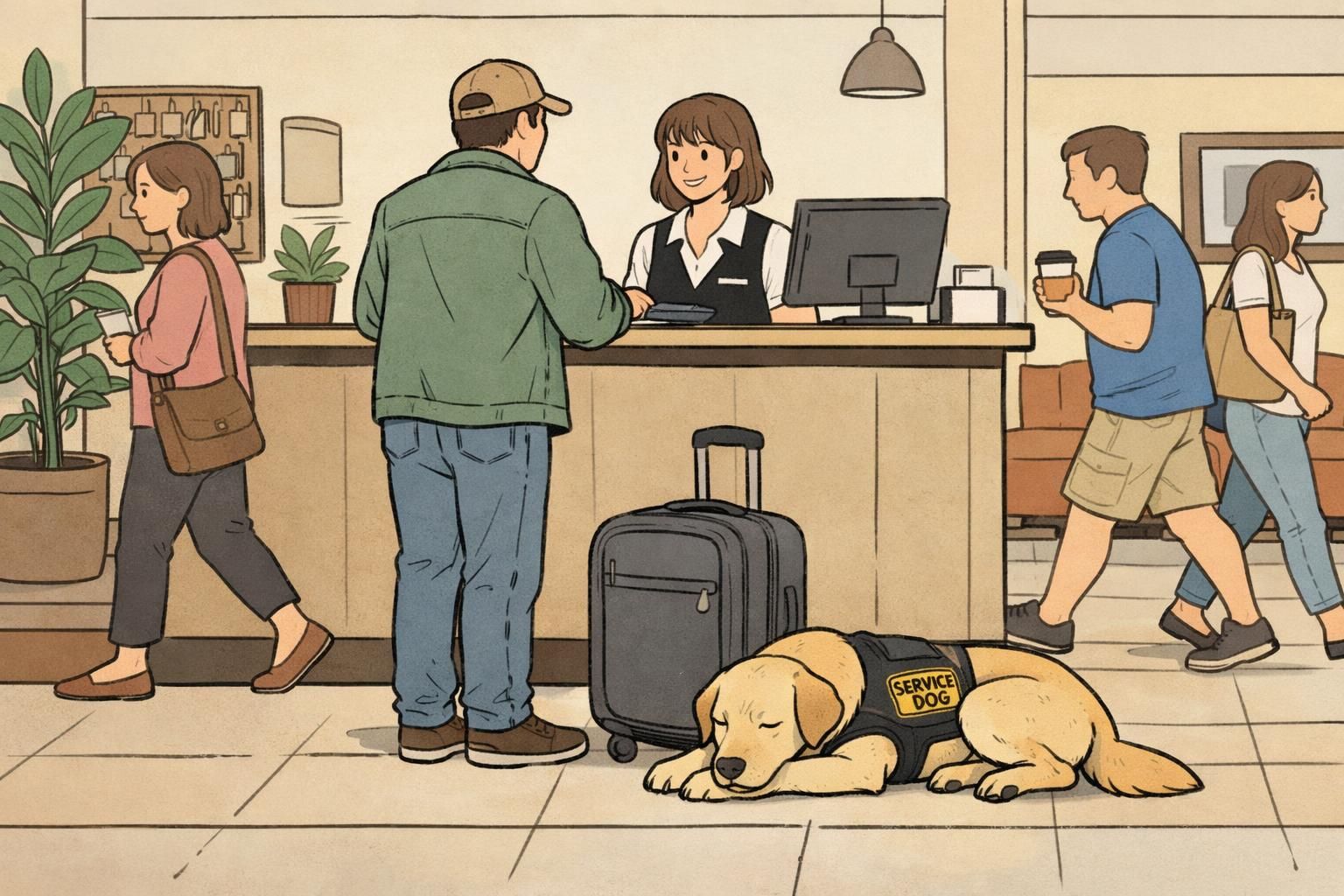
Travel changes everything: routines shift, environments are unfamiliar, and distractions multiply. Even a well-trained dog can need a refresher when you add rolling suitcases, hotel elevators, crowded terminals, and different scents at every stop. The goal during travel is consistency—keeping your dog’s expectations the same even when the location is brand new.
Start by protecting the basics: sleep, potty schedule, hydration, and decompression time. Then lean on your most reliable cues—heel, wait, leave it, and settle. Travel is where it becomes especially helpful to have a plan before you arrive, rather than improvising in a crowded lobby.
For more planning ideas, see tips for traveling with a service dog.
When you’re traveling, many handlers like having travel-specific identification and a ready-to-share set of materials. Options like a travel-ready service dog registration package can help you stay organized and confident while you focus on keeping your dog calm and under control in unfamiliar spaces.
One quick clarification: the phrase “public access training” is used in more than one setting. Outside the service dog world, it can also refer to training about government public-records access, workplace procedures, or other unrelated topics.
If you’re researching what “under control” means for a service dog team, make sure the guidance you’re reading is actually service-dog-relevant and focused on real-world public behavior: calm movement through shared spaces, reliable response to cues, and low-disruption manners in places where the public expects safety and order.
Your trusted source for service animal registration. Get professional ID cards, digital profiles, and smart NFC tags to keep your service animal safe and recognized.
© National Animal Registry — All rights reserved.