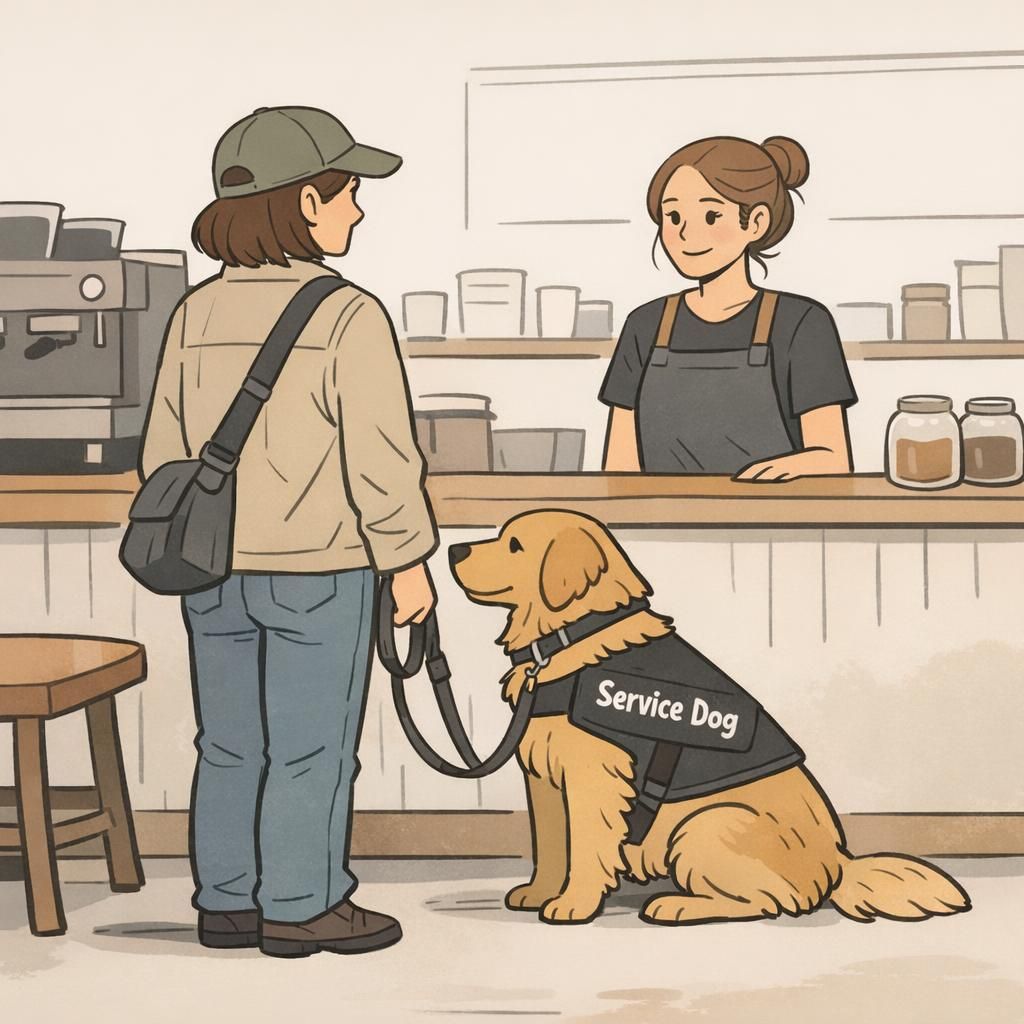
TikTok is great at sharing quick tips—and not so great at holding nuance. When a topic is complex (disability, public access, training, etiquette, and safety), a 15–60 second clip can unintentionally turn partial information into “rules,” and personal experiences into blanket statements.
That’s how myths spread: a confident voiceover, a dramatic story, and a comment section full of assumptions. Service dog teams end up dealing with the fallout in real life—extra questions, unwanted attention, and tense interactions in everyday places like grocery stores, restaurants, and rideshares.
One of the most common TikTok myths is that a “real” service dog must be paired with a visible disability. In reality, many disabilities are non-visible. A person can look perfectly fine while still needing a service dog for safety, independence, or medical support.
Service dogs are defined by what they do for their handler—trained, task-based help that mitigates a disability. That work can be obvious (like guiding) or subtle (like interrupting a harmful behavior or alerting to a medical change before it becomes an emergency).
Because many tasks are discreet, the public often doesn’t see the “why”—only the dog. That’s why it’s so important to treat service dog teams with respectful privacy. A stranger typically doesn’t need to know a person’s diagnosis, history, or medical details to offer basic courtesy in a shared space.
“ "You can’t always see what my service dog is preventing. The calm moments are often the point—because my dog helps keep things from turning into a crisis." – Service dog handler”
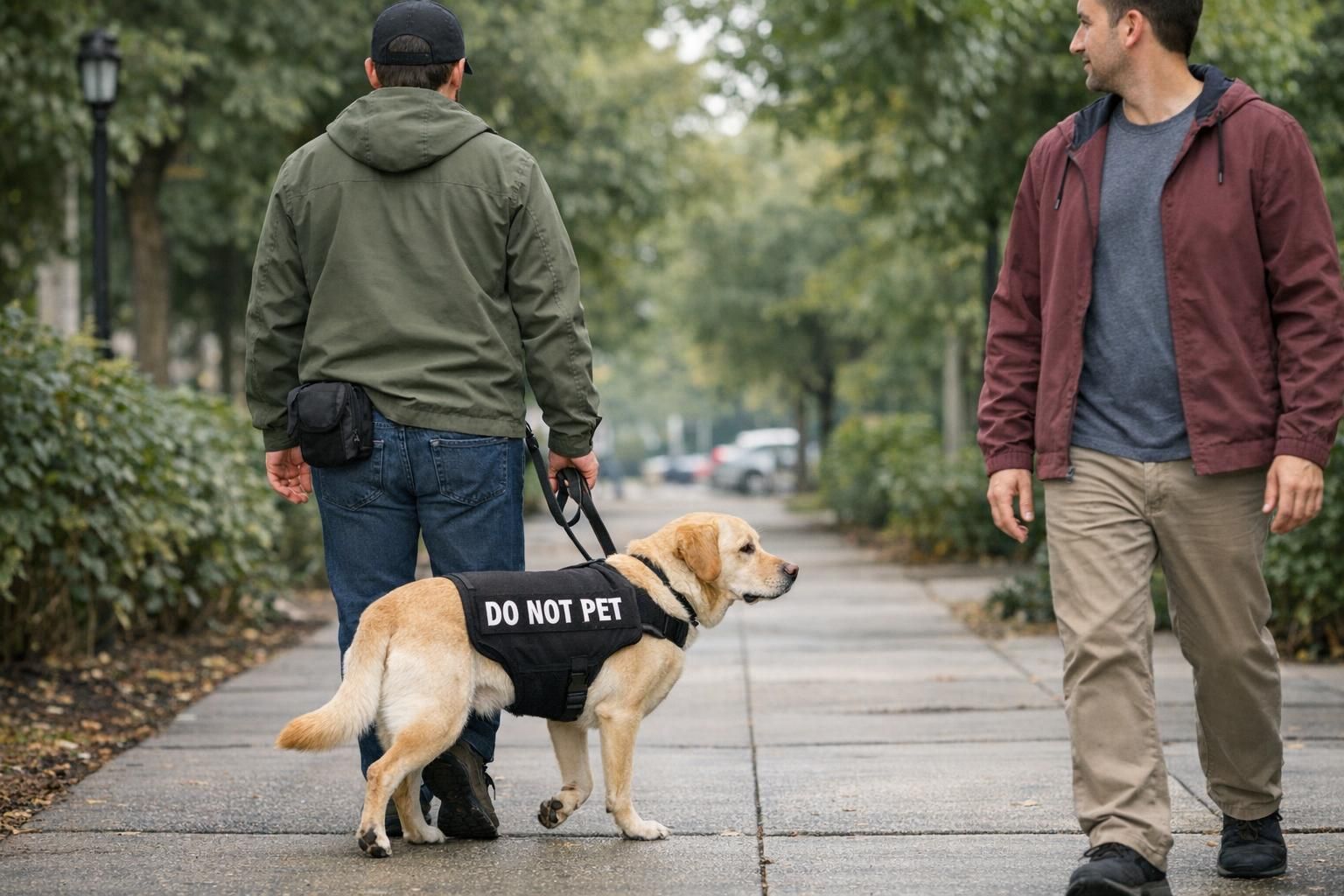
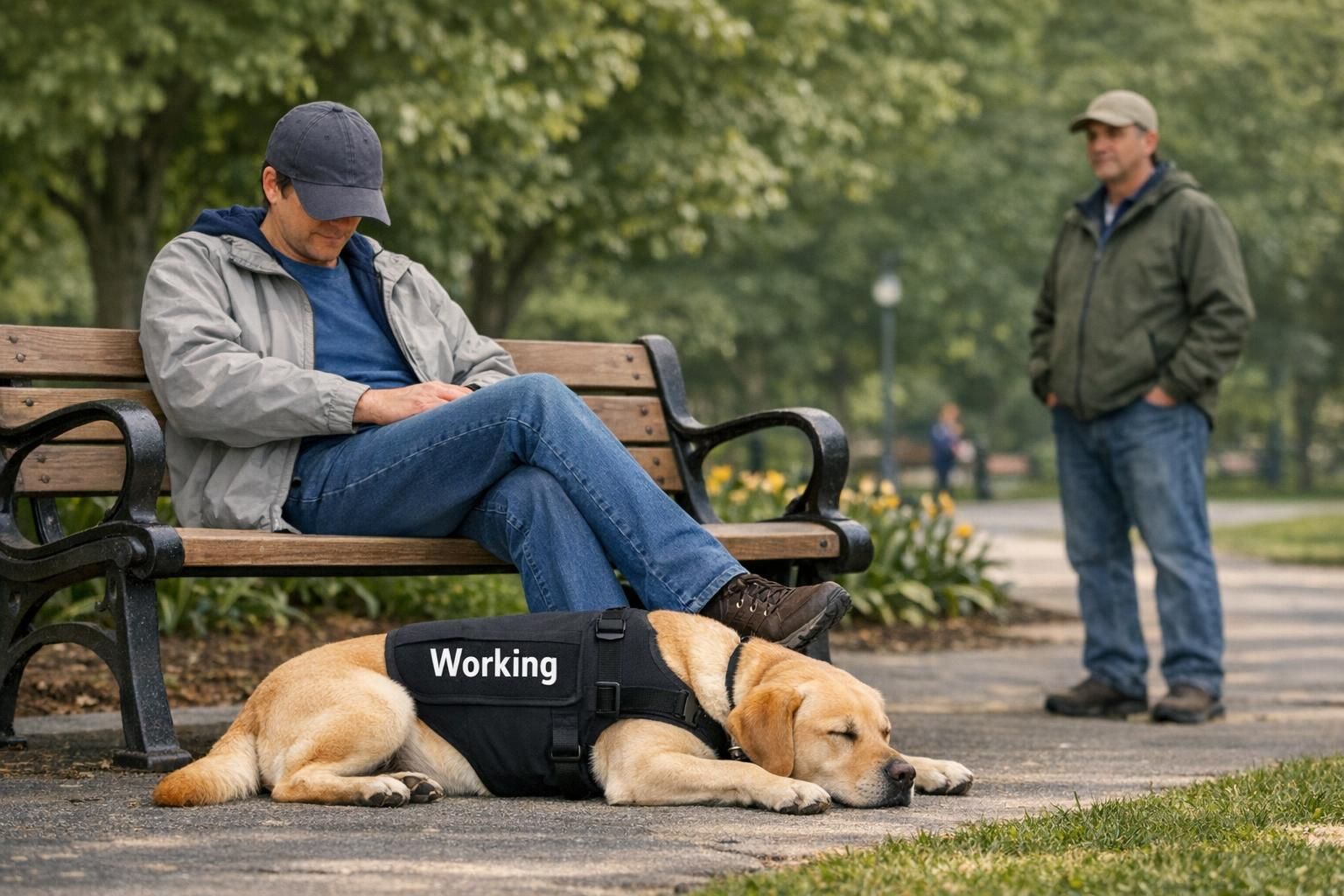
Another myth that spreads online is that service dogs must look a certain way at all times: never sniffing, never shifting position, never reacting to anything. In real life, well-behaved working dogs are calm and focused—but they’re also living animals navigating busy environments.
What many legitimate teams look like in public is actually pretty “boring”: the dog stays close, checks in with the handler, ignores most distractions, and settles quietly when asked. That low-drama appearance can confuse people who expect service work to be flashy or constant.
Mainstream explainers often address these misconceptions directly—especially the idea that disability must be visible and that a working service dog is typically steady and handler-oriented rather than attention-seeking. See source for an accessible example of how these myths get discussed.
If you’re a bystander and you want to do the right thing, simple etiquette protects the team and keeps the dog working safely.
TikTok often turns this topic into a shouting match: “You need papers!” versus “You never need anything!” The real world is more practical than that. Rules and expectations can vary by location, setting, and the specific type of access situation (public places, housing, travel, workplaces, or private venues).
What stays consistent is this: clear identification can make daily life smoother. Many handlers choose tools like a vest patch, printed ID, certificate, or a digital profile because it reduces misunderstandings, repetitive conversations, and stressful confrontations—especially when staff are simply trying to follow their company policy.
Because real-life interactions are faster and easier when staff can immediately understand that the dog is working. Optional IDs and digital profiles can reduce back-and-forth and help everyone stay focused on the actual goal: safe, respectful access.
No. Service dogs come in many breeds, sizes, and styles of gear. What matters most is the dog’s training, task-based support for the handler, and appropriate public behavior.
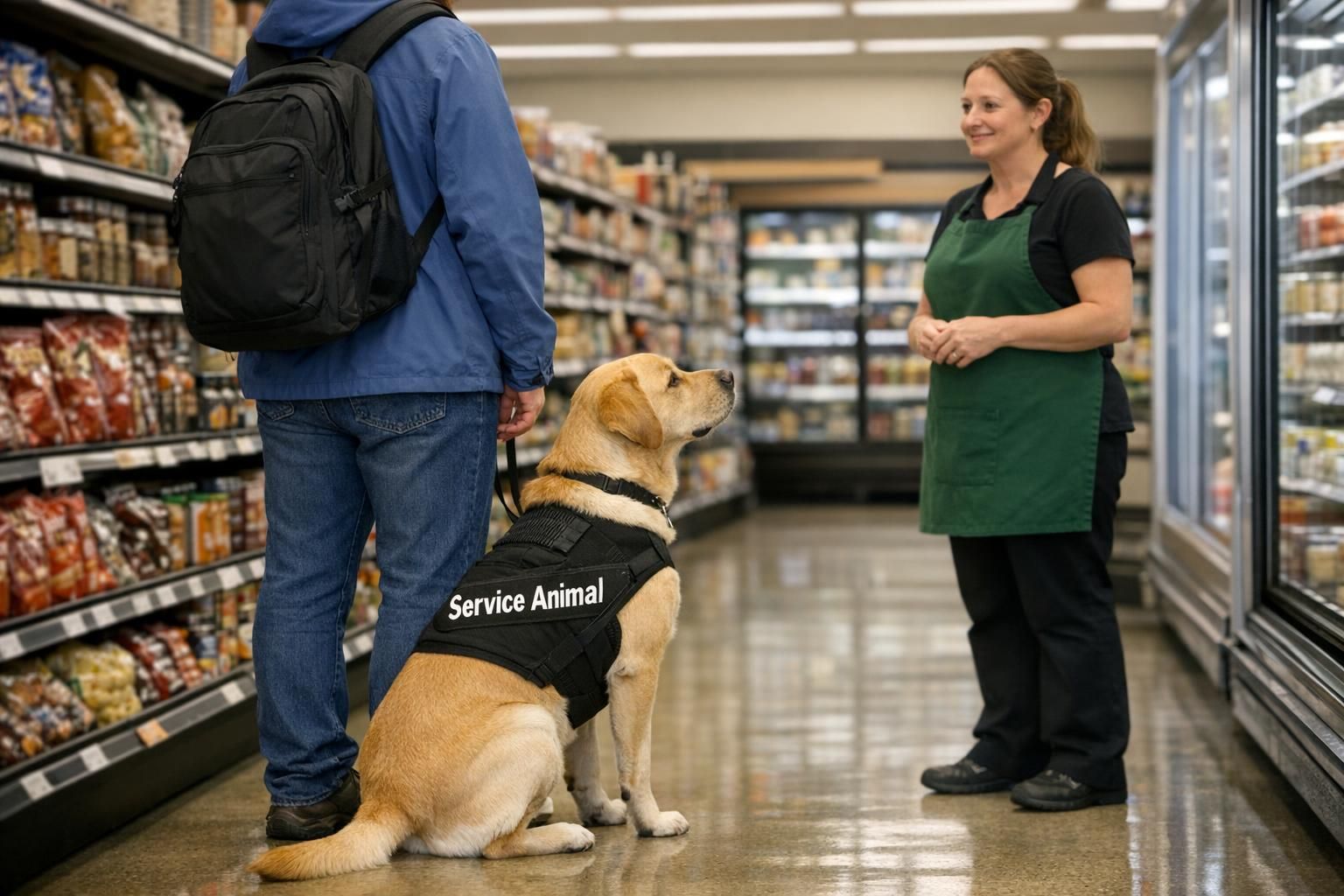
Most access issues don’t start with hostility. They start with uncertainty: an employee who hasn’t been trained well, a manager worried about complaints, or a bystander who confuses service dogs with pets. The more calmly and clearly a situation is handled, the more likely it is to end quickly and respectfully.
When you’re questioned, it helps to respond with a steady tone and a simple goal: you’re there to access the space safely with your working dog—not to debate online myths in the doorway.
“ "The fastest way through most access conversations is calm clarity. I’m not trying to ‘win’—I’m trying to get what I came for and leave with my dog still focused." – Service dog handler”
Travel adds extra layers: different staff, different policies, and tighter timelines. Airlines, hotels, and short-term rentals may each have their own procedures, and it’s common for frontline employees to be unsure in the moment. Planning ahead makes the experience more predictable for both you and your dog.
A helpful mindset is to treat travel prep like a routine: keep your dog’s schedule as consistent as possible, anticipate transitions (security lines, boarding, elevators), and organize what you’ll want to access quickly while on the move. If you’re looking for more travel-specific guidance, see traveling with a service dog.
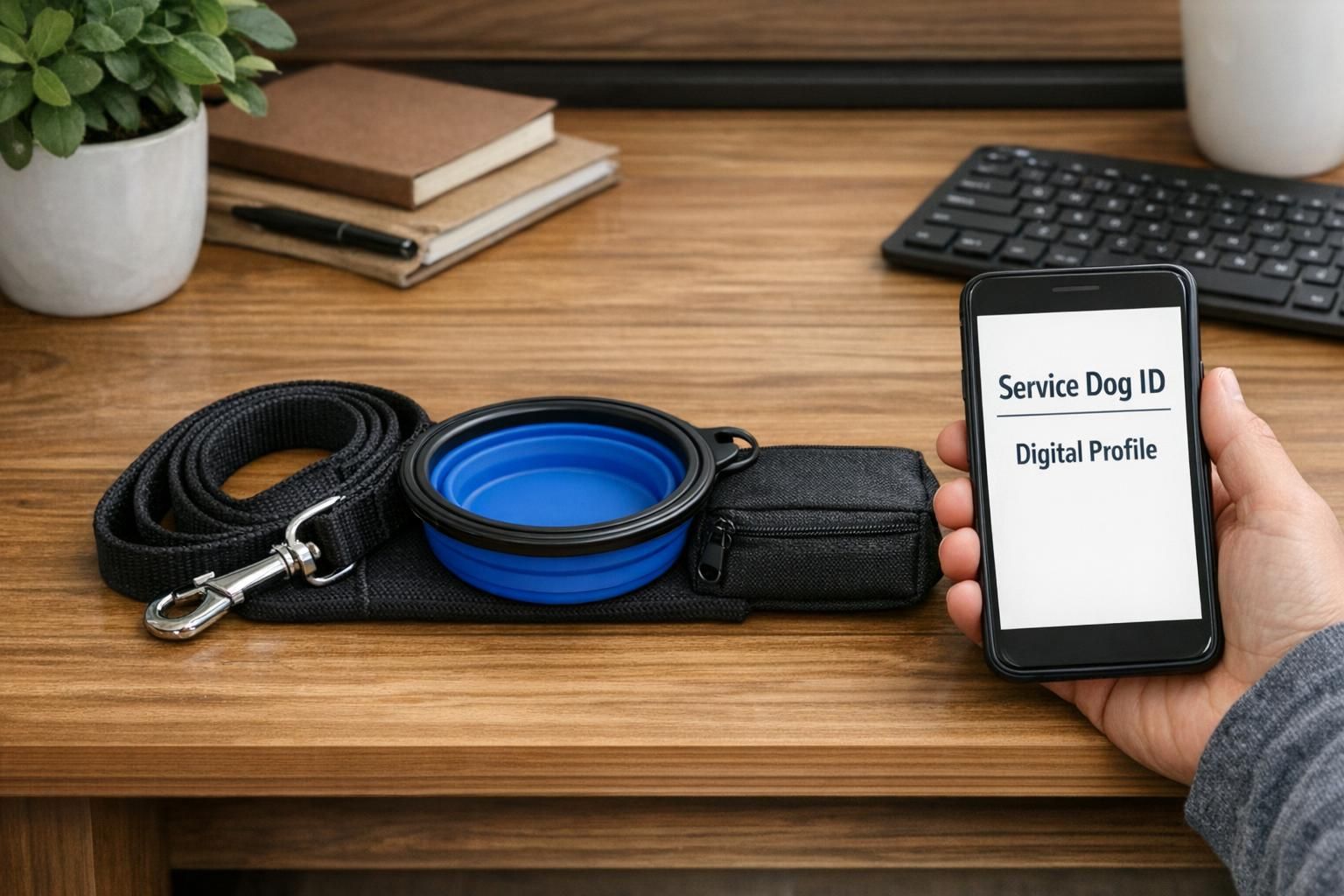
One of the most exhausting parts of being a service dog handler isn’t the dog—it’s the repeated conversations. A simple “calm communication kit” can help you stay grounded, reduce the emotional labor of explaining yourself, and keep interactions short and respectful.
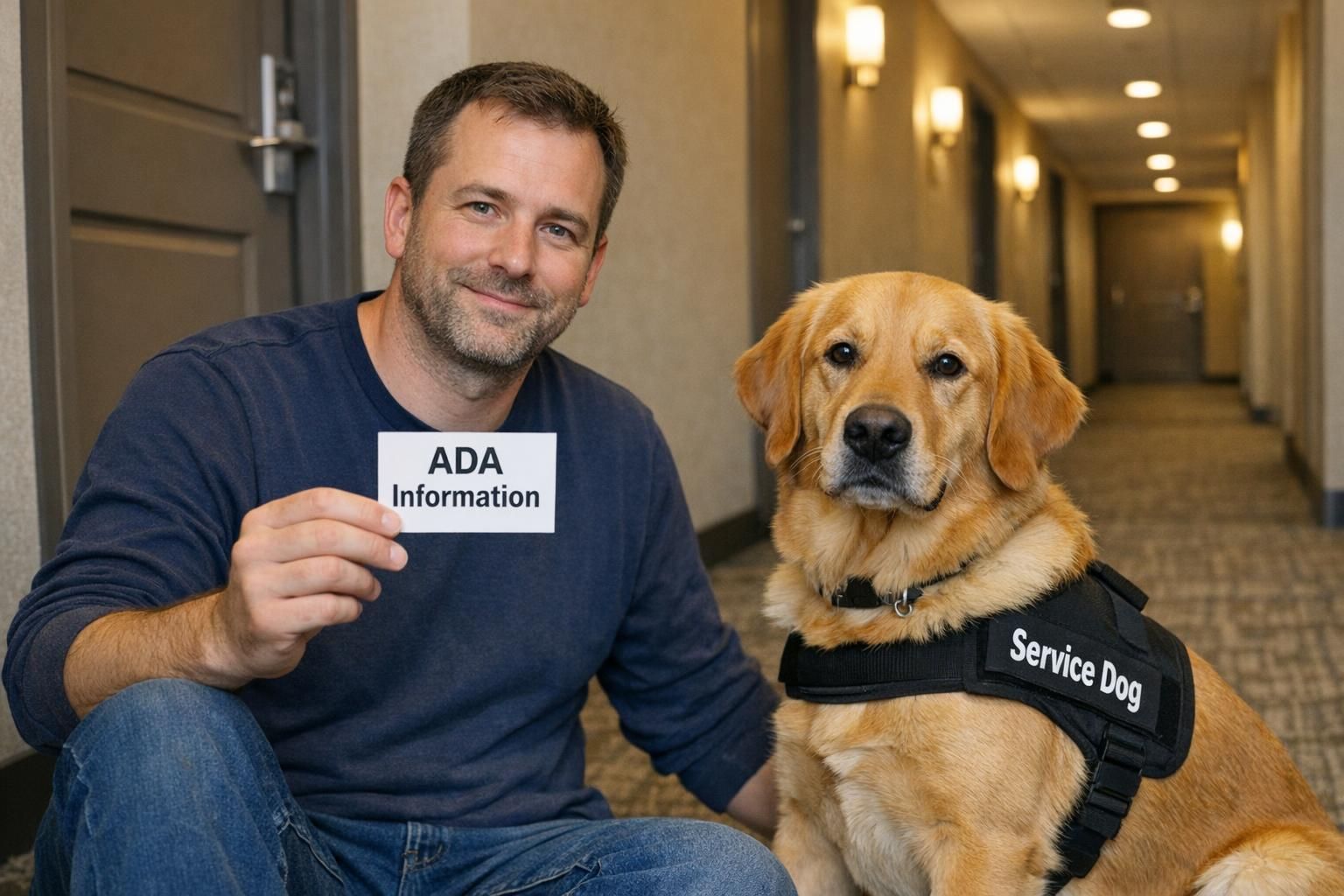
Some handlers like to carry simple printed resources that help keep the conversation factual and calm—especially when an employee is learning in real time. For example, ADA law handout cards can be an easy way to share basic information without turning an access moment into a debate.
Another TikTok misconception is that service dog teams either have to carry a specific “official” document everywhere or shouldn’t use documentation at all. Many real handlers choose a middle path: optional registration and identification tools that create consistency across daily interactions.
In practice, a printed ID, a digital profile, and a unique registration number can help streamline conversations with staff, housing contacts, travel providers, and new workplaces—especially when different people need the same basic information presented in a clear, repeatable way.
If you’re building a simple identification system for daily life, a bundled option like a starter registration package can be a straightforward way to keep everything together and ready to use when needed.
The most important truth behind the myths is also the simplest: disability is personal. The public is not entitled to a handler’s medical details, and the dog’s presence isn’t an invitation for questions, photos, or opinions.
When communities understand basic boundaries, service dog teams can move through the world with less stress—and dogs can focus on the work that keeps their handlers safe.
“ "The best public support is simple: space, respect, and letting my dog keep working." – Service dog handler”
Your trusted source for service animal registration. Get professional ID cards, digital profiles, and smart NFC tags to keep your service animal safe and recognized.
© National Animal Registry — All rights reserved.