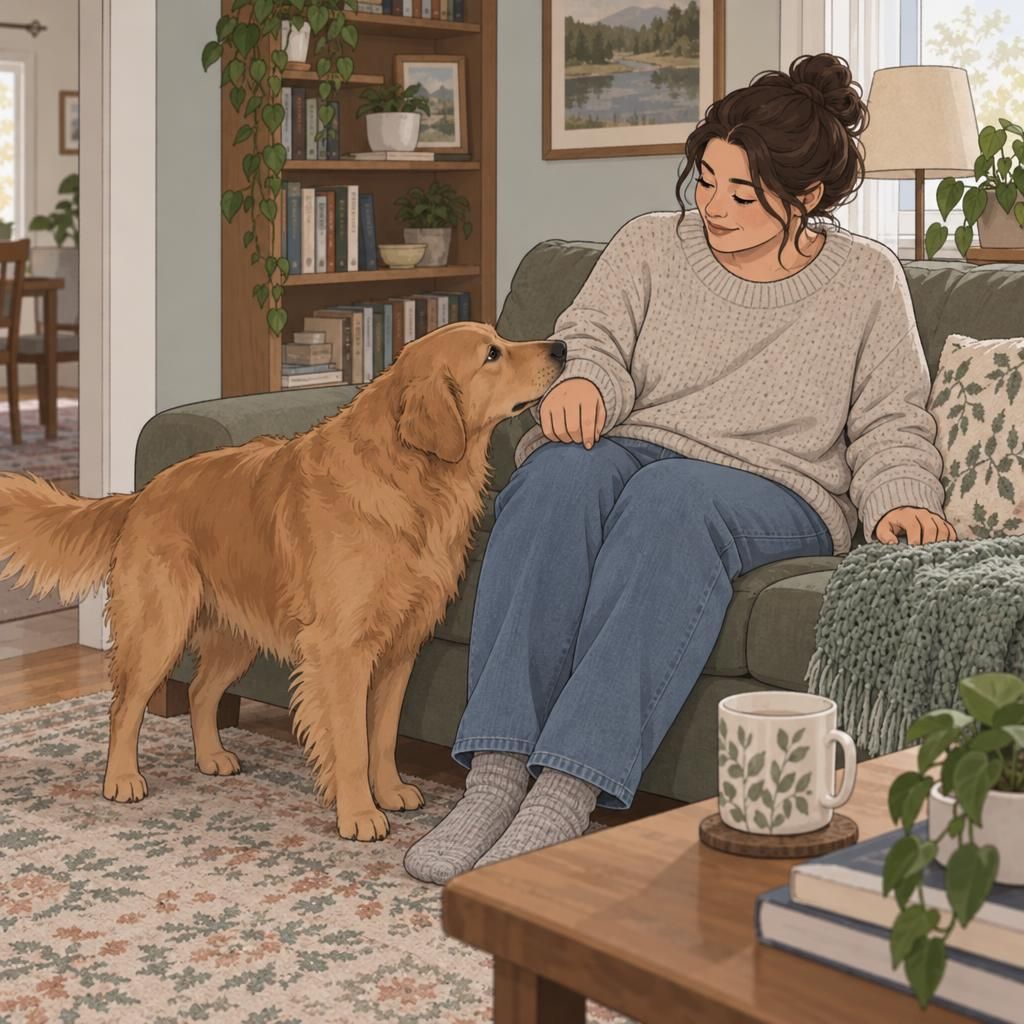
When people talk about a service dog learning “new tasks,” they mean trained actions the dog performs to help a person with a disability. A task is more than being well-behaved in public—and it’s more than providing comfort just by being present. Tasks are specific, trained behaviors that directly reduce a disability-related barrier in daily life.
For example, a dog that stays calmly by your side is showing good manners. A dog that nudges your hand to interrupt a dissociative episode, retrieves a dropped cane, or guides you toward an exit on cue is performing a task. Both matter, but they serve different purposes in training.
Many handlers add new tasks as life evolves: symptoms change, mobility needs shift, new environments become part of your routine, or you discover a skill that would make your day easier. Teaching a service dog new tasks is often less about starting over and more about building on what the dog already knows—one clear behavior at a time.
Before a service dog can perform complex tasks reliably, the basics have to be solid. Foundational obedience creates communication. Focus builds reliability. Routine creates predictability—so the dog can learn faster and make fewer mistakes.
A strong foundation usually includes core cues like sit, down, stay, come, and heel (or a loose-leash position you prefer), along with skills like calmly waiting at doors, settling on a mat, and ignoring everyday distractions. Many training plans follow a structured progression that starts with these basics and gradually builds toward advanced behaviors and calm public reliability with consistent practice (source).
At-home routine matters more than most people expect. If the dog is unsure what’s allowed in the kitchen, jumps on guests sometimes, or pulls on leash when excited, it’s harder to teach precision tasks—because the dog is constantly guessing. Clear household rules and consistent reinforcement speed up everything later.
House-training makes task training much easier because it reduces interruptions and stress. Many handlers also teach elimination on cue (a potty cue) so the dog can reliably bathroom before entering a store, appointment, or travel setting.
It means the dog learns a simple verbal cue (like “go potty”) that predicts a reward after they finish. Over time, the cue becomes a practical tool for consistent bathroom routines.
The best “next task” is usually the one that will make the biggest difference in your daily life. Many handlers start by identifying one to three priority problems: moments where symptoms spike, mobility support is needed, or routine activities become difficult or unsafe.
Then, match the training goal to your dog’s natural strengths. A dog that loves carrying items may excel at retrieval. A dog that is naturally attentive may learn interruption tasks quickly. A steady, physically appropriate dog may be a better fit for certain mobility-related behaviors (with safety and veterinary guidance as needed).
“ "When I picked just two tasks to start—item retrieval and a grounding nudge—training finally felt doable. My dog learned faster because I was consistent." – Service dog handler”
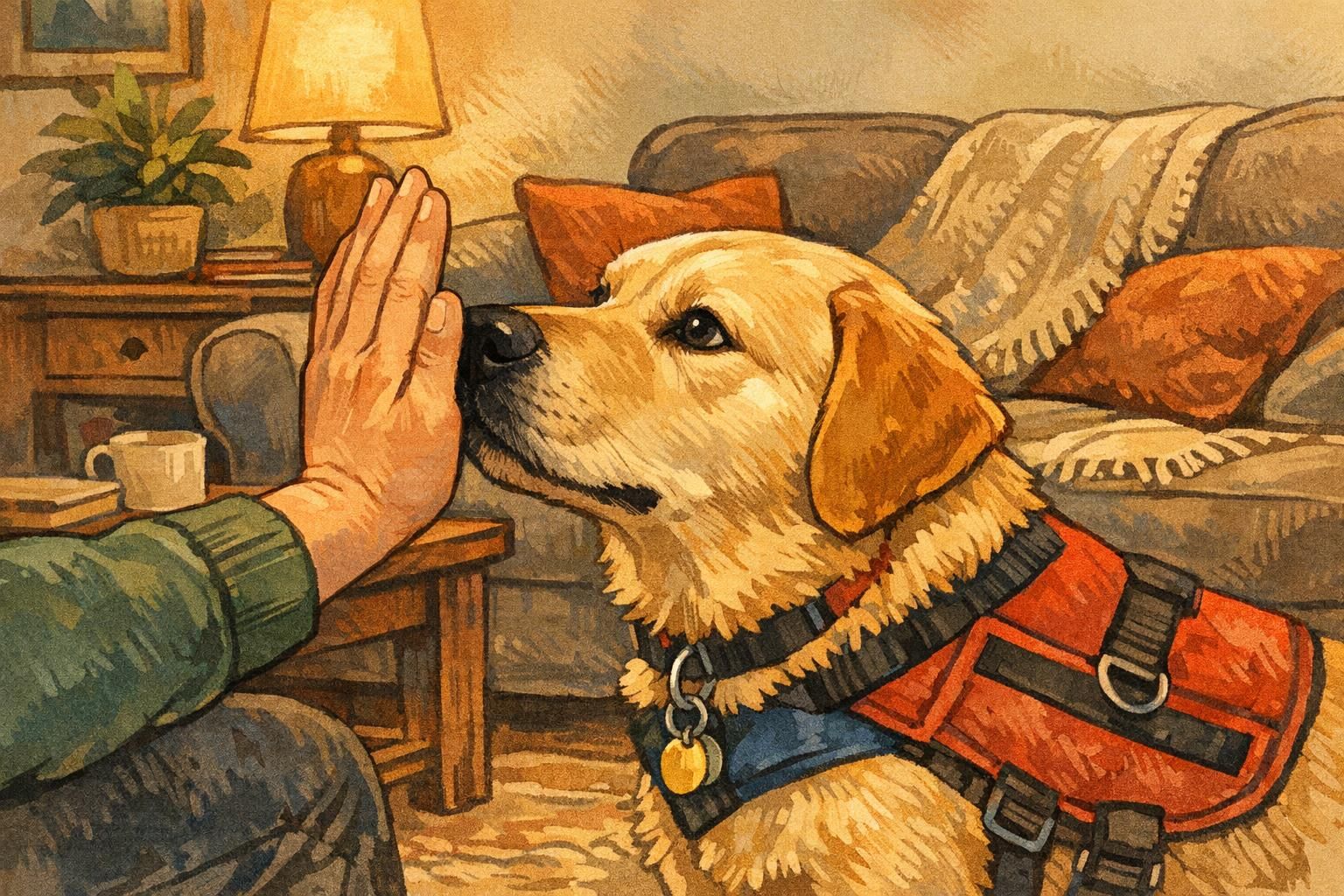
Most service-dog tasks look “magical” only because the dog learned them in tiny pieces. Owner-training is usually a process of defining the end goal, teaching the first small step, and then carefully adding difficulty until the full task is reliable.
Short sessions are your best friend. Two to five minutes, several times a day, often works better than one long session. End on a win—especially with new tasks—so your dog stays confident and eager to train.
Usually no. Build the behavior in quiet, familiar spaces first. When the dog understands the task at home, then you can gradually introduce new rooms, then low-distraction outdoor areas, and later more complex public environments.
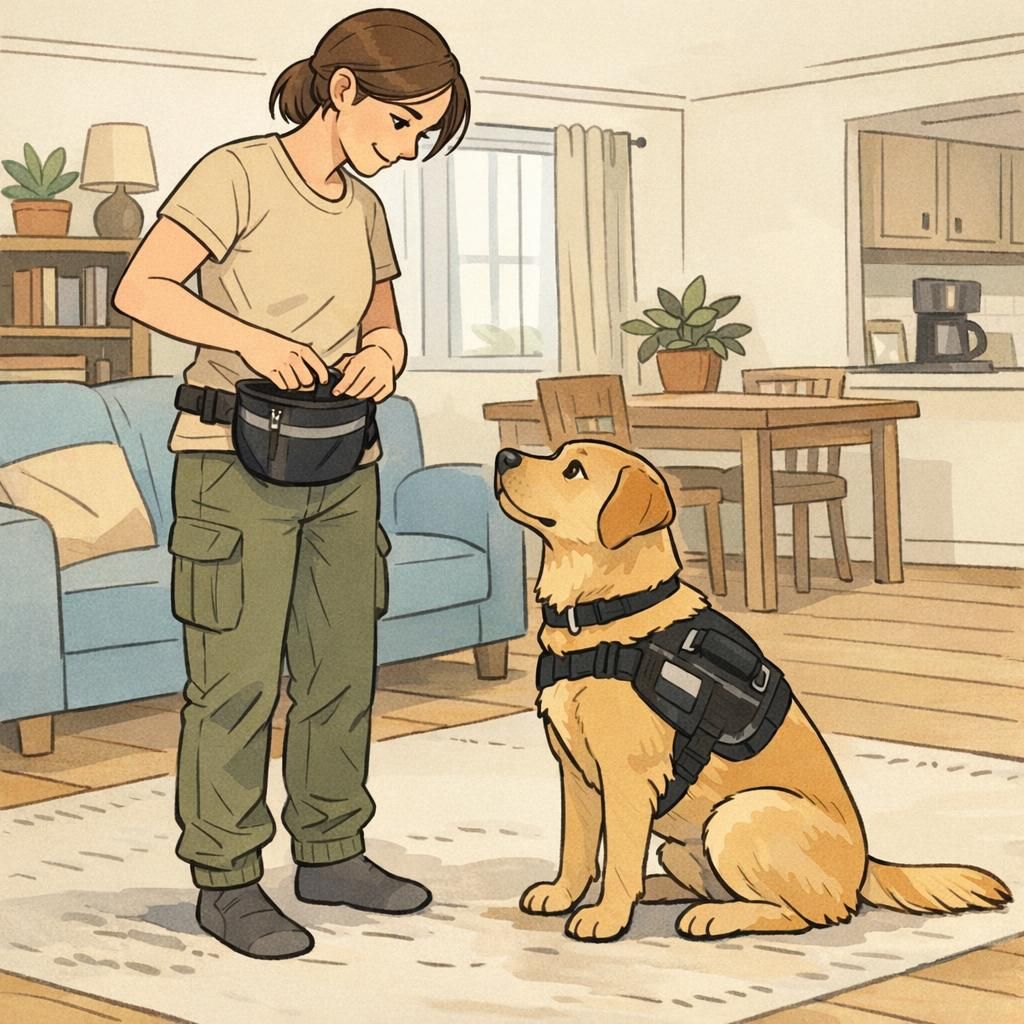
That’s common early on. Focus on timing and consistency first, then gradually fade visible food by keeping rewards nearby (like in a pouch), rewarding unpredictably, and using praise or play as part of the reinforcement.
Positive reinforcement is one of the most effective ways to build reliable service-dog tasks because it teaches the dog exactly what earns success. Treats, praise, and play can all be used to reward the precise behavior you want, which builds confidence and makes training feel safe and predictable.
Timing matters. Reward within a second or two of the correct moment—especially when you’re teaching something new. If the reward comes too late, the dog may think they’re being rewarded for something else (like looking away or stepping back).
A task that works perfectly in your living room can fall apart in a store, on a sidewalk, or near other dogs. That doesn’t mean your dog “forgot”—it means the environment is harder. Proofing is the process of teaching the dog that cues still matter in new places, around new sounds, smells, people, and movement.
Think of public access training as a gradual ladder. You start in quiet settings, then add small challenges—one at a time—so your dog stays successful. As you progress, you’re looking for calm behavior, steady leash manners, and the ability to complete tasks on cue without being pulled off course by distractions.
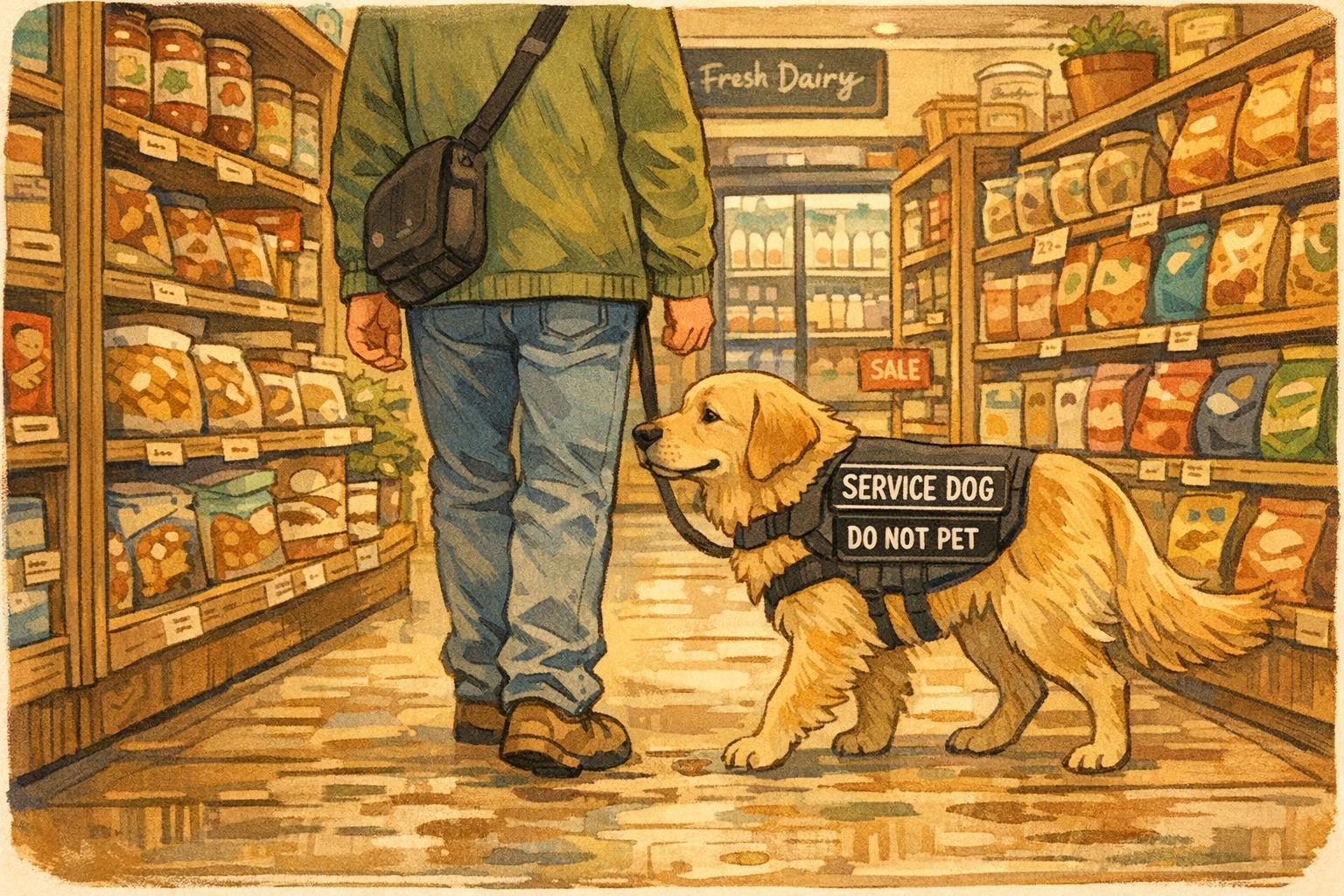
“ "We practiced ‘settle’ in three different quiet places before trying a café. Once my dog understood the pattern, it clicked." – Service dog handler”
Owner-training a service dog is a long-term project for most teams. It often takes months to years to build a dog who can perform tasks consistently and behave calmly in a wide range of real-world settings. That timeline isn’t a failure—it’s normal. Skills develop in layers: understanding first, then reliability, then fluency in harder environments.
Progress is usually gradual, with occasional “backslides” during growth stages, schedule changes, or stressful life events. The most helpful approach is to track small wins and use simple benchmarks that reflect real-life function—without assuming there’s one universal standard or single path.
Getting extra help is common—especially when you’re teaching complex tasks, working through a fear period, or trying to strengthen public manners. Even experienced handlers use trainers for tune-ups, fresh eyes, and better mechanics.
A qualified trainer can help you tighten up your timing, make your cues more consistent, and set up a safer step-by-step plan. Hybrid programs (where you do some training at home and some with a trainer) can also be a practical option if you want structure without giving up the owner-handler bond that comes from daily practice.
“ "A few sessions with a trainer helped me realize I was rewarding one second too late. Fixing that cleaned up our task training fast." – Service dog handler”
Even committed handlers run into obstacles. The good news: most challenges have straightforward fixes once you identify what’s happening—whether it’s unclear cues, too much distraction, or a training plan that’s moving faster than the dog can handle.
It also helps to prioritize your dog’s wellbeing. Fatigue, pain, digestive upset, or chronic stress can make even an experienced dog less reliable. If behavior changes suddenly, consider whether the dog needs rest, a schedule adjustment, or a health check.
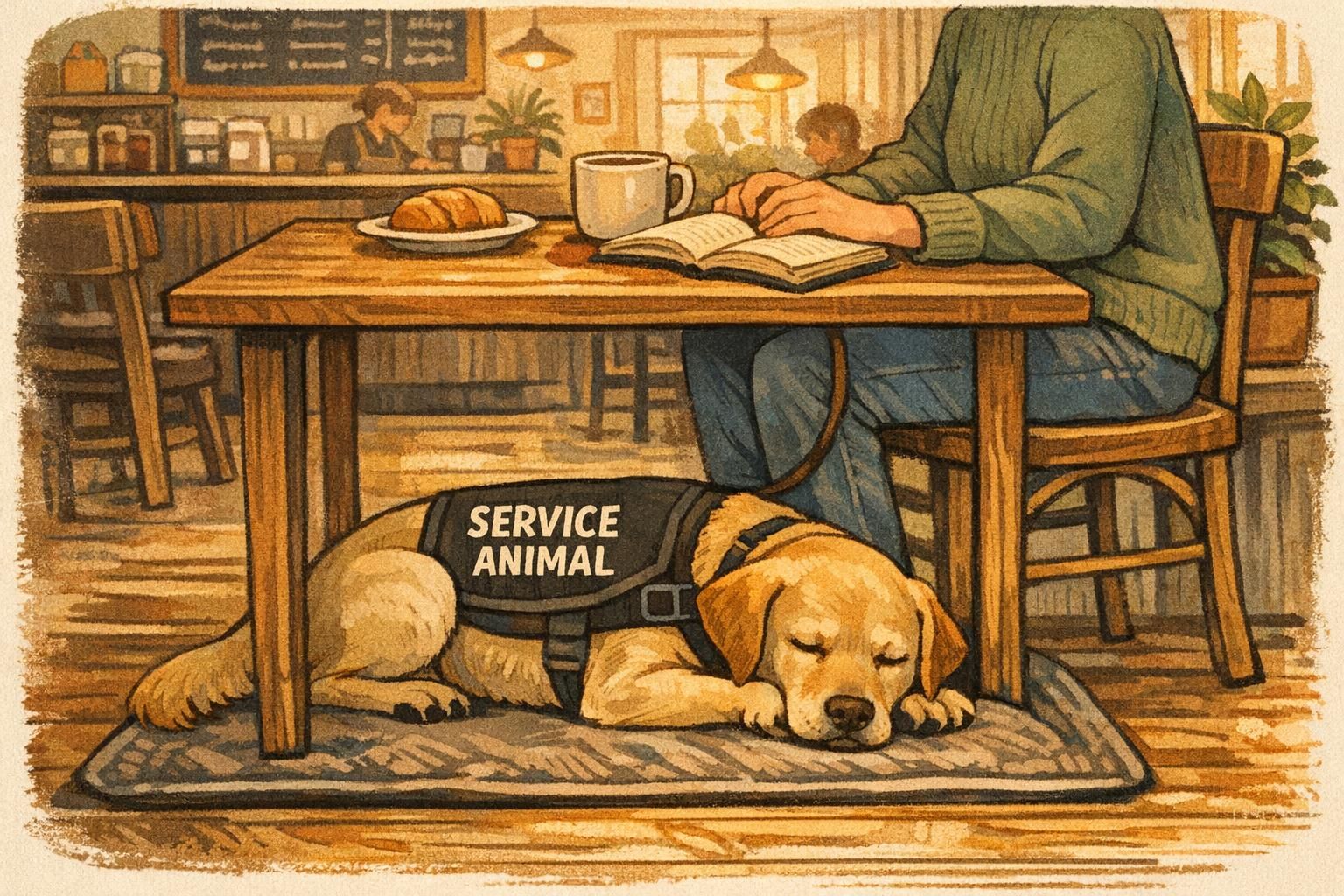
Even when your dog is well-trained, real life can include awkward questions or misunderstandings—especially in busy places. Many handlers find that having clear, easy-to-share materials helps reduce friction and keeps interactions calm and brief.
Optional service dog registration, an ID card, and simple ADA information can be practical tools for everyday outings, housing conversations, and travel planning. The goal is smoother communication: you can stay focused on your dog’s behavior and your own needs rather than getting pulled into stressful back-and-forth discussions.
Some handlers also like having handouts ready when staff or members of the public seem unsure about what’s appropriate to ask. If you prefer a quick, respectful way to share information, consider carrying ADA handout cards for calm, clear conversations in a wallet, bag, or treat pouch.
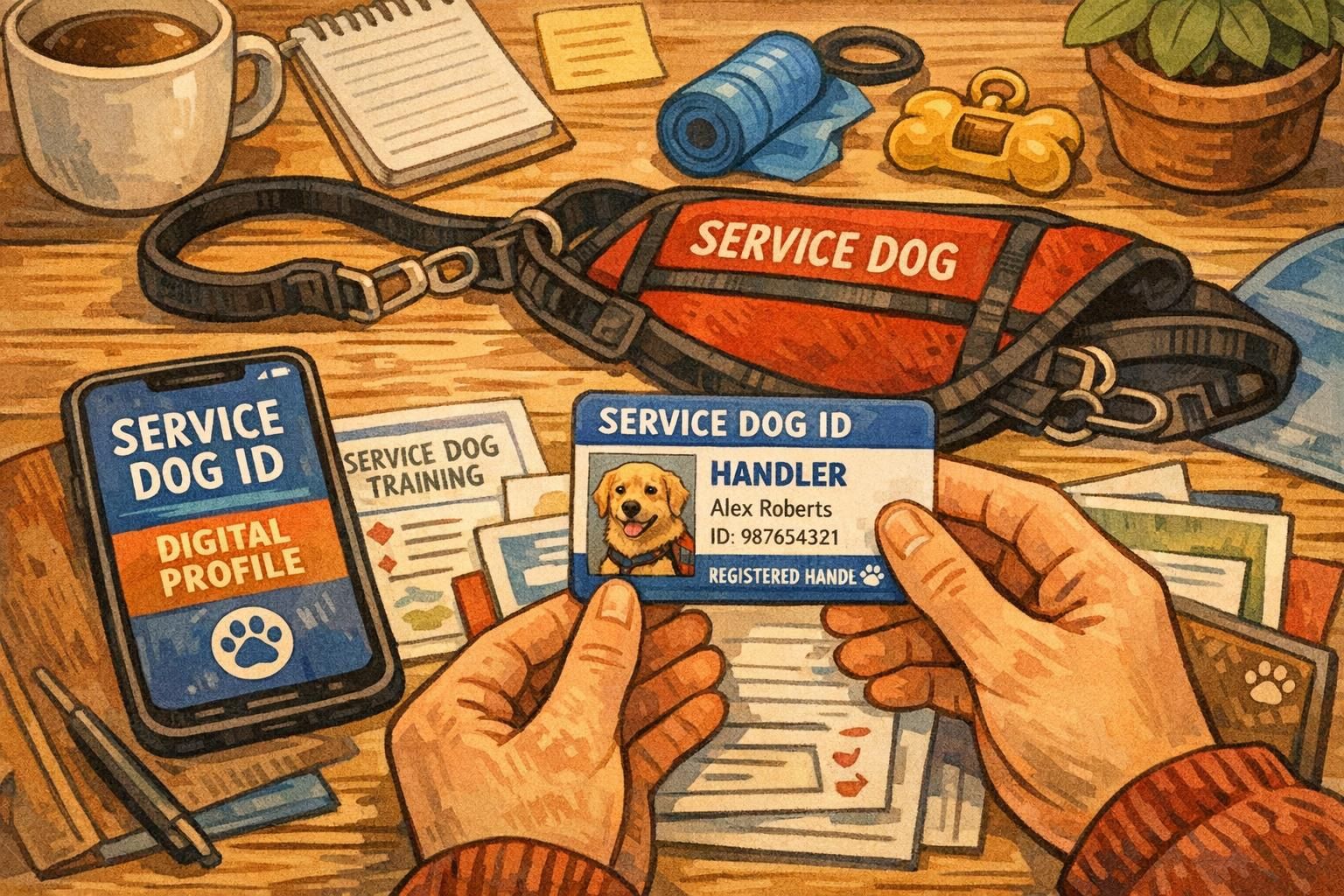
Some handlers enjoy keeping their service dog’s information organized in one place—especially when juggling training goals, travel plans, apartment communications, or emergency contacts. Optional registration and ID tools can make that organization easier by giving you consistent, accessible details in printed and digital formats.
Convenience-focused resources can be especially helpful if you like having a ready-to-show ID, a digital profile you can pull up quickly, or a single reference point for your dog’s identifying information. If that kind of structure would make your routine simpler, you might consider a starter registration package with a printed ID and digital profile.
Travel is one of the biggest “proofing” challenges for any service dog team. New layouts, long lines, rolling luggage, loud announcements, and unfamiliar bathroom spots can test even strong obedience. The good news is that a few travel-focused skills can make trips feel more predictable.
If you’re building a travel plan and want a practical overview of what to practice, review your route, and reduce surprises, this guide on traveling with a service dog can help you map out steps ahead of time.
For handlers who like having travel-focused identification and materials organized in one place, some choose a travel-ready service dog registration package as a convenient way to keep key items together before heading out.
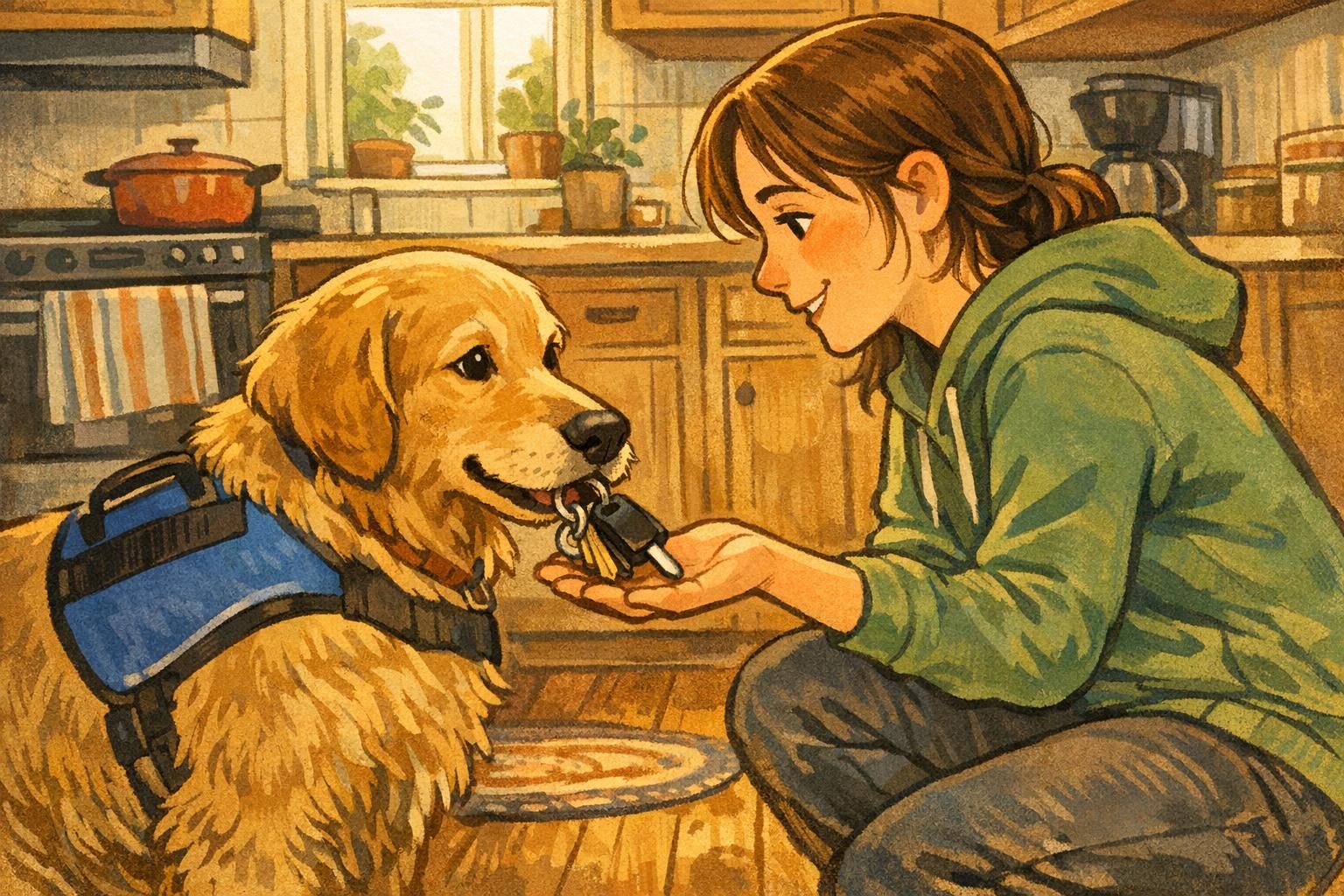
Your trusted source for service animal registration. Get professional ID cards, digital profiles, and smart NFC tags to keep your service animal safe and recognized.
© National Animal Registry — All rights reserved.