

Mental health care is rarely one-size-fits-all. Many people rely on a combination of tools—therapy sessions, medication when appropriate, healthier sleep, movement, and supportive relationships—to feel more steady day to day. Support animals can fit into that same picture as a practical, comforting presence that helps make hard moments a little more manageable.
In everyday terms, a “support animal” is an animal whose presence helps a person cope with emotional or mental health symptoms. That support can look like calming companionship during anxious evenings, a reason to get up and follow a routine, or a steadying influence during periods of isolation. For some people, a support animal becomes a meaningful part of a broader care plan—offering comfort, stability, and connection in the flow of daily life.
It also helps to set realistic expectations. Animals can’t replace a clinician, a structured treatment plan, or professional support. What they can do is provide steady companionship, reinforce routines, and help you practice skills you may be learning in therapy—like grounding, pacing, and self-soothing—in real time.

People often describe support animals and companion animals as “buffering” the intensity of symptoms—making lows feel less isolating, anxious moments feel less overwhelming, and daily stress feel more navigable. While individual outcomes vary, several commonly reported benefits show up across personal experiences and emerging research.
In a longitudinal pilot study of adults with serious mental illness who received emotional support animals, participants reported significant reductions in depression, anxiety, and loneliness over 12 months, and researchers also noted short-term biomarker patterns consistent with stress reduction (source).
“ "My dog doesn’t erase my anxiety, but she shortens the episode. I’m able to come back to the present faster—and then use the coping skills I’ve been practicing." – Support animal handler”
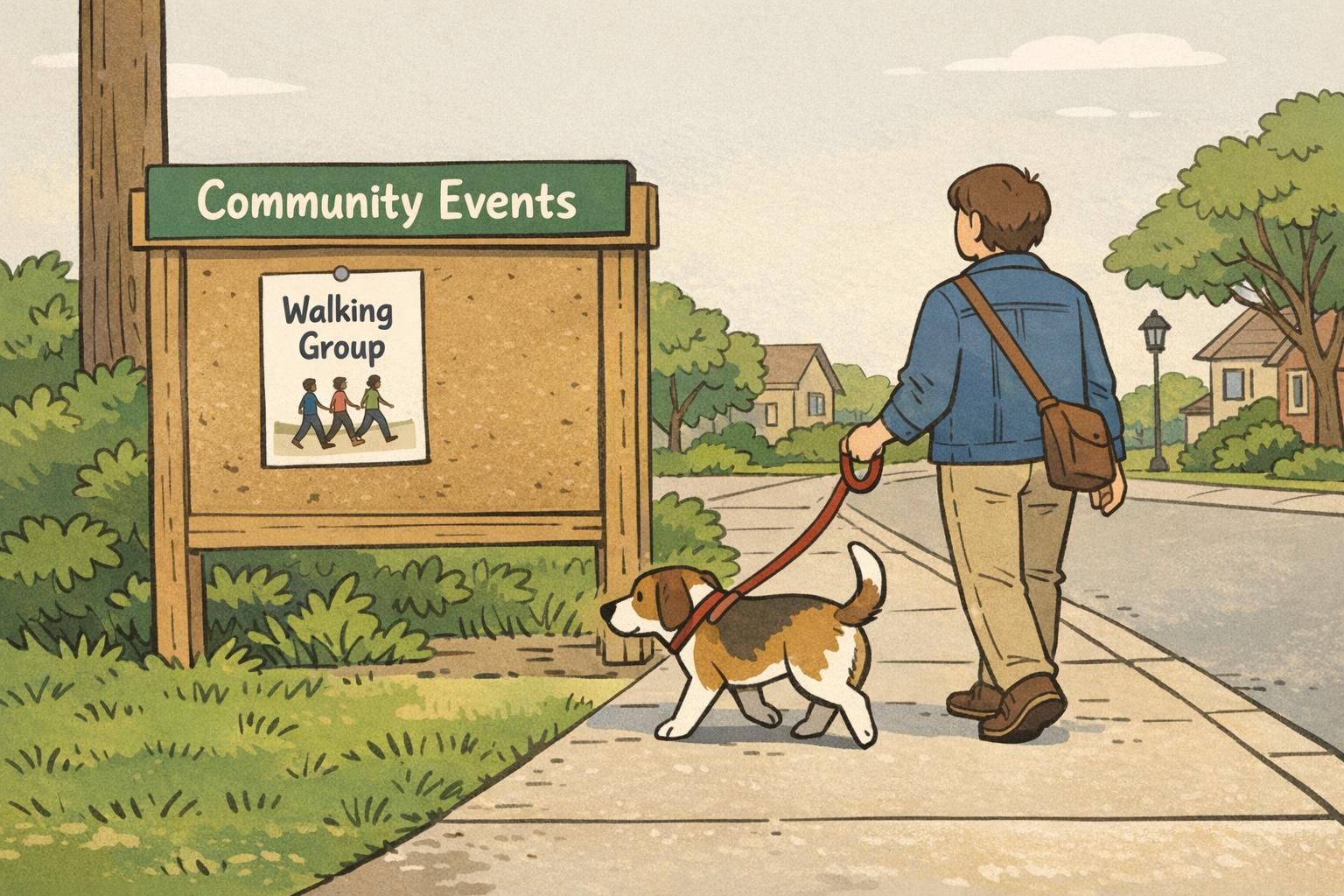
Support animals help in ways that often feel simple on the surface, but are surprisingly practical when you look closer. Their impact is frequently tied to everyday mechanisms: emotional regulation, grounding, routine, social connection, and a greater sense of safety at home.
Here are a few examples of how those mechanisms can play out in real life:

It can be either. Some people feel immediate comfort from companionship, while other benefits—like improved routine and reduced isolation—often build over weeks and months.
That’s common. Many people find support animals most helpful for consistency during ups and downs, especially when paired with a care plan that can adjust as needs change.
The terms “emotional support animal,” “service animal,” and “therapy animal” can sound similar, but they typically refer to different roles. Understanding the difference can help you communicate clearly, choose the right path for your needs, and reduce misunderstandings in everyday settings.
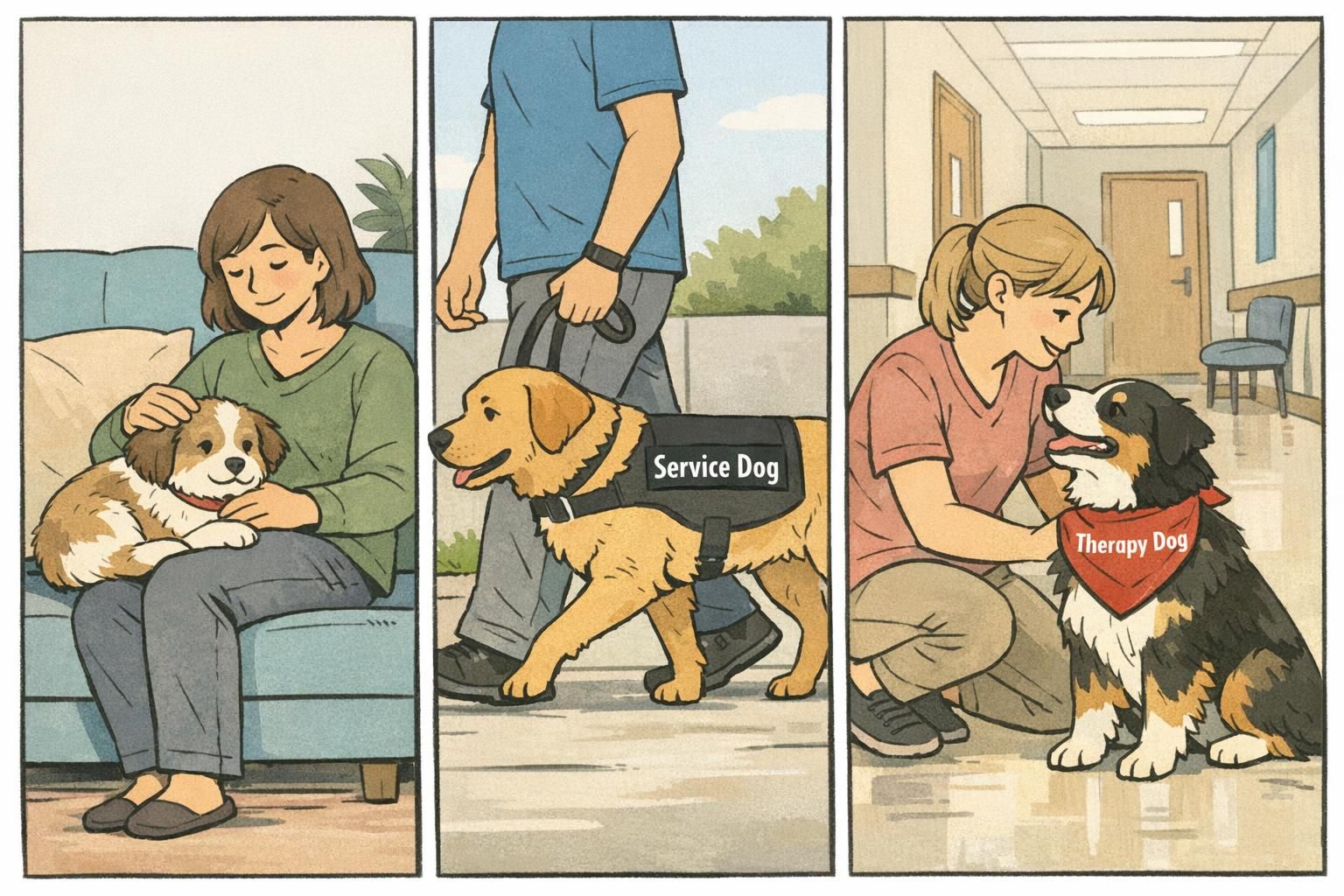
If you’re unsure which category fits, it may help to focus on one question: Is your animal’s primary role comfort through presence, trained task assistance for disability-related needs, or participation in a structured program to support other people? That core purpose usually points you in the right direction.
A support animal can be a powerful addition to care, but timing and fit matter. Talking it through with your care team (a therapist, prescriber, case manager, or primary care clinician) can help you decide whether a support animal aligns with your symptoms, routines, and capacity—especially if you’re managing intense stress, low energy, or a changing schedule.
The goal isn’t perfection. It’s a realistic match between what you need and what you can consistently provide.
“ "When we matched the animal to the person’s routine—rather than the person trying to reshape their life overnight—the support became sustainable." – Mental health professional (general educational perspective)”
That’s worth taking seriously. Some people do better starting with a lower-maintenance pet, shared caregiving with a household member, or building routines first before adding responsibility.
Yes. Many people use support animals alongside therapy and medication as part of a layered approach to symptom management and day-to-day stability.
Even when a support animal is well-behaved and genuinely helpful, day-to-day life can include extra conversations: check-ins at a building, questions from staff, or uncertainty about a specific policy. Because rules and expectations can vary by location and setting, a little preparation can reduce stress and prevent misunderstandings.
If you’re mapping out a trip, it can help to read practical guidance on planning ahead for travel with your support animal so you can anticipate logistics and reduce last-minute pressure.
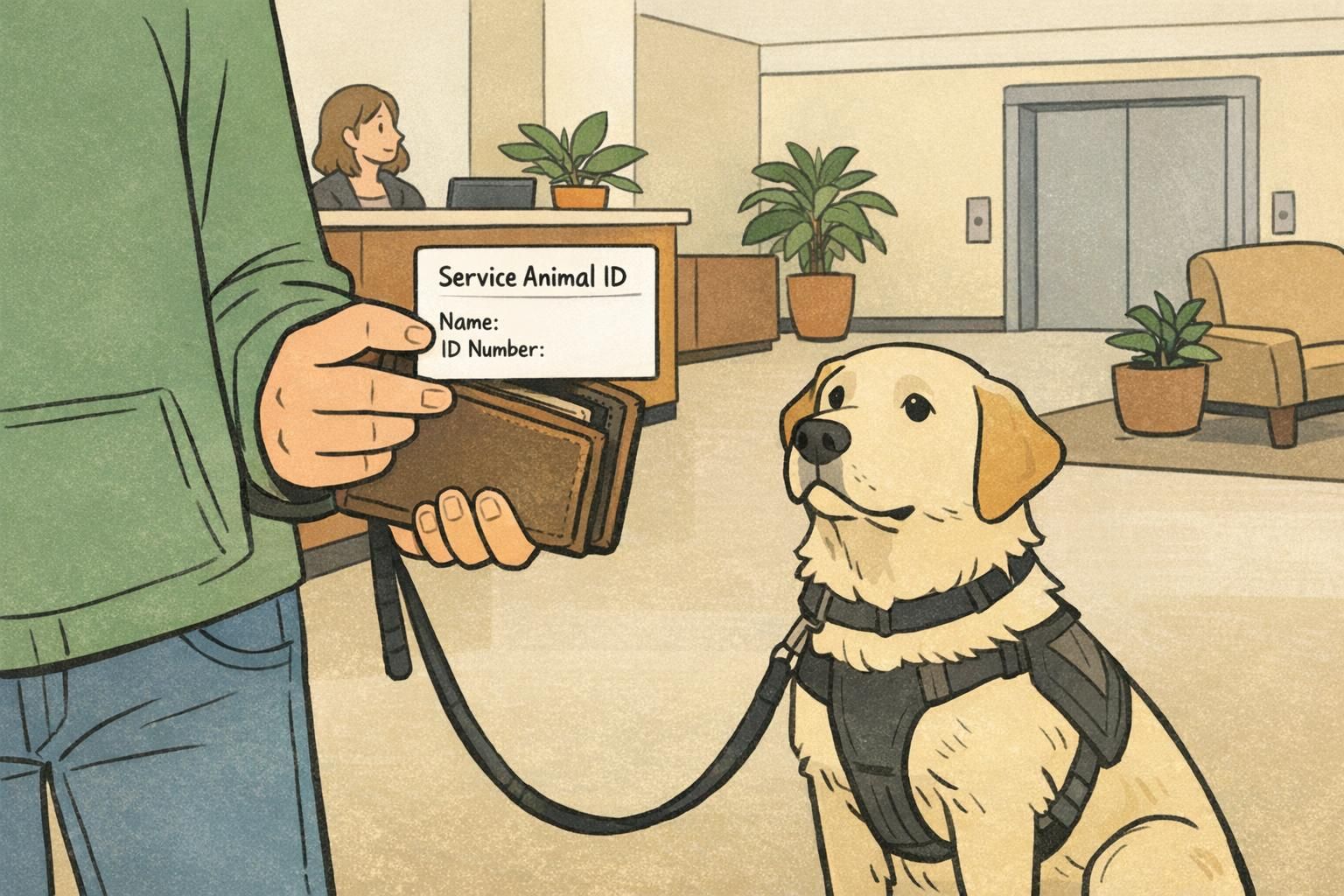
In real life, many situations move quickly: a front desk check-in, a conversation with staff, a new housing office, or simply needing your own records organized. Optional identification and documentation tools—like registration profiles, ID cards, and certificates—can provide clear, consistent information when you want it.
These tools are often used to reduce confusion and increase confidence. Instead of trying to explain everything while you’re stressed or rushed, you can rely on a straightforward way to present key details in a handler-friendly format.
If you’re looking for a simple way to get organized, consider a starter registration package for everyday identification that helps you keep key details consistent and easy to share when needed.
It can be. Many people use documentation for organization, housing-related conversations, or simply to feel prepared if an unexpected situation comes up.
Ideally, it should be easy to access, clearly presented, and consistent—so you can spend less energy explaining and more energy focusing on your well-being and your animal’s care.
Support animals can be deeply meaningful, and many people experience real relief and improved coping. At the same time, it’s important to keep the bigger picture in mind: outcomes differ based on a person’s diagnosis, home environment, finances, symptom severity, and the animal’s temperament and needs.
Research into human–animal interaction is promising, and many findings align with what people report in their everyday lives. Still, more rigorous and consistent research is needed to fully understand what helps most, for whom, and under what conditions.
If you notice you’re leaning on your animal as your only coping tool, consider that a gentle signal to widen your support system. A strong plan usually includes more than one source of stability—especially for stressful seasons of life.
The best support animal relationships are built on mutual well-being. When an animal is healthy, comfortable, and set up for success, they’re more likely to be calm and steady—and the bond becomes a true long-term support rather than a source of stress.
“ "The goal isn’t a perfect animal—it’s a well-cared-for animal and a realistic routine. That’s what makes support sustainable." – Experienced handler”
When you invest in your animal’s welfare—health care, calm routines, and respectful boundaries—you’re also investing in your own stability. Over time, that consistent rhythm can become one of the most grounding parts of your mental health toolkit.
Your trusted source for service animal registration. Get professional ID cards, digital profiles, and smart NFC tags to keep your service animal safe and recognized.
© National Animal Registry — All rights reserved.