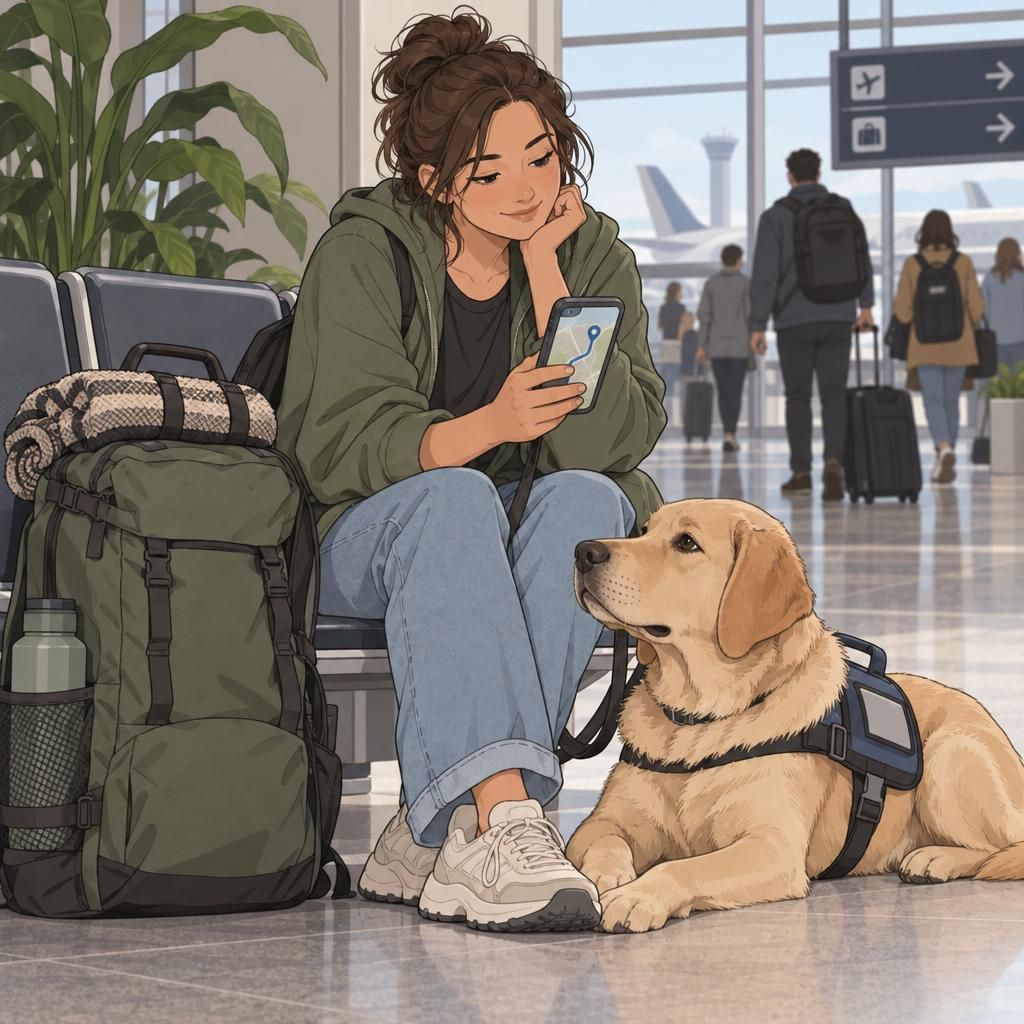
Traveling with a service dog is easier when you make room for your dog’s needs before departure day. The goal is not to plan every minute. It is to know where you are going, how you will get there, and where you can pause along the way. Start with your travel dates, route, lodging, and likely rest stops, then look for places where a little extra preparation could prevent a rushed decision.
Contact airlines, hotels, cruise lines, or other transportation providers early. Ask about their current procedures, any requested forms, and advance-notice deadlines. Confirm details for each part of the journey rather than assuming that one provider’s process applies to another. If your trip crosses a border or includes several carriers, check the requirements for each destination and travel segment.
Canadian Transportation Agency guidance is a useful reference when planning transportation in Canada and supports checking applicable procedures and documentation with transportation providers in advance (source). Its guidance should not be treated as a universal rule for every country or provider. For broader trip organization, explore a practical guide to traveling with a service dog.
A well-organized document folder can make travel conversations easier to manage. Keep vaccination and rabies records, identification details, and any forms requested by your carrier in one accessible place. Before leaving, check that the information is current and consistent across the materials you plan to carry. Finding an outdated detail at home is much easier than sorting it out while waiting to board.
Service dog registration, an ID, or a certificate can be helpful tools for keeping identification details organized and presenting them clearly during travel conversations. Keep these materials alongside your other travel records, while checking provider requirements separately. Registration and identification materials do not replace carrier-specific forms or confirmation of the procedures that apply to your journey.
If you prefer a dedicated organization option, consider a travel kit for keeping service dog identification and travel materials organized. Whatever system you choose, the practical goal is the same: make important details easy to locate when you need them.

Practice trips help you learn which parts of travel feel familiar to your dog and which need more preparation. Start with short drives or visits to familiar public settings. Keep the outing manageable, with time to settle rather than moving immediately from one activity to the next. You are building a predictable routine, not trying to recreate every possible travel challenge.
Pay attention to travel sounds, movement, and waiting. Does your dog settle more easily after a brief walk? Does a familiar blanket help during a pause? Is a quieter waiting area more comfortable than a busy entrance? Notice what works and repeat those helpful elements so they become part of your travel routine.
Leave enough time between practice and departure to make small changes. If one part of the routine feels rushed, simplify it. A few calm, repeatable habits can be more useful than a complicated plan that is difficult to follow when you are carrying bags or managing a connection.

Pack around your dog’s everyday routine. Regular food, water, a bowl, a leash, medications, and waste bags should be easy to reach throughout the journey. A familiar blanket or toy can also help make an unfamiliar stop feel more predictable. Choose items your dog already uses rather than introducing several new things on departure day.
Think about where each item will be when you need it. A water bowl packed at the bottom of a large suitcase is less convenient than one stored near the top of an accessible bag. Keep supplies for the next travel segment together so a quick break does not require unpacking everything.
Plan meals with your dog’s usual comfort in mind. If a heavy meal immediately before travel tends to cause discomfort, avoid that timing. Keep the routine familiar wherever possible, and make sure essentials stay with you rather than in luggage you cannot access during transit.
For road trips, use an appropriate restraint, such as a crash-tested harness or a secured crate. Set up the travel space before departure so you are not adjusting equipment while trying to leave. Keep your dog’s area comfortable and make sure the supplies you will need at stops are within easy reach.
Plan regular stops for water, stretching, and relief. Treat those pauses as part of the journey rather than interruptions to it. A stop also gives you a chance to notice whether your dog is settling comfortably and whether the next stretch of travel needs to be shorter or more relaxed.

For flights and other transportation, allow extra time and review the provider’s procedures before departure. Identify suitable places for breaks and quiet waiting whenever possible. Keep documents and essential supplies accessible, especially when moving between check-in, waiting areas, and boarding.
Arrival is another transition, so give your dog time to settle before starting a busy schedule. At your hotel or destination, create a calm resting area with familiar items. Set out the blanket and water bowl, organize supplies, and establish a simple routine for leaving and returning to the room.
Maintain your dog’s usual food, rest, and relief routines as much as your itinerary allows. You do not need to match every detail of home. Focus on the familiar patterns that help your dog settle, and avoid filling every available moment with activity.
Convenience depends on your trip. A location that makes relief breaks easier may matter more than proximity to a busy lobby or gathering area. Ask about available options without assuming a particular arrangement can be guaranteed.

Even a thoughtful itinerary can change. Weather, traffic, delays, and altered schedules may affect where you stop or when you arrive. A flexible plan gives you options without requiring you to solve every problem from scratch while traveling.
Keep provider and lodging contact details with your travel information. Identify a backup rest stop or lodging option, and keep essential supplies handy in case a travel segment takes longer than expected. Before relying on an alternative, confirm its current procedures and availability.
When plans shift, return to the basics: water, relief, rest, familiar cues, and clear communication. You may need to shorten an outing or take a quieter break before continuing. Stress-free travel does not mean nothing unexpected happens. It means having a practical way to respond while keeping your service dog’s comfort and needs at the center of the trip.
Your trusted source for service animal registration. Get professional ID cards, digital profiles, and smart NFC tags to keep your service animal safe and recognized.
© National Animal Registry — All rights reserved.