A service dog is more than a well-behaved pet in public. Service dogs are individually trained to perform specific tasks that mitigate (reduce the impact of) a person’s disability. Those tasks are what make the dog a working partner—helping the handler move through the day with more safety, independence, and stability.
When people hear “work environments,” they often picture a traditional job site. But for a service dog team, “work” can also mean everyday public-facing routines: grocery shopping, commuting on transit, picking up prescriptions, attending appointments, or going to class. It can also include offices, schools, medical facilities, retail workplaces, warehouses, and on-the-go schedules with frequent location changes.
Different environments create different practical considerations. Busy places add distractions and tight spaces. Quiet spaces may require long periods of stillness. Medical settings can involve mobility equipment, narrow corridors, and hygiene expectations. The goal is the same across all environments: the dog stays under control, focused, and ready to perform tasks when needed.
These terms are often mixed up in everyday conversation, which can lead to confusion during housing conversations, travel planning, or public interactions. Understanding the categories helps you communicate clearly and respectfully—especially when you’re speaking with landlords, staff, supervisors, or school administrators.
If you ever need to explain your dog’s role quickly, keep it simple and consistent: “This is my service dog. They’re trained to perform tasks that help with my disability.” You don’t need to share private medical details to communicate your needs and your dog’s working status.
Service dog tasks are not one-size-fits-all. Two handlers may have dogs that look similar and behave similarly in public, but the actual task work can be completely different. The best-trained teams are built around real-life needs—what the handler does all day, where they go, and what kind of support makes those activities safer and more manageable.
The most useful way to think about tasks is environment-first: What happens at home, in transit, at school, and at work that creates barriers? A service dog’s training can be tailored to those moments—like retrieving items in an office, maintaining position during long lectures, or alerting during noisy commutes.
“ "My dog’s best ‘work skill’ isn’t one big dramatic moment—it’s the steady support across dozens of small moments every day." – Service dog handler”
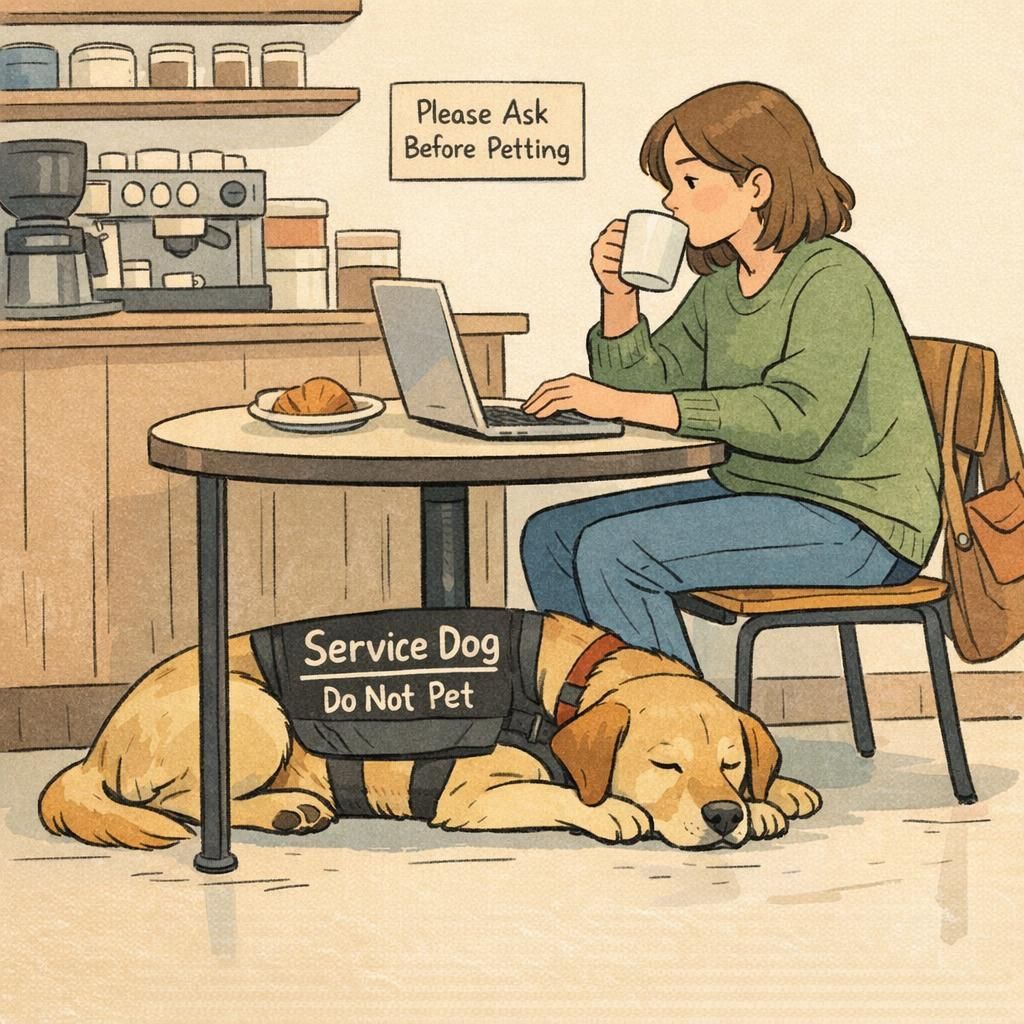
Busy public places are where good handling and good planning shine. Teams may move through grocery aisles, wait at host stands, navigate crowded sidewalks, and sit through events where noise and foot traffic are constant. In many cases, service dogs are permitted in public places under the ADA when they are individually trained to perform tasks for a person with a disability, which is a key distinction from therapy dogs and emotional support animals (source).
Success in public access settings is usually about three priorities: staying under control, minimizing disruption, and moving calmly through distractions. A well-prepared team looks “boring” in the best way—quiet, predictable, and focused.
If you prefer a quick, professional way to share basic information during misunderstandings, many handlers carry ADA law handout cards for quick, professional conversations so they can stay calm, keep moving, and avoid turning one moment into a long debate.
Healthcare settings can be surprisingly manageable for service dog teams, but they come with unique logistics: tight hallways, rolling equipment, high foot traffic, and people who may be anxious or unsteady. In many areas, service dogs can accompany their handlers as part of everyday access, while some spaces may have higher hygiene or safety restrictions (for example, certain sterile or procedure-focused zones).
It also helps to understand a related role you may see in hospitals: facility dogs. Unlike a service dog who works for one handler, facility dogs typically work with staff to support multiple patients. They are often part of a structured program and may accompany clinicians in specific units.
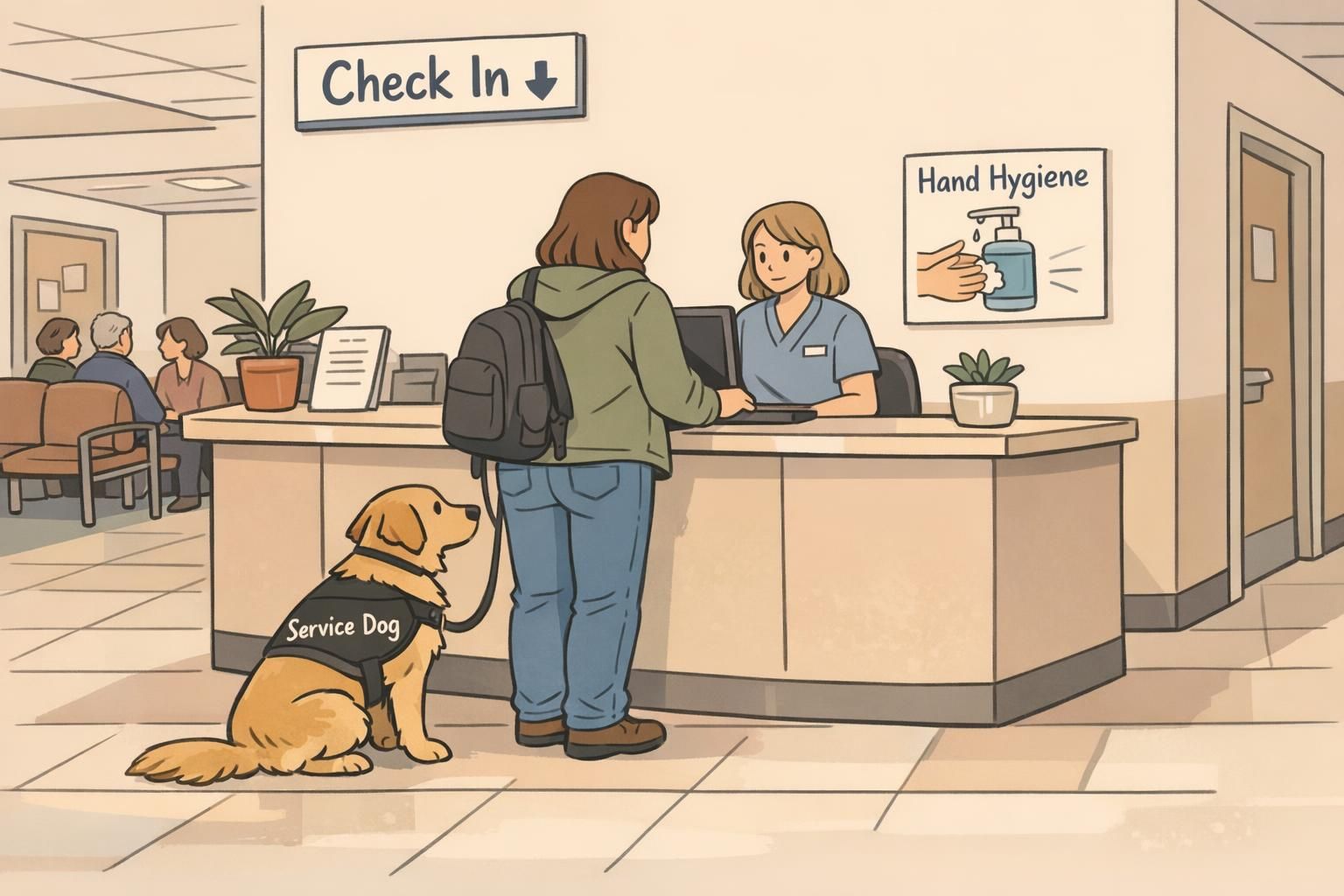
In education settings, service dogs may support students, educators, or staff through long days filled with transitions: classrooms, hallways, cafeterias, assemblies, labs, libraries, and campus events. Each location has different demands—quiet stillness during lectures, careful navigation around backpacks, and patient waiting during group activities.
Schools and colleges often run on routines, which can be a major advantage for training and handling. When a dog learns the rhythm of the day—walk to class, settle, transition, settle again—it becomes easier to maintain focus and reduce fatigue for both handler and dog.
“ "The best classroom days are the ones where my dog can quietly disappear under the desk—and still be ready when I need a task." – College student”
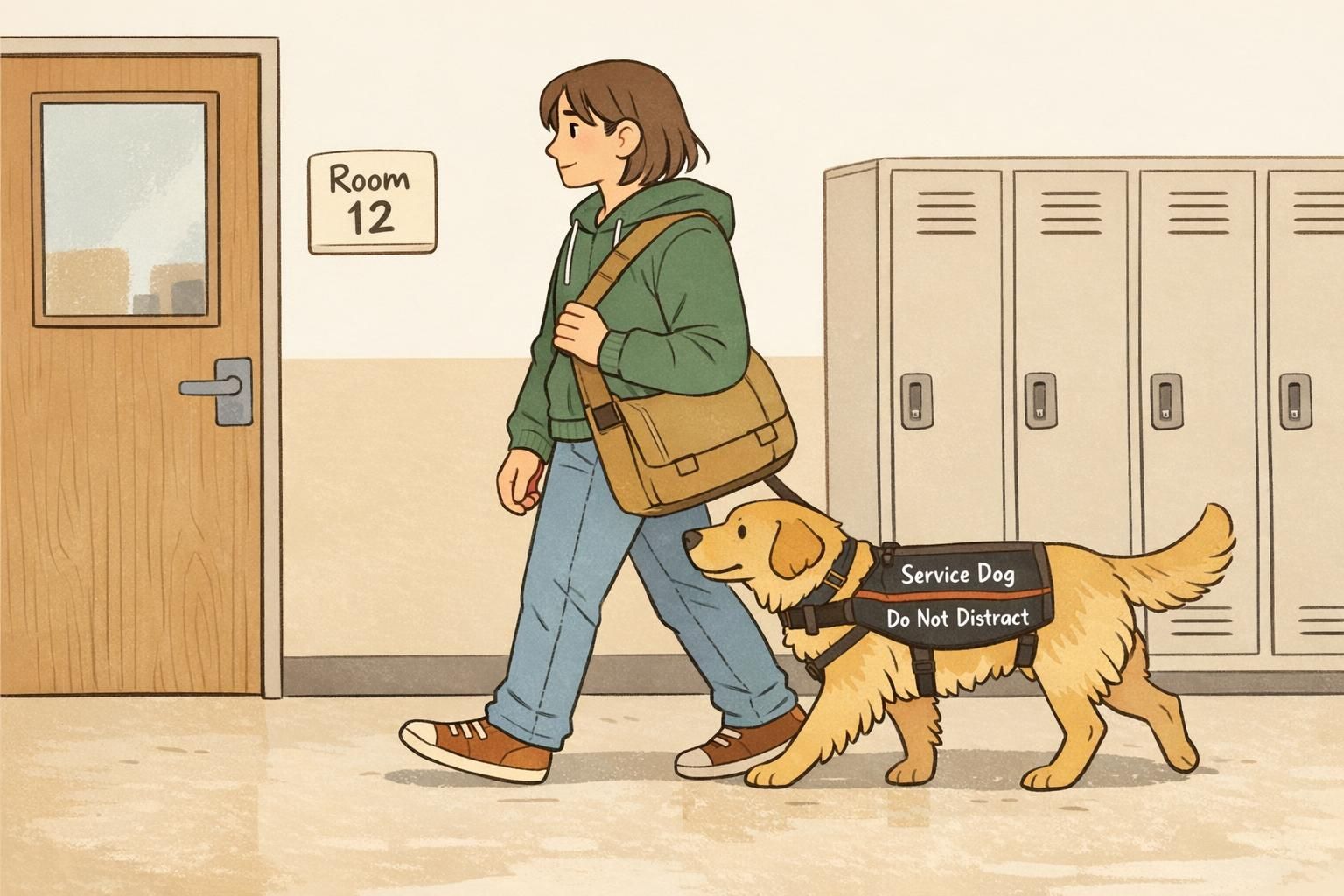
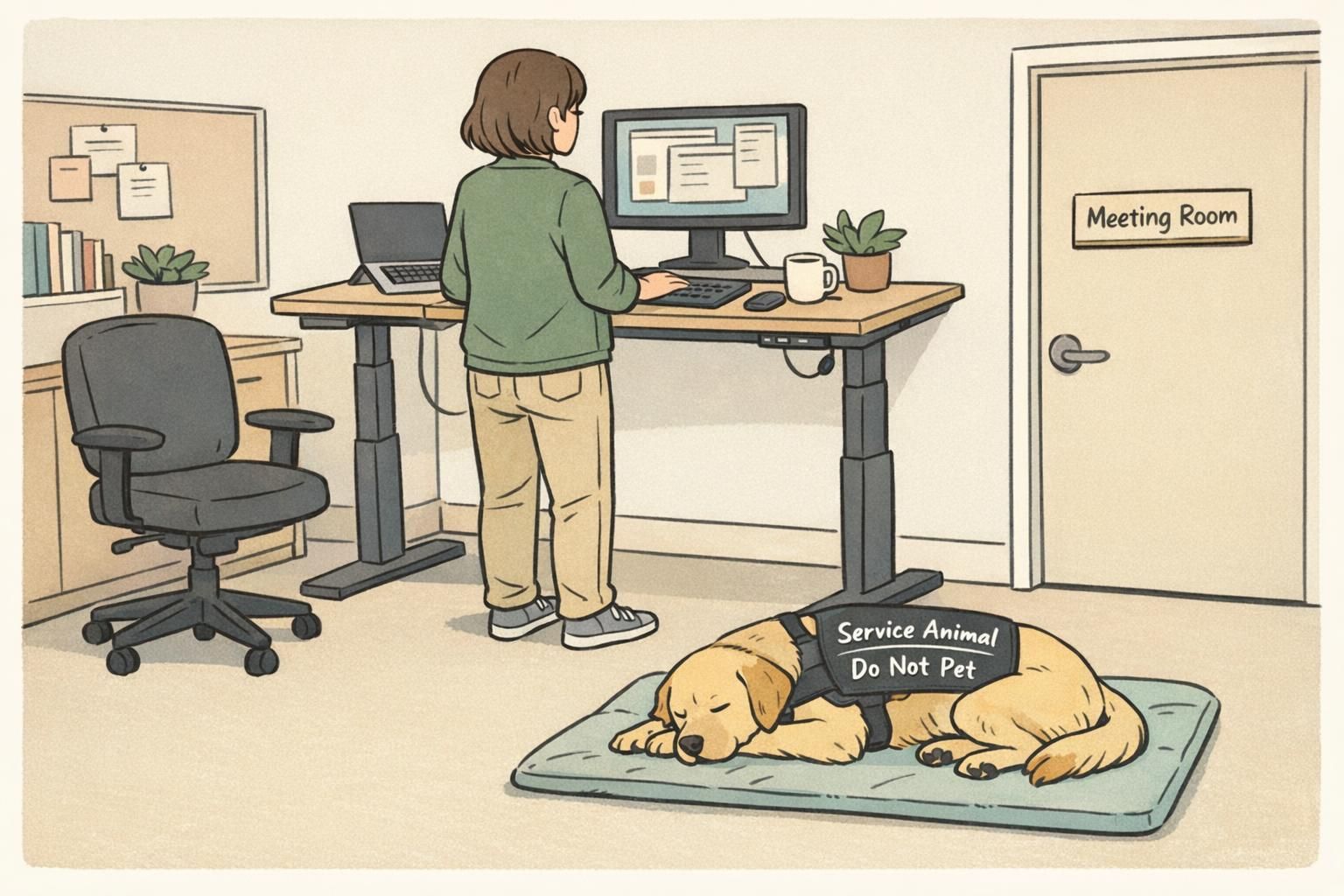
Workplaces can be excellent environments for service dog teams because many job routines are predictable. At the same time, jobs vary widely in space, safety needs, and pace. An office may require long settles and quiet task support. A retail job may involve constant customer interaction, narrow aisles, and repetitive movement. A warehouse or field role may involve noise, equipment, or safety gear planning.
The most successful workplace setups start with realistic mapping: where the dog will rest, how the team will move through the workspace, what the emergency exits are, and what parts of the job might require a modified approach.
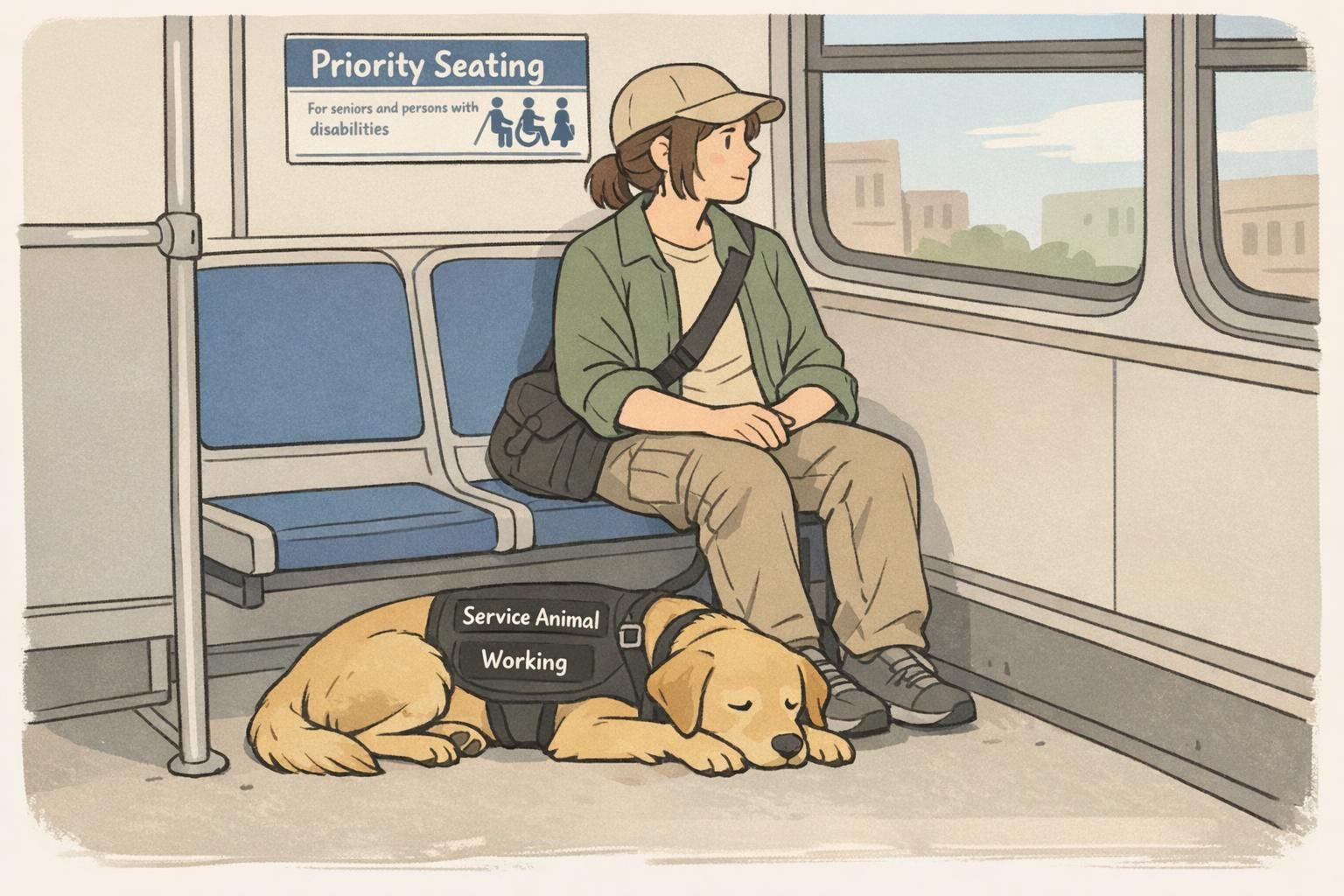
Some days are a straight line: home, work, home. Other days involve rideshares, airports, hotels, conferences, client sites, and roadside stops. For service dog teams, changing locations can affect everything from bathroom timing to stress levels to how easily a dog can settle.
A checklist approach helps reduce surprises. When you plan ahead for breaks and essentials, you spend less time problem-solving in public and more time moving through your day smoothly. For more ideas and planning tips, see traveling with a service dog.
Many handlers also like having a single, consistent set of travel materials—especially when moving quickly between locations. If that sounds helpful, consider a travel-ready service dog registration package to keep key identification and support materials organized for on-the-go days.
In real life, many challenges aren’t about your dog’s behavior—they’re about other people’s uncertainty. Staff may not know what questions are appropriate, supervisors may want clarity for workplace planning, and new environments may come with inconsistent expectations. Clear identification can reduce confusion and help routine interactions stay routine.
Optional registration materials—like ID cards, digital profiles, and certificates—can be a practical tool for everyday life. They create a consistent way to present your team, keep key details in one place, and streamline conversations in housing, travel, and public settings. For many handlers, the biggest benefit is peace of mind: feeling prepared instead of caught off guard.
If you want a simple, everyday option that’s easy to keep in your wallet and on your phone, a starter service dog registration package for everyday identification can help you feel ready for the situations where you’d rather avoid a long conversation.
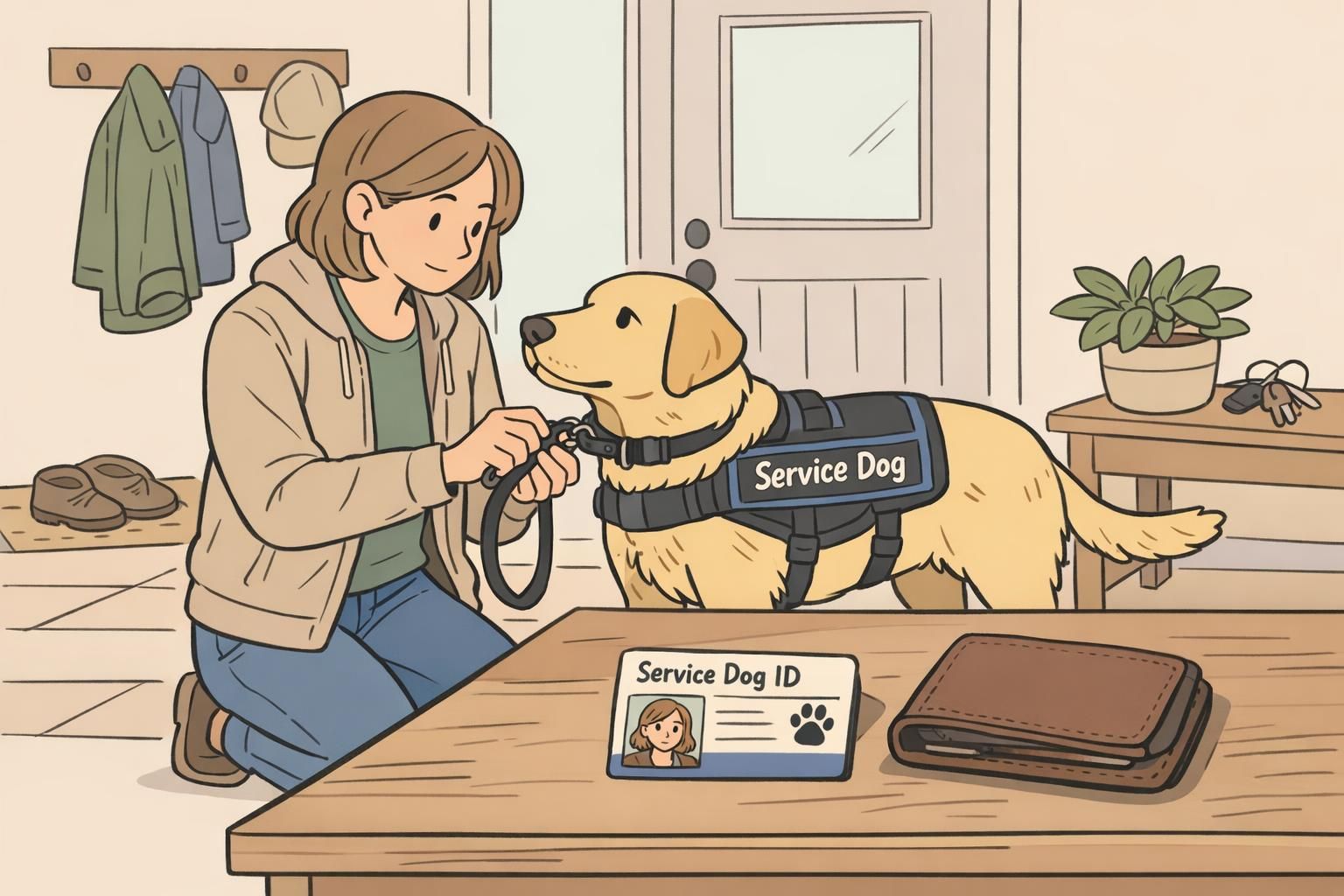
Good service dog etiquette protects safety and supports access for everyone. Whether you’re a member of the public, a coworker, or a handler, small choices—like giving space or setting boundaries—make a big difference in how smoothly a team can function.
“ "The kindest thing you can do is act like my service dog isn’t there—because that means my dog can focus on me." – Service dog handler”
Wherever their handler needs to go to function safely and independently—often including errands, transit, school, medical appointments, and the workplace. The practical goal is that the dog remains under control and able to perform trained tasks when needed.
Stay calm and keep your dog close and focused. Use a simple script that protects your privacy, such as: “This is my service dog, and they’re trained to perform tasks that help with my disability.” If it helps in the moment, having clear, professional materials on hand can make the conversation quicker and less stressful.
Plan a predictable schedule: a relief break before you start, a mid-shift break when possible, and a decompression period after. Bring water, a portable mat, and small rewards, and think ahead about where your dog can safely settle without blocking walkways.
You can keep it brief and private. Many handlers choose a simple explanation like: “My dog is a service dog and is trained to assist with my disability.” You’re allowed to set boundaries and end the conversation politely.
Consistency helps: calm handling, clear boundaries, and straightforward language. Many teams also find that clear identification and organized materials make day-to-day interactions smoother, especially when you’re in a hurry or entering a new place for the first time.
Your trusted source for service animal registration. Get professional ID cards, digital profiles, and smart NFC tags to keep your service animal safe and recognized.
© National Animal Registry — All rights reserved.