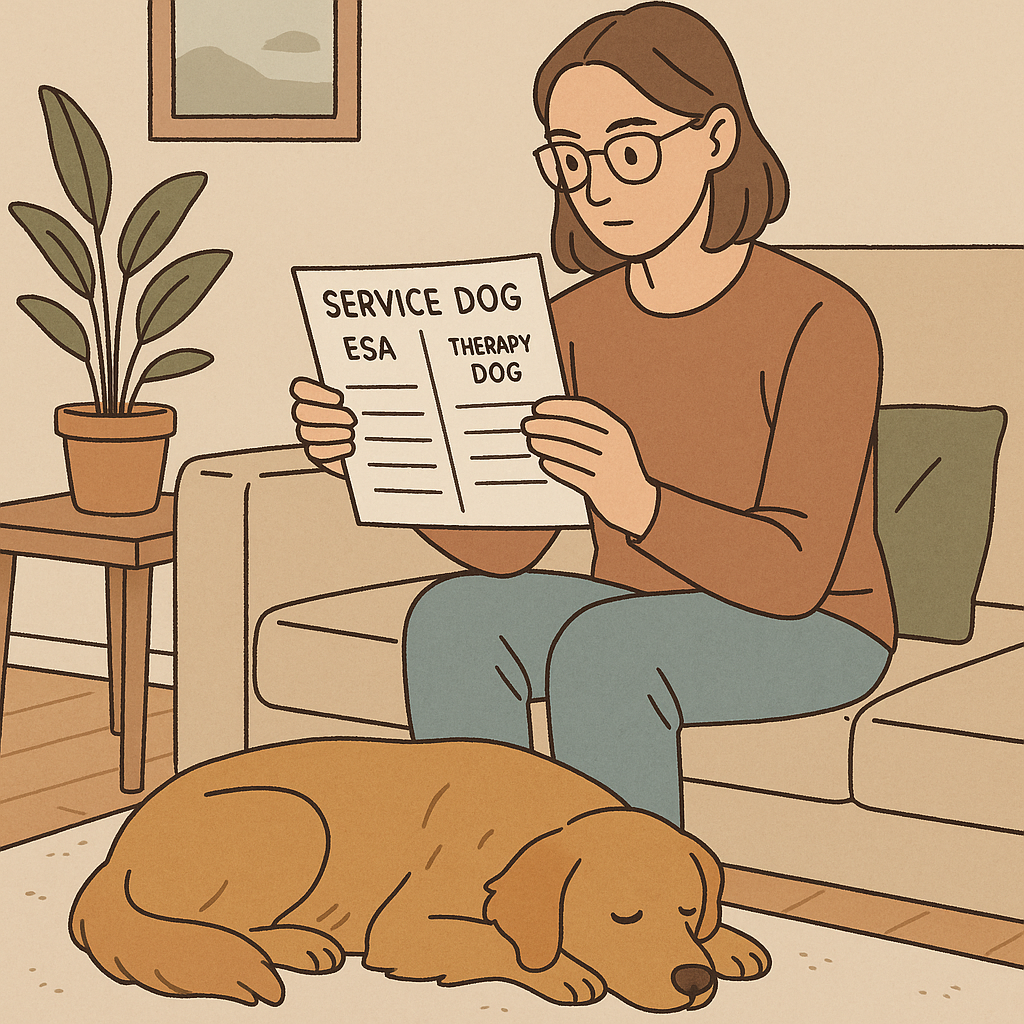
In everyday conversation, people often use “service dog,” “emotional support animal (ESA),” and “therapy dog” as if they mean the same thing. They don’t—and the differences matter most when you’re trying to figure out where an animal can go, what kind of training is expected, and what role the animal plays for a person or a community.
A simple way to think about it is this: service dogs are trained to do specific tasks that help a person with a disability; ESAs provide emotional comfort to their owner; therapy dogs provide comfort to other people in organized settings. Those core differences affect public access, housing experiences, and travel planning—so it’s worth getting the terms right.
If you’ve ever wondered why one person can bring a dog into a grocery store while another can’t, it usually comes down to category. The three types can all be life-changing, but they’re designed for different jobs and different environments.
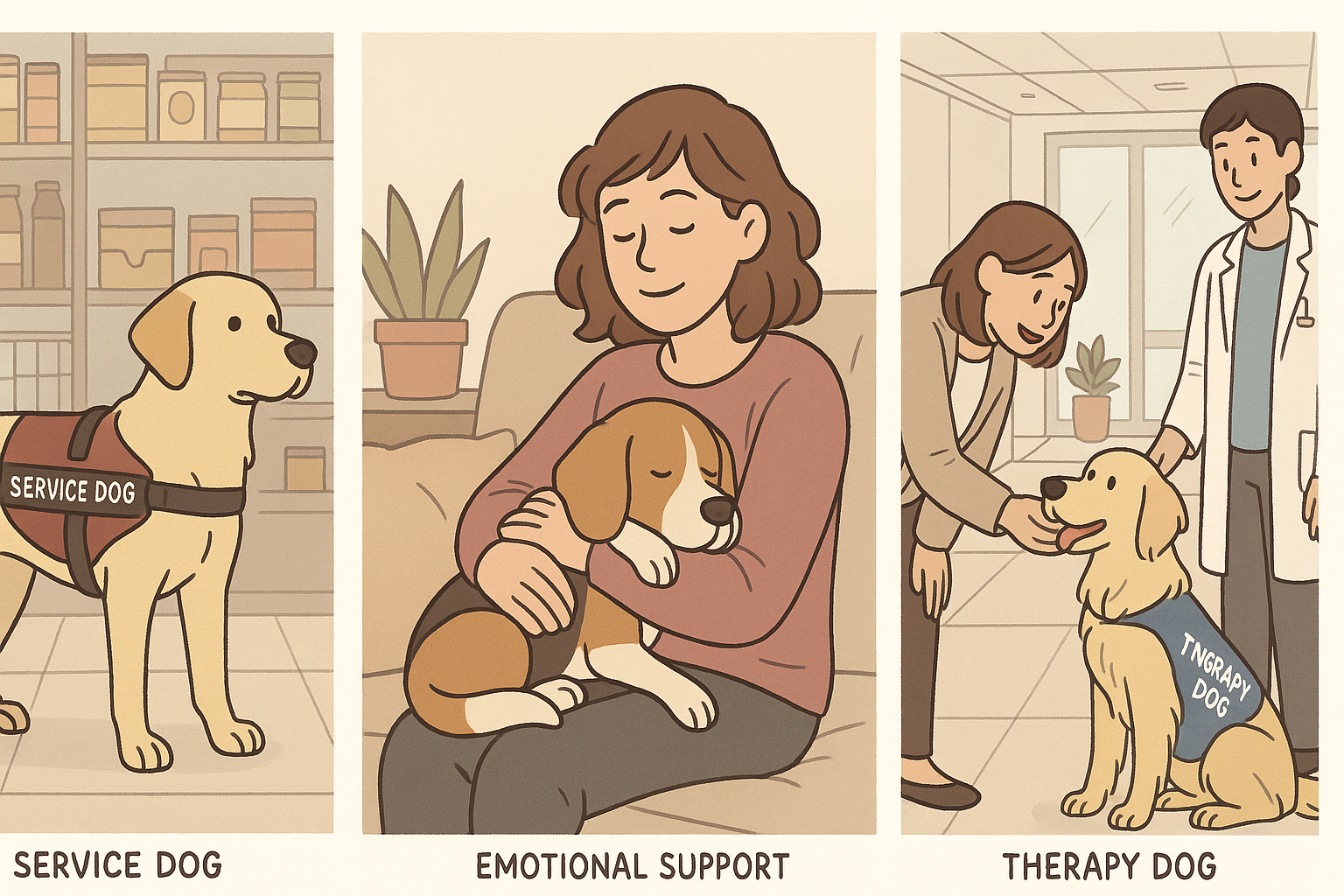
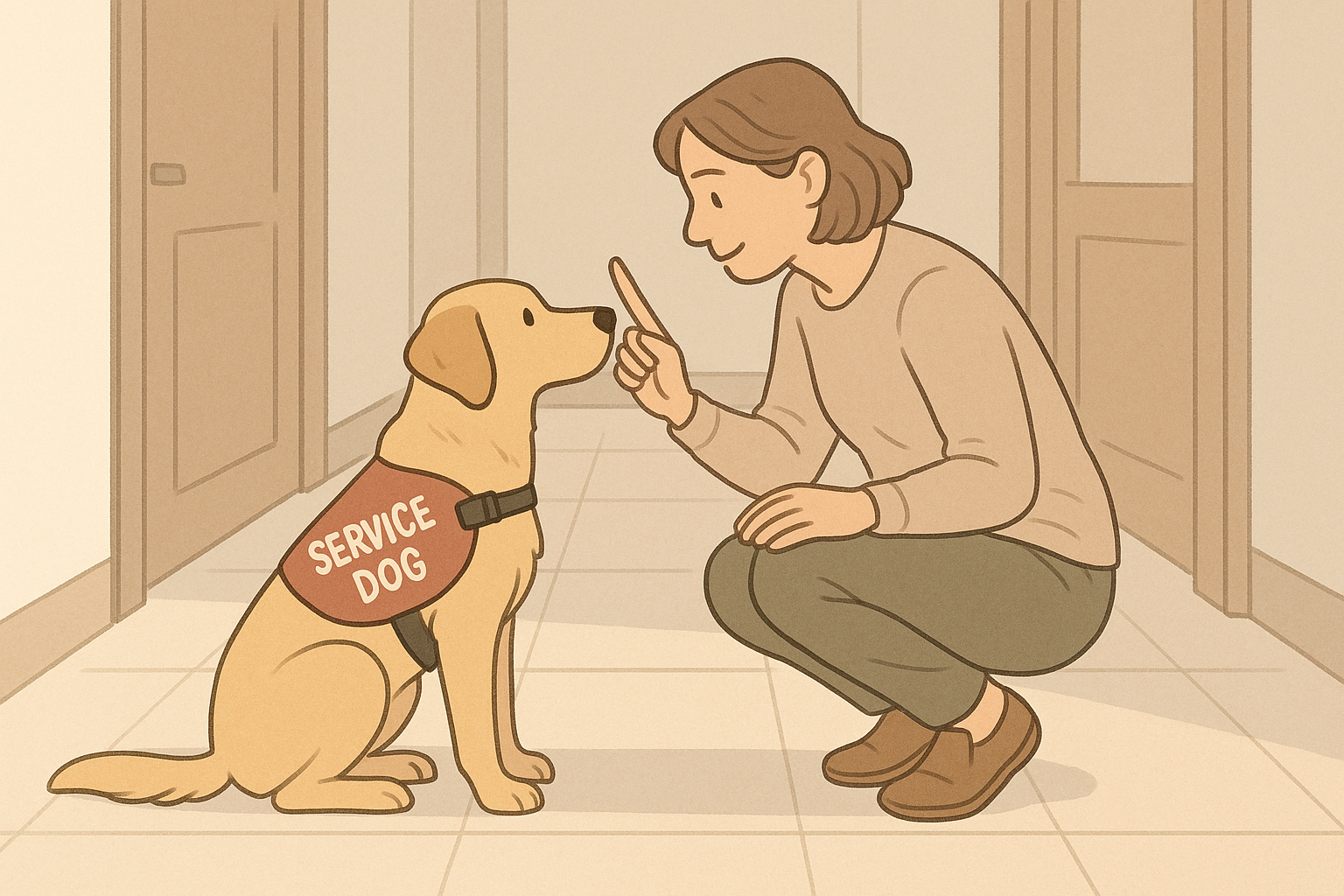
A service dog is a dog trained to help a person with a disability by performing specific tasks. The key idea is task-training: the dog does something concrete that helps with a disability-related need, and the dog is able to behave appropriately in public so the team can move through daily life safely and calmly.
Examples of service dog tasks can include:
In the U.S., service animals are defined by this disability-related task training, and service dog teams generally have broad public access rights under the ADA when the dog is working with its handler. That’s the main reason access differs from ESAs and therapy dogs. If you want to read the official guidance in plain language, the ADA’s Service Animals FAQs are a helpful reference: source.
An emotional support animal is a companion animal that helps its owner emotionally—often by providing comfort, routine, grounding, and a sense of stability. ESAs can be incredibly meaningful for people dealing with anxiety, depression, grief, trauma, or major life transitions.
Unlike service dogs, ESAs are not defined by task training. That difference is why ESAs generally do not have the same public access as service dogs in places like grocery stores, restaurants, and other businesses that typically don’t allow pets.
Where ESAs can have the biggest day-to-day impact is at home and in routines—helping someone sleep better, get through difficult evenings, feel safe enough to live independently, or manage stress during regular life.
Therapy dogs are the friendly, steady dogs you might see visiting a hospital unit, a counseling office, a school reading program, or a senior living community. Their role isn’t to support one handler’s disability-related needs. Instead, therapy dogs help many people feel calmer, safer, and more supported during structured visits.
Because therapy dogs interact with strangers, the focus is on social temperament, predictable manners, and safe, gentle engagement. Therapy dog teams typically enter spaces by invitation or permission based on facility rules—rather than having automatic public access everywhere.
“ "My therapy dog’s job is simple: show up calm, be friendly, and help people exhale for a few minutes. We go where we’re invited, and we follow the facility’s process." – Therapy dog volunteer handler”
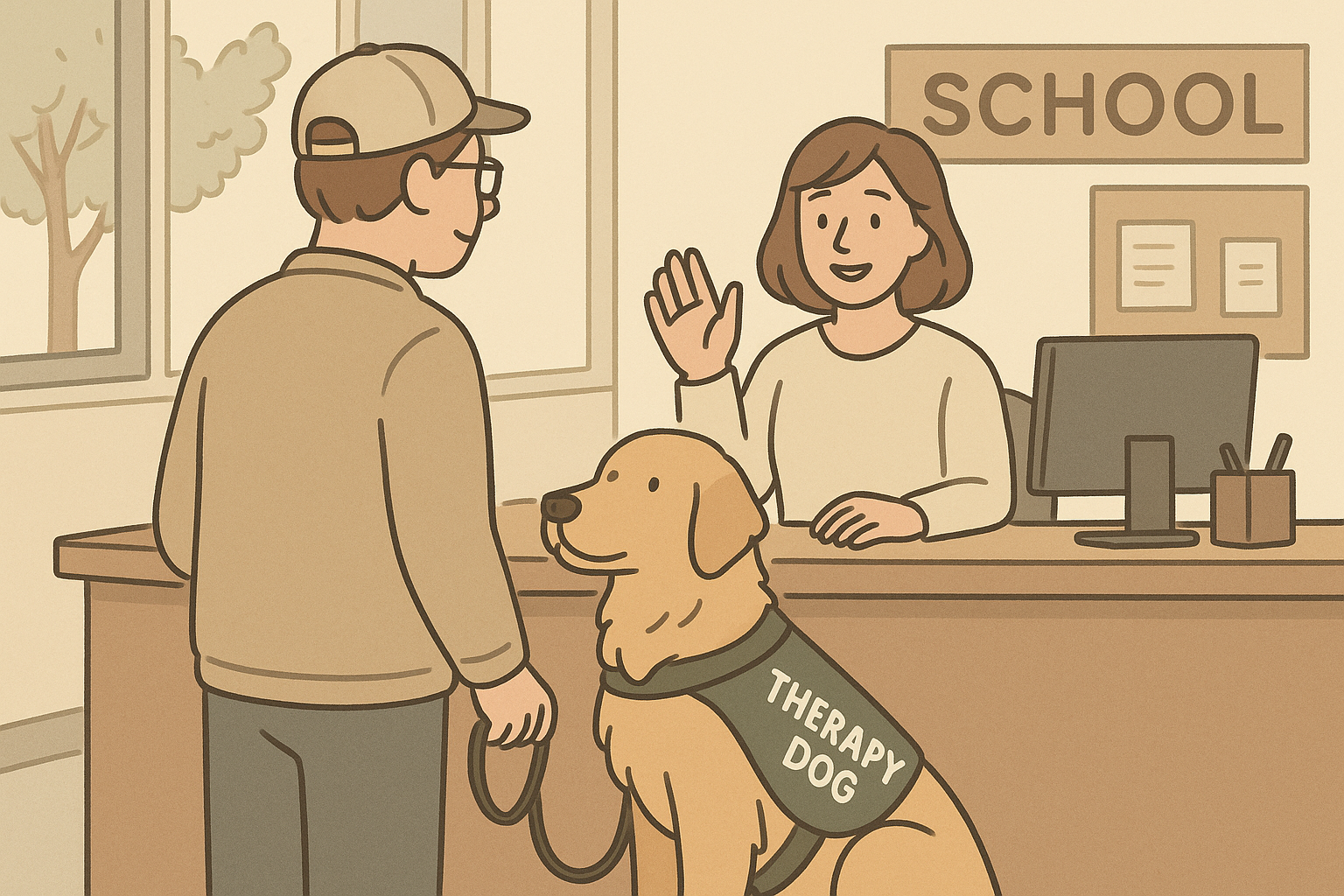
Most questions people have come down to three situations: going into public places, securing housing, and traveling. Here’s what to expect in plain terms—keeping in mind that policies can vary by location, provider, and setting.
Most conflicts around service and support animals aren’t about bad intentions—they’re about misunderstandings, stressful environments, or people not knowing what to say. A few simple etiquette habits can prevent problems before they start.
Only if the handler says yes. Many service dogs are trained to stay focused, and unexpected attention can break that focus at the wrong time.
Stay calm and concise. It often helps to keep your dog in a steady sit/heel and communicate clearly without turning the moment into a debate.
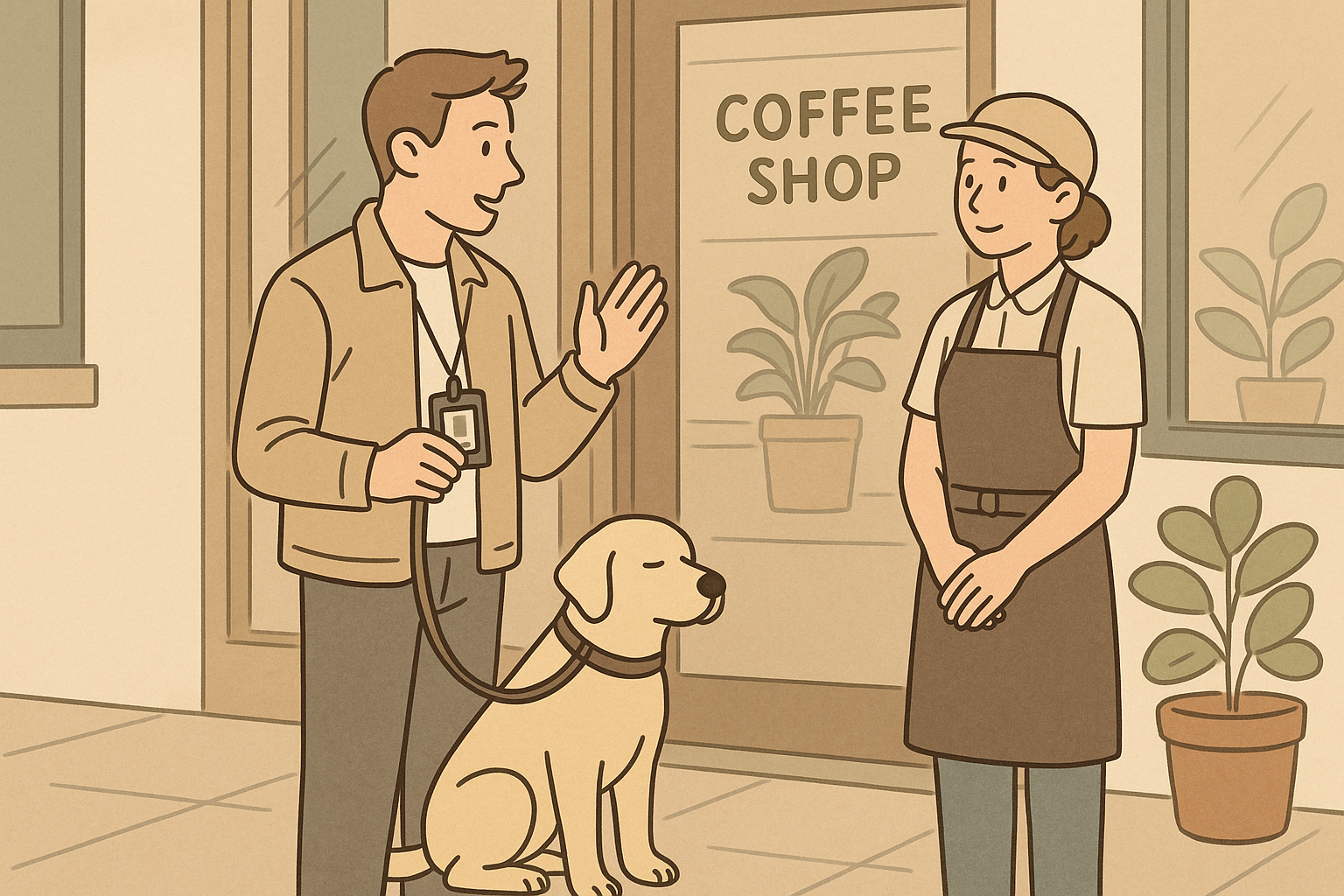
Even when you understand the differences between service dogs, ESAs, and therapy dogs, the outside world doesn’t always. That’s where a consistent registration and ID can be a practical tool—helping you present your animal’s information clearly and reducing confusion in everyday interactions.
In real life, handlers and owners often run into moments where quick clarity helps: a new building’s front desk, a security guard who’s never met you, a travel check-in, or a property manager trying to follow internal policy. Having an ID card and a consistent way to share key details can make these moments smoother and less emotional.
Choosing the right category starts with an honest look at your goals. The best fit is usually the one that matches what you need your animal to do and where you expect to go.
“ "Once I stopped using the terms interchangeably and focused on what I actually needed day-to-day, everything got simpler—training goals, conversations, and planning." – Service and support animal owner”
When you’re ready to make life with your animal smoother, a little organization goes a long way. The goal is to reduce stressful surprises by knowing your category, practicing good manners, and keeping key info easy to access.
If you ever find yourself stuck in a long explanation at a doorway or check-in counter, a simple printed reference can also help keep conversations calm and brief. Some handlers carry ADA law handout cards for smoother conversations so they can share consistent information without escalating the moment.
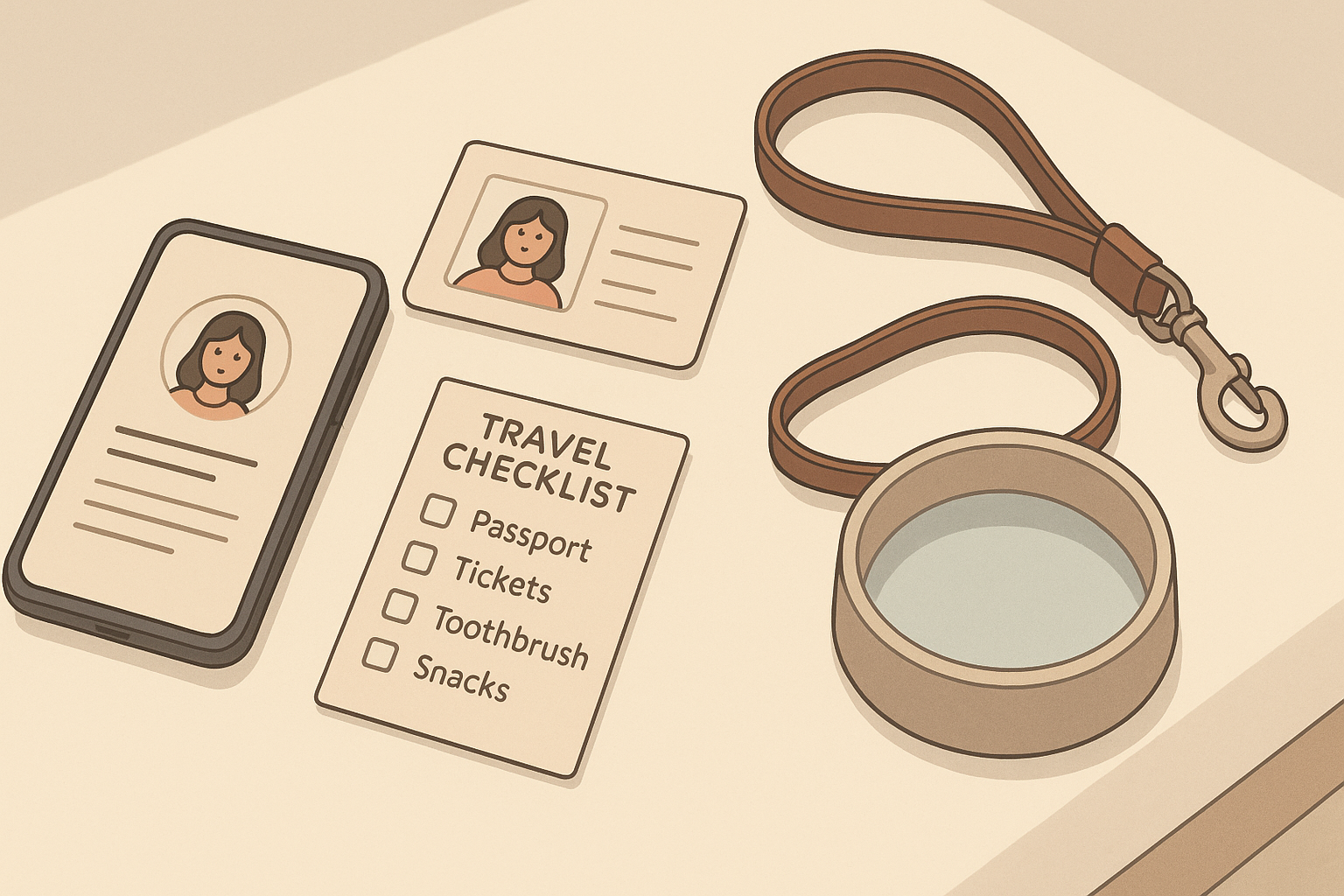
Many service dog handlers use simple identification tools to stay organized and reduce misunderstandings—especially in unfamiliar places. These tools are convenience-focused: they help you present your information consistently and keep important details easy to pull up when you need them.
If you’re looking for a simple way to keep those essentials together, consider a starter service dog registration package for everyday identification so you can head into daily outings feeling prepared and confident.
Your trusted source for service animal registration. Get professional ID cards, digital profiles, and smart NFC tags to keep your service animal safe and recognized.
© National Animal Registry — All rights reserved.