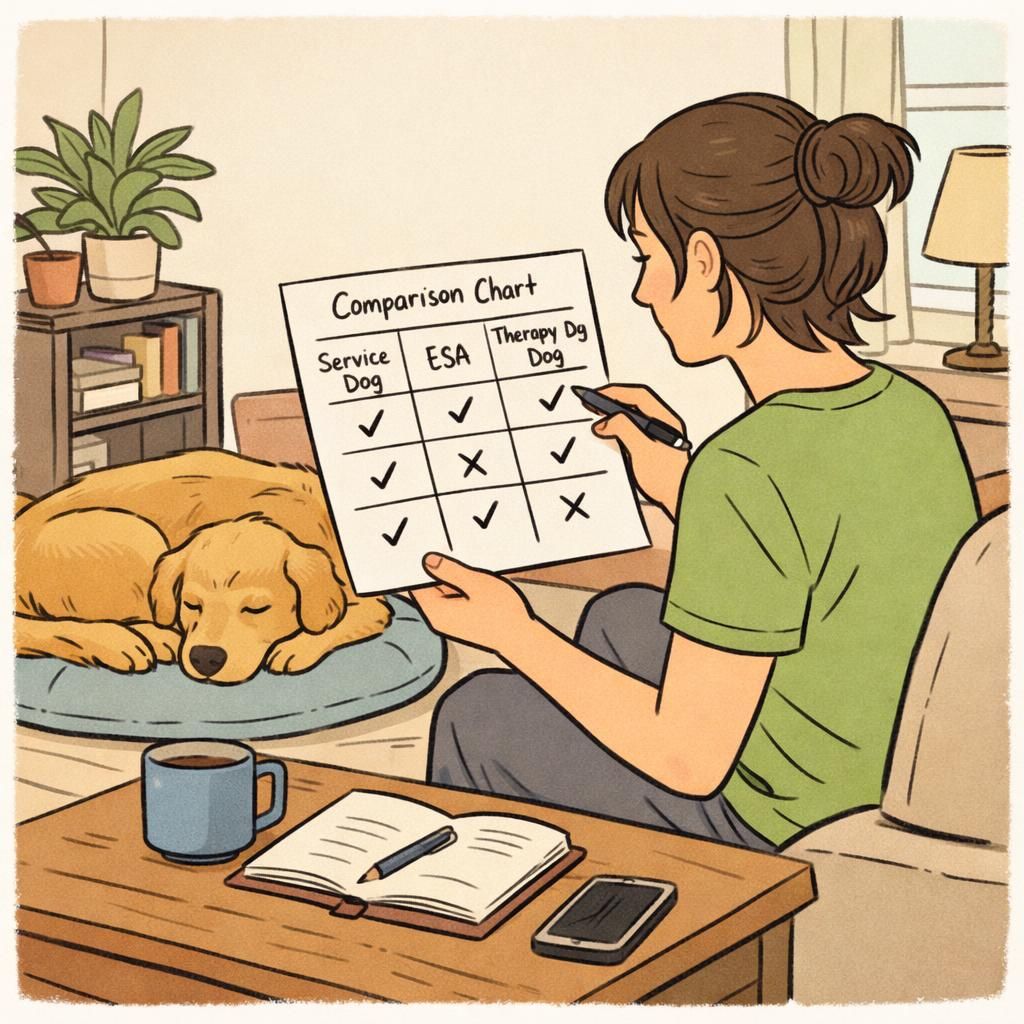
In everyday conversation, people often use “support animal” as a catch-all phrase. Sometimes they mean a dog that provides emotional comfort at home, sometimes they mean a dog that helps with a disability in public, and sometimes they even mean a friendly dog that visits hospitals or schools. The overlap in language is understandable—but the category matters, because different roles come with different expectations and, in many situations, different rules.
Getting the label right helps everyone. For handlers, it can reduce awkward conversations and help you advocate for your needs in a calm, confident way. For businesses and the general public, it sets clear expectations about behavior and access. And for landlords or travel providers, it helps guide the right paperwork, policies, and planning steps.
A service dog is a dog individually trained to perform specific tasks that help a person with a disability. The key idea is task work: the dog is trained to do something purposeful that reduces the impact of a disability in daily life. Service dogs are often described as working partners because they provide reliable, trained help during real-world routines—at home, at work, and out in public.
Tasks can look very different depending on the handler’s needs. Some tasks are highly visible (like guiding), while others are subtle (like interrupting a symptom or alerting to a change in a person’s condition). What matters is that the dog is trained to take specific actions that support the handler.
“ "A service dog isn’t just a comforting presence—task training is what turns a helpful dog into a consistent working partner."”
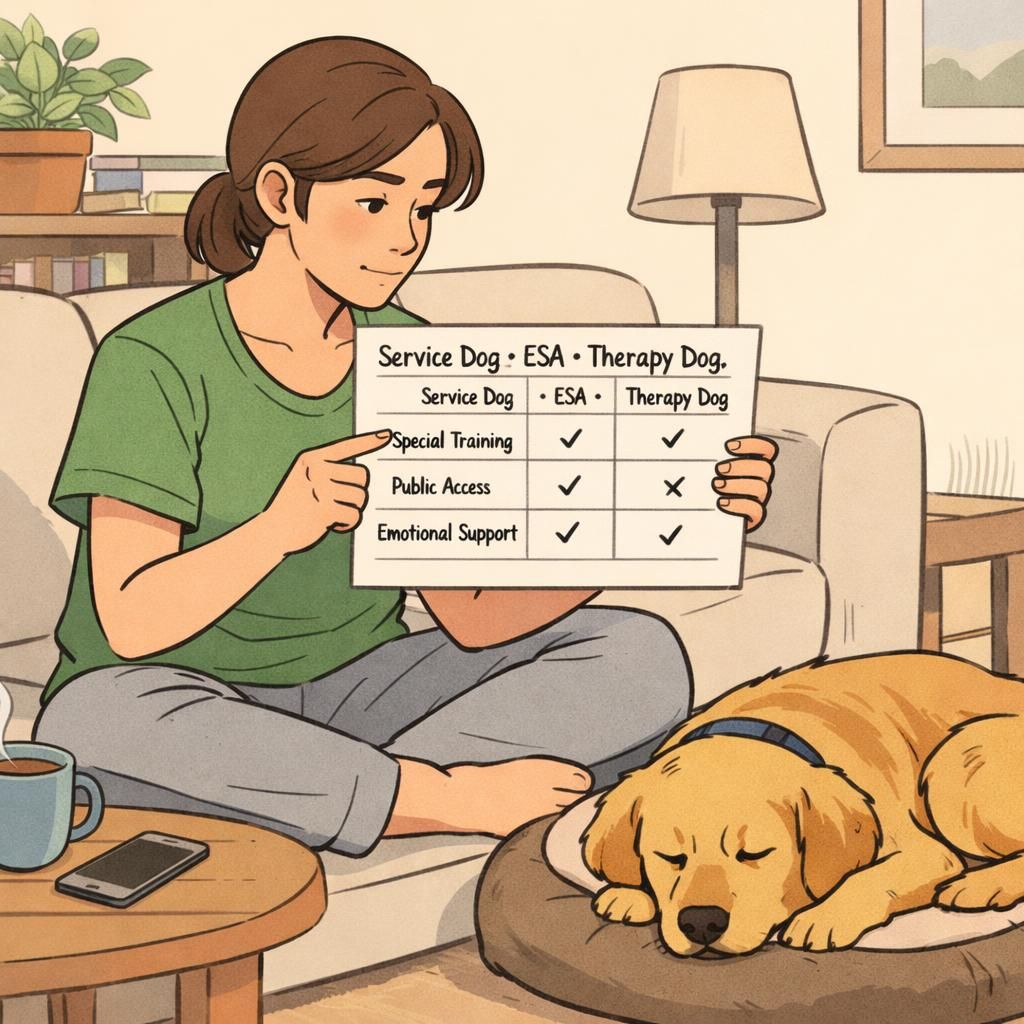
An emotional support animal (ESA) provides comfort, companionship, and a sense of stability that can support a person’s emotional well-being. Unlike service dogs, ESAs do not need specialized task training. Their value is often in their presence: being a steady, calming companion during day-to-day life, especially at home.
Many people describe their ESA as an important part of their mental and emotional health routine. An ESA may help someone feel more grounded, less isolated, and more able to manage stressful moments. In practice, ESA discussions most often come up in housing contexts, where people are trying to live successfully with the support of their animal.
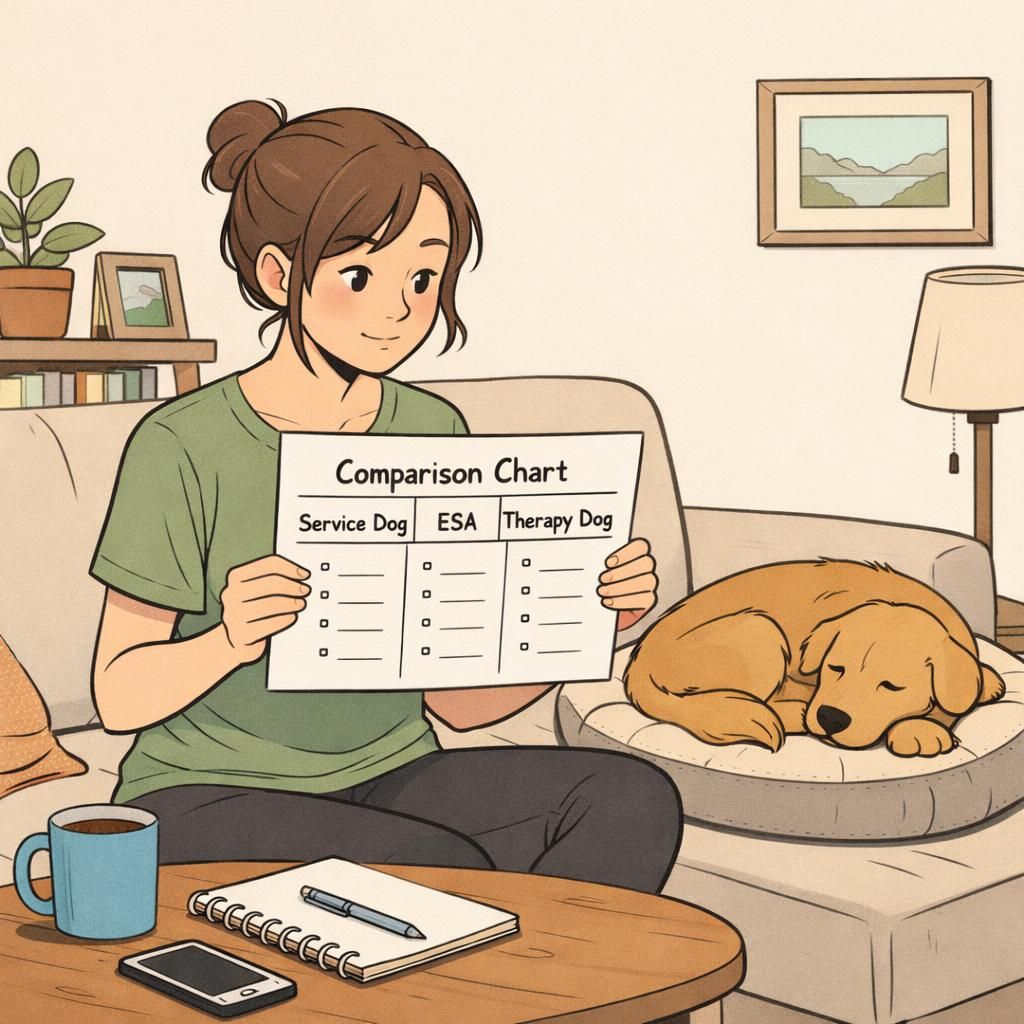
If you’ve ever wondered, “Which one do I have?” this quick comparison can help. While people sometimes say “support animal” to mean several different roles, most confusion disappears when you focus on two questions: Is the dog trained to perform specific tasks related to a disability? Or is the animal there primarily for comfort and companionship?
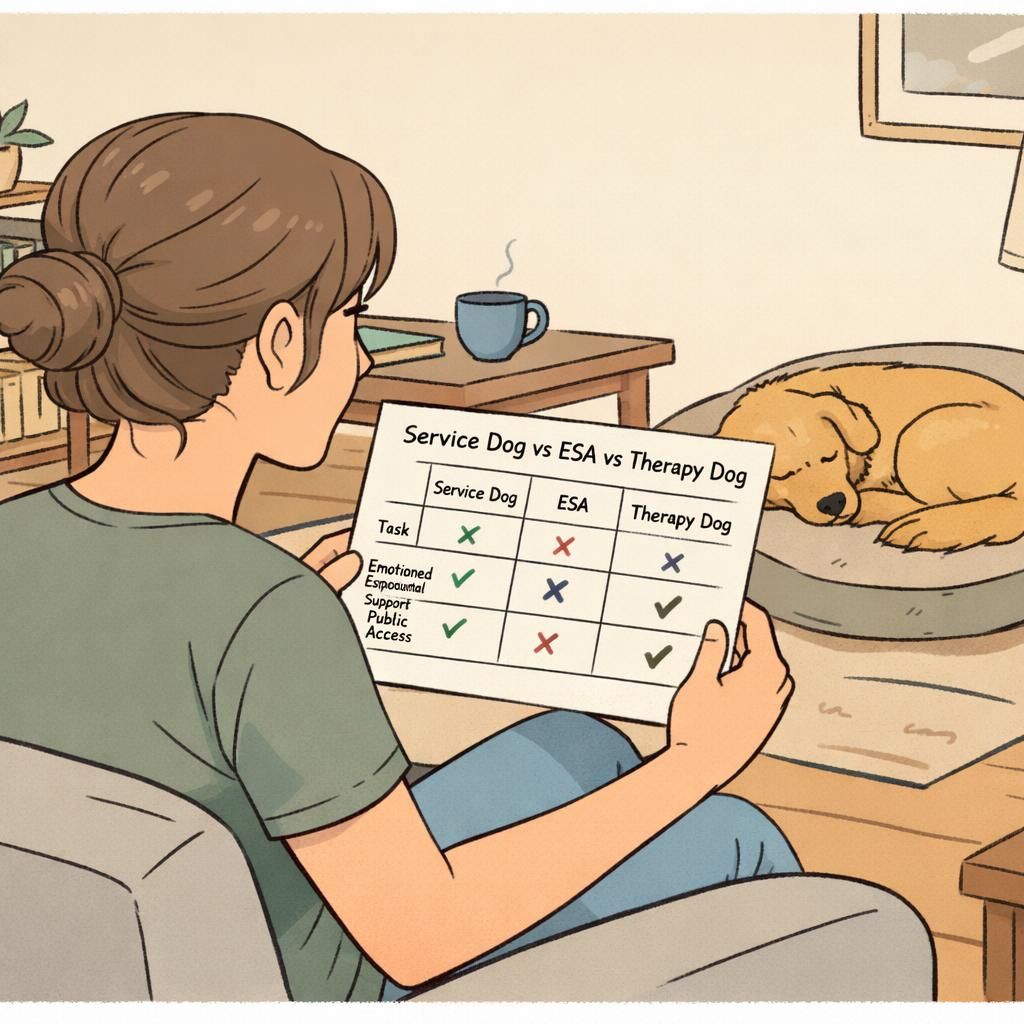
Public access is where the differences between service dogs and support animals are most noticeable in daily life. Under the ADA framework, service animals are dogs trained to perform tasks related to a person’s disability, and they generally have access rights in public accommodations like many stores and restaurants. For more detail directly from the ADA, you can review this guidance: source.
With those access rights also comes a practical expectation: the dog should be under control and able to behave appropriately in public. A well-prepared team helps everyone feel comfortable—staff, other customers, and the handler. In many real-world situations, smooth public access is less about “winning an argument” and more about calm communication and predictable, unobtrusive behavior.
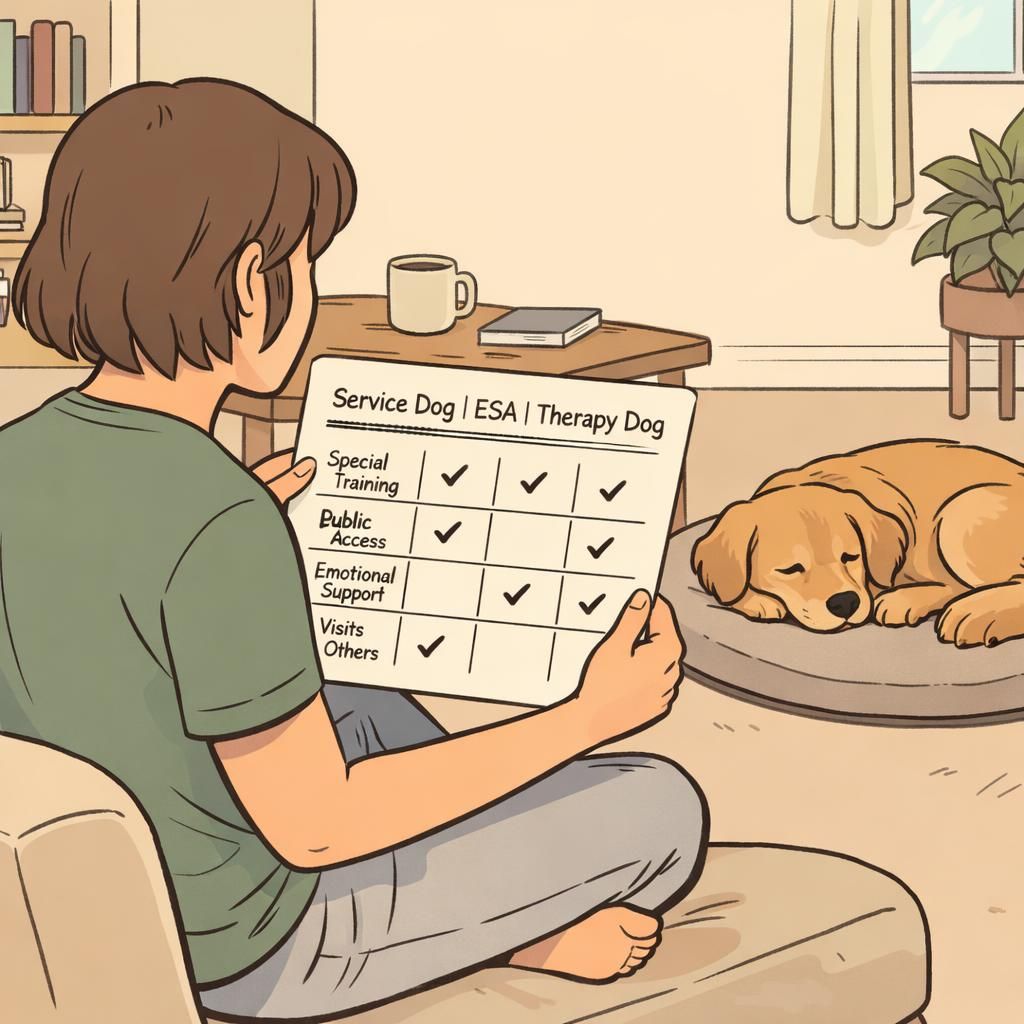
Housing and travel are two areas where planning ahead can make a big difference. Policies and processes can vary based on where you live, who you rent from, and which airline or travel provider you use. Even when you’re confident about your animal’s role, it helps to be organized and proactive so your move-in or trip doesn’t turn into a last-minute scramble.
A good approach is to think in terms of communication and timing: reach out early, ask what the provider needs from you, and keep your information consistent. If you’re traveling with a service dog, you may also appreciate practical preparation ideas like travel planning tips for service dog handlers.
Therapy dogs are often part of the confusion, because they also provide comfort—but in a different way. A therapy dog typically works with a handler to comfort many people in settings like schools, hospitals, libraries, or community programs. The focus is on supporting others, not on trained tasks for one specific person with a disability.
A service dog, on the other hand, is trained to assist one handler through specific task work related to a disability. An ESA provides comfort-based companionship—commonly in home life and housing-related contexts—without specialized task training. Choosing the correct label for your dog’s role helps set accurate expectations and keeps interactions simpler and more respectful.
Even when you’re fully in the right, real life can be messy. A new employee at a shop may not understand what a service dog is. A landlord may use outdated language. A well-meaning stranger may ask personal questions. Having a calm, consistent way to explain your situation can reduce friction and keep you focused on your day.
Many handlers like to keep short, simple materials on hand—especially in busy environments—so they don’t have to explain everything repeatedly. Some people choose to carry ADA information handout cards for easier conversations as a quick, respectful way to share general information without escalating the moment.
Try: “This is my service dog. We’re here to shop/eat, and my dog will stay under control.” If needed, you can add: “My dog is trained to assist me with a disability.” Keep it calm and brief.
Try: “I keep my medical information private, but thank you for understanding.” Then redirect to what matters: “My dog is trained to assist me and will remain well-behaved.”
Try: “I understand the confusion. My dog is trained to assist me, and we’ll be out of your way.” Then focus on your task and avoid getting pulled into an argument.
“ "When I stopped over-explaining and started using one calm sentence, my public interactions became much smoother." – Service dog handler”
Many handlers and owners find that optional documentation and identification tools make everyday life more predictable. In busy public settings, during housing conversations, or while travel planning, having consistent information ready can reduce back-and-forth and help you feel organized. These tools can also be helpful for caregivers or family members who may need to communicate on your behalf.
Some people choose an ID card, a digital profile, or a certificate simply because it creates a single, consistent place to keep key details—especially when you’re juggling moving timelines, trip logistics, or repeated questions. If you’re looking for an all-in-one option, consider a starter registration package for everyday identification to support clear communication and confidence.
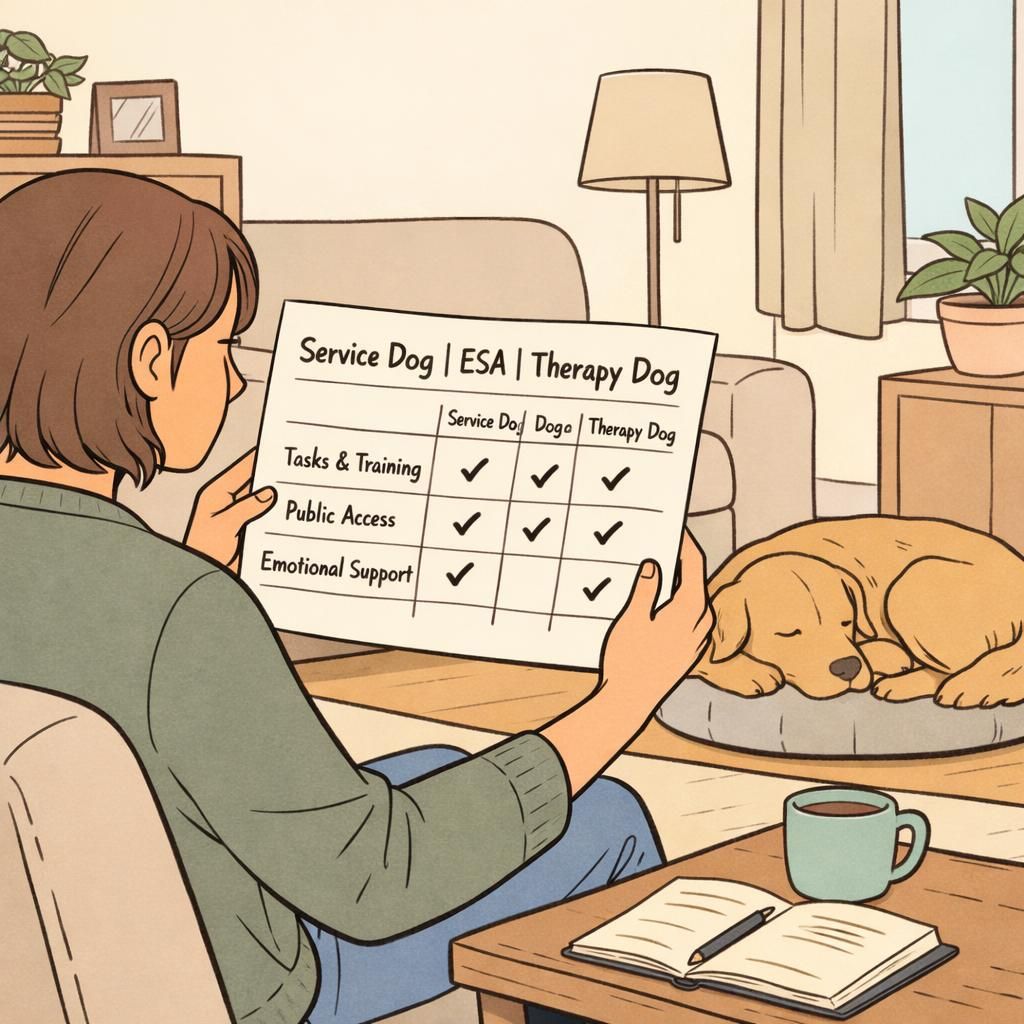
If you’re trying to decide which label fits best, start with the animal’s role in your daily life. The simplest decision point is whether your dog performs trained tasks that help with a disability, or whether your animal’s primary benefit is emotional comfort and companionship.
It can also help to think about your most common scenarios. Do you need reliable support during public errands? Are your biggest challenges tied to housing stability? Do you travel often? The more clearly you can define where and how your animal supports you, the easier it is to choose the right category and prepare for the conversations that come with it.
A dog can absolutely provide comfort and companionship, even when they are task-trained. In most conversations, it helps to lead with the role that matches the situation—especially in public access contexts where task-trained service work is the key distinction.
That’s common. Some people start with comfort-focused support and later pursue task training, while others adjust routines as life changes. Revisit your goals occasionally and keep your communication consistent with your current needs.
Your trusted source for service animal registration. Get professional ID cards, digital profiles, and smart NFC tags to keep your service animal safe and recognized.
© National Animal Registry — All rights reserved.