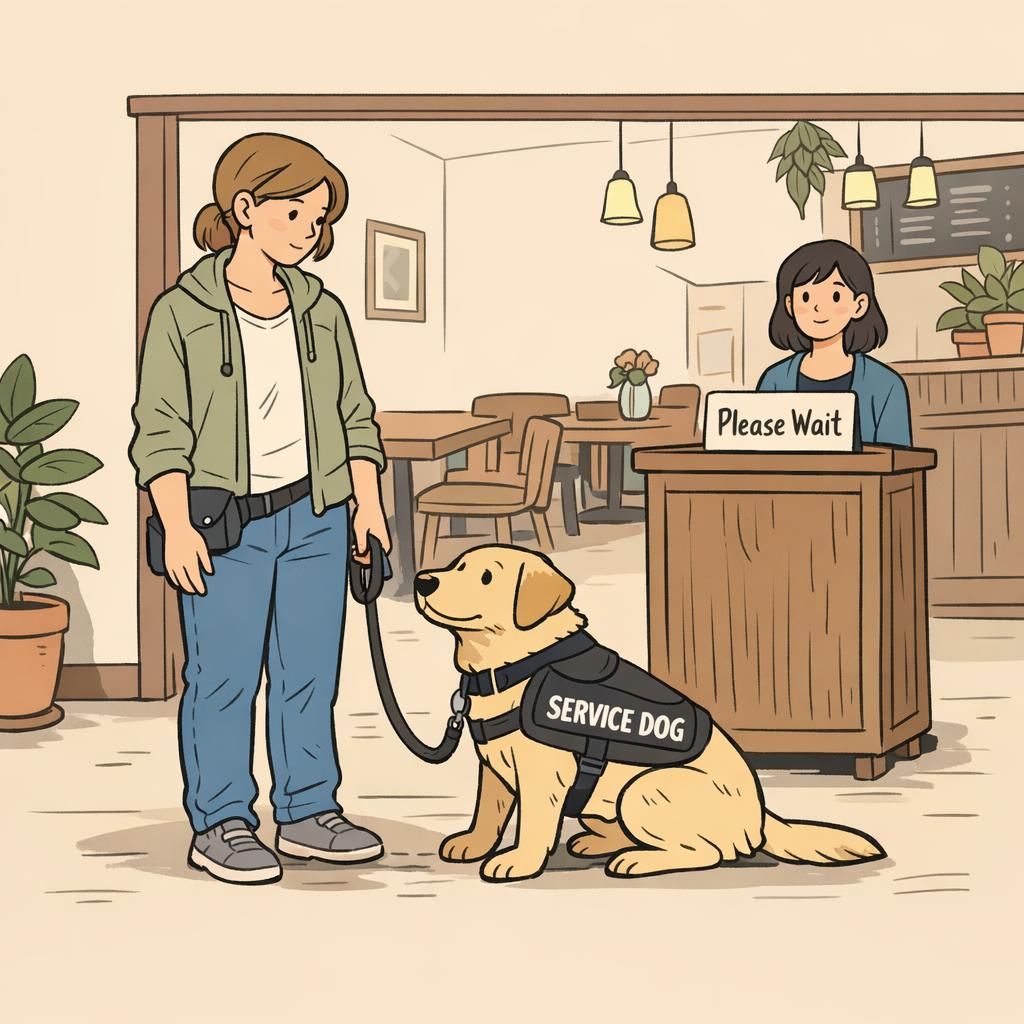
Service dog vests and ID cards are best understood as communication tools. They can quickly signal that a dog is working, which helps set expectations about behavior (staying focused, not being distracted) and helps people understand why the dog is present in a public place.
In day-to-day life, most access issues start with uncertainty—not hostility. A visible vest can reduce the "Is that pet allowed here?" moment before it turns into an awkward conversation. An ID card can support calm, clear communication when someone needs reassurance, especially in busy environments where staff are trying to follow policy.
Public access rights for service animals come from laws and regulations—not from purchasing a vest, downloading a badge, or carrying a card. In other words, accessories can support communication, but the legal standards that determine access are created and enforced through federal, state, and local rules.
Because terminology and requirements can vary by location, handlers benefit from knowing which rules apply where they live and where they travel. For example, certain settings (like housing or air travel) may have different policies, documentation preferences, or processes than routine errands. Understanding the differences helps you prepare without feeling caught off guard.
No. Legal access rights come from applicable laws. Vests and IDs can still be very helpful as practical identification tools during everyday interactions.
Not always. Federal rules may apply broadly, but state and local laws and specific venue policies can influence how situations are handled. Planning ahead helps reduce stress.
People often search for “service dog vest law” because they want a clear, simple rule: “If my dog wears a vest, we’re allowed,” or “If my dog doesn’t wear a vest, we’re not.” In real life, the legal theme in many jurisdictions is more practical: a service dog is typically recognized based on legal definitions and behavior standards—not on whether the dog is wearing a specific vest, patch, or ID.
That said, choosing visible identification can still be a smart decision. Many handlers use vests, patches, and IDs to avoid repeated questions, reduce unwanted attention, and keep the focus on the dog’s work. In other words, even when an item is not legally required, it can be socially useful.
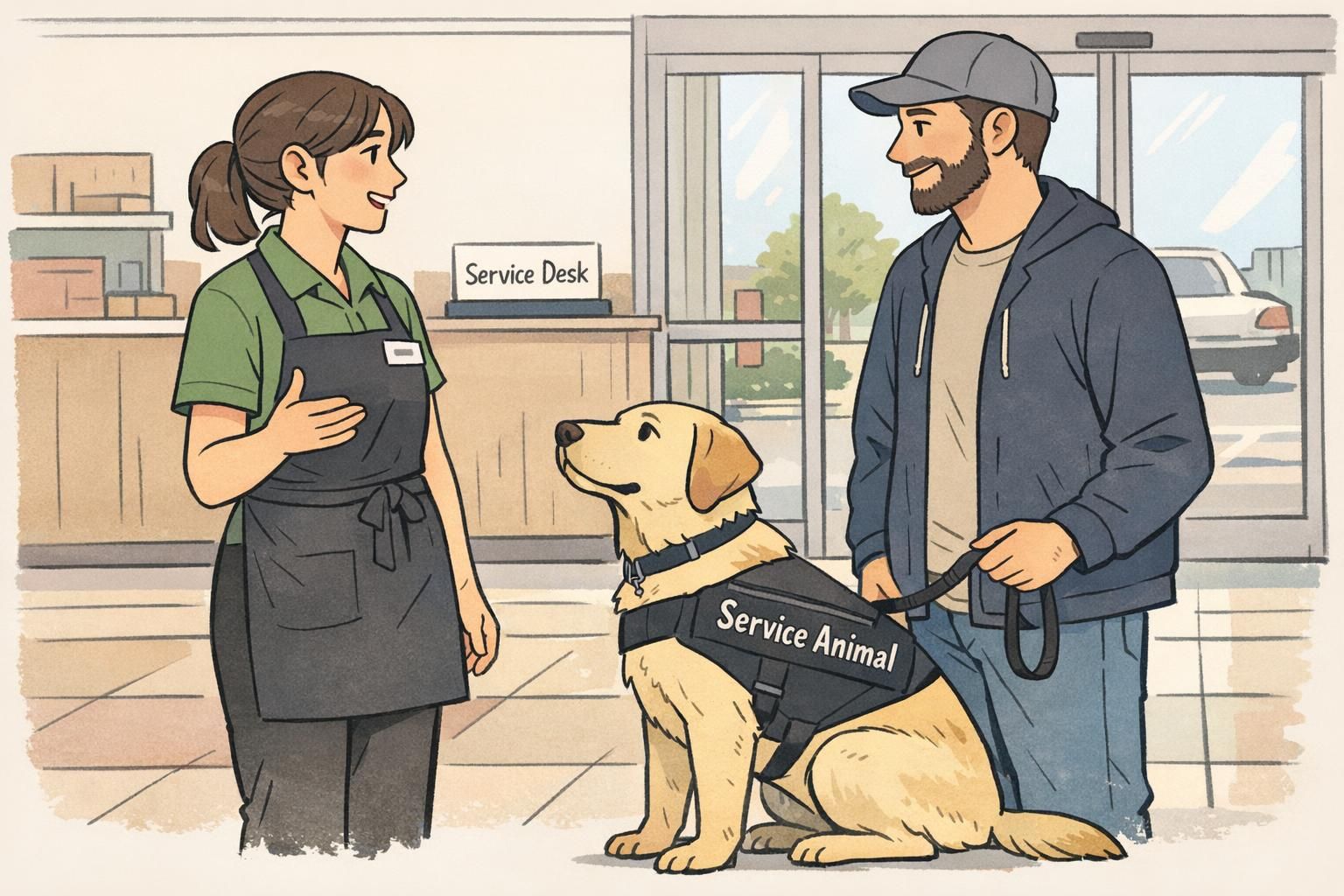
In many everyday public-access moments—entering a store, ordering food, checking into a hotel—staff are balancing customer service with policy. Misunderstandings happen most often when an employee is unsure what they’re allowed to ask or what they’re supposed to do next.
Under ADA-aligned guidance, staff typically focus on a short, limited set of questions when it’s not obvious a dog is working, and they can also expect the dog to be under control and housebroken. Importantly, the ADA does not require service dogs to wear a vest or for handlers to carry an ID. If you want to read the ADA’s service animal requirements directly, you can review this source.
Even though an ID doesn’t replace the legal standard, it can still help the conversation stay calm and quick. Some handlers choose to share a simple informational card rather than debate policy at the door. This approach can be especially useful in loud, busy environments where it’s hard to talk or where a line is forming behind you.
If you prefer a simple way to share clear, ADA-aligned information during access questions, some handlers keep ADA law handout cards to share during access questions with their wallet or leash bag. Think of them as a courtesy tool: they can reduce conflict, save time, and help everyone feel more confident about the interaction.
Many handlers choose consistent documentation and identification because it makes everyday life simpler. Registration and IDs can provide a standardized way to present key details quickly—especially when you’re tired, in a hurry, managing symptoms, or trying to avoid a long conversation in public.
Practical value matters. While laws define rights, routines define your day. A consistent ID can support smoother check-ins, clearer communication, and a more professional, organized experience in settings like housing inquiries, travel planning, and public spaces where staff turnover and policy confusion are common.
“ "Having a consistent ID and registration profile didn’t change our rights—but it changed how smoothly our day went. The conversations got shorter and calmer." – Service dog handler”
For handlers who want a straightforward option for everyday identification and peace of mind, National Animal Registry offers a starter registration package for everyday identification that includes a printed card and a matching digital profile.
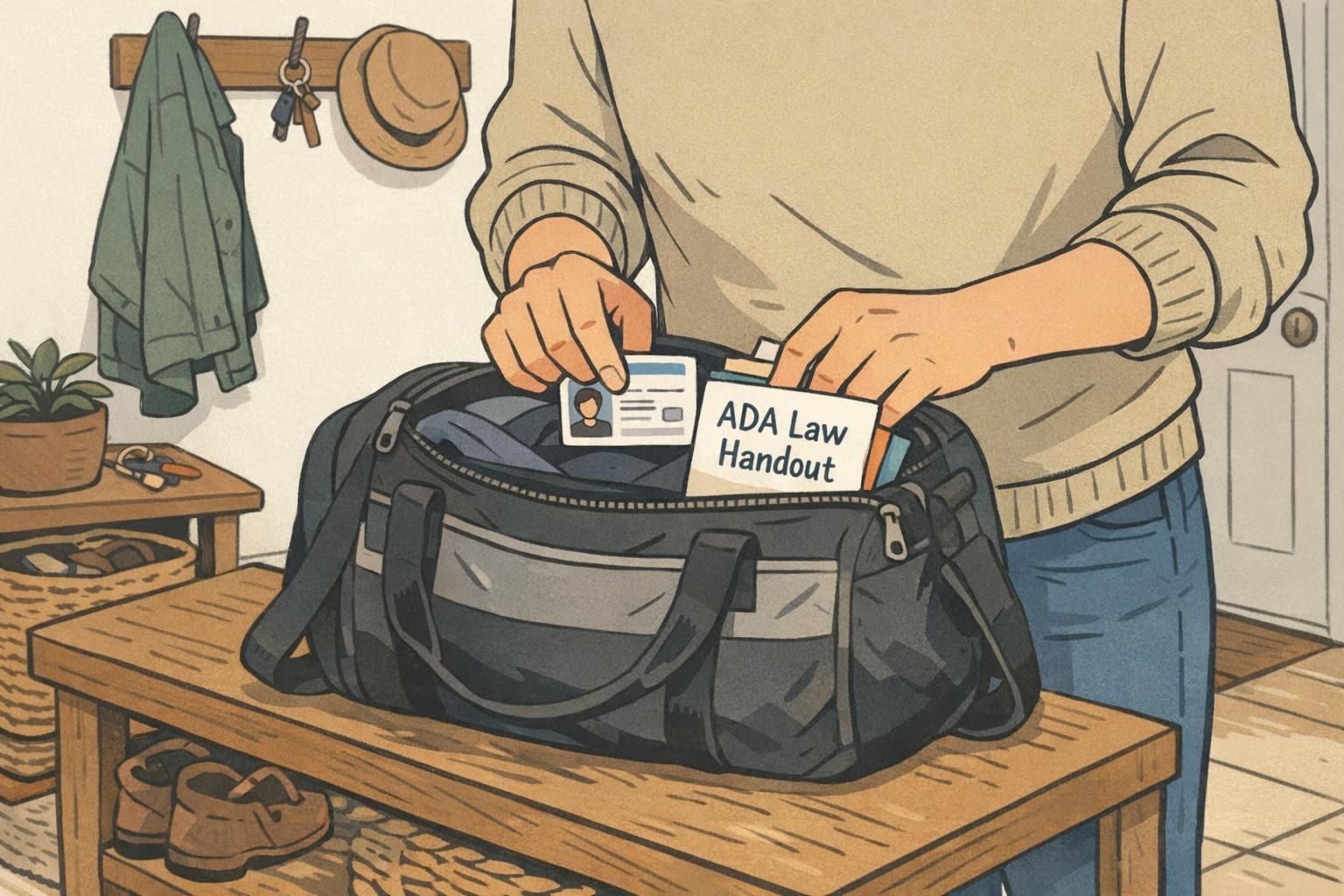
Clear identification doesn’t guarantee that you’ll never be questioned—but it often changes the tone and length of the interaction. The goal is simple: keep the focus on a calm, well-behaved dog and a respectful exchange.
In each of these situations, the best “tool” is a calm team: a dog that remains under control and a handler who communicates clearly. Visible identifiers and ready-to-share information simply make those moments more predictable.
If you’re planning a trip and want more practical tips for routines on the road, see our guide on traveling with a service dog.
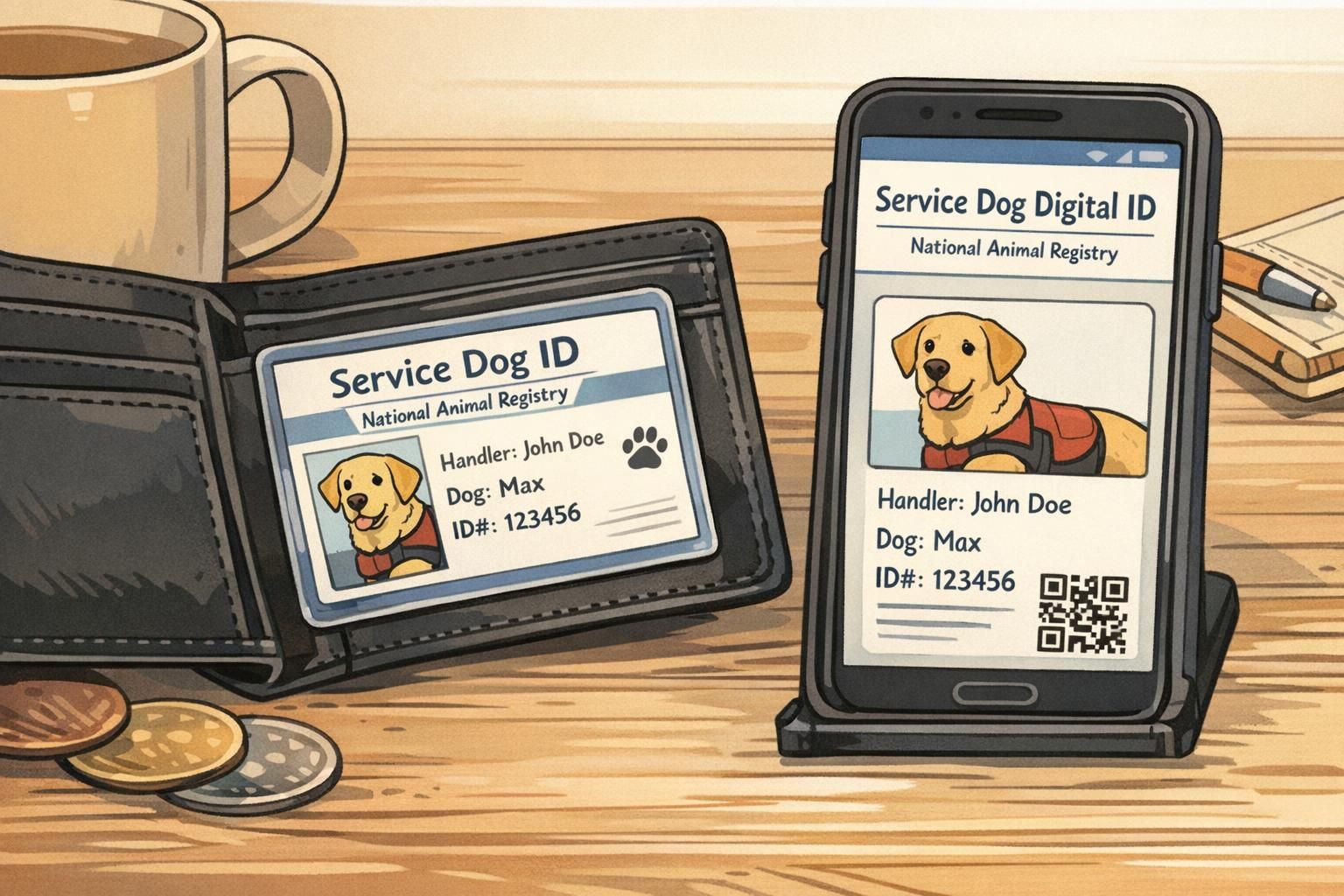
The best identification option is the one you’ll actually use consistently. Some handlers prefer a printed card they can hand over quickly. Others like a digital ID they can pull up on a phone without digging through a wallet or bag. Many people choose both so they can adapt to different situations.
For a flexible option that includes both formats, some handlers choose a customizable printed service dog ID with a matching digital profile so they can present information in the way that feels easiest in the moment.
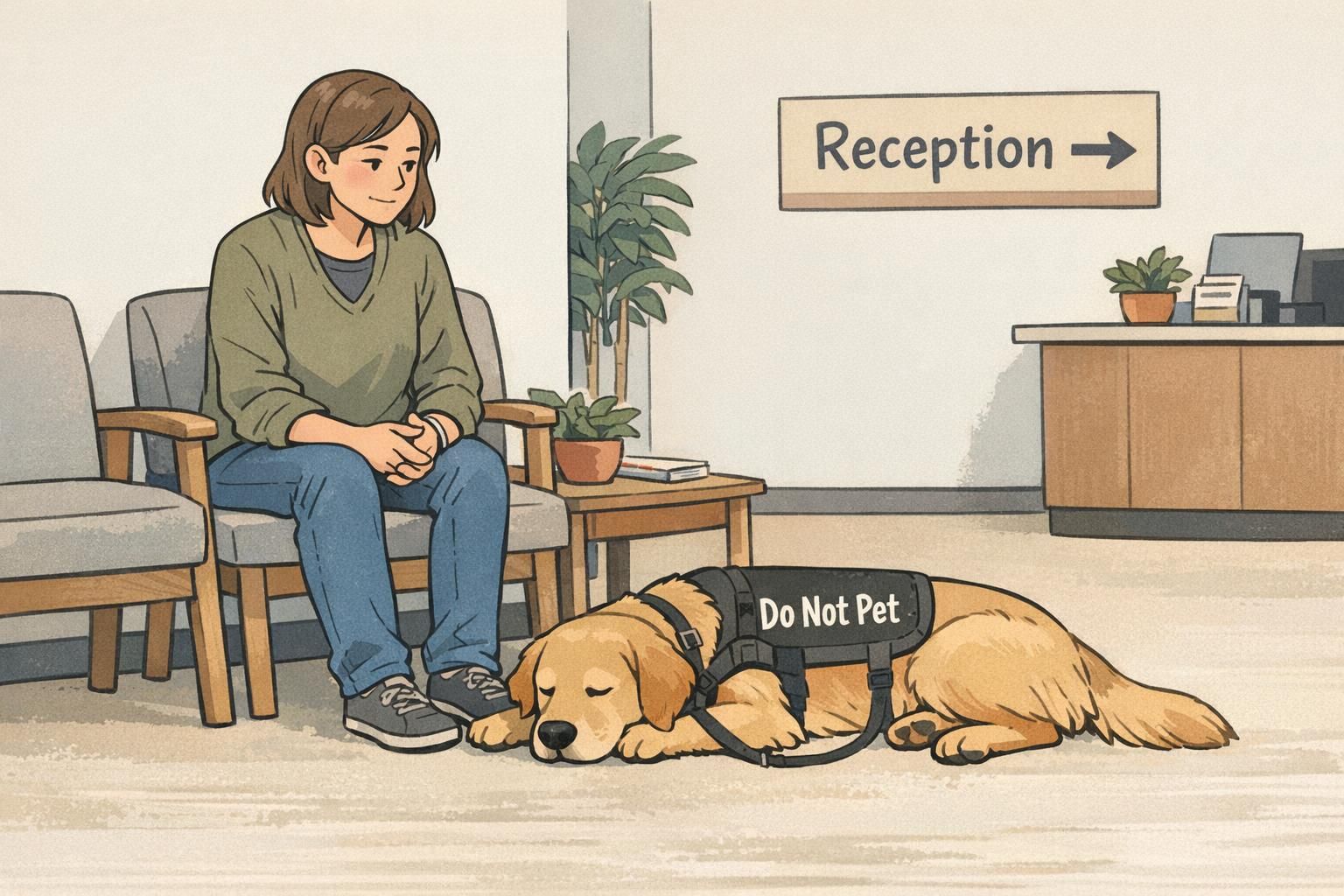
Travel and housing tend to involve more steps than a quick trip to the store. Even when rights are protected by law, you may still run into practical hurdles: different policies from one location to the next, staff who are unfamiliar with the rules, or extra paperwork and back-and-forth communication.
That’s where optional documentation can feel less like “extra” and more like organization. Having your key information ready—such as an ID, a digital profile, and simple informational materials—can reduce delays and help you respond confidently if questions come up during booking, check-in, or move-in.
For handlers who want a single, travel-focused bundle to keep everything organized, National Animal Registry offers a travel-ready service dog registration package designed to support smoother, more confident travel experiences.
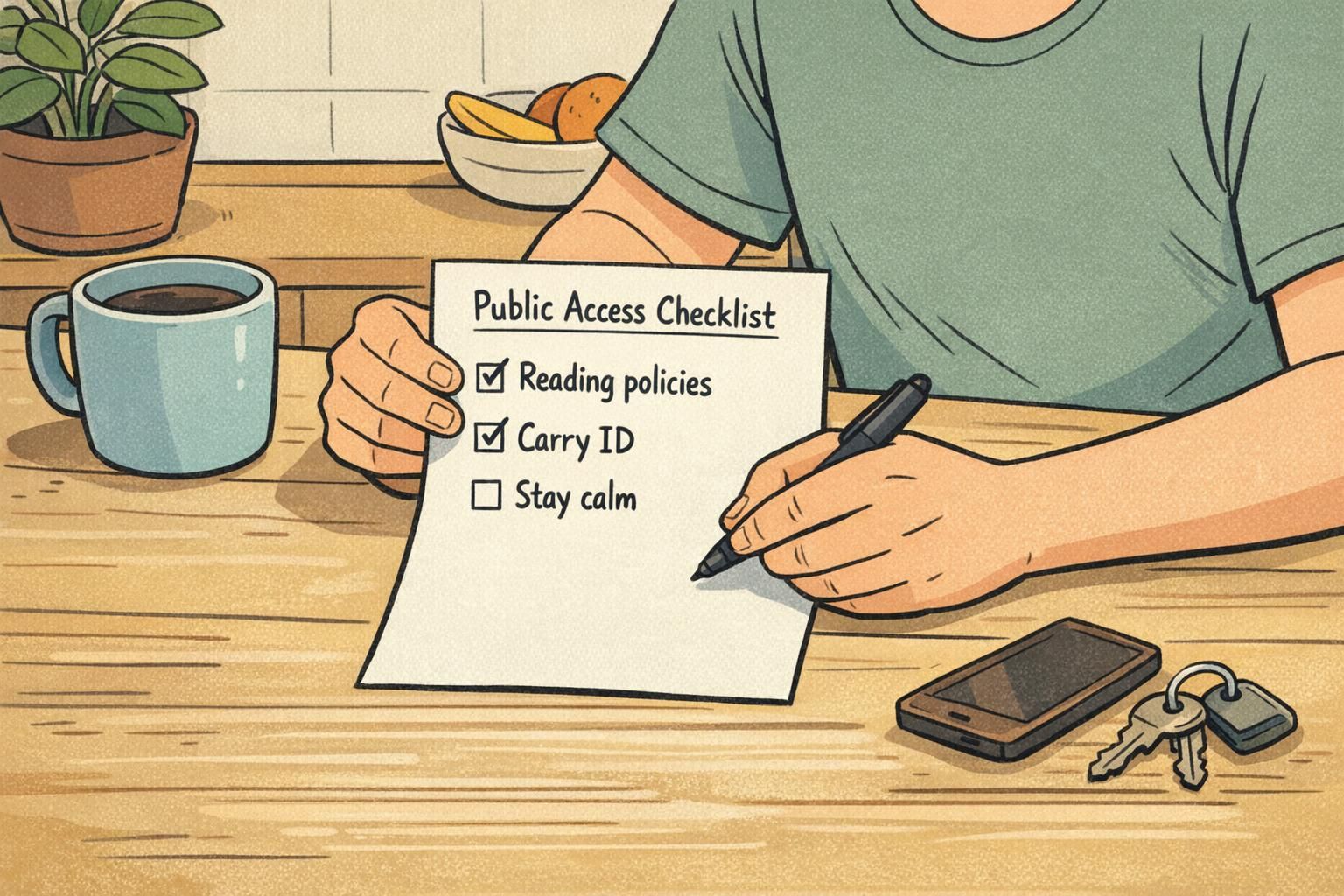
When access questions happen, it helps to have a plan. The most effective approach is a combination of lawful awareness, a well-managed dog, and calm communication. Vests and IDs can support that communication, but legal rights come from the laws that apply to the setting you’re in.
Your trusted source for service animal registration. Get professional ID cards, digital profiles, and smart NFC tags to keep your service animal safe and recognized.
© National Animal Registry — All rights reserved.