
Most service dog teams aren’t thinking about “visibility” as a concept while they’re out living life. They’re thinking about the next step: making it through the store entrance without a crowd forming, navigating a tight sidewalk without someone stepping into the dog’s space, or sitting in a lobby without repeated interruptions. In those everyday moments, a service dog vest can function like a quiet, practical signal that helps the public understand what’s happening: this dog is working.
Picture a few quick snapshots. A door opens at a busy shop, and a staff member instinctively steps aside instead of reaching for the dog. On a sidewalk, a passerby notices the vest patch and gives the team an extra foot of room. In a waiting area, the dog settles at the handler’s feet, and people who might have leaned in to talk to the dog choose to keep their distance. None of these moments are dramatic. That’s the point: vests can help routines stay routine.
A service dog vest is, first and foremost, a communication tool. It offers public identification in a way that’s clear and respectful—without requiring the handler to repeatedly explain personal details to strangers. When a vest includes visible patches (like “Service Dog” or “Do Not Pet”), it can help staff and bystanders adjust their behavior quickly: give space, avoid distracting the dog, and let the team move through normally.
Vests are also practical equipment. Depending on the style, they may include handles for added stability when appropriate, pockets for small essentials, and high-visibility colors or reflective trim for safety. In other words, they can help the dog do its job comfortably while also helping the public do the right thing without a long conversation. As noted in this overview of service dog vests, they’re commonly used for identification and functionality, and they’re not legally required under the ADA: source.
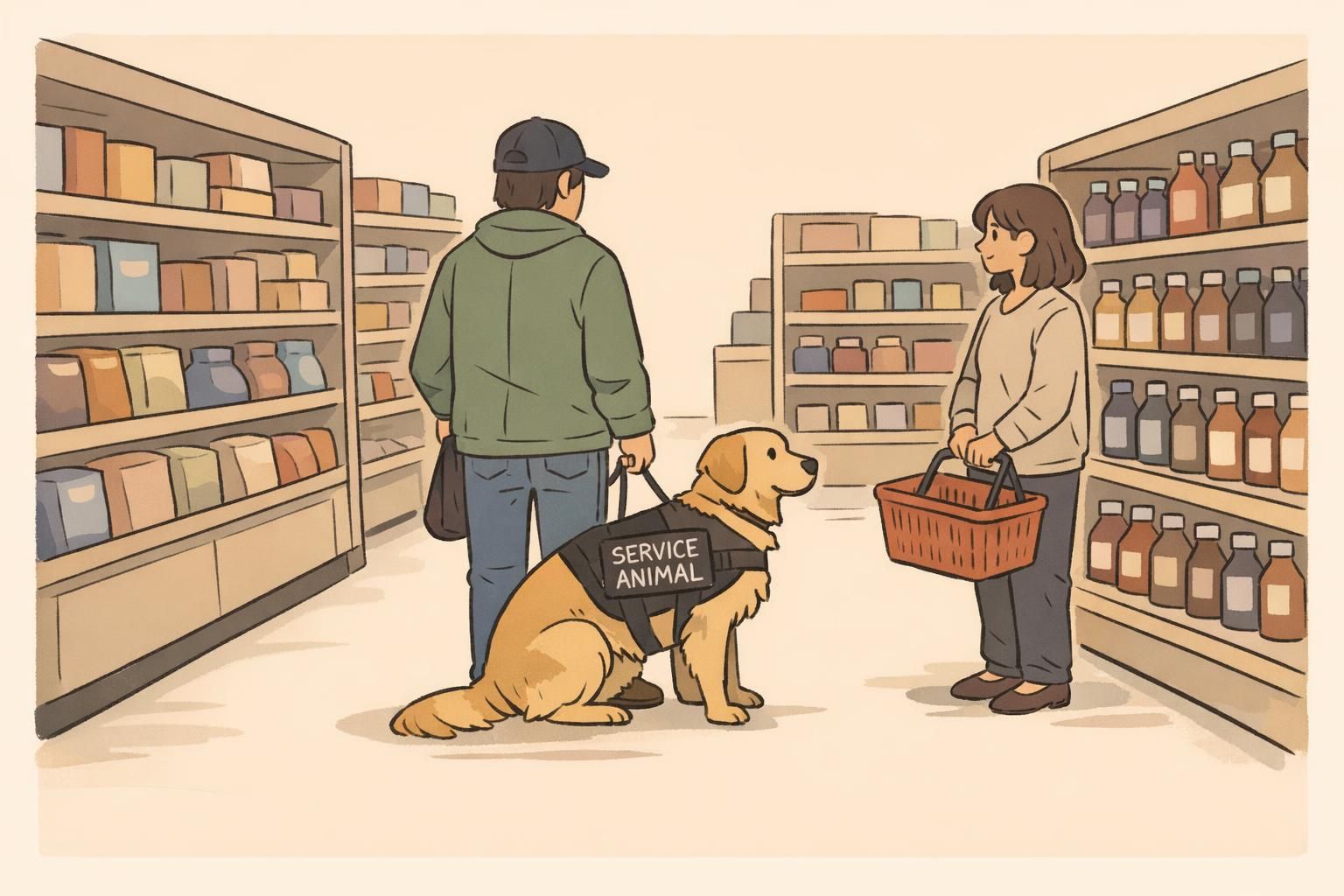
A grocery store is a perfect test of real-world teamwork: tight aisles, sudden stops, carts that appear from nowhere, and well-meaning people who love dogs. In this story, the goal isn’t an epic victory—it’s simply a smooth errand.
The handler and dog enter together. The dog is in a fitted vest with a clear patch. At the produce section, a shopper smiles and starts to reach out, then notices the patch and pulls their hand back. No awkward moment. No need for the handler to explain. The dog stays focused and continues heeling without breaking attention.
Later, in a narrow aisle, a cart approaches from the opposite direction. The vest makes the dog easier to notice at a glance, and the other shopper pauses—just long enough for the team to pass without anyone feeling rushed. At checkout, the dog tucks into a practiced position close to the handler’s legs, out of the main footpath. The line moves, the dog stays settled, and the entire interaction remains predictable.
“ "The biggest difference wasn’t the store—it was how people behaved around us. The vest helped strangers make the right choice without me having to say much." – Service dog handler”
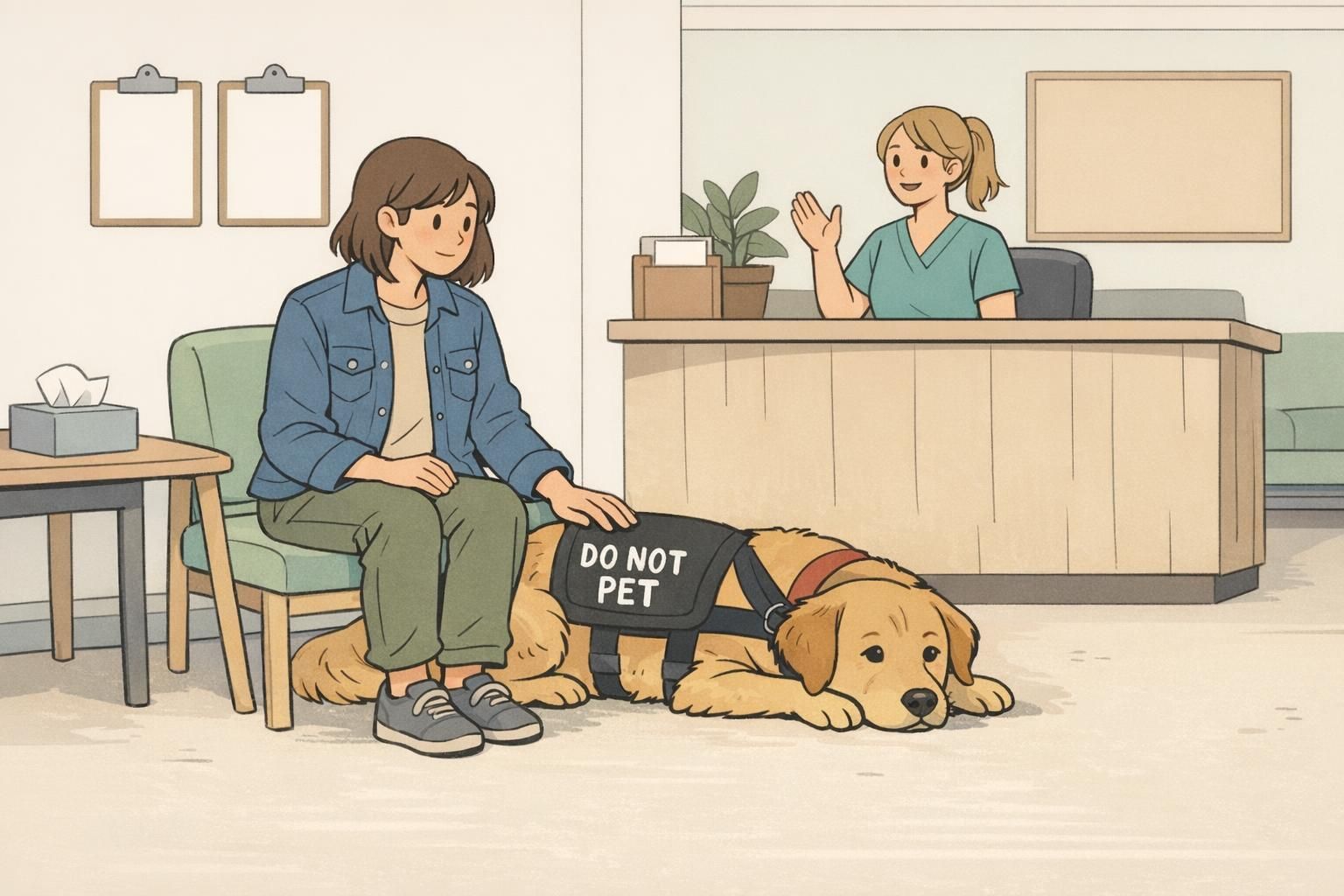
Medical settings add a different kind of pressure. Waiting rooms can be crowded, people may be anxious or moving quickly, and personal space is limited. In this environment, a vest can help reinforce boundaries that protect both the handler and the dog.
In this story, the handler arrives early and checks in. The dog lies down calmly beside the chair, vest visible. A child in the waiting room notices the dog and starts to walk closer. A parent catches sight of a “Do Not Pet” patch and redirects the child with a quick apology. The handler doesn’t have to manage the interaction, and the dog remains in a relaxed down-stay.
Time passes. A staff member comes through the room calling names, stepping around bags and chairs. A well-fitted harness keeps the vest from shifting or rubbing during a longer wait. The dog stays comfortable and ready, rather than restless from constant adjustments.
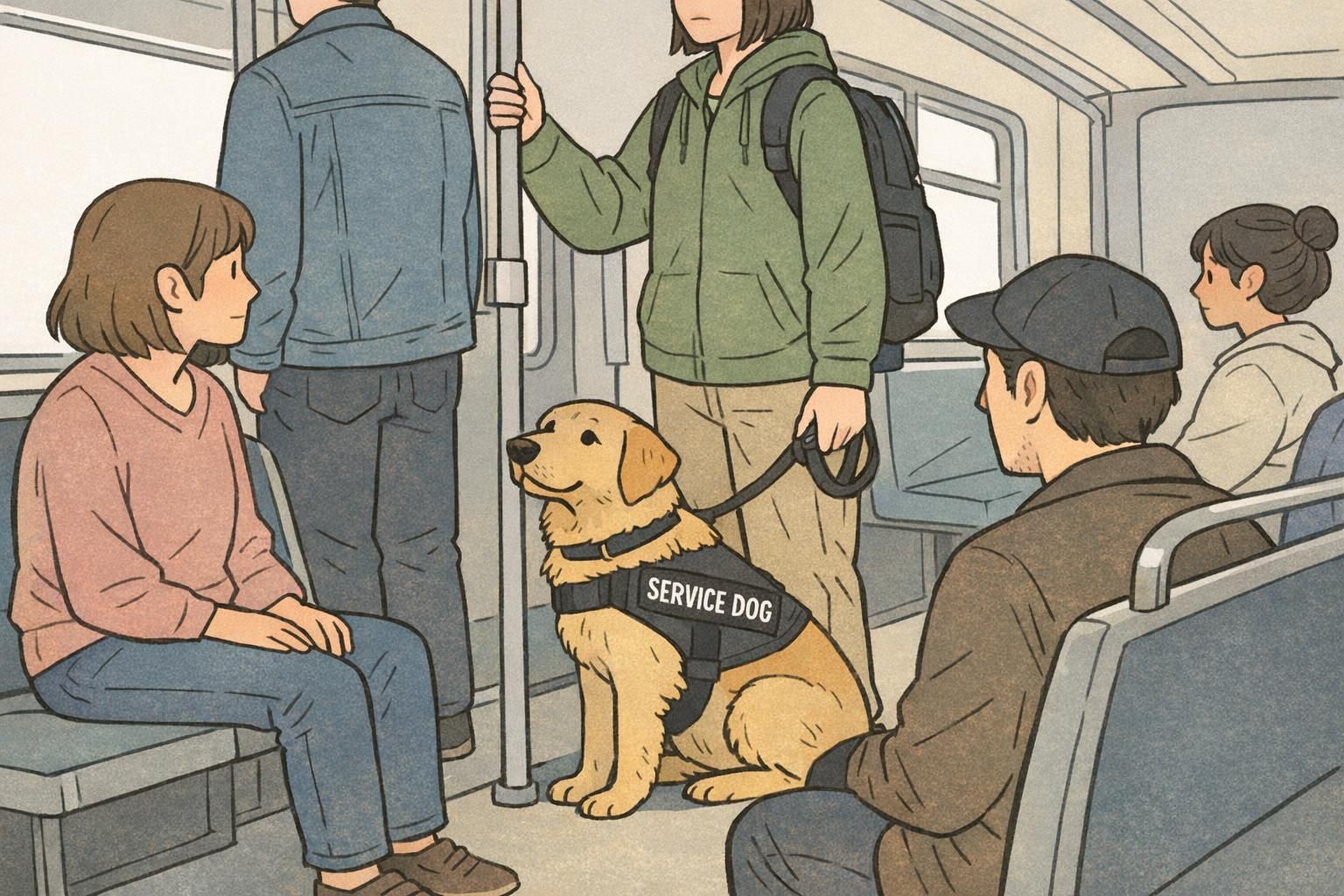
Public transit and city sidewalks demand quick decisions: boarding, stepping aside, finding a safe place to stand, and keeping the dog close without blocking others. In crowded spaces, a vest can act like a simple “working team” marker that reduces friction before it starts.
In this story, the handler approaches a bus stop during a busy commute. The dog sits close, facing forward. As the bus arrives, people line up tightly. The vest patch is visible at eye level, and a couple of passengers instinctively give the team an extra moment to board without squeezing past. Inside, the handler chooses a spot with enough floor space for the dog to settle safely, away from swinging bags and shoes.
The ride includes stops and starts—exactly the kind of movement that can cause a dog to shift. With clear routines (sit, tuck, focus), the dog stays calm. The vest helps prevent the most common interruption of all: strangers attempting to greet the dog when the train or bus is already cramped.
When people shop for a service dog vest, it’s easy to focus on appearance. What tends to matter most, though, is usability—especially when you’re moving through public spaces at real-life speed.
The best features are the ones that reduce decision fatigue. Clear patches answer questions before they’re asked. A well-placed handle can offer an extra point of control in certain situations. Pockets can keep essentials in one consistent location so you’re not digging through bags while also managing the dog.
“ "I don’t need a lot of gear—I need the right gear. A clear patch and a comfortable fit changed how smoothly we move through the day." – Service dog handler”
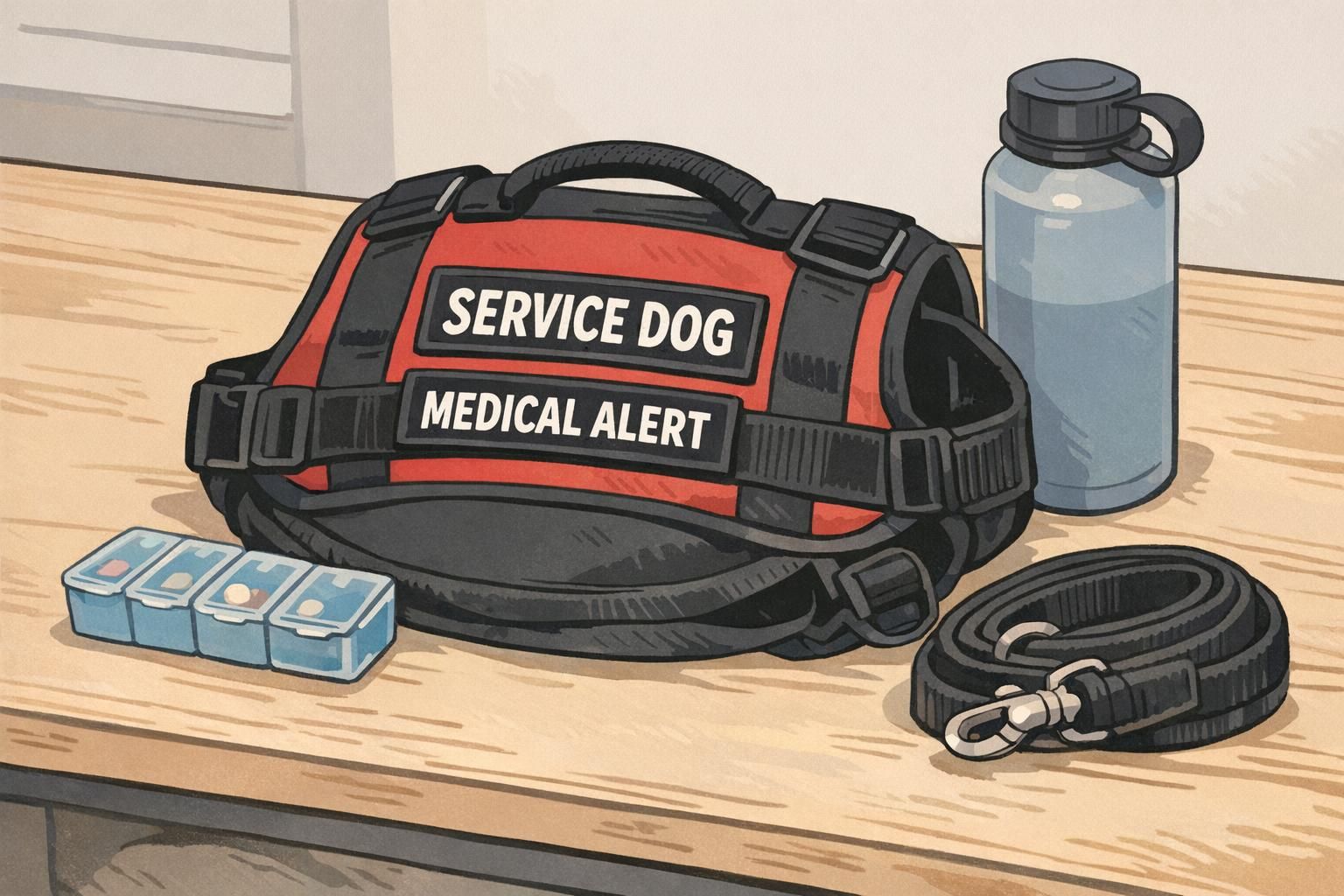
Even the most visible vest won’t help if it isn’t comfortable. Service dogs may wear gear for extended periods, and a good fit supports calm, confident movement—especially during longer outings or high-activity days.
Breathable materials, smooth seams, and light padding can reduce rubbing and heat buildup. Proper sizing matters: too loose and the vest shifts; too tight and it restricts movement or creates pressure points. Climate and coat type matter too—what feels fine in a cool season may be uncomfortable in a warm, humid summer.
It depends on the dog, the vest, and the conditions. Many teams use vests for outings and remove them during breaks. If you notice heat, redness, or restlessness, it may be time for a gear break and a comfort check.
Not necessarily. Stability comes from proper fit and good design. A lighter, well-fitted vest can be more comfortable for long wear while still providing clear identification.
Many handlers choose to use a vest because it makes public interactions smoother, but requirements can vary based on location and context. In practice, vests are widely used as a simple way to signal that a dog is working and to reduce confusion in public spaces.
Even when a vest isn’t required, it can still be helpful. It sets expectations, supports boundaries, and can make access experiences feel less stressful—especially for handlers who prefer not to answer questions repeatedly. The goal isn’t to “prove” anything to strangers; it’s to make day-to-day life calmer and more predictable for the team.
Even with a clear vest, questions can come up—especially in places with new staff, changing policies, or high turnover. Many handlers choose to carry optional identification tools so they can respond quickly and consistently when someone asks what the dog is for or how the team should be accommodated.
This kind of documentation can be especially helpful when you want to keep interactions short and calm. Instead of a long conversation, you can provide a simple, professional point of reference and move on with your day. For many teams, that organization and consistency offers real peace of mind.
If you’re building your everyday setup, consider a starter registration package for everyday identification as a convenient way to keep key details in one place and support smoother conversations when needed.
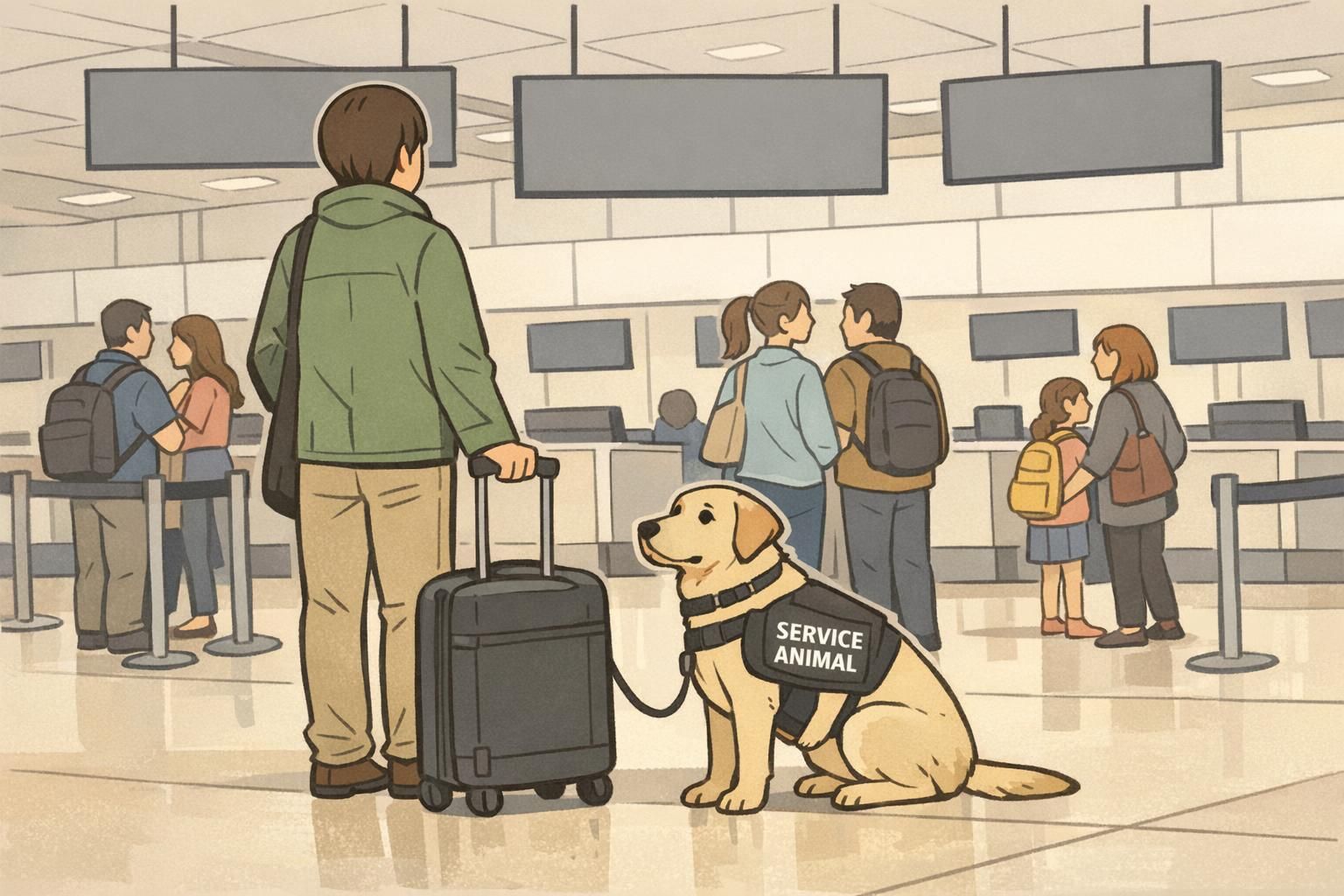
Travel adds layers: lines, tight spaces, security transitions, elevators, and crowded terminals. A vest can help a service dog team move through these environments with fewer interruptions by clearly signaling “working dog” at the moments it matters most—check-in, hallway traffic, and busy waiting areas.
In this story, the handler arrives at the airport early. The dog’s vest is visible in the check-in line, and people naturally give space as suitcases roll past. In the elevator to the hotel lobby later that day, the dog tucks neatly beside the handler’s legs, and other guests avoid reaching down to greet the dog. The result is a smoother flow: fewer pauses, fewer explanations, and less stress during transitions.
For more planning ideas, read traveling with a service dog and consider carrying a travel-ready service dog registration package to keep important details organized and easy to share when questions come up.
Most public-access conflicts don’t start as conflicts. They start as misunderstandings: someone tries to pet the dog, a staff member feels unsure about what they’re allowed to ask, or a rushed moment turns tense. Small, calm tools can keep these interactions brief and respectful.
One of the most effective strategies is to reduce the amount of real-time debating you have to do. A clear vest patch sets expectations. A prepared one-sentence explanation keeps your voice steady. And professional, easy-to-share materials can help you communicate quickly without escalating the situation.
Some handlers like to carry ADA law handout cards for quick, polite communication, especially when they want to keep an interaction calm, brief, and focused on moving forward.
“ "Having a simple system—vest, calm script, and a card if needed—keeps me from feeling like I have to ‘perform’ an explanation in public." – Service dog handler”
The real impact of a service dog vest isn’t about attention—it’s about fewer interruptions and more independence. The wins tend to be small but meaningful: a smoother entrance, a quiet checkout line, a waiting room where the dog can rest undisturbed, a bus ride where the team isn’t crowded. Over time, those moments add up to a steadier routine.
If you’re deciding what kind of vest or setup fits your team, focus on what supports your daily life. Clear patches that reduce conversation. A comfortable fit that your dog can wear confidently. Practical features that keep essentials organized. The goal is simple: calmer outings, safer transitions, and a working partnership that feels understood in public.
Your trusted source for service animal registration. Get professional ID cards, digital profiles, and smart NFC tags to keep your service animal safe and recognized.
© National Animal Registry — All rights reserved.