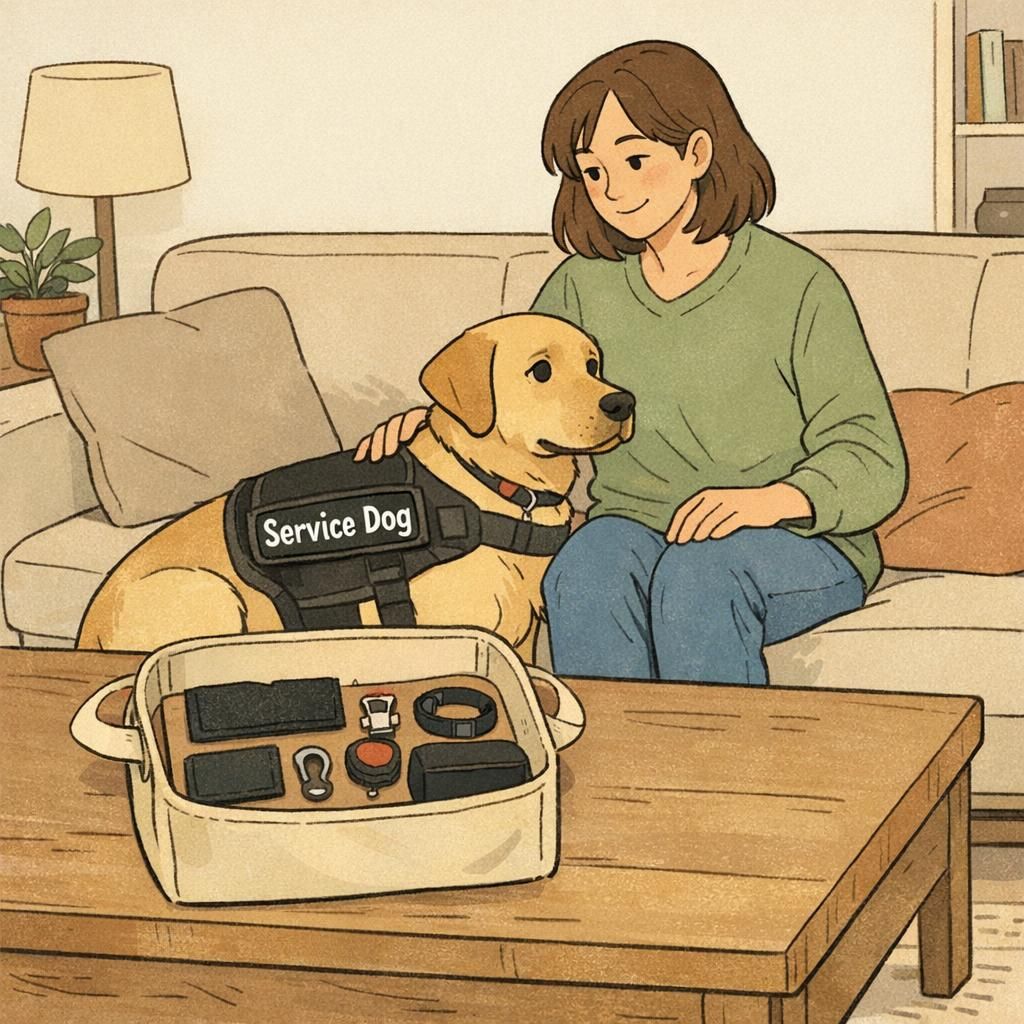
A service dog vest is more than a uniform—it’s a communication tool. The right accessories can help the public understand your dog’s role quickly, help you handle day-to-day situations more smoothly, and support safer routines in busy public spaces.
For many teams, accessories aren’t about decoration. They’re about clarity (so fewer people interrupt your dog), comfort (so your dog can work without rubbing or shifting gear), and practical handling (so you can guide your dog efficiently when you need to). Whether you use the term service dog, service animal, or assistance dog, the goal is the same: create a setup that supports your real routine.
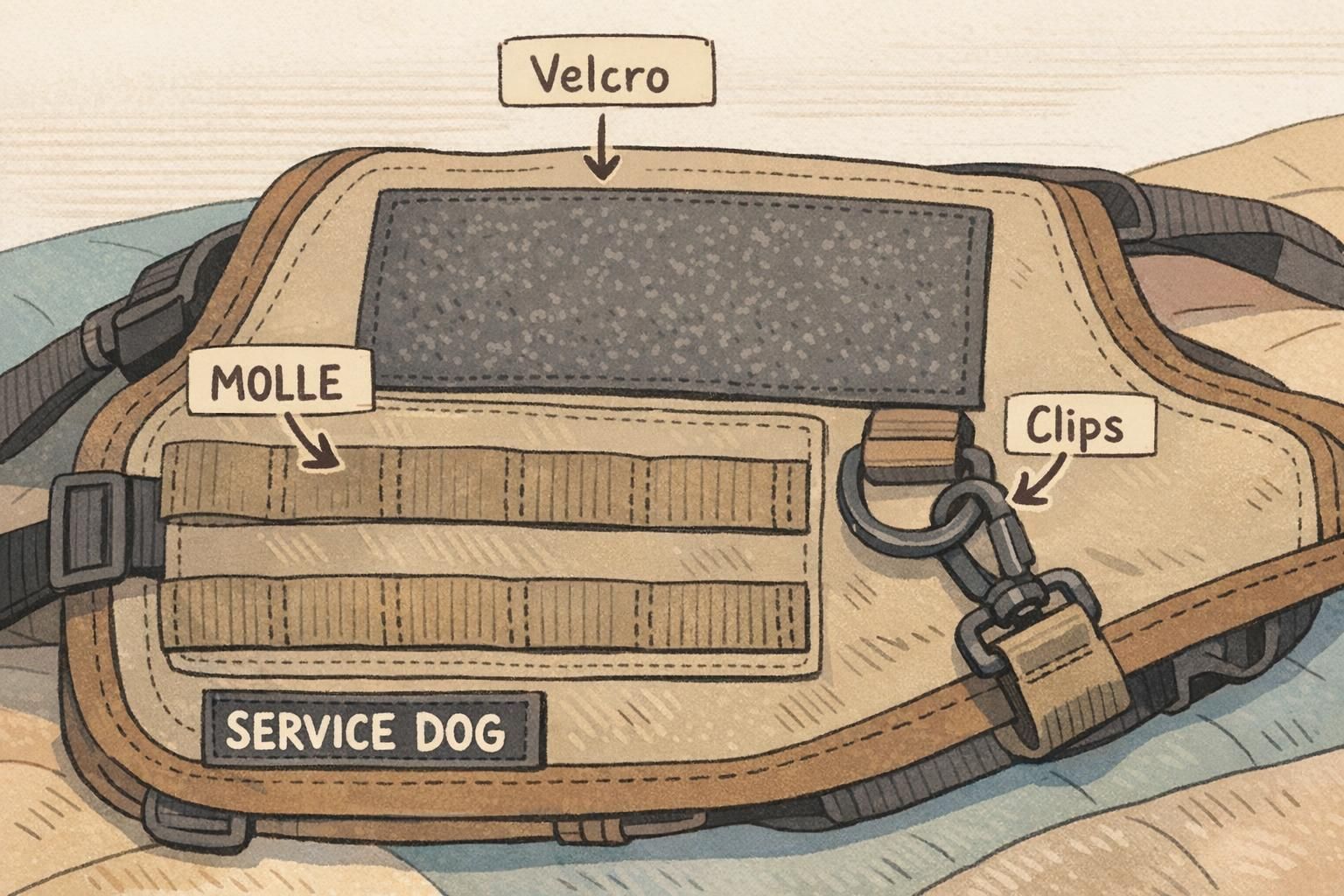
Before choosing add-ons, it helps to know how they attach. Most service dog vest accessories fall into three main styles: hook-and-loop (often called Velcro), MOLLE webbing, and clip-on hardware. The best choice depends on your vest design, how often you swap accessories, and how secure the attachment needs to be.
If you’re building a setup from scratch, start by checking your vest for patch panels and webbing rows. If you already have a vest you love, accessories should match that vest’s attachment style—not fight it.
Identification accessories are popular because they reduce confusion fast. Clear labeling helps the public understand that your dog is working and can discourage distracting behaviors like calling to your dog, reaching out, or trying to pet without permission.
Common patch types include embroidered patches for durability, high-visibility patches for easier reading at a distance, and message patches that set expectations. Many teams use a combination—one patch to identify the dog’s role and another to communicate boundaries.
ID window pockets are another widely used accessory. These clear pockets (often mounted on the vest) can hold a service dog ID card and handler information so it’s available when needed—without digging through a wallet or bag. Some teams prefer detachable ID holders that clip to a vest ring or handle area for quick access.
Across many gear brands, patches, handles, pouches, and ID holders are among the most common add-ons, typically designed to attach through Velcro panels or modular webbing for day-to-day practicality (source).
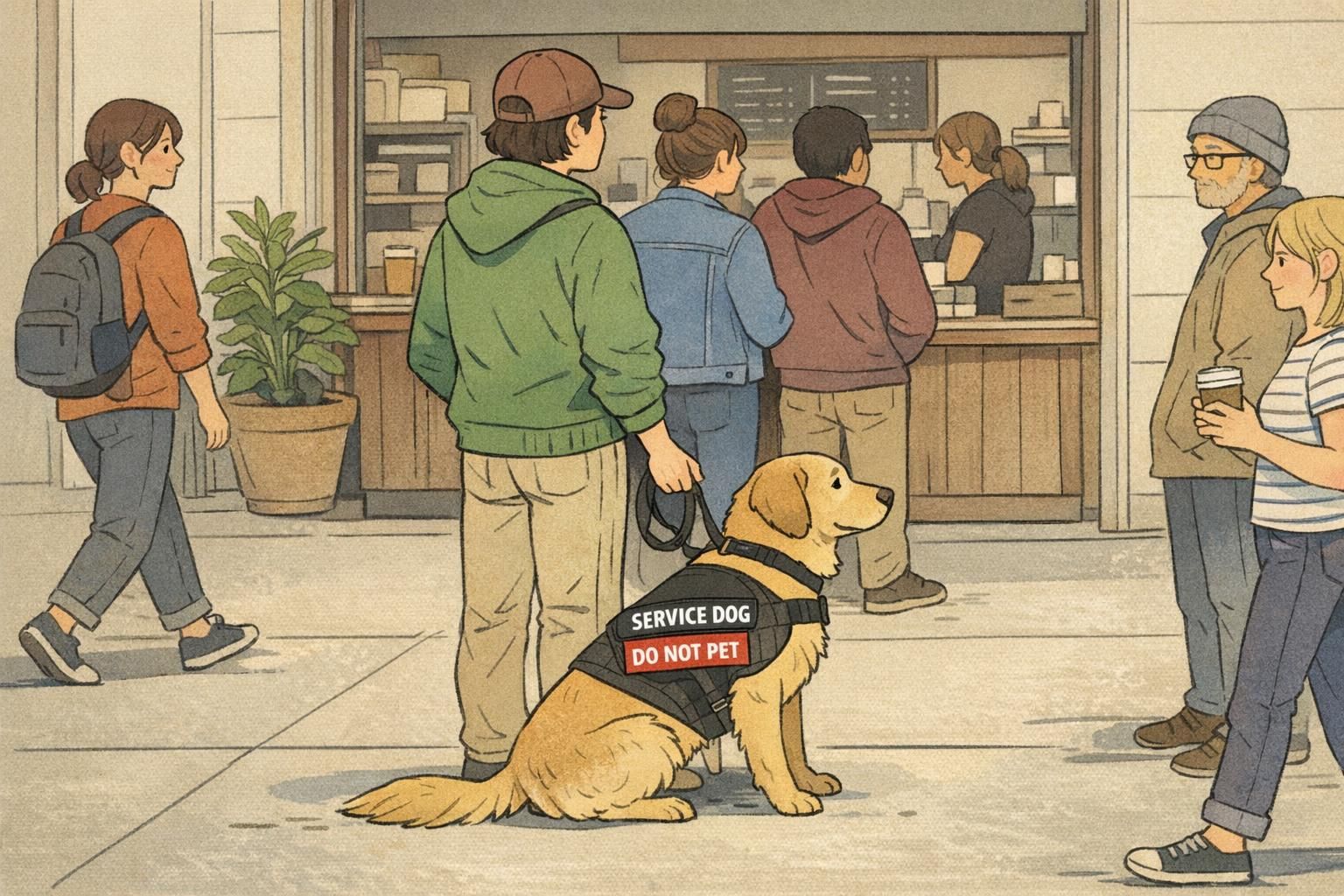
Many handlers like having professional, organized identification available—especially in busy places where conversations need to stay calm, brief, and respectful. A printed service dog ID card can be convenient for quick identification, while a digital profile can help you keep key details in one place (for example, your dog’s name, photo, and other useful notes you may want handy).
This kind of organization is often less about “proving” anything and more about keeping interactions from turning into long, stressful exchanges. If someone has questions, it can be reassuring to present clear, consistent information in a professional format and then move on with your day.
“ "Having everything organized—an ID card in the vest window and a digital profile on my phone—helps me keep interactions short and professional so my dog can stay focused." – Service dog handler”
Control accessories can make handling easier—especially in crowds, tight aisles, doorways, or moments when you need quick guidance. The goal is simple: predictable control without interfering with your dog’s movement or comfort.
A reinforced grab handle on top of the vest can help you guide your dog through narrow spaces or reposition for safety. Bridge handles add extra reach and can provide a more upright hold, depending on your needs and your dog’s size and working style. D-rings (and similar attachment points) allow you to position a leash more cleanly and keep your setup consistent.
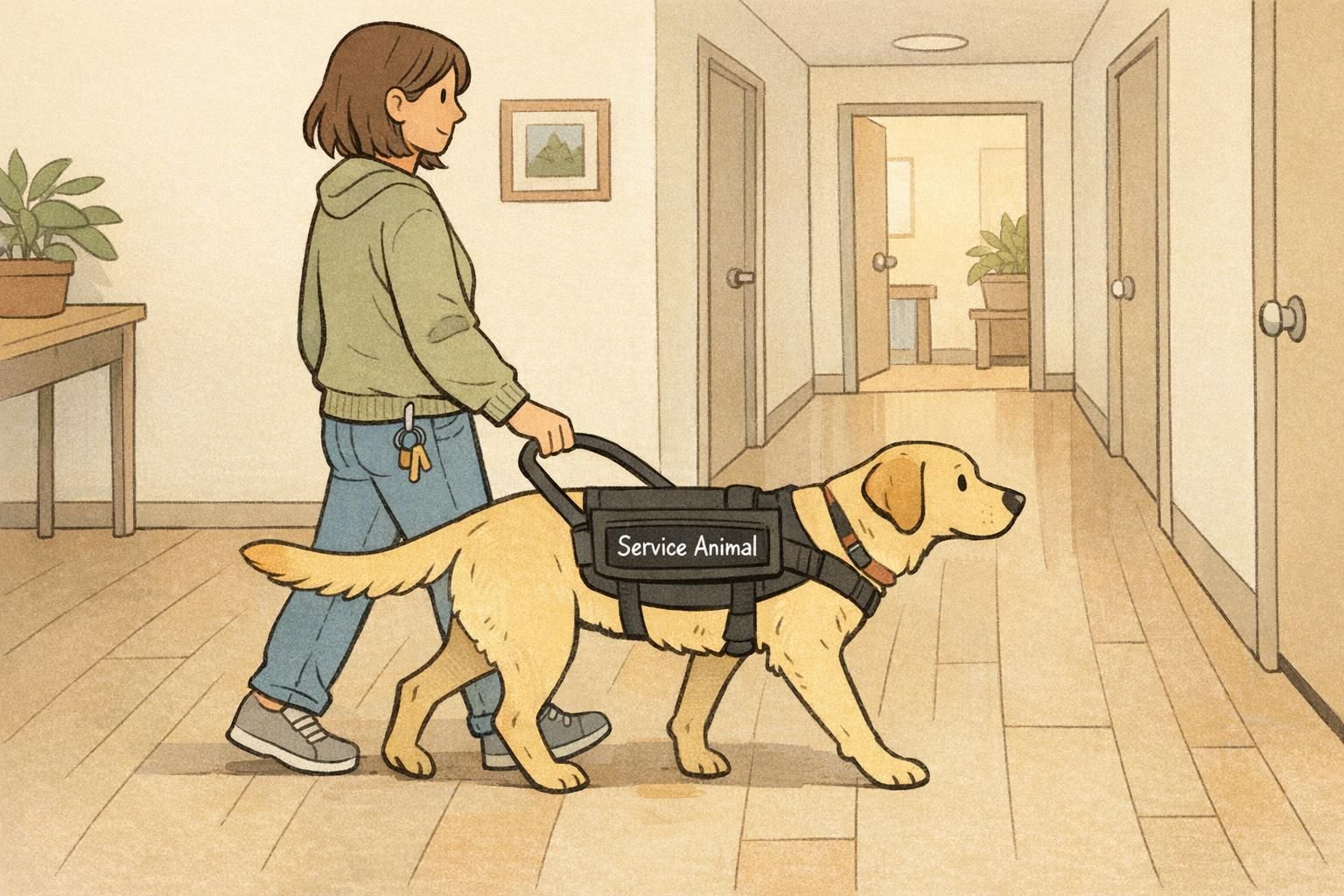
Storage accessories are popular because they reduce what you have to carry in your hands. A small pouch on the vest can hold the basics—waste bags, wipes, a tiny treat stash, or small medical items—so you’re not juggling pockets, purses, or loose items while your dog works.
MOLLE-compatible pouches are a common choice because they can be threaded securely into webbing. Clip-on bags can also work well for lighter items, especially if you want to remove the bag quickly when you get home.
In general, keep vest storage light. If you need to carry heavier medical or personal items, a small crossbody bag or backpack often keeps your dog more comfortable and unencumbered.
Many teams use small treat storage for reinforcement and focus. Choose a pouch that closes securely and doesn’t spill or crumble, and keep treats minimal so your dog stays comfortable.
Comfort accessories can make a big difference on long days. Even a well-made vest can rub if straps sit in the wrong place or if your dog’s coat changes seasonally. Strap covers, extensions, and padded liners help fine-tune the fit so your dog can work confidently.
Girth strap covers can reduce friction under the chest and belly, while strap extensions help when a vest is slightly too snug or when your dog is between sizes. Padded liners can spread pressure more evenly, which is especially helpful if the vest tends to shift during movement.
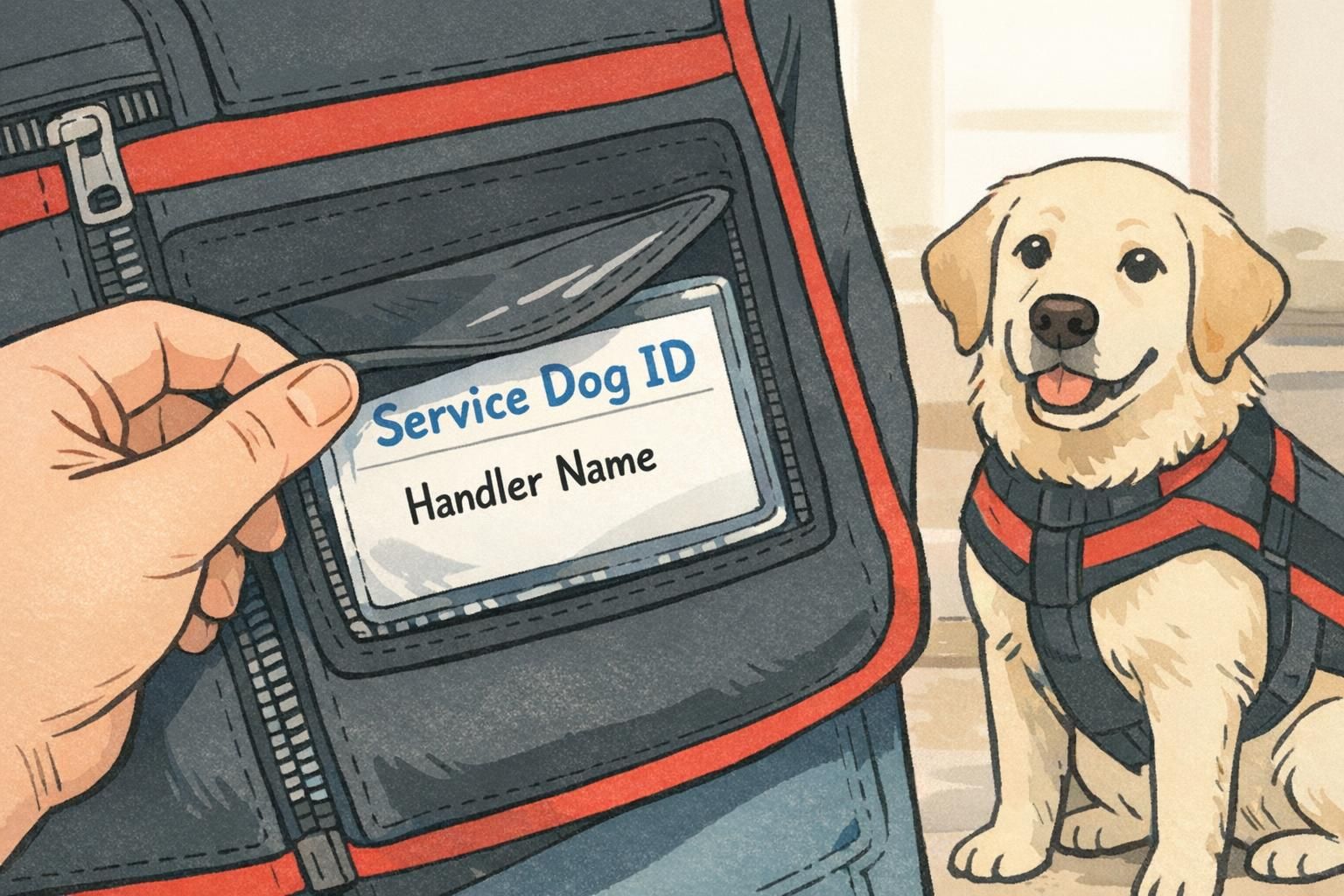
Accessories work best when they’re built for real life: movement, weather, repeated cleaning, and everyday wear. Before you buy, take a moment to check construction details—small differences in stitching and hardware can decide whether an accessory lasts months or years.
For safety, regularly inspect your dog’s gear for wear, confirm sizing as your dog’s body changes, and replace accessories that no longer attach securely. And while durable gear helps, remember that no vest accessory is truly chew-proof—store items appropriately when your dog is off duty.
A good vest setup is personal. The “best” accessories are the ones that match your lifestyle, your dog’s comfort, and your typical environments. If you’re building or refining your setup, it helps to add pieces in a simple order so you don’t end up with extra gear you don’t use.
A minimalist setup might include two patches and a simple handle—light, clean, and easy for the dog to wear all day. A fully-equipped setup might add an ID window pocket, a small utility pouch, a bridge handle, and reflective patches for evening errands. In both cases, the best rule is the same: keep your dog comfortable and unencumbered, and keep your communication clear.
“ "I used to add everything at once. Once I built my vest around our actual routine—clear patches, one handle, one small pouch—my dog moved better and we got fewer interruptions." – Assistance dog handler”
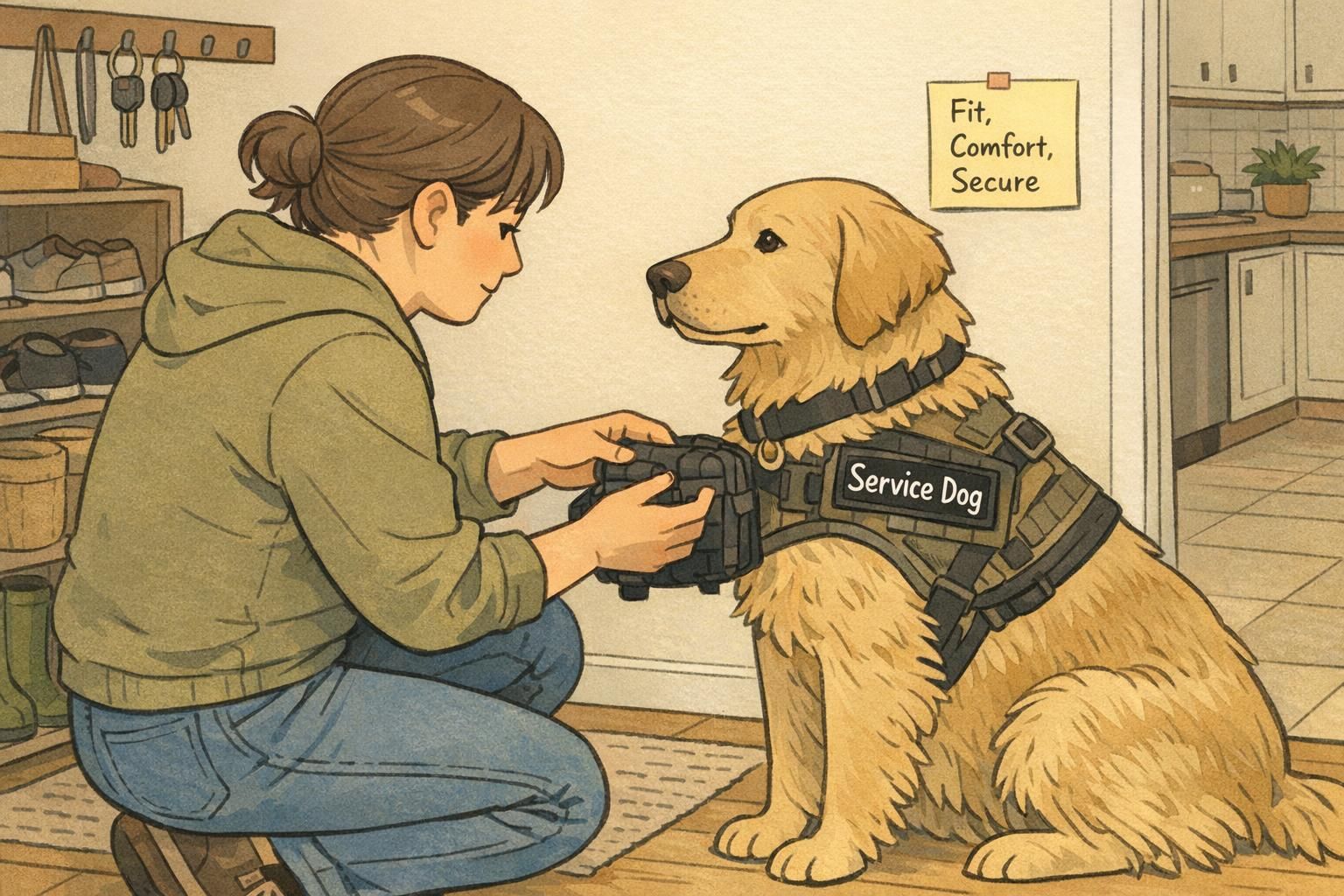
Travel adds extra variables: new environments, unfamiliar staff, tighter timelines, and more checkpoints. Travel-friendly vest accessories focus on predictability—keeping your dog’s working role clearly labeled and keeping your key information organized so you can present it when appropriate without stress.
A clear ID display option (like an ID window pocket), a spare patch set in your bag, and a small utility pouch for essentials can help you stay organized from the moment you leave home. Many handlers also plan a simple “travel kit” so they’re not repacking from scratch each time.
If you’re planning upcoming travel, it can also help to review travel tips for outings and trips with a service dog and consider keeping your identification and materials together in one organized set, such as a travel-ready service dog ID and document bundle for on-the-go organization.
Even with clear patches, questions can happen—especially in busy public settings. Small communication tools can help you stay polite and professional while keeping the interaction brief. Many handlers like having a concise ADA reference card available so they can redirect conversations without escalating tension.
These tools aren’t about arguing. They’re about giving you a calm “next step” when you need one—something you can hand over or reference quickly and then return your focus to your dog’s work.
If you’d like something compact to keep on hand, consider wallet-sized ADA reference cards for quick, respectful communication.
“ "A simple reference card helps me stay calm. I don’t have to explain everything from scratch—I can keep the interaction brief and get back to what I’m doing." – Service dog handler”
If you’re not sure where to start, a small starter kit is often enough to cover most everyday needs. The best accessory setups prioritize comfort, clarity, and secure attachment over adding more gear.
Your trusted source for service animal registration. Get professional ID cards, digital profiles, and smart NFC tags to keep your service animal safe and recognized.
© National Animal Registry — All rights reserved.