What This Service Dog Travel Checklist Covers (and How to Use It)
Traveling with a service dog can be smooth and predictable when you plan for two things at the same time: (1) the legal/airline requirements and (2) the practical realities of airports, crowds, long days, and tight timelines. This checklist is designed to help you handle both—without scrambling at the gate or realizing too late that a form, vaccine record, or seat setup isn’t right for your team.
Use this guide like a workflow. Start with “Before You Book,” then follow the domestic air checklist or the international travel checklist based on your itinerary. If you’re doing both (for example, flying from the U.S. to another country), treat the international section as your main plan and the domestic DOT form steps as a “must-do for the flight side.”
Rules can vary by airline, airport, and destination. Confirming details early (and keeping documents in one place) dramatically reduces day-of-travel stress.
Before You Book: Quick Planning Steps That Prevent Travel Day Surprises
The easiest way to avoid travel-day friction is to check a few key details before you click “purchase.” Even small choices—like flight length, seat location, or connection time—can affect how comfortable your service dog will be and how smoothly you’ll move through the airport.
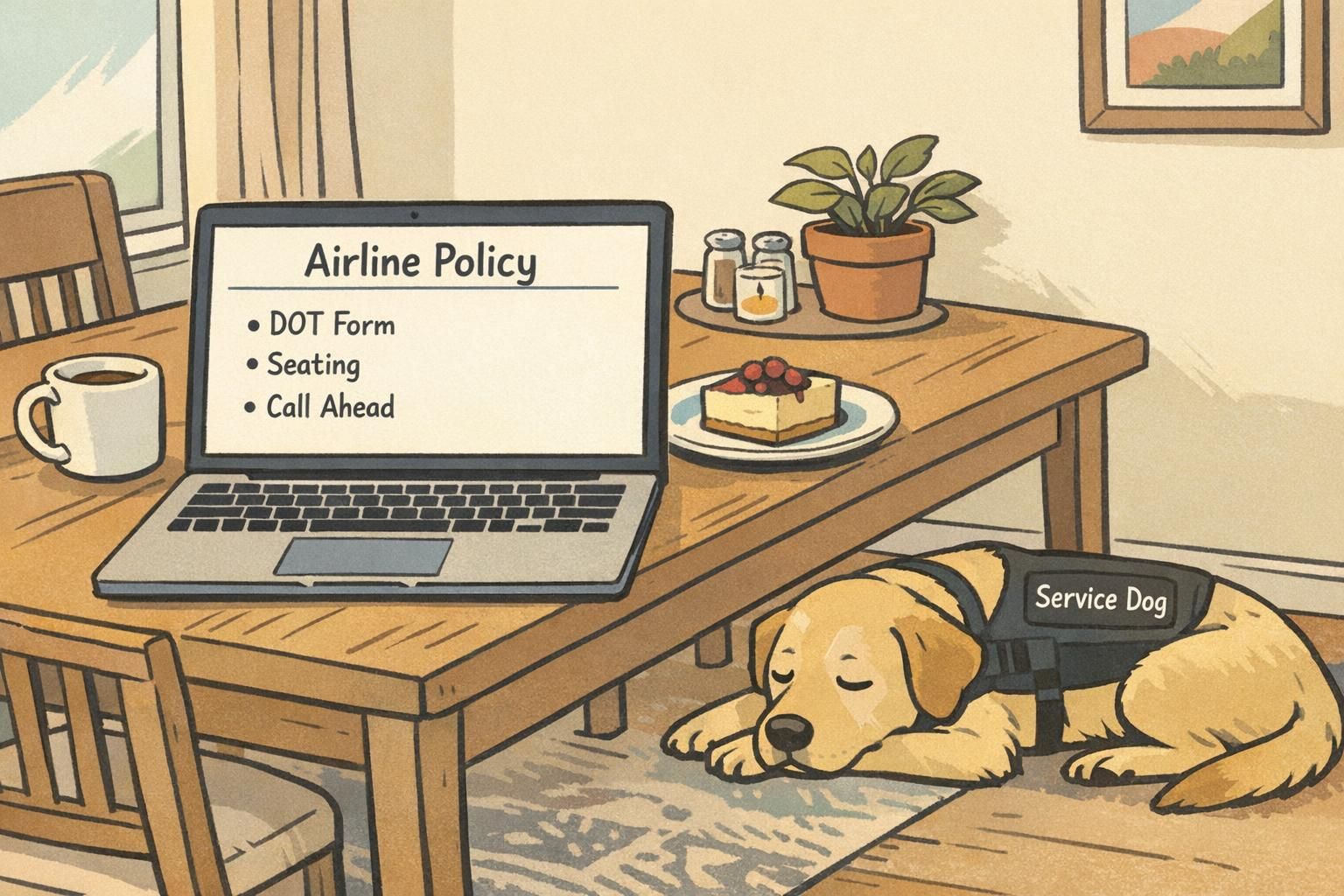
- Check the airline’s service animal policy: Look for the airline’s required forms, submission method, timing, and any specific instructions for airport check-in or the gate.
- Choose a seat with workable floor space: Think about where your dog will tuck in safely without blocking the aisle. If you anticipate tight space, consider whether a bulkhead (or another option the airline offers) is appropriate for your team.
- Evaluate route length and connection times: For flights that approach or exceed 8 hours (including delays), relief planning becomes a major factor. Tight connections can be hard if you need a relief area stop.
- Confirm any minimum age rules: Some carriers may have age minimums or additional requirements depending on route and aircraft type.
- Contact the airline early for large breeds or complex itineraries: If your dog is larger, if you’re flying on multiple legs, or if you’re traveling during peak times, early communication can prevent last-minute seat reshuffles or confusion at the gate.
A quick call or message to the airline before booking can save hours later—especially for large service dogs, multi-leg trips, or international routes.
Domestic Air Travel Checklist: DOT Forms, Timing, and Airport Basics
For U.S. domestic flights, the key paperwork is typically the U.S. Department of Transportation (DOT) service animal form. Airlines may request it during booking, through an online portal, by email, or at check-in—so it helps to confirm the exact process as soon as you have your flight details.
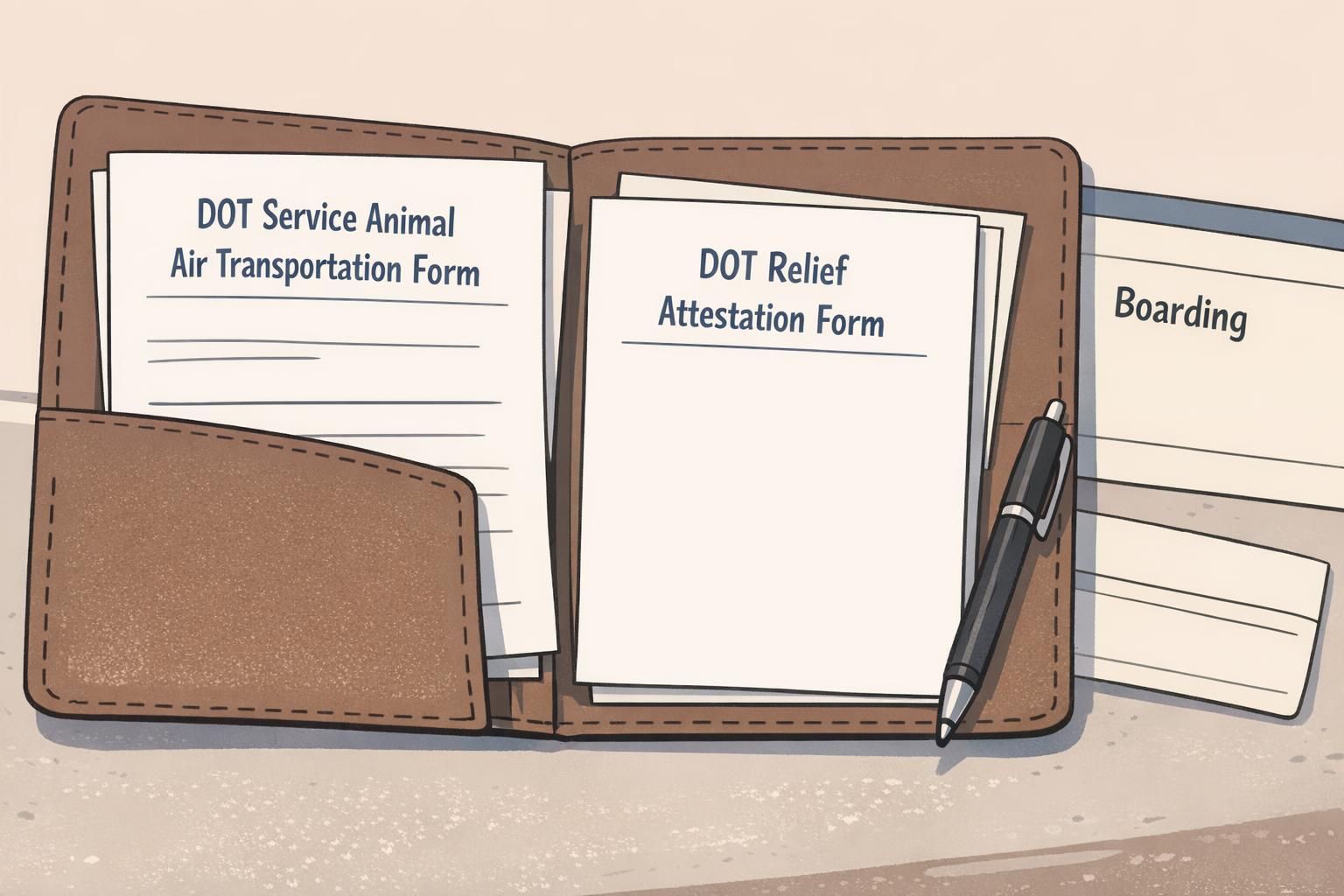
- Complete the DOT Service Animal Air Transportation Form: Fill it out carefully and keep a copy for your travel folder.
- Submit within the airline’s timeframe: Many airlines use a 48-hour window before departure, but policies vary. If you’re booking close-in travel, confirm how the airline handles last-minute submissions.
- Bring printed copies to the airport: Even if you submitted electronically, having paper copies can make interactions faster when Wi-Fi is spotty or systems are slow.
- Keep your service dog harnessed/leashed: Plan a setup that’s secure and comfortable through the airport, security, and boarding.
- Use the airport relief area before boarding: Build in time to locate it (some are far from gates) and to settle your dog before lining up.
- Plan for TSA screening: A calm, cooperative routine matters. Move at a steady pace, follow instructions, and keep your dog focused amid crowds, bins, and noise.
If the airline allows it, submitting early is a great way to reduce last-minute stress. You can also keep a printed copy ready in case staff need to reference it at check-in or the gate.
Stay calm and consistent. Having your forms organized, your dog under control, and a simple explanation ready usually keeps the interaction quick and professional.
Long Flights (8+ Hours): Relief Planning and Comfort Essentials
Extended travel days require a different level of planning. If your itinerary includes flights of 8 hours or more (or you anticipate long delays and layovers), you may need to address relief planning more formally. Some airlines may require the DOT Relief Attestation Form for longer trips, and even when it’s not required, having a relief strategy is essential for your dog’s comfort and your peace of mind.
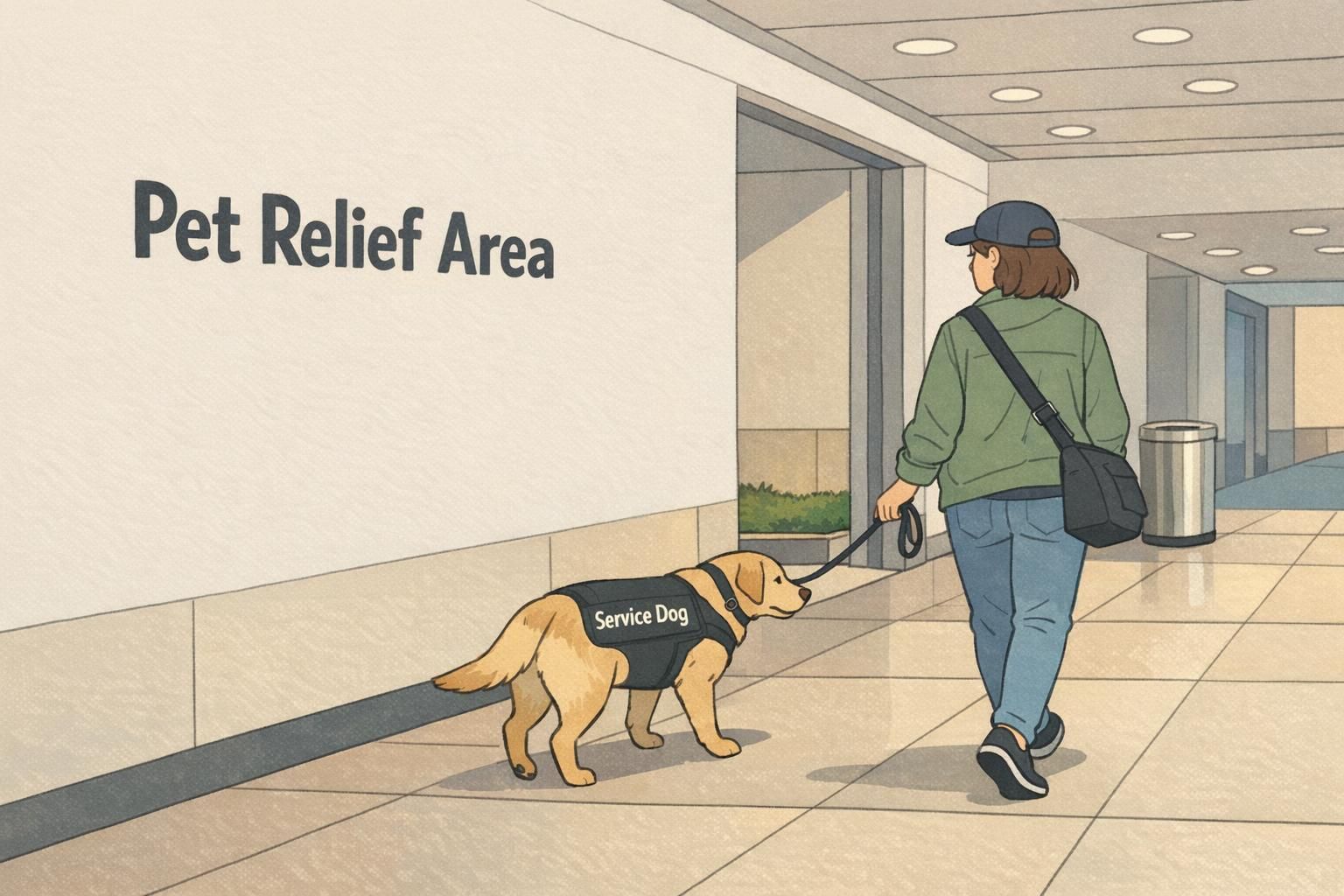
- Confirm whether a Relief Attestation Form is needed: Check your airline’s policy for flights at or above 8 hours (and for itineraries that may exceed that due to connections).
- Map relief locations in advance: Identify relief areas at your departure airport, connection airport(s), and arrival airport so you’re not searching under pressure.
- Build in layover time for a relief stop: A short connection can be stressful if you’re rushing and your dog needs a break.
- Pack cleanup supplies: Waste bags, wipes, paper towels, and a small sealable bag can be a lifesaver during long days.
- Consider absorbent pads (if helpful for your situation): Some handlers like having a disposable pad available for contingencies during extended travel.
- Manage water thoughtfully: Offer small amounts at sensible times to balance comfort with hydration, and bring a collapsible bowl.
Long-flight success usually comes down to three things: knowing where relief areas are, carrying basic cleanup supplies, and giving yourself enough time between steps.
Behavior, Space, and Onboard Etiquette: Staying In Control and Minimizing Friction
In real-world travel, the expectations are practical: your service dog should remain under control, behave appropriately in public spaces, and fit within your seating area without blocking aisles or encroaching on other passengers. When your dog is calm and you have a simple routine, most interactions become brief and uneventful.
It helps to rehearse your “airport skills” before travel day: walking through crowds, pausing in lines, settling under a chair, and calmly ignoring food, luggage wheels, and excited voices. Even one or two practice outings can make a big difference.
- Boarding routine: Decide in advance how you’ll cue your dog to tuck into position and stay settled while others pass by.
- Space awareness: Keep paws, tail, and gear within your area as much as possible—especially in tight rows.
- Quiet communication: If staff ask questions, respond clearly and briefly, then return focus to your dog.
- Calm reinforcement: Reward the behaviors you want (settling, eye contact, staying close) in busy areas like gates and baggage claim.
When you want a quick, low-conflict way to explain basic access standards, having small information cards can help you avoid repeating yourself in stressful moments. Many handlers keep ADA law handout cards for quick, calm explanations in an easy-to-reach pocket for travel days.
“ "The more consistent our routine is—security line, gate settle, boarding— the less my dog reacts to the chaos around us. Consistency turns airports into just another public outing." – Service dog handler”
Domestic Non-Flight Travel: Hotels, Trains, Buses, and Cruises
Not every trip involves flying. Hotels, trains, buses, rideshares, and cruises each come with their own rhythms—busy lobbies, long boarding lines, narrow aisles, and unexpected delays. A little preparation helps your service dog stay comfortable and helps you move through check-ins and boarding with confidence.
- Call ahead (when helpful): Ask about entrances, elevators, relief areas, and any accessibility notes that could affect your route through the property or terminal.
- Plan for crowded choke points: Hotel lobbies, train platforms, and cruise boarding lines can be tight—practice close-heel and “tuck” skills.
- Map relief options near lodging: Identify a nearby outdoor area or designated relief spot so you’re not wandering late at night after arrival.
- Keep handling routines consistent: The same leash/harness setup, the same cues, and the same settle routine reduce your dog’s stress in new environments.
- Pack for surfaces and weather: Hot pavement, icy sidewalks, or slick floors can affect traction and comfort—bring what your dog needs to stay safe.
Ground travel is often easier when you plan for lines, elevators, and relief breaks the same way you would in an airport.
International Travel Checklist: Start Early and Verify Country-Specific Rules
International trips are where early planning pays off the most. Each country sets its own animal entry requirements, and those rules can be more detailed than what you’re used to for domestic travel. Some destinations require specific vaccines, testing timelines, treatments, or government endorsements—so the earlier you verify requirements, the more options you have if something needs to be scheduled.
A smart starting point is to research destination-specific entry requirements through USDA APHIS and then confirm details through the destination’s official guidance and your airline. Because rules vary by country and may require health certificates, vaccinations, tests, or permits, build lead time into your plan. See source.
- Timeline (ideal): Start research weeks to months in advance, especially for countries with testing windows or endorsement steps.
- Verify requirements in three places: USDA APHIS (U.S. export guidance), the destination embassy/consulate (country rules), and your airline (flight-side procedures).
- Confirm your routing: A connection through another country may add requirements—even if it’s “just a layover.”
- Plan your vet appointments early: Some steps must happen within specific time windows before arrival.
International travel is destination-specific. The best checklist is the one that matches your exact country, dates, and routing.
International Documents and Vet Prep: Health Certificates, Vaccines, Microchips, and Permits
Most international destinations require a combination of veterinary documentation and proof of up-to-date health protections. While exact rules vary, the most common items include a health certificate issued by a USDA-accredited veterinarian and current rabies vaccination records.
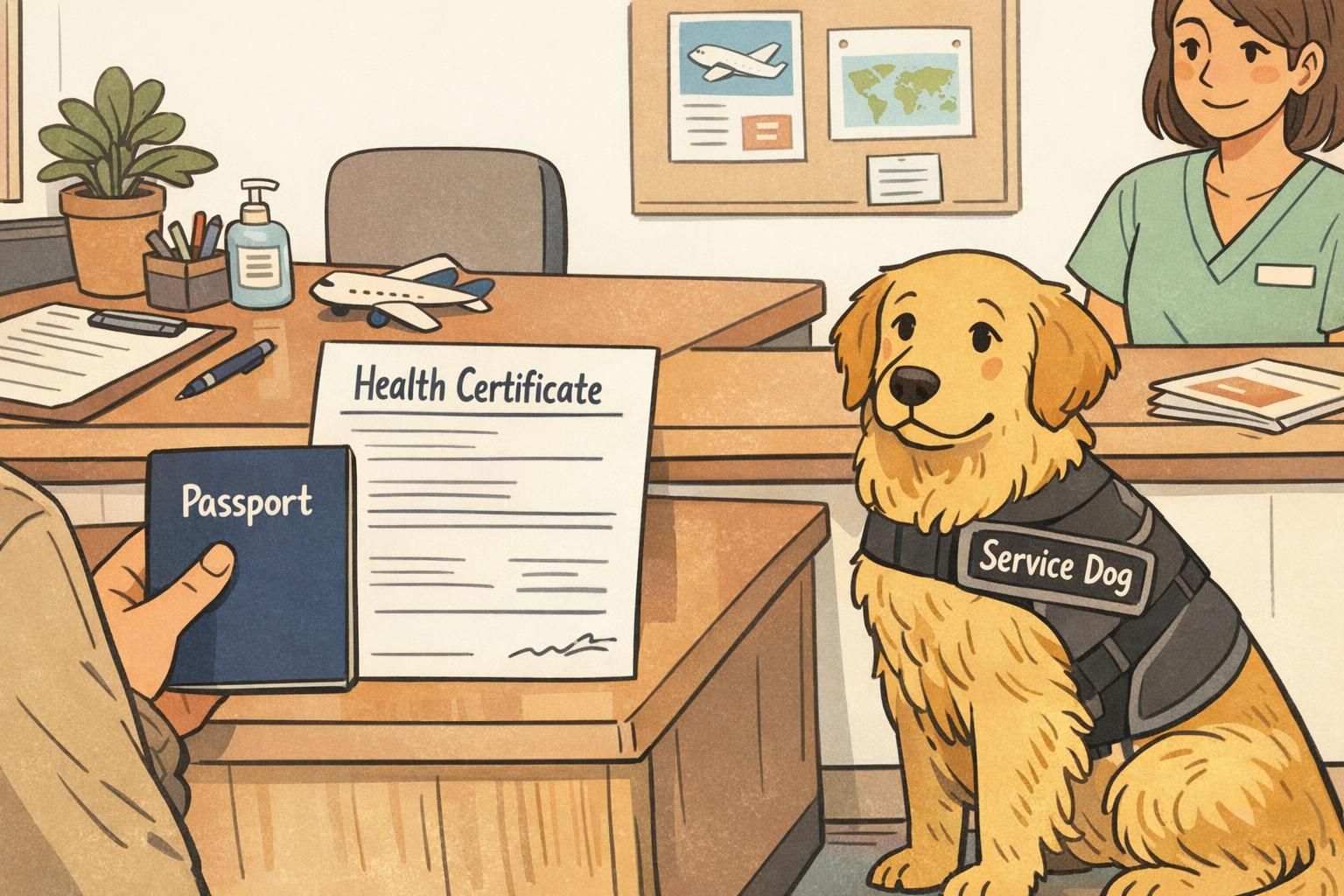
- Health certificate: Schedule an appointment with a USDA-accredited veterinarian (timing matters—some certificates must be issued close to departure).
- Rabies vaccination records: Keep clear documentation available and consistent across your travel folder.
- Microchip requirements: Some destinations require ISO microchips; confirm the standard and make sure the chip can be scanned reliably.
- Destination-required tests/treatments: Some countries require parasite treatments, specific lab tests, or rabies titers with precise timelines.
- Translations and endorsements: Some destinations require translated documents or government endorsement. If so, factor in shipping time and processing time.
- Multiple copies: Carry originals if required, plus paper copies and a digital backup.
As soon as you know your destination and dates. Some steps have strict timing windows, and scheduling can get tight during peak travel seasons.
It helps. A single travel folder (paper) plus a digital backup keeps you from digging through email or bags while staff are waiting.
International Flights: Pair Destination Paperwork With U.S. DOT Forms
For flights departing the U.S., airlines may still require the U.S. DOT service animal forms even when you’ve completed destination entry paperwork. Think of it as two parallel lanes: airline compliance forms for the flight experience, and country entry documents for the arrival process.
- Airline lane (often required for U.S. departures): DOT Service Animal Air Transportation Form; DOT Relief Attestation Form for longer flights if applicable; any airline-specific submission steps.
- Destination lane (country-specific): Health certificate, rabies records, microchip documentation, tests/treatments, permits, translations/endorsements if required.
- Organization tip: Keep everything together in one travel folder with a simple divider: “AIRLINE” and “COUNTRY.”
- Backups: Keep copies in your carry-on and a digital version on your phone (or secure cloud storage) in case papers are misplaced.
If you’re departing the U.S., plan on having DOT forms ready even when your destination paperwork is complete.
Returning to the U.S.: Re-Entry Rules and a Smooth Arrival Plan
A smooth return starts before you ever leave home. Re-entry rules can depend on where you traveled, how long you stayed, and whether your itinerary includes multiple countries. Confirm what you’ll need for your specific return route so you’re not troubleshooting paperwork after a long flight.
- Confirm re-entry requirements before departure: Double-check what documents you’ll need to show when arriving back in the U.S.
- Keep documents accessible: Store paperwork where you can reach it quickly without unpacking your entire carry-on.
- Allow extra airport time: International arrivals can involve lines, secondary questions, and document checks.
- Stay settled and controlled: Keep your dog leashed and calm during inspections or conversations so the process stays straightforward.
“ "Our best returns are the ones where I already know exactly which documents I’ll be asked for. When my dog is settled at my feet, everything moves faster." – Frequent traveler”
Travel Kit Packing List for Service Dogs (Carry-On vs Checked)
Packing for a service dog is less about bringing “everything” and more about bringing the right essentials in the right place. Put all critical items in your carry-on so you’re prepared even if checked luggage is delayed.
- Carry-on essentials: Collapsible bowl, measured food (plus a little extra), medication, backup leash, waste bags, wipes, paper towels, absorbent pads (optional), small grooming item (like a brush or paw wipe).
- Comfort and focus: A familiar small item (like a mat or towel) can help your dog settle in new places if it fits easily.
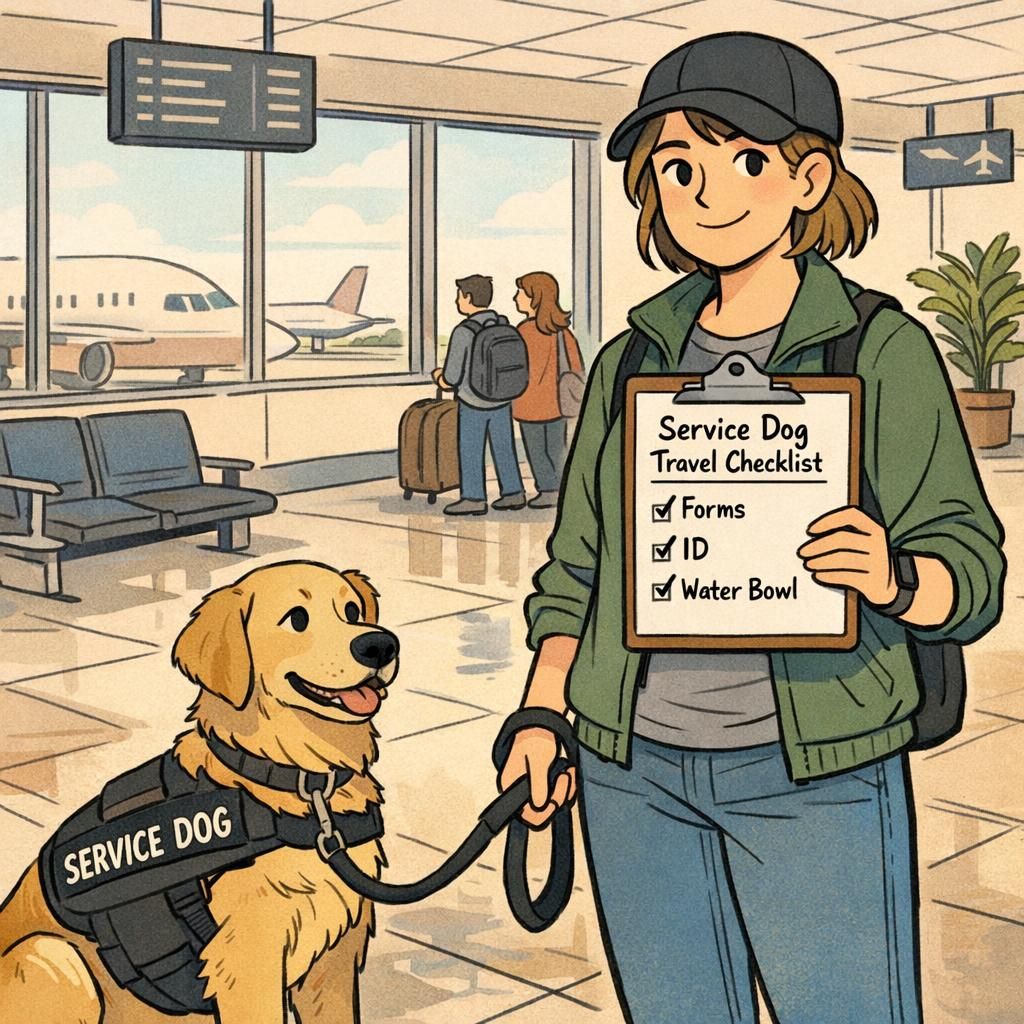
- Document organization: Printed airline forms (if applicable), destination paperwork (if applicable), vaccination/health records, and any supporting travel documents you prefer to keep handy.
- Backups: Keep copies in your carry-on and a digital backup on your phone.
If it’s critical for your dog’s care or your travel access, keep it in your carry-on—not in checked luggage.
Optional Travel Identification That Can Reduce Confusion
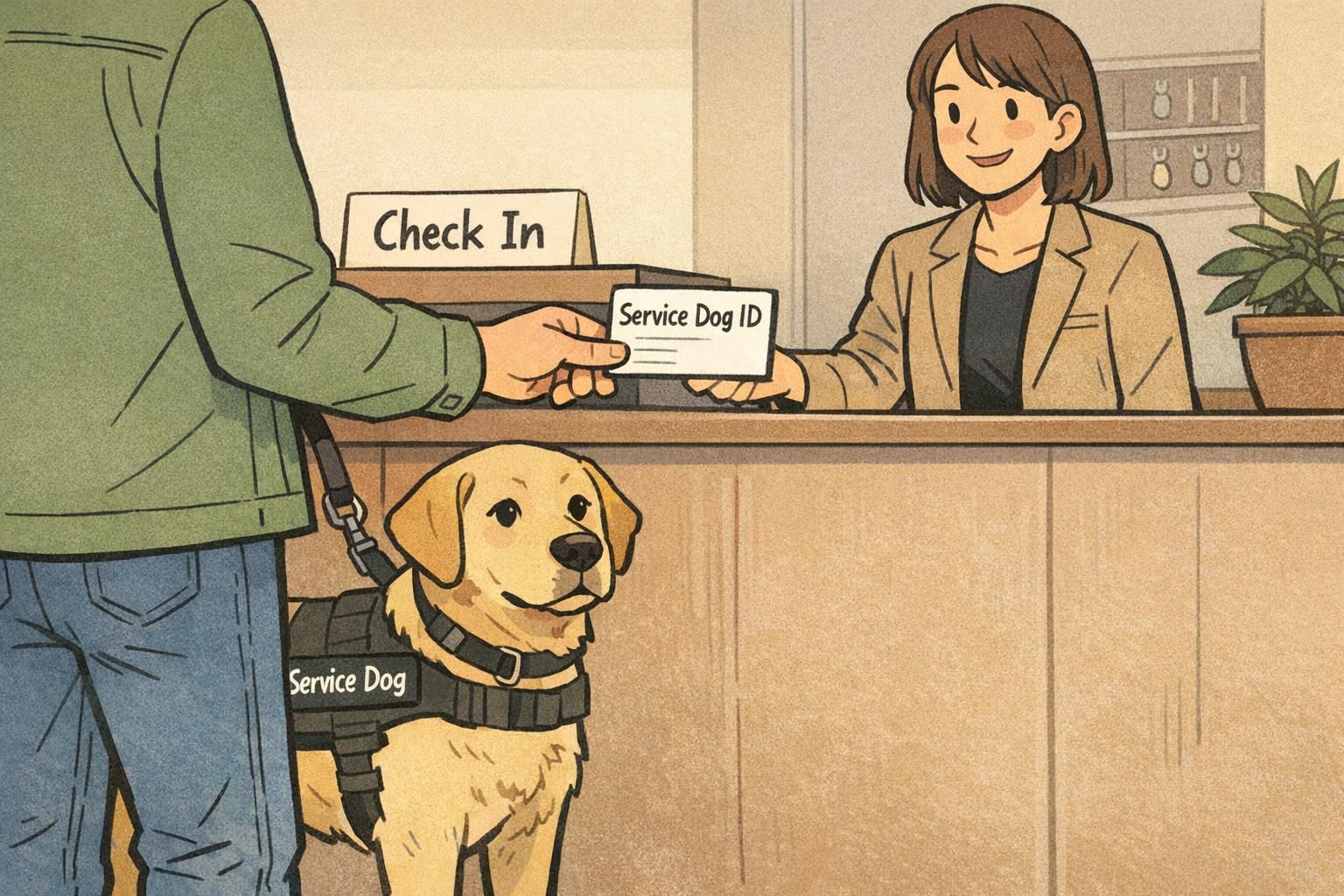
In busy travel settings, clarity matters. While requirements vary by context, many handlers choose travel-friendly identification materials to create consistent, easy-to-understand information during quick interactions—like hotel check-in, rideshare pickup, or when staff need clarity in a noisy terminal.
An optional ID can also help you stay organized by keeping key details in one place, reducing repetitive conversations and helping you communicate calmly when you’re juggling luggage, boarding announcements, and your dog’s focus. If you want a single travel bundle designed for these moments, consider a travel-focused service dog ID and document package.
Optional identification is about smoother day-to-day interactions: less back-and-forth, clearer communication, and a more confident travel routine.
Common Travel Scenarios and Calm Solutions (Airports, Seating, Staff Questions)
Even well-planned trips can include stressful moments: crowded security lines, sudden gate changes, and tight seating. The goal isn’t perfection—it’s staying calm, using consistent cues, and communicating in a simple, steady way so your service dog stays focused.
- Crowded security line: Step to the side when possible, keep your dog in a close position, and reward calm waiting. If you need extra space, ask politely before you feel rushed.
- Gate change across the terminal: Move at a steady pace, keep your dog close, and take a brief settle break once you arrive so your dog can decompress before boarding.
- Tight seating: Cue a practiced “tuck” and keep gear tidy. If you anticipate a problem, ask gate staff early rather than waiting until the last minute.
- Staff questions about tasks: Answer briefly and confidently, then redirect attention back to your dog and your travel steps.
Keep it short and matter-of-fact. For example: “My dog is trained to perform tasks that assist with my disability.” If they ask for more detail, you can briefly name one task in plain language and move on.
Use predictable cues (heel, sit, tuck), reward calm behavior, and build in short pauses—especially after security and right after boarding.
If you want a deeper walkthrough of the travel process from curb to cabin, read a complete guide to traveling with a service dog.
Printable One-Page Checklist (Domestic and International)
Copy the lists below into your phone notes or print them as a one-page travel companion. The goal is fast scanning: what to do before you leave, what to bring, and what to keep accessible at every step.
- DOMESTIC FLIGHTS (U.S.) — Quick Checklist:
- • Review airline service animal policy and submission method
- • Complete DOT Service Animal Air Transportation Form
- • Submit within airline timeframe (often ~48 hours when applicable)
- • Print copies and keep them in your travel folder
- • Confirm seat setup and plan your boarding routine
- • Locate airport relief area(s) and use before boarding
- • TSA plan: calm handling, steady pace, focused cues
- • Keep dog harnessed/leashed and under control throughout travel
- INTERNATIONAL TRAVEL — Quick Checklist:
- • Start early (weeks to months depending on destination)
- • Verify destination requirements and routing (including layovers)
- • Schedule USDA-accredited vet visit for health certificate timing
- • Gather rabies/vaccine records and any required tests/treatments
- • Confirm microchip requirements (if applicable)
- • Check for permits, translations, or endorsements (if required)
- • Keep airline lane + country lane documents together
- • For U.S. departures: prepare DOT service animal form(s) as required
- • Confirm U.S. re-entry plan before leaving
- SERVICE DOG PACKING LIST — Carry-On Focus:
- • Collapsible bowl + water plan
- • Measured food + extra
- • Medication
- • Primary leash/harness + backup leash
- • Waste bags
- • Wipes + paper towels
- • Absorbent pads (optional)
- • Small grooming item
- • Paper document folder + copies
- • Digital backups of key documents
When you plan early, pack smart, and keep documents organized, traveling with a service dog becomes a repeatable routine—not a stressful unknown.