When people ask about “minimum training standards” for service dogs, they’re usually looking for a clear rulebook: a required course, a checklist, or a set number of hours a dog must train. In the U.S., it rarely works that way. Instead, “minimum standards” usually refers to widely accepted best-practice benchmarks used by reputable service dog programs and experienced owner-trainers.
These benchmarks are less about perfection and more about readiness: Can the dog behave safely and calmly in public? Can the handler keep the dog under control? And most importantly—can the dog reliably perform trained tasks that directly support the handler’s disability?
Under the Americans with Disabilities Act (ADA), a service animal is a dog that is individually trained to do work or perform tasks for a person with a disability. That definition is important because it centers the purpose of the dog: the dog’s trained behavior must directly relate to the handler’s disability.
In everyday life, the ADA baseline also maps onto a few practical expectations that matter anywhere the public is present. A service dog should be under the handler’s control, housebroken, and able to behave appropriately in public settings. These basics help service dog teams navigate stores, medical offices, workplaces, sidewalks, and other common environments safely and smoothly.
One reason service dog training can feel confusing is that the ADA does not set a minimum number of training hours. It also does not require that a service dog be trained by a professional program. Many handlers owner-train, work with a private trainer, or use a blend of both.
So why do training benchmarks matter? Because real life is unpredictable. Having a structured plan helps teams build consistency, safety, and confidence across different environments—quiet places like a library, busy spaces like grocery stores, and high-stimulation situations like airports.
Across the service dog community, one commonly cited planning guideline is at least 120 total hours of training over six months or more, including at least 30 hours of public outings. This benchmark is often associated with IAADP-style minimum public access standards and is frequently used as a practical target for building a well-prepared team.
These hours aren’t usually a single “obedience bootcamp.” They typically blend basic obedience, public manners, distraction training, and early task foundations. The goal is to create a dog that can function calmly in real-world settings while also developing the specific disability-mitigating skills the handler needs.
If you’d like to see this benchmark described within established assistance-dog community standards, you can review the public-access minimums here: source.
Foundational obedience is the backbone of service dog work. While task training is what makes a dog a service dog, obedience is what makes that task training usable in real life—especially in busy, distracting environments.
Most minimum standards assume the dog can perform core cues promptly and calmly, even when something interesting is happening nearby. These skills help the handler maintain control and keep the team safe around foot traffic, carts, doorways, and sudden noises.
“ "Obedience isn’t about looking impressive—it’s about predictability. Predictability is what gives a handler freedom and peace of mind."”
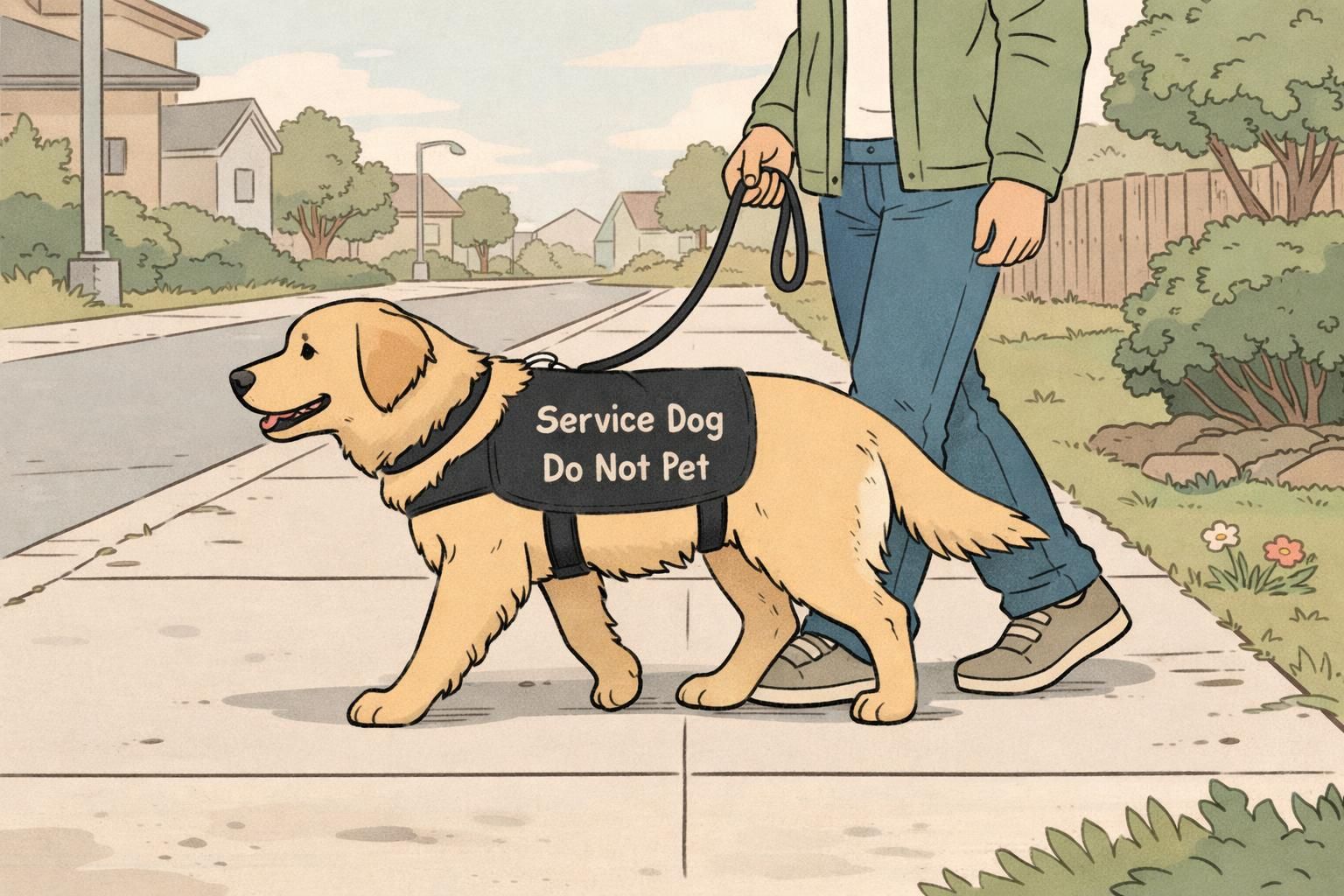
Public access manners are the behaviors that allow a service dog to move through everyday environments without disrupting others. People often notice public manners first: the dog that stays close, ignores food, doesn’t sniff merchandise, and settles quietly is a dog that can work unobtrusively.
Manners also include hygiene and house-training. A service dog should eliminate only in appropriate places and avoid accidents indoors. This is both a practical necessity and a key part of being a responsible team in shared public spaces.
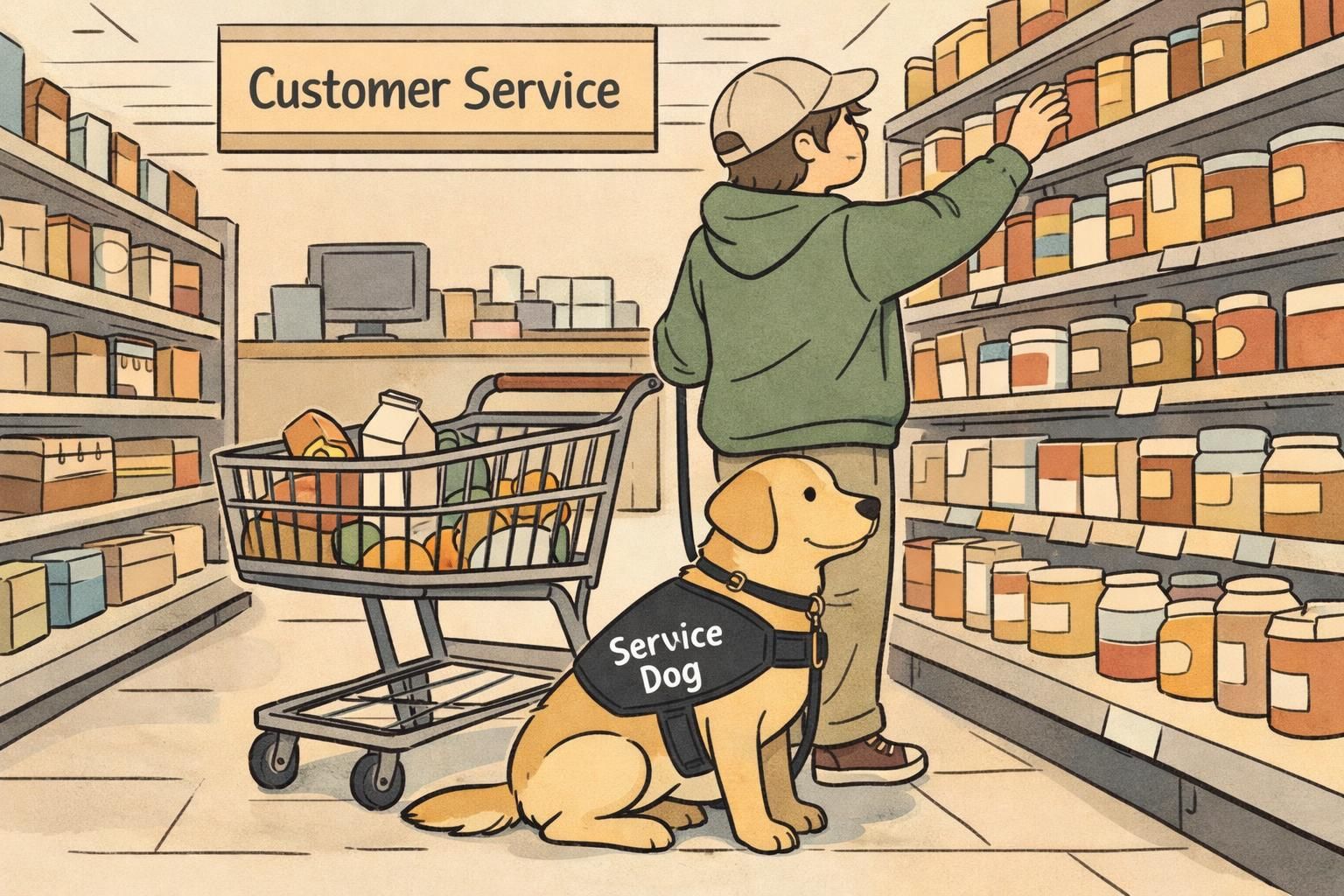
Task training is what separates a service dog from a well-behaved pet. A service dog’s tasks must mitigate (reduce the impact of) the handler’s disability. That means the tasks are individualized: two handlers can have equally legitimate service dogs that do completely different work.
It also helps to remember that task work is distinct from obedience and public manners. A dog can be excellent at “sit” and “stay” but still not be a service dog unless it is trained to perform disability-related tasks.
A service dog doesn’t need to be “robot perfect,” but reliability is the standard most teams aim for. Many established programs look for the dog to respond correctly on the first cue most of the time—both at home and in public—because public environments add distractions that can change from day to day.
Reliability matters for safety and independence. When cues and tasks are consistent, handlers can plan their routines with less stress—whether they’re navigating a checkout line, waiting at a pharmacy counter, or moving through a narrow aisle.
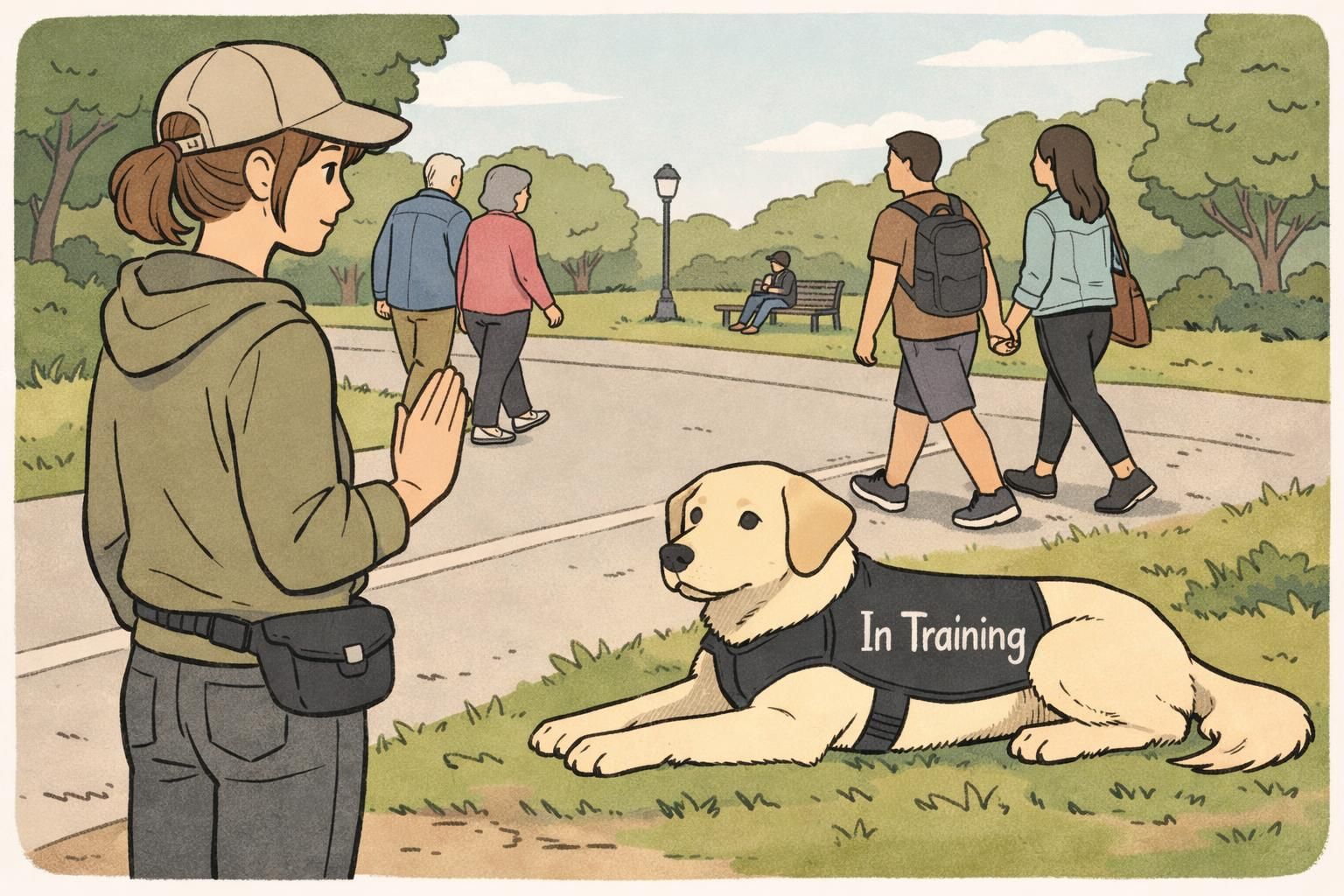
Public access tests are not legally required in the U.S., but many teams use them as a practical readiness check. Think of a public access test as a structured way to confirm that the dog can handle real-world situations politely and safely—and that the handler can keep the dog under control.
These evaluations vary, but most look at everyday skills that matter in shared spaces: calm behavior around crowds, food and drink, sudden noises, other dogs at a distance, and tight spaces like checkout lines or restaurant walkways.
Some handlers receive a dog trained through a program, while others owner-train their service dog (often with support from a qualified trainer). Both paths can lead to the same outcome: a stable, well-mannered dog that can work in public and perform trained tasks that mitigate the handler’s disability.
Timeline varies widely. Many teams train for 6 to 12 months or longer depending on the dog’s maturity, the complexity of the tasks, and how often the handler can train and practice in real environments. The focus is less on a fixed schedule and more on building skills in a way that is safe, humane, and sustainable.
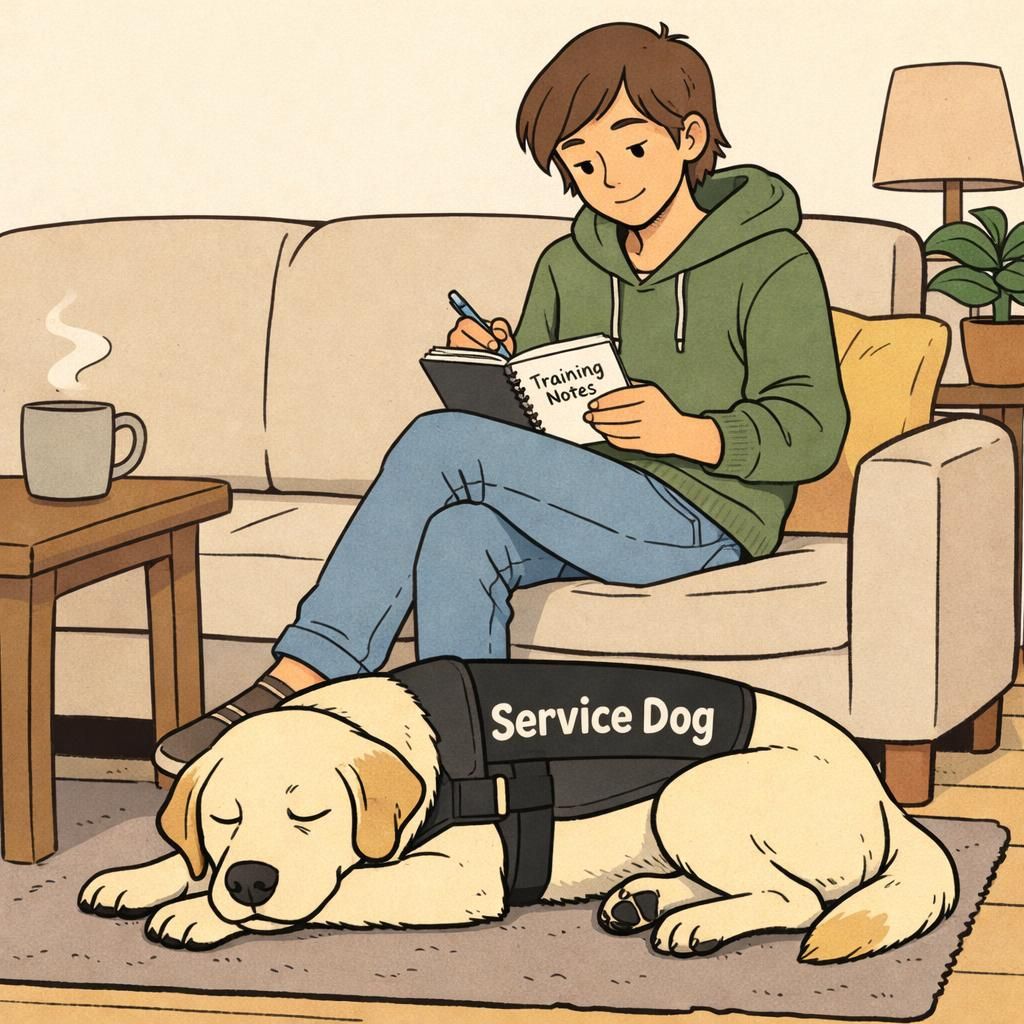
Training can feel like a blur, especially when you’re juggling daily life and health needs. A simple tracking system can help you stay encouraged and spot patterns (like which distractions are hardest, or which environments need more practice). This kind of documentation is a personal organization tool—useful for planning and confidence—not a requirement.
“ "When I started writing down just two notes after each outing—what worked and what to fix—our progress felt more real and a lot less overwhelming."”
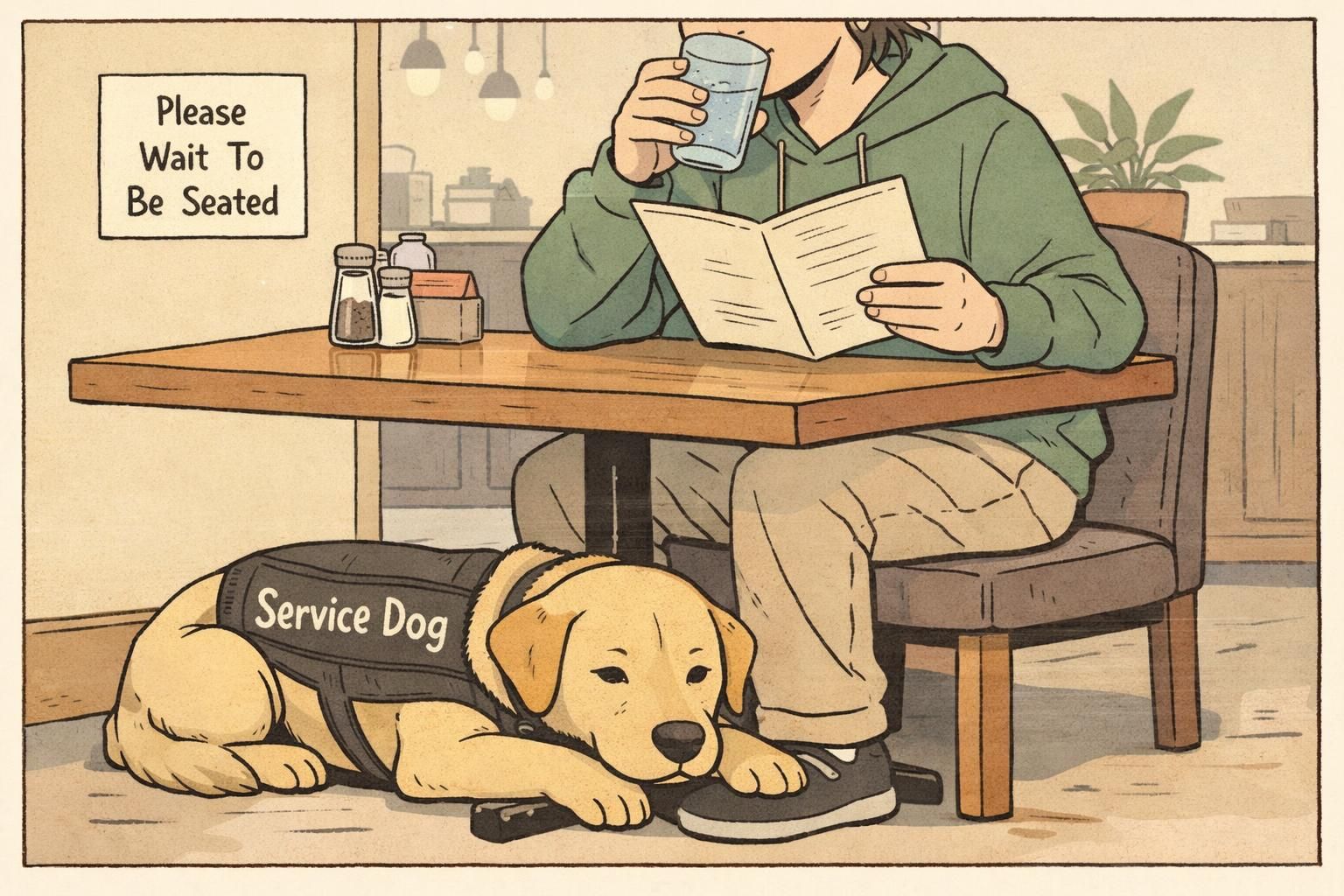
Even with excellent training, service dog teams can still run into awkward moments—especially in busy public spaces, while traveling, or during housing conversations. Clear, professional identification and simple communication tools can reduce friction by helping others quickly understand that your dog is working.
Many handlers choose to carry optional documentation for day-to-day convenience and peace of mind. For example, having an ID card can make it easier to communicate clearly during routine interactions, especially when you want a quick, calm way to set expectations.
A practical option some handlers use is a customizable service dog ID card, which can help streamline everyday communication in a professional, low-pressure way.
Travel is where minimum public-access skills really get tested. Airports, hotels, restaurants, rideshares, crowded sidewalks, and long waiting periods can push a dog’s patience and focus. Building strong public manners—like a reliable heel, a calm settle, and the ability to ignore food and strangers—can make travel dramatically less stressful.
If you’re preparing for trips, it helps to think ahead about the exact environments you’ll face: loud announcements, rolling luggage, tight lines, elevators, and unfamiliar rest areas. For more detailed guidance, see travel planning with a service dog.
Many teams also like having a single, organized set of materials for travel days. If that’s helpful for your routine, consider a travel-ready service dog registration package designed to keep key items in one place.
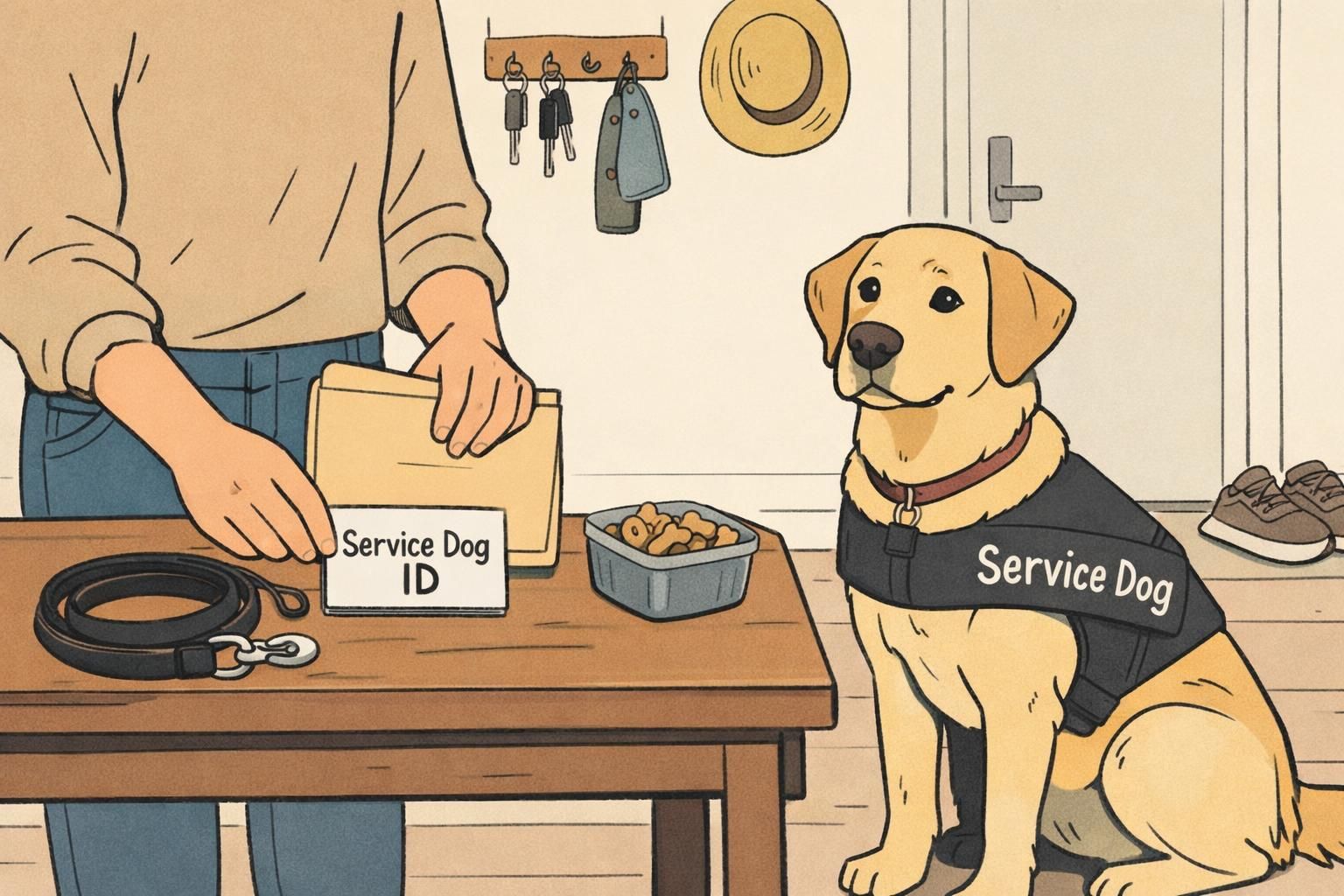
If you want a simple way to think about “minimum training standards,” focus on preparedness rather than perfection. The strongest teams usually share the same basics: reliable obedience, calm public behavior, solid house-training, and disability-mitigating tasks that work in real life.
No. The ADA does not require a minimum number of training hours. Many teams still use common benchmarks (like total hours and public practice time) as a practical way to build readiness and consistency.
Yes. Owner-training is a common path. Some handlers train independently, while others work with a trainer or follow a structured program. The key is that the dog is individually trained to perform disability-related tasks and can behave appropriately in public.
It generally means the dog can stay under control and behave calmly in public: no disruptive behavior, no aggression, strong leash manners, and the ability to ignore common distractions like food, crowds, and noise. Many teams use a public access test as a practical self-check, even though it isn’t legally required.
Many handlers find that optional documentation and clear identification can reduce confusion and make everyday interactions smoother—especially in busy public spaces, during travel, or when explaining that a dog is working. Having simple, professional materials ready can help you communicate quickly and confidently.
For quick, ADA-friendly communication during everyday interactions, some handlers like to carry ADA law handout cards for simple communication so they can keep conversations calm, brief, and respectful.
Your trusted source for service animal registration. Get professional ID cards, digital profiles, and smart NFC tags to keep your service animal safe and recognized.
© National Animal Registry — All rights reserved.