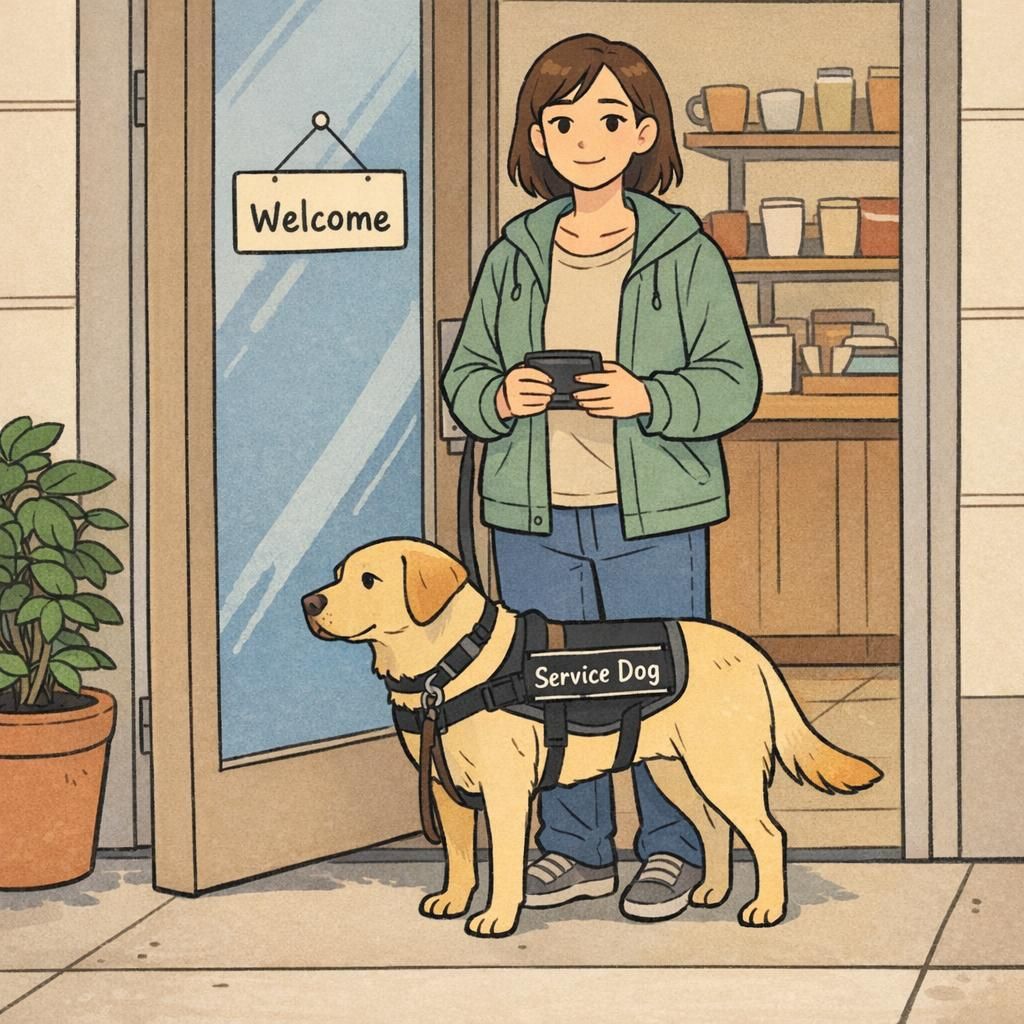
If you use a service dog, you have important access rights in many everyday settings. A “rights violation” generally means you were treated differently, denied access, or faced barriers specifically because you have a service dog—when the situation should have allowed you and your dog to proceed.
Violations can look different depending on where they happen. Public businesses, housing providers, airlines and airports, and workplaces often have different procedures and timelines. That’s why identifying the setting (and your location) is the first step: it helps you respond appropriately and decide the best path to resolve the issue.
When someone challenges your service dog, it can be stressful and personal. But your best outcomes usually come from a calm, steady approach. The goal in the moment is not to “win” an argument—it’s to keep you and your dog safe, prevent the situation from escalating, and create a clear record of what happened.
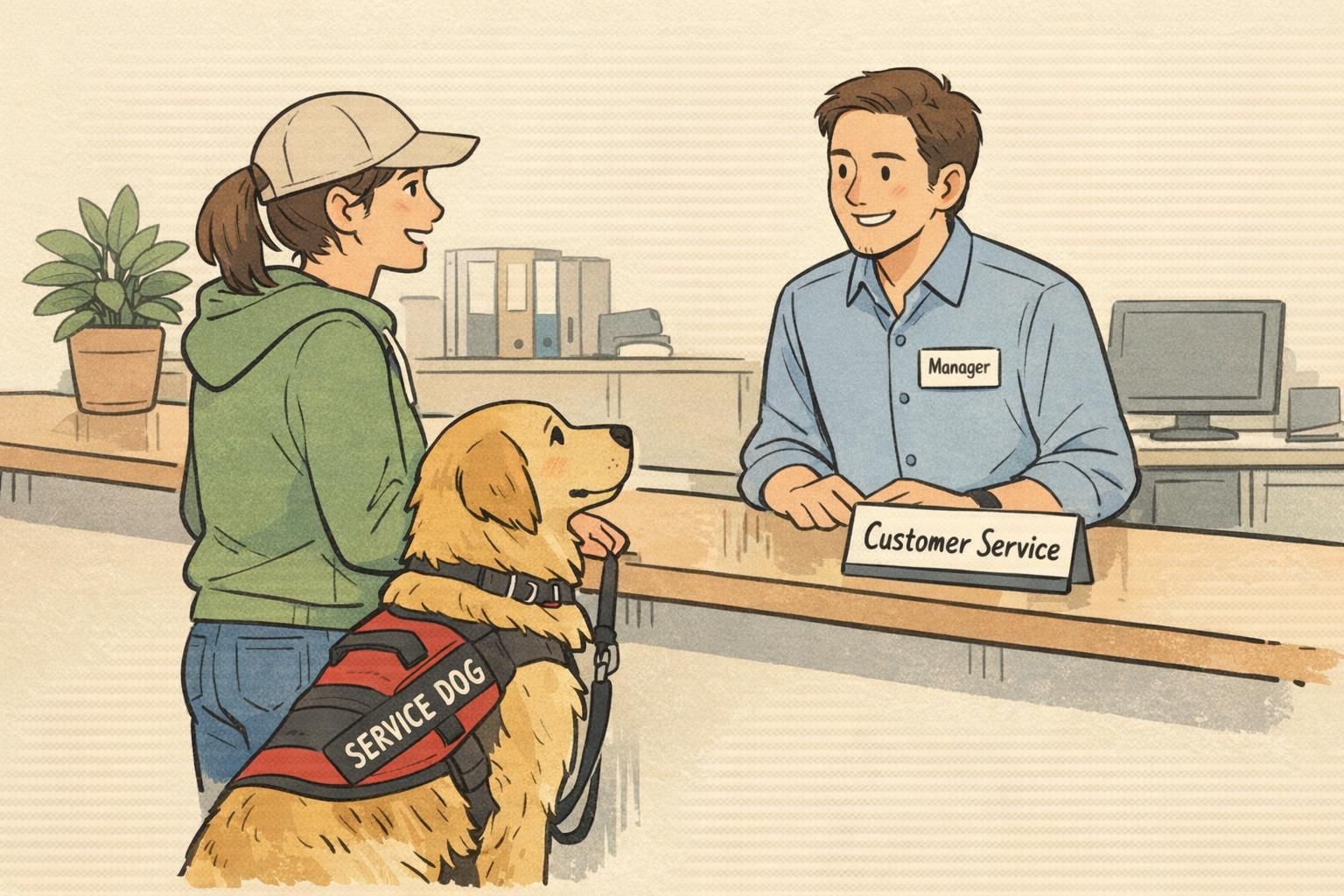
Start by grounding the interaction: keep your dog close, under control, and focused. Speak in a measured tone, and ask for a manager (or a supervisor) rather than debating with someone who may not know the rules. If you feel unsafe, prioritize leaving the immediate conflict area and continuing the conversation by phone or email later.
In many public-access situations, staff questions should stay limited and focused on access and safety. You can often move the interaction forward by answering clearly and briefly—without oversharing personal information. When you sound prepared and professional, the conversation is more likely to stay about what matters: whether you can access the business with your service dog.
A helpful approach is to prepare a short “script” you can repeat when you’re tired, rushed, or caught off guard. Your goal is to confirm your dog’s role and that you’re in control—then move forward.
For many handlers, having a clear, professional way to share access information reduces friction and helps staff feel confident they’re following the rules. Consider keeping ADA law handout cards you can share with staff in your wallet, bag, or vest pocket so you can keep the interaction short and respectful.
In most everyday public-access interactions, you can keep your information private. A concise explanation that your dog is a service dog trained to assist you is usually enough to move the interaction forward.
Stay calm, ask for a manager, and keep the focus on access and your dog’s appropriate behavior. If you have optional, professional identification materials, showing them can sometimes reduce confusion and speed up resolution.
It’s important to know that service dog access is strong—but not unlimited. In most public-facing settings, removal is typically only considered in narrow situations tied to safety and sanitation.
The most common examples are when a dog is out of control and the handler cannot regain control, or when the dog is not housebroken. These situations are about behavior, not the dog’s size, breed, or the presence of a vest.
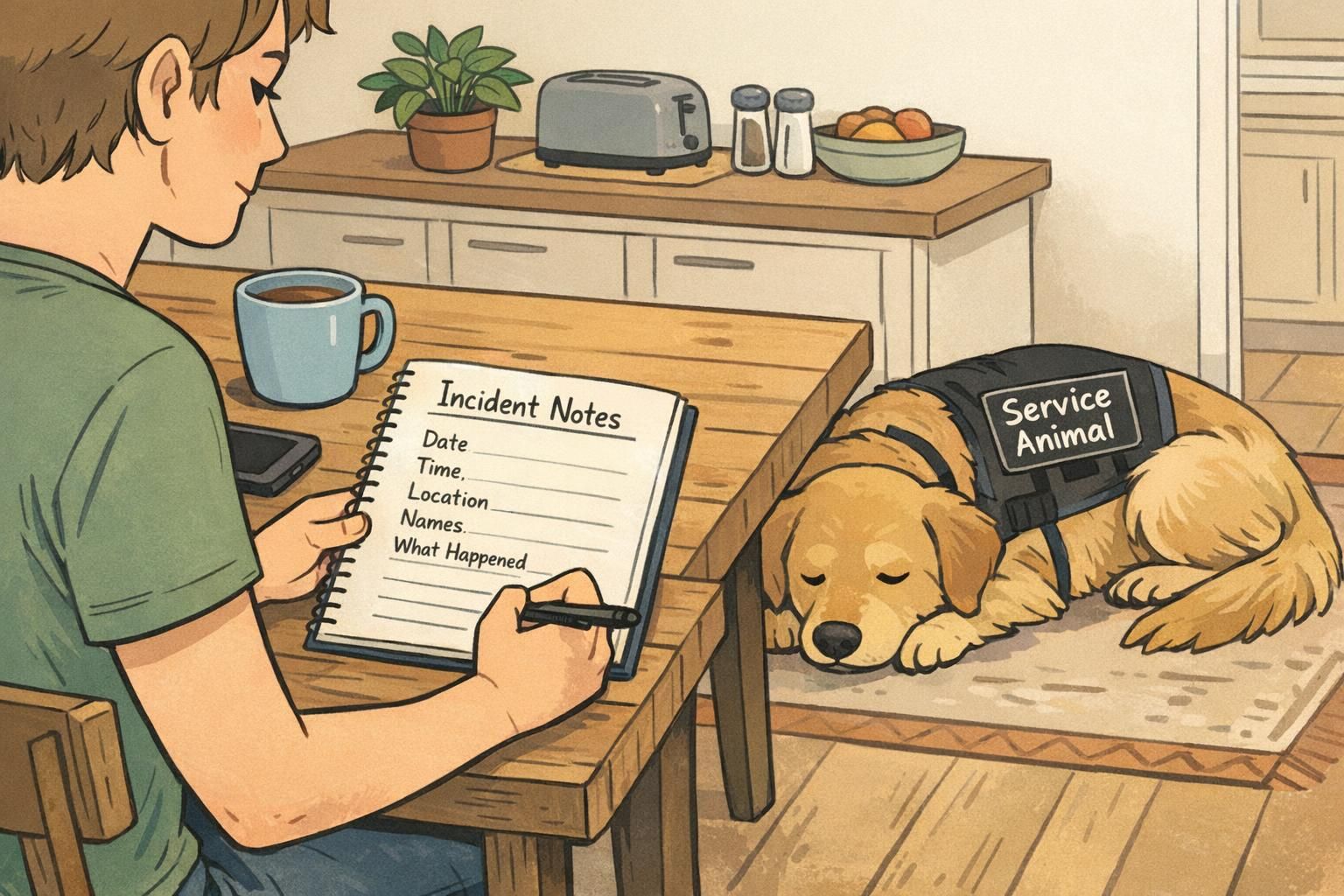
If your rights are violated, good documentation is one of the most powerful tools you have. Memories blur fast—especially after a stressful encounter—so capture details while they’re fresh.
You don’t need a complicated system. A simple note on your phone or in a small notebook can make a big difference when you follow up with management, contact corporate, file a complaint, or consult an attorney.
“ "The moment I started writing down names and exact wording, follow-ups became much easier—and the company took it more seriously." – Service dog handler”
Even when you’re fully within your rights, confusion and miscommunication can derail a simple errand. Busy staff may not know the rules, may be mixing up service dogs with pets, or may be reacting to incomplete information. Clear, professional identification can help keep interactions efficient and focused on access instead of confrontation.
Optional tools like printed ID cards, digital profiles, and a unique registration number can make it easier to present consistent information—especially if you’re traveling, visiting new places, or navigating a high-stress environment. These materials aren’t about “proving” your health history; they’re about reducing misunderstandings and supporting smoother conversations.
If you want an easy, everyday way to show organized information, consider a starter registration package for everyday identification so you can access your details quickly and present them in a professional format.
If the issue isn’t resolved on the spot, escalation works best when it’s structured and professional. The goal is to create a clear record, request a specific fix, and give the organization a chance to correct the problem through staff coaching or policy clarification.
What to say (simple framework):
1) What happened: “On [date] at [location], I was denied access with my service dog.”
2) Impact: “This prevented me from [making a purchase/attending an appointment/checking in].”
3) What you want: “I’m requesting confirmation that service dog teams are permitted and that staff receive refresher training.”
4) Documentation: “I have notes including time, names, and statements, and I can share them if needed.”
“ "Staying calm and putting it in writing turned it from a confrontation into a solvable customer service issue." – Frequent traveler with a service dog”
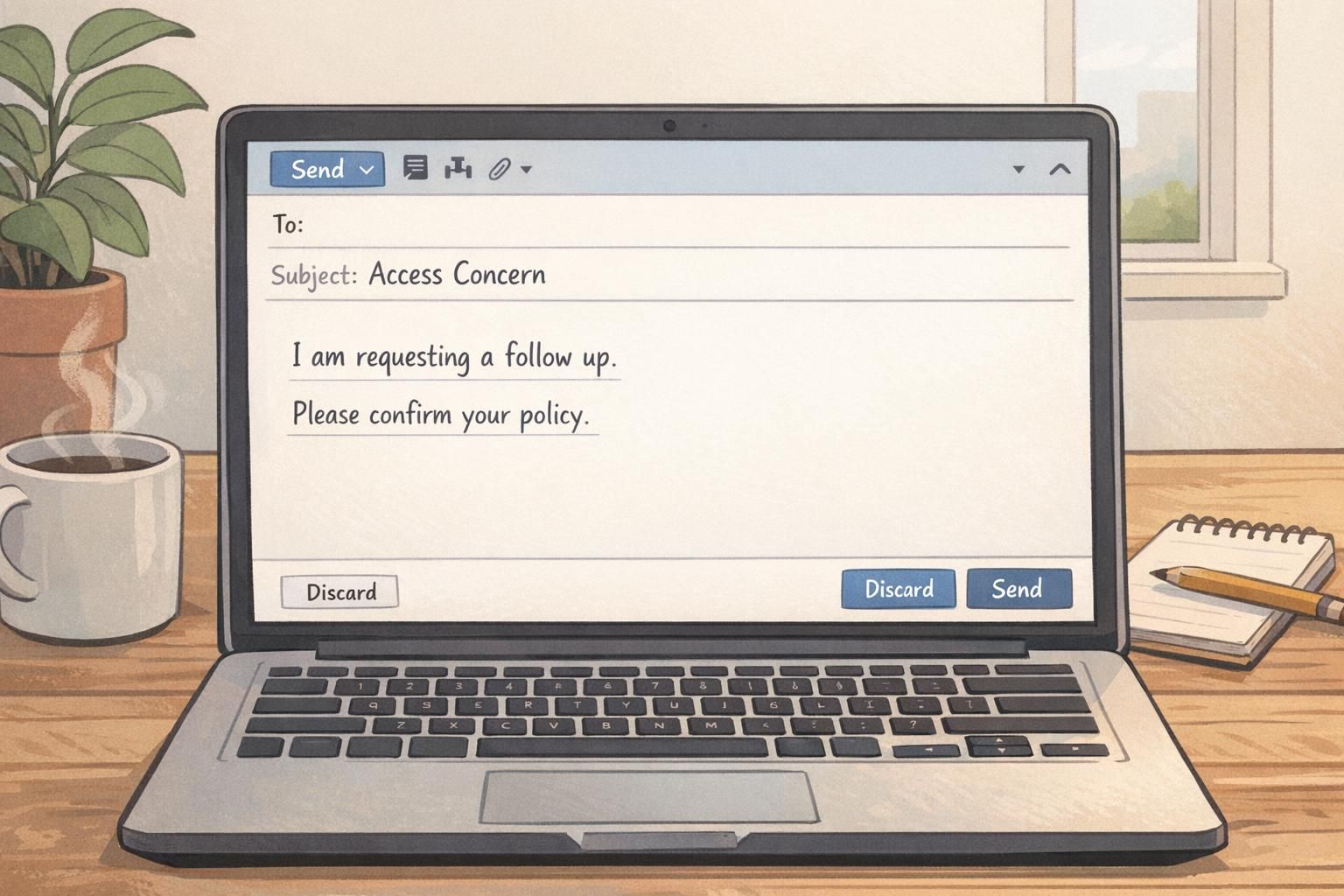
Some access problems are resolved quickly with a manager or corporate support. But if you believe you were illegally denied access or services because you use a service animal, filing a formal complaint may be the appropriate next step. For many public-access ADA issues, individuals may file a complaint with the U.S. Department of Justice, and a private lawsuit under the ADA may also be an option (source).
If the issue happens at work—such as being denied a reasonable accommodation, facing retaliation, or being treated differently after requesting to use your service dog—employment channels may apply. A common path involves internal HR processes and, when needed, external complaint options such as the Equal Employment Opportunity Commission (EEOC).
Federal rules are a major part of service dog access, but they’re not the whole picture. Many states and local jurisdictions add protections, define penalties, or provide additional complaint paths for people who are denied access or whose service animal use is interfered with.
This matters because your options—and the consequences for violations—can change depending on where the incident happens. If you’re frequently traveling between states or moving, it’s worth checking the rules in the places you live, work, and visit most.
Sometimes, an access issue is more than a misunderstanding. If you experience repeated denials, serious harassment, financial losses (missed flights, canceled appointments, lost wages), or retaliation after you assert your rights, getting legal advice can help you understand your options and the best way to protect yourself.
An attorney can help you evaluate whether a private lawsuit is appropriate, what remedies may be available in your area, and how to preserve evidence. Remedies vary by jurisdiction and situation, so individualized guidance can be valuable—especially when the stakes are high or the pattern is ongoing.
Many single incidents can be resolved through professional escalation and written follow-up. Legal advice may be especially helpful when the denial is repeated, causes significant harm, or involves threats, harassment, or retaliation.
Bring your timeline, names and contact details, copies of emails or messages, receipts or confirmations, and notes on what resolution you requested and how the business responded.
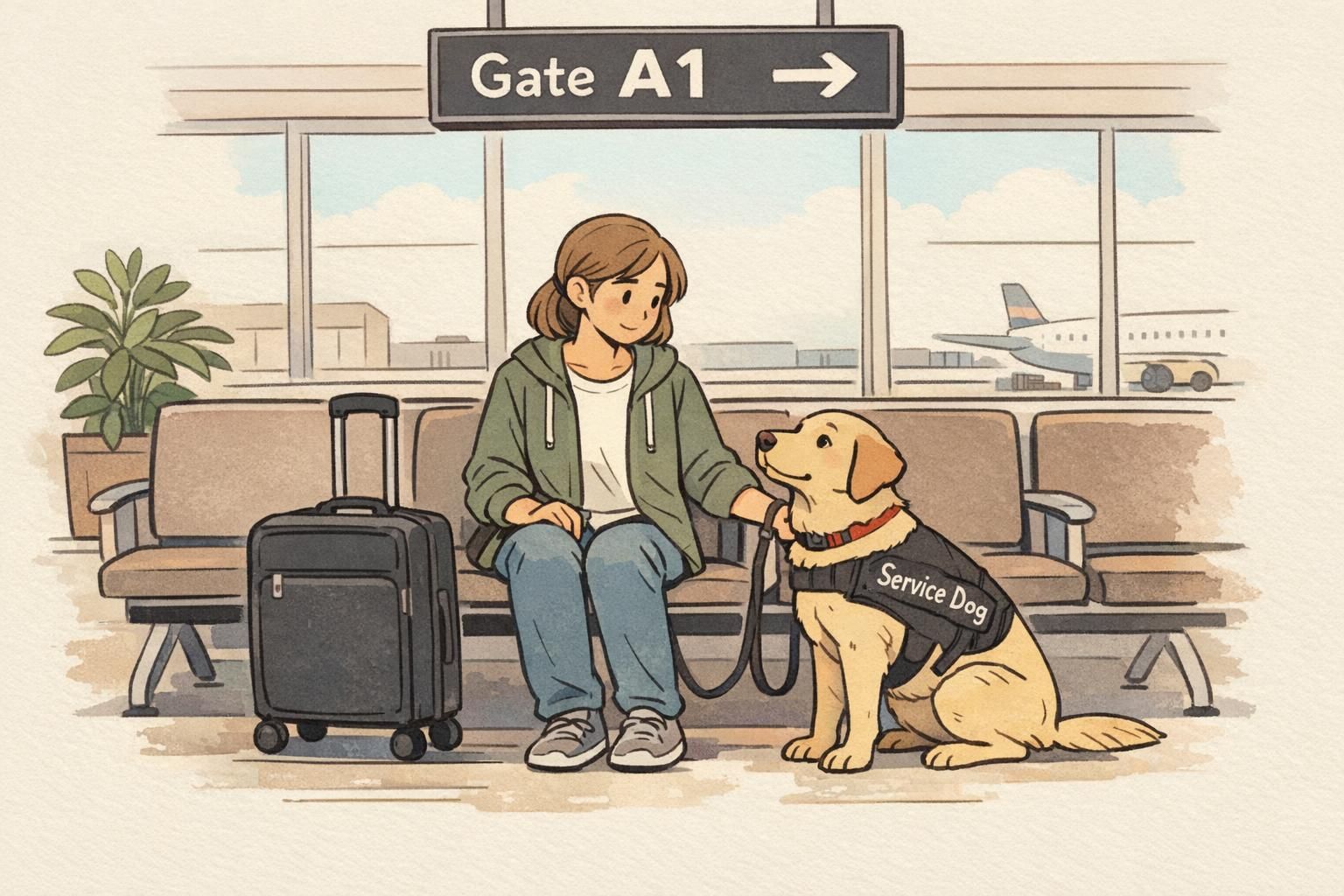
Housing and travel issues can become urgent fast. A landlord decision can affect where you live, and a travel disruption can strand you mid-trip. The key is to combine immediate problem-solving (so you can continue your day) with solid documentation (so you can follow up effectively).
For travel, planning ahead reduces stress and delays. If you’re preparing for a trip, review planning ahead for travel with a service dog so you have a smooth process and a clear idea of what to do if something goes wrong.
If a violation happens while traveling, ask for a supervisor quickly, note the names of staff involved, and request a workable solution (rebooking, seating assistance, a written explanation). For housing, keep all communication in writing when possible, and ask for clear next steps and a timeline for decisions.
If you want a travel-ready way to keep key materials together, consider a travel-focused service dog registration package so you can access and present consistent information quickly during time-sensitive moments.
When you’re stressed, it helps to rely on a repeatable plan. The steps below are designed to protect your safety, preserve your privacy, and increase your chance of a fast, fair resolution—while building a strong record if you need to escalate.
Many handlers find that having consistent, easy-to-show identification helps keep access interactions brief and professional. If you’d like a personalized option, consider a customizable printed service dog ID with a matching digital profile so you can confidently present clear information in everyday settings.
Your trusted source for service animal registration. Get professional ID cards, digital profiles, and smart NFC tags to keep your service animal safe and recognized.
© National Animal Registry — All rights reserved.