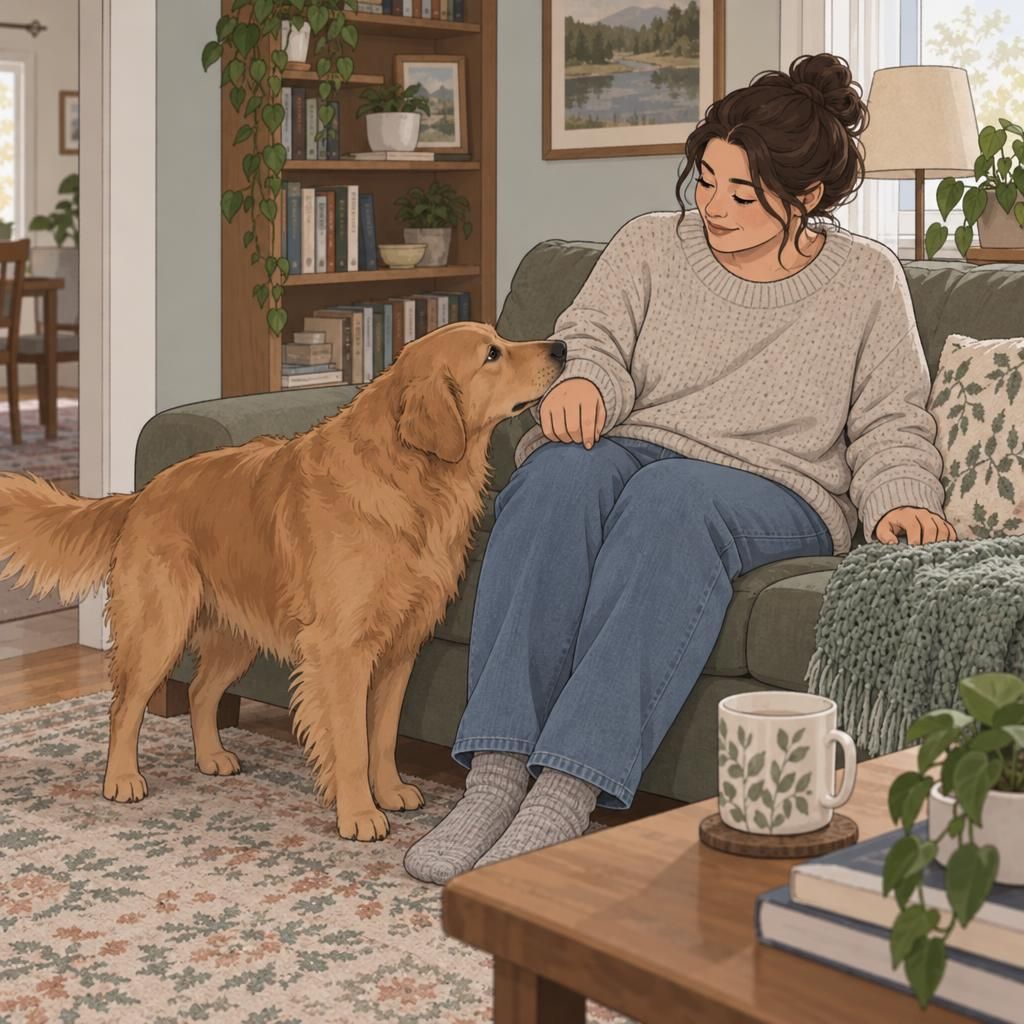
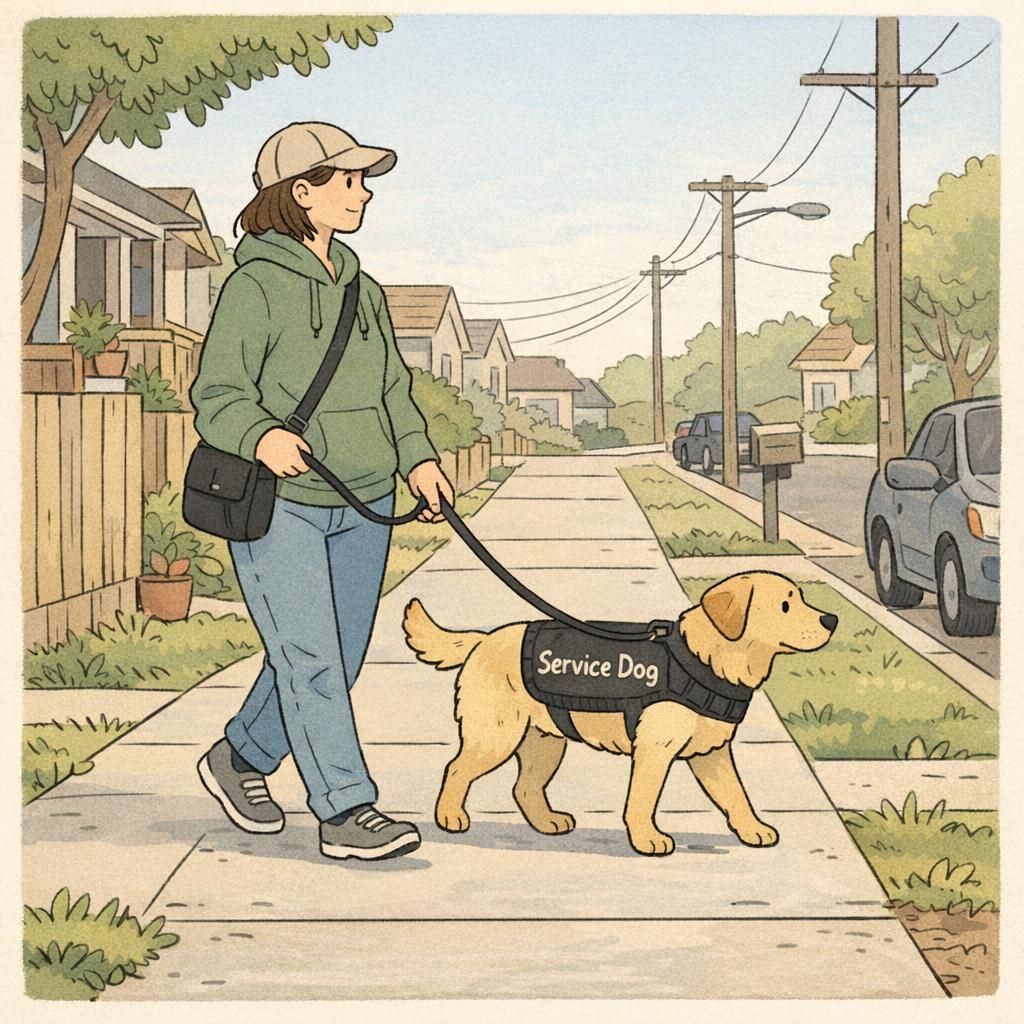
For many handlers, a service dog is part of nearly everything: morning routines, commuting, errands, school drop-offs, medical appointments, and the small spontaneous moments that make a day feel normal. A trained service dog can create real independence—helping a person navigate the world with more safety, stability, and confidence.
At the same time, day-to-day life with a service dog can be surprisingly social. People notice the dog. Strangers may ask personal questions, try to pet, or offer opinions. Staff at a store may not know the rules and might ask for “papers” or push back at the door. None of this changes the value of a service dog—but it does mean many handlers end up doing quiet, repeated “public education” while just trying to buy groceries or grab a coffee.
In everyday public-access situations, the Americans with Disabilities Act (ADA) is the key federal framework people reference most often. Under the ADA, a service dog is a dog that is individually trained to do work or perform tasks for a person with a disability. The tasks are not “one-size-fits-all”—they’re specific actions that help mitigate a disability in real life.
It can also help to understand a common point of confusion: emotional support animals (ESAs) can be deeply meaningful and beneficial, but “emotional support” by itself is not the same as trained task work under ADA service-dog public-access rules. This difference matters most in public places, where the ADA service animal definition is what businesses and government offices typically follow.
For a clear, practical overview of these ADA basics, including how public access works in everyday settings, you can reference the ADA’s service animal requirements here: source.
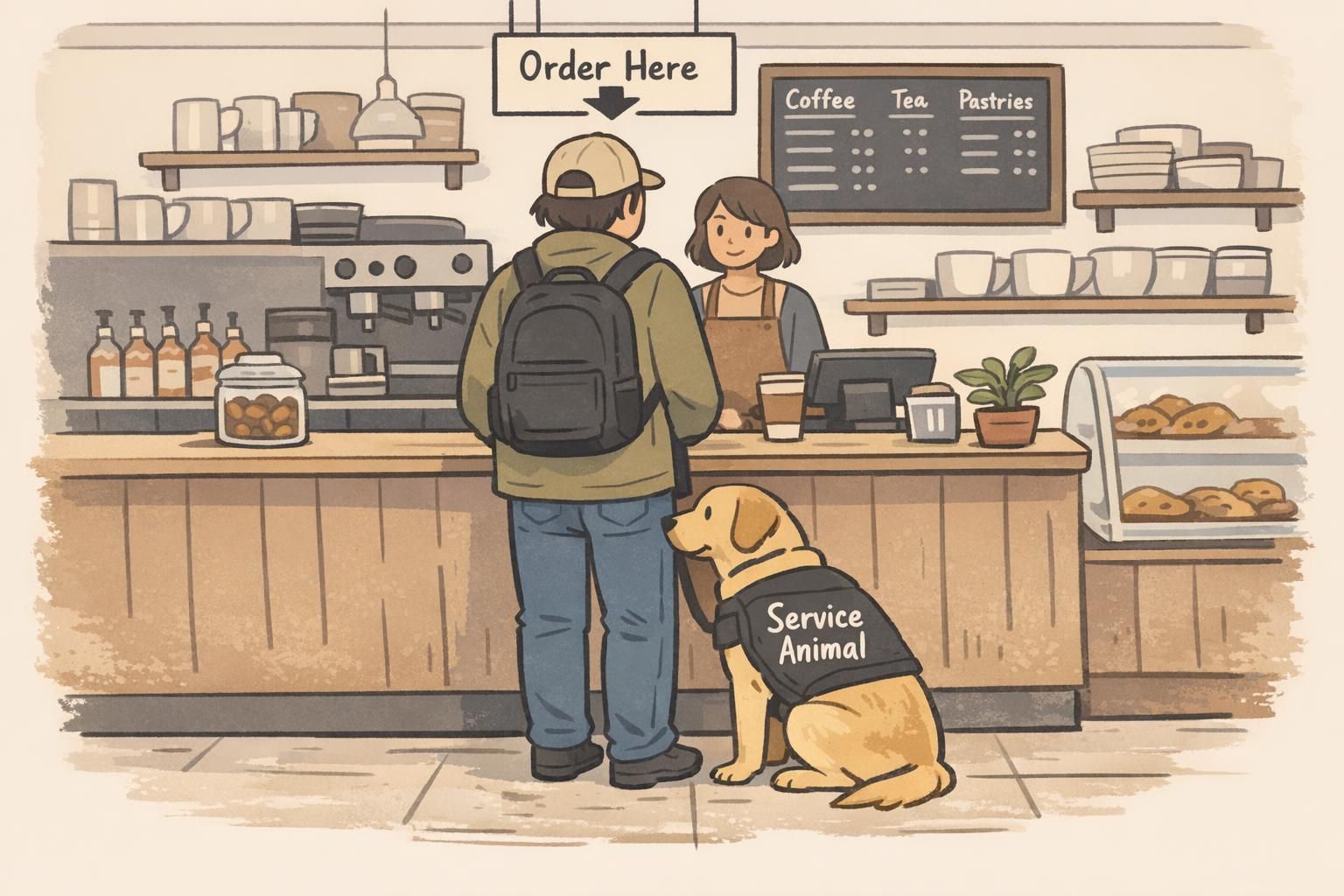
In general, service dogs are allowed to accompany their handlers in areas open to the public, including many businesses and government settings. In day-to-day life, that typically means the dog is with you in the same places you’d go without a disability—walking in alongside you, staying out of aisles, and settling quietly during the activity.
Public access often looks simple on paper, but “simple” doesn’t always mean “effortless.” A handler may need to pause at an entrance to answer a question, choose a quieter line, or reposition to keep their dog safely tucked in. The goal is usually the same everywhere: access without disruption, and safety for everyone.
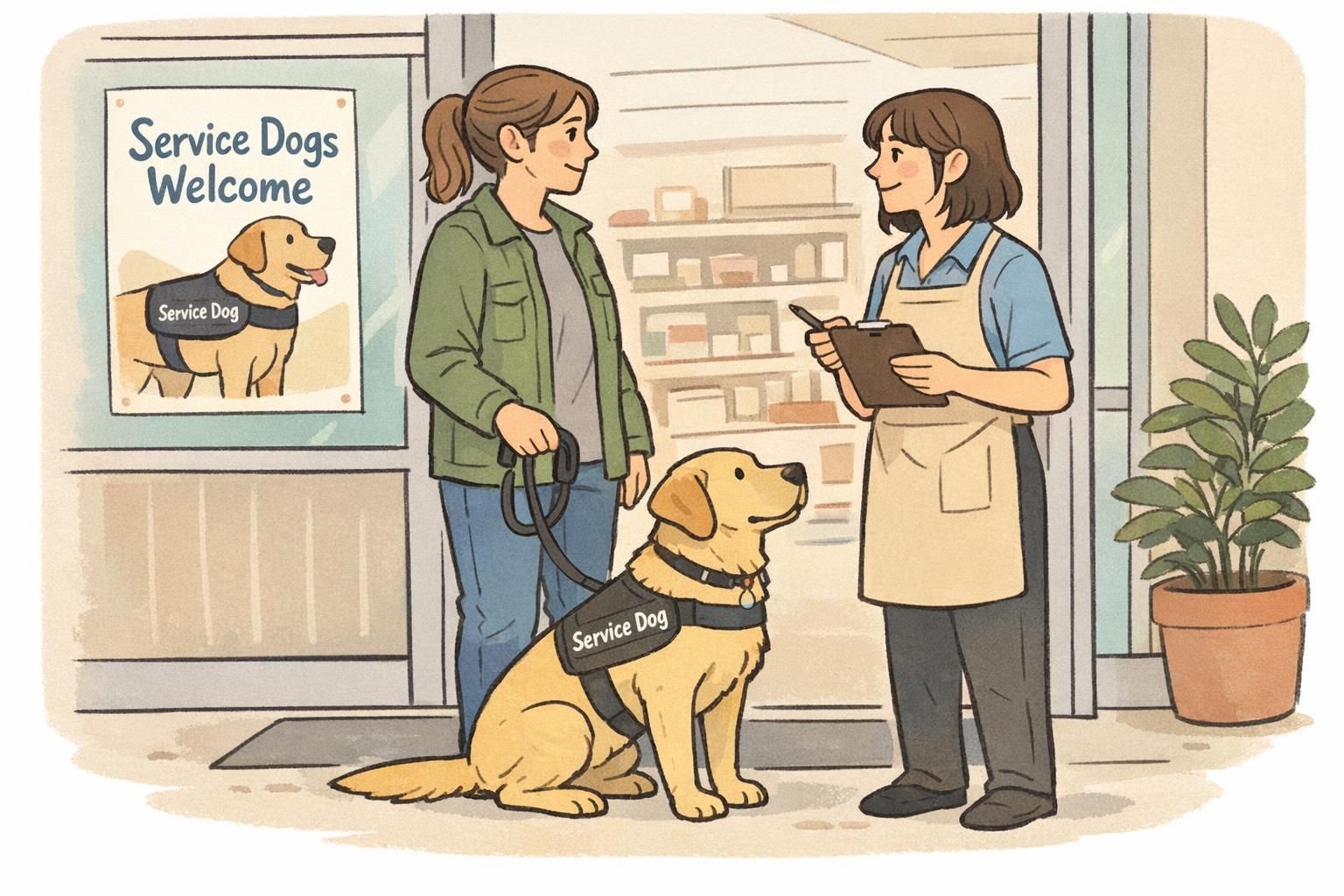
Many access issues start with uncertainty. Staff may be trying to do the “right” thing while also following policies, and handlers may be trying to protect their privacy while moving through the day. Knowing what questions are allowed—and having a calm way to respond—can make these moments shorter and less stressful.
In typical public-access situations, staff are generally limited to two questions: (1) Is the dog a service animal required because of a disability? (2) What work or task has the dog been trained to perform? Staff should not ask you to disclose details about your disability, request medical documentation, or require a demonstration of tasks.
Public access is a two-way street: handlers have rights, and they also have responsibilities that keep public spaces safe and workable. In everyday terms, that means your service dog should be under control, behave appropriately in public, and follow basic hygiene expectations like being housebroken.
Most of the time, control looks like a dog that stays with the handler, doesn’t approach strangers, doesn’t bark repeatedly, and doesn’t block aisles or doorways. Leashes, harnesses, and tethers are common tools for keeping things predictable. In situations where a tether interferes with the dog’s work or the handler’s disability prevents use, other methods of control (like voice commands or signals) can fill the gap.
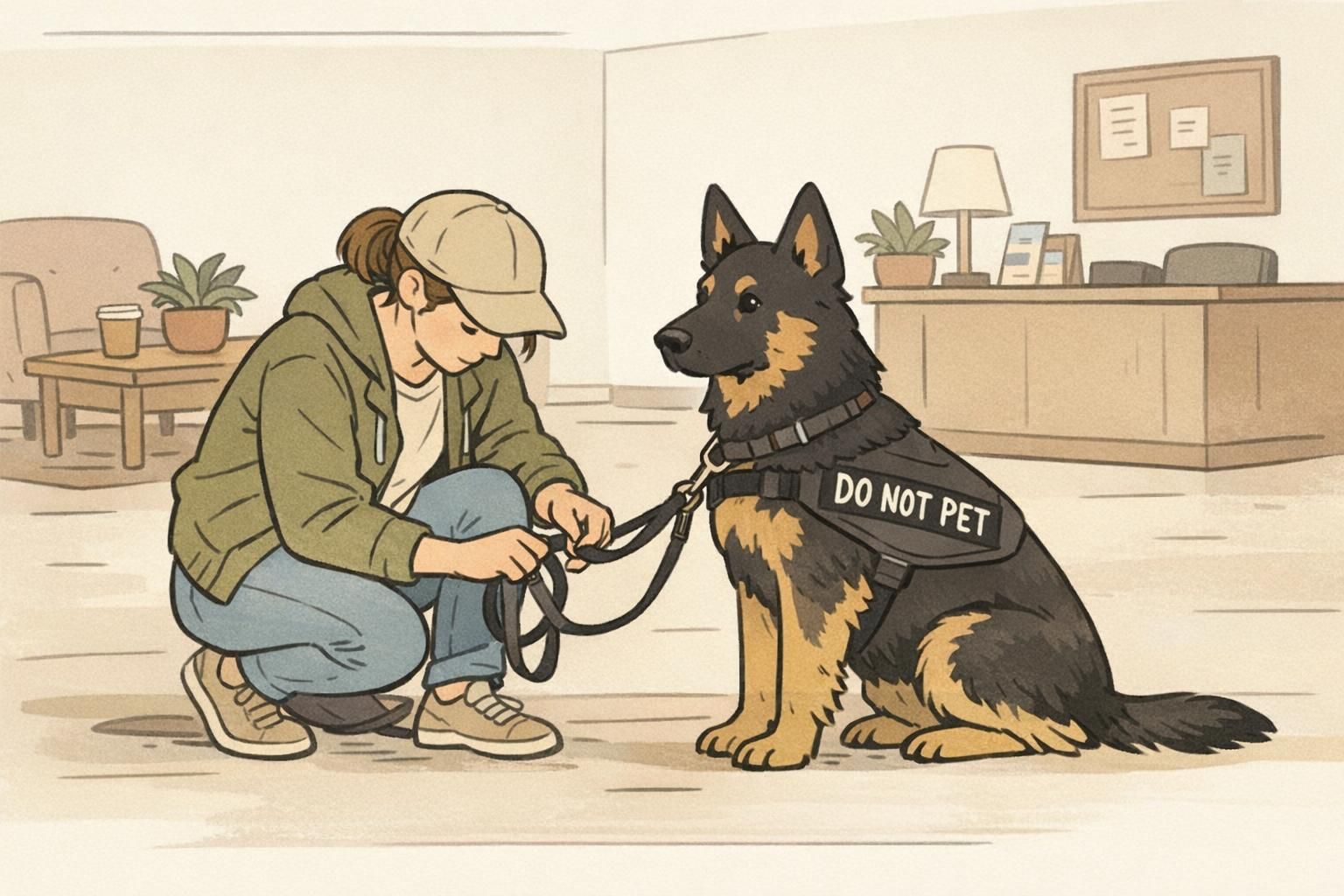
Although service dogs generally have broad public access, there are limited situations where a business or facility may ask for the dog to be removed. In real life, these situations usually involve safety and disruption—not preferences or “no pets” policies.
Examples of when removal may be allowed include: if the dog is out of control and the handler does not take effective action to correct it, or if the dog is not housebroken. These are narrow, behavior-based standards—meaning the focus is on what is happening in the moment.
If a service dog must be removed, the interaction shouldn’t end with a shut door. When possible, the person should still be offered the opportunity to receive goods or services without the dog—such as takeout instead of indoor dining, curbside service, or having an employee bring items to a counter while the dog waits outside with a companion.
Some handlers find it helpful to keep short, friendly educational materials on hand to reduce friction and keep conversations respectful. For example, ADA law handout cards for simple, respectful conversations can make it easier to share key points without debating at the entrance.
Even when you know your rights, the day-to-day challenges can wear on you. Many handlers report the same repeating themes: being asked for “papers,” hearing comments about whether the dog “looks like” a service dog, dealing with people who try to pet or distract the dog, or navigating confrontations from other customers.
A helpful mindset is to treat most issues as communication problems first—and safety problems always. Your priority is keeping your dog focused and the situation calm. You do not owe strangers personal medical information, long explanations, or an argument.
“ "The biggest skill I learned wasn’t just training—it was keeping conversations short and calm. The less I debate, the faster we get back to living our day." – Service dog handler”
The ADA sets an important federal baseline, but real-world experiences can still vary by location. State laws and local ordinances may add details that affect day-to-day expectations—especially around service dogs in training, penalties for interfering with a working team, and local requirements like licensing or vaccination rules.
This is why two handlers can have very different experiences in different cities—even when both are doing everything right. When you’re preparing for a trip or a move, it’s smart to check the specific rules and common practices where you’re going, and to plan for the environments most likely to create questions (airports, hotels, busy tourist areas, and major events).
If you’re mapping out logistics and want fewer surprises, see planning ahead when traveling with a service dog for practical ways to prepare your route, lodging, and daily routines.
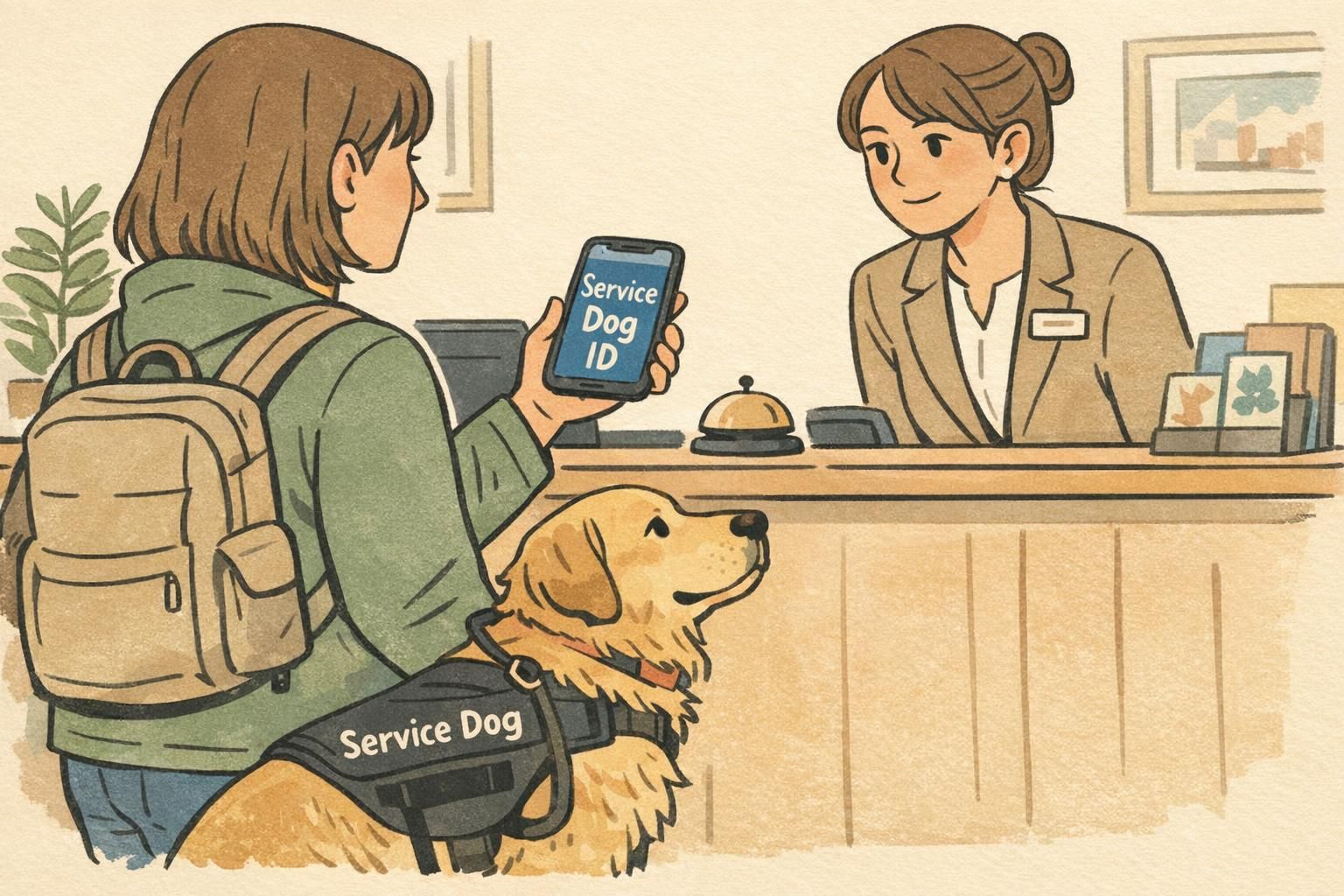
Even though federal ADA public access does not require you to carry documentation, many handlers choose to keep clear identification materials ready. In day-to-day life, the goal is often practical: shorten conversations, reduce confusion, and keep the focus on safe access rather than a prolonged back-and-forth.
Helpful options can include a service dog ID card in your wallet, a digital profile you can pull up quickly, and a consistent way to share basic information (like your dog’s name, emergency contact, or brief task description) without oversharing personal details. When used thoughtfully, these tools can support smoother check-ins at hotels, calmer interactions with new staff, and more predictable routines when you’re tired or in a hurry.
If you want an all-in-one option that combines everyday identification with a consistent digital reference, consider a service dog registration package with ID and a digital profile for everyday use.
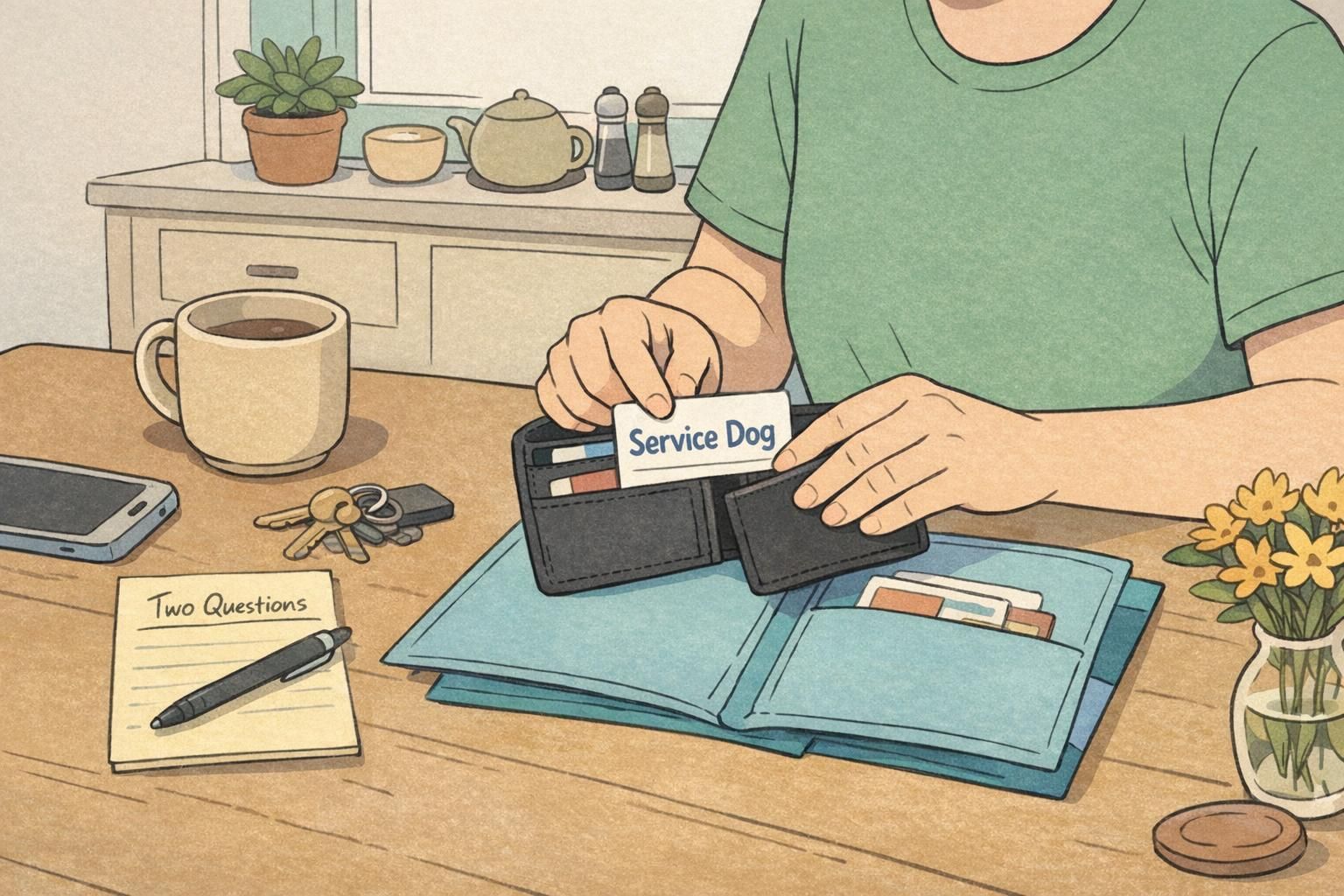
Access problems can feel personal—especially when you’re simply trying to go about your day. A simple plan can help you stay calm, keep the interaction professional, and protect your energy. The goal is not to “win” a confrontation; it’s to get access safely and appropriately, or to create a clear record if you need to follow up.
Some handlers also like having a ready-to-show reference on their phone for quicker, lower-friction conversations. If that fits your style, a digital service dog ID you can pull up quickly if questions come up can be a convenient part of your access toolkit.
The best “everyday” strategy is a mix of knowing your rights, practicing calm scripts, and building routines that set your dog up to succeed. Over time, small habits—where you stand in line, how you tuck your dog in, how you answer questions—can make public outings feel more predictable and less draining.
“ "Confidence isn’t about never getting questioned—it’s about knowing what to say, keeping your dog steady, and moving through your day with dignity." – Service dog handler”
Your trusted source for service animal registration. Get professional ID cards, digital profiles, and smart NFC tags to keep your service animal safe and recognized.
© National Animal Registry — All rights reserved.