
In everyday life, people use a few different terms—service dog, service animal, assistance dog—to describe a trained working animal that helps a person manage the practical impact of a disability. The exact wording can vary by context, but the core idea is the same: this is not a pet in public spaces. It’s a working partner trained to perform specific tasks that support the handler.
“Service dog registration” typically refers to an optional, handler-chosen way to keep your service dog’s key details in one consistent place and to receive easy-to-use identification materials. Many registries provide a listing/profile, a unique registration number, and common ID tools like a wallet card, tag, and certificate. For many teams, the biggest value isn’t “permission”—it’s smoother communication.
In the United States, the Americans with Disabilities Act (ADA) is the key federal framework people reference when talking about service dogs and public access. The ADA focuses on what the dog does (trained tasks that assist a person with a disability) and sets boundaries on what staff can ask in many public-facing situations.
Importantly, the ADA does not require service dog registration, and a business can’t require documentation as a condition of entry. That means your access rights don’t hinge on carrying a specific card or being listed in a database. You can read more detail directly from the ADA’s service animal FAQs here: source.
At the same time, many handlers still choose registration because it’s practical. Clear ID materials can make everyday interactions feel more predictable—especially in busy, high-pressure environments—while keeping the legal reality straightforward: registration is a helpful option, not a legal requirement.
Most service dog handlers don’t want to “win an argument” at the door—they want to grab groceries, go to an appointment, and move through the day without unnecessary stress. Registration materials help by giving you a consistent way to identify your dog as a working team member, not a pet.
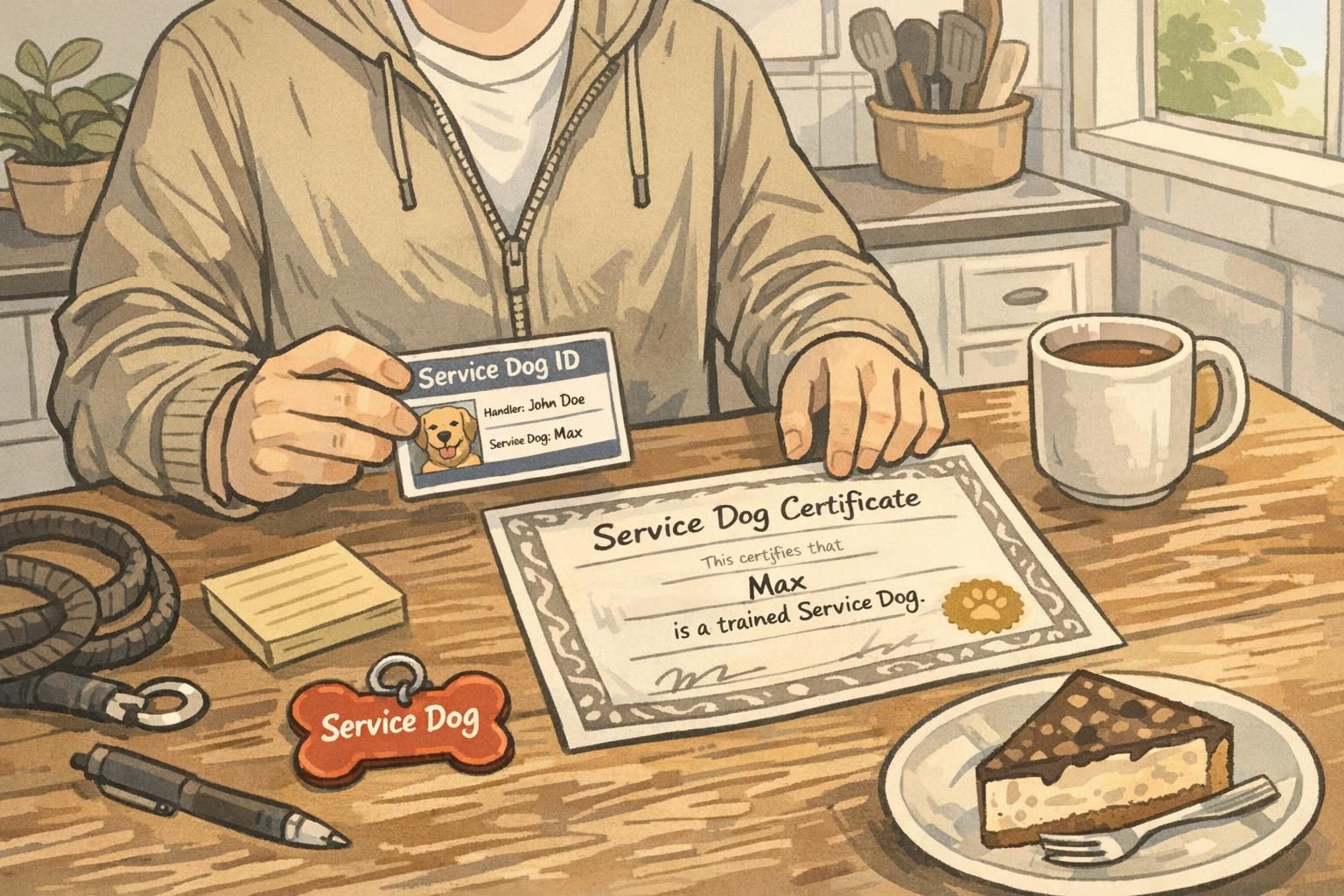
A wallet-sized ID card, a visible tag, and a clean certificate can reduce friction in places where staff turnover is high and policies are inconsistently understood. Instead of repeating personal details or explaining from scratch, you can present simple, professional identification that signals: this is an established service dog team.
Many handlers start with a starter registration package for everyday identification so they have the basics on hand: a unique registration number, a digital listing/profile, and easy-to-carry ID materials.
“ "The biggest change wasn’t ‘access’—it was less explaining. Having a consistent ID card and tag helped keep interactions short and calm." – Service dog handler”
Even when you know the rules, it can be tiring to educate strangers. Registration materials can set a professional tone right away, but it’s your communication style that often determines whether an interaction stays respectful and productive.
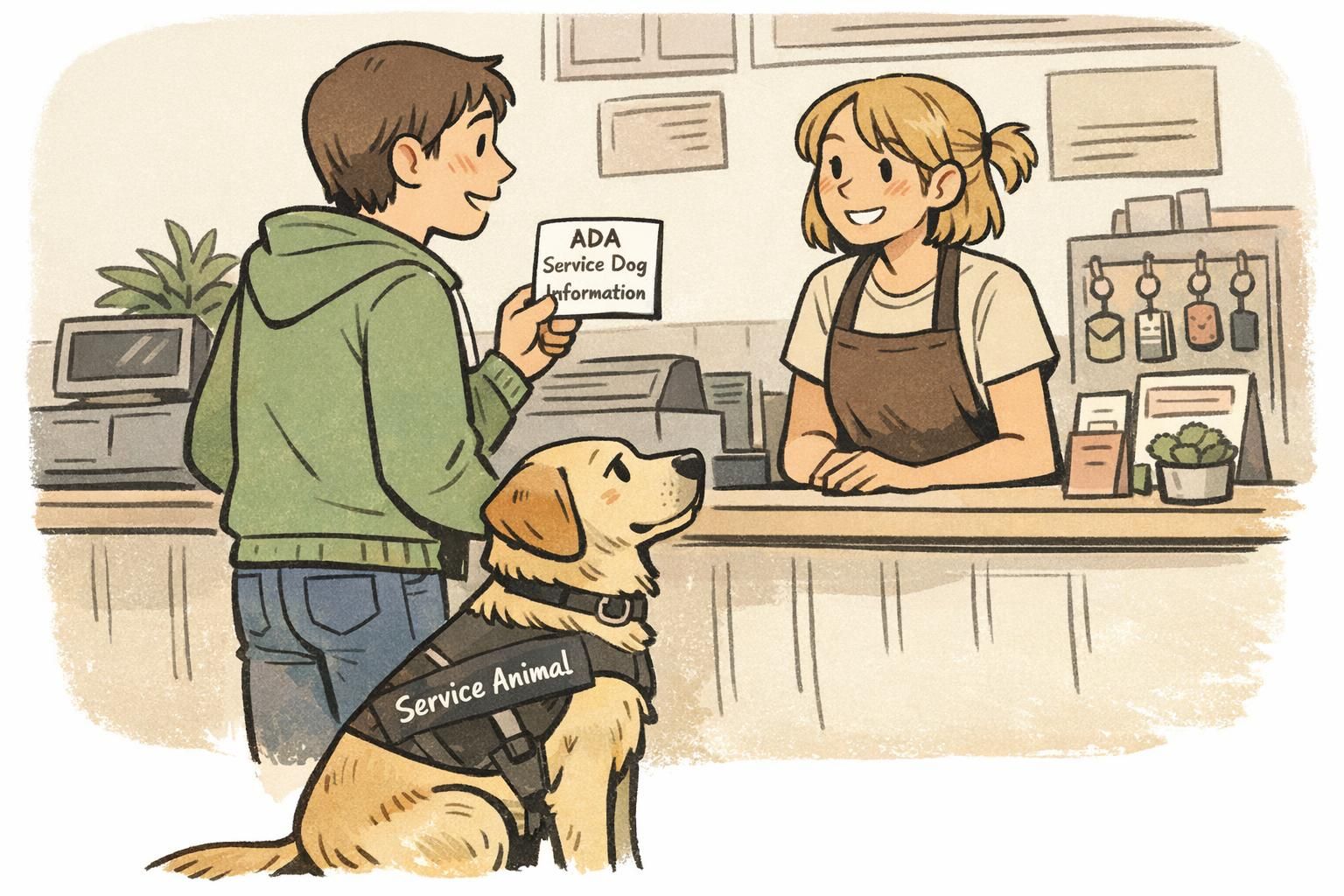
One of the simplest ways to prevent misunderstandings is to be prepared with a short, consistent explanation of service dog basics. This can help staff understand what to do next without feeling challenged or embarrassed—especially if they’re trying to follow store policy but haven’t been trained well.
Many handlers keep ADA law handout cards for quick, polite reference so they can share information calmly, without turning the moment into a debate.
Travel adds pressure: tight timelines, crowded spaces, and multiple checkpoints where you may need to communicate quickly. While you typically won’t want to fumble through bags or repeat the same explanation again and again, being organized can make the trip feel far more manageable.
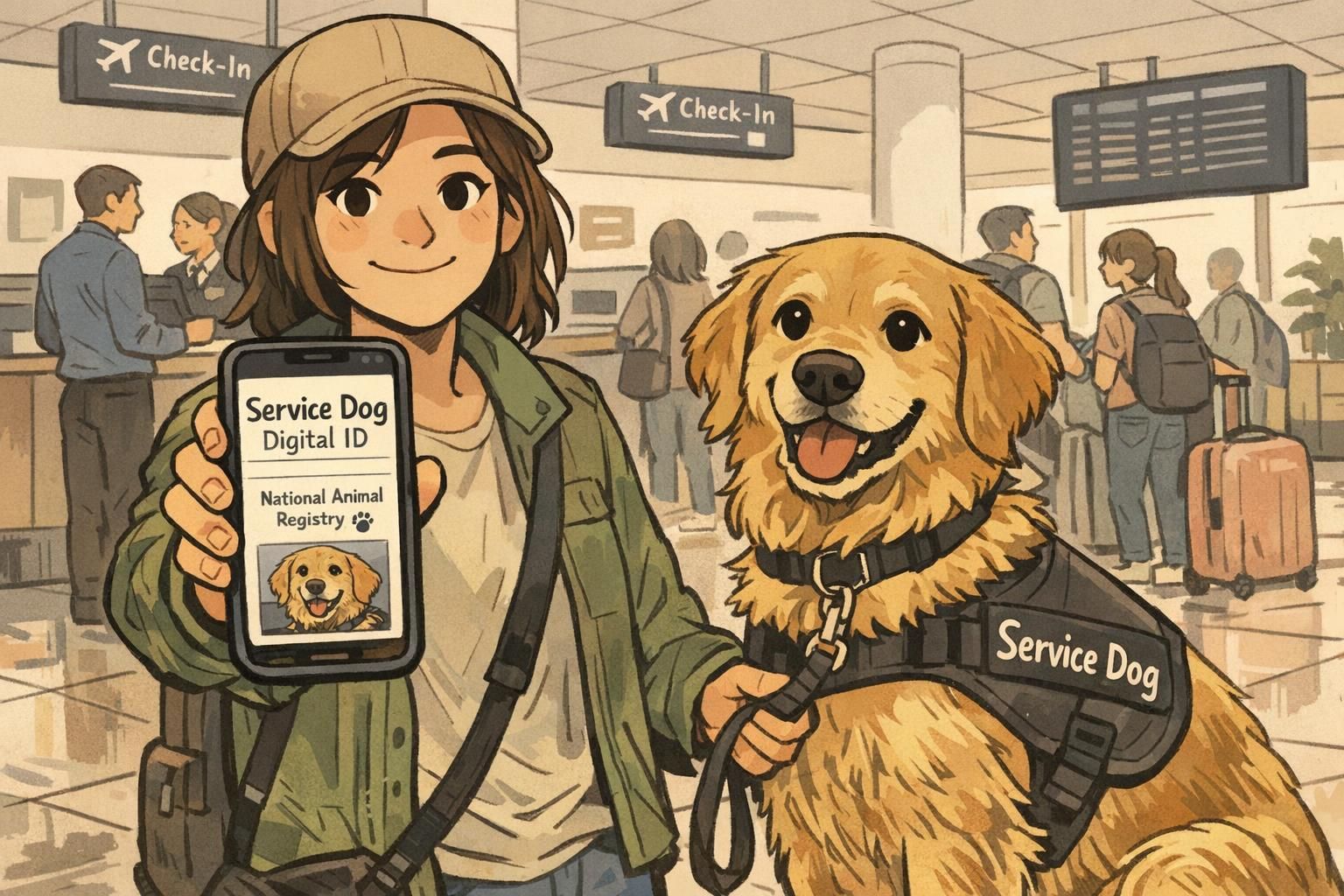
Registration documentation and a digital profile are helpful here because they keep key details in one place. If you’re asked routine questions, you can stay focused on the flow of travel—checking in, navigating lines, and boarding—rather than searching for information.
For more practical planning tips, see traveling with a service dog.
If you’re frequently on the move, a travel registration package designed for handlers on the move can be a convenient way to keep identification, digital access, and supporting materials together.
Housing conversations can feel sensitive because they often involve multiple people—property staff, managers, administrative offices—and you may need to repeat basic information more than once. Having consistent registration materials can reduce back-and-forth and keep the conversation focused on logistics rather than confusion.
A simple, organized set of materials helps you share the same key details each time: your service dog’s identification, a clear label that the dog is working, and a stable place where information can be referenced later. For many handlers, that level of organization is a stress reliever.
If housing-related organization is your top priority, a housing-focused registration package for organized verification can help keep everything consistent and ready when needed.
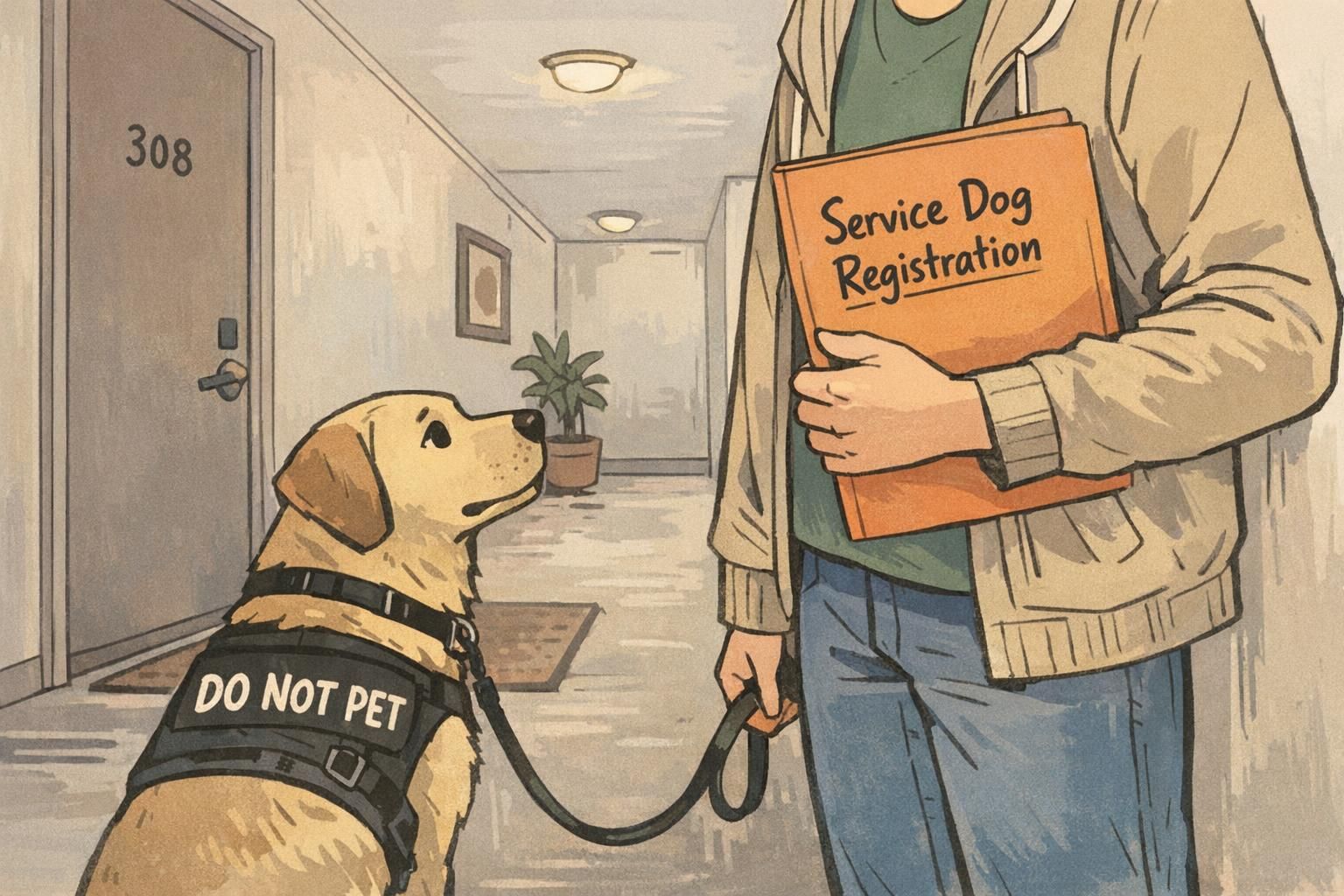
Emergencies are the moments when clear identification can matter most. In a stressful situation—an accident, a medical episode, an evacuation—people may misread your dog’s role. Visible identification can quickly signal that your dog is working and should remain with you whenever possible.
Registration tools support preparedness by making it easier to keep critical information accessible. A tag on the dog and an ID on the handler can help responders, staff, or bystanders recognize the team’s working status and avoid separating you unnecessarily.
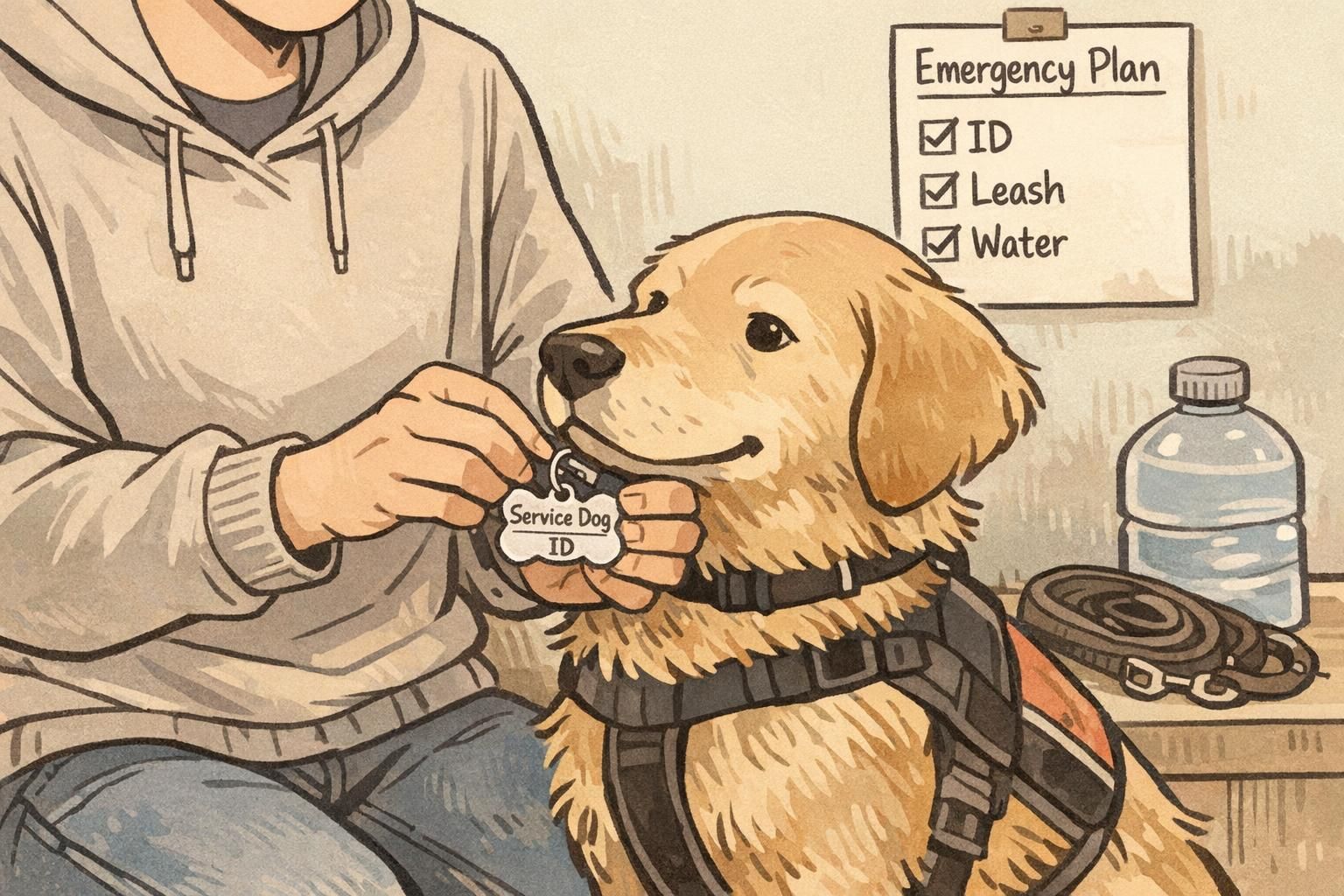
One challenge service dog teams face is public confusion—especially in busy locations where pets are common and staff may not know how to tell the difference between a working dog and a companion animal. Clear identification can reduce that uncertainty and help set appropriate expectations right away.
When a service dog is visibly identified, it can lower the odds of unwanted distractions like petting, whistling, or crowding. It can also decrease conflict at the door by giving staff an immediate visual cue that the handler is managing a legitimate working team.
“ "When my dog’s gear and ID are consistent, people hesitate less and distract us less. It’s not about attention—it’s about letting my dog do the job." – Handler”
The best registration setup is the one that matches your real routine. Some handlers mainly want a simple ID for errands and appointments. Others travel often and prefer a more robust set of materials that keeps everything organized across locations.
National Animal Registry registration is designed to be straightforward and accessible. You can register without providing proof, medical letters, or training documentation—many handlers appreciate being able to get organized quickly and confidently.
If you want the most complete, ready-for-anything bundle, consider an all-in-one complete registration package to cover day-to-day identification, travel organization, and quick-reference materials in one set.
In everyday speech, people often use them interchangeably. “Service dog” is the clearest phrase for most public situations because it immediately signals a trained working dog.
“Assistance dog” is a common, practical term that highlights the dog’s role: providing trained help that supports the handler’s daily life.
Typically, registration provides a registry listing or digital profile, a unique registration number, and identification materials like a printed ID card, tag, and certificate. These tools help you communicate your dog’s working status more smoothly.
It’s especially helpful in day-to-day interactions where staff or the public may be unsure of policies, as well as in travel, housing-related conversations, and emergency preparedness—anytime organization and clear identification reduce friction.
No. National Animal Registry does not require proof, medical letters, or training documentation to register. Many handlers choose registration as an accessible way to get organized and present consistent identification.
Your trusted source for service animal registration. Get professional ID cards, digital profiles, and smart NFC tags to keep your service animal safe and recognized.
© National Animal Registry — All rights reserved.