When people talk about “minimum training standards” for service dogs, they’re usually not describing a single universal rule that applies to every team. In practice, minimum standards are a benchmark: a clear, realistic baseline that helps a dog work safely, calmly, and reliably around the public.
These standards often come from respected organizations, experienced trainers, and established service dog programs. Owner-trainers also use them as training targets—something concrete to aim for when deciding when to practice in public, what to proof next, and how to measure progress.
In the United States, the Americans with Disabilities Act (ADA) focuses on functional criteria rather than a fixed training curriculum. A service dog is generally expected to be individually trained to do work or perform tasks that directly relate to the handler’s disability.
Just as important for public access, the ADA centers on behavior and management: the dog should be under the handler’s control and housebroken. Those simple requirements matter because they affect safety, hygiene, and how comfortably a team can move through shared spaces.
What the ADA does not do is set a required number of training hours or require a particular certification, test, or professional trainer. Many successful teams are trained in many different ways. Still, solid training is what makes public access go smoothly—both for the handler and everyone around them.
No. Many teams work with professional help, and many teams owner-train. Either way, the goal is the same: safe public manners, reliable control, and trained tasks that mitigate the handler’s disability.
There isn’t one single universal standard. The legal baseline focuses on training for disability-related tasks plus being housebroken and under control, while many teams use additional benchmarks to guide quality and readiness.
Even though there’s no single mandatory training checklist, many handlers and programs look to widely respected organizations for practical guidance. Two names that come up often are IAADP (International Association of Assistance Dog Partners) and ADI (Assistance Dogs International). Their recommendations are voluntary, but they’re commonly treated as a helpful “floor” for training quality and public readiness.
One of the most referenced guidelines is a minimum of 120 total hours of training over 6 months or more, including at least 30 hours of training in public settings. This benchmark is not about checking a box—it’s about putting in enough repetition, variety, and real-world practice to help skills hold up outside the home, when distractions and surprises happen.
You can read the full IAADP discussion of these minimum public access training standards here: source.
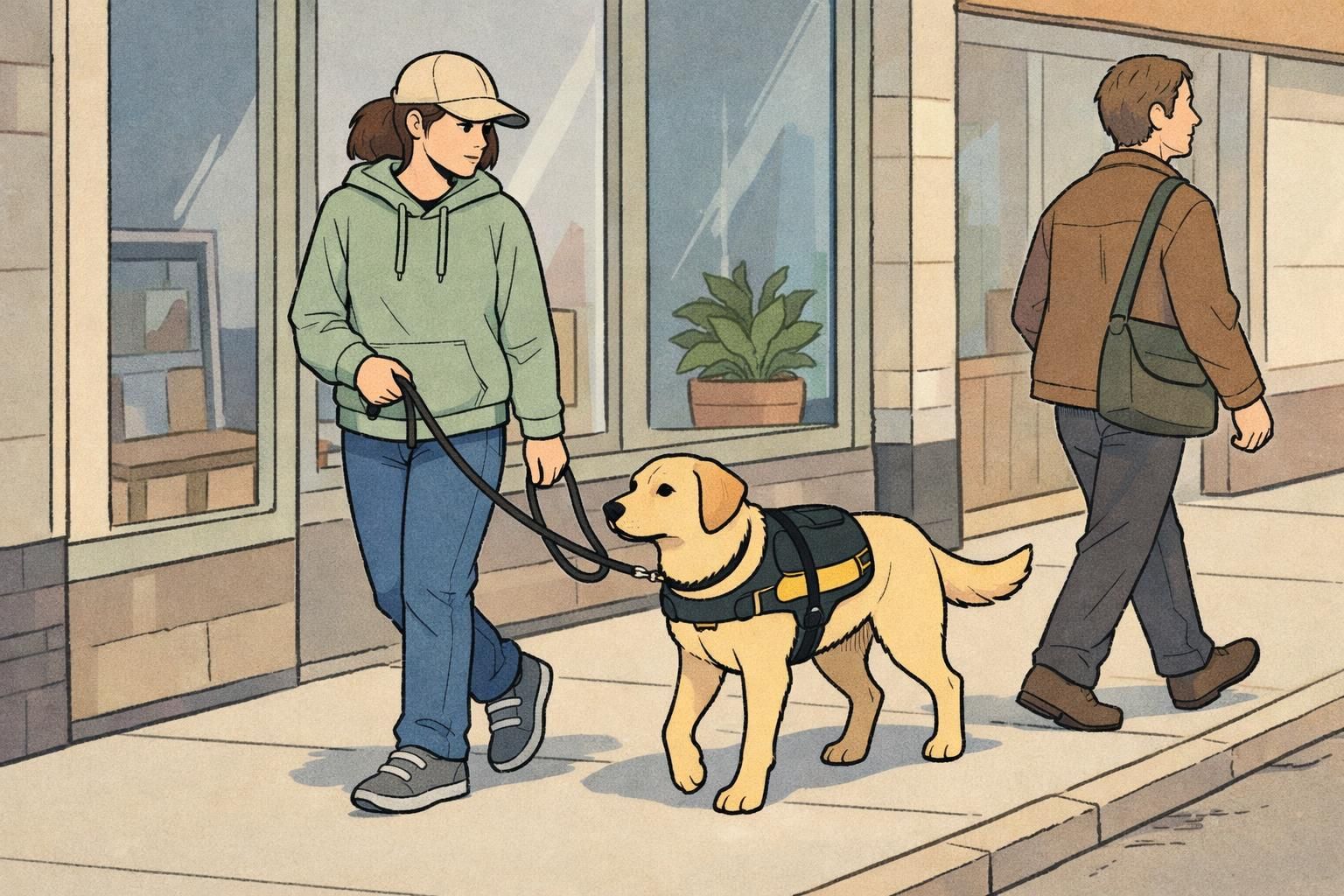
Core obedience isn’t about perfection—it’s about dependable communication. In public, handlers need cues that work the first time, even when something unexpected happens (a loud cart, a child running by, a new smell, a tight checkout line).
Most teams prioritize foundational cues like sit, down, stay, come, and heel (or a close loose-leash position). Over time, these cues are practiced in different locations so the dog can generalize the behavior—meaning “sit” works at home, on a sidewalk, and in a store, not just in one familiar room.
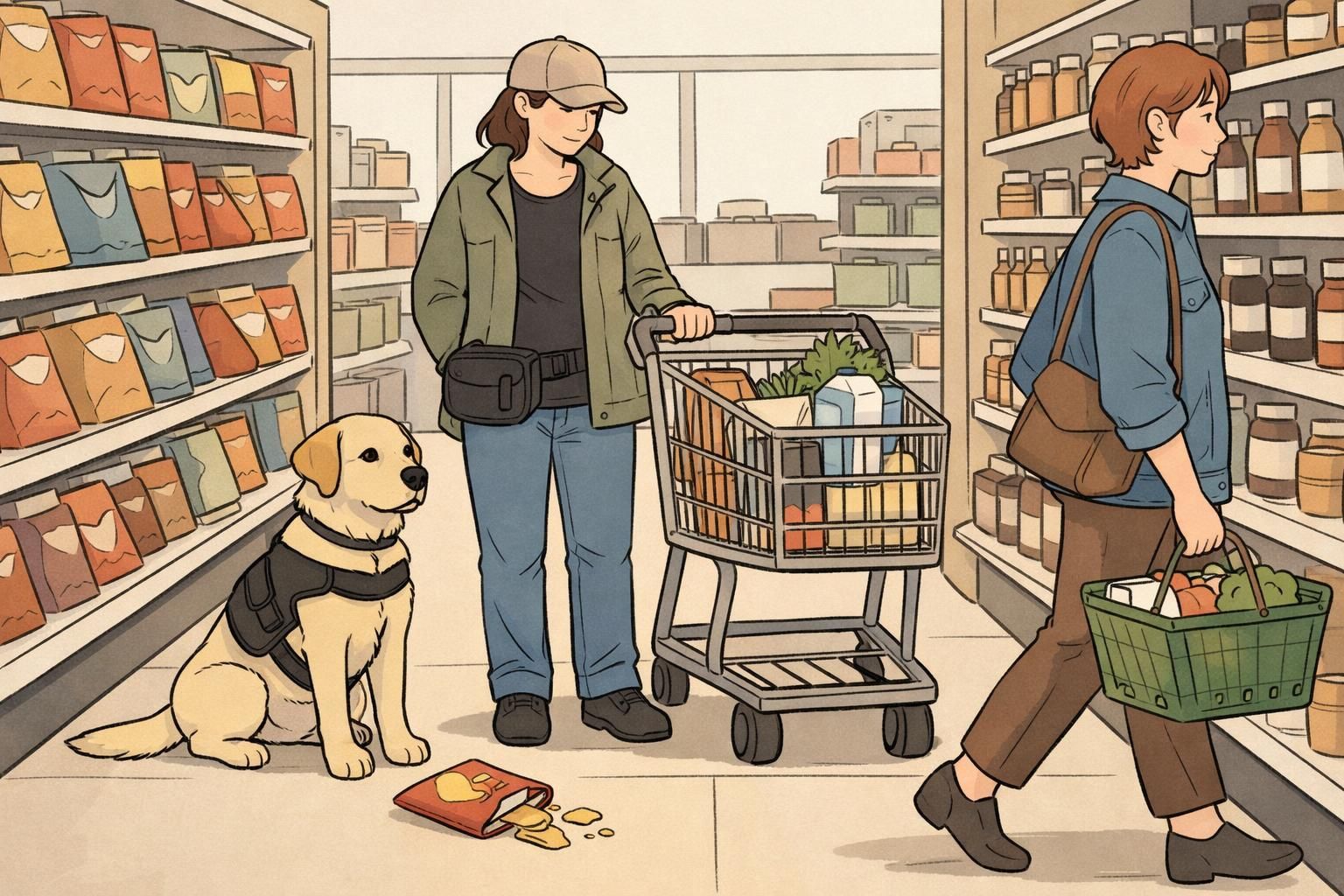
Public manners are what most people notice first, and they’re a major part of what keeps public access low-stress. Think of this category as “do no harm and don’t disrupt.” The more neutral and predictable a dog is in public, the easier it is for a team to navigate daily life.
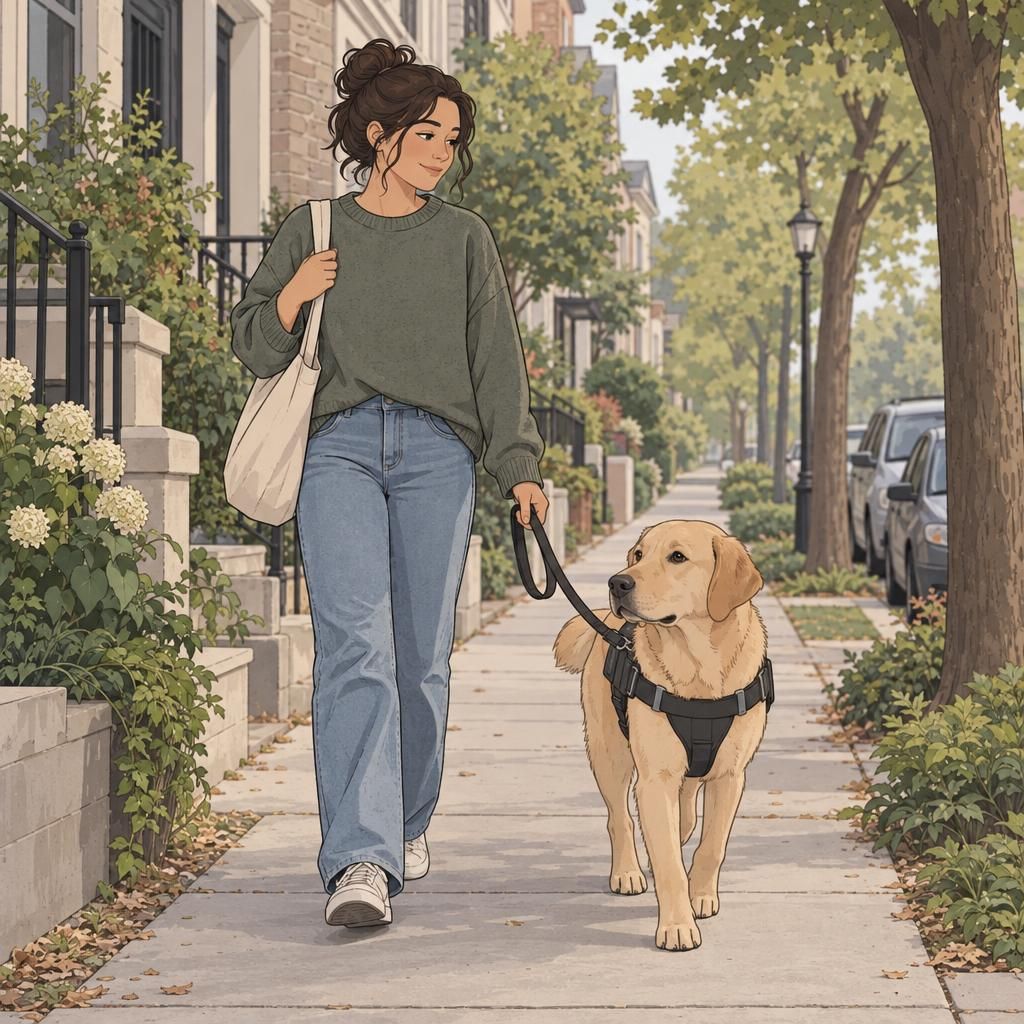
Good public manners usually include calm leash behavior, no aggression or threatening behavior, no jumping, and no soliciting attention. It also means minimal sniffing of shelves or people, and the ability to stay focused even when the environment is busy.
These standards show up in practical moments: waiting calmly in a checkout line, ignoring a french fry on the sidewalk, staying settled in an elevator, or quietly lying down during a medical appointment. Manners reduce conflict, reduce complaints, and protect access for the team.
“ "The biggest shift for us wasn’t a new task—it was learning to move through crowds calmly and predictably. Once our dog had solid public manners, everything else got easier." – Service dog handler”
Being housebroken is a core public access expectation because it affects health and safety. In shared indoor spaces—stores, clinics, airports, hotels—accidents can create sanitation issues and lead to understandable complaints. For service dog teams, consistent hygiene is part of being an unobtrusive presence in public.
House training isn’t only “no accidents.” It also means the handler has a predictable routine for potty breaks, the dog can wait appropriately, and elimination happens in suitable areas. Combined with calm leash control, good hygiene supports smoother interactions and reduces the risk of being asked to leave due to preventable issues.
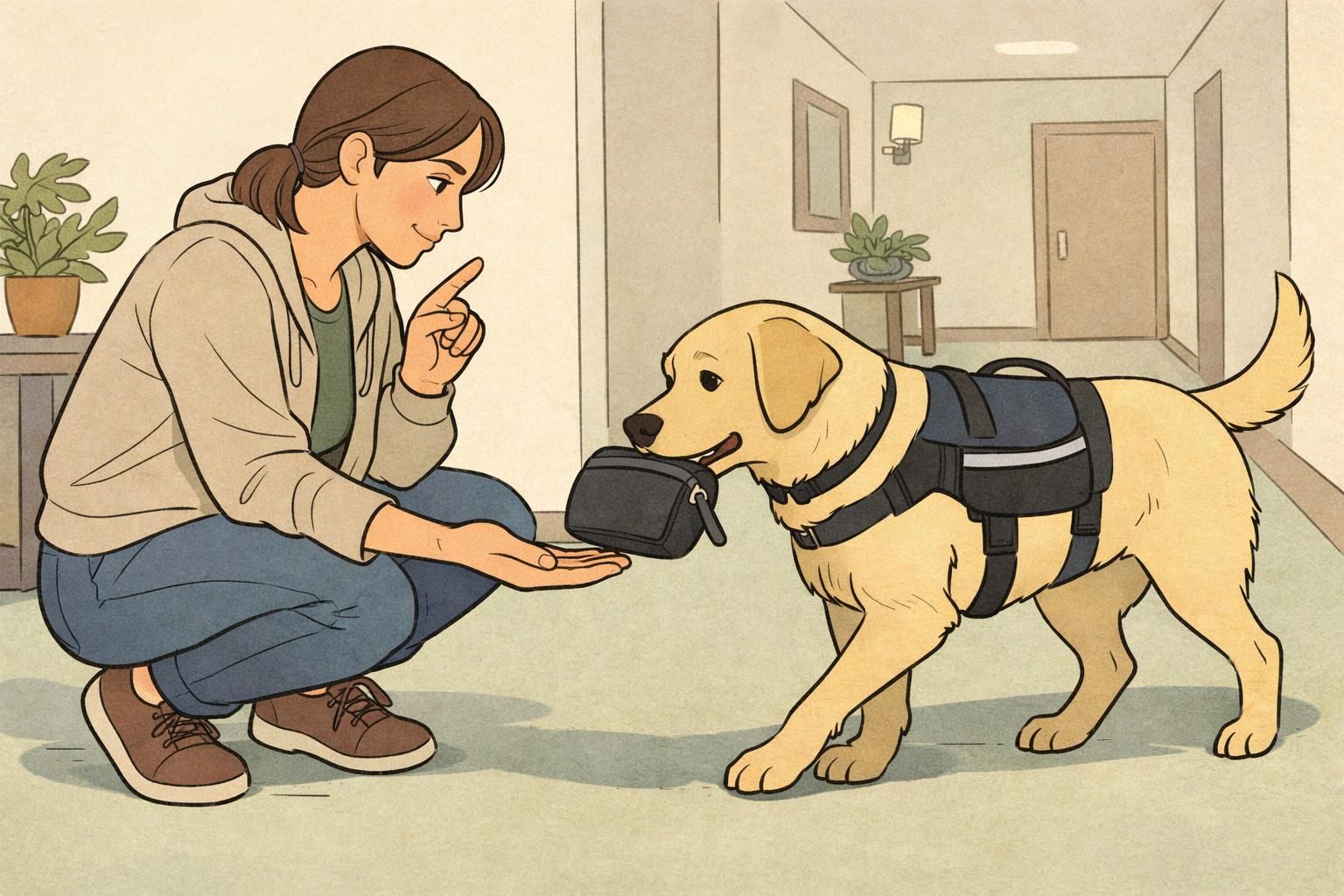
Task training is what distinguishes a service dog under the ADA: the dog is individually trained to perform specific actions that mitigate the handler’s disability. These tasks are individualized—two handlers can have the same diagnosis but need different trained support, and one handler might benefit from multiple tasks depending on daily life demands.
It can help to think of training as two parallel skill sets. Public manners are about being safe and unobtrusive in shared spaces. Tasks are about disability mitigation. Both matter, but they’re trained and evaluated differently—and teams often progress faster in one area than the other.
A Public Access Test is a structured way to check whether a service dog team can move through public spaces safely and unobtrusively. Even when no test is required, many teams find the concept useful because it turns “Are we ready?” into observable behaviors you can practice and measure.
Public Access Tests typically emphasize manners and handler control: controlled entry and exit, calm behavior around people and carts, minimal sniffing, stable temperament, and the ability to settle. They often don’t measure disability-mitigating tasks in depth, which makes them a practical milestone for both program-trained teams and owner-trainers.
Owner-training is allowed in the U.S., and many handlers build highly successful service dog teams this way. Program training can provide structure and support, while owner-training offers flexibility and customization. Either path benefits from a simple plan that keeps training consistent and realistic.
If you’re owner-training, published standards and checklists can be helpful guideposts. The key is to train in layers: start with clean behaviors in low-distraction places, then proof those behaviors around real-world distractions, and only then expect the same reliability in busy public environments.
“ "Having a written plan made owner-training feel manageable. We focused on one behavior per week and repeated it in different places until it became automatic." – Owner-trainer”
Even with excellent training, real life includes questions—especially in housing, travel, and busy public settings. Having clear, consistent identification and easy-to-share ADA information can reduce friction and keep interactions brief and respectful.
Many handlers choose to keep their service dog details organized in one place for convenience and peace of mind. While documentation isn’t presented here as a legal requirement for public access, it can be a practical tool: it helps you communicate consistently, avoid misunderstandings, and quickly reference key information during day-to-day life.
For teams who want an organized, professional way to carry key information, a customizable service dog ID card with an ADA-friendly reference can be a simple, handler-friendly option to keep details accessible.
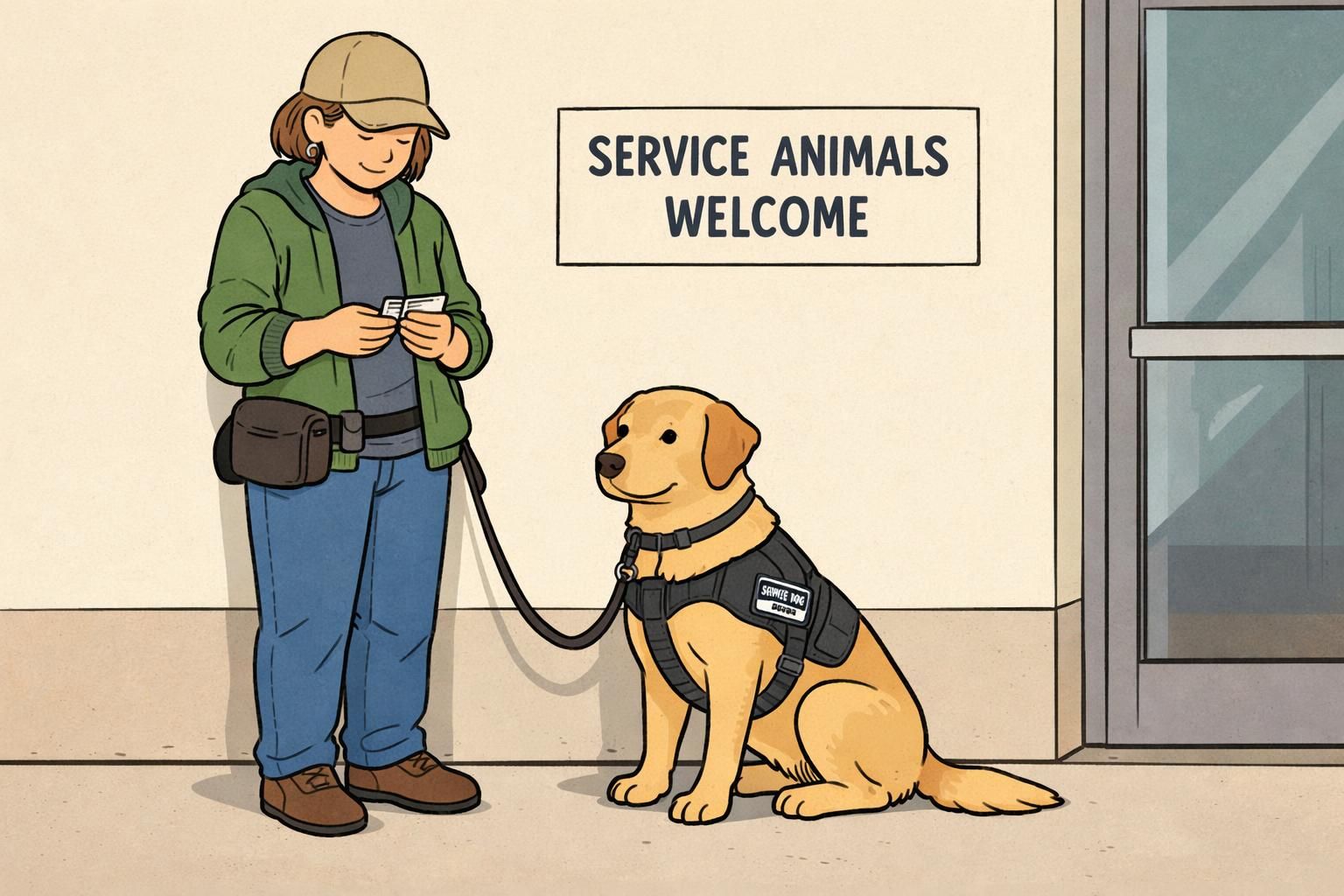
Minimum training standards aren’t abstract—they show up in the small moments that make a service dog team feel safe and welcome in public. If you can picture your typical errands and routines, you can usually pinpoint which skills matter most for your lifestyle.
For example, entering a store often requires a calm, controlled doorway routine: no rushing, no pulling, no scanning for snacks. Passing another dog in an aisle calls for focus, a solid heel or close loose-leash position, and a practiced “leave it.” Waiting during checkout relies on a comfortable sit or down-stay and the ability to ignore candy displays, dropped food, and friendly strangers.
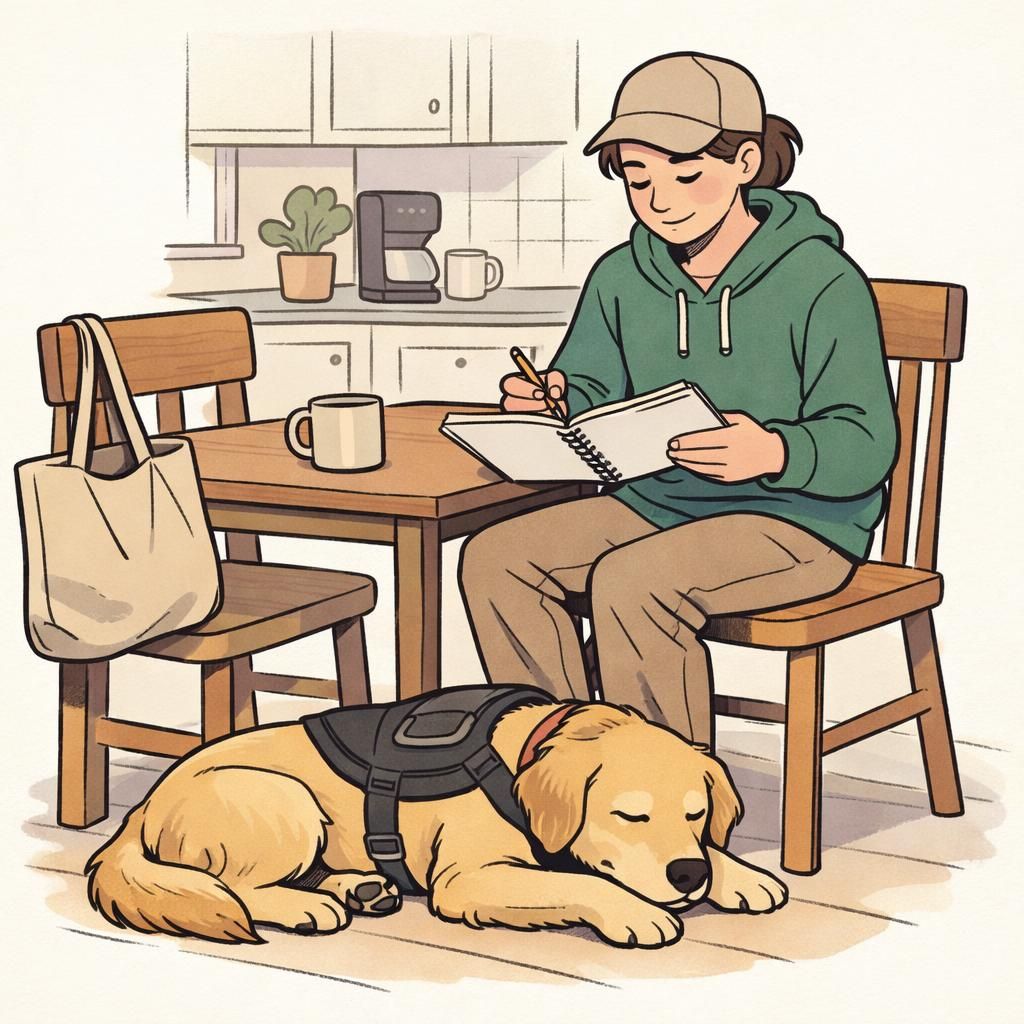
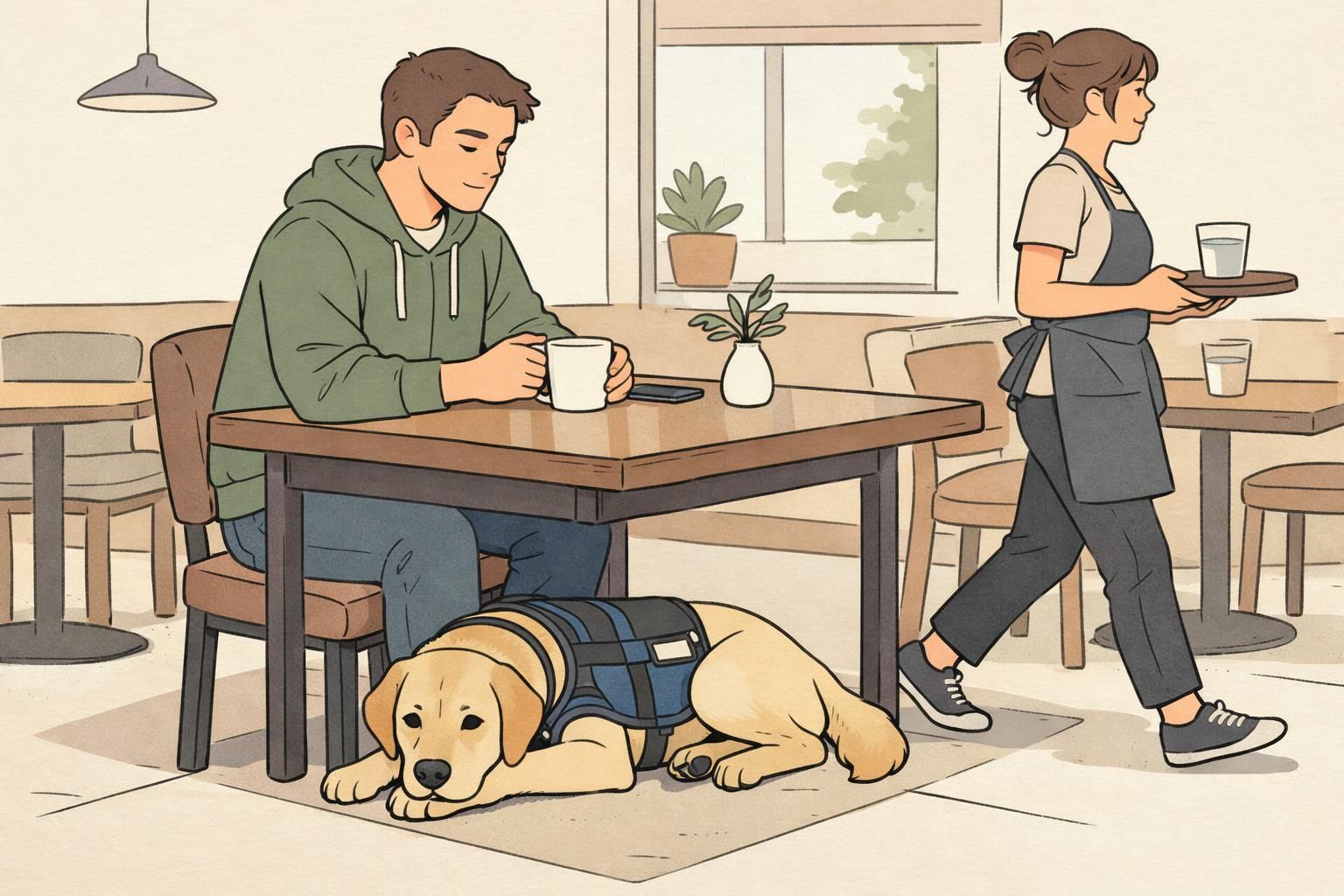
Restaurants and cafes bring another set of expectations: settling under the table, staying quiet, and keeping a tidy footprint so staff can move freely. Elevators and tight hallways highlight impulse control—calm entry, calm exit, and steady body language even when people step in close.
If you’re planning trips, training standards matter even more because travel adds crowds, time pressure, and unfamiliar layouts. For practical travel-focused guidance, see traveling with a service dog.
When you need a quick, polite way to explain ADA basics during an interaction, some handlers like carrying wallet-sized cards to keep conversations calm and consistent. ADA law handout cards for quick, polite explanations can be useful for those moments—especially when you’d rather share information than debate it.
Your trusted source for service animal registration. Get professional ID cards, digital profiles, and smart NFC tags to keep your service animal safe and recognized.
© National Animal Registry — All rights reserved.