Why “Public Access Ready” Matters (for You, Your Dog, and Everyone Around You)
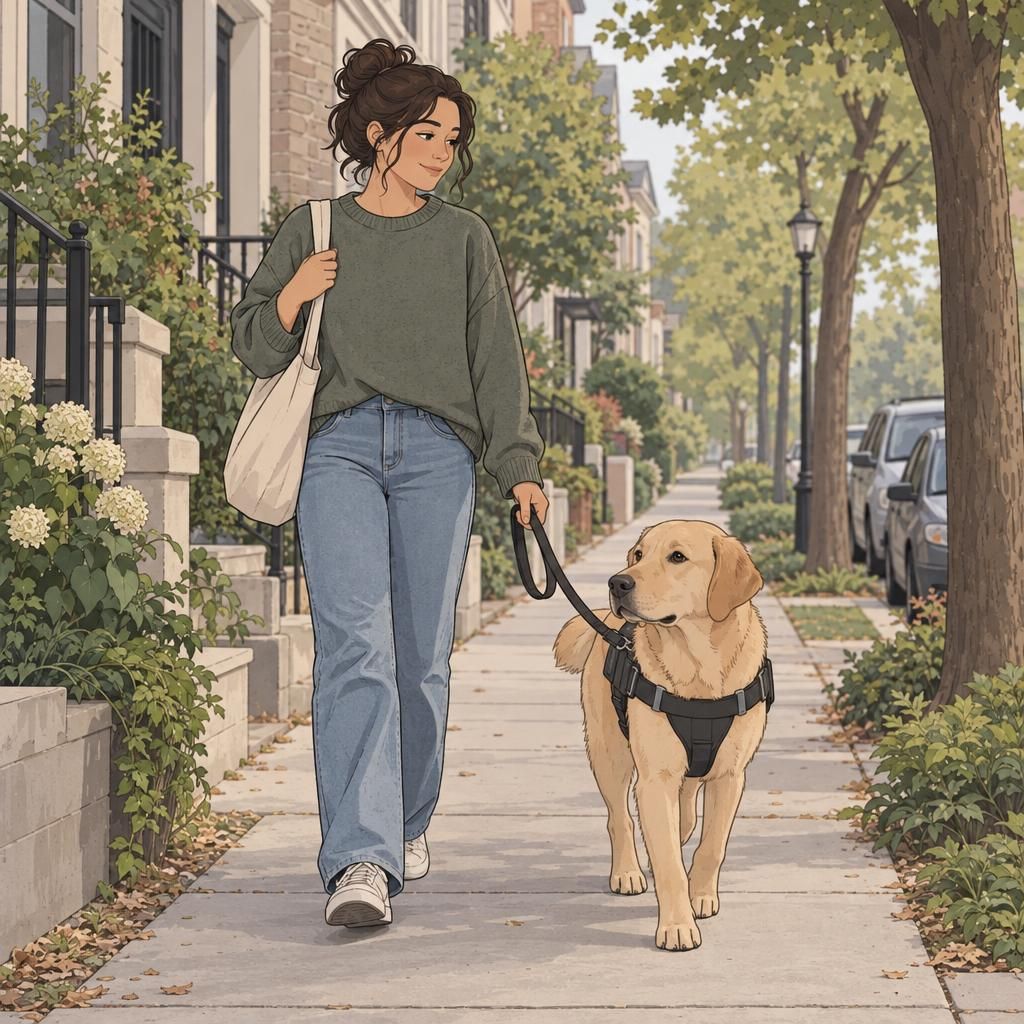
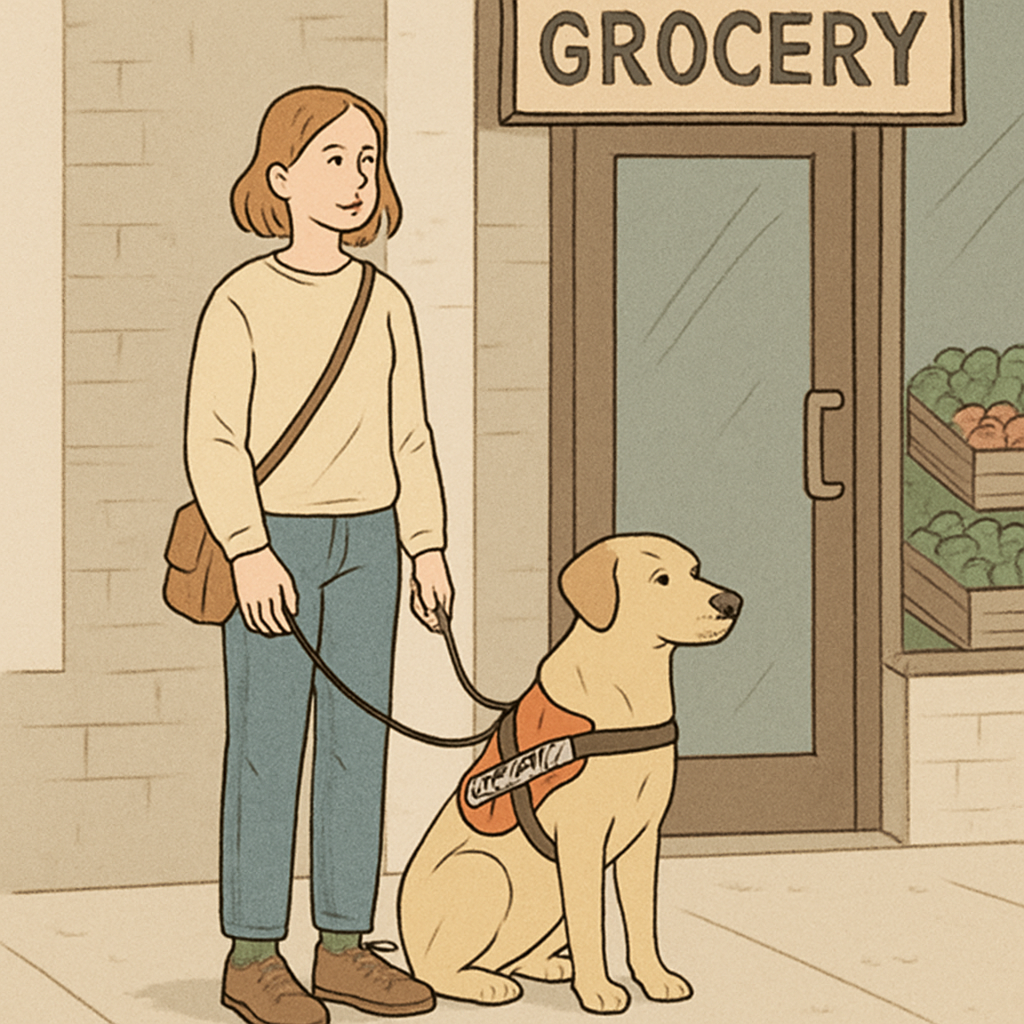
“Public access” is the real-life part of service dog work: walking through a pharmacy aisle, waiting calmly in a medical office, riding an elevator, or navigating a checkout line without turning the trip into a training emergency. A dog who is “public access ready” can do these everyday activities safely and predictably—so you can focus on your health and independence, not on managing constant distractions.
Readiness isn’t about perfection, and it isn’t a reflection of how much you care or how hard you’ve worked. Many excellent service dogs need more time to mature, gain confidence, and generalize skills in new environments. Choosing to step back and train in easier settings is often a smart, responsible decision that protects your dog’s long-term success.
Public access readiness protects three things at once: your independence, your dog’s ability to stay calm and confident, and the comfort and safety of people sharing the space.
- For you: fewer interruptions, less stress, and more reliable task performance.
- For your dog: clearer expectations, reduced overwhelm, and better learning experiences.
- For everyone around you: calmer shared spaces, fewer conflicts, and smoother interactions.
Clear Signs a Service Dog Isn’t Ready Yet
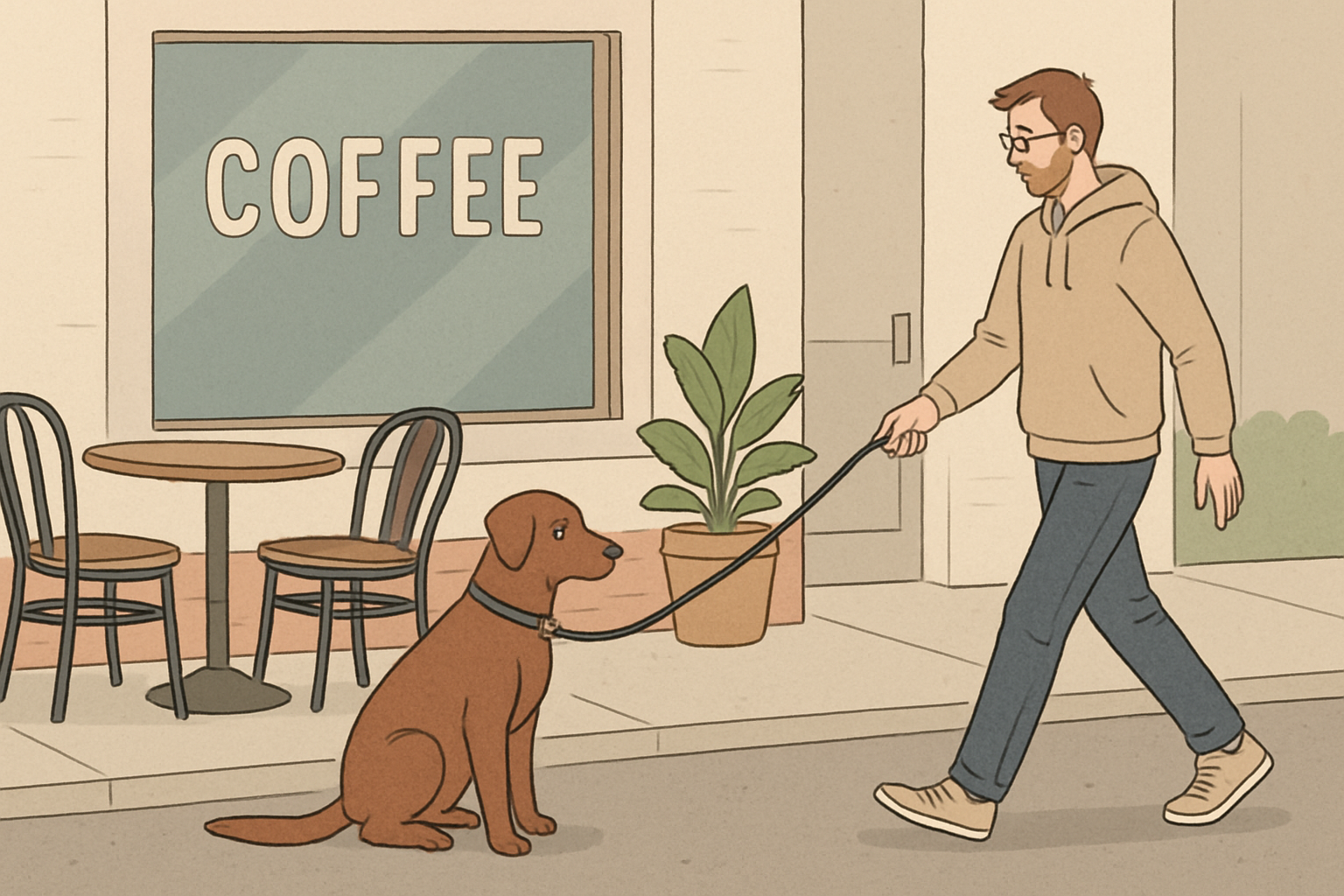
A dog can be wonderful at home and still be “not ready” in busy public environments. Public access asks for reliable manners under pressure—tight spaces, food smells, children moving quickly, carts rolling by, automatic doors, and unexpected noises. If you’re seeing the same issues repeatedly, it’s a signal to return to foundation training before increasing difficulty.
- Pulling or forging ahead: the leash feels like a negotiation instead of a connection.
- Wandering or sniffing constantly: your dog struggles to stay in working position or check in with you.
- Soliciting attention: approaching strangers, leaning in for pets, or repeatedly trying to interact.
- Difficulty ignoring distractions: dropped food, loud sounds, other dogs, or sudden movement immediately breaks focus.
- Missed cues in familiar skills: repeated failures to respond to sit, down, stay, heel, or “leave it.”
- Vocalizing unrelated to work: barking, whining, or grumbling that escalates in indoor spaces.
- Indoor accidents: any repeated elimination issues are a clear sign to pause public access practice.
- Fear or stress reactions: cowering, trembling, shutdown, bolting, or frantic panting that doesn’t resolve quickly.
- Any aggression: growling, snapping, lunging, or hard staring—these require immediate, careful intervention and professional support.
Even one recurring issue can be enough to say, “Not yet.” It’s better to train now than to push through and create a bigger problem later.
Yes. Dogs are living beings, and factors like health, sleep, hormones, and stress can affect performance. The key is whether the issue is occasional and quickly resolved, or frequent and escalating.
That’s common. New layouts, smells, lighting, and noise can feel like a completely different skill level to a dog. It often means your dog needs more gradual exposure and practice generalizing behaviors.
Public Access Test (PAT): What It Measures and What “Failing” Really Means
A Public Access Test (PAT)—or a PAT-style evaluation—is a structured way to check whether your dog has the calm behavior, handler responsiveness, and safe manners needed for real-world environments. Many trainers and programs use PAT concepts to identify strengths and training gaps. Even if you never do an official test, PAT criteria can guide what to practice and when to increase difficulty.
A typical PAT-style evaluation looks at how your dog handles transitions and pressure points: entering and exiting buildings, walking through crowds, passing food, waiting politely, staying under control in tight aisles, and recovering from surprises. The goal isn’t to show off—it’s to confirm the dog can be safe, unobtrusive, and responsive to you.
“Failing” a PAT isn’t a moral judgment or a permanent label. It’s a snapshot: it tells you what your dog can do today, and what needs practice next.
- Calm entry/exit without rushing or bracing against the leash.
- Neutral behavior around strangers (no greeting unless invited).
- Focus and recovery after distractions (food, carts, noises, other animals).
- Reliable cues with minimal repetition.
- Safe, clean public manners (including being housebroken).
- Handler ability to maintain control without escalating force or chaos.
“ "A good evaluation doesn’t ‘pass’ or ‘fail’ a team—it gives the team a map. When you know the weak points, you can train with confidence instead of guessing." – Service dog trainer perspective”
Readiness Breakdown: Pass vs. Not Ready (Focus, Commands, Manners, Safety)
If you’re unsure where your dog fits, it helps to look at readiness in a few practical categories. The examples below are written in plain, day-to-day terms—what you might notice in stores, restaurants, medical offices, and public transportation.
- Control & focus (Ready): Your dog stays close, checks in naturally, and can move through aisles without drifting. (Not ready): Your dog scans constantly, pulls toward smells/people, or struggles to stay with you.
- Responsiveness to commands (Ready): Cues are followed the first time, even with moderate distractions; your dog recovers quickly after surprises. (Not ready): You repeat cues, use constant leash corrections, or your dog ignores you once the environment gets busy.
- Manners & elimination (Ready): Your dog can settle for the length of a wait, stays out of the way, and remains reliably housebroken. (Not ready): Restlessness, begging behavior, inability to settle, or any repeated accidents indoors.
- Safety & stability (Ready): Your dog remains neutral and non-reactive; body language is relaxed and confident. (Not ready): Fear responses, shutdown, frantic behavior, lunging, growling, or any aggression.
The biggest green flag is not “my dog behaves when nothing is happening.” It’s “my dog can stay steady when something unexpected happens.”
Legal Context: ADA Basics and California Notes (Neutral, Practical Overview)
In the U.S., the Americans with Disabilities Act (ADA) sets a practical baseline for service animals in public-facing businesses. In plain language: a service dog should be under control and housebroken, and it should not pose a direct threat to others. If a dog is out of control, not housebroken, or poses a direct threat, a business may require the dog to leave. Businesses are also limited in what they can ask; generally, staff may ask only two questions: whether the dog is a service animal required because of a disability, and what work or task the dog has been trained to perform. For a clear, reader-friendly overview, see this source.
California note: California has state rules that can allow service dogs in training access in certain situations. Because details can depend on who is training the dog and where you are, it’s wise to check local and state guidance for your specific circumstances—especially if you travel between states where expectations differ.
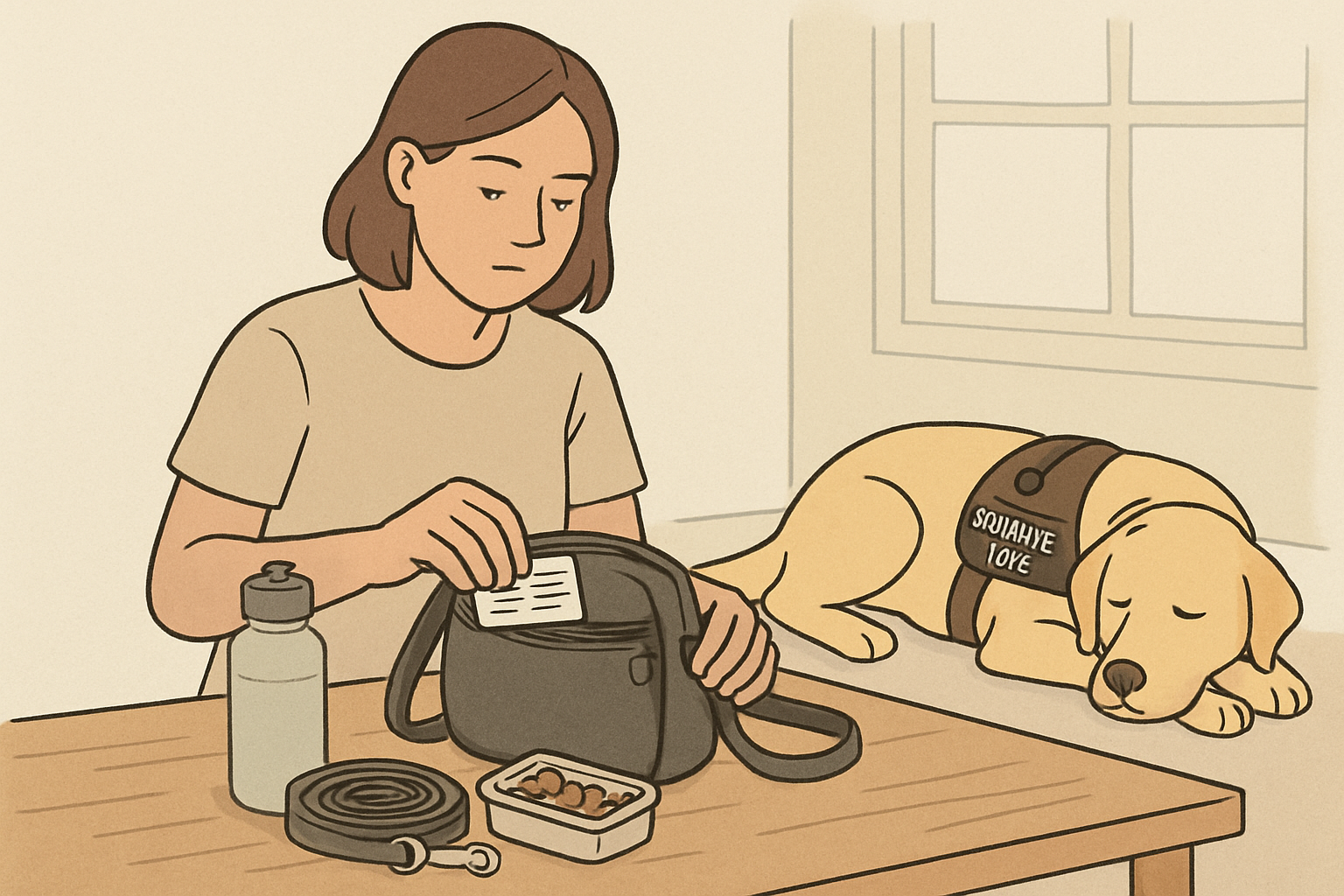
Many handlers find it helpful to carry simple informational materials for calm, respectful conversations—especially when staff are unfamiliar with the rules or you’re trying to keep an interaction brief and low-stress. Consider keeping ADA handout cards for simple, respectful conversations in your bag so you can share basics without having to explain everything verbally.
A practical takeaway: if your dog is struggling with control, cleanliness, or safety in public, stepping back to train protects your access long-term and helps you avoid stressful conflicts in the moment.
What to Do If Your Dog Isn’t Ready: A Calm, Step-Back Plan
If you’ve recognized signs your dog isn’t ready, you don’t need to “power through.” The most effective approach is usually a calm reset: reduce difficulty, rebuild reliability, then return to public environments in short, successful sessions. This protects your dog’s confidence and keeps your training clean and consistent.
- Step 1: Scale down the environment. Practice in quiet places first (parking lots, quiet parks, low-traffic stores at off-hours) before attempting peak-time crowds.
- Step 2: Rebuild core obedience under distraction. Practice sit/down/stay, loose-leash walking, heel, and “leave it” where your dog can succeed—then gradually add movement, noise, and people at a distance.
- Step 3: Strengthen “settle.” Work on calm down-stays beside a chair or bench, rewarding relaxed body language and steady breathing, not just position.
- Step 4: Use short outings with a clear goal. Example: walk in, do a 2-minute calm settle near the entrance, and leave. End before your dog falls apart.
- Step 5: Track progress. Note triggers, distances, duration, and recovery time. Small improvements add up quickly when you can measure them.
- Step 6: Record practice sessions. A quick phone video helps you notice patterns: leash tension, timing of rewards, and early stress signals.
- Step 7: Prioritize health and stability. Make sure vaccinations, parasite prevention, nutrition, rest, and any pain issues are addressed—physical discomfort can look like “bad behavior.”
“ "My biggest training breakthroughs came when I stopped trying to ‘get through the errand’ and started treating outings like short practice reps. Two calm minutes beats twenty chaotic ones." – Service dog handler”
Reducing Friction During Training and Everyday Outings (Without Over-Explaining)
When you’re actively training, the last thing you need is a long conversation while your dog is trying to focus. Clear identification and a simple plan can reduce friction: you stay calm, your dog stays engaged, and interactions remain brief and respectful.
Many handlers choose to use registration and ID as an organizational tool—something that keeps key details consistent in one place and supports confident, predictable routines. While not required by the ADA for public access, having an ID card and a digital profile can be practically helpful in day-to-day life, especially when you’re managing a dog’s learning curve and want smoother communication.
- Keep your message short: a calm “We’re working, thank you” is often enough.
- Position your body to create space: stand between your dog and distractions when possible.
- Have a simple exit plan: if focus drops, leave early and count it as a win.
- Stay consistent with gear: the same leash/harness setup reduces confusion for your dog.
If you want a straightforward way to stay organized and feel more prepared during everyday outings, consider a starter registration package for everyday identification.
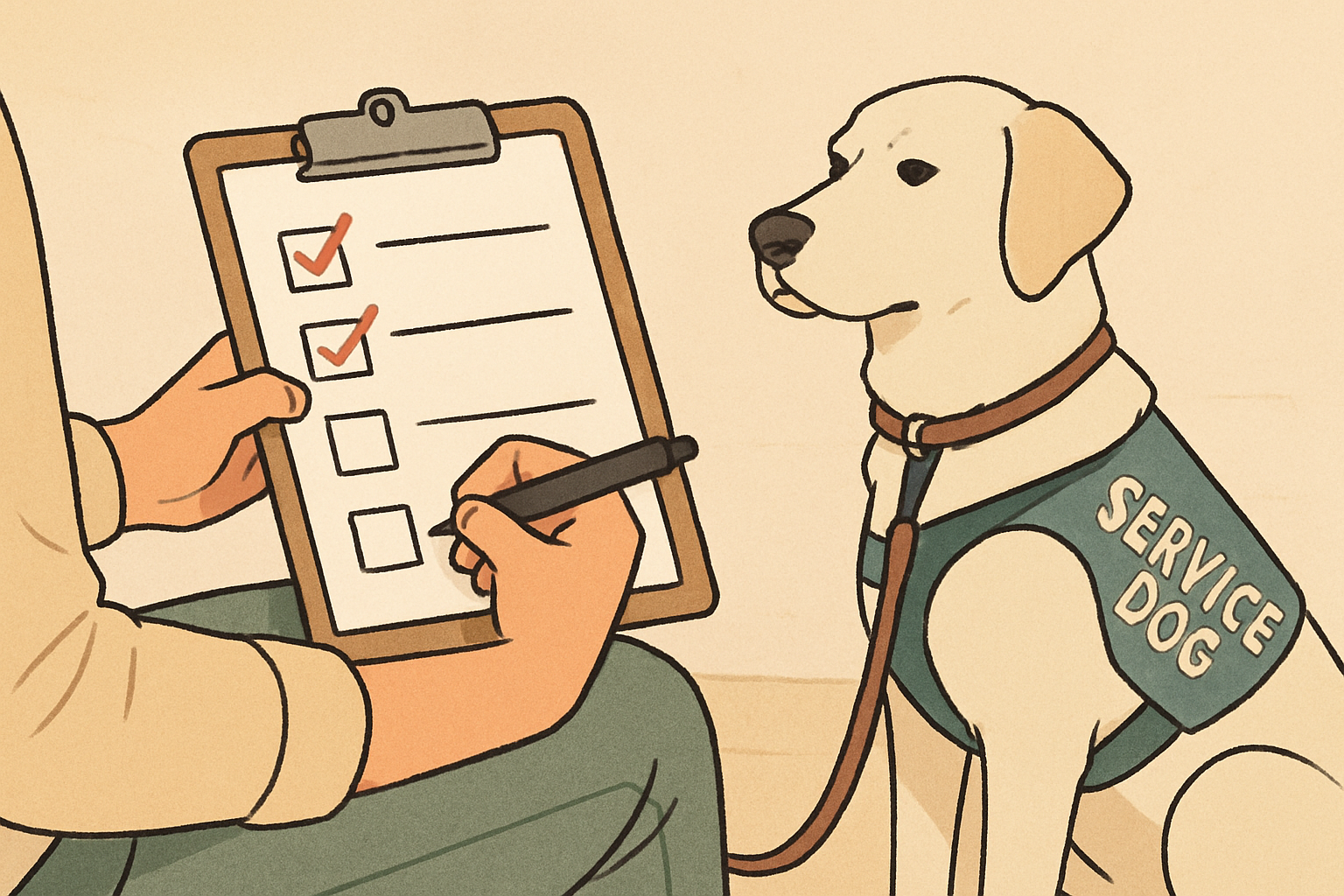
Public Access Readiness Checklist You Can Use Before Each Outing
A quick checklist can prevent most “we should have stayed home” moments. The goal isn’t to test your dog until they fail—it’s to set the trip up for success and protect your dog’s confidence.
- Equipment check: leash secure, gear comfortable, tags/ID where you need them, poop bags packed.
- Body needs met: your dog has had a chance to relieve themselves and has had water.
- Warm-up: 60 seconds of easy cues (sit/down/heel) before entering.
- Calm entry/exit plan: practice pausing at the door, then walking in with a loose leash.
- Focus check: can your dog respond to their name and make eye contact within 1–2 seconds?
- Leave-it check: can your dog ignore a low-level distraction (smell on the ground, distant food) with one cue?
- Settle ability: can your dog relax at your side for at least a short wait?
- Handler plan: you know where you’ll stand in line, where you’ll take a break, and how you’ll leave early if needed.
Choosing a shorter or quieter trip is a strategy, not a setback. Ending on a success is how public access skills get strong.
Common Real-World Scenarios Where Dogs Struggle (and How to Handle Them)
Many service dogs-in-training struggle in the same predictable “pressure points.” Knowing what tends to go wrong—and what to do in the moment—helps you keep outings productive instead of stressful.
- Automatic doors: Not ready looks like startling, rushing, or refusing to go through. Try creating distance, asking for a simple sit, rewarding calm, then re-approaching slowly.
- Tight aisles: Not ready looks like drifting into shelves, sniffing, or blocking others. Try a slow pace, frequent check-ins, and stepping into a wider spot to reset.
- Checkout lines: Not ready looks like whining, scanning, or breaking position repeatedly. Try a down-stay with steady reinforcement, or leave the line and practice at a quieter time.
- Food courts or restaurant entrances: Not ready looks like intense pulling toward food smells or dropped crumbs. Try increasing distance, using “leave it,” and keeping your dog in a clear working position.
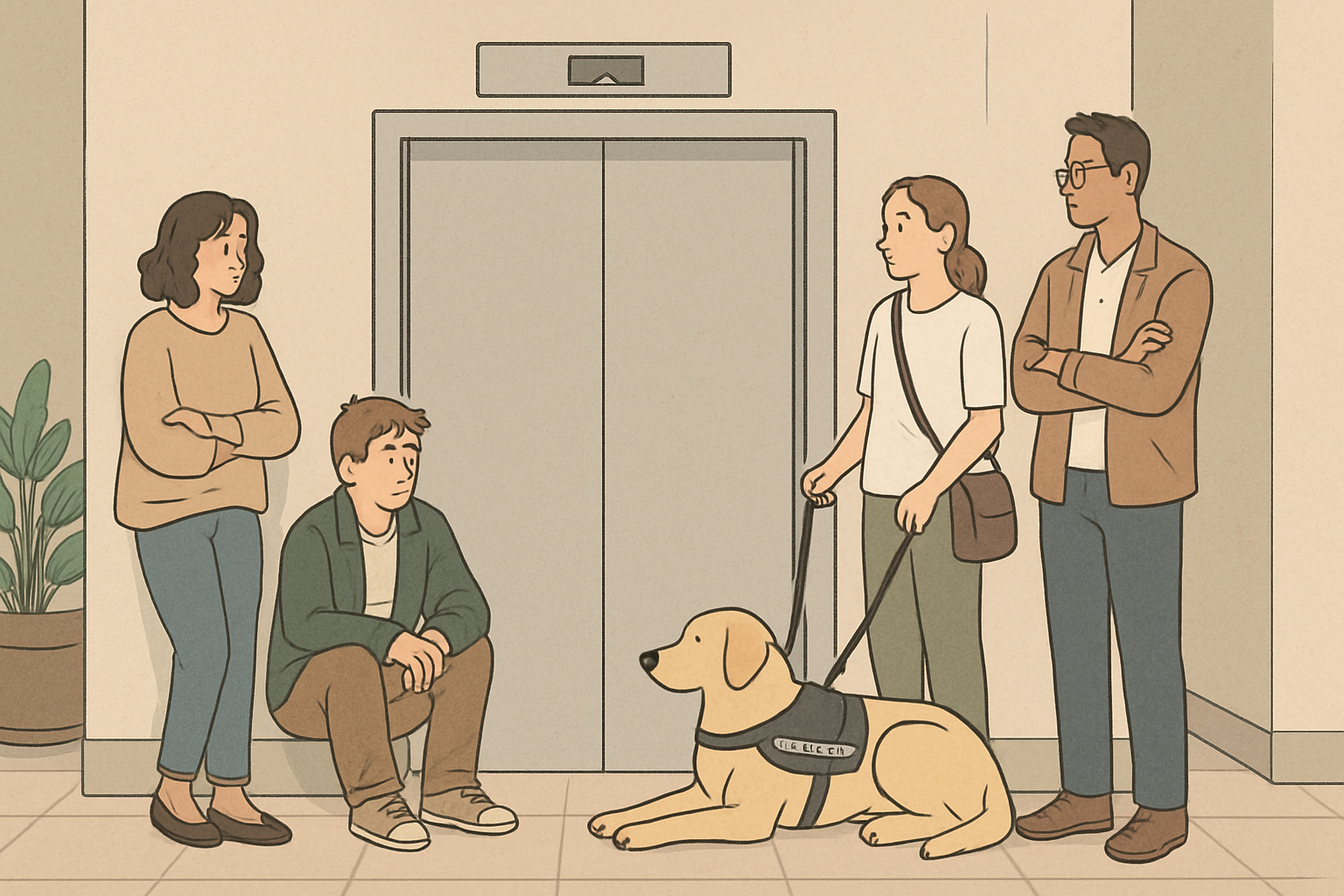
- Elevators: Not ready looks like crowding the doors, fear of the movement, or excitement when people enter. Try practicing near elevators without riding first, then build up to short rides at low-traffic times.
- Crowded sidewalks: Not ready looks like weaving, greeting attempts, or stress panting. Try moving to the outer edge, pausing for a reset cue, and choosing a calmer route.
In-the-moment rule: create distance, ask for one easy behavior, reward, and leave on a small success. You’re training a skill, not finishing a mission.
Travel and Busy Environments: When to Wait, and How to Prepare
Travel and high-traffic environments amplify everything: noise, tight spaces, time pressure, and long durations without a true break. Airports, hotels, and public transit can be doable for a stable, public-access-ready team—but they can overwhelm a dog who is still building foundational focus and neutrality.
If your dog is not ready, it’s okay to wait on big trips while you train intentionally. The goal is to build a dog who can handle travel without stress behaviors, not to force exposure that creates setbacks.
- Build duration gradually: practice 10 calm minutes, then 20, then 40—don’t jump from quick errands to full-day outings.
- Practice “transport-like” scenarios: elevators, escalators (if safe), waiting in lines, sitting quietly near rolling carts, and settling near busy doors.
- Plan decompression: schedule quiet breaks where your dog can relax away from foot traffic.
- Keep training goals simple while traveling: prioritize calm behavior and responsiveness over advanced task work in the busiest moments.
- Organize essentials: have a dedicated go-bag with water, bowl, wipes, treats, backup leash, and any handler essentials so you’re not scrambling.
For a deeper guide to planning trips and building skills over time, read traveling with a service dog.
If you’re preparing for airports, hotels, or multi-day schedules, many handlers like having travel-specific organization and identification materials ready in one place. Consider a travel-ready service dog registration package to support smoother, more confident travel experiences.