Knowing the basics of service-dog law can make everyday outings easier. The key is understanding what qualifies a dog for public access, what staff may ask, and what responsibilities remain with the handler. Registration and identification can help organize information, while legal protections depend on the applicable rules.
Under the Americans with Disabilities Act (ADA), a service dog is a dog individually trained to do work or perform tasks directly related to a person’s disability. The disability does not have to be visible. What matters is the connection between the person’s disability and the work the dog has learned to perform.
Providing comfort through companionship alone does not meet the ADA definition. A psychiatric service dog, however, can qualify when it performs a trained disability-related task. The U.S. Department of Justice explains the federal definition, public-access rules, permitted questions, and handler responsibilities in its ADA service-animal guidance: source.
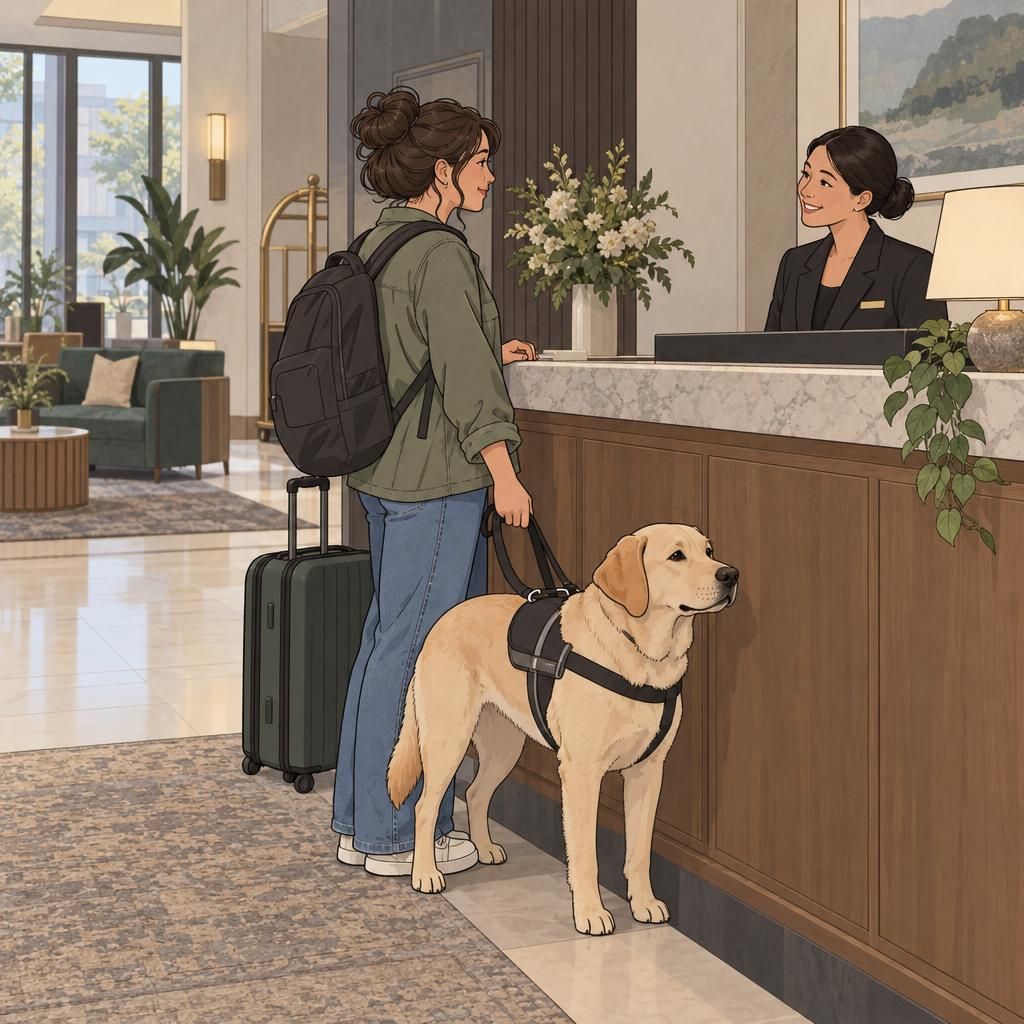
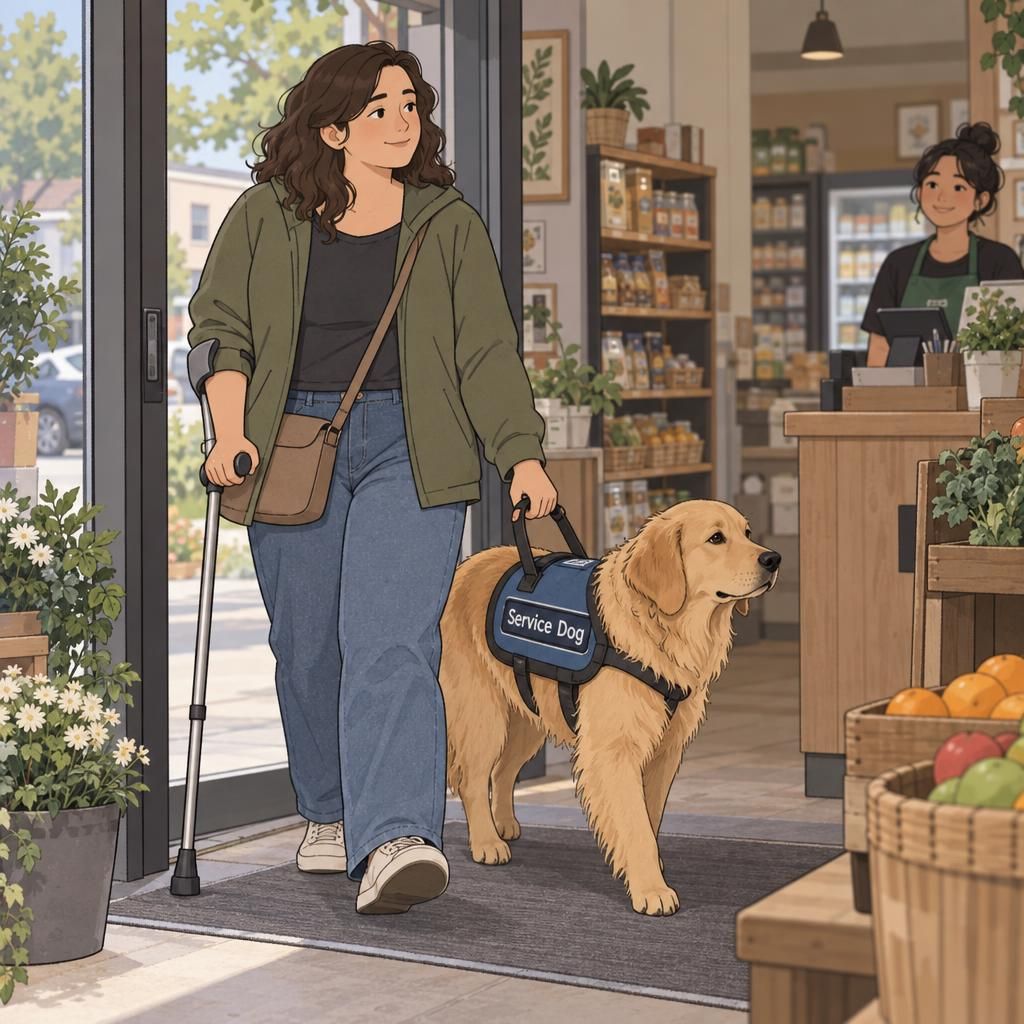
Qualified service dogs generally may accompany their handlers into areas open to the public at businesses, nonprofit organizations, and state or local government facilities. Common examples include shops, restaurants, hotels, libraries, and government service counters.
A no-pet policy generally does not apply to a service dog because the dog is working, not visiting as a pet. Businesses generally cannot charge a special admission fee, cleaning fee, or pet surcharge simply because someone uses a service dog. Handlers may still be responsible for damage under the same policies applied to other customers.

When the dog’s role is not obvious, staff may ask two questions. Keeping your answers short and clear can help everyone understand the situation without discussing private medical details.
For example, a handler might answer, “Yes. My dog is trained to retrieve items I cannot reach because of my disability.” Describe the actual trained work rather than giving a diagnosis or saying only that the dog provides support. Staff cannot require disclosure of your diagnosis or ask the dog to demonstrate its task.
Registration materials or an ID can help communicate information clearly in everyday interactions if you choose to share them. They are optional communication tools, not a prerequisite for answering the permitted questions or exercising ADA public-access rights.
Federal ADA rules do not require a particular vest, identification card, registration, or certificate for public access. Handlers may nevertheless choose these materials to identify their dog, keep information consistent, and feel more prepared during everyday interactions.
Registration, IDs, and certificates serve a different purpose from task training. They can help organize and communicate information, but they do not replace the dog’s trained disability-related work, appropriate behavior, or applicable legal requirements. A vest can also signal that a dog is working without changing the legal standards.
For a portable explanation of the basics, handlers may choose wallet-sized ADA information cards. These can support a calm conversation when someone is unfamiliar with service-dog rules.
Public-access protections come with practical responsibilities. A service dog must remain under the handler’s control and be housebroken. Reliable behavior helps the dog work effectively while allowing other people to use the same space.
Generally, the dog should wear a harness, leash, or tether. If that equipment interferes with its work, or the person’s disability prevents its use, the handler must maintain control through voice, signals, or another effective method. The handler remains responsible for the dog’s care and supervision.
A business may ask that a dog be removed if it is genuinely out of control and the handler does not take effective action, or if it is not housebroken. If removal is appropriate, the person should still have an opportunity to obtain goods or services without the dog present.

Service dogs and emotional-support animals can both provide meaningful assistance, but the ADA treats them differently. A service dog performs trained work or tasks related to a disability. An emotional-support animal provides comfort or companionship without necessarily having that task training.
An animal whose role is comfort alone does not receive ADA public-access rights as a service animal. The distinction is the trained work—not whether the disability is physical or psychiatric. Registration or identification can help describe an animal’s role, but does not change the legal category by itself.
The ADA’s public-access provisions do not cover dogs that are still training to become service dogs. Some state laws extend access rights to service dogs in training, with conditions that can differ by location. Before a training outing, check the rules where you will actually be training.
Do not assume the same rules apply everywhere. Housing accommodations are primarily addressed by the Fair Housing Act. Its assistance-animal standards differ from ADA public-access standards and can cover certain animals that provide disability-related emotional support.
When requesting a housing accommodation, ask about the applicable process and keep related communications organized. Optional registration and identification materials can help maintain consistent information, while the accommodation request must be considered under the housing rules that apply to the situation.
For flights, the Air Carrier Access Act provides a separate framework. Check your specific airline’s current service-animal requirements, forms, submission deadlines, and destination-related rules before departure. Our guide to planning ahead for service-dog travel can help you prepare.
Keeping travel documents and identification materials together can make trip preparation more orderly. These materials complement your planning; they do not replace airline-required forms or guarantee boarding.

A little preparation can reduce confusion and help you respond confidently. Focus first on your dog’s working skills and everyday behavior, then organize the information you find useful.
If an access concern occurs, stay calm and ask to speak with a manager when practical. Record the date, location, what was said, and any steps taken to resolve the issue. For guidance about a possible ADA access problem, contact the U.S. Department of Justice or an appropriate state agency.
The ADA generally defines service animals as dogs, but it also contains separate provisions for trained miniature horses. Businesses and public entities may need to make reasonable modifications to accommodate a miniature horse individually trained to perform disability-related work or tasks.
That assessment considers factors such as the horse’s size and weight, whether it is housebroken and under control, and whether the facility can safely accommodate it. It is not a blanket rule allowing every miniature horse into every location.
For dogs and miniature horses alike, check current federal, state, and local guidance for your circumstances. Understanding the rules, maintaining dependable training, and keeping useful information organized are practical ways to approach daily life with confidence.
Your trusted source for service animal registration. Get professional ID cards, digital profiles, and smart NFC tags to keep your service animal safe and recognized.
© National Animal Registry — All rights reserved.