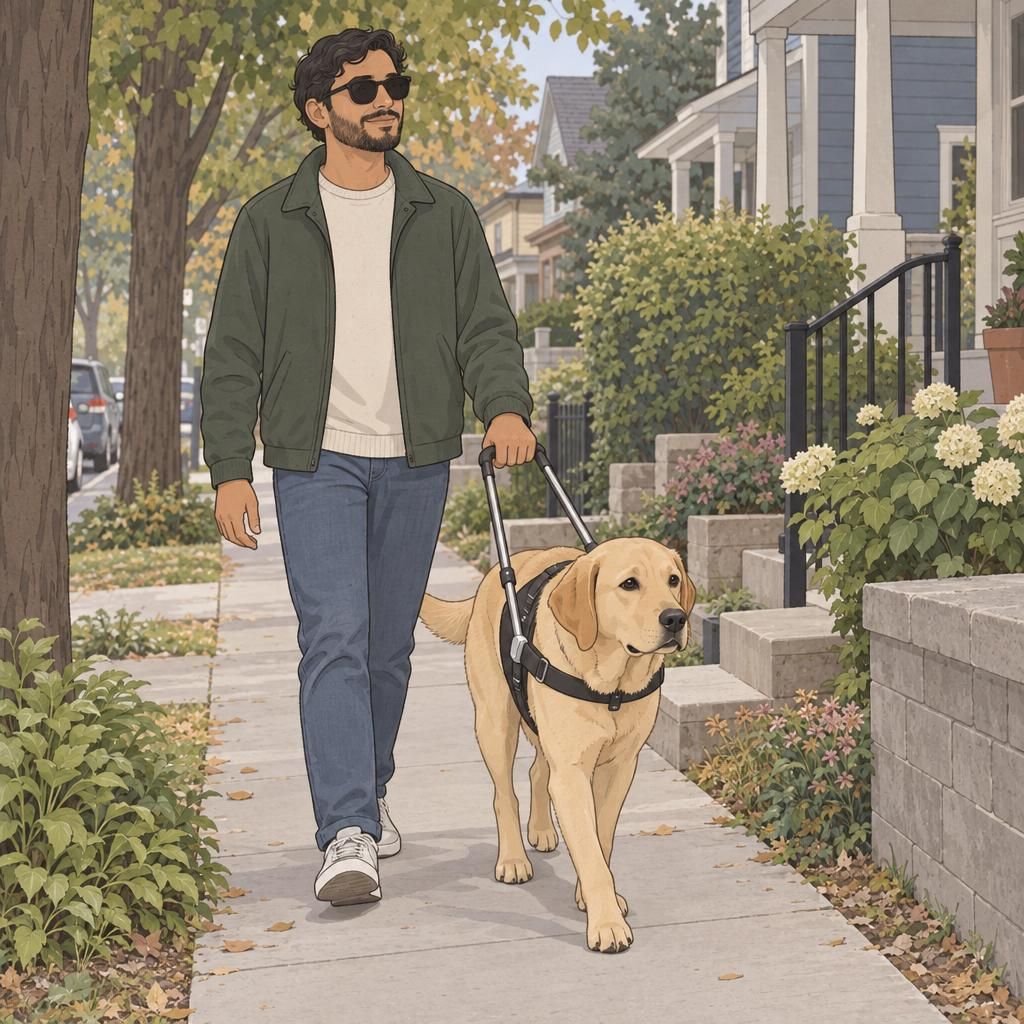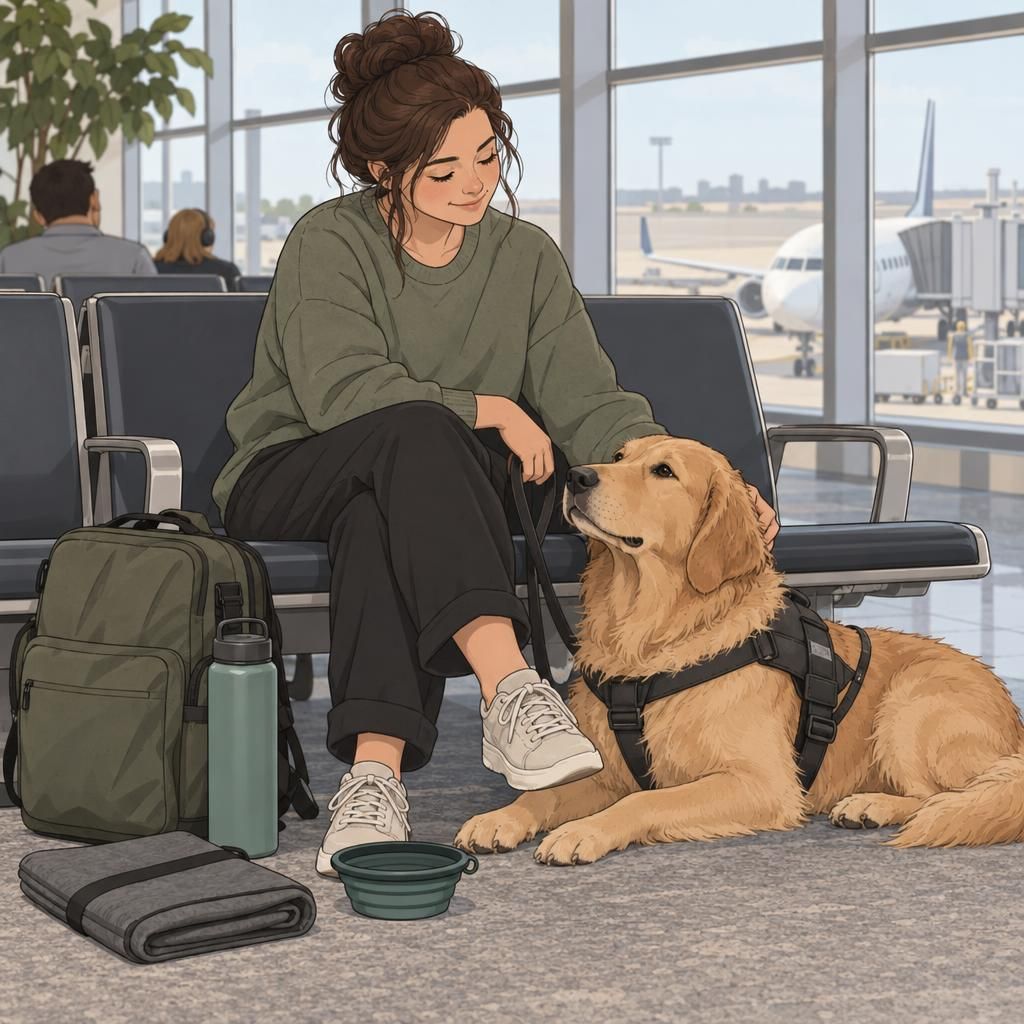
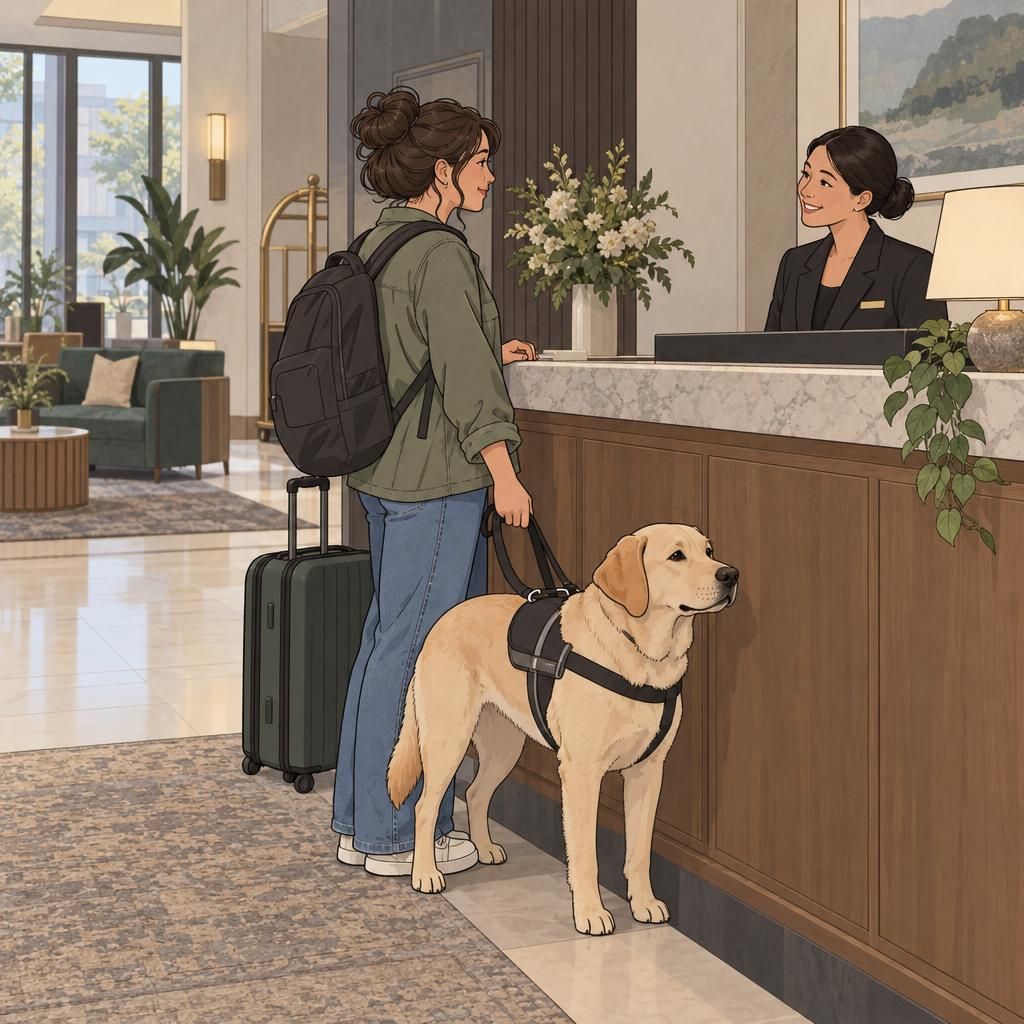
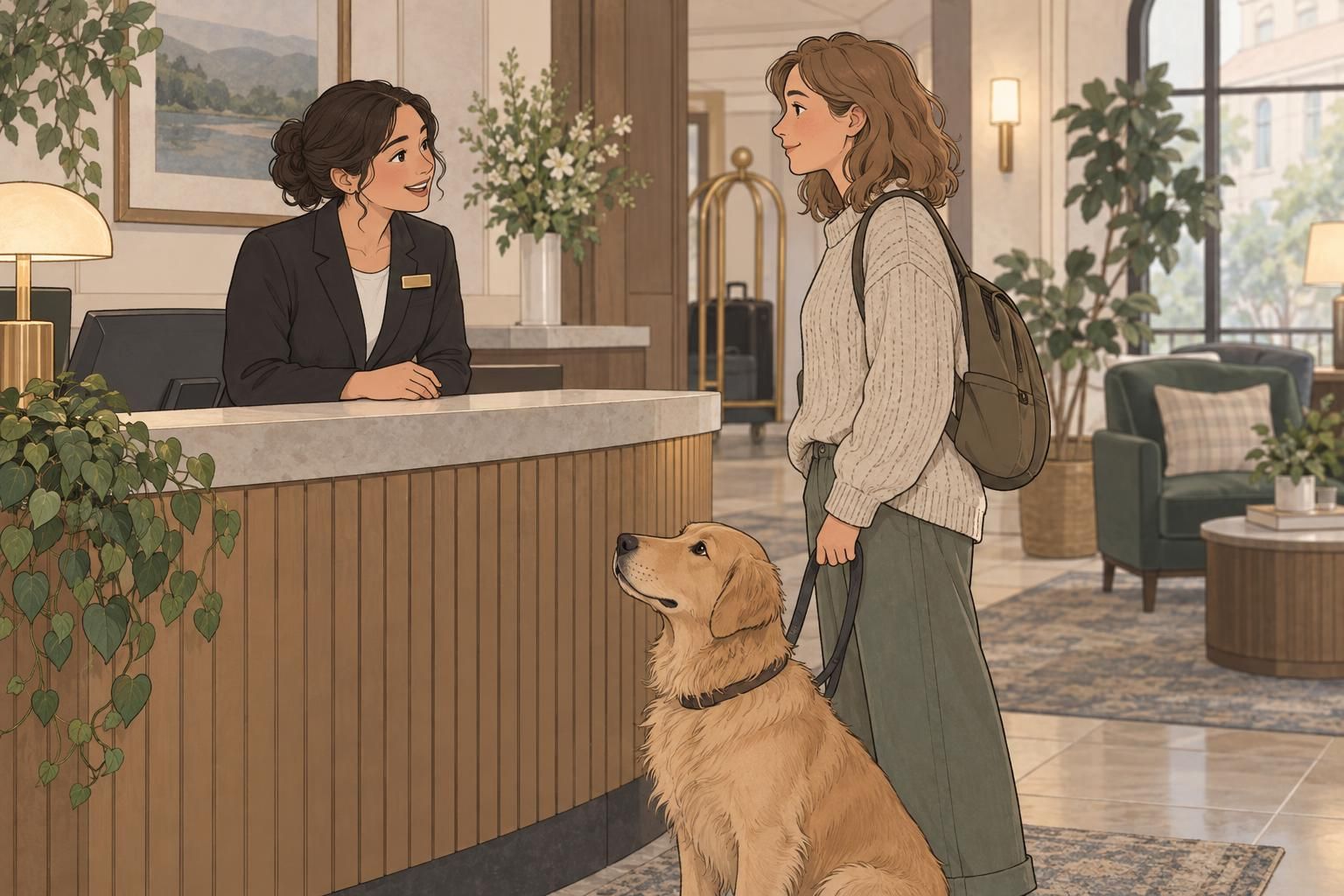
Picture a traveler arriving after a long drive, one hand on a suitcase and a service dog close beside them. The lobby is unfamiliar, the elevator chimes, and several guests are waiting. Before the room key is ready, the welcome has already begun: the receptionist addresses the handler directly, speaks calmly, and leaves enough space for the dog to remain beside its person.
An illustrative first-person account captures why these details matter: “After hours on the road, I needed a straightforward check-in. The receptionist spoke to me rather than calling to my dog, explained where the elevators were, and gave us time to move. I could concentrate on getting settled instead of preparing to explain myself.”
That sense of ease is not about special treatment. It comes from having an ordinary travel interaction without unnecessary attention, separation, or assumptions. A dog positioned beside a handler may be monitoring, guiding, or preparing to perform a disability-related task, even when the partnership looks quiet.
Planning can make these moments easier, too. Knowing the arrival time, locating an outdoor relief area, and keeping essential supplies accessible reduces the number of decisions waiting at the front desk. For help preparing, explore our practical advice for traveling with a service dog.
Under the Americans with Disabilities Act, a service dog is individually trained to do work or perform tasks for a person with a disability. The work must relate directly to that disability. Examples include guiding a person who is blind, alerting someone to sounds, retrieving items, or taking a trained action during a disability-related episode. Providing comfort through presence alone is different from performing a trained task.
Hotels generally must allow service dogs to accompany their handlers in areas where guests are permitted, including hotels that do not accept pets. When the dog's role is not apparent, staff may ask only these two questions:
Staff may not require disclosure of the person's diagnosis, demand a task demonstration, or require service-animal certification or medical documentation as a condition of ADA access. The Department of Justice explains the definition and these limited inquiries in its service-animal guidance: source.
Emotional-support animals are treated differently: companionship or emotional comfort alone does not qualify an animal for service-animal access under the ADA. A hotel's pet policy may accommodate an emotional-support animal, and other laws may apply in particular settings. Check the rules relevant to the location and type of stay rather than assuming every accommodation follows the same framework.
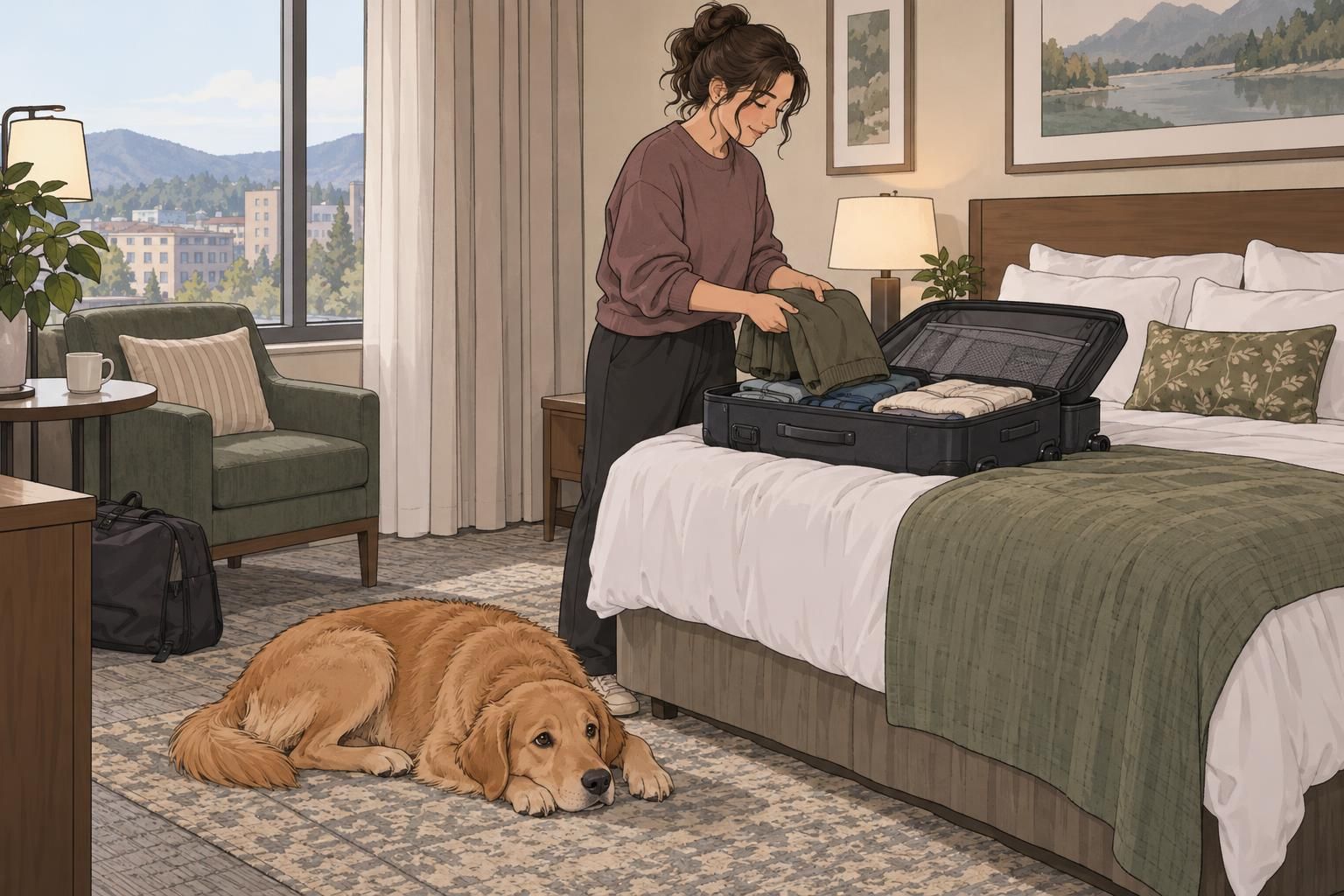
A hotel room may be a place to relax, but it is also an unfamiliar working environment for a service dog. Hallway footsteps, rolling luggage, unfamiliar flooring, and a different room layout all introduce new information. A quiet arrival routine gives the partnership time to adjust without expecting the dog to ignore every distraction immediately.
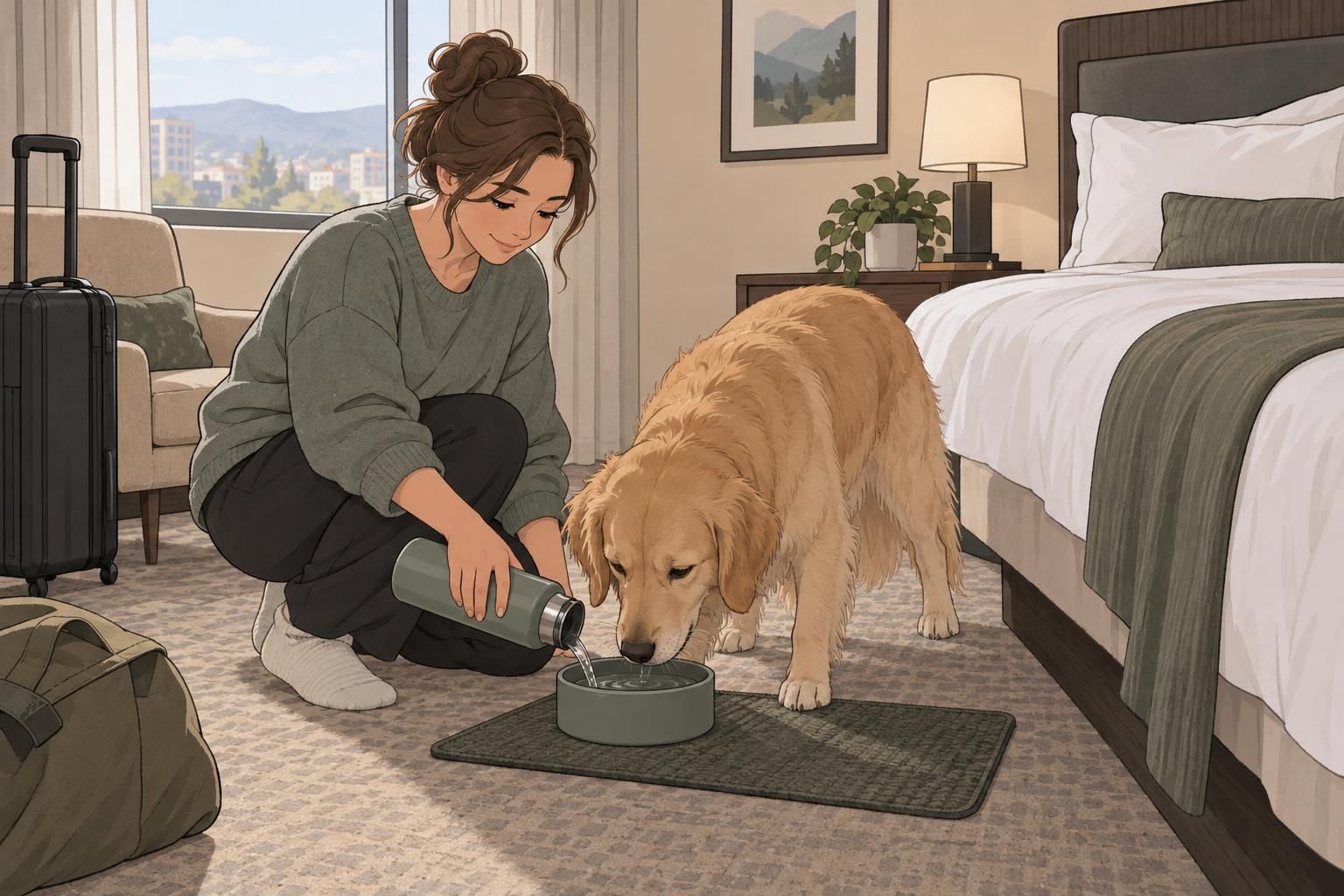
Once inside, a handler might show the dog its resting spot, set out water, and organize essential supplies. A familiar mat can provide a recognizable place to settle. Keeping walking routes clear also helps both handler and dog move safely between the bed, bathroom, and door.
Rest supports reliable work; it is not a break from responsible handling. A busy itinerary should leave room for the dog's ordinary physical and behavioral needs. Handlers should also plan outings with the dog rather than leaving it alone in the hotel room. Hotel staff are not responsible for supervising, feeding, or walking a service dog.
Sometimes the first conversation goes differently. A receptionist points to a no-pets policy, adds a pet charge, or asks a guest to describe a medical condition. These moments can be frustrating, especially after a tiring trip. A concise explanation can help distinguish a misunderstanding from a disagreement that needs a manager's attention.
A handler might say, “This is my service dog, trained to perform disability-related tasks. Could we follow your service-animal check-in procedure?” If the task is not apparent and staff ask the permitted questions, a brief, accurate description can keep the exchange focused without discussing private medical history.
Calm communication is a useful strategy, not an obligation to tolerate disrespect indefinitely. If a crowded lobby makes the discussion uncomfortable, requesting a quieter conversation may help. Keeping records also allows a guest to follow up later rather than trying to settle every detail while tired or under pressure.
Some handlers prefer to travel with optional identification, registration materials, or a short explanation of service-animal access rules. Keeping these items with reservation details and emergency contacts can make a travel folder easier to use when energy and attention are limited.
Their practical role is communication and organization. A handler may choose to show an ID to introduce the dog's role or keep consistent identifying information readily available. These materials complement a conversation; ADA hotel access rests on the dog's qualifying training and the applicable rules, rather than possession of a particular card or certificate.
For travelers who prefer a compact reference, wallet-sized ADA reference cards for travel offer a convenient way to keep an explanation close at hand. They can be particularly helpful when a staff member wants a brief reminder of the limited questions permitted during check-in.
No. Identification is an optional communication tool, not an ADA access requirement. You can choose whether presenting it would be helpful.
Consider food, bowls, waste bags, a familiar mat, necessary medications, and veterinary contact information. Keep frequently needed items accessible instead of buried in luggage.

Welcoming hotels make accessibility consistent rather than leaving it to an individual employee's familiarity with service dogs. Front-desk teams know the permitted questions, understand the difference between service dogs and pets, and have a clear route to a manager when an unusual situation arises.
Their reservation and billing procedures matter, too. A booking note about a service dog should not automatically trigger a pet fee or limit the guest to pet-designated rooms. Staff should be able to explain ordinary damage policies without treating the presence of a working dog as damage in itself.
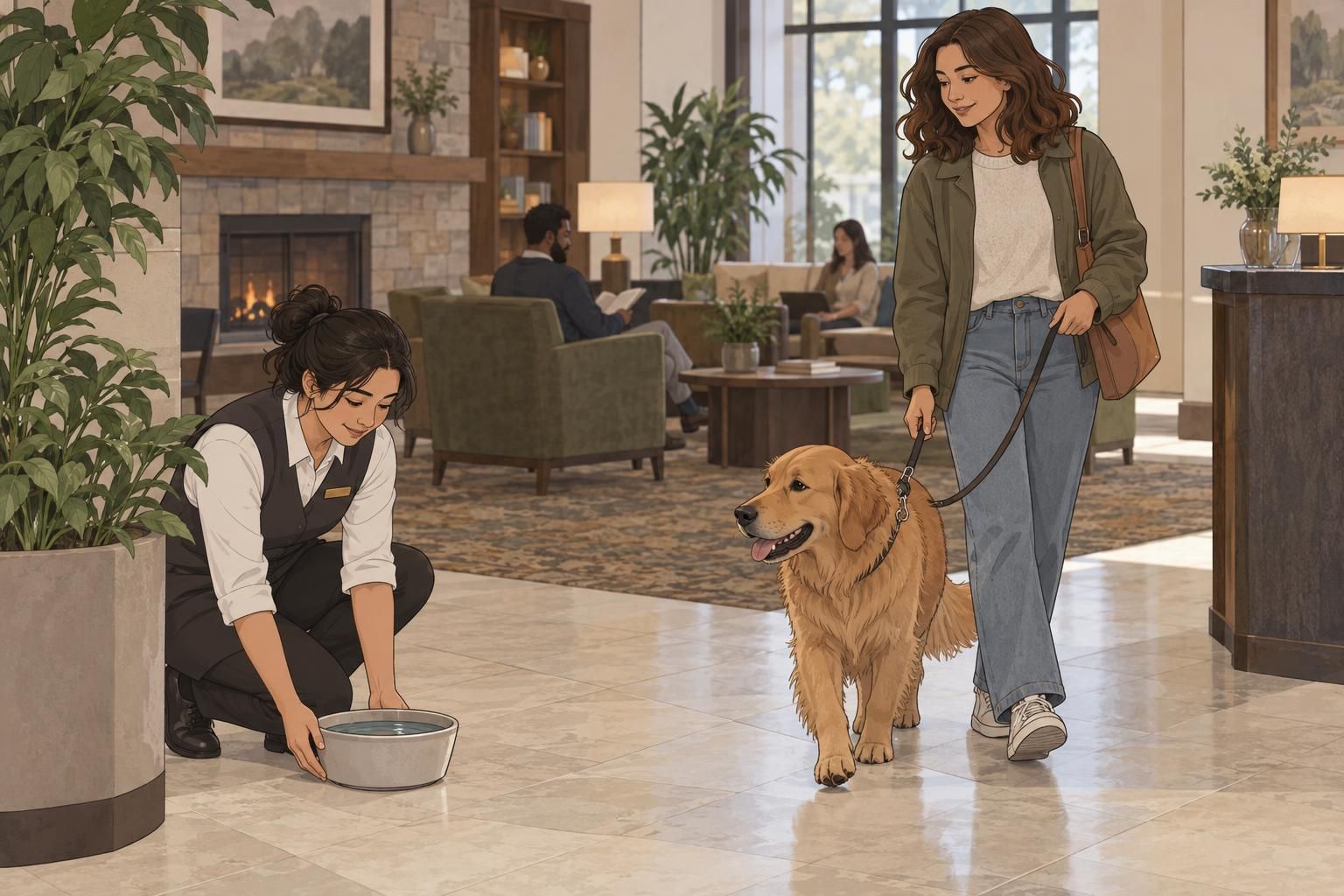
The best hotel stories often turn on small moments: a clear answer, an uncluttered path, or an employee who quietly corrects a billing mistake. Accessible hospitality is more than permission to enter. It means recognizing a working partnership and treating the handler and dog with consideration throughout the stay.
Your trusted source for service animal registration. Get professional ID cards, digital profiles, and smart NFC tags to keep your service animal safe and recognized.
© National Animal Registry — All rights reserved.