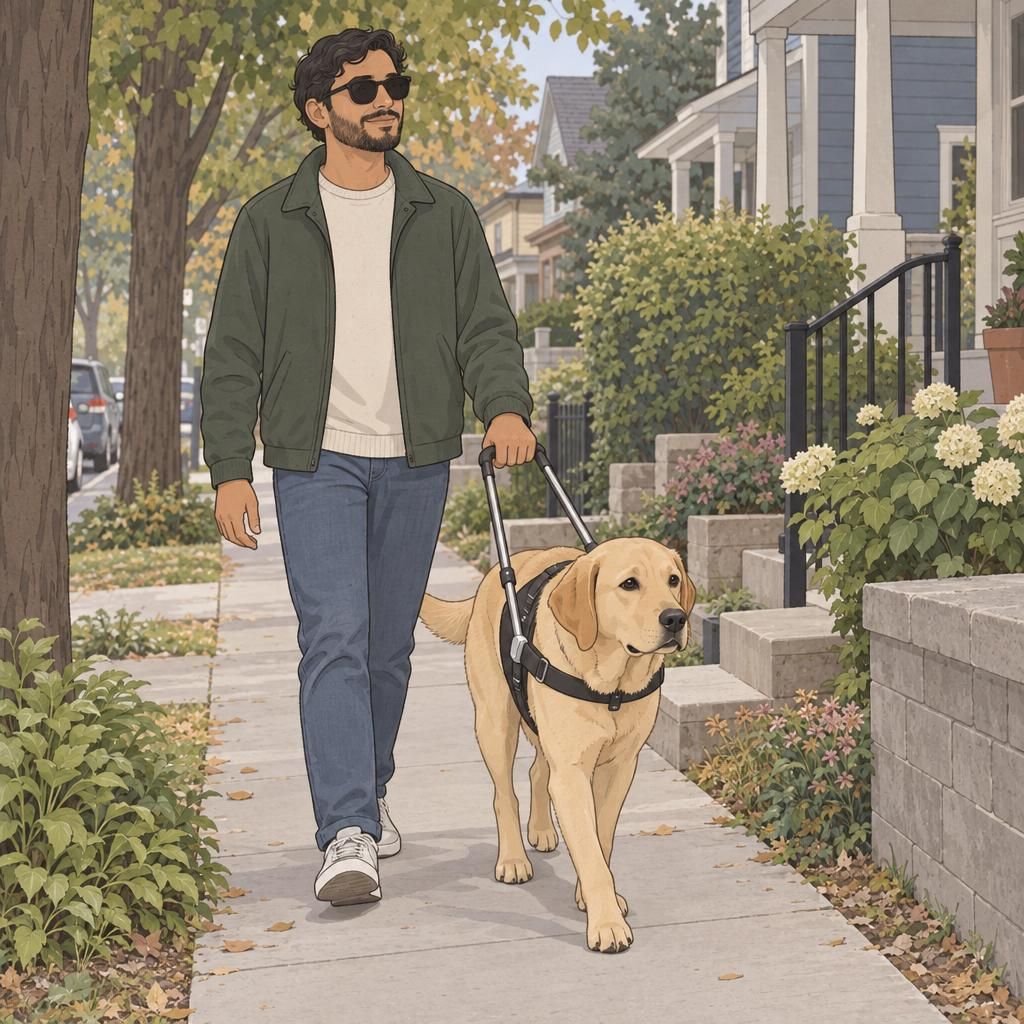
A guide dog is an assistance dog trained to support safe mobility for someone who is blind or has low vision. By helping the handler move around obstacles and recognize important features along a route, the dog contributes to a partnership built on communication, practice, and trust.
You may also hear terms such as “seeing eye dog” or “blind assistance dog.” Terminology varies by region and organization, but the central purpose is the same: helping a person navigate their surroundings. These dogs perform specific mobility tasks, rather than simply providing companionship or emotional comfort.
One common myth is that a guide dog takes complete control of every journey. In reality, the handler remains an active decision-maker. The dog contributes trained responses to the environment, while the person contributes direction, judgment, and knowledge of where they want to go. Understanding that division of responsibility makes the rest of guide-dog work easier to understand.
The handler chooses the destination and directs the route. Through practiced commands and communication, they ask the dog to move forward, turn, or locate a useful feature. The dog uses its training to guide around obstacles and identify changes such as curbs and stairs.
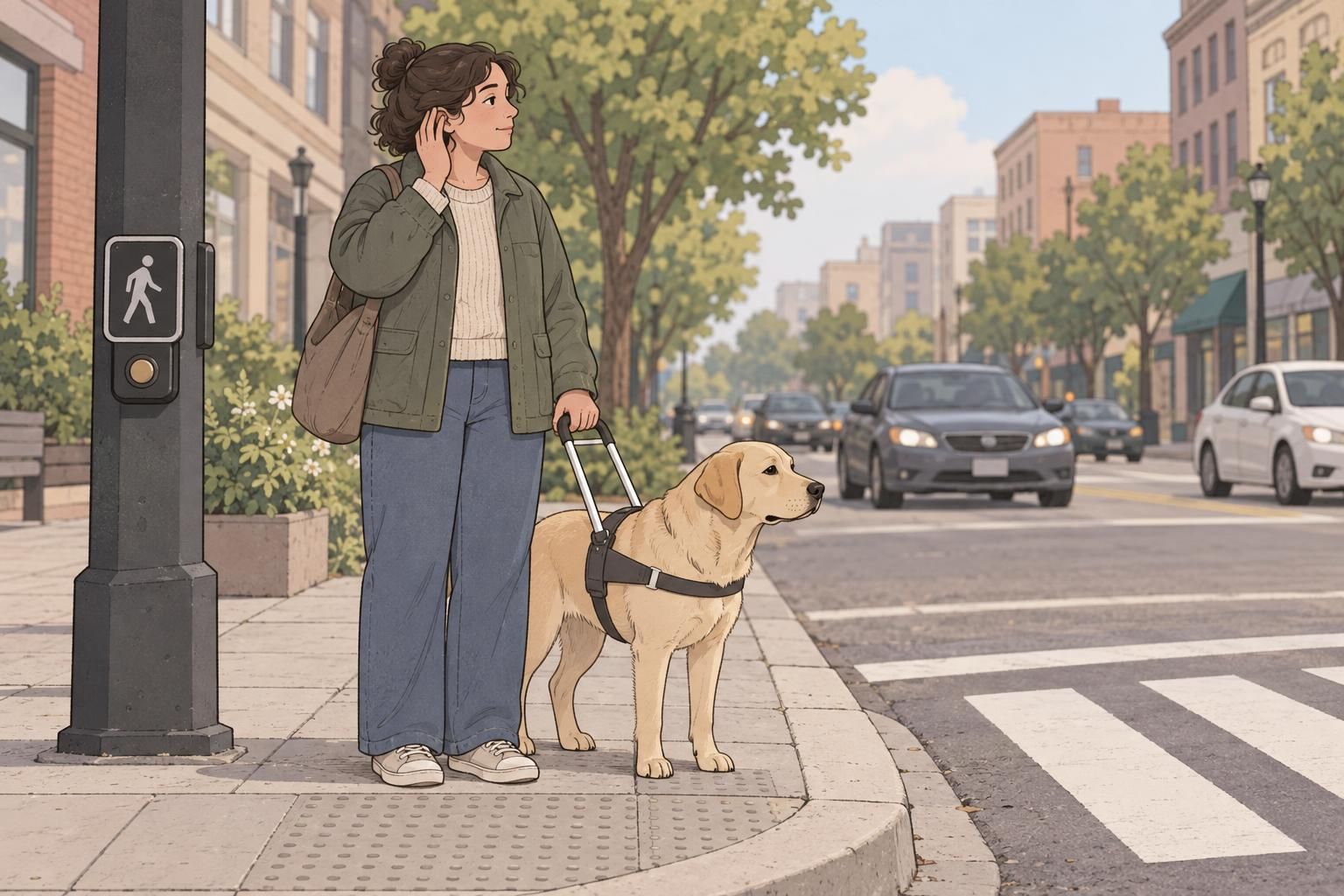
This teamwork is especially important at road crossings. A guide dog does not interpret traffic lights or independently decide when it is safe to cross. The handler assesses the crossing and gives the direction to proceed. The dog helps locate the curb and may refuse a command when it detects danger, a response often called intelligent disobedience. Guide Dogs explains this distinction in its discussion of guide-dog myths: source.
Think of a familiar trip to a nearby building. The handler knows the destination and directs the journey; the dog helps negotiate the physical path. Neither partner works in isolation. Clear commands, careful attention, and experience together help the team respond to changing surroundings.
Guide work calls for more than knowing a few commands. A dog needs to respond reliably to its handler while remaining focused in environments full of movement, unfamiliar sounds, food smells, and other animals. Its working role centers on practical mobility assistance.
Labradors, Golden Retrievers, German Shepherds, and suitable crosses are common guide-dog choices. Breed alone, however, does not tell the whole story. An individual dog’s temperament, focus, suitability for the work, and compatibility with a handler all matter.
Another misconception is that a guide dog doubles as a personal-protection dog. Guide work is about helping someone travel, not guarding them or confronting strangers. A calm, attentive working presence supports that purpose. The dog’s value comes from reliable assistance and cooperation, rather than an intimidating appearance or protective behavior.
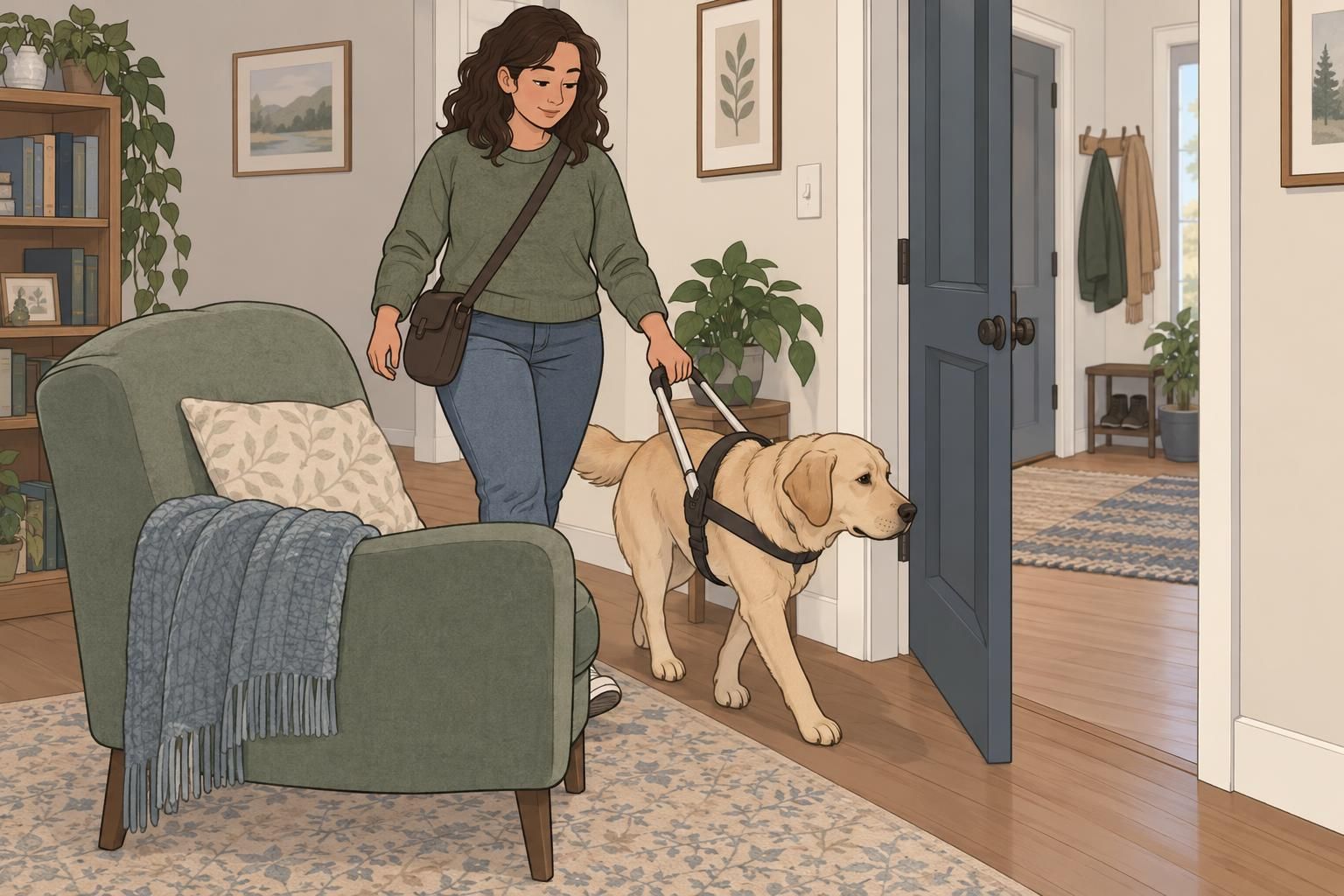
Guide dogs are not only for people who are totally blind. People with low vision may also be suitable candidates. Someone’s ability to see certain objects, recognize light, or use vision in some situations does not reveal the full picture of their mobility needs.
Needs and circumstances vary from person to person. Daily routes, surroundings, individual preferences, and the practical responsibilities of caring for a dog all influence whether a guide-dog partnership is a good fit. Two people with similar levels of vision may make different choices about how they travel.
A guide dog works alongside—not instead of—the handler’s orientation and mobility skills. Those skills help a person understand their location, plan a journey, follow a route, and make decisions along the way. The dog adds trained help with navigating the physical environment.
No. People with low vision may also benefit. Suitability depends on individual needs and circumstances, not simply whether someone has any usable sight.
No. The handler continues to direct the journey and use orientation and mobility skills, with the dog providing complementary assistance.
A working harness can signal that a guide dog is concentrating on its job. While wearing it, the dog may appear particularly focused on the route and the handler’s instructions. That concentration should be respected, even when the dog looks friendly or seems to be standing still.
Working life also includes time away from guiding. Off-duty periods allow for relaxation, companionship, and ordinary dog activities. A guide dog resting at home is not failing to do its job; rest is part of a balanced routine that supports its well-being.
Responsible guide-dog programs monitor dogs’ suitability and welfare. Attention to how a dog is coping matters throughout the working relationship, not just at the beginning. A successful partnership considers the needs of both the handler and the dog.
Trust develops through everyday experience together. The handler learns the dog’s responses, and the dog becomes familiar with the handler’s communication. The result is both a working relationship and a personal bond. Respecting the dog’s concentration in public helps protect that partnership.

The most helpful approach is simple: treat the handler as the person in charge and give the team space to work. A guide dog may be appealing, but attracting its attention can interrupt the concentration its handler relies on.
A brief question such as “Would you like any assistance?” is more respectful than taking hold of someone or trying to steer their dog. If the handler declines, accept that response. If they agree, let them explain what would help rather than assuming you know the best approach.
The same principle applies when a team pauses. They may be listening, orienting themselves, or preparing for the next part of the route. Standing still is not automatically a request for intervention. Patiently allowing room to move is often the most useful thing a passerby can do.
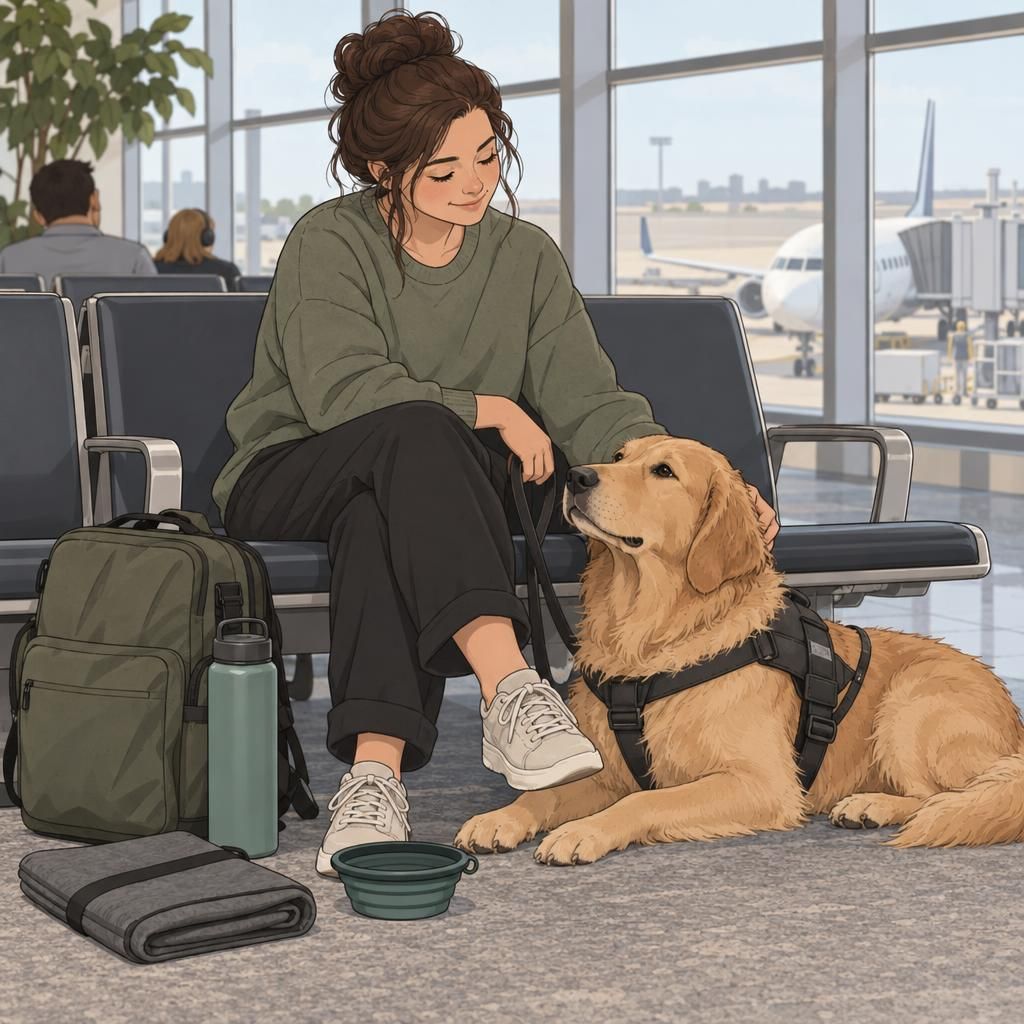
Assistance-dog access rules vary by location. Before traveling, handlers should check the requirements that apply to their destination, transportation, and accommodation. Preparing for those details in advance can make a journey more predictable and reduce last-minute confusion.
Registration, IDs, certificates, and digital profiles can serve as optional practical tools for identification and clearer communication. Keeping information consistent and easy to find can help a handler explain the dog’s working role during everyday interactions. These tools support preparation while applicable local rules continue to govern access.
For handlers who prefer a portable identification option, a customizable service dog ID for everyday identification can be included in their usual travel supplies. The choice of identification tools can reflect the handler’s preferences and communication needs.
For more preparation tips, explore planning ahead when traveling with a service dog. Understanding the partnership, respecting the dog’s working attention, and preparing thoughtfully all help support smoother experiences for guide-dog teams.

Your trusted source for service animal registration. Get professional ID cards, digital profiles, and smart NFC tags to keep your service animal safe and recognized.
© National Animal Registry — All rights reserved.