The best travel accessories for service dogs are not necessarily the newest or most elaborate. They are the items that help your dog stay comfortable, support familiar routines, and make everyday care easier away from home. A compact collection of dependable supplies usually serves a working team better than a bag full of unfamiliar equipment.
Start with your dog’s size, working tasks, and preferences. A bowl should be easy to drink from, a mat should provide enough room to settle, and equipment should allow comfortable movement without interfering with tasks. Consider your own needs, too: lightweight supplies, accessible pockets, and easy-to-clean materials can make managing luggage and your dog more straightforward.
Next, match the bag to the journey. A short car ride calls for different preparation than a flight followed by several nights in lodging. Think through transportation, weather, available storage, and opportunities for water and relief breaks. For the broader planning process, see a practical guide to planning service-dog travel.
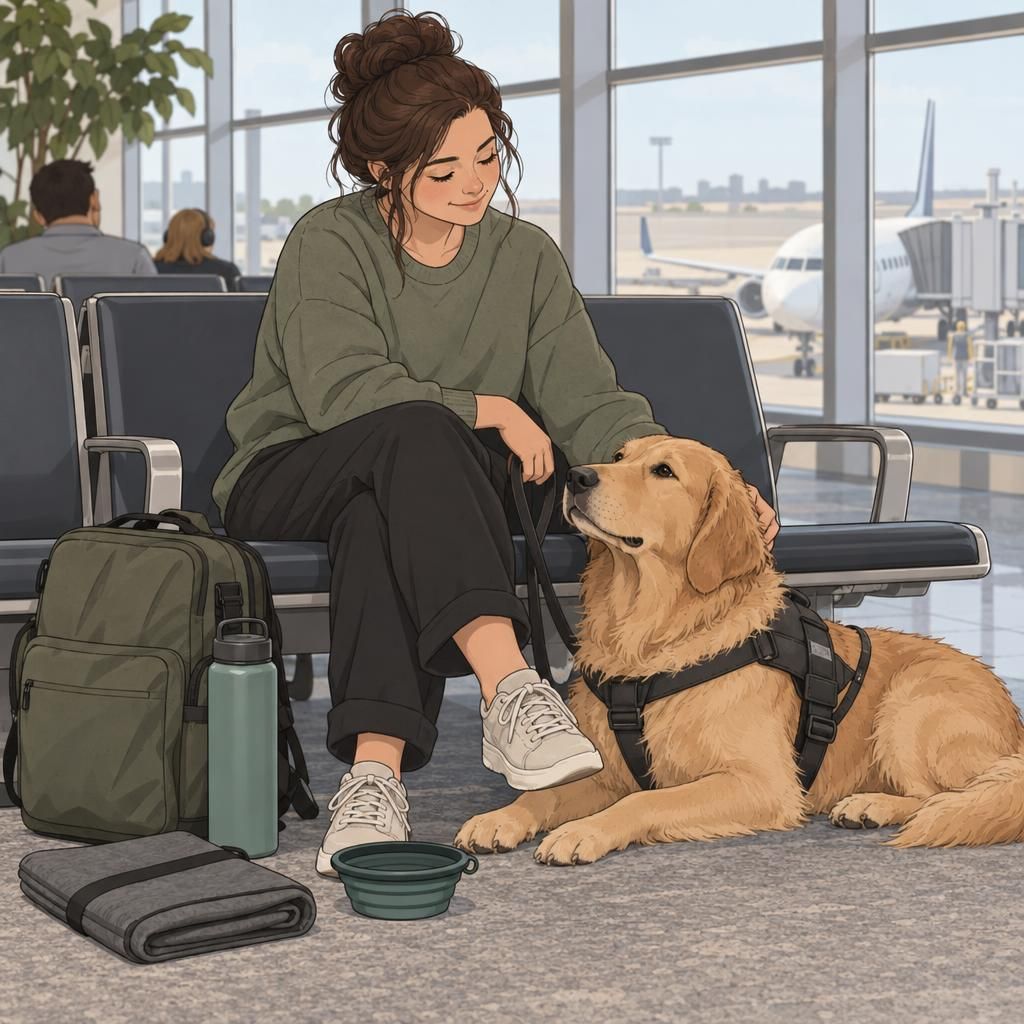
A dedicated water bottle and collapsible bowl are useful travel-day basics. Choose a bottle that closes securely and a bowl that stays reasonably stable on the surfaces you expect to use. Keep both within reach so offering water does not require unpacking the entire bag.
For lodging, a larger familiar bowl can be more comfortable than a small travel bowl, especially for longer stays. Pack measured meals in securely closed containers or individual portions, along with the treats you normally use. Familiar food and feeding items help preserve routine when the surroundings change.
Bring enough food for the planned trip and, when practical, a modest reserve for delays. Keep food dry and separate from cleanup items, and wash bowls regularly. Portable water, bowls, meals, and other everyday supplies are also included in this service-dog travel packing source.

Pack the well-fitting working harness, collar, and leash your dog already uses comfortably. Check straps, buckles, attachment points, and stitching before leaving. A spare leash takes little space and provides a practical backup if the regular one becomes wet, damaged, or misplaced.
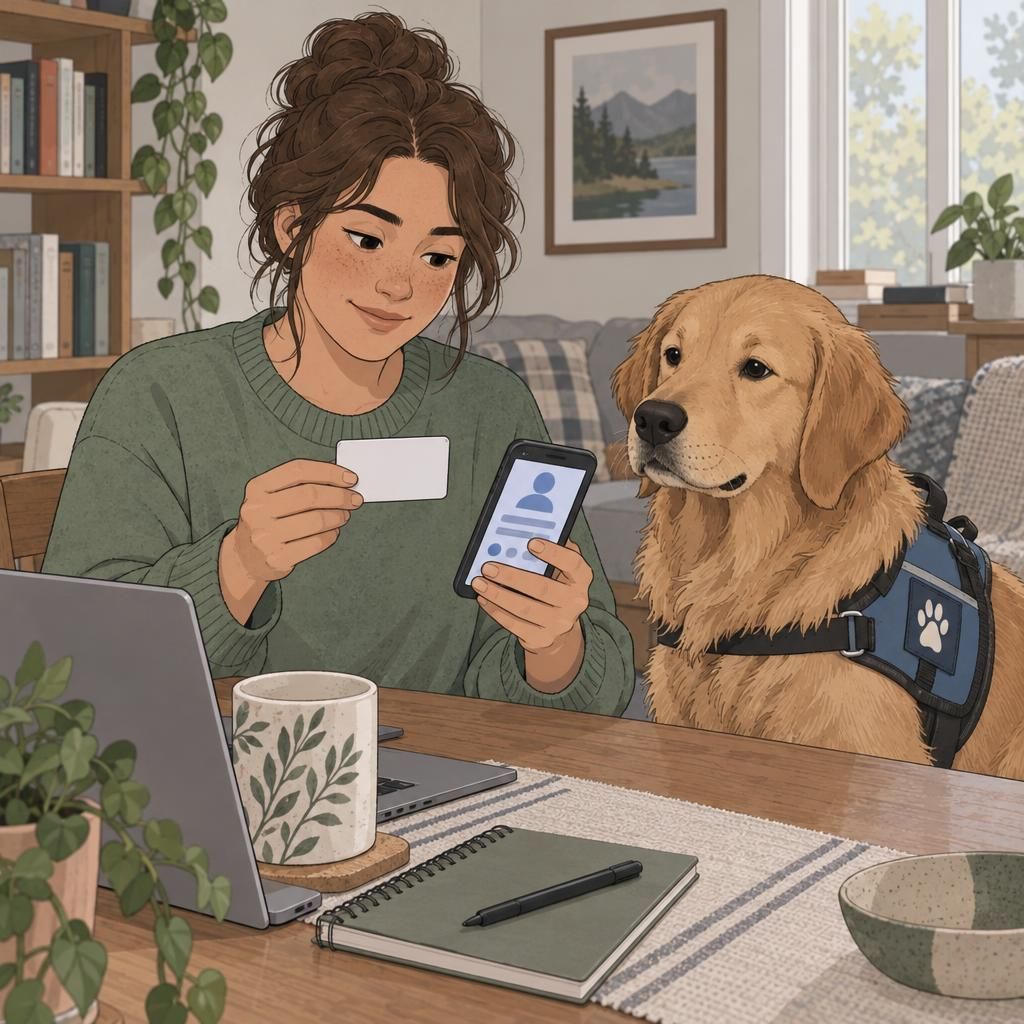
Check that the dog’s identification has current contact information, and keep backup identification and emergency contact details for both dog and handler. Store important information somewhere you can reach without putting down every bag. A protected paper copy can be helpful if your phone battery runs low or a digital file is unavailable.
Service dog identification and registration materials can keep details organized and make communication clearer. For example, a customizable printed service dog ID with a digital profile offers a convenient way to keep identifying information accessible.
A low-profile, washable travel mat gives your dog a familiar resting surface in unfamiliar places. Look for one that folds compactly, dries reasonably quickly, and provides enough space without extending into a walkway. Practice using it at home and on short outings before relying on it during a longer journey.
In waiting areas, restaurants, and lodging, position the mat where your dog can rest close to you without blocking movement. A familiar mat can support an established settling routine, but it should not interfere with your dog’s working position or ability to perform tasks.
Build a small cleanup pouch with waste bags, dog-appropriate wipes, paper towels, a small towel, and whatever paw-cleaning supplies your dog already tolerates. Add a waterproof pouch for damp or used items. Keeping clean supplies separate from used materials makes the bag easier to manage until you can wash or dispose of them.

Pack your dog’s required medications in a clearly organized, readily accessible place. Keep dosing instructions and relevant health records with your travel materials, along with your veterinarian’s contact information. Plan for the full trip and discuss any concerns about delays or schedule changes with your veterinarian before departure.
Temperature-sensitive medication should be stored exactly as directed. Do not assume an ordinary travel pouch provides the necessary temperature control. If the journey involves extended transit or limited refrigeration, ask your veterinarian how to maintain appropriate storage throughout the trip.
A compact first-aid kit should contain veterinarian-recommended supplies suited to your dog. Know what each item is for before packing it; supplies are most useful when you understand how and when to use them. First aid supports an initial response and does not replace veterinary care when needed.
Weather protection depends on the destination. Paw balm, appropriately fitted boots, a rain jacket, or an extra towel may be useful. Introduce unfamiliar items gradually before departure and check that your dog can walk, settle, and work comfortably while wearing them. Protective gear does not replace choosing safe routes and resting conditions.
For road trips, choose a properly designed, crash-tested canine restraint or vehicle containment system compatible with your dog and car. Follow the manufacturer’s instructions for sizing, installation, and attachment. Do not assume an everyday working harness is also designed for crash protection.
Practice loading, securing, and unloading before departure. The setup should allow an appropriate resting position without leaving loose straps where they can tangle. A washable seat cover can help manage fur, dirt, and damp paws, provided it does not interfere with the restraint system or vehicle safety features.
For downtime at your destination, pack a familiar toy, suitable chew, or food puzzle your dog already uses safely. Offer enrichment during genuine rest periods when it will not interfere with work, and supervise as appropriate. Familiar items can make an unfamiliar room feel more predictable without adding much luggage.
Keep administrative supplies organized separately from toys and cleanup gear. If you prefer a dedicated option, consider a travel-focused service dog kit for organizing identification and travel materials. Review its contents alongside your itinerary and confirm carrier requirements independently.

Use this list as a starting point, then adjust it for your dog’s tasks, the trip length, transportation, and destination. Pack frequently needed items near the top or in an outside compartment so you can reach them without disrupting your dog.
For an additional reference you can keep close at hand, pack wallet-sized service dog information cards for convenient reference. Before leaving, do one final check: can you quickly reach water, waste bags, medication, and essential documents? Thoughtful organization and familiar equipment help keep travel manageable for both you and your dog.
Your trusted source for service animal registration. Get professional ID cards, digital profiles, and smart NFC tags to keep your service animal safe and recognized.
© National Animal Registry — All rights reserved.