
Choosing between an emotional support animal (ESA) letter and an ID starts with a simple question: What do you want the documentation to help you do? Preparing a housing accommodation request is different from wanting a convenient way to identify the animal that supports you. Both needs are understandable, but they call for different tools.
An ESA letter addresses a person’s disability-related need for an emotional support animal in a particular context, such as housing. An ID card or tag provides a portable way to communicate the animal’s role. Although owners may keep these items together, they should not expect them to perform the same function.
Starting with your goal can make the decision less confusing. Rather than looking for one document that handles every situation, focus on what information is relevant, who will receive it, and what rules apply. This approach helps you choose documentation with realistic expectations.

An ESA letter may support a request for a reasonable accommodation under applicable housing laws. A letter from a licensed mental-health professional who knows the person’s circumstances can help explain the relationship between the person’s disability-related needs and the emotional support the animal provides. Its purpose is to support that housing discussion, rather than simply identify the animal.
Educational information from UMass Chan Medical School discusses emotional support animals and the relevance of professional documentation when seeking housing accommodations: source. Whether a particular letter is appropriate depends on the person’s circumstances and the rules governing the housing situation.
Eligibility and documentation processes can vary. Before submitting a request, ask the housing provider how accommodation requests are handled and what information is relevant. A professional who understands your circumstances can discuss whether an ESA letter is appropriate and what it can reasonably address. A letter may support the process, but it should not be presented as a guarantee of approval.

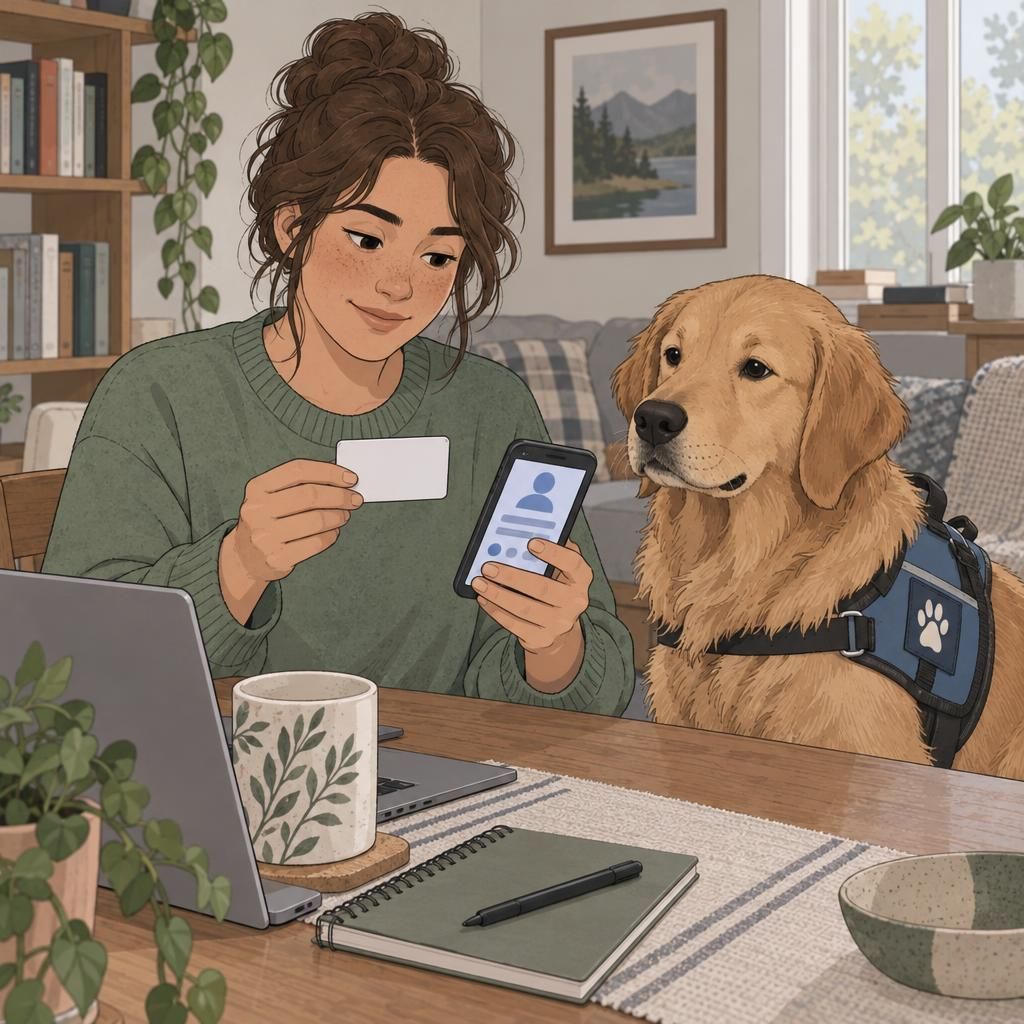
Some owners choose an ESA ID because they want a simple, accessible way to communicate that their animal provides emotional support. A card can be kept in a wallet or document holder, while a tag offers another convenient identification option. Having that information ready may help an owner feel more prepared when a conversation about the animal arises.
The practical benefit is clarity. Instead of searching through housing correspondence or trying to explain everything at once, an owner can use identification as a starting point for a brief conversation. This can be especially helpful when keeping the animal’s identifying information consistent across personal records and everyday identification.
ESA identification is optional. Its purpose is to communicate information, not to determine whether an accommodation must be granted. Any accommodation decision still depends on the applicable rules and circumstances. Presenting an ID with that understanding keeps expectations clear for both the owner and the person receiving it.
No. An ID identifies the animal’s stated role, while a housing letter may address the person’s disability-related need for an accommodation. Check what is relevant to your housing request.
Some owners value having a portable identification tool available. It can make information easier to present without requiring them to carry their housing paperwork for routine identification.
A letter and an ID can complement each other when each is used for its intended purpose. An owner might keep an ESA letter with accommodation correspondence and retain an ID in a wallet or alongside the animal’s everyday supplies. This creates a practical distinction between documents used for a housing request and items used for identification.
Organization matters more than the number of documents you carry. Keep housing-related materials together so you can locate them when communicating with a housing provider. Separately, keep your chosen identification easy to access and check that its details remain accurate. There is no need to treat every everyday interaction as a housing documentation review.
Having both items does not change the rules governing an accommodation. Their value lies in supporting different tasks: the letter may help explain a housing-related need, while the ID offers convenient identification. Checking your particular housing situation remains the most useful next step.

An emotional support animal provides therapeutic emotional support through its presence. The comfort and companionship it offers can be meaningful to the person it supports. A service dog, by contrast, is trained to perform specific tasks related to a person’s disability. The distinction concerns the animal’s role, not how important the animal is to its owner or handler.
For example, a service dog might retrieve a dropped item as a disability-related task. An ESA may provide emotional comfort by staying nearby without performing a specifically trained task. These are different forms of support, and describing them accurately helps others understand the animal’s role.
Public-access rules also differ. An ESA letter does not provide unrestricted access to public places, and an ESA ID does not turn an emotional support animal into a service dog. Likewise, a service dog’s legal access rights are separate from any optional identification the handler chooses to carry. Check the rules that apply to the setting rather than assuming housing documentation applies everywhere.
Everyday language can add confusion. Someone may conversationally call an animal a “support dog,” but that phrase alone does not explain whether the dog is an ESA or a task-trained service dog. “Companion animal” is broader still. When documentation matters, use a description that accurately reflects your animal’s role.

The practical takeaway is straightforward: consider an ESA letter when preparing a housing accommodation request, and consider an ID when you want optional, everyday identification. If you choose both, give each a clear purpose. This helps you stay organized without expecting one item to answer every question about your animal.
For handlers whose dog is a service dog, a customizable service dog ID for clear everyday identification can provide a convenient way to communicate the dog’s role. Choose wording that accurately describes your dog, and treat the ID as a practical identification tool, separate from the animal’s legal access rights.
Before making your choice, identify your immediate goal: requesting a housing accommodation, communicating your animal’s role, or organizing both kinds of information. Then check the requirements relevant to that situation. Clear descriptions, appropriate documentation, and realistic expectations can help you approach these conversations with confidence.
Your trusted source for service animal registration. Get professional ID cards, digital profiles, and smart NFC tags to keep your service animal safe and recognized.
© National Animal Registry — All rights reserved.