

Living with severe depression can make ordinary activities feel difficult to begin or sustain. Getting out of bed, eating regularly, leaving home, and responding to distress may all require additional support. For some people whose depression substantially limits daily functioning, a psychiatric service dog can be one part of that support.
A psychiatric service dog is trained to perform specific work or tasks related to a person’s disability. Those tasks might help a handler start a morning routine, retrieve a phone during distress, or interrupt a harmful pattern of behavior. The purpose is practical assistance that supports daily functioning, safety, and independence—not simply having a reassuring companion nearby.
Every partnership is different. A task that helps one person may be unnecessary or unsuitable for another. A service dog complements mental-health care rather than replacing therapy, prescribed treatment, or a personal safety plan. Deciding whether this partnership fits requires considering both the assistance a dog could provide and the responsibilities involved.
Under the Americans with Disabilities Act, a service dog is individually trained to do work or perform tasks for a person with a disability. For psychiatric disabilities, the connection between the trained behavior and the handler’s functional needs is essential. A dog’s presence may feel comforting, but comfort alone is different from a trained service task.
For example, a dog trained to respond to a particular sign of distress with persistent nudging is doing something different from a pet that happens to offer affection. Emotional support animals can provide meaningful companionship, but that support role does not carry the same ADA public-access rights as a task-trained service dog.
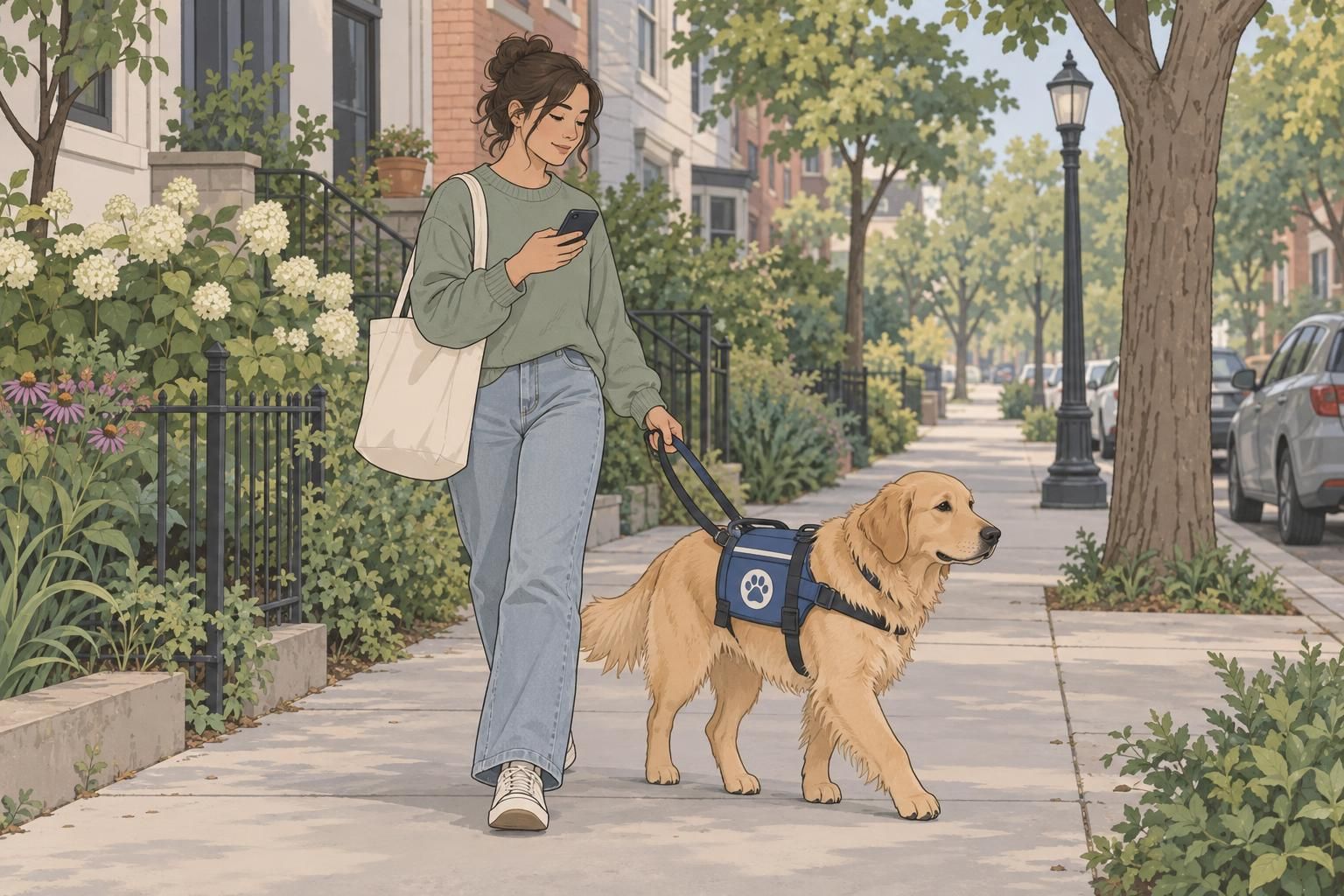
Depression can disrupt the sequence of small actions that make a day manageable. An individualized service-dog task may help create a starting point. Depending on the handler’s needs and the dog’s training, a prompt could support getting out of bed, beginning to dress, eating breakfast, or preparing to leave home.
These examples are possibilities, not a universal task list. The dog does not decide medication doses or whether treatment should change. Reminders may support structure, but they do not guarantee that symptoms will improve or that every day will follow the same routine.
During distress, a psychiatric service dog may perform a trained response that helps the handler reconnect with their surroundings or take a next step. Tactile grounding might involve nudging a hand or maintaining steady body contact. Deep-pressure stimulation involves trained pressure or contact tailored to the person’s needs and the dog’s physical suitability.
Other possible tasks include interrupting dangerous behavior, waking a handler from nightmares, retrieving a phone or medication, or seeking assistance through a trained response. Task selection should reflect the handler’s actual difficulties rather than an assumption that everyone with depression needs the same support.
Safety planning should account for what happens if the dog is asleep, ill, distracted, or unavailable. A service dog cannot reliably recognize every emergency or prevent every harmful action. Accessible contact information, human support, and a clear crisis plan remain important.

Going out with a working dog involves preparation as well as task assistance. The handler needs to keep the dog under control, plan for toileting and water, and consider how the team will navigate seating, crowds, and limited space. A shorter outing may be a more manageable starting point than a long, demanding day.
Under the ADA, service dogs generally must be harnessed, leashed, or tethered unless that interferes with their work or the person’s disability prevents it; effective control is still necessary. Different settings, including air travel and housing, may involve different rules, so checking the requirements for the specific situation helps avoid surprises.
Optional registration, IDs, and certificates can provide practical identification and help keep information organized. For example, a customizable service dog ID and digital profile offers a consistent place to present identifying details. These tools complement preparation; they do not replace applicable public-access rules or establish access rights on their own.
Caring for a dog may add meaningful structure to the day, but the work remains necessary even when depression makes basic activities difficult. Feeding, fresh water, toileting, exercise, grooming, and veterinary care all need dependable arrangements. Ongoing task practice and appropriate public behavior also require attention.
Needing help with these responsibilities is not a personal failure. It is a practical consideration in deciding whether a service-dog partnership is sustainable. The plan should protect both the handler’s well-being and the dog’s welfare during depressive episodes.

A service-dog partnership involves more than the initial decision to get a dog. Expenses may include obtaining a suitable dog, training support, equipment, food, grooming, and lifelong veterinary care. Some assistance-dog programs have waitlists, and training and handling demands can require substantial time and energy.
Housing and travel deserve early attention. Consider available space, toileting access, transportation, destination requirements, and arrangements if the dog cannot accompany you. When planning ahead for travel with a service dog, review the rules that apply to the specific carrier and destination rather than assuming everyday public-access practices apply everywhere.
A mental-health professional can help you consider functional needs and how a dog might fit alongside treatment. Reputable assistance-dog organizations can explain training options, suitability, timelines, and ongoing support. These conversations are sources of guidance, not requirements for National Animal Registry registration, which does not require proof, medical letters, or training documentation.

Research on psychiatric assistance dogs describes tasks reported by handlers, including tactile grounding, nudging, interrupting unwanted behavior, body contact, and deep-pressure stimulation. These reports help illustrate how assistance can work in everyday life. They concern psychiatric assistance dogs broadly and should not be treated as conclusive proof of effectiveness for depression alone (source).
Evidence specifically about depression remains limited. Individual experiences also vary, so a promising example is not a prediction of what every handler will experience. A useful starting point is identifying concrete daily barriers, considering appropriate tasks, and weighing the partnership’s demands alongside its potential benefits.
If there is an immediate risk of self-harm, contact emergency services or a local crisis service now. For longer-term planning, focus on a support system that includes appropriate mental-health care, dependable human support, and—when suitable—a carefully planned service-dog partnership.
Your trusted source for service animal registration. Get professional ID cards, digital profiles, and smart NFC tags to keep your service animal safe and recognized.
© National Animal Registry — All rights reserved.