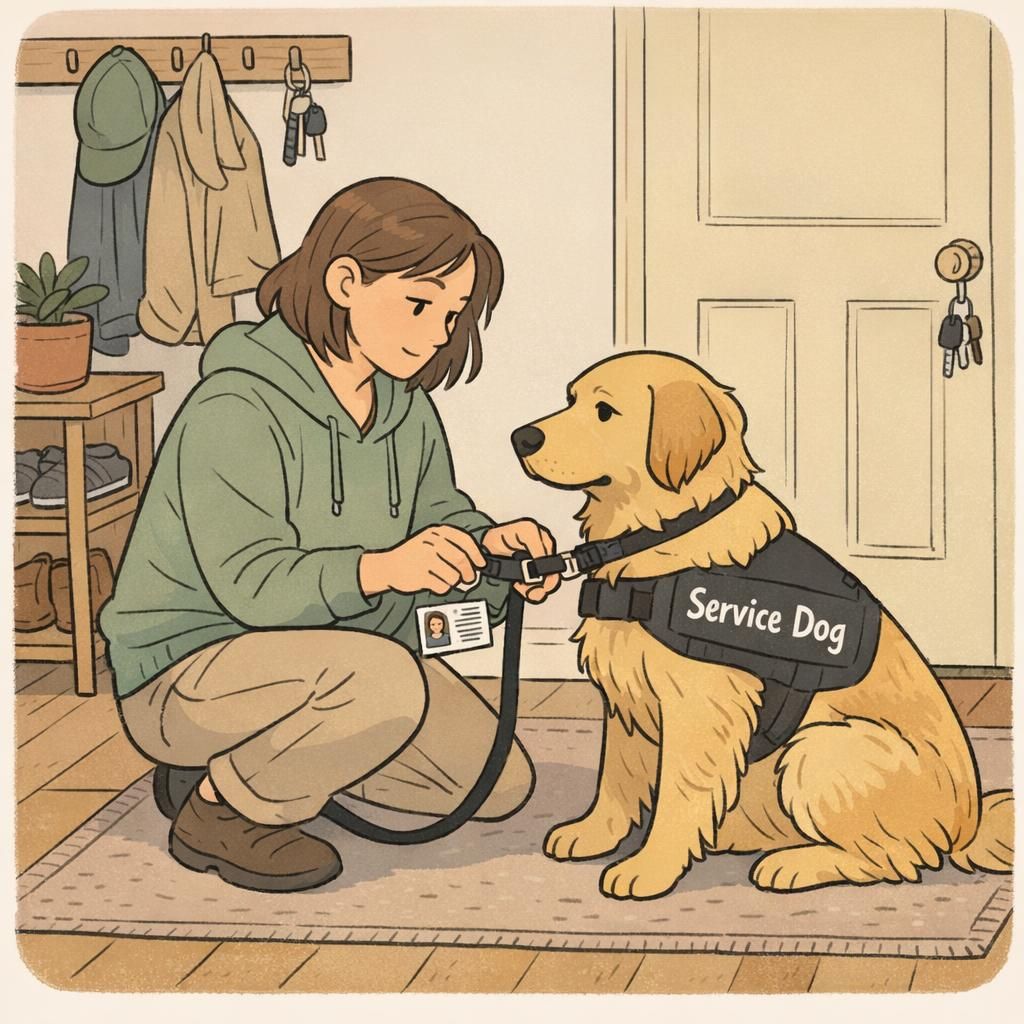
A service dog ID card is a voluntary identification tool that puts the most useful handler-and-dog details into one simple, professional-looking format. Think of it like a quick reference card: it helps you communicate the basics at a glance without turning every public outing into a long conversation.
Handlers often use an ID card to make everyday interactions smoother in places where people may be unfamiliar with service dog etiquette or rules. Instead of explaining everything verbally, you can calmly present a card that clearly identifies your dog as a working service animal and connects the dog to you as the handler.
In real life, the “what it’s for” is simple: reducing friction. It can help during quick check-ins, brief conversations with staff, or moments when you’d rather keep things private and move on with your day.
Most service dog ID cards are designed to be straightforward and readable. The goal is to include enough information to establish a clear first impression—without inviting unnecessary questions.
Common fields typically include the dog’s name, the handler’s name, and a photo. Many cards also list a service dog type (for example, mobility, guide, hearing, psychiatric, or autism support). This can help staff understand that your dog is working and not simply a pet accompanying you.
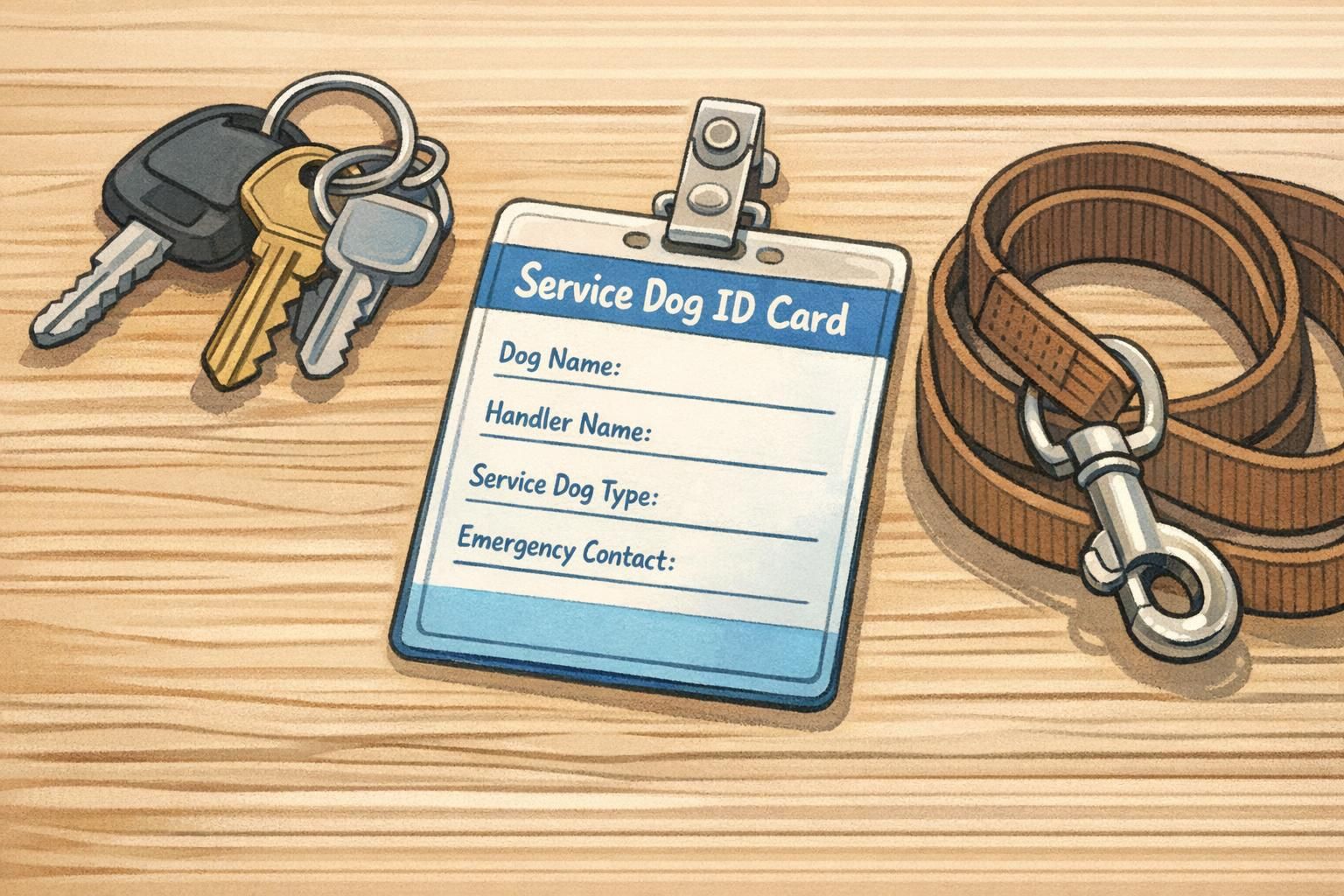
Some handlers prefer to add practical details that can be helpful in emergencies or in the event a dog is separated from them. These additions are optional, and many people keep them minimal.
A well-designed ID card communicates what’s needed for everyday identification—while respecting that your health information is personal. If you’ve ever felt pressured to “prove” more than you’re comfortable sharing, a simple card can help keep the interaction brief and respectful.
Service dog handlers are often managing a lot: symptoms, schedules, accessibility needs, and the responsibility of working as a team with their dog. An ID card doesn’t change your rights—but it can make daily life feel more predictable by reducing repetitive questions and smoothing first impressions.
Many handlers say the biggest benefit is how quickly an ID card can move an interaction forward. Instead of answering the same questions repeatedly, you can offer a calm, consistent reference that signals, “We’re prepared, and this dog is working.”
“ "On days when my energy is low, having an ID card means I don’t have to explain my life story to run a quick errand. I can stay calm, keep it brief, and move on." – Service dog handler”
Another reason owners love ID cards is the subtle but meaningful reminder it provides to others: this dog is on duty. Even well-meaning strangers sometimes approach working dogs. Having professional identification on hand can help redirect those moments with less stress.
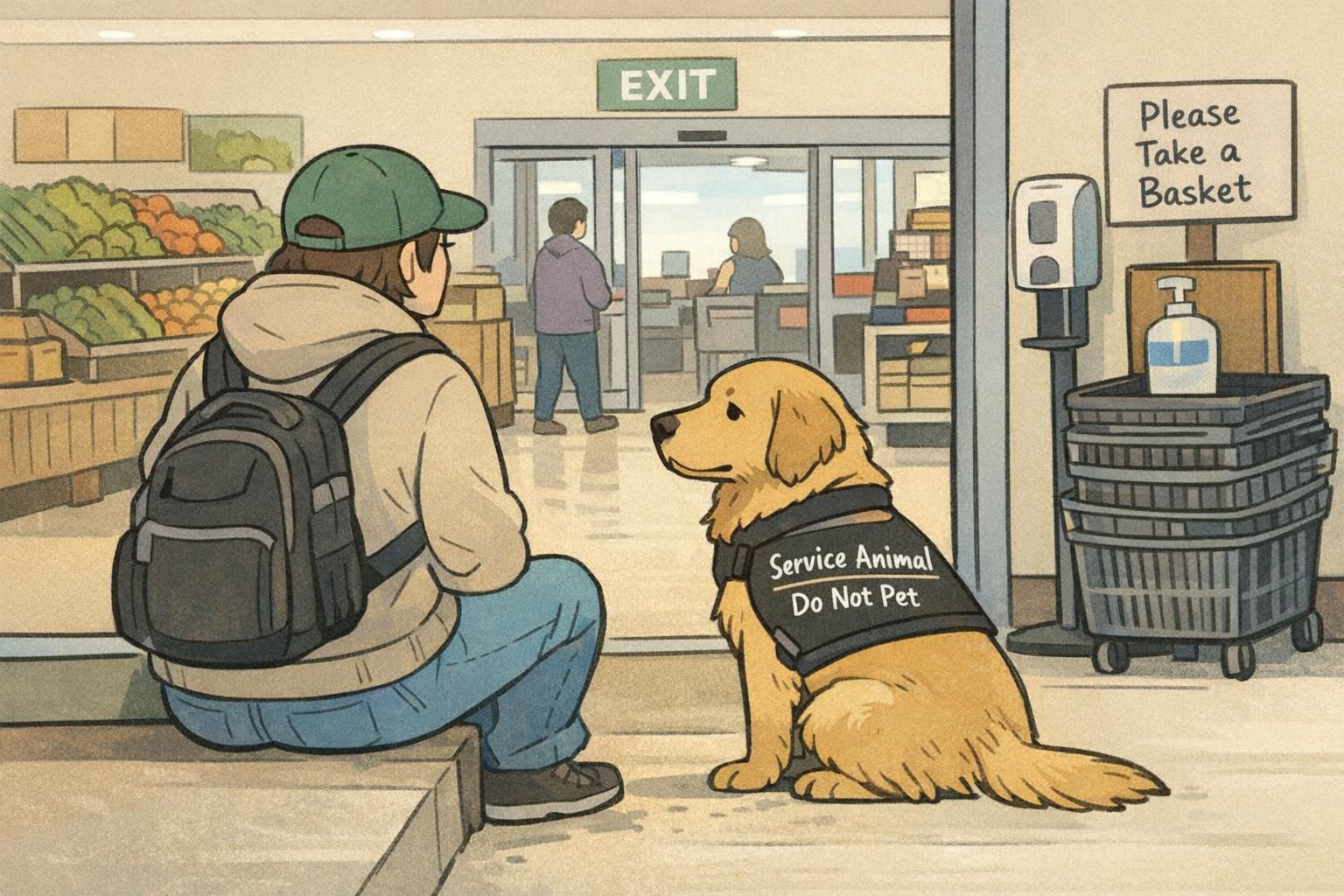
It helps to know the basics of the Americans with Disabilities Act (ADA) service animal principles so you can feel confident and grounded in everyday situations. Under the ADA framework, service animals are generally allowed in public places when they are individually trained to do work or perform tasks for a person with a disability.
Just as important: service dog identification documents (including ID cards, vests, or certificates) are not required under federal law, and staff questions are limited. This is why many handlers view an ID card as a practical communication aid rather than a legal prerequisite. For the ADA’s official overview of these points, see this source.
In day-to-day life, though, not every employee or business owner knows the details. An ID card can help de-escalate confusion and keep conversations courteous and efficient. Even when you don’t legally need to show anything, having an optional tool ready can reduce misunderstandings—especially in fast-moving environments.
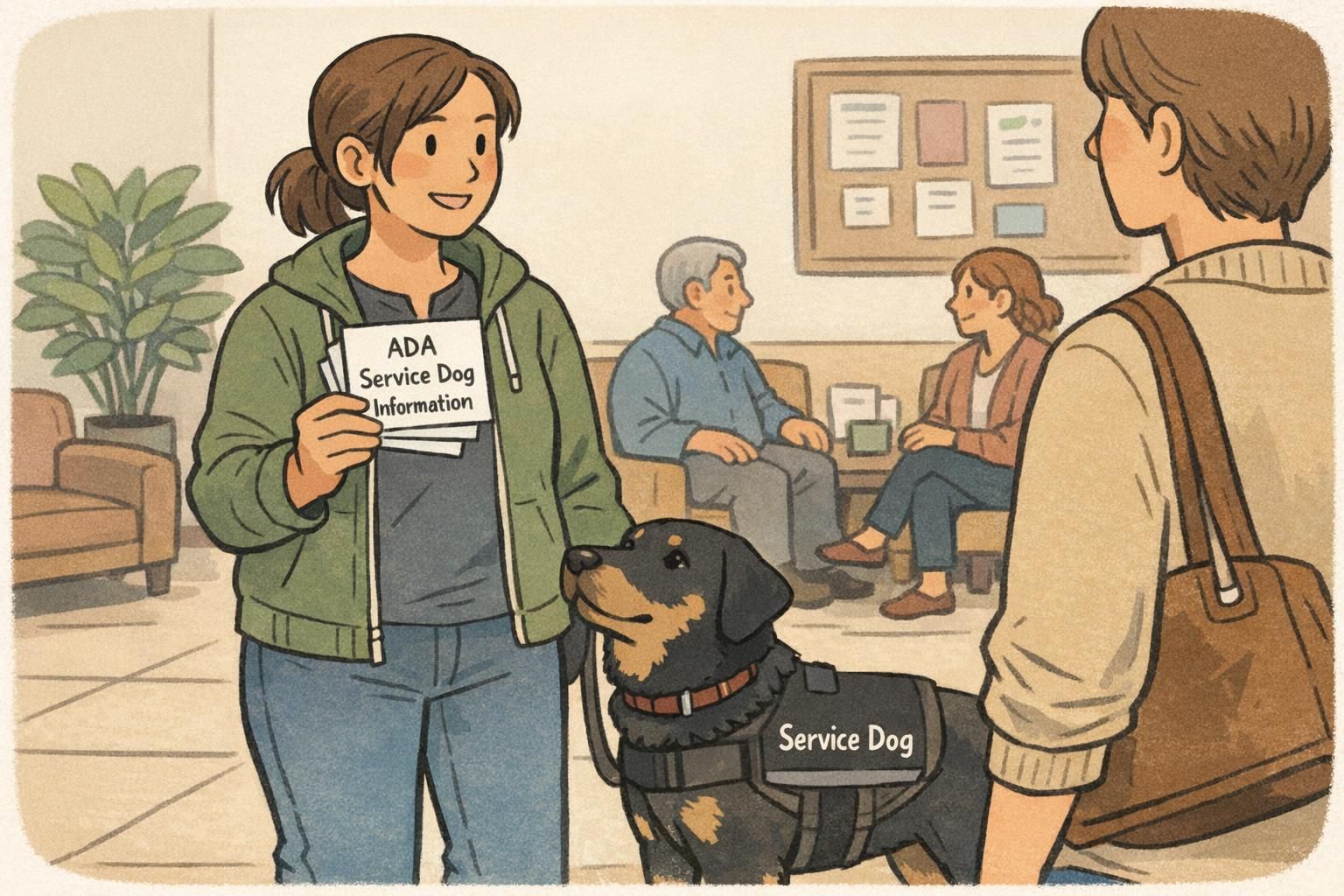
If you carry additional communication tools, many handlers also like having small informational handouts available for quick, clear conversations—especially when staff seem anxious about policy or unsure what questions are appropriate.
For moments like these, some handlers keep ADA law handout cards for quick, clear conversations ready in a wallet or bag to support calm, respectful communication.
A service dog ID card can be useful anywhere you interact with new people, new policies, or busy environments. It’s not about “winning” an argument—it’s about being prepared and helping the other person understand the situation quickly.
In stores and everyday errands, most issues are simply confusion. An ID card can help staff feel reassured that your dog is a working animal and that you’re a responsible handler. When you’re in a hurry or managing symptoms, that smoother first minute matters.
In housing conversations—especially when you’re working with a new landlord, property manager, or leasing team—clarity and consistency can go a long way. An ID card can help you present your information neatly and professionally, keeping the conversation organized and focused.

Travel adds another layer: bags, schedules, rules that vary by company, and employees who may not handle service animal situations every day. An ID card can be a simple “on-hand” tool that supports smoother check-ins and fewer repeated explanations.
If travel is part of your routine, you may also appreciate planning guidance specifically focused on life on the go with a working dog. National Animal Registry’s post on traveling with a service dog is a helpful place to start when you’re building a smoother travel checklist.
Service dog IDs come in different formats, and the best choice depends on how you live day to day. Some handlers want something physical they can hand over or show briefly; others prefer the speed and convenience of a digital option.
A printed wallet card is familiar, durable, and quick to present. It’s easy to keep with your driver’s license or in the same pocket you reach for when you’re checking in somewhere. A printed card can also be handy in low-battery situations or locations where you’d rather not pull out your phone.
A digital ID can be equally practical. It’s fast to access, easy to keep updated, and simple to share if you’re handling remote communication (for example, sending details ahead of time for a trip or keeping a backup on your phone). Many handlers like the peace of mind of having both formats available.
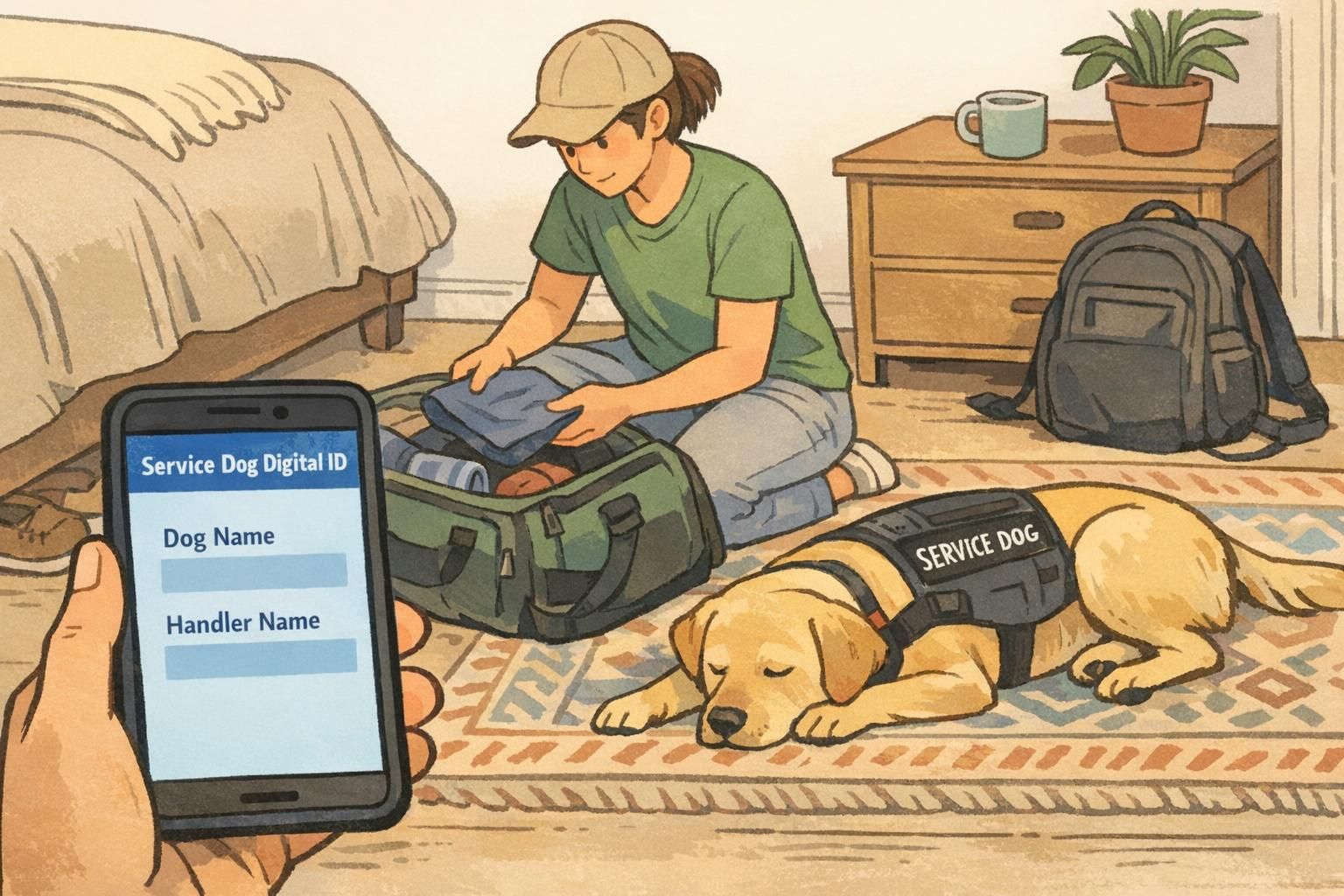
If you like the idea of a coordinated set—something you can keep in your wallet plus a matching digital reference—National Animal Registry offers a customizable printed service dog ID with a matching digital page designed for everyday convenience.
If you want a clean, organized way to carry service dog identification, setting up an ID card and registration profile can be a straightforward process. The goal is to create something you feel comfortable presenting in public—clear, consistent, and aligned with your privacy preferences.
Many handlers appreciate having an optional registration number and a consistent profile they can reference when needed. It’s a practical way to organize your service dog’s identification details so you’re not scrambling when a question comes up.
For an all-in-one option, National Animal Registry provides a starter registration package for everyday identification that keeps your key details together in a professional, easy-to-use format.
“ "Once I had everything in one place—photo, service type, and a consistent ID—I felt more confident walking into new spaces. It didn’t change how my dog works, but it changed how smooth my day felt." – Service dog handler”
A service dog ID card works best when it supports calm, courteous communication. In most situations, you’ll get the best results by keeping your tone friendly and your message short. You’re not obligated to overshare, and you don’t need to “prove” your private medical circumstances to strangers to move through your day.
It also helps to remember that access comes with reasonable public behavior expectations for service dog teams. A well-behaved service dog should remain under control, be housebroken, and avoid disruptive behavior in public settings. When your dog is calm and focused, an ID card becomes an extra layer of clarity—not the centerpiece of the interaction.
In many everyday situations, an ID card is not required. Many handlers still choose to carry one because it can make interactions faster, clearer, and less stressful.
Most cards include the dog’s name, the handler’s name, a photo, and a service dog type. Optional additions like an emergency contact or microchip number can be useful, but it’s best to keep the card simple and privacy-friendly.
No. Many handlers prefer not to share disability details or task specifics on an ID card. An ID is typically used to identify the team clearly without disclosing sensitive information.
Stay calm, keep your response brief, and protect your privacy. You can redirect the conversation back to simple identification and courteous communication. Many handlers find that presenting an ID card (and, if helpful, a short informational handout) keeps the interaction respectful and short.
Yes, many handlers like digital IDs because they’re instant and easy to access on a phone. If you want a fast, convenient option, National Animal Registry offers an instant-access digital service dog ID that you can pull up quickly when needed.
An ID card won’t replace good training, calm handling, and respectful communication—but it can support all three. For many teams, that extra bit of clarity is what helps daily life feel smoother, more predictable, and more comfortable.
Your trusted source for service animal registration. Get professional ID cards, digital profiles, and smart NFC tags to keep your service animal safe and recognized.
© National Animal Registry — All rights reserved.