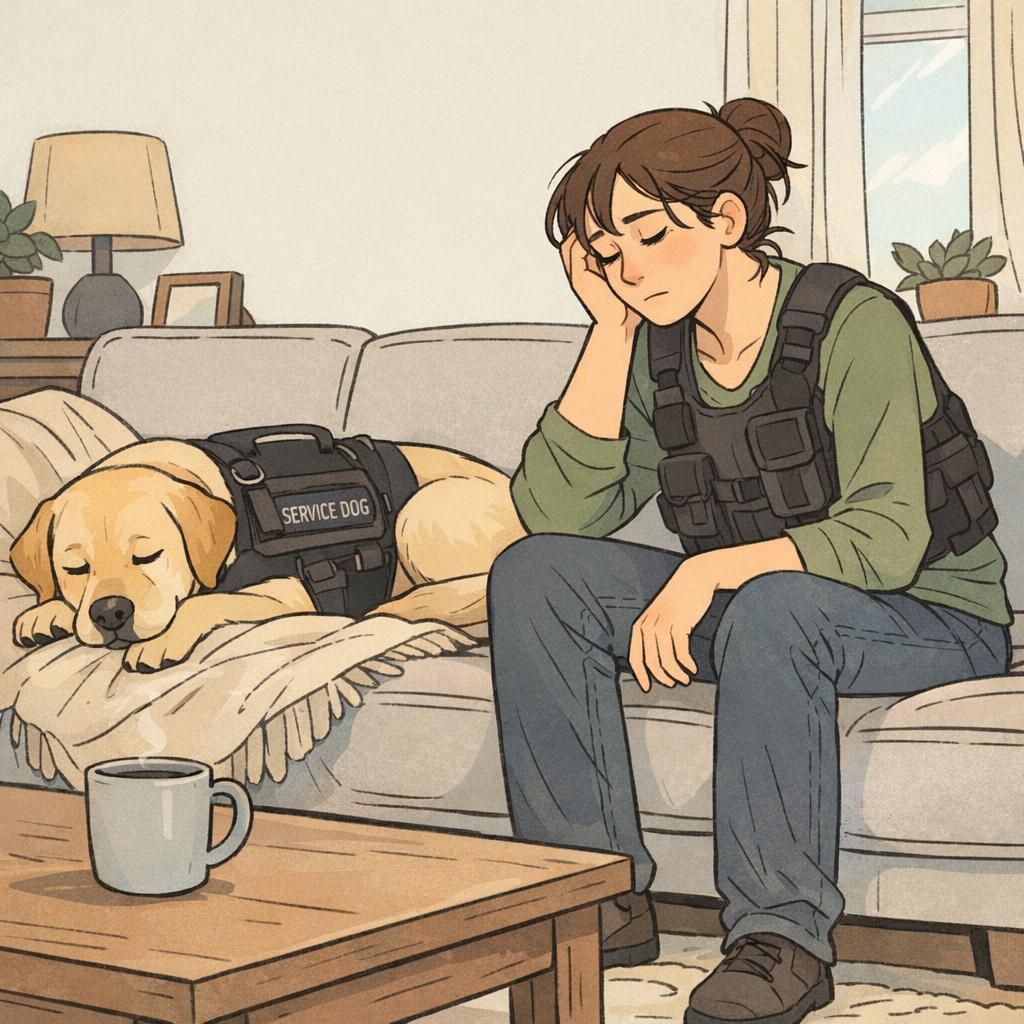
Service dog teams are often described as “two working together,” but a reality many people don’t talk about is how much the human carries. Handler burnout is a real form of emotional, physical, and mental exhaustion that can build when you’re responsible for your own health and functioning while also meeting your service dog’s daily needs—exercise, training upkeep, grooming, feeding, planning, and public access readiness.
If you’ve felt stretched thin, it doesn’t mean you’re doing something wrong. Burnout is common, especially when your dog is a lifeline and your day-to-day routines require extra planning. The goal isn’t to “tough it out.” The goal is to notice what’s happening early and make practical changes that protect your energy while keeping your dog supported.
Stress is part of life. A busy week, a tough appointment, or a day with unexpected obstacles can leave anyone feeling worn out. Burnout is different: it’s what happens when stress becomes chronic and recovery never quite catches up. Instead of bouncing back after rest, you may feel like your batteries never fully recharge.
For service dog handlers, one major difference is that you can’t always “clock out.” Even on quieter days, you’re still managing care tasks and planning ahead. You may be thinking about timing potty breaks, packing the right gear, maintaining training cues, and preparing for the public-facing parts of handling.
Over time, this can overlap with compassion fatigue—especially when you’re repeatedly navigating access questions, unsolicited comments, or the pressure of being “on” in public. When you’re already drained, even small interactions can feel enormous, and the constant planning can start to feel like a weight you carry everywhere.
“ "It wasn’t one big moment that wore me down. It was a hundred small decisions every day—where to sit, what to say, how to keep my dog settled—without any real break." – Service dog handler”
Burnout doesn’t always look dramatic. Sometimes it shows up as subtle changes that you dismiss because you’re used to pushing through. Recognizing early signs can help you adjust before you hit a wall.
Burnout usually isn’t caused by one thing. It’s the accumulation of responsibilities, pressure, and friction—especially when there’s limited support or limited space for rest.
This can snowball because stress reduces your capacity, and reduced capacity makes everyday tasks take more effort. When even “simple” errands require planning, those small frictions compound. The result is often a cycle: you feel behind, push harder, recover less, and feel even more behind.
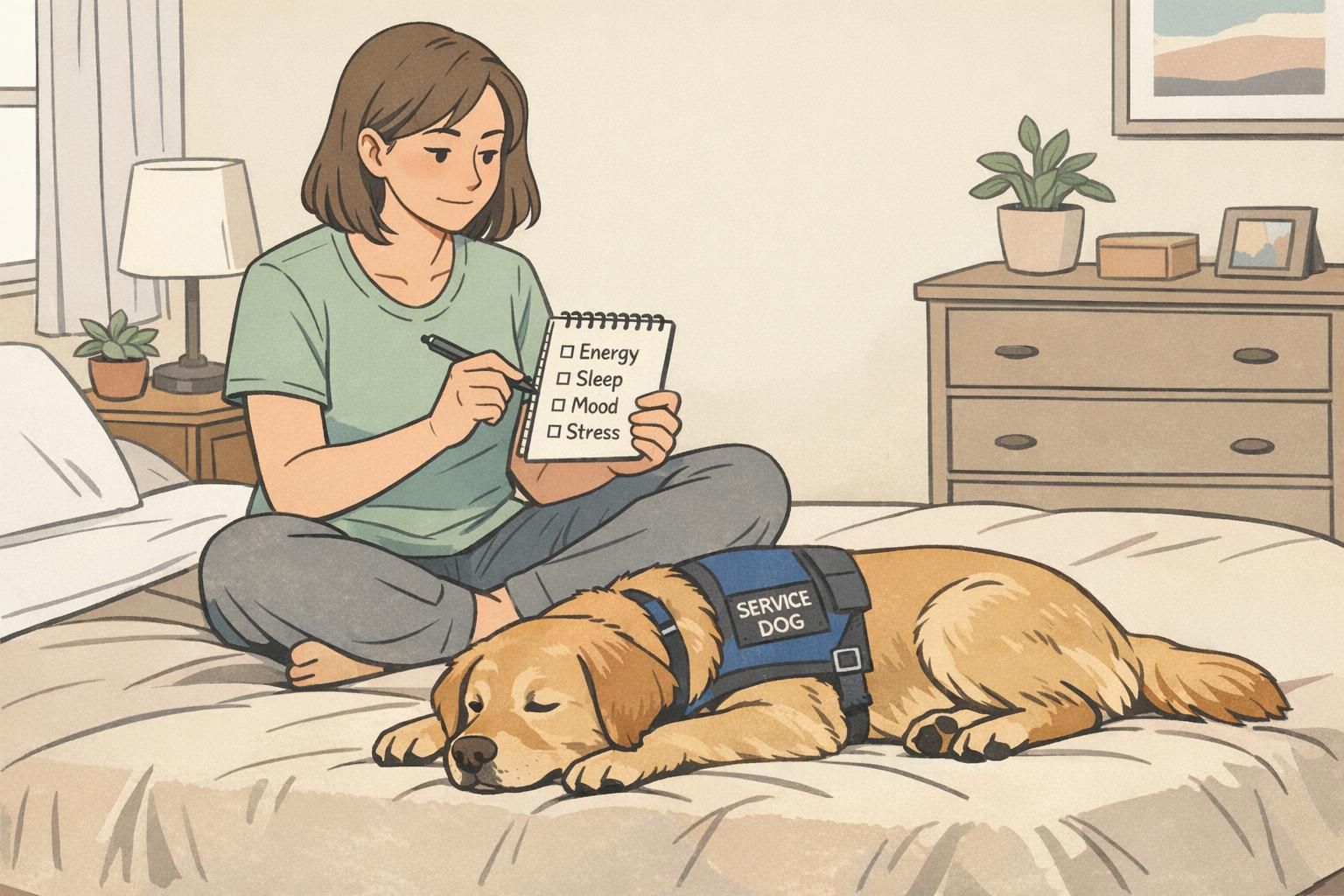
This is a non-clinical self-check meant to help you notice patterns. It’s not a diagnosis. Think of it as information you can use to adjust your routines and seek support sooner rather than later.
These are common burnout signals discussed in many health resources, including the Mayo Clinic’s overview of burnout signs and impact. Recognizing the pattern early can guide practical changes and help you decide when to reach out. source
Sustainable handling isn’t about doing everything perfectly. It’s about keeping what matters consistent while reducing the load that drains you the fastest. Your dog benefits from a handler who has enough energy to be clear, calm, and steady.
“ "I stopped trying to do the ‘ideal’ routine every day. When I built a simpler baseline I could maintain, everything got more stable—my dog included." – Service dog handler”
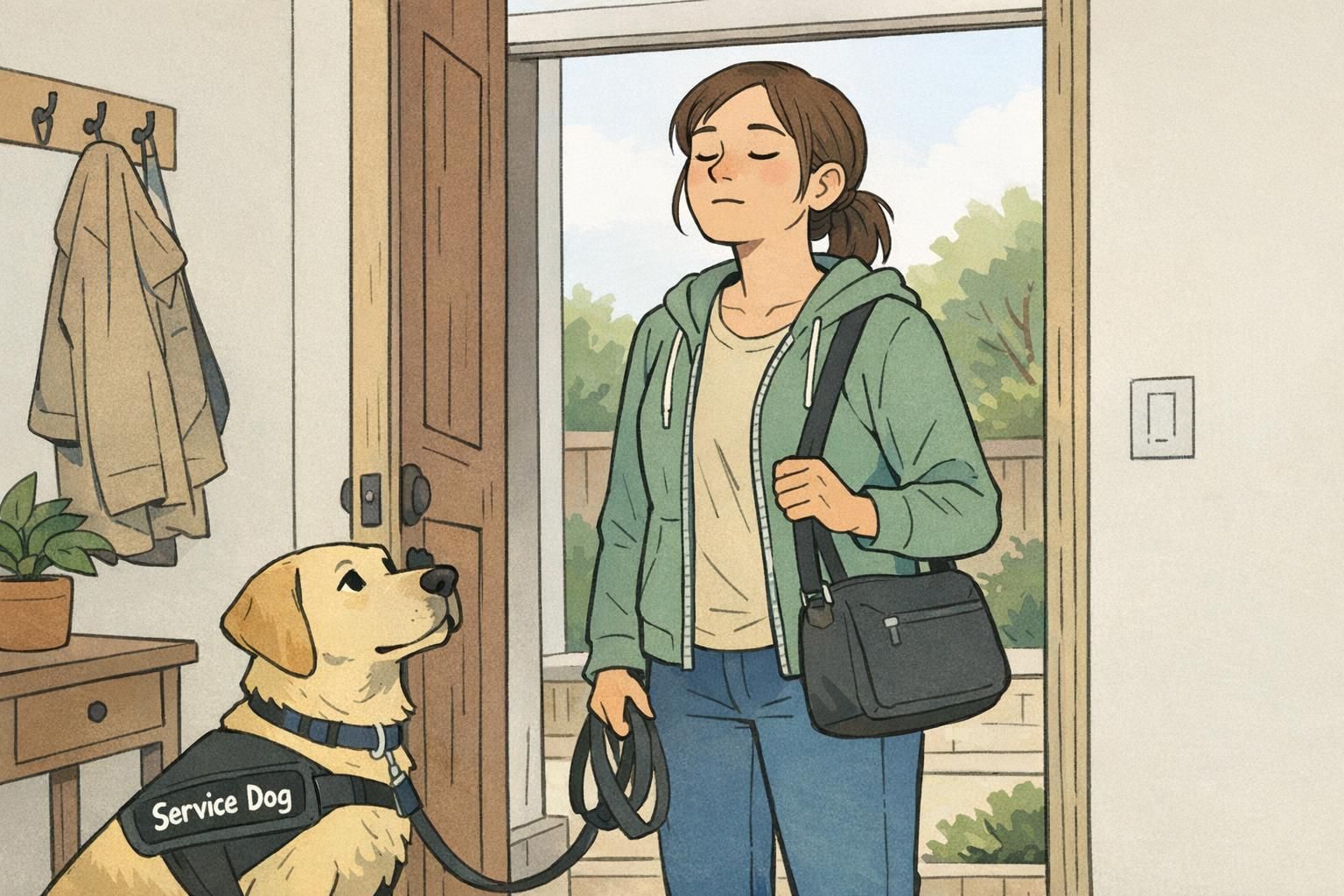
Public outings can be one of the biggest hidden drains for handlers—not necessarily because of the outing itself, but because of the mental load. When you’re repeatedly preparing for questions, anticipating pushback, or improvising scripts on the spot, you burn energy fast.
Calm, consistent communication can prevent confrontations and reduce decision fatigue. The goal isn’t to “win” interactions. The goal is to move through your day with as little friction as possible.
Many handlers find it helpful to carry ADA law handout cards for quick, calm conversations so they can share clear information without having to argue, over-explain, or use precious energy in the moment.
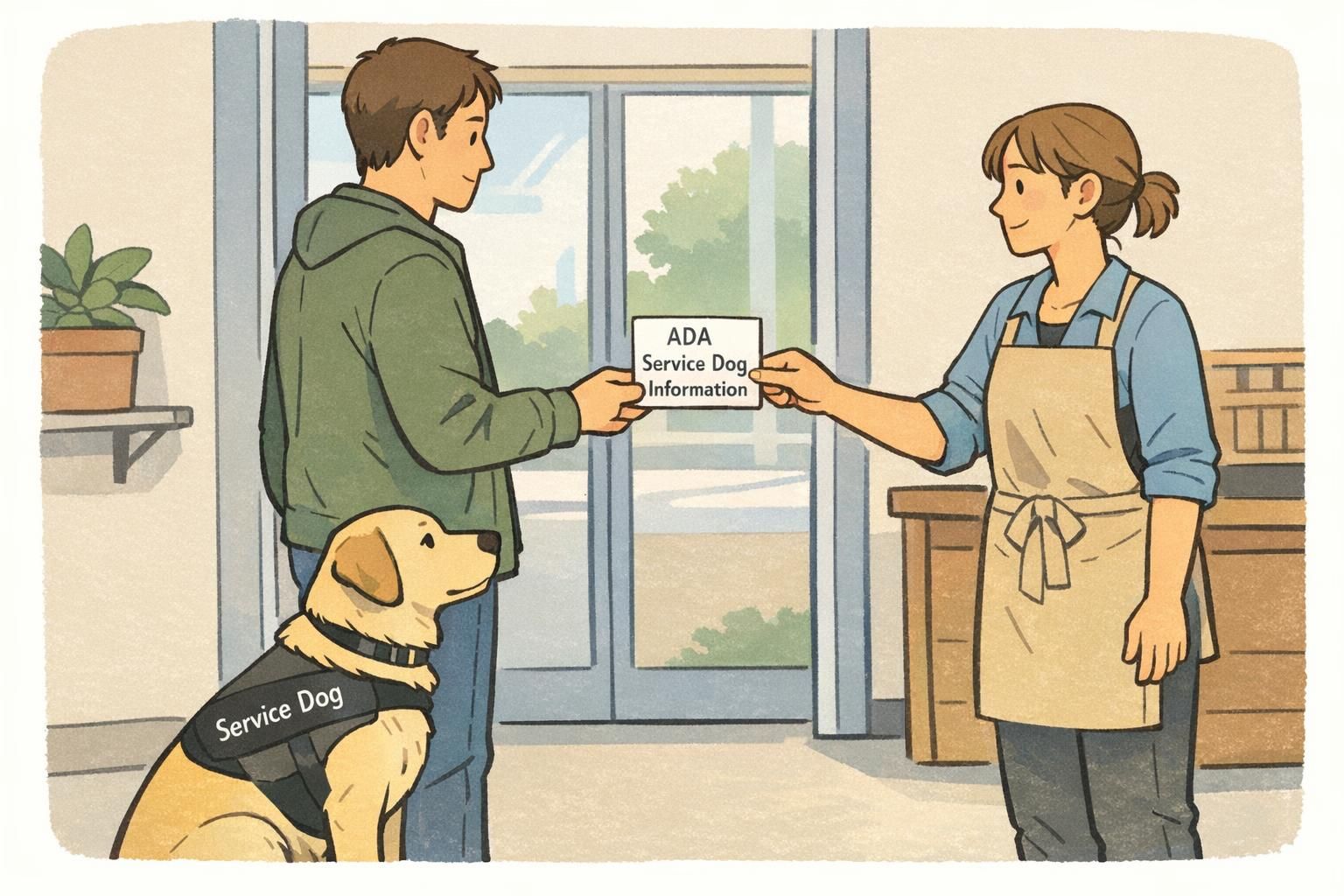
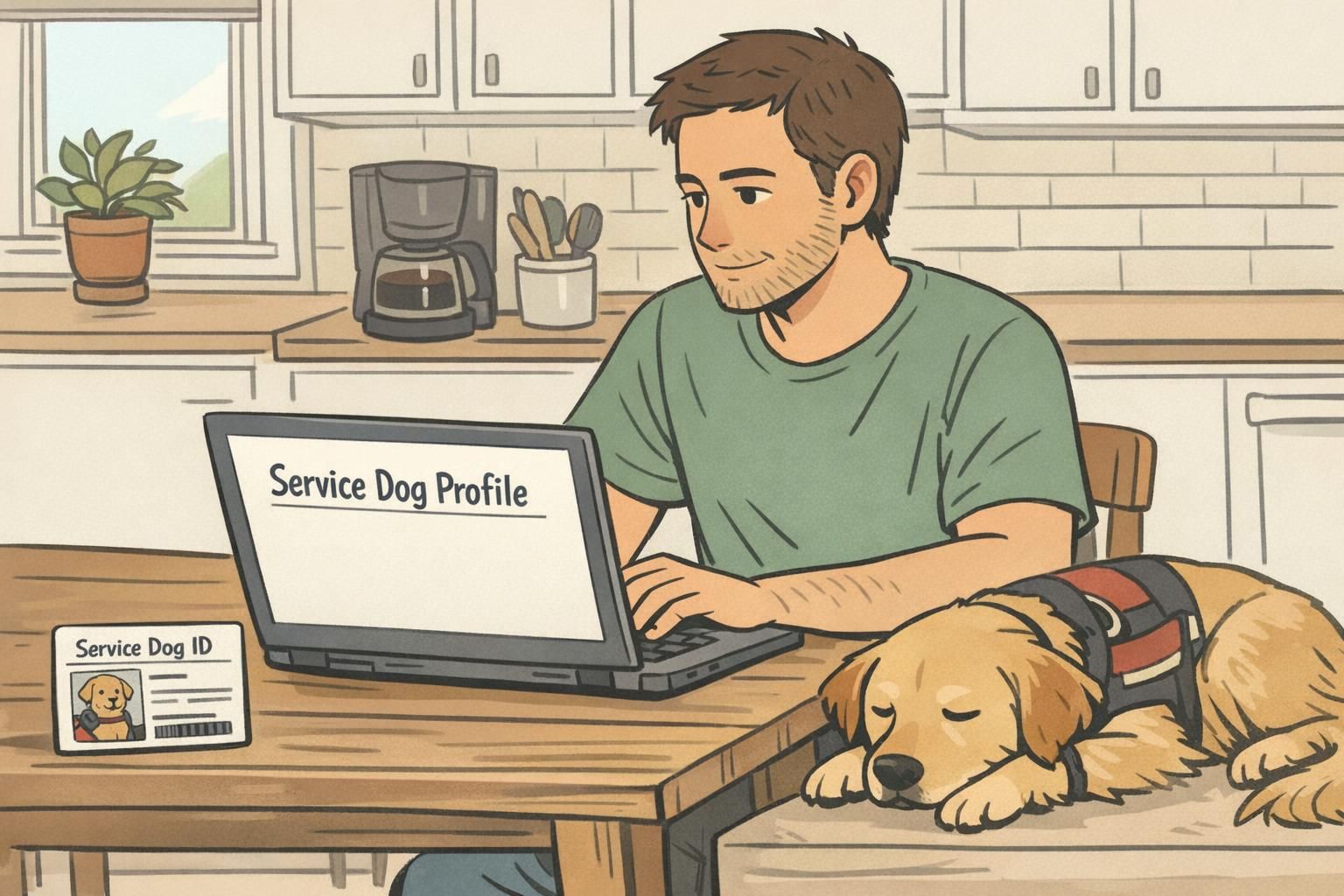
When you’re already managing symptoms, schedules, and public logistics, it helps to have simple tools that bring order to the chaos. Service dog registration, printed IDs, and digital profiles can be a straightforward way to organize key information and communicate clearly in everyday situations.
These tools can be especially useful in high-traffic environments or when you’re juggling multiple responsibilities—like housing conversations, travel planning, or busy errands. They’re not about adding burdensome steps. They’re about giving you a consistent way to present your team with confidence and reduce uncertainty when you’re already depleted.
If you want a simple, organized option, many handlers choose a starter registration package for everyday identification and peace of mind to keep their team’s details in one consistent place.
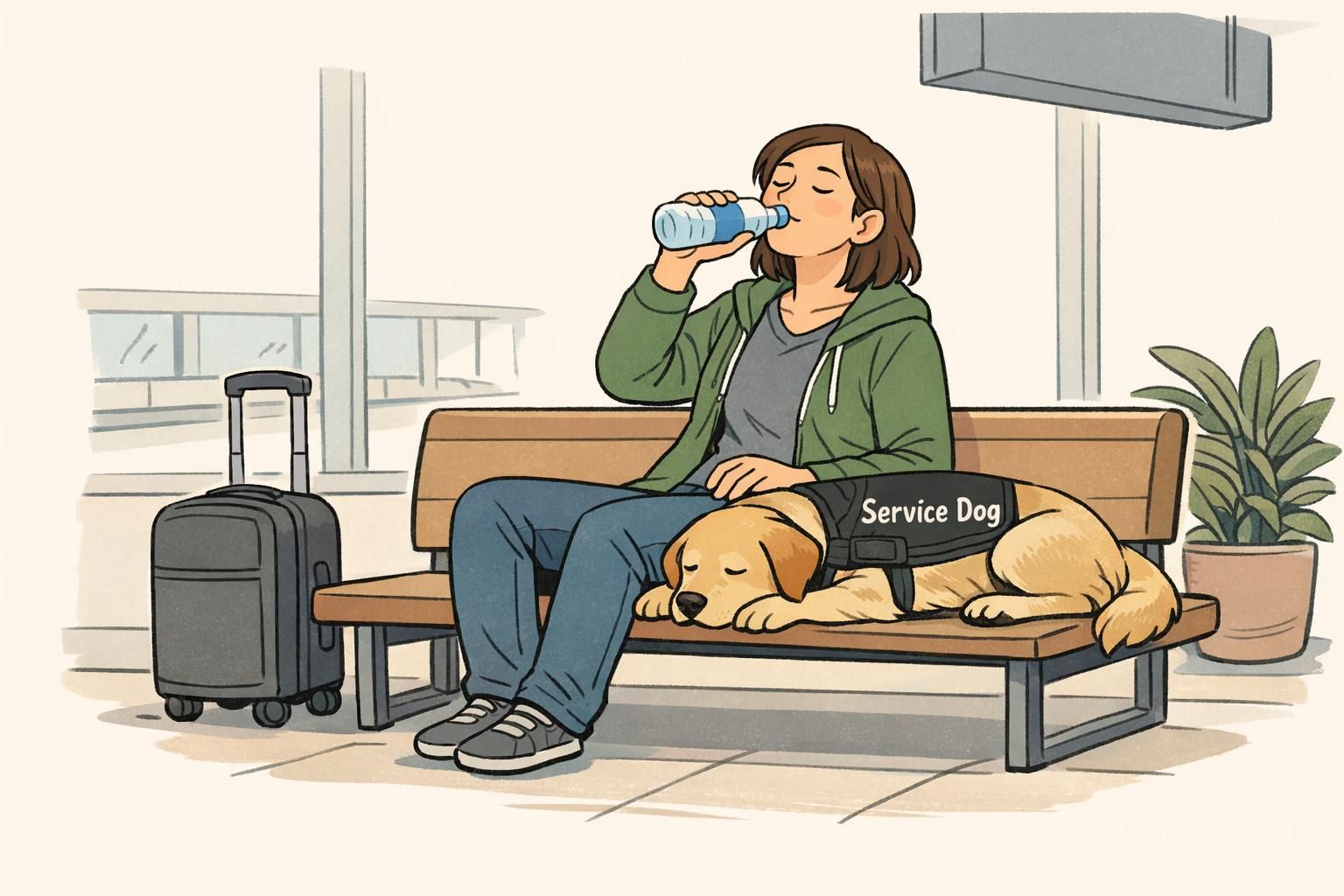
Travel can intensify burnout because it stacks stressors all at once: timelines, crowds, unfamiliar environments, disrupted routines, and fewer comfortable places to recover. Even “good” travel can be draining when you’re managing both your needs and your dog’s.
Pre-planning helps because it moves decisions out of the moment. The less you have to improvise while tired, the more steady you can be—and the calmer your dog can remain.
For more practical planning tips, see traveling with a service dog.
Some handlers also like using a travel-focused registration package to keep essentials organized, especially when they’re moving through multiple locations and want consistent information close at hand.
Many handlers wait until they’re in crisis to ask for help—often because they’re used to being resilient. But burnout is easier to address early. If your sleep, mood, patience, or functioning is slipping, that’s a valid reason to reach out.
That guilt is common—and it’s also a sign you’ve been carrying too much alone. Your dog’s job is to support you, and your job is to keep the team sustainable. Accepting help protects both of you.
A short, simplified routine you can maintain is often better than an ambitious plan you can’t keep up with. Focus on consistency and calm, then rebuild when you have more energy.
Burnout recovery doesn’t have to start with a huge life overhaul. A small reset can restore a sense of control and help you identify what actually improves your days. Here’s a simple 7-day approach that protects your wellbeing while keeping your dog supported.
At the end of the week, ask yourself: What helped the most? What drained me the fastest? What can I adjust before it becomes a bigger problem? Supporting the handler supports the team—and your wellbeing matters, too.
“ "When I started treating my energy like something worth protecting, my dog got a steadier handler—and I got a steadier life." – Service dog handler”
Your trusted source for service animal registration. Get professional ID cards, digital profiles, and smart NFC tags to keep your service animal safe and recognized.
© National Animal Registry — All rights reserved.