When people say “service dog certification,” they’re usually talking about practical documentation that helps them communicate in everyday situations—things like a registration record, an ID card, a certificate, or a digital profile. These tools can make it easier to explain that a dog is working, reduce confusion, and keep daily routines moving.
It also helps to clarify the terms people commonly mix together. A service dog is trained to perform specific tasks for a person with a disability. Those tasks are what directly support the handler in day-to-day life—at home, in public, and during important routines.
Other types of support animals can provide meaningful help too, but in different ways. Emotional support animals (ESAs) are generally associated with comfort and companionship, and therapy animals typically provide support in structured settings like hospitals, schools, or community programs. In everyday conversation, “certification” often becomes a catch-all term for documentation that helps people communicate clearly and confidently—whatever their support-animal situation may be.
Even experienced service dog handlers can run into misunderstandings. Staff may be unfamiliar with service dog teams, other customers may ask personal questions, and well-meaning strangers may try to pet or distract a working dog. In those moments, having clear identification can reduce the need to repeatedly explain your situation.
Many handlers choose service dog documentation for one simple reason: it can make interactions shorter and calmer. A visible ID card or a digital profile can answer common questions quickly, without turning a routine errand into a stressful conversation.
If you want a simple, professional option that’s easy to carry and easy to show when needed, many teams choose a professional service dog ID card with a matching digital profile so they can communicate clearly without oversharing personal information.

One of the most common reasons people choose a service dog is straightforward: task-based help that increases independence. Small tasks can add up quickly—especially when mobility, pain, fatigue, or balance issues are part of daily life.
A service dog may be trained to retrieve dropped items, bring needed objects, open doors, press accessible buttons, or turn lights on and off. Some dogs provide balance support or help a handler maintain a steadier gait. These tasks can reduce reliance on caregivers and help people move through routines with more confidence.
“ "It wasn’t one big moment—it was the hundred little moments a day. Having my dog help with the small tasks gave me more control over my routine." – Service dog handler”
Some service dogs are trained to alert their handler to changes in medical status and prompt early action. The goal is practical: earlier awareness can mean faster treatment decisions, fewer disruptions, and more confidence leaving the house.
Examples people commonly talk about include diabetic alert work, seizure alert/response, asthma support, and allergy response. Depending on the team’s needs, a dog may be trained to notify the handler (or another person), retrieve emergency supplies, activate an alert device, or guide the handler to a safer place.
For many handlers, documentation is part of staying prepared. When a dog’s work is medical in nature, people often prefer to keep communication simple—especially in busy public spaces where detailed explanations feel intrusive or stressful. Clear identification can help reduce friction and keep attention where it belongs: on health and safety.

Guide dogs and hearing service dogs support safety, navigation, and awareness—often in ways that are hard for bystanders to recognize. That’s one reason many teams value clear identification: it helps people understand that the dog is doing important work, even if the disability isn’t obvious.
Guide dogs may help a handler navigate obstacles, find curbs or doorways, and maintain a safer path through crowds. Hearing service dogs may alert to important sounds such as alarms, doorbells, timers, or someone calling the handler’s name. In public environments, these supports can make daily life more predictable and secure.
You may also hear the term “intelligent disobedience.” This refers to situations where a guide dog is trained to disobey a command if following it would be unsafe—like stepping into traffic when a car is approaching. It’s a powerful example of how service dog work often centers on safety-first decision-making.

Beyond tasks, many service dog teams describe meaningful quality-of-life changes: increased confidence leaving the house, improved participation in everyday activities, and more comfort navigating work or school. For some people, this “life participation” benefit is a major reason to pursue a service dog in the first place.
Research has also reported measurable improvements in areas like social functioning, emotional well-being, and work/school functioning for service dog handlers, along with overall quality of life (source). These outcomes help explain why many people also choose service dog documentation: when daily participation increases, the number of public interactions increases too—and smoother interactions can matter.
Mental health service dogs are service dogs trained to perform specific tasks related to a mental health disability. People sometimes assume these dogs only provide comfort, but many are trained for practical, repeatable actions that help the handler function more safely and independently.
Depending on the person’s needs, tasks may include interrupting harmful or escalating behaviors, guiding the handler to a safe space, creating space in crowds, prompting routines, or performing grounding-oriented tasks that help the handler reorient during distress.
Because mental health disabilities are often invisible, handlers frequently face extra questions or skepticism in public. That’s where registration materials can help: a clear, consistent way to communicate that the dog is working, without requiring the handler to share private medical details just to get through a normal day.
“ "Having my dog with me helps, but having a consistent way to explain it helps too. I don’t want to talk about my health in a checkout line." – Service dog handler”
In everyday settings like restaurants, stores, and waiting rooms, well-behaved, task-trained service dogs are typically calm, focused, and unobtrusive. You’ll often see a service dog staying close to the handler, resting under a table, ignoring food and distractions, and remaining under control.
Public access can still come with questions, especially when staff training varies or a location doesn’t frequently see service dog teams. Many handlers find it helpful to keep their communication simple and consistent: short answers, calm tone, and documentation ready if it helps move the interaction along.
For quick, respectful communication in the moment, many handlers keep ADA law handout cards for simple, respectful communication on hand to share when a staff member is unsure how to handle the situation.

Housing changes and travel plans tend to come with extra time pressure: applications, check-in desks, pet policies, last-minute staff questions, and unfamiliar procedures. Many service dog teams prefer to keep a simple documentation set ready so they can answer questions consistently and avoid delays.
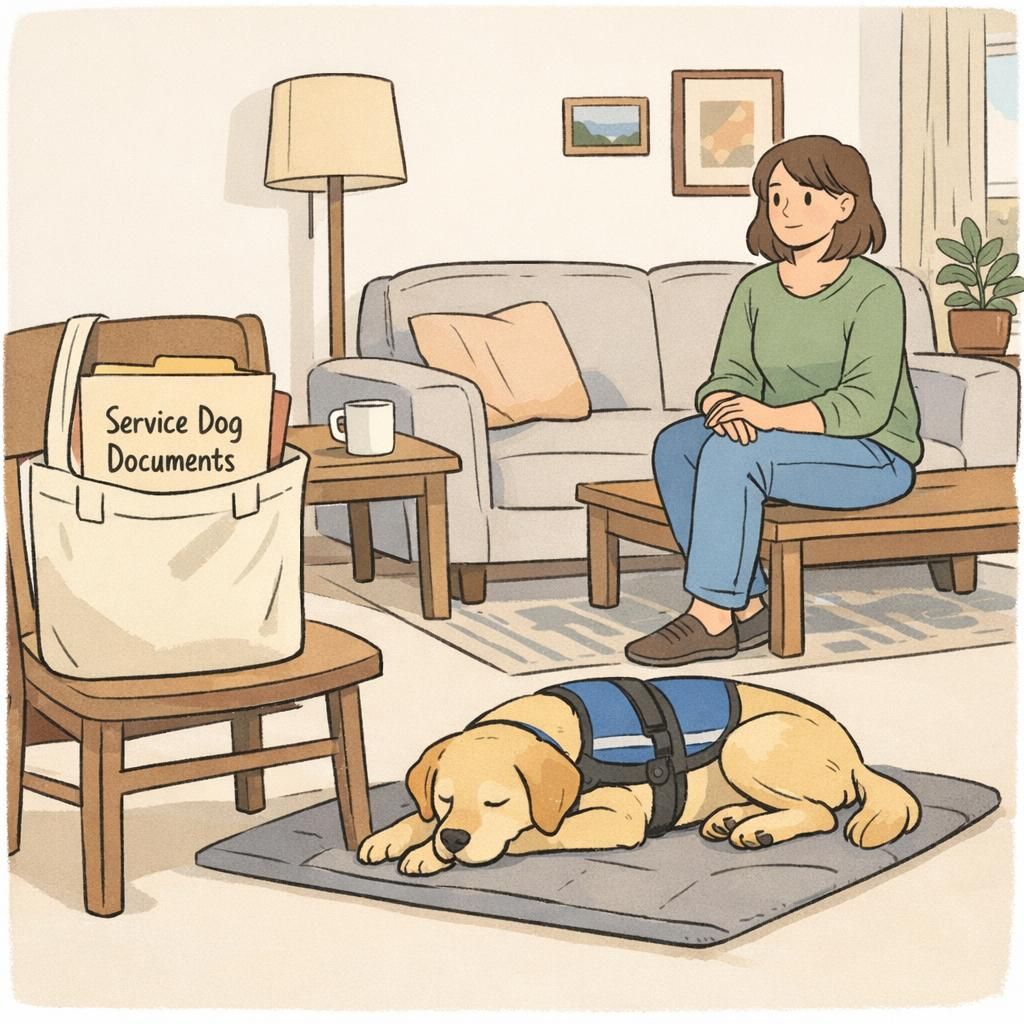
A practical approach is to organize your materials once and reuse the same details across situations. That might mean keeping a digital copy on your phone, saving a backup in email, and carrying a printed ID card in your wallet or travel folder.
If you’re planning a trip, travel planning tips for life with a service dog can help you think through timing, supplies, and the kinds of situations where being organized makes the day easier.
For frequent travelers who want a single, organized bundle, many teams choose a travel-ready service dog registration package so important items are in one place when time matters.
A service dog documentation set is often most helpful when it’s consistent, easy to access, and simple to understand at a glance. Different handlers prefer different levels of materials, but most sets aim to do the same thing: help the handler communicate clearly and stay organized.
For everyday identification that covers both physical and digital needs, many handlers start with a starter registration package with printed and digital ID to keep things straightforward and consistent.

The best documentation setup is the one that matches your real routine. Some people need something simple for daily errands. Others prioritize housing organization, or they travel frequently and want extra materials ready. Choosing based on lifestyle keeps things easy—and helps you feel prepared without overcomplicating it.
For handlers who prefer having everything together—ID, digital access, tags, certificate, and communication materials—an all-in-one service dog documentation package can be a convenient way to stay ready for everyday life, housing situations, and travel.
For many people, it’s mainly about convenience and clarity. Documentation can help reduce misunderstandings and keep day-to-day interactions calm and efficient.
Many handlers prefer not to. Clear identification and consistent materials can help communicate that the dog is working without turning a quick interaction into a personal conversation.
A simple setup—like a printed ID and an easy-to-open digital profile—helps many teams feel ready for common questions while staying organized.
Your trusted source for service animal registration. Get professional ID cards, digital profiles, and smart NFC tags to keep your service animal safe and recognized.
© National Animal Registry — All rights reserved.