A successful road trip with a service dog usually comes down to one thing: reducing surprises. When your dog knows what to expect, you’re more likely to keep them comfortable, focused, and ready to work in new places.
Before you map the fastest route, build your plan around three pillars that make travel smoother: (1) access readiness, (2) comfort and health, and (3) practical driving-day logistics. Together, these help you stay calm and consistent—especially during busy check-ins, crowded stops, and long drive days.
When you’re traveling, you’ll likely interact with hotel staff, restaurant hosts, attraction employees, and ride operators. Knowing the basics of public access can help you feel prepared and keep conversations brief and respectful.
In general, under the ADA, service dogs are allowed in public areas where customers are normally permitted. Staff are also limited to two specific questions when it’s not obvious what the dog does: (1) whether the dog is a service animal required because of a disability, and (2) what work or task the dog has been trained to perform. This helps protect your privacy while still giving businesses a simple way to confirm access. For a travel-focused overview, see this source.
It also helps to know the narrow situations where a business can require a service dog to be removed: if the dog is out of control and the handler does not take effective action to control it, or if the dog is not housebroken. When handlers plan ahead for potty breaks, decompression, and calm routines, these situations are much less likely.
Some handlers like having a quick, low-pressure way to share ADA basics during check-ins or busy moments. ADA law handout cards for quick, calm access conversations can be a helpful tool when you’d rather hand over a simple reference than explain everything verbally.
A few short calls before you leave can prevent the most common travel headaches: confusion at check-in, awkward delays in crowded lobbies, or staff who aren’t sure what to do. Calling ahead is especially useful for hotels, guided tours, small venues, and transportation providers with limited space.
When you call, keep it straightforward: share that you’ll be accompanied by a service dog, ask where the nearest relief area is, and request a room location that supports your routine—such as a ground-floor room or one near an exit if that helps your dog settle quickly.
Many handlers also find it easier to travel when they have consistent, travel-ready identification and details in one place—especially in busy public spaces where it’s helpful to communicate quickly and confidently. a travel-ready service dog registration package for clearer identification on the road can support smoother check-ins and help keep your travel information organized.
If you want a broader overview of what to think about before you go, National Animal Registry’s guide on traveling with a service dog is a useful pre-trip read.
Your vehicle setup is one of the biggest safety factors on a road trip. In sudden stops or collisions, an unrestrained dog can be injured—and can also injure people in the car. A secure setup is not only safer; it also helps many service dogs relax because their “place” is clear and consistent.
Temperature control matters just as much. Keep airflow moving, block direct sun when possible, and choose a spot where your dog isn’t pressed against hot surfaces. Even mild weather can become dangerous quickly in a parked car, so it’s safest to avoid leaving your service dog unattended in a vehicle.
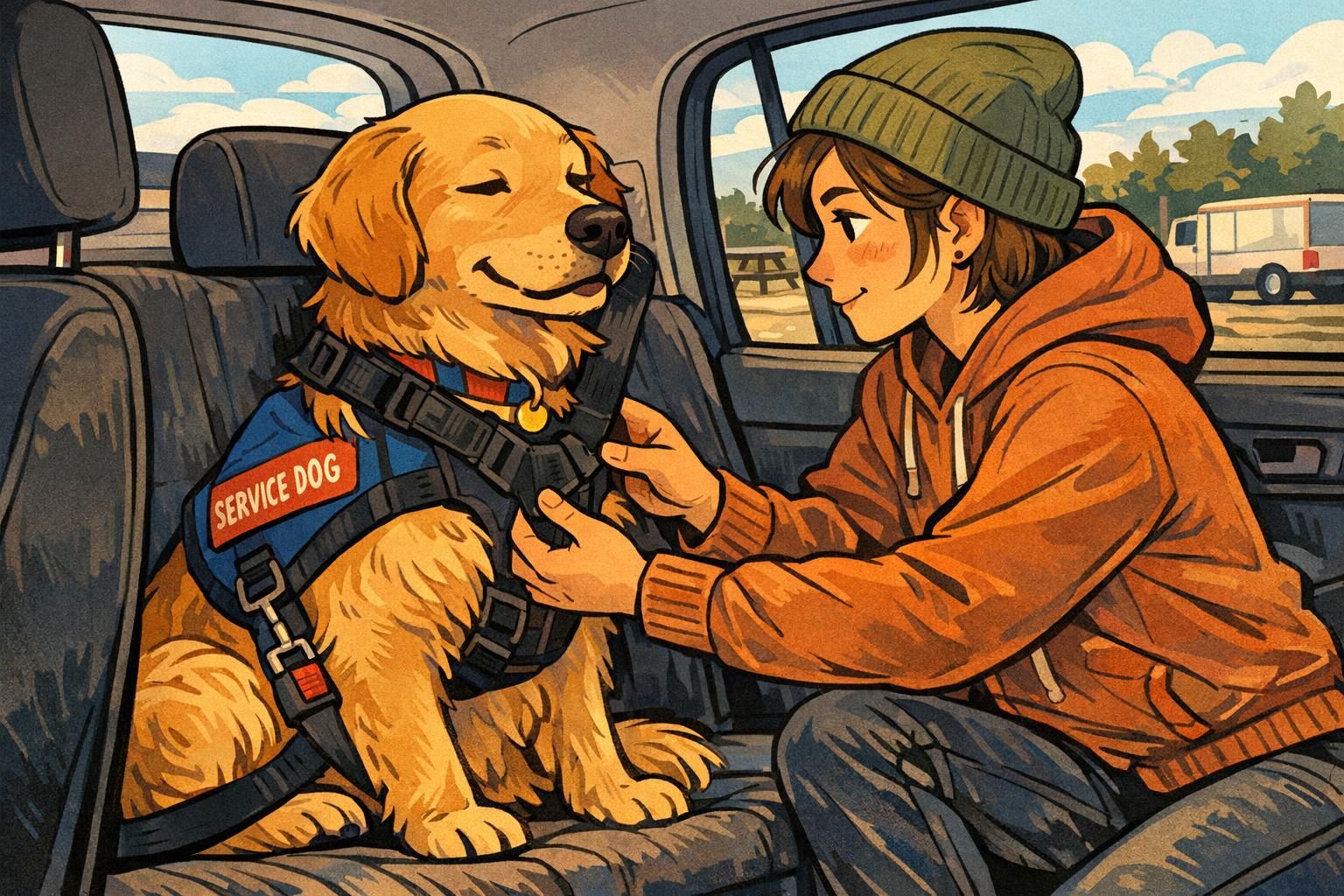
A road trip can be mentally demanding for a service dog: new smells, new sounds, and long stretches of staying still. Predictable breaks help your dog reset so they’re less restless and more comfortable when you arrive.
Many handlers plan breaks about every 2–3 hours, but the best schedule is the one that fits your dog’s needs, your route, and the day’s temperatures. The key is consistency—your dog learns that relief and movement are coming, so they can settle more easily between stops.
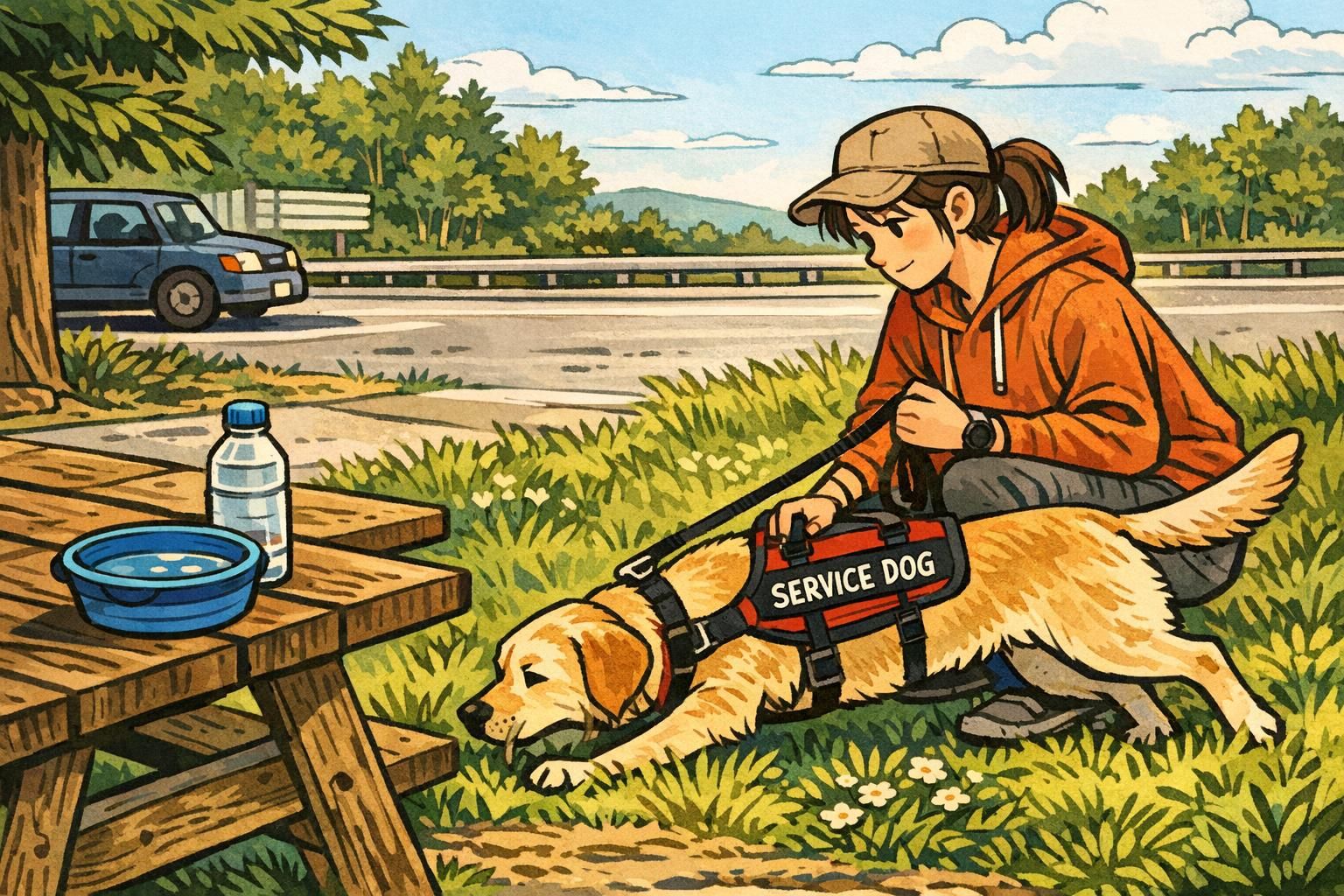
Meal timing can make a long drive feel easier. Many dogs do better with a lighter meal before a long driving stretch, then a normal meal once the day’s major driving is done. This can also help you predict elimination timing more accurately.
If you know your itinerary will change your usual routine, consider adjusting gradually a few days before you leave—shifting meals and potty times so they line up with the kinds of stops you’ll actually be able to take on the road.
Motion sickness is common, especially in younger dogs or dogs who don’t ride often. Your veterinarian can recommend safe options and help you time meals, water, and any medications appropriately for travel days.
If possible, avoid last-minute food changes right before travel. Keeping diet consistent can help prevent stomach upset when you’re far from home.
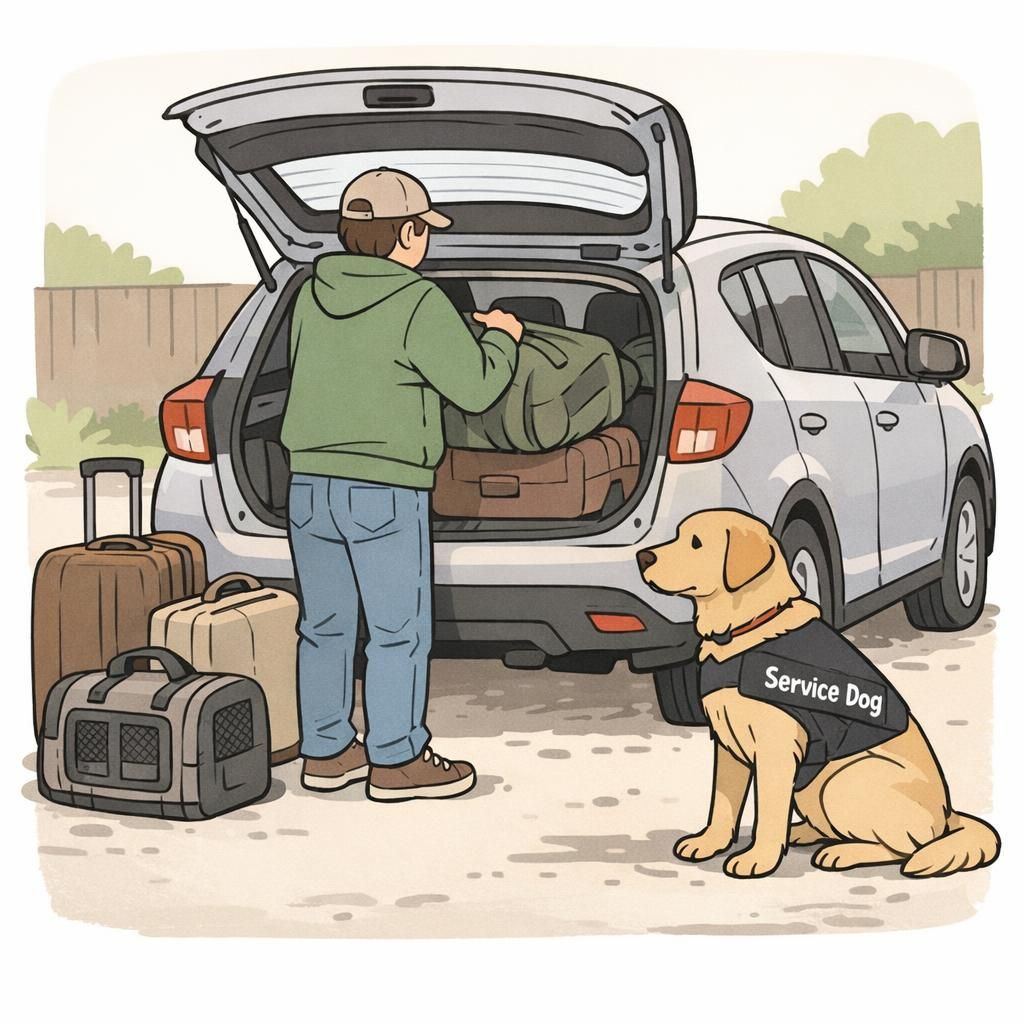
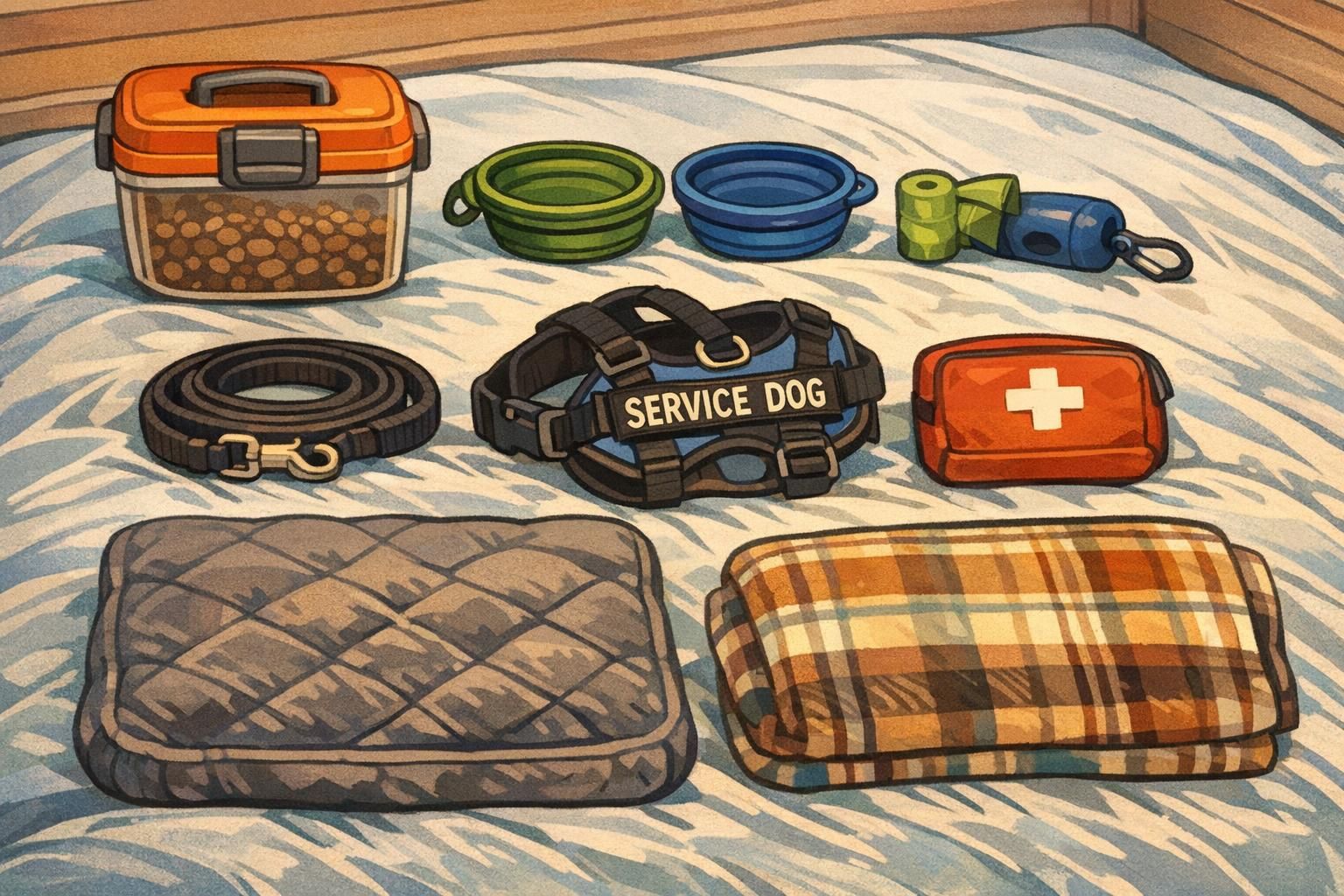
Packing is easier when you treat your service dog’s items like a dedicated “go bag.” The goal is simple: if you pull into a rest stop, hotel, or crowded lobby, the items you might need are reachable without unpacking the whole trunk.
Hotels and rentals can be exciting for dogs—new smells, new sounds, and people in hallways. A simple arrival routine helps your service dog understand what’s expected, even in an unfamiliar room.
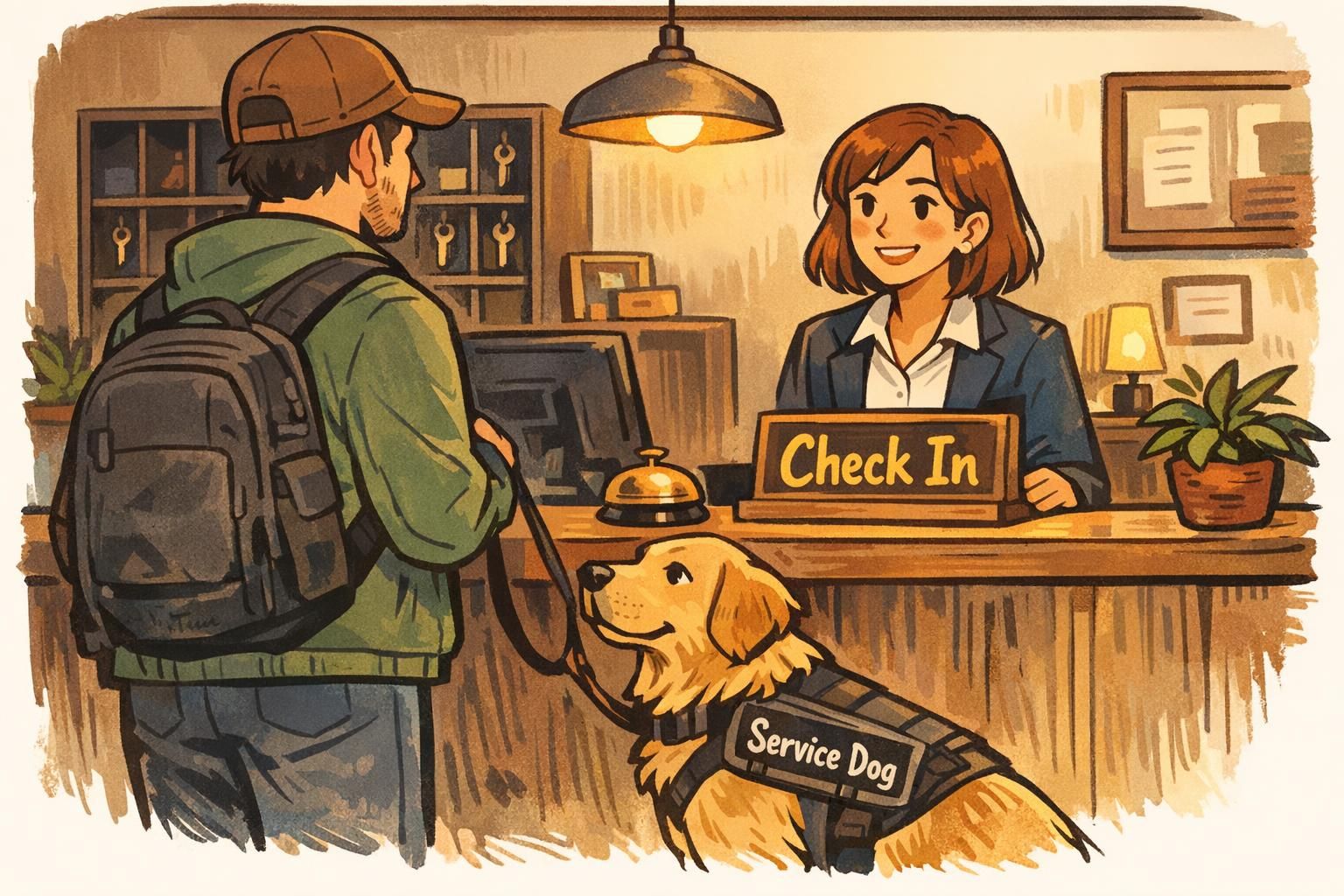
At check-in, you can ask (or confirm) where the nearest relief area is and whether there’s a convenient exit. Many handlers prefer a ground-floor room or one near an exit because it reduces time in busy hallways and makes potty breaks quicker—especially late at night or early in the morning.
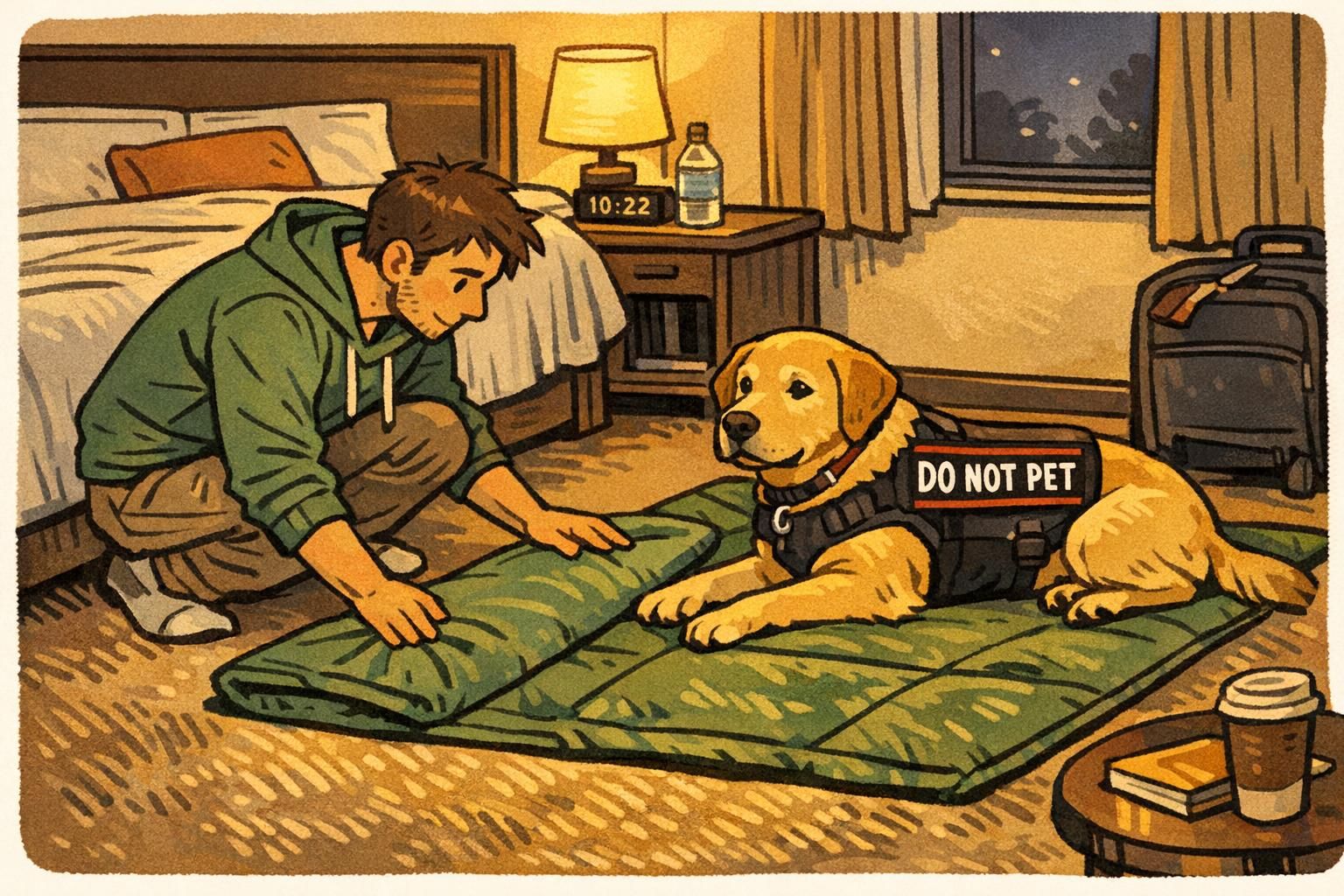
“ "When we arrive, I do the same three steps every time—potty, water, then mat. My dog settles faster, and the whole trip feels calmer." – Service Dog Handler”
Being emergency-ready doesn’t mean expecting problems—it means you can respond quickly if something unexpected happens. On the road, that might be a torn paw pad, a sudden stomach issue, a lost tag, or needing a vet visit far from home.
Start with identification: up-to-date ID tags are essential, and many handlers also consider microchipping as an added layer of protection. Keep your dog’s vaccine and medical records accessible in case a clinic needs them, and store key information in both paper and phone formats so you’re covered if a device dies.
For day-to-day travel interactions, some handlers appreciate having a consistent ID and a matching digital profile they can pull up quickly when needed. a customizable service dog ID card and matching digital profile for quick identification can help keep your information organized and ready while you’re away from home.
Use this simple checklist as a quick pre-departure and arrival reset. Many handlers screenshot a list like this so it’s easy to reference on the road.
With the right plan, a road trip can feel steady and empowering—your dog stays comfortable and working-ready, and you get to focus on the reason you’re traveling in the first place.
Your trusted source for service animal registration. Get professional ID cards, digital profiles, and smart NFC tags to keep your service animal safe and recognized.
© National Animal Registry — All rights reserved.